

Education
More trouble for varsity students as NASU, SSANU extend strike by two months

The hope of ending the ongoing industrial action in the universities has become dimmed as Joint Action Committee of the Senior Staff Association of Nigerian Universities and the Non-Academic Staff Union of Educational and allied institutions has announced an extension of its strike by two months.
This came on Wednesday in a statement signed by the National President, SSANU, Mr Mohammed Ibrahim, and General Secretary, Mr Peter Adeyemi.
The statement partly read, “In view of the fact that government is still a long way from effectively resolving the issues in contention, it is only expedient that we allow the process to be fully concluded before directing the end of the strike. Consequently, you are hereby informed that the strike has been extended by two months, within which we are hoping that all the contentious issues would have been effectively laid to rest. The two-month extension is with effect from Friday, June 24, 2022.’’
The NASU/SSANU’s strike started with a warning strike of two weeks which commenced at the midnight on Sunday, March 27, 2022, while the extension of another two weeks commenced on Sunday, April 10, 2022, and it is still ongoing.
Their demands include the inconsistent issue of the Integrated Payroll and Personnel information system, unpaid earned allowances, delay in the renegotiation of the FGN, NASU, SSANU agreements, and non-payment of minimum wage arrears.
Others are neglect and poor funding of state universities, non-payment of retirement benefits to outgoing members of the unions, and usurpation of the headship of non-teaching units in clear violation of conditions of service and establishment procedures, among others.









Education
Regnum Medical University Secures NUC Licence, Set to Boost Nigeria’s Healthcare Workforce

Regnum Medical University Secures NUC Licence, Set to Boost Nigeria’s Healthcare Workforce
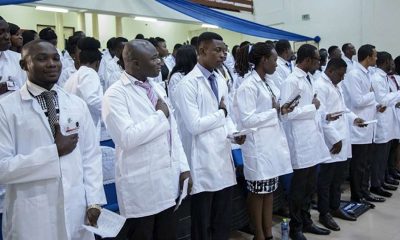
Regnum Medical University, Anthony, Lagos, has received its operational licence from the National Universities Commission (NUC), clearing the way for the institution to begin training the next generation of medical and healthcare professionals in Nigeria.
The licence followed the university’s approval by the Federal Executive Council (FEC), marking a major milestone in efforts to expand access to quality medical education and strengthen the country’s healthcare workforce.
The NUC Executive Secretary, Professor Abdullahi Yusufu Ribadu, formally presented the licence to the university’s leadership, including the pioneer Vice-Chancellor, Professor Akin Osibogun; Chairman of the Board of Trustees, Mr Akinbode Agbaoye; and the Proprietor, Mr Chuks Ochonogor.
The university will commence academic activities with degree programmes in Medicine and Surgery (MBBS), Pharmacy (Pharm.D.), Nursing Science (B.N.Sc.), Medical Laboratory Science (BMLS), Physiotherapy (DPT) and Radiography (B.Rad.).
Professor Osibogun, who chaired the institution’s Planning and Implementation Committee before his appointment as pioneer Vice-Chancellor, is one of Nigeria’s most accomplished medical academics and administrators.
A Professor of Community Health, he is a Fellow of the Nigerian Medical Association (FNMA), the association’s highest professional honour, and was named a Distinguished Professor by the University of Lagos in January 2026.
He previously served as Chief Medical Director of the Lagos University Teaching Hospital (LUTH) from 2006 to 2014 and later as President of the National Postgraduate Medical College of Nigeria between 2022 and 2023.
Professor Osibogun is also a Fellow of the National Postgraduate Medical College of Nigeria (FMPCH) and the West African College of Physicians (FWACP), and has been honoured as a Distinguished Fellow of the National Postgraduate Medical College.
The Chairman of the university’s Board of Trustees, Mr Agbaoye, is a former Deputy Executive Secretary of the National Universities Commission, bringing decades of experience in university administration and regulation to the institution.
According to the university, Regnum Medical University is committed to attracting highly qualified medical educators and deploying innovative teaching technologies to produce competent, compassionate and globally competitive healthcare professionals.
The institution said it aims to contribute significantly to improving healthcare delivery in Nigeria by equipping graduates with the knowledge, skills and ethical values required to meet both local and international healthcare needs.
Education
Hoodlums Invade ATBU Female Hostel, Rob Students of Over 50 Phones, Valuables
Hoodlums Invade ATBU Female Hostel, Rob Students of Over 50 Phones, Valuables
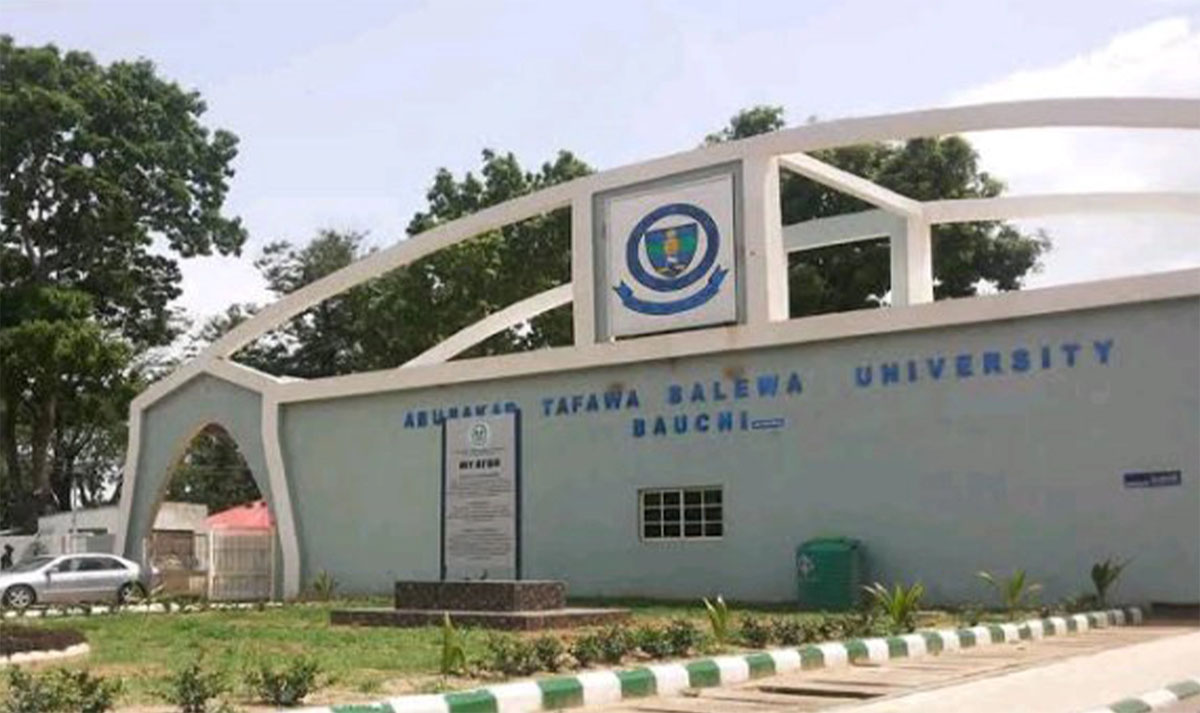
Armed hoodlums invaded the female hostel of Abubakar Tafawa Balewa University (ATBU), Gubi Campus, Bauchi, in the early hours of Monday, robbing students of mobile phones, cash and other valuables during a violent attack that has left students traumatised and heightened security concerns across the institution .
The attackers reportedly stormed the hostel at about 2 a.m., armed with machetes, knives and other dangerous weapons . An eyewitness, who pleaded anonymity, disclosed that the assailants broke into more than 10 rooms within the hostel, terrorising the students and carting away over 50 mobile phones and other valuables .
Recounting the incident, one of the students, Rejoice Duke, said the attackers operated swiftly and methodically, splitting up to cover more ground within the hostel. “At about 2 a.m. this morning, some guys came into the hostel and barged into different rooms. They split up and entered several rooms. They were asking whether you wanted your life or your phone. They made away with valuables, including mobile phones. The whole operation lasted about three minutes before they left,” she said .
Some of the students alleged that the suspects gained access to the hostel by cutting through the barbed-wire fence before using a ladder to climb onto the premises. The Gubi Campus lies near thick bushes and shares boundaries with nearby villages, making it vulnerable to criminal activities .
Some of the victims sustained injuries during the attack, with one female student reportedly suffering serious injuries after refusing to surrender her mobile phone. The eyewitness confirmed that the student who resisted was attacked by the armed hoodlums .
READ ALSO:
- Presidency tells Peter Obi to stop dreaming, insists he lost 2023 presidential election
- Kano Woman Arrested for Severing Boyfriend’s Manhood Over Plan to Marry Another
- PFIPC scandal: How Accountant-General exposed Adeniyi Adeyemi’s fake presidential agency
Expressing fear over what they described as a delayed security response, another student, Fauziya Abdullahi, voiced concerns that the campus remains vulnerable to more severe attacks. “Our main fear is that if they come in here and march us out, we do not want to become another Chibok girls. We do not want to be used for campaigns. We do not want people to say we had a bright future. We want to stay here and live our bright future. We cannot wait 45 minutes for security personnel to drive from town to this place,” she said .
The incident has since dominated discussions within the university community and on social media, with many calling for improved security around the hostel and the arrest and prosecution of those responsible. Students have also taken to various platforms to express their frustration over what they perceive as inadequate security measures on campus .
Confirming the incident, the university’s Director of Information and Public Relations, Zailani Bappa, said the situation was under control. He disclosed that the Vice-Chancellor, Prof. Ibrahim Hassan Garba, had visited the female hostel to sympathise with the affected students and reassure them of the university management’s commitment to their safety . “The incident has been reported to the police. They have deployed personnel to the campus, taken statements from the affected students and commenced investigation,” Bappa said . He added that the university has taken proactive steps with relevant security agencies to strengthen security on campus .
Speaking on the incident, the Bauchi State Police Public Relations Officer, Nafiu Habib, said the suspects had fled before officers arrived at the scene. He added that investigations are ongoing and efforts are underway to track down and arrest those responsible . The police have assured stakeholders that those responsible will be arrested and prosecuted .
Some affected students have urged the institution to replace the stolen items, arguing that its failure to deploy enough security personnel to the campus contributed to the incident. Others appealed to the university management to deploy more security personnel to the Gubi Campus, located on the outskirts of Bauchi metropolis .
The incident comes barely two weeks after students living off campus at Sa’adu Zungur University were reportedly robbed. In April, students residing off campus near the Federal Polytechnic, Bauchi, also experienced a similar attack . The Bauchi State Safe School Implementation Task Force was inaugurated in March this year to strengthen security in schools and prevent such incidents. However, following the recent attacks, many residents are calling for more proactive security measures to better protect students and educational institutions across the state .
Hoodlums Invade ATBU Female Hostel, Rob Students of Over 50 Phones, Valuables
Education
Kogi Poly Suspends 7 Lecturers Over Sex-For-Marks, Handout Sales Amid Cultism Crisis

Kogi Poly Suspends 7 Lecturers Over Sex-For-Marks, Handout Sales Amid Cultism Crisis
- The management of Kogi State Polytechnic, Lokoja, has suspended seven lecturers following separate allegations of sexual harassment and unauthorised sale of handouts, as investigations intensify into a wider campus crisis involving cultism, intimidation of female students, and weakening institutional discipline.
The management of Kogi State Polytechnic, Lokoja, has taken decisive action against seven lecturers over allegations ranging from sexual harassment to the unauthorised sale of handouts and textbooks, sources have confirmed. According to the institution’s Public Relations Officer, John Onimisi, six lecturers were suspended on Wednesday, July 22, 2026, for allegedly engaging in the illegal sale of handouts to students, while a seventh lecturer was separately suspended over a specific allegation of sexual harassment. The suspensions, however, appear to be only the tip of the iceberg, as multiple sources within the polytechnic have raised alarm over a deepening crisis on campus, with claims that sex-for-marks practices, cult-related activities, and a general breakdown of discipline have surged under the current administration.
In a statement issued on Sunday, Mr. Onimisi confirmed that the disciplinary action was taken after the institution’s management received credible reports of misconduct involving academic staff. The statement read in part that six lecturers were suspended on Wednesday, July 22, 2026, by the management of the institution for the unauthorised sale of handouts and textbooks, while a lecturer was also suspended for alleged sexual harassment. The affected lecturers are currently facing internal investigation, and the polytechnic has assured that appropriate sanctions will be imposed if they are found guilty by the institution’s disciplinary committee.
While the official statement focused on the suspensions, insiders have painted a troubling picture of systemic misconduct that has allegedly taken root at the polytechnic. These allegations suggest that the suspensions are merely a response to a much deeper and more pervasive problem affecting the institution’s academic and social environment. Sources familiar with developments at the institution alleged that some lecturers, particularly from the Department of Public Administration and Department of Graphics Design, have been demanding sexual favours or monetary payments from female students in exchange for passing grades. One particularly disturbing account claimed that a lecturer instructed a female student to book and pay for a hotel room as a precondition for passing his course. When the student reportedly reported the incident, she was met with intimidation rather than institutional support, sources said, adding that female students who speak up are often victimised and receive little or no protection from the school authorities.
READ ALSO:
- Tinubu appoints Olanrewaju-Smart as Special Adviser on House of Reps matters
- Gunmen invade Osun PVC distribution centre, flee with voter cards
- NDLEA intercepts ₦10bn worth of cocaine, Loud, opioids in Lagos
In addition to sexual misconduct, sources claimed that cult groups have resurfaced on campus, holding nocturnal meetings and reportedly conducting initiations near female hostels. These activities, sources said, have continued despite being reported to campus security personnel on multiple occasions, raising serious questions about the effectiveness of the institution’s security apparatus and its commitment to student safety. A recurring complaint among sources is the perceived weakening of disciplinary measures since the resumption of the current Rector, Professor Salihu Sanusi Avidime. Allegations include lax enforcement of the institution’s dress code policy, which has allowed students to appear on campus in inappropriate attire without consequence, and a failure to enforce the mandatory use of student identity cards, permitting unauthorised persons to access campus facilities and potentially contributing to security breaches. Furthermore, there has been a return of compulsory handout sales, which had previously been banned under the institution’s earlier administration, forcing students to purchase materials they may not need or want. Overall, sources point to a general decline in staff accountability, emboldening both lecturers and students to engage in misconduct with impunity.
Responding to the growing allegations, Mr. Onimisi stated that the school management is fully aware of the claims and has already referred the matter to the institution’s disciplinary committee for thorough investigation. He assured that the school management is aware of the allegations, and the disciplinary committee of the Polytechnic is already investigating them, adding that the outcome will be made available to journalists in due course. He further pledged that any staff or student found culpable would face the full weight of the institution’s disciplinary framework, sending a strong signal that misconduct will not be tolerated.
For students, parents, and education stakeholders, the unfolding scandal raises serious concerns about safety, academic integrity, and the overall learning environment at Kogi State Polytechnic. Female students are particularly vulnerable, with allegations of sexual coercion creating a hostile academic atmosphere where their educational pursuits are compromised by predatory behaviour from those entrusted to teach them. The resurgence of cultism threatens campus security and undermines the polytechnic’s ability to provide a safe space for learning, potentially discouraging enrollment and tarnishing the institution’s reputation. The weakening of discipline suggests a systemic failure that may require intervention beyond the institution’s internal mechanisms, possibly involving external regulatory bodies to restore order.
Stakeholders have called on the polytechnic management to expedite the disciplinary process and make findings public to restore confidence in the institution’s commitment to justice. They also urge the management to strengthen protection mechanisms for students who report misconduct, ensuring that whistleblowers are shielded from retaliation and intimidation. There are calls to reinforce campus security to curb cult-related activities and restore a sense of safety among students and staff. Additionally, stakeholders demand that the management reintroduce and strictly enforce dress codes, ID card policies, and bans on handout sales to re-establish a culture of discipline. Finally, there is a growing demand to engage external oversight bodies such as the National Board for Technical Education (NBTE) to ensure accountability and provide independent monitoring of the institution’s reforms.
The disciplinary committee is expected to conclude its investigations in the coming weeks, and the polytechnic management has promised to communicate its findings to the public through the media, ensuring transparency in the process. In the meantime, students and staff await action that will determine whether Kogi State Polytechnic can restore its reputation as a credible institution of higher learning and whether meaningful reforms will be implemented to prevent a recurrence of these troubling incidents.
Kogi Poly Suspends 7 Lecturers Over Sex-For-Marks, Handout Sales Amid Cultism Crisis
-

 Politics2 days ago
2027 election: Atiku accuses Obasanjo of reviving false allegations to favour preferred candidate
-

 metro1 day ago
NDLEA intercepts ₦10bn worth of cocaine, Loud, opioids in Lagos
-

 Sports1 day ago
Super Falcons recover stolen cash after hotel theft suspect confesses
-

 Sports2 days ago
Anthony Joshua stuns Kristian Prenga with dramatic knockout to revive career
-

 metro2 days ago
Al-Mustapha Fires Back: Ex-DSS Officer’s Account of Abacha’s Death Is a Lie, I Have CCTV Evidence
-

 metro2 days ago
ISWAP finance chief surrenders to Nigerian troops with two children in Borno
-

 metro3 days ago
Bandits Abduct Zamfara LG Chairman, Kill Four Security Operatives
-

 metro2 days ago
Is Nigeria’s Electricity Tariff Going Up? FG Finally Breaks Silence