
Business
Naira slides to ₦1,451/$1 official rate as black market hits ₦1,475
Naira slides to ₦1,451/$1 official rate as black market hits ₦1,475
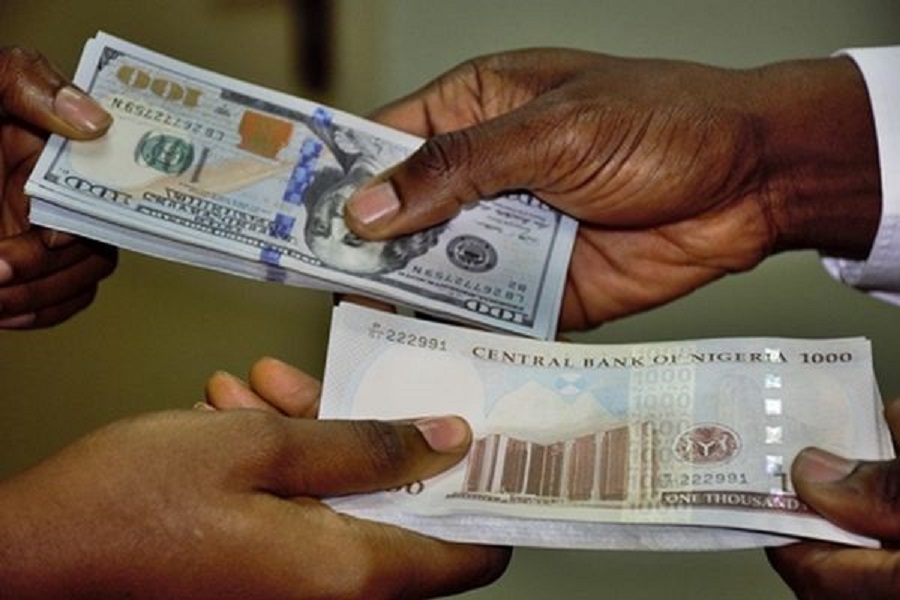
Nigeria’s currency closed the day weaker across major trading windows, with the naira exchanging at roughly ₦1,451 per US dollar in the official Nigerian Foreign Exchange Market (NFEM) on Wednesday, while the parallel market quoted the dollar around ₦1,475.
According to the Central Bank of Nigeria’s published data, the ₦1,451/US$1 NFEM figure represents the volume-weighted average rate that serves as the country’s official benchmark for authorised transactions. In contrast, the informal or black-market rate hovered at about ₦1,475, leaving a spread of roughly ₦24–₦26 between both markets.
Why the FX gap matters
The persistent gap reflects Nigeria’s two-tier foreign exchange system, where an official NFEM/NAFEX window coexists with a vibrant informal market used by individuals, SMEs and some import-dependent businesses.
READ ALSO:
- Nationwide outrage as Kwara Church killings, Kebbi schoolgirls’ abduction trigger fresh security demands
- Kebbi School Abduction: Location of abducted schoolgirls identified – Senator
- EFCC arrests Archbishop over alleged naira abuse, money laundering
A widening premium between the two rates often translates into higher import costs, increased pricing pressures and potential stress on business margins. A narrowing gap, however, typically eases inflation and improves market confidence.
Market context and trend
Market dashboards monitored on Wednesday showed modest movement across trading venues, with NFEM fixings remaining in the mid-₦1,400s this week. Parallel market quotes largely stayed in the high-₦1,400s, signalling continued—though contained—volatility.
Cross-checks of major financial data vendors indicate that parallel market rates have traded between ₦1,450 and ₦1,468 on surrounding days, underscoring a relatively stable but still elevated demand for the US dollar in the informal market.
Naira slides to ₦1,451/$1 official rate as black market hits ₦1,475






Business
Dangote Expands into Steel, Power, Ports to Drive Africa’s Industrial Growth
Dangote Expands into Steel, Power, Ports to Drive Africa’s Industrial Growth
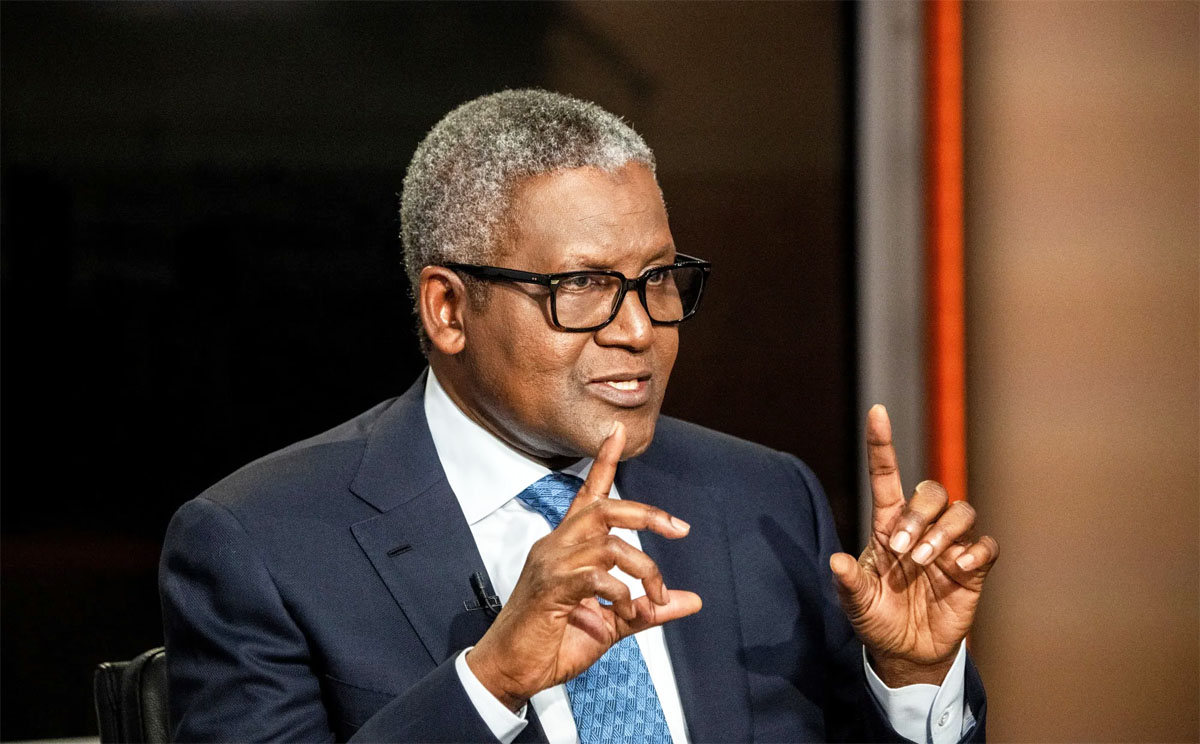
Africa’s richest businessman, Aliko Dangote, has unveiled an ambitious expansion plan to grow the Dangote Group into steel production, electricity generation and port development, marking a decisive new phase in his long-term strategy to deepen Africa’s industrialisation and reduce dependence on imports.
Dangote said the move is aimed at building a stronger manufacturing base in Africa, shifting the continent away from commodity exports toward value-added production. He described steel, power and ports as the next pillars of growth after the success of his refinery project. At the centre of his industrial transformation agenda is the Dangote Petroleum Refinery, which is currently producing about 650,000 barrels of refined products per day. According to Dangote, output is projected to double within three years as expansion plans advance, strengthening Nigeria’s energy security and reducing fuel imports. However, he stressed that refining is only one component of a broader vision to industrialise Africa at scale.
Dangote emphasised that steel manufacturing in Africa is critical to infrastructure, housing, automotive production, rail networks and heavy industry. By investing in domestic steel capacity, the continent can significantly cut import bills, conserve foreign exchange and stimulate downstream industries. Industry analysts say entry into steel would place the Dangote Group at the heart of major infrastructure development across West and Central Africa, positioning it as a key supplier for large-scale public and private sector projects.
READ ALSO:
- Pentagon Distances America from Iran Supreme Leader’s Death
- How Ikwechegh’s ₦1.15tr Interrogation Led to Tinubu’s Cabinet Shake-Up
- The world dislikes the weak, by Hakeem Baba-Ahmed
Reliable electricity remains one of the biggest constraints to industrial growth in Nigeria and across Africa. Dangote’s plan to expand into power generation aims to address chronic electricity shortages that force manufacturers to rely on costly alternatives. He also identified port infrastructure development as essential to reducing logistics bottlenecks and improving trade competitiveness. Efficient ports would lower shipping costs, improve export turnaround times and strengthen regional trade under continental agreements. Together, investments in steel, electricity and ports are designed to create a vertically integrated industrial ecosystem capable of supporting mass production and global exports.
Job creation is central to Dangote’s expansion blueprint. With Nigeria projected to require between 40 million and 50 million new jobs by 2030, he said large-scale industrial projects are vital to absorbing the country’s fast-growing youth population. The Dangote refinery currently employs around 30,000 workers, about 80 percent of them Nigerians. Expansion into steel, power and ports is expected to increase total group employment to roughly 65,000 jobs, providing a significant boost to local skills development. Dangote also disclosed plans to list the refinery on the Nigerian stock market, opening the door for broader local participation in one of Africa’s largest industrial assets.
Despite the bold expansion plans, Dangote acknowledged ongoing challenges, including crude supply constraints, infrastructure gaps and logistics inefficiencies affecting feedstock delivery to the refinery. Nevertheless, he insisted that bold private investment is essential to reshaping Nigeria’s industrial landscape. “Nobody dared to do it, so we did it,” he said, reinforcing his belief that large-scale manufacturing is the key to sustainable economic transformation.
With cement plants operating across several African countries and a refinery already reshaping Nigeria’s downstream oil sector, Dangote’s expansion into steel production, electricity generation and port development signals a major step toward continent-wide industrial transformation.
Dangote Expands into Steel, Power, Ports to Drive Africa’s Industrial Growth
Business
Shell workers shut Lagos office, allege pay discrimination
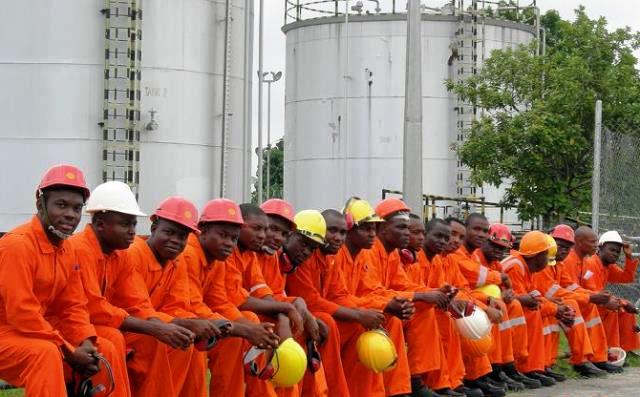
Shell workers shut Lagos office, allege pay discrimination
Workers of Shell Nigeria Exploration and Production Company Limited (SNEPCo) on Tuesday staged a protest at the company’s Broad Street office in Lagos, locking the main gate and temporarily restricting access to the premises.
The action, coordinated by the Petroleum and Natural Gas Senior Staff Association of Nigeria (PENGASSAN), caused traffic congestion in the area as protesting workers blocked vehicular entry into the building.
Eyewitnesses said although some staff members were initially allowed into the premises with their vehicles, protesters later reversed the decision and barred all cars — including those of top company officials — from gaining access.
In a flyer circulated during the protest, the workers accused SNEPCo’s leadership of practising “modern-day slavery,” alleging pay discrimination against Nigerian employees and bias in salary benchmarking.
They faulted the application of the company’s global pay structure in Nigeria without reflecting local economic realities, describing it as a “Best-in-Basin” cost-cutting model that has adversely affected staff welfare and operational engagement.
According to the workers, the cost-control policy has limited the company’s participation in key industry events.
They cited the 2026 Nigeria International Energy Summit in Abuja, where SNEPCo reportedly attended with a five-man delegation instead of participating as a sponsor — a role that typically accommodates about 40 delegates. Organisers were said to have been informed of the change barely a week to the event.
Other industry players, including Nigeria LNG Limited, TotalEnergies Nigeria and Chevron Nigeria Limited, were said to have participated fully.
The protesting staff also decried what they described as non-market-reflective allowances, citing car grants as an example. One worker claimed the N1 million car allowance offered by the company was grossly inadequate given current market prices.
The employees further alleged deteriorating working conditions, heavy workloads and what they described as a growing reliance on expatriates for roles traditionally handled by Nigerians.
They warned that mounting stress, debt burdens and frequent restructuring had negatively impacted staff morale.
A staff member said the decision to barricade the office followed what they described as management’s failure to address longstanding grievances.
They called on the Federal Government to intervene, alleging that the company’s leadership felt insulated from accountability.
The workers also claimed that hybrid work arrangements and internal controls had made it difficult to mobilise staff effectively or draw public attention to their concerns.
SNEPCo, a subsidiary of Shell with operations now largely concentrated in Lagos following its recent divestment activities, remains active in the energy financing space through affiliates such as All On and Daystar Power.
The company has yet to react to the development.
Railway
Historic, Rotary Club of Ota holds fellowship on moving NRC train
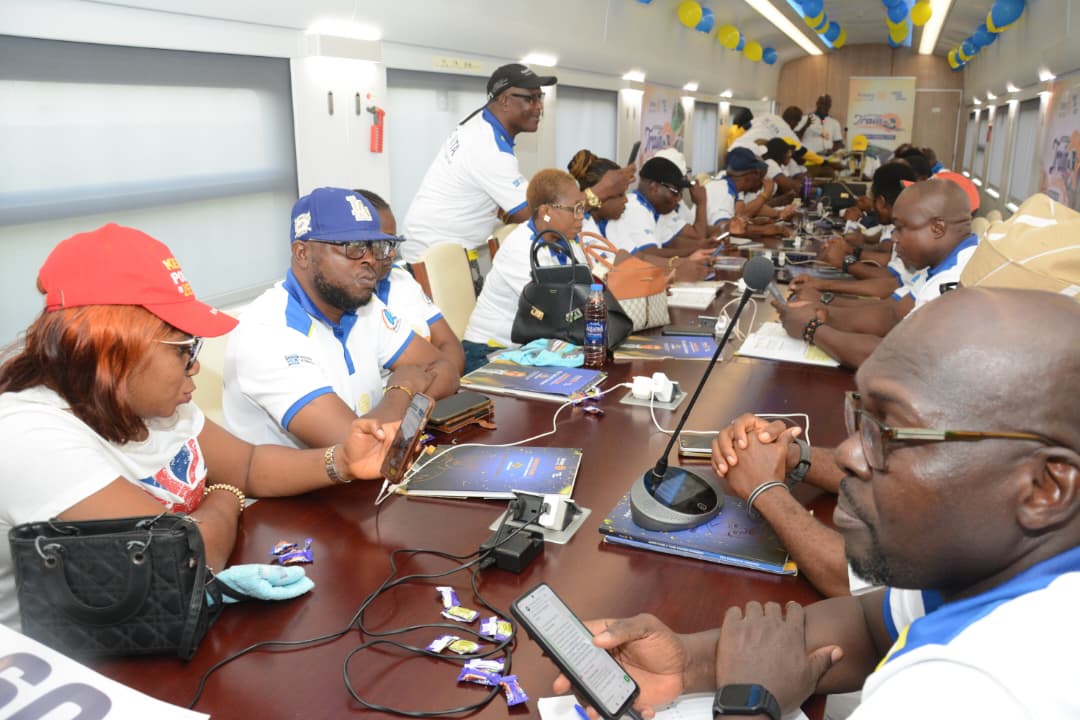
Historic, Rotary Club of Ota holds fellowship on moving NRC train
The Rotary Club of Ota has set a national precedent by hosting Nigeria’s first-ever Rotary fellowship aboard a moving train, marking a unique blend of innovation, service and strategic partnership with the Nigerian Railway Corporation (NRC).
The historic fellowship, held on February 28, 2026, brought together members of the club for leadership interaction, networking and discussions focused on humanitarian service, climate action and sustainable community development — all while in transit.
Leading the event was the President of the Rotary Club of Ota, Mr. Charles Umukoro, alongside members of the club’s executive and general membership.
Key officers present are Vice President Bisi Seleso, Pioneer President Olumide Adebiyi, Treasurer Olumide Omotola, President-Elect Fatai Wasi, and the club’s doyen and the oldest serving member, Dr. Kele Abolaji.
The unconventional setting underscored Rotary’s drive to reimagine fellowship and civic engagement.
Participants described the moving-train gathering as symbolic of progress and forward momentum — values closely aligned with the transformation agenda of the NRC.
A major highlight of the occasion was the visit of the Railway District Manager, Engr. Rasheed Adedeji, who welcomed the Rotarians on board.
His presence added institutional weight to the event and reinforced the growing collaboration between the railway management and the civic organisation.
In a symbolic gesture reflecting shared values of service and partnership, Engr. Adedeji was formally inducted as a member of the Rotary Club of Ota following his welcome address.
The induction was widely seen as a step toward deepening institutional cooperation between the club and the railway corporation.
Beyond its novelty, the fellowship also carried a strong environmental message. As part of its climate action agenda, the Rotary Club of Ota commenced a large-scale tree-planting exercise on the same day, aimed at contributing to climate change mitigation and environmental protection within its host communities.
Club leaders said the initiative aligns with Rotary International’s growing emphasis on environmental sustainability as a core area of focus.
By combining an innovative fellowship format with tangible environmental action, the club sought to demonstrate that civic organisations can creatively advance impact-driven programmes.
The Nigerian Railway Corporation, which hosted the event, reaffirmed its commitment to supporting initiatives that promote national development, environmental sustainability and community advancement.
The corporation also highlighted the railway system as a safe, modern and strategic platform for engagement and national integration.
The development was contained in a statement signed by Callistus Unyimadu, Chief Public Relations Officer, for the Management of the Nigerian Railway Corporation.
With the landmark moving-train fellowship and the launch of its environmental intervention, the Rotary Club of Ota has positioned itself as a trailblazer within Nigeria’s civic space — proving that service to humanity can, quite literally, remain on the move.

-

 metro3 days ago
Hajj, Umrah Are for Muslims Only – Scholar Urges NAHCON to Tighten Screening
-
 International2 days ago
Iran Retaliates: Gulf States Allied With US Hit by Missiles, Drones
-
 International2 days ago
Saudi Arabia Denies Lobbying US to Strike Iran as Gulf States Respond to Escalation
-

 International2 days ago
Several U.S. Warplanes Crash in Kuwait Amid Ongoing Iranian Strikes
-

 metro2 days ago
Daddy Freeze Warns Couples Over 40: ‘Avoid Moving Abroad, Especially US, UK’
-

 metro3 days ago
Four Die in Katsina Stampede During Ramadan Alms Distribution
-

 metro3 days ago
Gunmen Abduct Father of Former Ebonyi Deputy Governor on Way to Church
-

 International2 days ago
Israeli Airstrikes Kill 31 in Lebanon as Hezbollah Loses Senior Figures