

Education
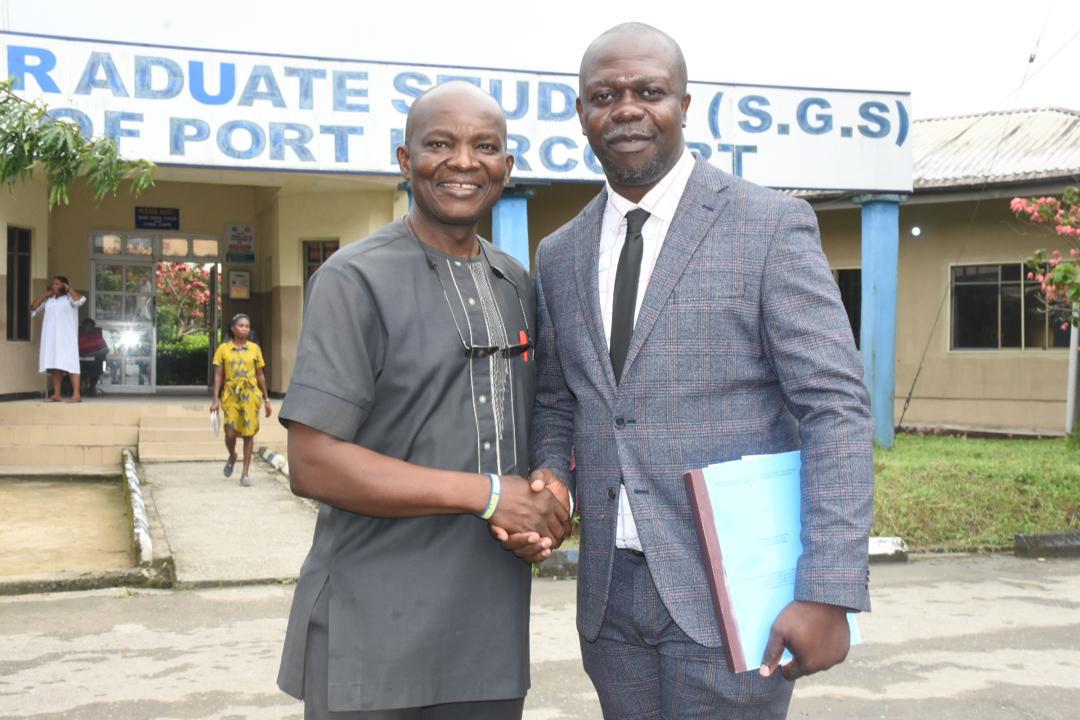
NCDMB’s Obinna Ezeobi bags PhD in Communications
NCDMB’s Obinna Ezeobi bags PhD in Communications
One of the founding staff members of the Nigerian Content Development and Monitoring Board (NCDMB), Obinna Joseph Ezeobi, on Friday, successfully defended his thesis that earned him a doctoral degree in Communication Studies at the University of Port Harcourt, Rivers State.
The thesis by the NCDMB’s deputy manager was titled, “Nigerian Oil and Gas Content Communication Campaigns and Selected Oil Companies’ Awareness and Compliance”.
At the external examination conducted by renowned academics, Ezeobi, Deputy Manager at the NCDMB, successfully defended his dissertation titled “Nigerian Oil and Gas Content Communication Campaigns and Selected Oil Companies’ Awareness and Compliance.”
His study explored how the Nigerian Oil and Gas Industry Content Development (NOGICD) Act was introduced and communicated as a transformational policy of the Federal Government and its challenges and limitations as a developmental strategy.
The empirical research probed the persistence of Nigerian Content non-compliant practices by international and indigenous oil and gas companies despite the extensive communication campaigns carried out on the Nigerian Content Act.
Dr. Ezeobi expects that the findings of the PhD research would improve policy formulation in the wider Nigerian economy and guide Government agencies to come up with impactful communication campaigns that would foster compliance and improve engagement with key stakeholders in various sectors of the economy.
He is confident that outcomes of the study would enhance NCDMB’s communication programmes and implementation of the NOGICD Act, in addition to contributing to the body of knowledge on the influence of media and communications on the behaviour of individuals and companies, particularly their attitude towards regulations when business interests are involved.
In his masters studies as well as the terminal degree, Dr. Ezeobi had focussed his research interests on the emerging field of Energy Communications, exploring how Communications and Media Activities impact and influence core operations of the Nigerian oil and gas industry.
The scholar holds degrees from the University of Nigeria Nsukka and the University of Port Harcourt and has worked at the NCDMB since 2010, after stints in the media and the advertising industry and says that his goal is to contribute significantly to the practice and study of Energy Communications, foster improved understanding and support of the sector by members of the public.











Education
FG Opens N2.5bn Grant Window For 50 Student Innovators Under “Next Moonshot Initiative”

Education
JAMB Releases Underage UTME Results, Sets Strict Conditions for Admission
JAMB Releases Underage UTME Results, Sets Strict Conditions for Admission
The Joint Admissions and Matriculation Board (JAMB) has officially released the 2026 Unified Tertiary Matriculation Examination (UTME) results for candidates under the age of 16. However, the board has made it clear that these results are for viewing purposes only and do not guarantee admission into any tertiary institution.
In a statement issued on Saturday in Abuja, JAMB’s Public Communication Adviser, Dr. Fabian Benjamin, explained that while the results are now accessible, only a select group of exceptionally performing underage candidates who meet strict requirements will be considered for admission.
For the 2026 admission cycle, JAMB defines an underage candidate as any applicant who will be less than 16 years old by September 30, 2026. This age benchmark is non-negotiable and serves as the foundation for all admission eligibility decisions regarding younger candidates.
According to the board, the primary reason for releasing the results is to allow candidates, parents, and guardians to view their performance. This transparency is intended to help families assess academic progress and make informed decisions about next steps. However, JAMB stressed that the release does not confer automatic eligibility for admission. The results cannot be used for admission or any other official purpose unless the candidate meets the prescribed conditions for exceptional consideration.
READ ALSO:
- Delta Police Arrest Minor, Five Others Over Alleged Illicit Drug Sales
- BREAKING: OPay Warns Customers Against Viral Shutdown Message, Threatens Legal Action
- Ghana Launches Marrify App to Let Users Verify Partner’s Marital Status Before Marriage
Candidates can check their results by sending the word “RESULT” via SMS to 55019 or 66019. This must be done using the same phone number and SIM card that were used during the UTME registration process. No other method has been authorized for result viewing.
JAMB has outlined a rigorous, multi-stage process for underage candidates who wish to be considered for admission. The requirements are intentionally strict to ensure that only genuinely exceptional candidates are admitted. To qualify, an underage candidate must meet all of the following: a minimum UTME score of 320 out of 400; at least 80% performance in relevant Senior Secondary School Certificate Examination (SSCE) subjects, where applicable; compliance with the Post-UTME requirements of their chosen institution, even if the general Post-UTME exercise has been suspended; and successful completion of a final assessment by experts, designed to evaluate academic maturity and readiness for tertiary education. Dr. Benjamin explained that these measures are in place to distinguish truly gifted candidates from those who may have simply performed well in the UTME but lack the overall academic maturity for university-level studies.
Not yet. JAMB has confirmed that the admission process for exceptionally performing underage candidates is still ongoing. The board is currently awaiting the release of this year’s National Examinations Council (NECO) results to allow candidates awaiting these results to present them for verification. A date for the final stage of assessment will be announced as soon as the NECO results are released. JAMB emphasized that no candidate will be admitted until all stages of assessment and verification are concluded.
JAMB has issued a strong advisory to parents, guardians, and candidates: do not present underage UTME results to any institution for admission unless you meet the exceptional criteria; and beware of fraudsters who claim they can secure admission for underage candidates outside the official process. The board reiterated that participation in the UTME does not guarantee admission, especially for candidates who have not attained the prescribed age. The board also noted that in the 2025 admission cycle, only 85 out of over 41,000 underage applicants qualified for exceptional admission, underscoring how competitive and selective the process truly is.
JAMB has assured the public that the exceptional admission process will remain transparent, rigorous, and merit-based. The board is committed to protecting the integrity of the admission system and ensuring that only candidates who genuinely satisfy all established requirements are admitted.
JAMB Releases Underage UTME Results, Sets Strict Conditions for Admission
Education
From University of Lagos to Canadian Dean: Nigerian Scholar Appointed Law Dean at USask
From University of Lagos to Canadian Dean: Nigerian Scholar Appointed Law Dean at USask
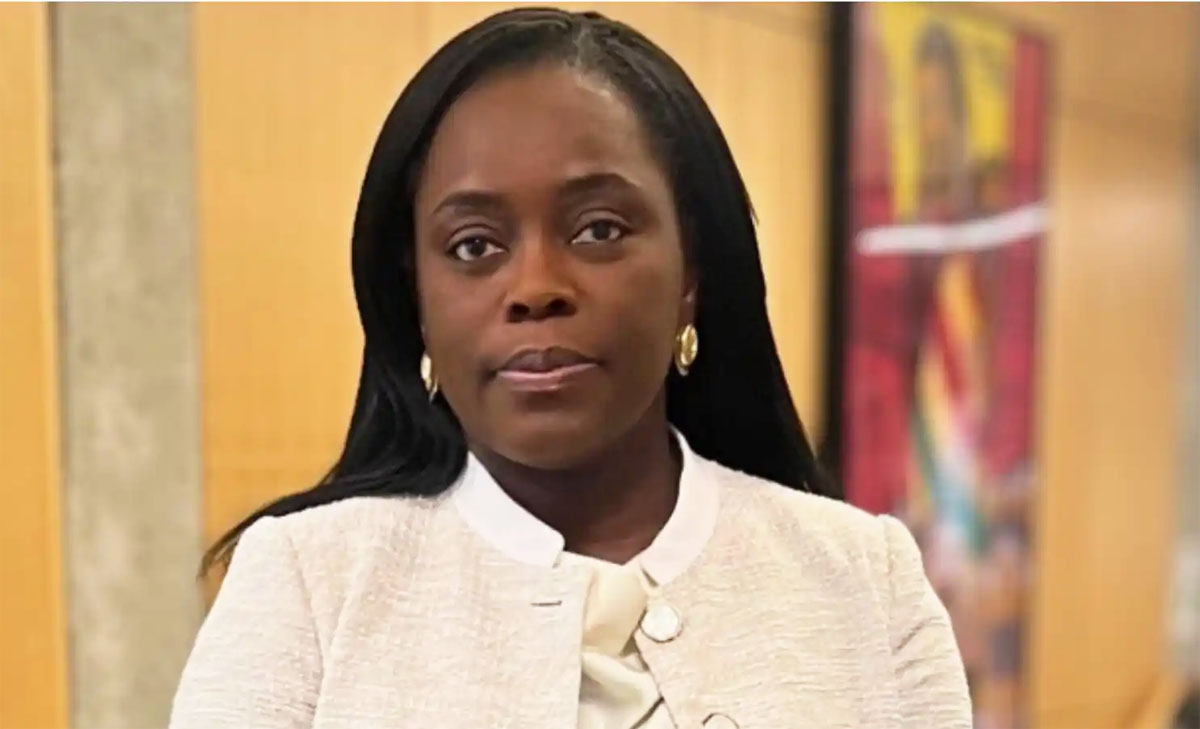
The University of Saskatchewan College of Law in Canada has appointed Nigerian-born legal scholar Dr. Ibironke Odumosu-Ayanu as its new dean for a five-year term beginning October 1, 2026. She succeeds Martin Phillipson, who completed two five-year terms as dean and began administrative leave on July 1, 2026. The appointment was announced by Patti McDougall, interim provost and vice-president, academic at the University of Saskatchewan, who also chaired the search committee for the new dean. McDougall praised Odumosu-Ayanu’s academic record and leadership qualities, stating: “Dr. Odumosu-Ayanu’s appointment as dean reflects a distinguished record of academic excellence, collaborative leadership, and dedication to advancing research and graduate education. Her work as dean will continue to build on the College of Law’s strong reputation for excellence in legal education and research, while strengthening its leadership in Indigenous legal scholarship and engagement with local and global communities”.
Odumosu-Ayanu grew up in Lagos, Nigeria, where she developed an early interest in reading and writing. Although she initially considered pursuing communications, encouragement from her teachers and support from her parents led her towards law. By the end of secondary school, she had decided to study law and enrolled at the University of Lagos (UNILAG), where she earned her Bachelor of Laws (LLB) degree. She later moved to Canada to pursue a master’s degree at the University of Calgary, drawn by its research strengths in natural resources, energy and environmental law. She obtained her LLM from the University of Calgary in 2005. Reflecting on this decision, she noted: “Since I started law school, I always knew that I wanted to do a master’s and to do one abroad. But I always thought I would go to England”. Odumosu-Ayanu initially intended to return to Nigeria after completing her master’s degree and practise as a lawyer. However, she continued her academic journey by pursuing a PhD at the University of British Columbia, which she completed in 2010. She said a doctorate was not part of her original plan, but she eventually embraced the academic path.
READ ALSO:
- ‘I Needed Money for Wedding’ – Police Arrest Three Over N21m Kidnap Ransom in Lagos
- First Lady Commissions N1bn ICT Centre at UNICROSS, Gives Students Free Laptops
- NSCDC Rescues 15 Trafficked Minors Sold for ₦2m Each by Fake NGO Official
Odumosu-Ayanu joined the University of Saskatchewan’s College of Law in 2008 as an assistant professor and has been a member of the faculty since then. Before her appointment as dean, she served as associate dean for research and graduate studies at the college, a position she assumed on July 1, 2025. Prior to joining USask, she was a sessional lecturer at the University of British Columbia Faculty of Law and at the Canadian Institute of Resources Law in Calgary. She is also a barrister and solicitor of the Supreme Court of Nigeria. Before Odumosu-Ayanu assumes office, Professor Doug Surtees, who has been serving as interim dean since July 1, 2026, will continue in the position until September 30. Surtees was appointed interim dean to provide stable leadership during the transition as the search for the next dean continued.
Odumosu-Ayanu is internationally recognised for her research focusing on business and human rights, as well as the intersections of natural resource development, international law on foreign investment, and socio-economic development. Her current research interests focus on local communities and Indigenous peoples and their interactions with legal systems. A recipient of several competitive research grants, including grants from the Social Sciences and Humanities Research Council (SSHRC) , her research has been published in several leading international journals and books. She has coedited books and journal issues, including the 2025 volume Contested Consultations in the Extractive Industries: Rights, Processes and Tensions published by Routledge. She has spoken at numerous international conferences across several continents, delivered invited lectures at leading universities, and co-convened workshops and conferences with leading experts. Her recent publications include “Local Communities, Indigenous Peoples, and Reform/Re-Definition of International Investment Law” in the Journal of World Investment and Trade (2023) and contributions to the Oxford University Press volume Rethinking Investment Law: Perspectives and Prospects.
Beyond her research contributions, Odumosu-Ayanu has developed a strong record in teaching and mentorship, regularly supervising graduate students in law and interdisciplinary programmes. She teaches Contracts, Business Organizations I, Law Development and the International System, and Advanced Law Development and the International System. Her contributions to student support and teaching have earned her several recognitions, including the Provost’s College Award for Outstanding Teaching in 2012 and the USask InterD Advisor Award in 2026. She is also a contributor to one of Canada’s leading contracts law casebooks.
Odumosu-Ayanu has been actively involved in academic and community organisations across Saskatchewan and Canada. She has served on the boards of professional associations, academic journals and community organisations, including the Saskatchewan Intercultural Association. She serves or has served on the editorial/advisory boards of the Business and Human Rights Journal, Law and Society Review, Journal of African Law, African Journal of International Economic Law, and the African Yearbook of International Law. She was co-chair of the Midwest Interest Group of the American Society of International Law and a vice president of the Canadian Law and Society Association. She has also served as a consultant for the United Nations University, chair of a SSHRC committee, and reviewer for granting agencies including SSHRC, as well as external examiner and reviewer for publishers, journals and universities including the University of Oxford and the University of Victoria. Her appointment adds her to the growing list of Nigerian academics who have risen to senior leadership positions within Canadian universities, building on an academic career that has spanned legal education and research in both Nigeria and Canada.
From University of Lagos to Canadian Dean: Nigerian Scholar Appointed Law Dean at USask
-

 metro3 days ago
20-year-old arrested over alleged gang-rape of 19-year-old woman in Ogun
-

 metro3 days ago
Presidency breaks silence on Tinubu’s US FOIA case, denies criminal trial
-
 metro3 days ago
Oyo kidnap rescue: Five security personnel, four civilians killed — DSS DG
-

 News3 days ago
NAF recruitment 2026: Step-by-step guide to applying for BMTC 47/2026
-

 Business2 days ago
BREAKING: OPay Warns Customers Against Viral Shutdown Message, Threatens Legal Action
-

 metro3 days ago
NBA controversy: VDM apologises to security agencies over ‘unknown gunmen’ remarks
-
 Politics3 days ago
Amaechi: Atiku will restore electricity subsidy if elected in 2027
-

 Education3 days ago
LASU: Mother allegedly assaults daughter’s roommate, student rushed to LASUTH with eye injury