

News
NDLEA nabs Brazilian returnee with cocaine hidden in private parts

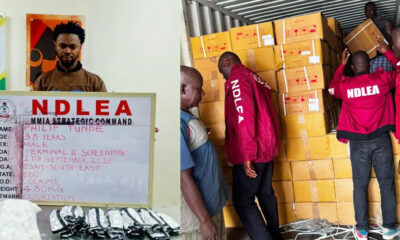
A Brazilian returnee, Igwedum Uche Benson has been arrested in Lagos with pellets of cocaine concealed in his private part.
He was arrested at the Murtala Muhammed International Airport, Ikeja by the operatives of the National Drug Law Enforcement Agency.
The agency said Igwedum came in via Ethiopian Airlines from Sao Paulo, Brazil, enroute from Addis Ababa.
A statement signed by spokesman for the agency, Femi Babafemi, said, “Preliminary investigations revealed the suspect had swallowed 50 wraps of cocaine before departing Brazil and excreted 48 pellets in Addis Ababa where he handed them over to another person.
“He however claimed he was unable to excrete the remaining two wraps at the hotel room in Addis Ababa before boarding his flight but later excreted them in the aircraft restroom during the flight from Ethiopia to Lagos.
“In the same vein, after three weeks of painstaking investigation and tracking, operatives of the MMIA command of NDLEA on Saturday night, 25th June arrested a drug kingpin, Onyekachi Chukwuma Macdonald behind attempts to export 40 parcels of Methamphetamine popularly called Mkpuru Mmiri locally to London, United Kingdom, through the NAHCO export shed of the Lagos airport.
“Onyekachi was arrested at Manacola estate, Alakuko area of Lagos at the weekend, three weeks after his Mkpuru Mmiri consignment weighing 2.05 kilogrammes was intercepted at the airport and his freight agent, Peter Christopher Anikan arrested on 7th June.
“During his interview, the suspect said he’s from Ahiazu, Mbaise Local Government Area of Imo state and had lived in Dubai, UAE, for 10 years before returning to Nigeria in 2019.
“He stated that after his return to Nigeria, he opened a phone accessories shop in Sango Otta, Ogun State, but the business collapsed.
“He then started sending cigarettes to London and decided to conceal the illicit drug in the consignment after advice by a friend”.
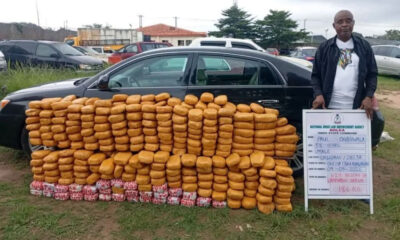
Closely related is the seizure of another consignment of 2kg Mkpuru Mmiri at a courier house in Owerri, Imo State.
The cargo seized on Wednesday 22nd June had ankara and lace fabrics in which two cylindrical cellophanes containing the drug heading to Hong Kong were concealed.
Also at the Lagos airport, NDLEA operatives on Friday June 24, intercepted 500,000 tablets of Tramadol 225mg packed in 10 cartons and labelled Tramaking imported from Karachi, Pakistan on Emirates Airline.
The consignment weighing 407.60kg was seized during a joint examination with Customs and NAFDAC officials.
Same day, a Dubai, UAE-bound passenger, Alegbeleye Taiwo was arrested at the departure hall of the MMIA with 40 ampoules of pentazocine injection.
The 21-year-old suspect claims he’s from Osun state.
Meanwhile, two kingpins behind the importation of two recent drug consignments from Canada concealed in vehicle containers through the Tincan seaport in Apapa, Lagos have been arrested by NDLEA operatives.
One of them, Gboyega Ayoola Elegbeji, was arrested at his house, 14 Bakare Street, Idi Araba, Lagos on Wednesday 22nd June, for importing a 40ft container TRHU7874497 containing 33 parcels of cannabis indica (Colorado) weighing16.5kg.
The second suspect, Sunday Joe Oyebola, (aka Otunba) was arrested on Thursday 23rd June.
He’s linked to the importation of a 40ft container MEDU4389887 containing four vehicles used to conceal 290 parcels weighing 145kg cannabis indica (Colorado) from Montreal, Canada.
He had been on the run since March and had in the course of the investigation attempted to bribe officers with N10million to influence the case.
Chairman/Chief Executive of NDLEA, Brig. Gen. Mohamed Buba Marwa (Retd) commended the officers and men of the MMIA, Tincan, and Imo state Commands of the Agency for the drug seizures and arrests especially of those who thought they could evade the long arm of the law.
He encouraged them and their compatriots across other formations to intensify their efforts towards achieving set goals.








News
20 Years After Father’s Death in Air Crash, NAF Officer Loses Husband in Another Crash
20 Years After Father’s Death in Air Crash, NAF Officer Loses Husband in Another Crash
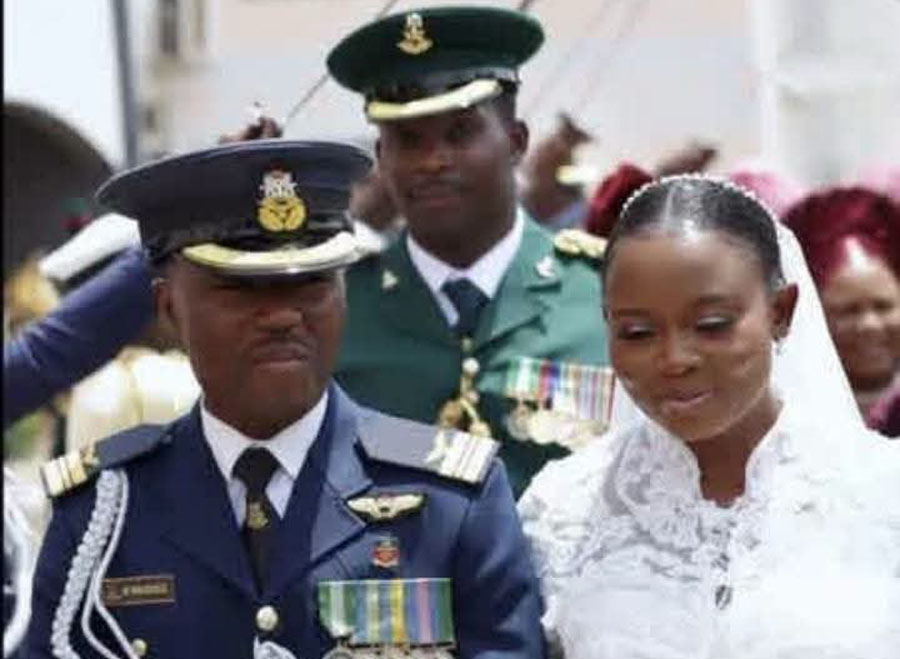
A Nigerian Air Force family has been hit by another devastating tragedy, 20 years after the reported death of a senior officer in a military aircraft crash in Benue State.
Flight Lieutenant Damilola Adekunle is reportedly the daughter of the late Wing Commander E. O. Adekunle, who was among the Nigerian military personnel killed in an aircraft crash in Benue State in 2006.
The incident occurred on September 17, 2006, when a Nigerian Air Force Dornier 228 aircraft crashed in the Oko area of Vandeikya Local Government Area of Benue State.
The aircraft was carrying senior military officers reportedly travelling towards Cross River State. Thirteen military personnel were killed in the crash, including Wing Commander Adekunle, who was reported to have been serving as co-pilot.
Twenty years later, tragedy has reportedly struck the family again.
According to reports following the latest Nigerian Air Force aircraft crash, Flight Lieutenant Adekunle recently married Squadron Leader Ahamefule Aham Man-Ugwueje.
The marriage reportedly took place on September 19, 2026.
Barely three weeks later, Man-Ugwueje was among the Nigerian Air Force personnel killed in the crash involving NAF 931 at Igbokoda in Ondo State on October 5, 2026.
READ ALSO:
- Ondo High Chief Shot Dead During Colleague’s Burial, One Arrested
- ‘We Are Ignorant, We Don’t Read’ — NAFDAC DG Raises Food Safety Concerns
- 2027: Obi Makes U-Turn, Vows to Restore Fuel Subsidy If Elected
The Nigerian Air Force has identified Man-Ugwueje among the personnel who lost their lives in the incident. He was reportedly serving as the aircraft’s co-pilot.
The reported connection between Flight Lieutenant Adekunle and the late Wing Commander Adekunle has given the tragedy an especially painful dimension.
If the family relationship reported in accounts of the incident is confirmed, it would mean that Adekunle lost her father in a Nigerian Air Force aircraft crash in 2006 and, two decades later, lost her newly married husband, also a Nigerian Air Force pilot, in another crash.
The timing is particularly poignant, as Man-Ugwueje reportedly died just 16 days after his marriage to Flight Lieutenant Adekunle.
The latest crash has claimed the lives of several Nigerian Air Force personnel whose identities have been officially released by the Service, prompting condolences from across the country and renewed attention to the risks associated with military aviation.
For the family of Flight Lieutenant Adekunle, however, the tragedy carries a deeply personal history.
Twenty years after the loss of a father in a military aircraft accident, she is reportedly facing the loss of her husband in another.
While the Nigerian Air Force has officially identified the personnel who died in the latest crash, details of the reported family relationship between Flight Lieutenant Adekunle and the late Wing Commander Adekunle are being reported with caution pending independent confirmation.
The fallen officers will be remembered for their service to the nation.
Newstrends extends its condolences to the families, colleagues and loved ones of all the Nigerian Air Force personnel who lost their lives in the crash.
20 Years After Father’s Death in Air Crash, NAF Officer Loses Husband in Another Crash
News
Pastor Apologises to Wife, Women Over Past Affairs, Steps Back From Ministry
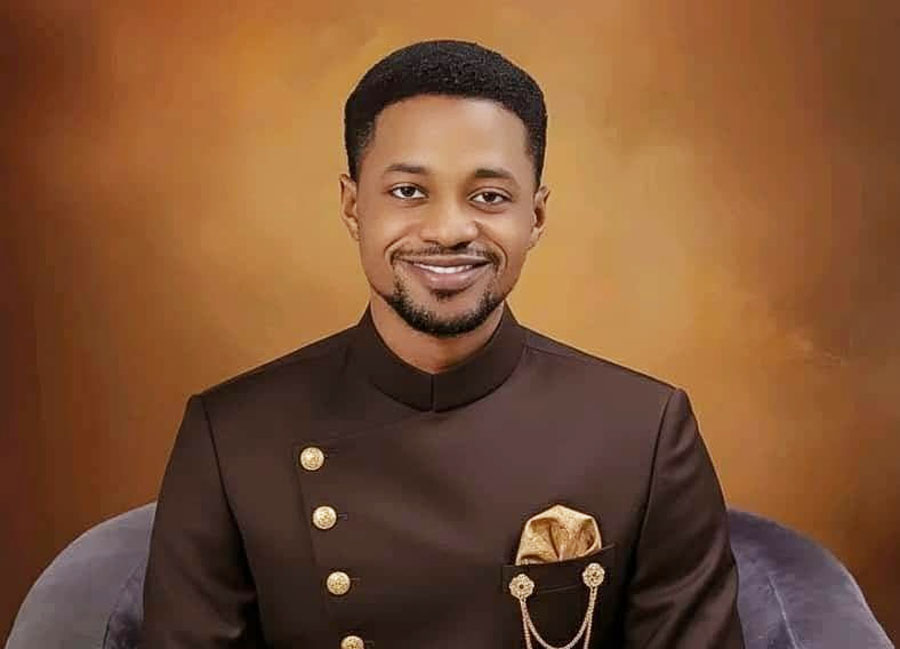
Pastor Apologises to Wife, Women Over Past Affairs, Steps Back From Ministry
Apostle Sam Adegoke, a newlywed pastor of Elijah Generation Church, Akure, Ondo State, has stepped back from public ministry after apologising over past sexual relationships and allegations surrounding his conduct with women.
Adegoke announced his decision in a statement, saying he had chosen to withdraw from public ministry and social media to reflect on his actions, seek counsel and take steps towards making amends.
The pastor acknowledged that he had been involved in sexual relationships with women before his marriage, describing his conduct as wrong and expressing regret over the consequences of his actions.
He said the fact that the relationships occurred before his marriage did not excuse his behaviour, adding that he was seeking spiritual guidance as well as pastoral and professional counselling.
Adegoke also apologised to the women involved, as well as his wife, family, church members, colleagues and others who had placed their trust in him as a spiritual leader.
He said stepping back from public ministry was necessary to allow him to confront his past, make appropriate changes and demonstrate genuine repentance through his actions.
READ ALSO:
- Troops Take Down Zamfara Bandit Kingpins Baban Love, Mai Zamani, Three Others
- FG Gives N250m To Families Of 37 Miners Who Died In NSCDC Custody
- Tompolo’s PBAT Movement Suspends Campaign Over Ondo Military Crash
The pastor further said he was willing to remain under appropriate spiritual, pastoral and professional accountability during the process.
His decision followed the emergence of leaked WhatsApp conversations in which several women allegedly accused him of having sexual relationships with female church members over several years.
Some of the allegations reportedly concerned relationships that allegedly occurred shortly before his wedding. Adegoke admitted to past sexual relationships but did not publicly address every allegation contained in the leaked conversations.
The women also reportedly raised concerns about the welfare of female members of the church and alleged that some women had left the congregation over the pastor’s conduct.
Adegoke, however, said his immediate focus was on accepting responsibility for his past actions and undergoing the process he considered necessary for genuine change.
He appealed for prayers and said he wanted to approach the situation with humility, integrity and accountability, while making amends where appropriate.
The controversy has drawn significant attention because of its timing, coming shortly after the pastor’s marriage and amid renewed scrutiny of the allegations concerning his past relationships.
The pastor and his wife have reportedly disabled comments on their respective Instagram accounts following the development.
Pastor Apologises to Wife, Women Over Past Affairs, Steps Back From Ministry
News
Iwo Son Becomes Yorubaland’s First Muslim Professor of Arabic Without Secondary School
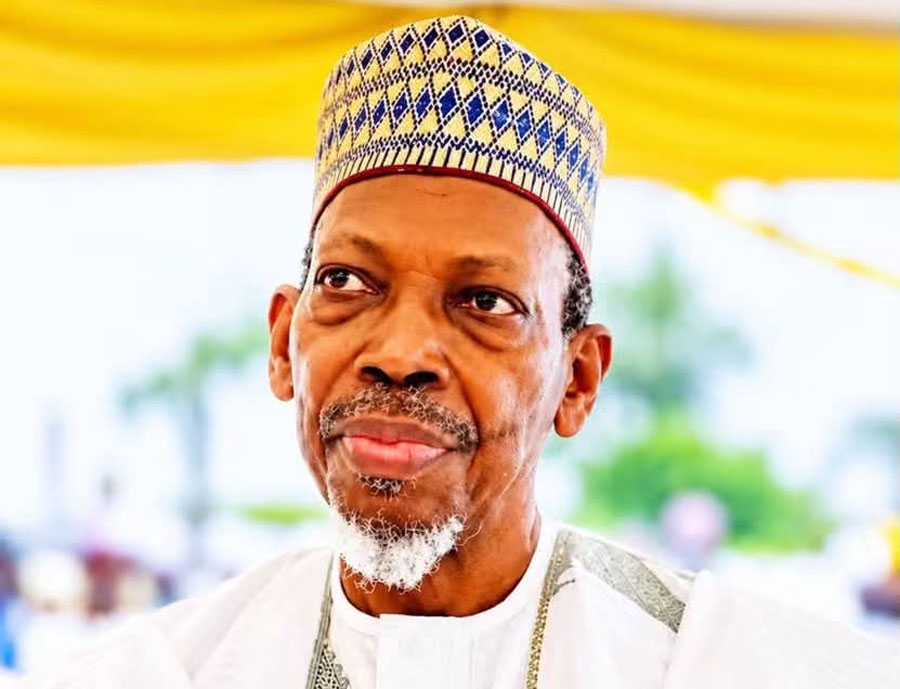
Iwo Son Becomes Yorubaland’s First Muslim Professor of Arabic Without Secondary School
Prof. Razaq Abubakre’s remarkable journey from self-study to academic excellence
The remarkable story of Professor Razaq Deremi Abubakre, an indigene of Iwo, Osun State, has continued to inspire generations, particularly for his extraordinary journey from a humble educational background to the pinnacle of Arabic scholarship in Nigeria.
Born on January 20, 1948, in Iwo, Abubakre rose to become the first Muslim Professor of Arabic in Yorubaland, a feat that established his place among the foremost scholars of Arabic and Islamic studies in the country.
What makes his achievement even more remarkable is the unusual path through which he attained academic excellence.
Available biographical accounts indicate that Abubakre did not attend a conventional secondary school. Instead, he pursued much of his early education through Arabic and Islamic learning, self-study and personal discipline.
His determination eventually paid off when he obtained distinctions that enabled him to proceed to the University of Ibadan, where he studied Arabic and graduated with First Class honours.
In an interview published by The PUNCH, Abubakre recalled how he returned to formal schooling after leaving in 1961 and was placed in Year Three in 1966. He said he subsequently performed exceptionally well, before later taking the University of Ibadan entrance examination for a Certificate in Arabic and Islamic Studies in 1969.
His academic journey later took him to the School of Oriental and African Studies (SOAS), University of London, where he pursued doctoral studies in Arabic Literature under a Commonwealth Scholarship and completed his PhD in 1980.
READ ALSO:
- Troops Take Down Zamfara Bandit Kingpins Baban Love, Mai Zamani, Three Others
- FG Gives N250m To Families Of 37 Miners Who Died In NSCDC Custody
- Tompolo’s PBAT Movement Suspends Campaign Over Ondo Military Crash
In 1989, Abubakre was appointed a Professor of Arabic at the University of Ilorin, at the age of 41, cementing his place in the history of Arabic scholarship in Yorubaland.
But beyond his own academic accomplishments, perhaps the most enduring part of Abubakre’s legacy is the number of scholars and intellectuals he taught and mentored.
Among those associated with him as students are Professor Ishaq Oloyede, former Vice-Chancellor of the University of Ilorin and current Registrar of the Joint Admissions and Matriculation Board (JAMB); Professor Muhammad Shafi’u Abdullahi, former Registrar of the National Board for Arabic and Islamic Studies (NBAIS); and Professor Amidu Olalekan Sanni, former Vice-Chancellor of Fountain University.
Others include Professor Abdul-Rasheed Na’Allah, former Vice-Chancellor of the University of Abuja, as well as Professors K.K. Oloso and Muhibbu-Din Opeloye, who served at different times as commissioners in Oyo and Osun states respectively.
Academic records and scholarly publications also attest to Abubakre’s influence on the development of Arabic and Islamic scholarship in Nigeria. A University of Ibadan research publication, for instance, lists him alongside Professor Ishaq Oloyede and other prominent scholars as products of the Arabic-Islamic educational tradition.
Abubakre’s career has extended beyond the classroom. He served as Vice-Chancellor of Al-Hikmah University, Ilorin, and held several academic and administrative responsibilities, while also contributing extensively to scholarship through books, journal articles and international academic engagements.
His story therefore goes beyond the title of professor.
It is a story of determination, self-education, intellectual discipline and mentorship.
For Iwo, it is also a story of a son of the ancient town who rose from an unconventional educational beginning to become a major figure in Arabic scholarship and a mentor to generations of academics.
Professor Abubakre’s journey demonstrates that the circumstances of one’s beginning do not necessarily determine the height of one’s achievement.
From Iwo to the University of Ibadan, from there to SOAS in London and eventually to professorial leadership in Nigeria, his life remains an enduring testimony to the power of knowledge, perseverance and purposeful mentorship.
At a time when educational opportunities are increasingly available to millions of young Nigerians, the story of the Iwo-born scholar offers another important lesson: great intellectual achievements can emerge from the most unlikely beginnings when determination is matched with discipline and opportunity.
Iwo Son Becomes Yorubaland’s First Muslim Professor of Arabic Without Secondary School
-

 metro2 days ago
Tragedy Strikes FMC: Medical Director Loses Two Daughters—A Doctor and a Pharmacist—Within 48 Hours
-

 metro2 days ago
Transporters Urge IGP Disu to Arrest Illegal Highway Tax Collectors
-
 metro2 days ago
Army, DSS, Amotekun Kill ISWAP Commander Planning Attacks in Southern Nigeria
-

 Politics2 days ago
2027: Soludo Govt Accuses Peter Obi Of Plot To Destroy APGA
-
 metro2 days ago
Kidnappers torture abducted corps members, slash ransom to N100m
-
 News2 days ago
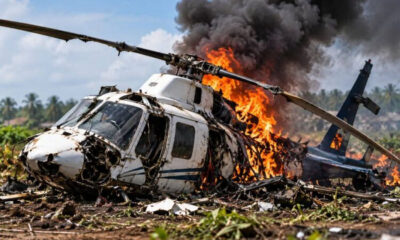
BREAKING: Many Feared Dead as Helicopter Crashes in Ondo Community
-
 metro3 days ago
Ojudu Reveals How Tinubu, He Narrowly Escaped Death In Third Mainland Bridge Crash
-

 metro2 days ago
Grand Chief Imam of Oyoland Urges Rabitah 1964 to Regulate ‘Yorubaland’ Islamic Titles