

metro
Nigeria to launch e-visa, digital cards

Nigeria to launch e-visa, digital cards
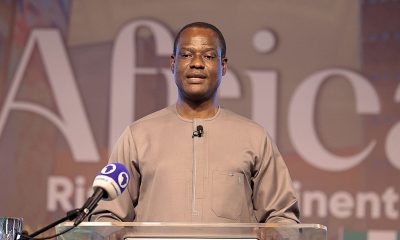
Festus Keyamo, minister of Aviation and Aerospace Development, says the Federal Government will launch an e-visa system and digital landing/exit cards to enhance national security.
He disclosed this on Wednesday in Abuja when he received a delegation led by the minister of Interior, Olubunmi Tunji-Ojo.
According to Keyamo, the e-visa system will enable applicants to submit visa requests online and upload required documents electronically.
He added that the manual landing and exit cards would be digitalised, requiring visitors to pre-fill their information before travelling to Nigeria.
“What we are doing here today reflects this government’s commitment to cooperation between ministries with overlapping mandates.
“Today is another example of inter-ministerial collaboration. This specifically concerns the introduction of the e-visa system,” he said.
He said further details would be given by Mr Tunji-Ojo, and that relevant agencies such as Immigration, NCAA, and FAAN would fully support the initiative.
READ ALSO:
- US revokes visas of nearly 40 international students over traffic violations
- You will enjoy APC, Okpebholo assures defecting PDP lawmakers
- Why Obi’s 15-year-old supporter is in prison — Lawyer
Mr Keyamo emphasised that there was no objection to the programme, which primarily falls under the Interior Ministry.
Meanwhile, the Minister of Interior stated the automation system will commence on May 1.
He noted that the e-visa application will be free and is designed to simplify entry into Nigeria while boosting national security.
Mr Tunji-Ojo explained the Nigeria Civil Aviation Authority, NCAA, will manage landing and exit cards, which travellers must complete online before boarding.
“Coordinating and issuing regulations to airlines is naturally the NCAA’s responsibility,” Mr Tunji-Ojo said.
He revealed a central visa approval centre already exists at Immigration headquarters, with trained officers and integrated global criminal record checks.
“Better background checks will be conducted for travellers entering Nigeria. We aim to eliminate bottlenecks and ensure a transparent visa process.
“Our goal is to open Nigeria’s borders without compromising security. Both Interior and Aviation ministries have critical roles in this,” he said.
Nigeria to launch e-visa, digital cards
NAN










metro
Petrol Subsidy Return Could Cost Nigeria Over N20tn Yearly—Oyedele
Petrol Subsidy Return Could Cost Nigeria Over N20tn Yearly—Oyedele
The Federal Government has warned that returning to a blanket petrol subsidy regime could cost Nigeria more than N20 trillion annually, as the administration seeks alternative ways to cushion the impact of rising fuel and transportation costs.
Finance and Coordinating Minister of the Economy, Taiwo Oyedele, has maintained that reversing the petrol subsidy removal would place a huge burden on government finances and potentially undermine the fiscal gains of the 2023 reform.
The warning comes amid renewed calls for government intervention as petrol prices, transportation costs and inflation continue to put pressure on households and businesses.
An earlier estimate by the Centre for the Promotion of Private Enterprise (CPPE) put the potential annual cost of restoring a universal petrol subsidy at about N19.16 trillion, based on an assumed daily petrol consumption of 50 million litres and an indicative subsidy of N1,050 per litre. The organisation rounded the figure to nearly N20 trillion and warned that the actual cost could vary depending on crude oil prices, exchange rates, consumption, refining or landing costs and the regulated pump price.
The estimated burden translates to about N52.5 billion daily and N1.575 trillion monthly, according to the CPPE calculation.
The group warned that such spending could compete with funding for infrastructure, healthcare, education, security, agriculture and social protection, while potentially widening the fiscal deficit and increasing borrowing and debt-servicing pressures.
Oyedele has also said the removal of the subsidy generated significant fiscal resources. The Federal Government has put the savings mobilised between June 2023 and December 2025 at N15.8 trillion, with about N5.4 trillion accruing to the Federal Government and N10.4 trillion shared among states and local governments.
READ ALSO:
- Man Allegedly Caught Using Old Tyres to Scam POS Operator
- BREAKING: FG Unveils 10 Measures to Cushion Fuel Price, Inflation Pressures
- 2027: ADC Vows to Collate, Share Polling-Unit Results Despite INEC Warning
However, the subsidy debate has intensified as Nigerians contend with renewed increases in the cost of petrol and the knock-on effects on transportation, logistics and household purchasing power.
The Federal Government has therefore introduced a series of measures designed to provide relief without returning to a blanket fuel subsidy.
Among the measures is a 30-day discount on petrol sold through NNPC stations, with public transport operators expected to receive priority. The government has stressed that the arrangement is not a subsidy but a temporary discount intended to ease the immediate pressure on consumers.
The government has also proposed a N1,350-per-litre ceiling on petrol landing or ex-gantry costs, with the mechanism expected to be reviewed monthly. Under the proposal, refiners and importers would absorb temporary cost increases above the ceiling and recover the difference when market conditions improve.
Another major component is the planned use of forward crude sales to domestic refineries, aimed at providing refiners with greater certainty over crude supply and helping to moderate the impact of international crude prices and foreign-exchange fluctuations.
The government is also accelerating the deployment of compressed natural gas (CNG) as a cheaper alternative for transportation. Officials say more than 120,000 CNG-powered vehicles, over 400 conversion centres and dozens of refuelling facilities are already part of the programme.
The administration has further announced plans to remove selected levies and regulatory costs that add to transportation and logistics expenses, while expanding targeted support for vulnerable households and small businesses.
The government is also considering an excess profit tax on businesses deemed to be taking undue advantage of current market conditions. Proceeds would be directed towards measures such as transport support and vouchers for vulnerable households.
Oyedele has repeatedly argued that these measures are intended to address the consequences of high fuel prices without recreating the fiscal and market distortions associated with the former subsidy system.
The CPPE has similarly urged the government to retain the downstream petroleum reforms while providing targeted relief through affordable mass transportation, improved electricity supply, food-production support, stronger social protection and measures to reduce energy and logistics costs for businesses.
The debate is expected to remain contentious as political parties and other stakeholders differ over whether Nigeria should maintain the current market-based petrol pricing system or introduce targeted intervention to shield consumers from further price shocks.
For the Federal Government, the challenge is to balance economic reforms and fiscal sustainability with immediate relief for Nigerians facing higher living and transportation costs.
The administration insists that its latest interventions are aimed at achieving that balance without returning the country to a blanket petrol subsidy regime.
Petrol Subsidy Return Could Cost Nigeria Over N20tn Yearly—Oyedele
metro
Man Allegedly Caught Using Old Tyres to Scam POS Operator
Man Allegedly Caught Using Old Tyres to Scam POS Operator
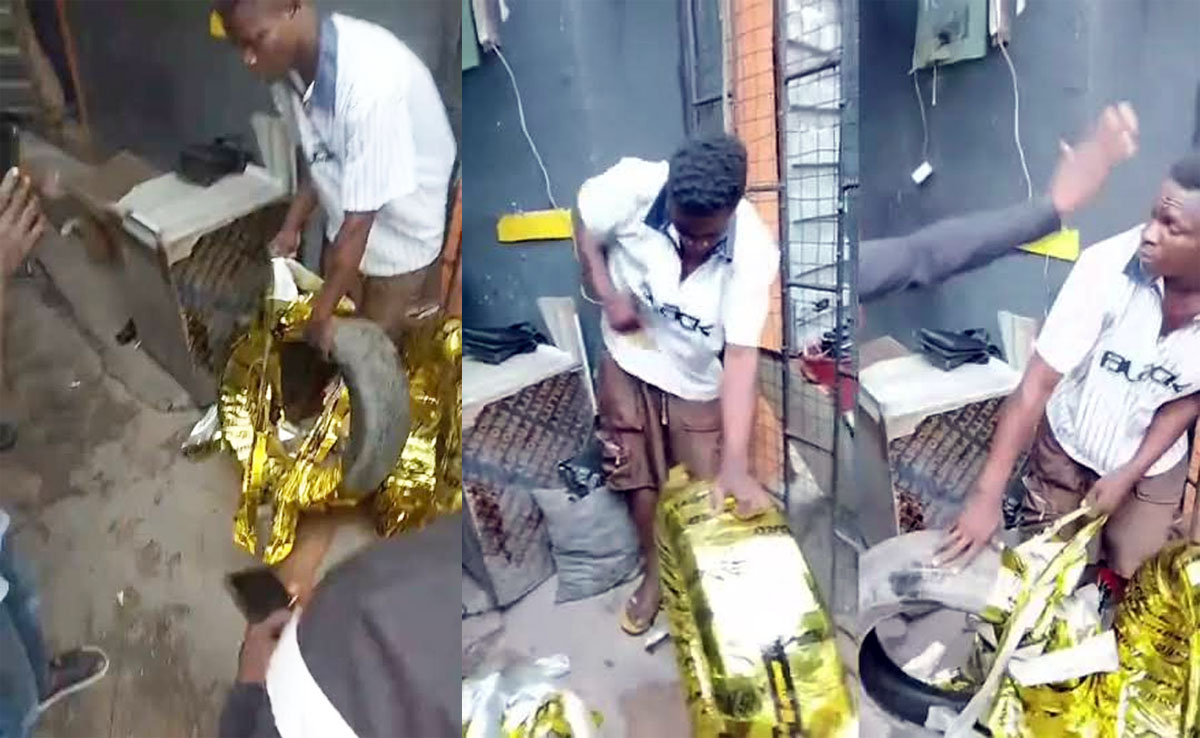
A man was reportedly caught in an alleged attempt to scam a POS operator by presenting old and damaged car tyres wrapped in nylon as new ones in exchange for cash.
The incident, captured in a video circulating on social media, reportedly occurred after the man approached a Point-of-Sale (POS) operator seeking cash.
According to reports, the man claimed that he wanted to make a withdrawal but that a bank transfer had failed because of network problems.
He allegedly asked the operator to release the cash and offered several tyres wrapped in nylon as collateral, claiming they were new and promising to return later to redeem them.
The unusual arrangement reportedly attracted the attention of people around the POS stand, who became suspicious of the man’s explanation.
The packages were subsequently opened, revealing that the tyres were allegedly old, worn and damaged, rather than the new tyres he was said to have presented them as.
The discovery reportedly sparked a confrontation, with a crowd gathering around the man after the alleged scheme was exposed.
READ ALSO:
- BREAKING: FG Unveils 10 Measures to Cushion Fuel Price, Inflation Pressures
- 2027: ADC Vows to Collate, Share Polling-Unit Results Despite INEC Warning
- FBI Raids Ghana Scam Centre, Detains Over 130 in $10m Fraud Probe
The circulating video shows the man being confronted by people at the scene. Reports also indicate that he was at risk of mob action before the situation was brought under control.
It remains unclear where exactly the incident occurred, while the man’s identity has not been publicly established.
There is also no confirmed police statement indicating whether he was formally arrested, questioned or charged over the alleged incident.
The reported incident has drawn attention to the risks faced by operators in Nigeria’s expanding POS business, where agents routinely handle cash and electronic transfers for customers.
POS operators have previously been targeted by different forms of fraud, including fake bank alerts, disputed transfers and attempts to persuade agents to release cash before transactions are independently confirmed.
The alleged tyre scheme appears to have relied on a combination of urgency, a failed-transfer claim and the appearance of the wrapped items to convince the operator to release cash.
The incident has also highlighted the dangers of jungle justice, with observers urging people who encounter suspected fraud to alert law-enforcement authorities rather than resorting to violence.
For POS operators, the incident serves as another reminder to independently confirm that funds have been credited before releasing cash, regardless of screenshots, verbal explanations or items offered as security.
The allegation against the man has not been tested in court, and he is presumed innocent unless proven guilty.
Man Allegedly Caught Using Old Tyres to Scam POS Operator
metro
BREAKING: FG Unveils 10 Measures to Cushion Fuel Price, Inflation Pressures
BREAKING: FG Unveils 10 Measures to Cushion Fuel Price, Inflation Pressures
The Federal Government has announced a 10-point intervention package aimed at cushioning the impact of rising petrol prices, transportation costs and inflation on households and businesses while maintaining its broader economic reform programme.
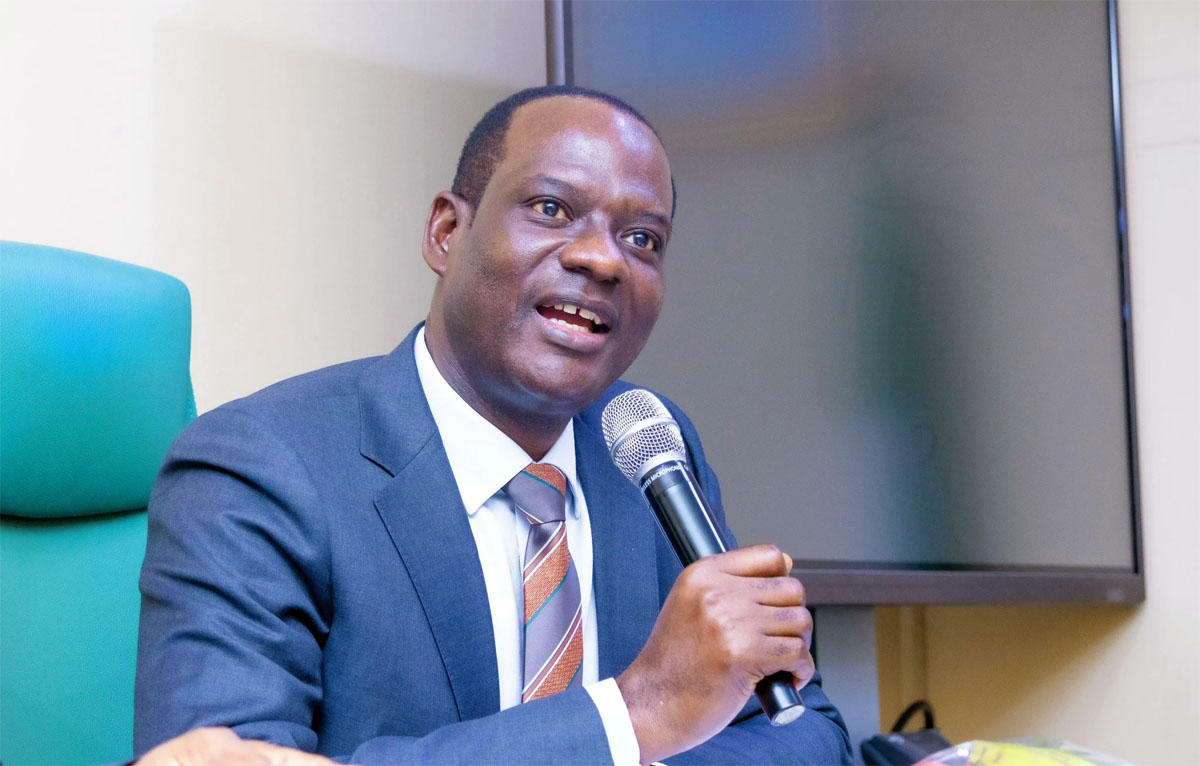
Minister of Finance and Coordinating Minister of the Economy, Taiwo Oyedele, announced the measures on Thursday during a media briefing in Abuja, acknowledging that Nigerians were still facing significant pressure despite various reforms introduced by the administration.
Oyedele said the interventions include a 30-day petrol discount at NNPC stations, forward sales of crude oil to domestic refineries, a proposed ₦1,350-per-litre modulation on petrol landing costs, faster deployment of Compressed Natural Gas (CNG) vehicles, removal of selected levies, targeted support for vulnerable households and small businesses, and the establishment of a National Strategic Fuel Reserve.
He stressed, however, that the measures should not be interpreted as a return to the former petrol subsidy regime, which he said created significant fiscal and market distortions.
“To be perfectly clear, none of these measures restore a blanket subsidy. To do so would amount to creating longer-term harm for a short-term cure,” Oyedele said.
According to him, the government’s objective is to provide immediate relief while protecting consumers from sharp price movements without recreating the long-term fiscal burden associated with fuel subsidies.
The first intervention is a 30-day discount on petrol sold through NNPC Limited retail stations, with public transport operators expected to receive priority.
Oyedele said the measure was designed to provide immediate relief to transport operators and commuters affected by rising fuel costs.
“It is not a subsidy. Government is just saying we sell to you at a discount,” he explained.
READ ALSO:
- 2027: ADC Vows to Collate, Share Polling-Unit Results Despite INEC Warning
- FBI Raids Ghana Scam Centre, Detains Over 130 in $10m Fraud Probe
- Court Grants Alleged Fake JAMB Registrar N50m Bail, Sets Strict Conditions
The minister did not immediately disclose the exact amount of the discount or a single nationwide pump price that would apply during the 30-day period.
The second measure involves forward sales of crude oil to domestic refineries as crude production increases and previously committed volumes become available.
Oyedele said the arrangement would provide domestic refiners with greater certainty over crude supply and reduce their exposure to sudden movements in international crude prices.
Under the proposed arrangement, the government could agree to sell crude to refiners at a predetermined price for a specified period, enabling them to plan their operations and manage costs more effectively.
“If you can sell your crude forward, we sell to the refiners for the next six months. We are selling you crude at $80 per barrel, for example. That preserves your budget, provides certainty to the refiners and price stability to the consumer,” he said.
The third intervention is a price-modulation mechanism under which the government is negotiating a ceiling of ₦1,350 per litre on the landing or ex-gantry cost of petrol.
The objective is to prevent domestic petrol prices from responding immediately to every movement in international crude prices or the foreign-exchange market.
Under the proposed mechanism, when the actual cost rises above the agreed ceiling, refiners and importers would initially absorb the difference and recover it when market conditions improve.
Oyedele stressed that the arrangement was neither a subsidy nor conventional price control but a mechanism designed to smooth out price movements.
He explained that greater price stability would be preferable to sharp increases followed by uncertain reductions.
The proposed ceiling would be reviewed monthly, with relevant calculations and data expected to be published to promote transparency.
The ₦1,350 figure is therefore a proposed landing-cost or ex-gantry ceiling, rather than a declaration that petrol will sell at ₦1,350 per litre at every filling station nationwide.
The fourth intervention focuses on reducing dependence on petrol through CNG and other alternative energy sources.
Oyedele said more than 120,000 vehicles were already operating on CNG, supported by more than 400 conversion centres, 96 refuelling stations and 18 unified CNG stations.
READ ALSO:
- NESREA to Honour Lagos Baale After Dramatic Rescue of Endangered Sea Turtle
- How Six Members of a Family Were Murdered in Oyo
- World Bank Raises Nigeria Growth Forecast, Demands More Jobs, Poverty Reduction
He added that the government had deployed hundreds of CNG buses, with commuters in areas where the buses operate benefiting from fare reductions of between 30 and 50 per cent.
The government has also removed taxes on electric vehicles and solar equipment and reduced import duties on vehicles as part of efforts to encourage the adoption of cheaper and cleaner alternatives to petrol.
According to Oyedele, Nigeria Customs Service data showed that imports of CNG-powered vehicles, including tricycles, electric vehicles and renewable-energy equipment, had more than doubled since May 2023.
He said the government had also granted tax and duty waivers worth more than ₦100 billion within the first nine months of the current intervention period.
The fifth measure involves the removal of levies and charges that increase transportation and logistics costs.
Oyedele said the Federal Government was working with state governments under the new tax laws to eliminate unnecessary charges that ultimately raise the cost of moving people and goods.
The government also plans to strengthen cash transfers to vulnerable households and provide subsidised credit to small businesses and consumers facing higher operating and living costs.
The sixth intervention is an accelerated nationwide CNG infrastructure rollout.
Oyedele said the Federal Government would work with state governments to expand CNG deployment and urged transport operators to pass the savings from cheaper fuel on to passengers through lower fares.
The government wants the initiative to gradually reduce dependence on petrol while giving commuters access to cheaper transportation.
The seventh measure is the proposed introduction of an excess-profit tax on operators found to be taking undue advantage of prevailing market conditions at the expense of consumers.
Oyedele said proceeds from the proposed measure could be used to cushion the impact of food prices through transport support or vouchers targeted at vulnerable urban households and wage earners.
“We will collect it from them and give to the vulnerable people,” he said.
The minister added that the Federal Government would work with the National Assembly on enhanced tax relief for low-income earners under the 2027 Finance Bill.
The eighth intervention targets regulatory costs and red tape that increase the cost of doing business and are eventually passed on to consumers through higher prices.
Oyedele said the government had commenced discussions with regulatory agencies to identify unnecessary costs and processes that could be eliminated.
READ ALSO:
- Flood Submerges Enugu Road, Strands School Children, Passengers
- US Proposes $70,000 OPT Fee for Nigerians, Other Foreign Students
- EFCC Re-Arraigns Two Over Alleged £110,000 Money Laundering, ₦500m Fraud
The ninth measure is the establishment of a National Strategic Fuel Reserve to protect households and businesses from supply disruptions, artificial scarcity and excessive price volatility.
According to Oyedele, refined petroleum products would be released into the market under clear and publicly published rules whenever global disruptions, hoarding or other factors threatened supply and price stability.
He stressed that the reserve would not be used to fix petrol prices or subsidise the product.
“This is not a subsidy, and it does not fix prices. Rather, it secures supplies and reduces price volatility,” he said.
The reserve is expected to strengthen Nigeria’s energy security, reduce the risk of artificial scarcity and provide a buffer during periods of major supply disruption.
The 10th intervention focuses on traffic management and logistics, particularly in major urban centres.
Oyedele said traffic management agencies would be expected to improve traffic flow to reduce fuel consumption and transportation costs.
He also cited the recently launched digital addressing system as part of efforts to make logistics more efficient and reduce the cost of moving goods and services.
Beyond the 10 measures, Oyedele said the government was continuing other interventions aimed at reducing pressure on household energy and food costs.
He said the government continued to support electricity for vulnerable consumers and was also working to improve gas and fertiliser supply for producers.
Oyedele said the Federal Government had granted a full waiver of taxes and duties on petrol worth more than ₦3.3 trillion up to September 30, 2026, as part of measures to reduce the cost burden on consumers.
He said the government’s approach was broadly consistent with international responses to energy-price shocks, which increasingly favour targeted support, tax adjustments, improved energy efficiency and supply security over broad-based subsidies.
The minister acknowledged that the measures already implemented had not completely eliminated the pressure on households.
“We recognise that these measures, important as they are, do not fully relieve the pressure households feel today,” he said.
Oyedele nevertheless maintained that returning to a blanket petrol subsidy would not provide a sustainable solution, arguing that Nigeria had previously experienced fuel scarcity, smuggling, currency pressures and significant fiscal difficulties under the system.
“Because fuel is real, I will not dismiss it. The cost of reform came at a price, and many households are still bearing it,” he said.
He added that the government was working on a broader package of fiscal measures aimed at bringing inflation down to single digits sustainably in the near term.
Further details of the fiscal package, he said, would be released in the coming months.
The latest measures come as petrol prices remain a major driver of transportation and household costs, with changes in global crude prices, exchange rates, refinery pricing and distribution expenses continuing to affect the domestic market.
The government says it will continue to monitor developments in the energy market and introduce further interventions where necessary, while avoiding policies that could recreate the long-term fiscal pressures associated with petrol subsidies.
Oyedele said the ultimate objective was to combine immediate relief with structural reforms that would reduce Nigeria’s vulnerability to energy-price shocks, lower transportation costs, strengthen domestic refining and improve energy security.
He said the Federal Government remained committed to ensuring that the benefits of the economic reforms translated into tangible improvements in the living conditions of Nigerians.
BREAKING: FG Unveils 10 Measures to Cushion Fuel Price, Inflation Pressures
-

 metro3 days ago
Ondo Air Tragedy: Soldiers, Families Among 32 Killed In NAF Crash
-

 metro3 days ago
Gunmen Open Fire At Lagos Bus Stop, Kill NURTW Member, Injure Three
-

 metro3 days ago
Ogun Crash: Nine Die As Bus Collides With Truck On Ijebu-Ode-Ore Road
-
 metro3 days ago
Supreme Council For Sharia Secretary-General Nafiu Baba-Ahmed Dies
-

 metro2 days ago
UCH CMD: After Decades Without Muslim, Agunbiade Demands Fair Chance
-
![[UPDATED] 20 NYSC Prospective Corps Members Freed After Seven Days in Captivity](https://newstrends.ng/wp-content/uploads/2026/10/20-NYSC-Prospective-Corps-Members-Freed-After-Seven-Days-in-Captivity-400x240.jpg)
![[UPDATED] 20 NYSC Prospective Corps Members Freed After Seven Days in Captivity](https://newstrends.ng/wp-content/uploads/2026/10/20-NYSC-Prospective-Corps-Members-Freed-After-Seven-Days-in-Captivity-80x80.jpg) metro19 hours ago
metro19 hours ago[UPDATED] 20 NYSC Prospective Corps Members Freed After Seven Days in Captivity
-

 International3 days ago
Kemi Badenoch: I Don’t Want Migrants Turning UK Into Nation Of ‘Little Ghettos’
-

 metro2 days ago
Seven Years With Parkinson’s: Man Seeks N65m for Brain Surgery in Türkiye