
metro
Nigerian Army opens online registration for new intakes
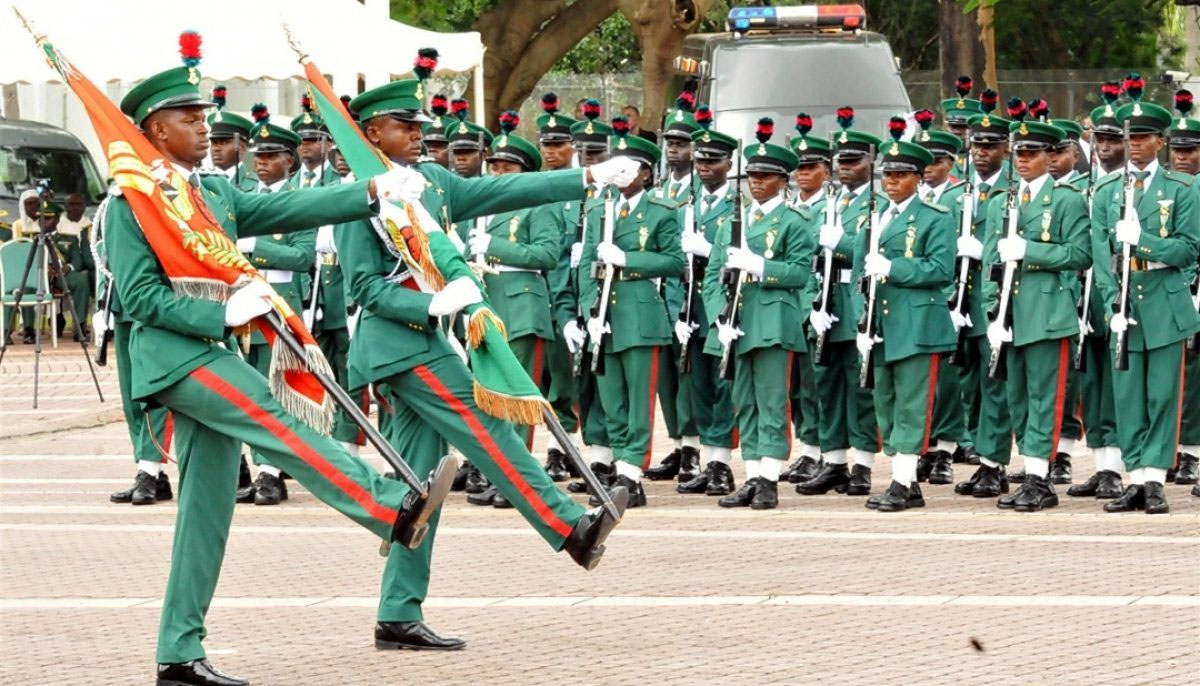
Nigerian Army opens online registration for new intakes
The Nigerian Army has officially commenced online registration for its 89 Regular Recruits Intake Exercise, inviting applications from qualified tradesmen, non-tradesmen, and women.
Announced via the Army’s official X (formerly Twitter) handle on Monday, the recruitment drive aims to enlist capable individuals to serve in various capacities within the force.
This initiative presents a significant opportunity for Nigerians aspiring to build a career in the military.
Prospective candidates are encouraged to visit the Nigerian Army’s recruitment portal to complete their registration.
According to the Army, the registration period will run from March 31 to May 7, 2025, encouraging interested individuals to apply via the official recruitment portal at https://recruitment.army.mil.ng.
In a detailed breakdown of the eligibility criteria, the Nigerian Army emphasised that applicants must be single Nigerian citizens by birth and possess a valid National Identity Card (NIN) and Bank Verification Number (BVN).
Interested candidates must also be medically, physically, and psychologically fit in accordance with the Army’s standards, and must not have any criminal conviction by a court of law.
Also, applicants must have at least four passes, including English Language, in WASSEC/NECO/GCE/NABTEB, and tradesmen/women must possess a valid trade test/certificate.
READ ALSO:
- Woman arrested for trafficking daughter for N50,000 to Mauritania
- Breaking: Tinubu sacks Kyari, appoints Ojulari as new NNPCL GCEO
- Kogi LG imposes curfew ahead of Natasha’s homecoming event
Applicants must present a valid birth certificate issued by the National Population Commission, hospital, or local government council as part of the application requirements.
The announcement also gave the age limit at 18-22 years for non-tradesmen/women, and 18-26 years for tradesmen/women, and such persons’ minimum height requirements are 1.68m for male candidates and 1.65m for female candidates.
A state of origin certificate is also required as part of the requirements.
The Nigerian Army reaffirmed that the recruitment process is entirely free of charge, warning applicants against making payments to any individual or group claiming to influence the selection process.
“Candidates are advised to conduct their own due diligence and not engage in any form of financial transaction to secure recruitment,” the statement read.
The Army also stated that successful recruits will enjoy several benefits, including career opportunities in the military, regular and enhanced pay allowances, opportunities for further education and interaction with people from diverse backgrounds.
Other benefits include health and insurance housing in choice locations across Nigeria, pension and gratuity upon retirement, and the opportunity to serve the nation within and outside Nigeria.
Interested candidates must apply via the official portal https://recruitment.army.mil.ng.
Shortlisted candidates will be invited for a screening exercise from June 2 to June 19, 2025, at their respective states of origin.
To maintain the integrity of the recruitment process, the Army warned that all documents submitted will be thoroughly verified by the appropriate issuing authorities.
“All those with fake documents will be handed over to the police for prosecution,” the Army cautioned.
The Nigerian Army also reminded applicants that there will be no pre-selection computer-based test, and all shortlisted candidates must participate in the physical screening exercise at designated centers.
The Army’s announcement concluded with an appeal to young Nigerians to take advantage of this opportunity to contribute to national security and territorial integrity.
“Join the Nigerian Army and contribute to the preservation and protection of Nigeria’s sovereignty and territorial integrity,” the Army stated.
Nigerian Army opens online registration for new intakes






metro
BREAKING: Drama in NASS as Reps Clash Over Backup Manual Result Collation
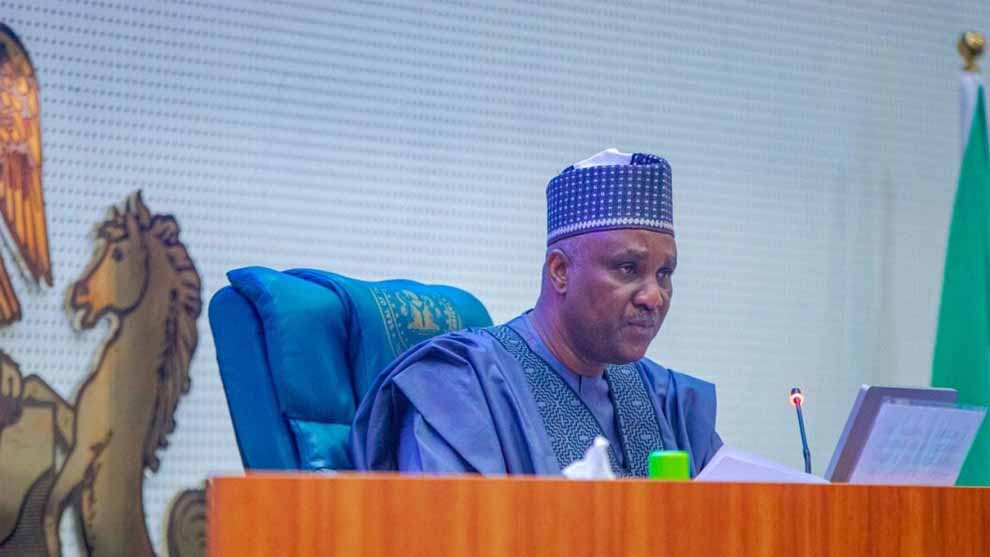
BREAKING: Drama in NASS as Reps Clash Over Backup Manual Result Collation
Abuja — Tension erupted at the National Assembly on Tuesday as opposition lawmakers staged a dramatic walkout in protest against the approval of manual collation of election results as a backup to electronic transmission.
The controversy unfolded during plenary when a motion seeking to adopt manual collation as a contingency measure in the event of technical failure of electronic transmission systems was presented for consideration. While the majority lawmakers supported the proposal, opposition members strongly objected, arguing that the move could undermine electoral transparency and public confidence in the electoral process.
Heated Debate on the Floor
The debate quickly grew intense as several opposition representatives warned that reintroducing manual collation, even as a backup, could open the door to manipulation and irregularities.
One opposition lawmaker described the decision as “a dangerous step backward,” insisting that Nigeria’s electoral reforms were designed to eliminate the flaws associated with manual processes. According to them, reliance on manual collation in previous elections had been a major source of disputes and litigation.
However, lawmakers from the majority caucus defended the proposal, stating that the backup option was necessary to safeguard the integrity of elections in situations where electronic systems malfunction due to network failure, cyber threats, or logistical challenges.
A ranking member of the majority party argued that “no responsible legislature should ignore the possibility of technical glitches,” stressing that manual collation would only serve as a last resort and not replace electronic transmission.
Dramatic Walkout
Following the Speaker’s ruling allowing the motion to proceed to approval by voice vote, opposition lawmakers rose from their seats in protest. Chanting “No to manual manipulation” and “Protect our votes,” they exited the chamber en masse.
The walkout temporarily disrupted proceedings, drawing reactions from observers and legislative aides present in the gallery.
Despite the protest, the remaining lawmakers proceeded to adopt the motion, effectively approving manual collation as a backup mechanism pending further legislative fine-tuning and possible amendments to the electoral framework.
Implications for Electoral Reform
The development is expected to generate significant political debate across party lines and among civil society organizations. Advocacy groups have consistently pushed for full electronic transmission of results to minimize human interference and enhance credibility.
Political analysts say the decision could become a flashpoint ahead of future elections, especially given past controversies surrounding result collation.
As of press time, leaders of the opposition caucus were reportedly preparing a joint press briefing to outline their position and next steps, including the possibility of seeking judicial interpretation if the approval translates into legislative amendments.
Further updates will follow as the situation develops.
BREAKING: Drama in NASS as Reps Clash Over Backup Manual Result Collation
metro
Grand Chief Imam of Oyo Pays Courtesy Visit to Customs Zonal Deputy Controller in Ibadan
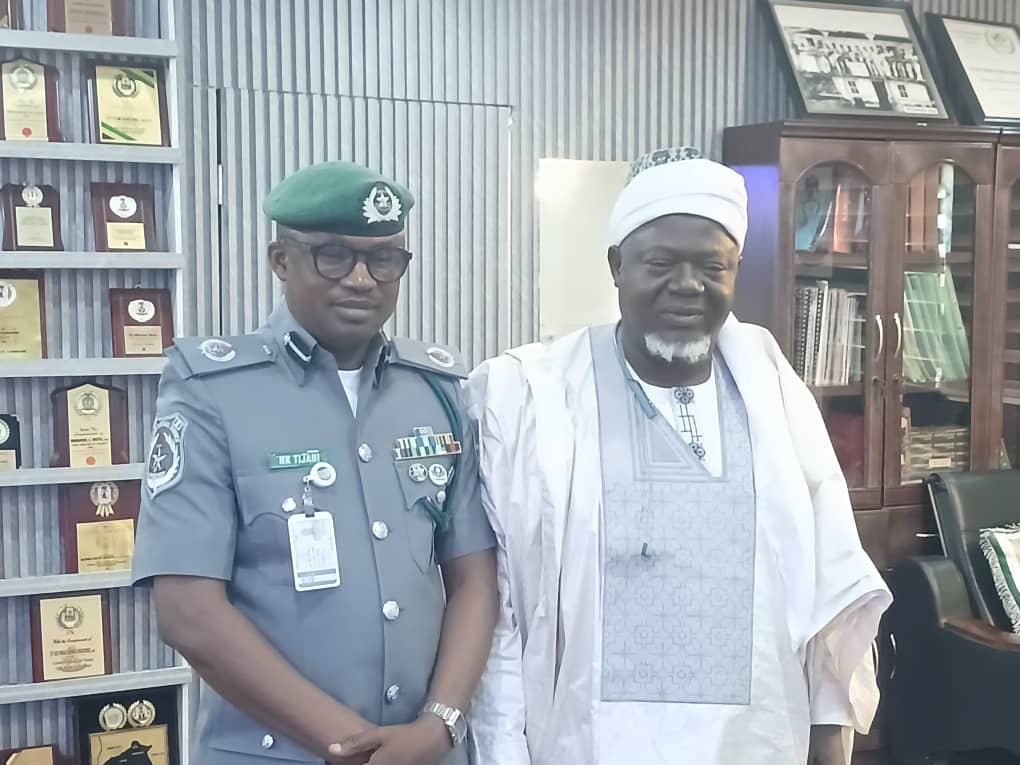
Grand Chief Imam of Oyo Pays Courtesy Visit to Customs Zonal Deputy Controller in Ibadan
The Grand Chief Imam of Oyo Land, Sheikh Al-Imam Barrister Bilal Husayn Akinola Akeugberu, on Tuesday paid a courtesy visit to the Zonal Deputy Controller of the Nigeria Customs Service, DC Wale Moses Adewole, at the Oyo and Osun Zonal Directorate Office, Agodi Secretariat, Ibadan.
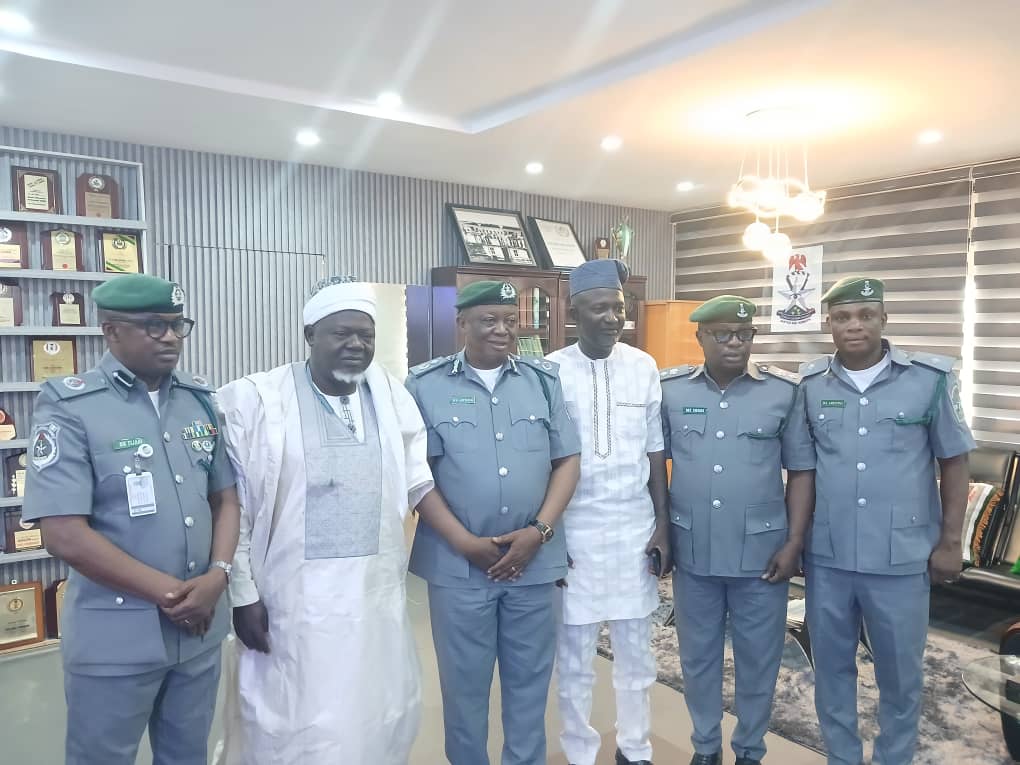
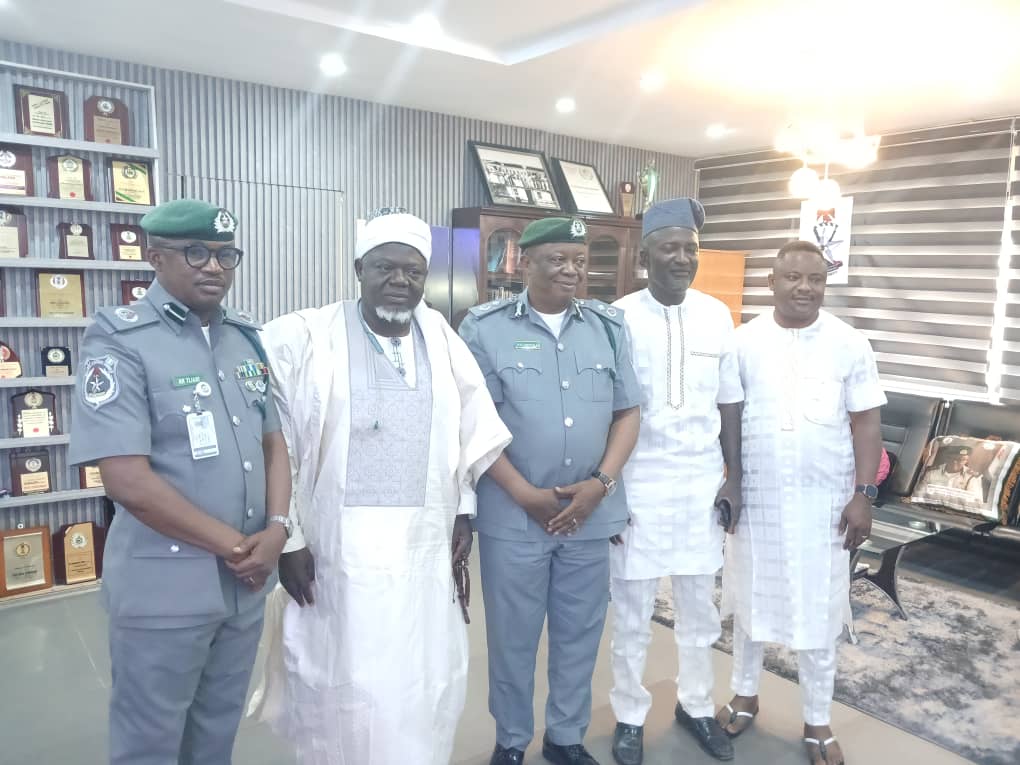 The visit, which took place on February 17, 2026, was marked by warm reception and professional camaraderie, underscoring a shared commitment to institutional cooperation and national development.
According to a statement issued by the Media Office of the Grand Chief Imam of Oyo Land, the engagement forms part of the Imam’s ongoing outreach to key government institutions aimed at strengthening moral values, civic responsibility, and harmonious relationships between religious leadership and public agencies.
In his remarks, Sheikh Akeugberu commended DC Adewole and officers of the Nigeria Customs Service for what he described as their dedication to safeguarding the nation’s economic frontiers, facilitating legitimate trade, and contributing significantly to national revenue generation.
He emphasized that integrity, transparency, and accountability remain indispensable pillars of effective public service, noting that religious and public institutions must work collaboratively to promote ethical standards within society.
The Imam further reiterated that Islam promotes justice, fairness, and lawful conduct in all spheres of life. He assured the Customs leadership of the Muslim community’s continued support in encouraging compliance with lawful regulations and fostering a culture of discipline and responsibility.
Responding, DC Wale Moses Adewole expressed appreciation for the visit, describing it as inspiring and encouraging. He acknowledged the important role religious leaders play in shaping moral consciousness, patriotism, and discipline among citizens.
Adewole reaffirmed the commitment of the Oyo and Osun Zonal Directorate to professionalism, fairness, and efficient service delivery in line with the mandate of the Nigeria Customs Service.
The meeting, described as cordial and intellectually engaging, concluded with special prayers offered by the Grand Chief Imam for divine guidance, wisdom, and continued success for the Customs leadership and the entire Service.
The visit, stakeholders say, reinforces the collective aspiration for a peaceful, law-abiding, and economically progressive Oyo State and Nigeria at large.
Grand Chief Imam of Oyo Pays Courtesy Visit to Customs Zonal Deputy Controller in Ibadan
metro
Deadlock at National Assembly as House Snubs Electoral Act Bill Meeting on E-Transmission Clause
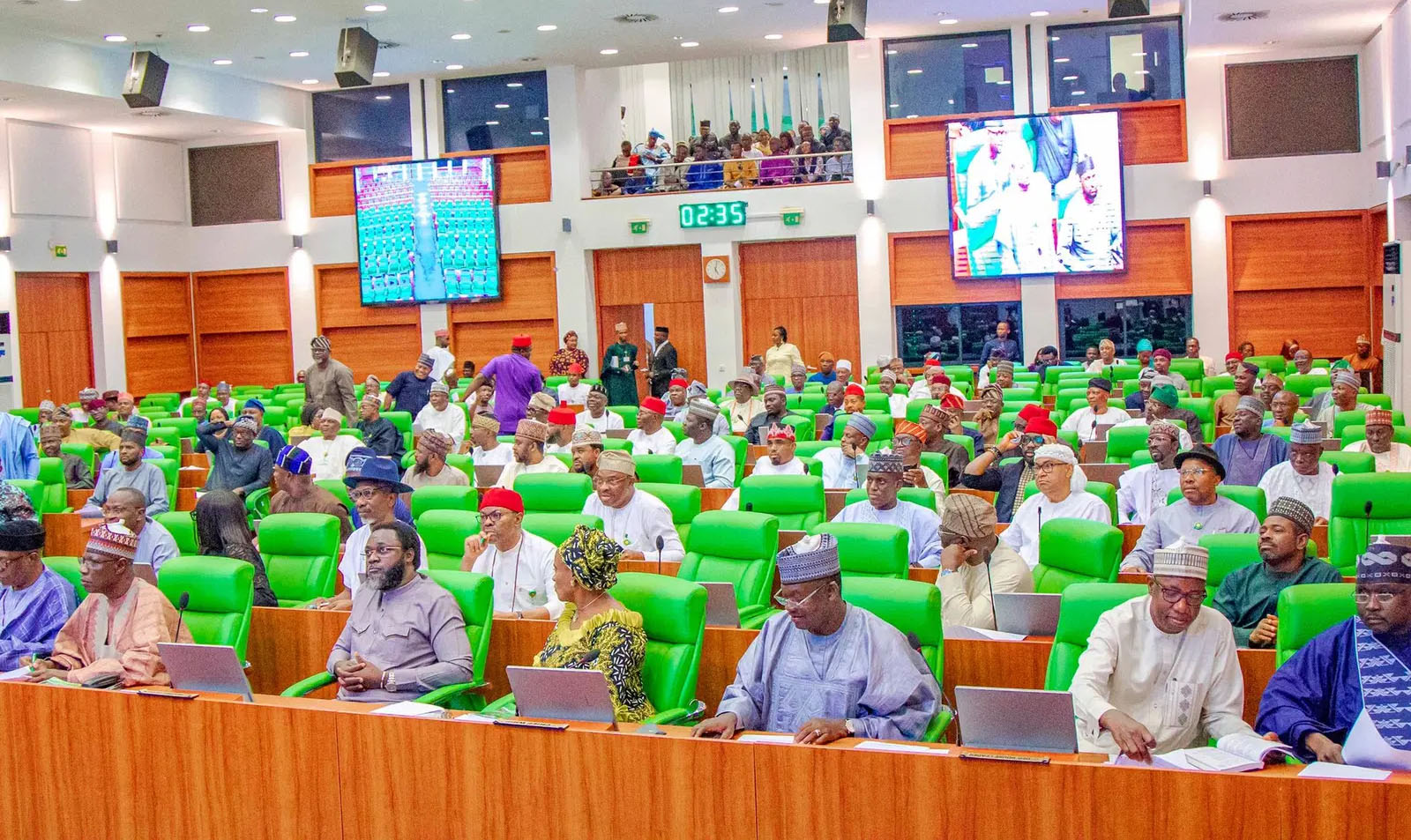
Deadlock at National Assembly as House Snubs Electoral Act Bill Meeting on E-Transmission Clause
Tension escalated at the National Assembly on Monday after members of the House of Representatives failed to attend a joint conference committee meeting with the Senate aimed at harmonising the Electoral Act (Repeal and Re-enactment) Bill, 2026. The absence of House lawmakers stalled efforts to reconcile differences over Clause 60(3), which governs the electronic transmission of election results.
The session, initially scheduled for 11:00 a.m., did not proceed as senators waited in vain for their House counterparts. Later, senators reconvened at the office of Senator Simon Lalong, chairman of the Senate Committee on Electoral Matters, but the stalemate persisted. A second attempt in the afternoon also failed, with only a few lawmakers present, leaving the harmonisation process in limbo.
At the core of the dispute is the mandatory electronic transmission of results from polling units. The House version requires real-time uploading of results to INEC’s Result Viewing Portal (IREV), while the Senate adopted a more cautious approach, allowing electronic transmission but making the physical result sheet (Form EC8A) the primary document where network challenges occur. Senators cited concerns about uneven internet coverage and power supply gaps, stressing the need for a pragmatic approach nationwide.
The disagreement comes less than a year before the February 20, 2027 general elections, rekindling debates over electoral credibility. Memories of the 2023 presidential election, when delays in IREV uploads triggered widespread criticism, legal disputes, and political tension, remain fresh. Analysts warn that failure to harmonise the law could undermine public confidence in future elections.
READ ALSO:
- Maikori Accuses Ex‑Governor El‑Rufai of Persecution Over 2017 Tweet
- Shari’ah Council Defends Kwankwaso, Rejects US “Christian Genocide” Claims
- Hundreds of Millions in Goods Destroyed as Protests Against Northerners Erupt in Rivers
Telecom operators have insisted that infrastructure is sufficient to support electronic transmission. The Association of Licensed Telecom Operators of Nigeria (ALTON) highlighted that even basic 2G networks can reliably transmit results, while broadband penetration now exceeds 50 percent, with over 109 million active subscriptions nationwide. Experts say that transparency, system testing, and public trust will be crucial for the success of reforms ahead of 2027.
Civil society groups, including Situation Room Nigeria and Action Aid, have protested outside the National Assembly, urging lawmakers to adopt mandatory real-time electronic transmission to ensure transparency and minimise the risk of election manipulation. Youth and reform organisations also stress that allowing manual fallback options could reintroduce vulnerabilities that past reforms sought to eliminate.
The impasse highlights the importance of legal clarity and political will in safeguarding Nigeria’s electoral integrity. Observers note that beyond infrastructure, the cooperation of lawmakers, INEC, and security agencies will determine whether the next general election restores public trust or exacerbates existing doubts.
Deadlock at National Assembly as House Snubs Electoral Act Bill Meeting on E-Transmission Clause

-

 Education2 days ago
Check Your Name: UNILORIN Releases Updated NELFUND Refund List for 2024/2025 Students
-

 News2 days ago
Osogbo Sons and Daughters Mark 5th Anniversary with Awards, Political Undertones
-

 metro1 day ago
US Freezes Assets of Eight Nigerians Over Boko Haram, ISIL, Cybercrime Links
-

 News2 days ago
Afenifere Calls for Immediate Take-Off of State Police as Terror Threats Rise in Yorubaland
-

 metro1 day ago
Terror in Lagos Traffic: Cutlass Gang Unleashes Mayhem on Mile 12–Ketu Road
-

 Entertainment1 day ago
Mystery in Lekki: Police Probe Death of Two Nollywood Crew Found Lifeless in Parked Car
-
 metro2 days ago
US Military Boosts Support for Nigeria’s Fight Against Insurgency With Ammunition, Troop
-

 metro2 days ago
Argungu Festival 2026 Highlights Peace, Stability, Economic Growth — Tinubu