
Business
Nigeria’s identity database not hacked, says NIMC

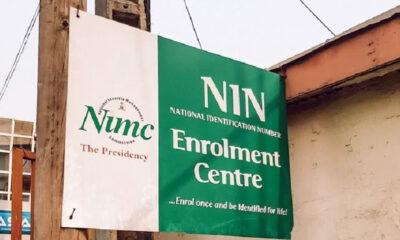
The National Identity Management Commission (NIMC) says the country’s identity database has not been breached by hackers.
It was reported on Monday that Nigeria’s identity database had been hit by cyberattack.
But NIMC in a statement on Tuesday said its servers were not breached but fully optimised and running at the highest international security levels as the custodian of the most important national database for Nigeria.
The Director-General of NIMC, Aliyu Aziz, was quoted by the statement as saying that the commission, as the custodian of the foundational identity database for Africa’s most populous nation, had gone to great lengths to ensure the nation’s database was adequately secured and protected especially given the spate of cyber-attacks on networks across the world.
“Over the years, through painstaking efforts, NIMC has built a robust and credible system for Nigeria’s identity database. The commission and its infrastructure are certified to the ISO 27001:2013 Information Security Management System Standard which are revalidated annually”, Aziz was quoted by the statement signed by NIMC’s Head of Corporate Communications, Kayode Adegoke.
The statement said NIMC had ensured maximum security of its systems and database because of the critical nature of the identity data which the commission collects, manages and maintains as critical assets for the country.
The commission assured the public that it would continue to uphold the highest ethical standards in data security on behalf of the Federal Government and ensure compliance with data protection and privacy regulations.
The NIMC Director-General stated that the commission neither used nor stored information on the AWS cloud platform or any public cloud despite the usefulness of the NIMC Mobile App available to the public for accessing their NIN on the go.
According to the DG, the NIMC MobileID application has no database within the app, nor does it store information in flat files, adding that the commission has made this app available to the public to reduce and eliminate any delay or challenge(s) in accessing one’s NIN.
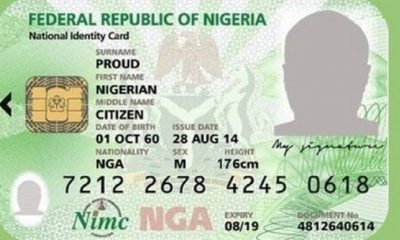
He said, “The public should be aware that the possession of a NIN slip does not amount to access to the National Identity Database, but that the NIN slip is just a physical assertion of a person’s identity. Under the data protection regulations, no licensed partner/vendor is authorized to scan and store copies of individuals NIN slips but rather authenticate the NIN using the approved and authorized verification platforms/channels provided.
“As part of its policies to protect personally identifiable information stored in the National Identity Database, the public may recall that the Ministry of Communications and Digital Economy through NIMC launched the Tokenization features of the NIN verification service. This solution is to safeguard the personal data of individuals and ensure continuous user rights and privacy. ”
The commission commended the efforts of several Federal Government agencies such as Joint Admissions and Matriculations Board (JAMB), the Federal Road Safety Corps (FRSC), Nigeria Immigration Services, Pension Commission (PenCom), the Nigeria Police Force, the Nigeria Correctional Service, the Nigeria Customs, and a host of others, that had streamlined their services in line with the use of National Identification Number (NIN) as the valid means of identification.




Business
Oil prices tumble after US–Iran deal, Nigeria’s fuel cost remains high

Oil prices tumble after US–Iran deal, Nigeria’s fuel cost remains high
Global oil markets tumbled and equities surged on Wednesday after the United States and Iran struck a fragile, conditional ceasefire deal that includes reopening the critical Strait of Hormuz shipping route.
Brent crude plunged by 13 per cent to $94.80 a barrel, while US-traded crude dropped more than 15 per cent to $95.75—marking one of the sharpest declines since the conflict erupted on 28 February.
Despite the drop, prices remain significantly above pre-war levels of around $70 per barrel.
In Nigeria, this sigh of relief is yet to reflect in the pump price of fuel. Indeed, the last report as of Tuesday night was an increase of five per cent by Dangote Petroleum Refinery in its gantry price of petrol, pushing it to N1,275 per litre, from N1,200 per litre.
The ceasefire—set to last two weeks—offers temporary relief to global energy markets rattled by weeks of disruption. The Strait of Hormuz, a vital artery for global oil shipments, had been under threat after Iran warned it could target vessels in retaliation for US and Israeli airstrikes.
The easing of tensions sent stock markets rallying across Asia. Japan’s Nikkei 225 jumped 5 per cent, South Korea’s Kospi surged nearly 6 per cent, while Hong Kong’s Hang Seng rose 2.8 per cent. Australia’s ASX 200 also gained 2.7 per cent, with US futures pointing to a strong opening on Wall Street.
Announcing the deal on social media, former US President Donald Trump said Washington would suspend military action for two weeks—on the condition that Iran ensures the “complete, immediate, and safe” reopening of the Strait.
READ ALSO:
- Bill Gates to Testify Before US House Panel in High‑Profile Jeffrey Epstein Probe
- Trump Announces Two‑Week Ceasefire With Iran, Pauses Planned Bombing
- Arsenal Edge Sporting in Lisbon with Last-Minute Havertz Strike
Iran’s Foreign Minister, Abbas Araghchi, signalled Tehran’s willingness to comply, stating that a ceasefire would hold if attacks on Iran stop, adding that safe passage through the strait “will be possible.”
A report by BBC News quotes analysts as saying the move reflects growing pressure on both sides to avoid further economic fallout. Escalation risked driving energy prices even higher, potentially triggering what market watchers describe as a “self-inflicted economic wound.”
With the ceasefire in place, more oil tankers stranded near the strait are expected to resume transit, offering short-term relief. However, experts caution that a full recovery in energy supply remains distant.
Infrastructure damage across the Middle East could take months—if not years—to repair. Iran’s retaliatory strikes have hit key energy facilities, with estimates suggesting reconstruction could exceed $25 billion.
The conflict has already left deep scars on global energy supply chains. In mid-March, strikes on Qatar’s Ras Laffan industrial hub—responsible for roughly a fifth of global liquefied natural gas—cut export capacity by 17 per cent, with full repairs expected to take up to five years.
Asia has borne the brunt of the crisis, given its heavy reliance on Gulf energy supplies. Countries like India, Malaysia and the Philippines scrambled to secure safe shipping routes, while China confirmed that some of its vessels continued to pass through the strait despite the risks.
The economic strain has been severe. The Philippines, which depends on the Middle East for 98 per cent of its oil, declared a national energy emergency after fuel prices more than doubled.
Airlines across the region have also raised fares and cut routes as jet fuel costs soared.
While the ceasefire offers a breather, analysts warn it is far from a lasting solution. Energy production is unlikely to fully rebound until a durable peace agreement is secured—and even then, recovery will take time.
For now, markets are celebrating a pause in hostilities. But beneath the optimism lies a fragile reality: the global energy system remains on edge.
Oil prices tumble after US–Iran deal, Nigeria’s fuel cost remains high
Business
BREAKING: Dangote Refinery Raises Petrol Price across Nigeria

BREAKING: Dangote Refinery Raises Petrol Price across Nigeria
The Dangote Petroleum Refinery has again increased the price of petrol across Nigeria, pushing its gantry price of Premium Motor Spirit (PMS) to ₦1,275 per litre, up from ₦1,200 per litre.
The latest adjustment represents a ₦75 increase (about 5%), reversing a recent period of relative stability in fuel prices and reinforcing concerns about rising cost of living.
The price hike comes amid renewed volatility in the global oil market, with crude benchmarks climbing sharply. Brent crude hovered around $105 per barrel, while West Texas Intermediate (WTI) traded near $110 per barrel, driven by heightened geopolitical tensions.
A major trigger for the surge has been escalating uncertainty in the Middle East, following strong warnings from US President Donald Trump over a potential conflict involving Iran. The situation has raised fears of global supply disruptions, which typically push up crude prices and, by extension, refined fuel costs.

MRS Filling Station
Industry analysts say the Dangote refinery’s pricing remains closely tied to international crude benchmarks, meaning local pump prices are still heavily influenced by global market dynamics despite increased domestic refining capacity.
READ ALSO:
- Nigerians to Receive Airtime Credits as NCC Enforces Service Quality Standards
- NNPC Doubles Crude Supply to Dangote Refinery, But Petrol Prices May Stay High
- Decades of Prayer, No Results: Man’s Story Divides Public Opinion
The development comes just weeks after the refinery reduced petrol prices on March 27, 2026, when global crude prices softened. However, the recent rebound in oil prices has quickly erased those gains, underscoring the volatility of the energy market.
Despite the increase, President of the Dangote Group, Aliko Dangote, moved to reassure Nigerians and the wider African market about product availability.
“What I can do is assure Nigerians and most of West Africa, Central Africa, and East Africa that we have the capacity to supply them,” Dangote said during a recent tour of the facility.
His assurance comes as the refinery continues to ramp up production and expand its footprint across Africa. The plant, with a capacity of 650,000 barrels per day, is increasingly becoming a key supplier of refined petroleum products across the continent.
However, analysts caution that while supply may improve, price stability remains uncertain. They note that persistent global tensions, fluctuating crude prices, and foreign exchange pressures could continue to drive frequent price adjustments.
The latest increase is expected to have a ripple effect across the Nigerian economy, with likely impacts on transport fares, food prices, and inflation, as businesses adjust to higher energy costs.
Market watchers also warn that unless crude prices ease or government intervention—such as pricing support or subsidies—is introduced, Nigerians may continue to face elevated petrol and diesel prices in the near term.
BREAKING: Dangote Refinery Raises Petrol Price across Nigeria
Business
Nigerians to Receive Airtime Credits as NCC Enforces Service Quality Standards

Nigerians to Receive Airtime Credits as NCC Enforces Service Quality Standards
Nigeria’s telecom regulator, the Nigerian Communications Commission, has directed mobile network operators to compensate subscribers affected by prolonged or repeated poor quality of service, under a new regulatory framework set to take effect from April 2026.
The commission said the directive is aimed at strengthening consumer protection, enforcing accountability, and improving overall service quality in Nigeria’s telecommunications sector.
Under the new framework, telecom operators—including major players like MTN Nigeria, Airtel Nigeria, Globacom, and 9mobile—are required to proactively identify affected users and issue automatic airtime compensation without requiring complaints.
Subscribers in impacted local government areas will receive airtime credits for disruptions affecting voice calls, SMS, and data services, provided they made at least one revenue-generating activity—such as a billed call, SMS, or data session—during the outage period.
The NCC explained that both individual and corporate subscribers are eligible, and compensation will be credited directly to affected lines. Users will be notified via SMS, with details of the credited amount and reason. However, subscribers with multiple SIM cards will only receive compensation on lines that recorded billable activity in affected areas, while those who switch networks during or after an outage will not qualify for compensation from their previous operator.
READ ALSO:
- NNPC Doubles Crude Supply to Dangote Refinery, But Petrol Prices May Stay High
- Decades of Prayer, No Results: Man’s Story Divides Public Opinion
- Blessing CEO Used Another Patient’s Cancer Report to Seek Donations – NMA
The commission emphasised that subscribers do not need to file claims, as operators are expected to rely on network performance monitoring systems and Quality of Service (QoS) benchmarks to detect service failures and identify impacted customers automatically.
This development comes against the backdrop of worsening network reliability challenges. In the first quarter of 2026 alone, telecom operators recorded 577 network outages, with 361 linked to fibre cuts, a major issue affecting infrastructure nationwide. Industry data shows that MTN Nigeria and Backbone Connectivity accounted for nearly 70 per cent of these incidents, underscoring the scale of the problem.
Despite these disruptions, telecom companies have continued to invest heavily in network upgrades, fibre infrastructure, and coverage expansion, as they struggle to balance rising demand with infrastructure vulnerabilities such as vandalism, theft, and accidental fibre damage.
The NCC clarified that the new compensation regime applies only to significant service failures that fall below regulatory thresholds. Minor or quickly resolved outages will not qualify. In addition, outages that occurred before November 2025 are excluded, and exceptional events such as fibre cuts, vandalism, natural disasters, or other external disruptions will be carefully reviewed before compensation is approved.
The regulator also noted that the compensation mechanism does not replace existing enforcement measures. Telecom operators may still face regulatory fines for persistent or severe service failures, and compliance will be monitored through audits and performance reviews.
According to the commission, the compensation amount will be determined based on subscriber usage during the outage period, the operator’s QoS performance in the affected location, and confirmation of at least one billed activity.
The framework aligns with existing regulations, including the Consumer Code of Practice Regulations 2024 and the Quality of Service Regulations 2024, further strengthening Nigeria’s telecom regulatory structure.
Importantly, the policy applies only to mobile network operators in Nigeria. Internet service providers operate under a separate framework, while foreign SIM cards roaming in Nigeria are excluded. However, subscribers on national roaming arrangements may still qualify depending on network evaluation.
Industry analysts say the move marks a significant shift from traditional penalty-based regulation to a more consumer-centric model, where subscribers directly benefit from service failures.
While the directive is expected to improve customer satisfaction and increase pressure on operators to deliver consistent service, it also introduces additional operational and financial responsibilities for telecom companies already grappling with infrastructure challenges.
Ultimately, the NCC believes the policy will ensure Nigerians receive value for money while compelling operators to maintain acceptable service standards across the country.
Nigerians to Receive Airtime Credits as NCC Enforces Service Quality Standards

-

 metro19 hours ago
FG Deports US Missionary Alex Barbir Over Alleged Role in Nigeria Insecurity
-

 Entertainment17 hours ago
Veteran Nollywood Actor Davis Ofor ‘Clarus’ of New Masquerade Dies at 85
-

 metro2 days ago
MURIC Backs Egba Imams’ Call for Inclusive Leadership in Ogun 2027 Governorship Race
-
 metro22 hours ago
Lagos Announces Partial Road Closures for Project Commissioning
-

 International3 days ago
Netanyahu Condemns ‘Christian Persecution’ in Nigeria in Easter Message
-

 metro3 days ago
Hajiya Hadiza Attahiru Jega, Wife of Former INEC Chairman, Dies in Abuja
-

 Politics2 days ago
2027: Atiku Signs $1.2m US Lobbying Deal to Engage Trump
-
 News21 hours ago
Iran Lists Tough Conditions for Peace Talks with US