

News
NNPC memo: Governors seek end to petrol subsidy
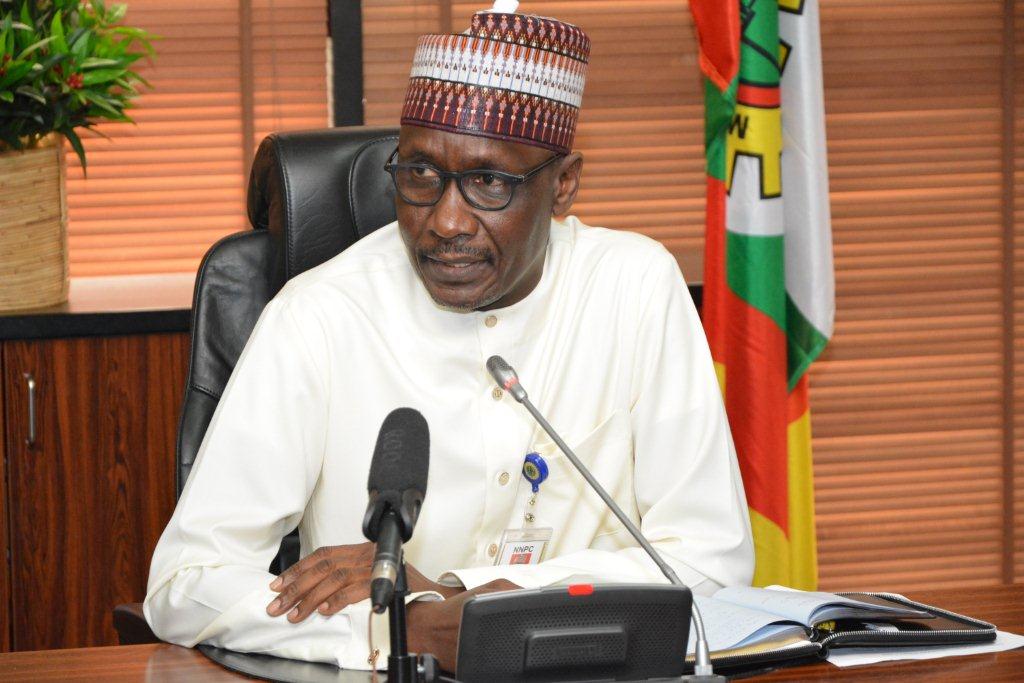
Governors will back withdrawal of petrol subsidy to end fleecing of the country, it was learnt yesterday.
They also opened discussions with the Nigeria National Petroleum Corperaton (NNPC) over the oil giant’s “zero remittance for May” letter.
A governor, who spoke in confidence, told our correspondent yesterday that the Nigeria Governors’ Forum (NGF) was on the same page with the NNPC because “fuel subsidy is a scam”.
The source added: “It is a case of heavens falling. All will be affected and hopefully, we will stop living a lie. We cannot continue with this scam called subsidy regime.
“Certainly, states may back withdrawal of fuel subsidy to have more funds for far-reaching and impactful projects for Nigerians.”
On the NNPC letter, the source said: “We are talking.”
Another governor, said: “Total withdrawal of petrol subsidy is inevitable. It is a reality we have to face as a nation.
“What is being shared from the Federation Account monthly to all the tiers of government is pittance because about N120billion is deducted for subsidy. This amounts to about N1, 3trillion to N1.4trillion annually.
“We are virtually subsidising the petrol being smuggled into neighbouring countries because our fuel consumption is between 55% and 60% of what is pushed out.
“With the subsidy level, about 27 states cannot break even. Instead, states have resorted to borrowing.
“We are already thinking ahead on palliatives which will mitigate the effect of the withdrawal of subsidy.
“The NGF is already talking with the NNPC on zero remittance and withdrawal of subsidy. The Federal Government has also raised a committee on petrol pump price ahead of the withdrawal of subsidy. The NNPC has presented all the indices to the FG-NLC committee.”
But Katsina State Governor Aminu Masari differs.
As far as he is concerned, the zero remittance plan of the NNPC will negatively impact the states and the battle against insecurity.
He told reporters at the Aso Villa after meeting Chief of Staff to the President Prof. Ibrahim Gambari, that “it’s with resources that state and local governments are able to contain some of these restive youths so that they can be used for better purposes because most of them might be foot soldiers for bandits.
“So, I think we have to look at this issue seriously, it will significantly affect even the capacity of states to pay salaries and to do what is necessary for the smooth running of government and fund the logistic requirements of security agencies.”
The federal government believes that zero remittance from the NNPC into the Federation Account next month will not amount to much.
A source at the Federal Ministry of Finance insisted yesterday that the “NNPC’s projections will not significantly affect FAAC disbursement for May”.
According to the source, “remittances from other agencies into the federation account have surpassed NNPC’s over time”.
“Contributions from the Nigeria Customs Service (NCS), the Federal Inland Revenue Service (FIRS) and remittances from non-oil sources, especially other mineral proceeds, have always been higher than what the NNPC brings to the table.”
The Finance ministry official who is a FAAC member said FAAC had survived past funds denials from NNPC, especially with under-remittance until the Corporation was forced to remit all it was owing.
Asked how this will affect workers’ salaries in the affected months and beyond the zero remittance from the NNPC persist, the official said “there are other strategic accounts the government can withdraw from to augment funds for sharing”.
“Some of the strategic accounts are the Excess Crude Account (ECA) and the Nigeria Sovereign Investment Authority (NSIA).”
Reacting to the development, Prof Uche Uwaleke of Nasarawa State University said, NNPC’s zero remittance “will adversely affect the distributable revenue for the months due largely to rising under recovery costs or petrol subsidy”.
This he said: “Is because the NNPC is a major contributor to that pool. The others are the FIRS, Customs and to a little extent, Ministry of Solid Minerals”.
Prof Uwaleke warned that “this should be of concern to Nigerians, especially civil servants at the state level, given that staff salaries, unfortunately, are either delayed or not paid whenever there is a shortfall in projected revenue. Ditto for contractors handling various projects in states”.
He advised sub national governments “to reprioritise their spending, placing premium on salaries and deferring expenditures that can wait till the situation improves”.
According to him, “these austere times equally call for cutting costs and reducing wastes in government spending”.
The NNPC had written to the Accountant-General of the Federation that “the sum of N111.966,456,903.74 will be deducted from April 2021 Oil and Gas Proceeds due to the Federation in May 2021, which will translate to zero remittance to the Federation Account from the NNPC in the month of May 2021. This is to ensure the continuous supply of petroleum products to the nation and guarantee energy security”.
The NNPC said it arrived at the decision because “the average landing cost of Premium Motor Spirit (PMS) for the month of March 2021 was N184 per litre as against the subsisting ex-coastal price of NI28 per litre, which has remained constant notwithstanding the changes in the macroeconomics variables affecting petroleum products pricing.
“As the discussions between government and the labour are yet to be concluded, the NNPC recorded a value short fall of N111,966,456,903.74 in February 2021 as a result of the difference highlighted above”.
The last two FAAC meetings witnessed major revenue shortfalls.
In April FAAC, though there was an accrued revenue of over N800 billion, the federal government adopted a tough stance the state governments to accept N680 billion as amount to be shared for the month.
The last two FAAC incidences corroborate the NNPC’s claims of sustained revenue decline affecting the federation account.
The Nigeria Labour Congress (NLC) was still awaiting the invitation of the Federal Government on resumption of talks on fuel pump price per litre.
The Petroleum Products Pricing Regulatory Agency (PPPRA), preemptively in March published a new price regime for Premium Motor Spirit.
It said with the new template, fuel was expected to sell at N209.61 per litre and at an upper retail price of N212.61 per litre.
A high-ranking labour leader said: “They said the FG-NLC committee will reconvene after the Easter break, we are awaiting the invitation of the government.
“We have made some cost saving recommendations to the government team led by the Secretary to the Government of the Federation, Mr. Boss Mustapha. We said N168 per litre pump price is realistic. We have rejected either N209.61 per litre or N212.61 per litre.”









News
We Must Build Beyond the Next Elections’ — Shettima

Vice-President Kashim Shettima has called on political leaders to look beyond election cycles and leave behind institutions that can continue to benefit Nigerians.
His remarks came at the Abuja presentation of Brigadier Musa Usman (1940–1991): Service and Impact, a book documenting the life and public service of the late military governor of the former North-Eastern State.
Represented by Aliyu Modibbo Umar, Shettima said leadership should be measured by the value that remains after an administration has left office.
“We must recover the spirit of selflessness in public service,” he said, urging leaders to “build beyond the next elections and think beyond political boundaries.”
He listed reconstruction, agriculture, education, transport, energy, industrialisation, jobs, environmental restoration, peace and security among areas where leaders must take a long-term approach.
The Vice-President pointed to Musa Usman’s administration as an example of how development can outlive a political tenure. Usman governed the former North-Eastern State from 1967 to 1975, and the region he once administered now covers six states in the North-East.
Shettima said Usman played a major role in developing Maiduguri and establishing infrastructure and institutions that later administrations were able to build upon.
Governor Babagana Zulum, who spoke at the event, described Usman as a leader who combined effective governance with integrity, discipline and humility.
Zulum said the late governor’s contributions included investments in education, healthcare and infrastructure, as well as efforts to strengthen the region’s economy.
The book, written by journalists Mahmud Jega and Theophilus Abbah, also traces Usman’s military career and his rise to leadership at a young age. It was published to preserve his record and the history of the former North-Eastern State.
Shettima said preserving such history could help younger Nigerians understand that lasting public service is about strengthening institutions and improving lives, rather than simply holding office.
News
I Wanted to Disgrace Tinubu — Omokri Reveals What He Discovered at Chicago Varsity
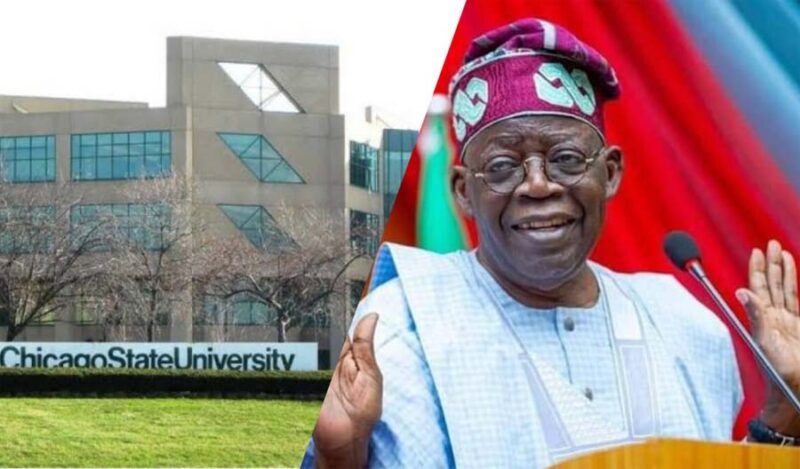
I Wanted to Disgrace Tinubu — Omokri Reveals What He Discovered at Chicago Varsity
Nigeria’s ambassador-designate to Mexico, Reno Omokri, has recounted what he described as an unexpected twist during his visit to Chicago State University (CSU) in the United States, saying he initially travelled there with the intention of scrutinising President Bola Ahmed Tinubu’s academic history.
Omokri, a former aide to ex-President Goodluck Jonathan and now a diplomatic appointee of the Tinubu administration, reportedly made the disclosure while recounting his earlier position on the controversy surrounding the President’s academic credentials.
According to the account circulating online, Omokri said his original objective was to find information that could be used to discredit Tinubu, particularly amid years of controversy over the President’s educational background.
However, he said what he encountered at the university changed his understanding of the matter.
Omokri was quoted as saying that he went to Chicago State University with a predetermined objective—to investigate Tinubu and, if possible, expose inconsistencies that could damage the President politically.
But, according to his account, the findings did not produce the outcome he expected.
Instead, he said he became convinced that Tinubu had genuinely been admitted to and attended Chicago State University.
The development is significant because Tinubu’s educational history has remained one of the most contentious issues surrounding his political career, particularly since the 2023 presidential election.
READ ALSO:
- ‘I Was Never the Chosen One’ — Dembele Responds to Mbappe
- Plateau Attacks: Gunmen Kill Passengers, 13 Dead Across Three LGAs
- 2027: Northern Lecturers Back Tinubu, ASUU Disowns Endorsement
The controversy intensified in 2023 when former Vice-President Atiku Abubakar obtained a United States court order compelling Chicago State University to release documents relating to Tinubu’s academic records.
The records were subsequently released following the order of a US federal judge. Reports at the time said the university’s records confirmed that Tinubu attended the institution and graduated in 1979.
CSU Registrar Caleb Westberg also testified under oath that Tinubu had attended and graduated from the university.
However, the controversy did not completely disappear because questions were raised about the specific diploma submitted by Tinubu to Nigeria’s electoral authorities.
Reports of the US proceedings indicated that the university had Tinubu’s academic record but could not authenticate a particular diploma presented to Nigerian authorities because that exact document was not in the university’s possession.
Against that background, Omokri’s reported admission represents a striking change in tone, considering his earlier opposition to Tinubu.
His account suggests that his visit to Chicago State University was initially motivated by political scepticism but ultimately left him convinced that there was indeed a genuine academic connection between Tinubu and the institution.
The development has generated reactions on social media, with supporters of the President viewing Omokri’s account as further vindication of Tinubu’s claim that he attended the Chicago university.
Critics, however, are likely to maintain that the issue was never simply whether Tinubu attended Chicago State University, but also concerned questions surrounding documents, identity details and the certificate submitted to the Independent National Electoral Commission (INEC).
The available reporting from the 2023 legal proceedings provides an important distinction. There is substantial documentary evidence that Tinubu attended Chicago State University and graduated in 1979. CSU’s registrar testified to his attendance and graduation, while the university released academic records pursuant to a US court order.
At the same time, the controversy over the particular diploma submitted to INEC was not identical to the question of whether Tinubu attended the university.
That distinction has continued to fuel political arguments between supporters and opponents of the President.
Tinubu’s education has remained a recurring political issue since the 2023 election, with opponents repeatedly questioning aspects of his academic credentials, while his supporters argue that the available university records establish his attendance and graduation.
The latest account attributed to Omokri therefore adds another dramatic chapter to a controversy that has survived the election, court battles and the release of university records.
For Omokri, the story appears to have taken an unexpected turn: he said he went looking for ammunition against Tinubu but returned convinced that the President was, in fact, admitted to Chicago State University.
I Wanted to Disgrace Tinubu — Omokri Reveals What He Discovered at Chicago Varsity
Interview
“Not as Corrupt as the World Thinks”: Reno Omokri Defends Nigeria’s Image and Safety

Citing economic growth and safe public festivals, Reno Omokri urges the nation to tell its own story rather than rely on external perception indexes.
Nigeria is not nearly as corrupt or unsafe as foreign reports claim, according to Reno Omokri, Nigeria’s Ambassador-designate to Mexico. In a television interview on Channels Television, Omokri explained that international assessment groups often misunderstand Nigerian customs because they apply global benchmarks that ignore local traditions.
A central issue, Omokri noted, is how different cultures view appreciation. In Nigerian society, offering a gift to say thank you to an official who provides excellent service is a familiar sign of respect, much like tipping in other parts of the world.
However, international observers often label this practice as corruption. Omokri stated that the country needs to share its own experiences directly with the world rather than allowing outside groups to set a negative narrative.
Omokri also defended the country’s safety record by pointing to Lagos, where the economy has expanded steadily and major cultural events draw massive crowds.
He highlighted the annual holiday season in Lagos, which brings more than one million visitors together peacefully each year. For Omokri, these vibrant events show that everyday life in Nigeria is full of energy, community warmth, and safety.
-

 metro3 days ago
Ondo Herbal Drink Tragedy: Survivor Vows Never to Drink Again as Death Toll Tops 30
-
 Business3 days ago
Dangote: ₦525 Refinery Shares Could Rise to ₦10,000
-
 News2 days ago
SERAP Threatens Legal Action Over ₦126bn INEC Electoral Funds
-

 metro3 days ago
MURIC fires back at Peter Obi: Forget Sallah ceremony, free Nigerian Muslims
-

 metro3 days ago
Abia Police Arrest Father, Three Others Over Alleged Attempt to Sell 16-Month-Old Daughter
-
 International3 days ago
Trump Tells Supporters to ‘Cheat Like Hell’ Ahead of US Election
-
 metro3 days ago
FG Targets 2 Million Creative Jobs by 2030
-

 metro3 days ago
How I Conspired with My Son’s Teacher to Stage His Kidnap for N15m Ransom