
News
Pope Leo XIV speaks on Nigeria insecurity, says crisis not only targeting Christians
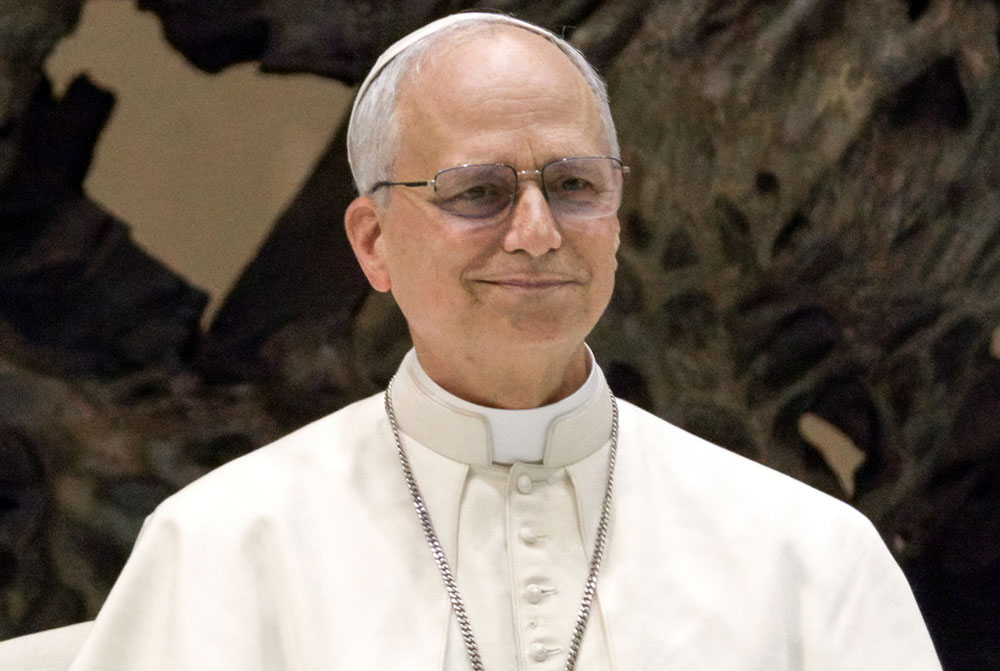
Pope Leo XIV speaks on Nigeria insecurity, says crisis not only targeting Christians
Pope Leo XIV has raised alarm over the worsening security situation in Nigeria, saying both Christians and Muslims “have been slaughtered” amid escalating terrorist attacks, economic hardship and land-related conflicts.
The Pope’s remarks, delivered in a video interview recorded Tuesday in Castel Gandolfo, Italy, and circulated online Friday, were reported by the Catholic News Agency. Responding to a question on whether Christians face genocide in Nigeria, he said there is “certainly a danger” in some regions — not only for Christians but for all citizens.
“There’s a question of terrorism. There’s a question that has to do a lot with economics, if you will, and control of the lands that they have,” he explained.
Calling for decisive action, the Pope urged Nigerian authorities to work with all communities to promote authentic religious freedom, noting that “many Christians have died.”
READ ALSO:
- Naira Trades at ₦1,450/$1 Official Rate as Parallel Market Hits ₦1,474 Amid Rising FX Demand
- Nnamdi Kanu: Benjamin Kalu Pushes for Political Solution After Court’s Life Sentence
- ISWAP Terrorists Attack Yobe Police Outpost, Kill Officer and Burn Patrol Vehicles
His comments come weeks after a controversy sparked by Vatican Secretary of State, Cardinal Pietro Parolin, who argued that Nigeria’s unrest is “not a religious conflict” but a social conflict between herders and farmers — a statement that drew criticism from groups accusing him of siding with the Nigerian government.
Parolin also emphasized that extremist attacks harm Muslims as well. “Many Muslims… are victims of this intolerance… groups that make no distinctions to advance their goals,” he said.
On Sunday, Pope Leo XIV again mentioned Nigeria while condemning global attacks on Christian communities, writing on X: “In various parts of the world, Christians suffer discrimination and persecution… I think especially of Bangladesh, Nigeria, Mozambique, Sudan…”
His remarks land amid renewed debate in the United States, where President Donald Trump recently redesignated Nigeria as a Country of Particular Concern (CPC) over allegations of Christian genocide — claims the Federal Government of Nigeria has rejected.
The controversy deepened during a U.S. House Foreign Affairs Subcommittee hearing on Thursday, where lawmakers, religious leaders and expert witnesses presented sharply divided views on the redesignation.
Pope Leo XIV Speaks on Nigeria Insecurity, Says Crisis Not Only Targeting Christians







News
Tinubu Reduces Reliance on U.S, Strengthens Defence Partnerships With Turkey, EU
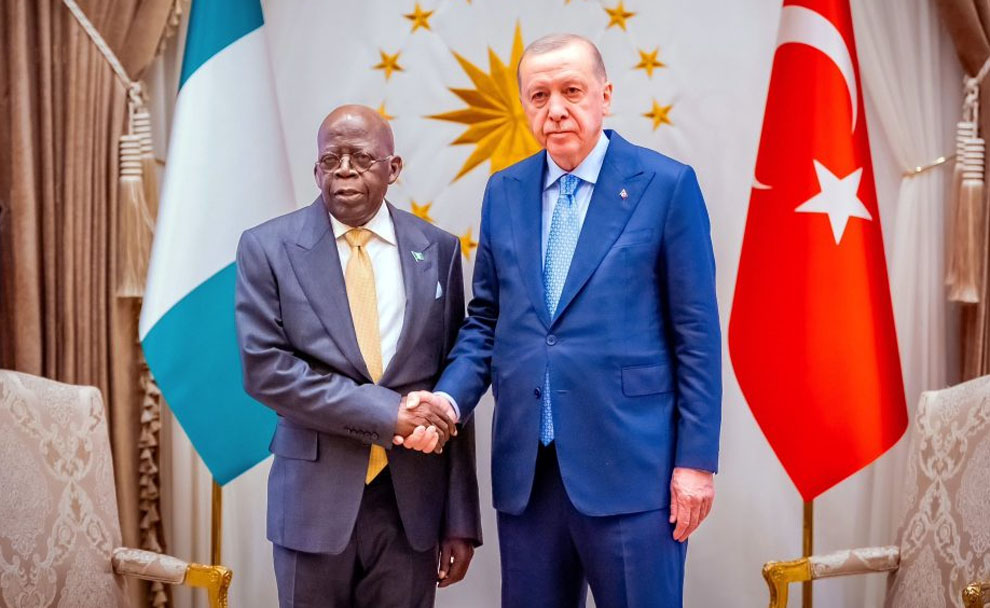
Tinubu Reduces Reliance on U.S, Strengthens Defence Partnerships With Turkey, EU
President Bola Tinubu has commenced a strategic expansion of Nigeria’s defence diplomacy, engaging the European Union (EU) and Turkey to strengthen the nation’s security architecture while reducing overreliance on the United States. The initiative comes as Nigeria faces multiple security threats, including Boko Haram insurgency in the north-east, farmer-herder clashes in the north-central region, separatist violence in the south-east, and escalating banditry in the north-west.
The move coincided with a visit to Brussels by National Security Adviser Mallam Nuhu Ribadu, who led discussions at the first EU-Nigeria Peace, Security, and Defence Dialogue. Both sides agreed to deepen collaboration on regional stability, counter-terrorism, and violent extremism, while enhancing intelligence sharing, maritime security, and cybersecurity cooperation. An EU diplomat in Abuja emphasized that the bloc would provide non-lethal military support, while respecting Nigeria’s sovereignty, describing the EU as “more consistent, more reliable, and more coherent than the United States” in delivering security assistance.
READ ALSO:
- Again, Early Morning Blaze Destroys Dozens of Shops in Kano Market
- Suspected Terrorists Warn Kebbi Residents: Pay ₦100 Million or Face Attack
- ICPC Searches El-Rufai’s Abuja Home Amid Multi-Agency Corruption Investigation
During his state visit to Turkey in January 2026, President Tinubu also held defence discussions with Turkish officials. Turkish companies pledged to supply military equipment, advanced systems, and tactical hardware, while exploring joint local production arrangements with Nigeria. Türkiye is currently regarded as a global leader in armed drones, which could bolster Nigeria’s counter-terrorism operations and reconnaissance capabilities.
Despite these new partnerships, Nigeria continues security cooperation with the United States, including deployments by United States Africa Command (AFRICOM) to support training, intelligence sharing, and operational planning. Recent U.S. personnel arrivals in Bauchi State aim to enhance counter-terrorism capacity without taking direct combat roles, operating under Nigerian command structures.
Analysts say Nigeria’s diversified defence diplomacy seeks to reduce dependency on a single partner, while providing access to a wider range of technology transfer, training opportunities, procurement options, and operational expertise. The strategy also reflects a broader trend of African nations balancing traditional defence alliances with emerging strategic partners to better address evolving security threats.
With regional instability and domestic insurgency on the rise, Nigeria’s engagement with Turkey, the EU, and other partners is expected to strengthen the Nigerian Armed Forces, enhance counter-terrorism operations, and secure national and regional stability.
Tinubu Reduces Reliance on U.S, Strengthens Defence Partnerships With Turkey, EU
News
Tinubu, German Chancellor Merz Pledge Stronger Nigeria-Germany Ties
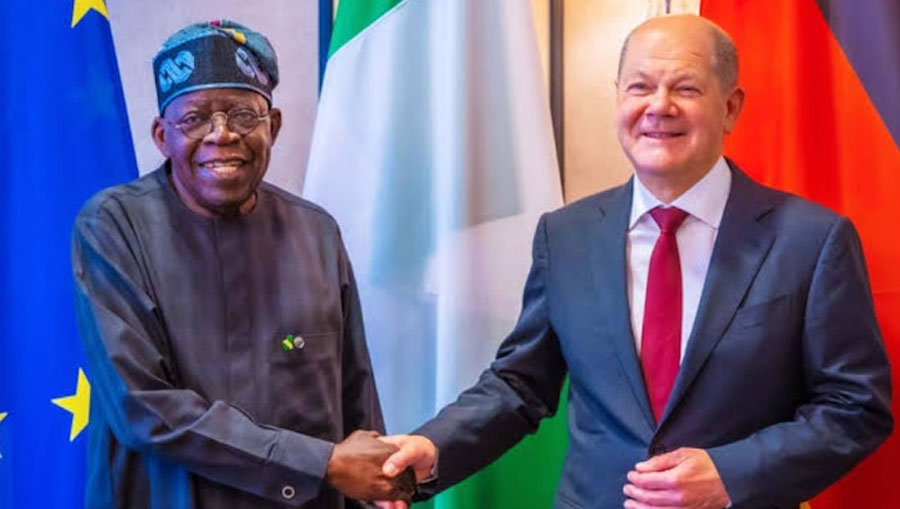
Tinubu, German Chancellor Merz Pledge Stronger Nigeria-Germany Ties
President Bola Tinubu and German Chancellor Friedrich Merz have agreed to deepen bilateral relations between Nigeria and Germany, with a focus on security cooperation, power infrastructure, and railway development.
The commitment emerged during a telephone discussion on Wednesday, in which both leaders reaffirmed their dedication to expanding collaboration across critical sectors.
A major topic was Nigeria’s Presidential Power Initiative. President Tinubu highlighted the need for further support, particularly in power transmission infrastructure, to ensure reliable electricity supply nationwide. Chancellor Merz expressed Germany’s readiness to assist, noting that Siemens could provide technical support and Deutsche Bank could finance components of the initiative.
READ ALSO:
- Tinubu, el-Rufai and the cobra
- American Woman, 64, Alleges Embassy Mocked 27-Year-Old Fiancé Before Visa Denial
- Epstein, Ex-Israeli PM Named in Alleged Profiteering From Boko Haram Crisis
Security concerns in the Sahel region also featured prominently in the call. President Tinubu stressed the urgent need for enhanced intelligence and reconnaissance capabilities, including the provision of used helicopters to strengthen regional security. “The Sahel corridor is bad and needs our support. Intelligence support and reconnaissance are needed,” he said.
Beyond security and infrastructure, both leaders emphasized the potential for collaboration in creative arts and skills development. Chancellor Merz highlighted the value of cultural exchange and proposed establishing a Great Museum of African Arts to promote African heritage internationally.
Nigeria-Germany diplomatic relations have spanned more than 65 years, with longstanding economic and political ties. Chancellor Merz also welcomed Nigeria’s incoming ambassador to Berlin, signaling intentions to further consolidate bilateral engagements.
The 10-minute telephone call, which began at 2:01 p.m. and ended at 2:10 p.m., was confirmed in a statement by President Tinubu’s Special Adviser on Information and Strategy, Bayo Onanuga, on February 18, 2026.
Tinubu, German Chancellor Merz Pledge Stronger Nigeria-Germany Ties
News
American Woman, 64, Alleges Embassy Mocked 27-Year-Old Fiancé Before Visa Denial

American Woman, 64, Alleges Embassy Mocked 27-Year-Old Fiancé Before Visa Denial
A 64-year-old American woman has claimed that officials at the U.S. Embassy in Lagos, Nigeria mocked her relationship with her 27-year-old Nigerian fiancé before denying his K-1 fiancé visa, leaving her emotionally distressed. The woman, who identified herself as Deborah, shared her experience during a live call with U.S. immigration attorney Jim Hacking, highlighting the challenges and perceived bias in the visa process.
Deborah explained that her fiancé attended a formal interview at the embassy but was issued a 221(g) refusal form, a common administrative measure indicating that further processing or verification is required before a visa can be granted. The notice stated that the applicant “does not meet the qualifications for the visa class.” Hacking told Deborah that 221(g) refusals often occur when consular officers have unresolved questions about the authenticity of a relationship, especially in cases involving significant age differences or unusual circumstances.
According to Deborah, the interview proceeded normally until the consular officer asked about the couple’s age difference. When informed that she was 64 and her fiancé 27, she alleges the officer reacted with surprise, repeatedly referenced her age, and appeared to discuss the relationship with a colleague outside the room. She described seeing both officers laughing in the hallway before returning and issuing the visa refusal.
READ ALSO:
- CBN Policies, Foreign Inflows Drive Naira to Two-Year Peak
- Edo Governor Okpebholo Names Mercy Johnson-Okojie Special Adviser
- Many Feared Dead as Suspected Lakurawa Militants Attack Kebbi Communities
Deborah said her fiancé presented about 20 documents, including photographs and chat records, to prove the legitimacy of their nearly two-year-long relationship. However, she claimed the consular officer dismissed the evidence as unnecessary at that stage.
Hacking advised Deborah that under such circumstances, the couple might consider marrying first and applying for a spousal visa, rather than a fiancé visa. He explained that even then, the process could take up to two years, a timeline that left Deborah visibly distressed during the live call.
Visa denials under Section 221(g) of the U.S. Immigration and Nationality Act are not uncommon and typically signal the need for additional documentation or administrative review rather than permanent ineligibility. Recent U.S. visa policies for Nigerians have tightened, including additional social-media disclosure requirements, reflecting broader efforts to combat fraud and ensure compliance with immigration rules.
Deborah described the denial as a “devastating blow” to a relationship she and her fiancé have nurtured for years. Despite prior visits to Nigeria, she said she had been hoping to spend more time with her fiancé in the U.S., a plan now complicated by procedural delays and bureaucratic hurdles.
American Woman, 64, Alleges Embassy Mocked 27-Year-Old Fiancé Before Visa Denial

-

 News3 days ago
Saudi Arabia Confirms Sighting of Ramadan Crescent, Fasting Begins Wednesday
-

 metro3 days ago
Lagos Woman Shares Ordeal After Alleged Rape, Sparks Nationwide Outcry
-

 News2 days ago
Ramadan Begins in Nigeria as Sultan Confirms Crescent Sighting
-

 International19 hours ago
Canada Opens New Express Entry Draw for Nigerian Workers, Others
-
 metro2 days ago
Seven Killed in Horrific Crash at Ota Toll Gate
-
 metro3 days ago
Deadlock at National Assembly as House Snubs Electoral Act Bill Meeting on E-Transmission Clause
-

 News2 days ago
Korope Drivers Shut Down Lekki–Epe Expressway Over Lagos Ban (Video)
-

 Health2 days ago
Ramadan Health Tips: Six Ways to Stay Hydrated While Fasting