
metro
Prodiva set to celebrate Nigeria’s unity in diversity on Independence day

Prodiva Set to Celebrate Nigeria’s Unity in Diversity on Independence Day
As Nigeria is set to mark its 65th Independence Day on October 1, 2025, a new cultural initiative, Prodiva, has unveiled plans for a vibrant celebration of the nation’s prosperity through its diversity.
The event, titled “Prodiva Independence Fiesta”, is the brainchild of Bolatito Ajibode, a veteran banker turned entrepreneur, who is passionate about showcasing Nigeria’s unique cultural identity.
The celebration is being organized by Prodiva, a name derived from Prosperity and Diversity, and will take place at Muri Okunola Park in Lagos, according to a statement obtained on Monday.
Sponsored by Ginger Up Nigeria Limited, makers of healthy ginger-based beverages like Ginger Up and Ginger Shot, the fiesta will feature a panel of young Nigerian entrepreneurs.
These trailblazers, many of whom have launched successful small and medium-scale businesses, will share their journeys—challenges, triumphs, and lessons—in a bid to inspire the next generation.
“Our goal is to energize young Nigerians to believe in what is possible here at home,” Ajibode said.
“We want to motivate them to build rather than flee, to see opportunity rather than despair.”
The keynote speaker at the event is Ifedolapo Runsewe, the innovative founder of Freee Recycle Limited in Ibadan, which has gained national attention for its transformative work in tyre recycling.
In addition to motivational talks and cultural showcases, the event will also offer free exhibition booths for partner brands and businesses to display their products and services.
READ ALSO:
- El-Rufai fires Peter Obi, Amaechi on one-term presidency
- JUST IN: Former Man Utd boss Ten Hag sacked by Leverkusen
- NSA’s office dismisses El-Rufai’s claim of ransom payments to bandits
Ajibode, who describes herself as “a woman with green blood” for her unwavering love for Nigeria, said the Lagos edition is just the beginning. Prodiva Independence Fiesta is envisioned as an annual, nationwide movement, rotating across Nigeria’s six geopolitical zones.
“By God’s grace, it will become a national event,” she said. “After the second edition in Lagos, we plan to move to Abuja, Port Harcourt, Enugu, and Kano—eventually hosting it simultaneously in all six zones.”
A Cultural Fabric with a Purpose
The inspiration behind Prodiva is more than just a celebration—it’s also about creating a unifying cultural identity. Ajibode first launched the Prodiva fabric in 2020 to mark Nigeria’s 60th Independence anniversary.
Unlike Ghana’s iconic kente cloth, she felt Nigeria lacked a fabric that truly represents all its peoples.
Prodiva fabric is a carefully designed textile that incorporates symbols from each of Nigeria’s six geopolitical zones:
North Central – Lush green landscape, representing the region’s vast agricultural potential.
North East – The handcrafted calabash, used for serving cow milk, symbolizing tradition.
North West – The Arewa knot, a symbol of unity and political identity.
South West – The Oduduwa crown, signifying heritage and authority.
South East – The Ofor staff, representing justice and truth in Igbo culture.
South South – The Fedora black hat, also known as the Niger Delta cap, symbolizing resource control and identity.
“Despite being the largest consumer of Ankara in Africa, Nigeria lacked a signature fabric like Ghana’s kente,” Ajibode noted. “So I decided to create one that reflects who we are—diverse, yet united.”
With support from design experts at Yaba College of Technology, the Prodiva fabric was born and has since gained traction as a proudly Nigerian attire. It will also be promoted during the Independence Fiesta, encouraging Nigerians to wear local instead of imported fabrics.
From Kitchen Startup to National Brand
Ajibode’s story mirrors the very essence of Prodiva. In 2016, while still a top executive at Stanbic IBTC Bank, she began making a ginger-and-honey mixture at home for her husband. When imported ginger granules disappeared from shelves, she saw an opportunity. With support from her employer’s Outside Business Interest (OBI) policy, she started Ginger Up Nigeria, now the country’s pioneer in commercial ginger-based drinks.
Today, the company employs over 50 people and is steadily building a footprint beyond Nigeria.
After a 32-year banking career across three major banks, Ajibode retired in July 2025 from her most recent role as Deputy Managing Director of the Lekki Free Zone Development Company, where she served for three years.
She now focuses full-time on growing her ginger beverage business and promoting Prodiva as a cultural and entrepreneurial movement.
For Ajibode, this event is more than just a celebration—it’s a call to action.
“We are the prosperity in our diversity,” she said. “And it’s time we told that story to the world.”
Prodiva Set to Celebrate Nigeria’s Unity in Diversity on Independence Day









metro
Lagos Court Remands Four Police Officers Over Owode Onirin Market Killings
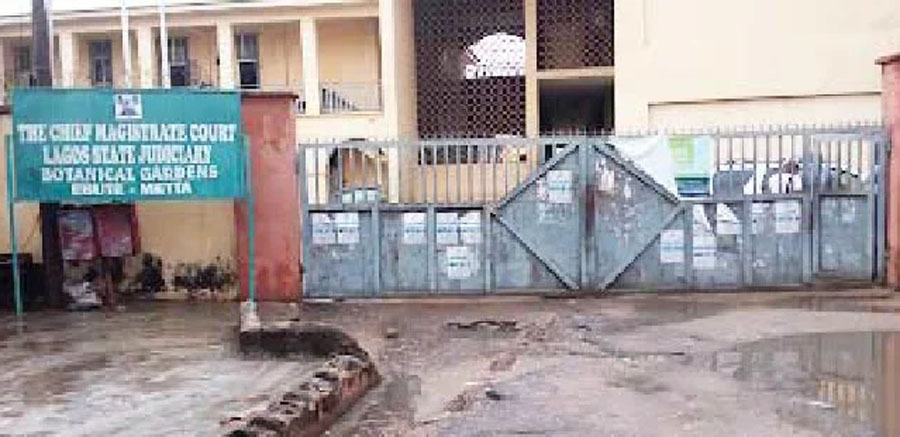
Lagos Court Remands Four Police Officers Over Owode Onirin Market Killings
A Chief Magistrates’ Court in Ebute Metta, Lagos, has ordered the remand of four police officers accused of killing traders at the Owode Onirin International Spare Parts Market in Lagos State.
The defendants — Msanu Bala (41), Jibrin Samaila (47), Ibrahim Garuba (29), and Ibrahim Kashimu (26) — were arraigned on a seven-count charge bordering on conspiracy and murder over the deadly incident that reportedly occurred at the busy market.
According to the prosecution, the alleged offence took place on August 27, 2025, at about 9:00 a.m., when the officers and others still at large allegedly opened fire on traders using AK-47 rifles during a confrontation at the market.
The prosecutor, O.W. Ologun, told the court that the accused officers allegedly conspired to carry out the attack, which resulted in the deaths of several traders and injuries to others.
The charge sheet listed six victims allegedly killed during the shooting. They include Bamidele Dare Mufutau, Adebayo Adewale Mathew, Adeoye Taiye, Abraham Idowu Temilola, Akinboye Oluwaseyi Olamilekan, and Akeem Aderemi Adeoye.
READ ALSO:
- UNILAG Faults ASUU Strike, Insists Examinations Will Continue Despite Lecturers’ Protest
- Boko Haram, ISWAP Kill Officers, Soldiers in Fresh Attacks on North-East Military Bases
- Nigeria Security: FG Knows Every Terrorist by Name, Location — Sheikh Gumi
Authorities said the alleged offences contravene Sections 223 and 233 of the Criminal Law of Lagos State, 2015, which deal with conspiracy and murder.
Following their arraignment, the presiding magistrate E. Kubeinje ordered that the suspects be remanded at the Kirikiri Custodial Centre pending legal advice from the Director of Public Prosecutions (DPP).
The court subsequently adjourned the case until April 15, 2026, for mention.
Counsel to the defendants, Azuri Ejiofor, opposed the remand request, arguing that the accused officers had already spent more than five months in detention before being brought before the court.
However, the court granted the prosecution’s request for remand while awaiting the DPP’s legal advice to determine whether the case would proceed to full trial.
The case is linked to a violent confrontation between traders and armed security operatives during a dispute reportedly related to demolition activities and land ownership issues at the Owode Onirin market.
The incident sparked public outrage among traders and residents, who demanded justice for the victims killed during the shooting at the popular spare parts market in the Kosofe area of Lagos State.
Earlier, the Lagos State Police Command confirmed that the officers involved in the incident had been dismissed from the Nigeria Police Force following investigations into the killings.
Authorities say the prosecution of the suspects is part of efforts to ensure accountability and justice over the Owode Onirin market killings.
Lagos Court Remands Four Police Officers Over Owode Onirin Market Killings
metro
Boko Haram, ISWAP Kill Officers, Soldiers in Fresh Attacks on North-East Military Bases
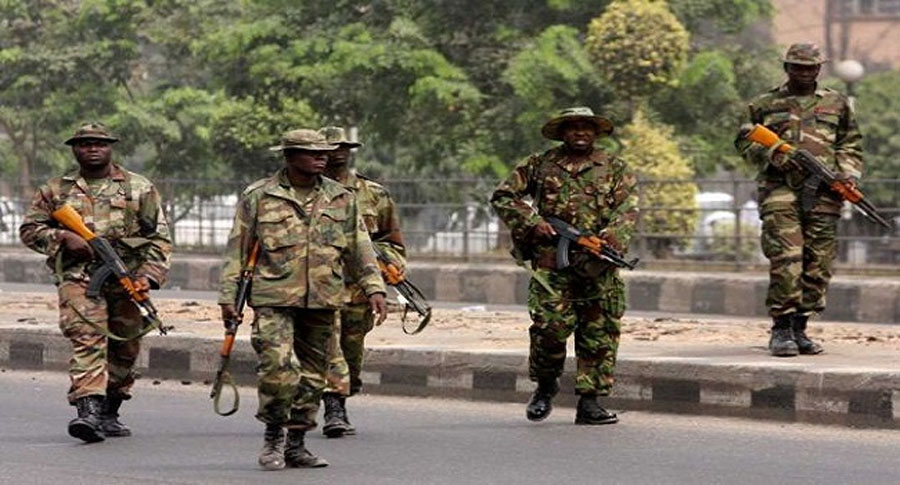
Boko Haram, ISWAP Kill Officers, Soldiers in Fresh Attacks on North-East Military Bases
Jihadi extremist groups, including Boko Haram and its faction, the Islamic State West Africa Province (ISWAP), have intensified coordinated attacks on military bases across Nigeria’s North-East, leaving several officers and soldiers dead and raising fresh concerns about security in the region.
Over the past week, insurgents carried out multiple assaults on military formations in Borno and Yobe states, targeting troop positions in remote areas and communities around the Lake Chad region.
Security reports indicate that at least two military officers and several soldiers were killed during the latest wave of attacks, while analysts estimate that no fewer than four officers may have died within the period as militants launched simultaneous operations against different bases.
The Nigerian military confirmed the incidents, describing them as coordinated attempts by terrorists to overwhelm troop positions.
Military spokesperson Maj.-Gen. Sani Uba said the attacks, which occurred between Sunday and Monday, resulted in the loss of an unspecified number of soldiers and at least one officer.
According to him, the casualties add to the deaths of several soldiers and another officer earlier recorded during separate attacks earlier in the week.
Reports show that Islamic extremists launched at least six attacks over the weekend across Borno and Yobe states, striking several military formations and checkpoints across the wider Lake Chad basin, a region that has remained the epicentre of the insurgency for more than a decade.
READ ALSO:
- Nigeria Security: FG Knows Every Terrorist by Name, Location — Sheikh Gumi
- Iran Security Chief Fires Warning at Trump as US-Iran Tensions Escalate
- Egypt Raises Fuel Prices Up to 30% as Middle East War Drives Global Energy Costs
During the raids, insurgents reportedly carted away military trucks, motorcycles, weapons and ammunition from some of the bases after temporarily overrunning the facilities.
Videos circulated by ISWAP after the attacks showed militants displaying weapons, ammunition, motorcycles and vehicles which the group claimed were seized during the assaults.
Security experts say such attacks are often aimed at replenishing insurgents’ weapons stockpiles.
Taiwo Adebayo, an analyst at the Institute for Security Studies, said insurgents typically target military camps to seize arms and supplies.
“When they hit those camps, they strip the base of weapons, burn it down and retreat into the forests,” he said.
Another security researcher, Malik Samuel of Good Governance Africa, warned that the vulnerability of some military bases allows insurgents to strengthen their arsenal without spending resources on purchasing weapons.
“As long as military bases remain vulnerable to being overrun, ISWAP does not need to spend money buying arms,” he said.
The renewed attacks have triggered public anger in Nigeria, with some citizens accusing the administration of President Bola Tinubu of focusing on political developments ahead of the next presidential election rather than addressing worsening insecurity in the North-East.
Observers note that although ISWAP has increased attacks on military positions in recent months, the latest wave marks one of the few times the group has launched multiple coordinated assaults on several bases within a short period.
The attacks are occurring despite increased security cooperation between Nigeria and the United States, under which more than 100 US troops have been deployed to assist the Nigerian military with training, logistics and intelligence support.
Analysts say insurgents continue to exploit limited government presence and weak security coverage in remote communities, enabling them to move quickly between forests and border areas across the Lake Chad region.
Nigeria’s Boko Haram insurgency, which began in 2009, remains one of the country’s deadliest security crises, killing thousands of people and displacing millions across the North-East and neighbouring countries.
Boko Haram, ISWAP Kill Officers, Soldiers in Fresh Attacks on North-East Military Bases
metro
Nigeria Security: FG Knows Every Terrorist by Name, Location — Sheikh Gumi
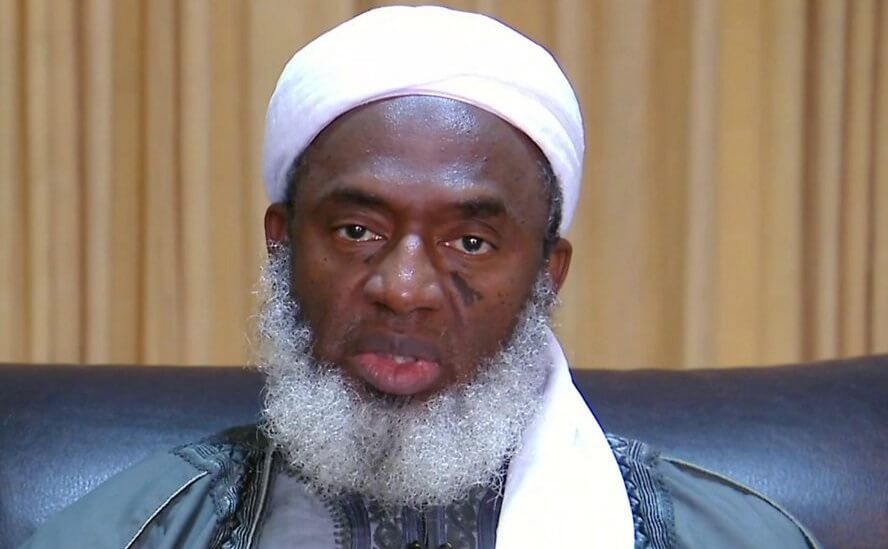
Nigeria Security: FG Knows Every Terrorist by Name, Location — Sheikh Gumi
Kaduna‑based Islamic scholar Sheikh Ahmad Abubakar Gumi has alleged that the Federal Government of Nigeria (FG) possesses detailed intelligence on terrorists and armed bandits, including their names and locations, underscoring the government’s awareness of insurgent activities across the country. The statement was made during a recent interview with DRTV, which quickly trended on social media, sparking national discussion about Nigeria’s ongoing security crisis.
Gumi was responding to claims that he personally maintains contact with terrorist and bandit leaders responsible for attacks and kidnappings in northern Nigeria. He clarified that his engagements with armed groups are never conducted alone, but always in coordination with security agencies, including the police and military.
“The government knows every terrorist by name and by location,” Gumi said. “I don’t go alone to negotiate — I go with the police and other security agencies.” He also revealed that some negotiation efforts involved visits to traditional rulers and trips into forested areas believed to be hideouts for armed groups. “I would go to the Emirs. In fact, when we went to one forest, I even went with women into the bush,” he added.
READ ALSO:
- Iran Security Chief Fires Warning at Trump as US-Iran Tensions Escalate
- Egypt Raises Fuel Prices Up to 30% as Middle East War Drives Global Energy Costs
- Nothing Will Happen if You Die, Afenifere Director Tells Peter Obi
Gumi’s Role in Dialogue and Negotiation
Gumi, a former army captain and respected Islamic cleric, has participated in several dialogue initiatives with armed groups, including Boko Haram factions and bandit networks, advocating for negotiation as a means to reduce violence and encourage fighters to lay down their arms. He emphasized that peaceful engagement remains a vital component of Nigeria’s security strategy, particularly in areas where military operations alone have struggled to restore stability.
The cleric’s comments have reignited debate over the effectiveness of Nigeria’s counter-terrorism strategies. While some analysts say Gumi’s claims highlight the wealth of intelligence available to the government, critics question why insurgent activity continues despite this knowledge. Many Nigerians on social media expressed concerns over the implementation of intelligence and the apparent inability to fully neutralize armed groups.
Public Reactions and Security Implications
Reactions to Gumi’s statements were mixed. Supporters argue that his involvement is crucial for mediating conflict and reducing bloodshed, while critics worry that such negotiations could legitimize criminals and undermine military efforts. Similar assertions by regional leaders in the past have also prompted debate about how intelligence and security operations are coordinated across Nigeria’s troubled regions.
As of now, the Federal Government and security agencies have not officially confirmed or refuted Gumi’s claims, leaving the interview as a focal point in ongoing discussions about national security, counter-insurgency strategy, and intelligence deployment.
Nigeria Security: FG Knows Every Terrorist by Name, Location — Sheikh Gumi

-
 International3 days ago
Top 10 Strongest Militaries in the World in 2026 – Full Ranking
-

 metro2 days ago
Viral Video Shows Man Disarming Robbers After Minna Bank Heist, ₦10m Stolen
-

 Business2 days ago
NNPCL, Marketers Increase Petrol Price Again Within 24 Hours After Dangote Refinery Hike
-

 metro2 days ago
Tragedy in Ibadan as Woman, 26, Dies at Boyfriend’s Residence
-
 metro3 days ago
EFCC Intercepts Wife of Federal High Court Chief Judge With $160,000 Cash
-

 Business15 hours ago
JUST IN: Dangote Refinery Cuts Petrol, Diesel Ex-Depot Prices Amid Market Relief
-

 metro2 days ago
Students Escape as Four-Storey School Building Collapses in Lagos
-
 News3 days ago
Strait of Hormuz Crisis Threatens Nigeria’s Food Inflation Progress as Oil Prices Surge