
International
Putin’s troops willing to kill civilians as ‘collateral damage’ in war, says UK

British defence chiefs said on Wednesday there was a “realistic possibility” that a horrific missile strike on a shopping centre in Ukraine may have been intended for another nearby target.
But they stressed that Russian military planners were “highly likely” to be willing to kill many civilians as “collateral damage” in Vladimir Putin’s war in Ukraine.
They also warned that the “shortcomings” of Mr Putin’s military planners and a “shortage” of Russian precision missiles was likely to lead to more atrocities with civilians being killed.
In its latest intelligence update, the Ministry of Defence in London said: “There is a realistic possibility the missile strike on the Kremenchuk shopping centre on 27 June 2022 was intended to hit a nearby infrastructure target.
READ ALSO:
- 2023: Court rejects motion seeking Tinubu, Atiku’s disqualification
- Weststar: Our dealers are lifeblood of Mercedes-Benz in Nigeria
- Gay Asylum Seeker to Be Deported to Nigeria From UK
“Russia’s inaccuracy in conducting long range strikes has previously resulted in mass civilian casualty incidents, including at Kramatorsk railway station on 9 April 2022.”
It added: “Russian planners highly likely remain willing to accept a high level of collateral damage when they perceive military necessity in striking a target.
“It is almost certain that Russia will continue to conduct strikes in an effort to interdict the resupplying of Ukrainian frontline forces. Russia’s shortage of more modern precision strike weapons and the professional shortcomings of their targeting planners will highly likely result in further civilian casualties.”
Mr Putin’s army was also reported to make more progress in the eastern Donbas region where he is focusing his military campaign.
The MoD added: “Russian forces continue to make incremental advances in their efforts to encircle the town of Lysychansk. Since 25 June 2022, Russian forces have advanced a further 2km near the Lysychansk oil refinery, south of the town.”











International
Several U.S. Warplanes Crash in Kuwait Amid Ongoing Iranian Strikes
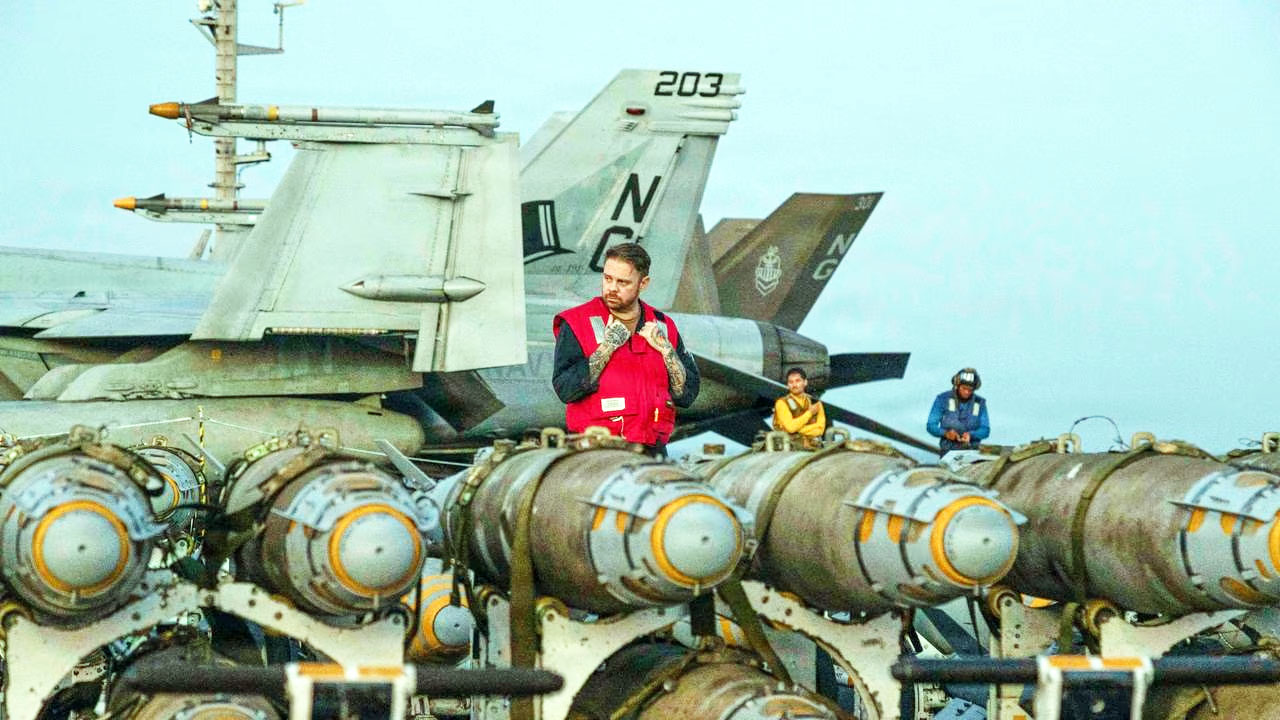
Several U.S. Warplanes Crash in Kuwait Amid Ongoing Iranian Strikes
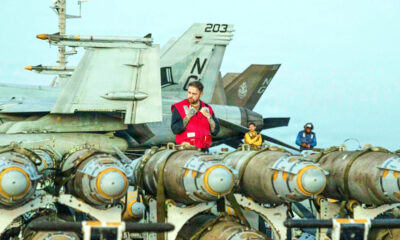
Several U.S. military warplanes crashed in Kuwait on Monday, March 2, 2026, amid ongoing Iranian retaliatory strikes across the Gulf region, Kuwait’s Ministry of Defence confirmed.
According to the ministry, all aircrews survived, were safely evacuated, and were taken to hospitals for evaluation. Their condition is reported as stable, and an investigation into the cause of the crashes is underway.
The United States Central Command (CENTCOM) stated that three F‑15E Strike Eagle fighter jets were mistakenly shot down by Kuwaiti air defence systems during heightened aerial operations, marking a friendly-fire incident amid the ongoing U.S.–Iran conflict.
READ ALSO:
- Wike Blasts Kingibe Over FCT Council Election Remarks
- Israeli Airstrikes Kill 31 in Lebanon as Hezbollah Loses Senior Figures
- Nigeria to Receive Breakthrough HIV Prevention Drug This Month – NACA
Smoke was also reported near the United States Embassy in Kuwait City, though officials have not confirmed any direct strike on the compound. The embassy issued a security alert advising people to avoid the area due to continuing threats from missiles and drones.
The crashes coincide with Iran’s third consecutive day of retaliatory attacks following U.S. and Israeli strikes on Iranian territory, targeting military bases, infrastructure, and strategic sites across Gulf countries, including UAE, Qatar, and Bahrain. Iranian strikes have already resulted in civilian casualties, injuries, and property damage.
Kuwaiti authorities reported that debris from intercepted Iranian missiles and drones caused minor injuries to workers at the Mina Al-Ahmadi refinery. Kuwaiti air defence systems reportedly intercepted several incoming projectiles, helping prevent further casualties.
The incident highlights the risks of airspace misidentification in a region where multiple allied and hostile forces are operating simultaneously. Analysts warn that such events could escalate tensions further, particularly as Iran continues targeting U.S. and allied military assets in the Gulf.
The ongoing conflict has prompted heightened security measures across Gulf states, including embassy alerts and travel advisories, as concerns grow over the potential for a broader regional confrontation.
Several U.S. Warplanes Crash in Kuwait Amid Ongoing Iranian Strikes
International
Israeli Airstrikes Kill 31 in Lebanon as Hezbollah Loses Senior Figures
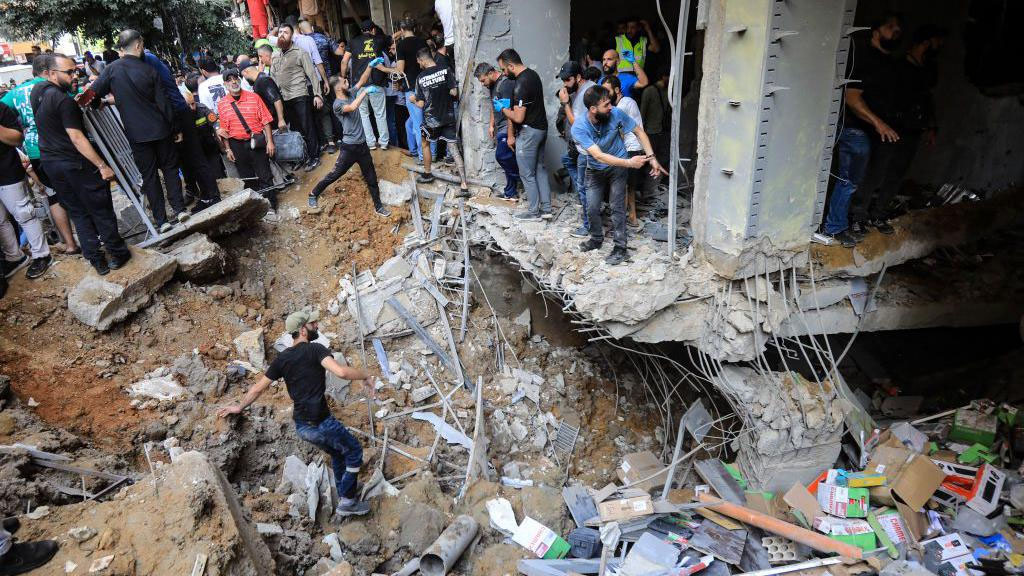
Israeli Airstrikes Kill 31 in Lebanon as Hezbollah Loses Senior Figures
Israeli airstrikes have killed at least 31 people in Lebanon, following renewed cross-border hostilities between Hezbollah and Israel, Lebanese health authorities have confirmed.
The overnight Israeli raids targeted southern Lebanon and the southern suburbs of Beirut, areas regarded as strongholds of Hezbollah. The Lebanon Ministry of Public Health said more than 100 people were injured, adding that the death toll could rise as several victims remain in critical condition.
Israel’s military said the attacks were aimed at Hezbollah infrastructure and senior operatives. The Israel Defense Forces (IDF) described the strikes as a response to recent rocket and drone fire from Lebanese territory into northern Israel, which Israeli officials said posed a direct threat to civilian communities.
READ ALSO:
- Nigeria to Receive Breakthrough HIV Prevention Drug This Month – NACA
- Iran Retaliates: Gulf States Allied With US Hit by Missiles, Drones
- Islamic Leader Warns Tinubu: State Police Could Be Used Against Opponents
Lebanese security sources reported that several senior Hezbollah figures were among those killed, though the group has not released an official list of casualties or confirmed the identities of the alleged commanders. Hezbollah has acknowledged losses but has so far withheld operational details.
Residents in Beirut’s southern districts reported multiple explosions before dawn, with thick plumes of smoke rising over residential and commercial areas. In towns close to the Israel–Lebanon border, emergency workers searched through rubble, while ambulances rushed the wounded to hospitals already under severe strain.
The latest escalation follows days of rising tension along the Israel–Lebanon frontier, marked by near-daily exchanges of fire. Hezbollah has said its cross-border attacks are retaliation for Israeli military actions elsewhere in the region, while Israel has warned it will not tolerate sustained threats to its northern border.
Security analysts warn the latest violence risks dragging Lebanon deeper into a widening regional confrontation, at a time when the country is battling economic crisis, political instability, and overstretched public services.
Despite intensifying international calls for restraint, both sides have placed security forces on heightened alert. With senior figures reportedly killed and retaliatory rhetoric hardening, fears are growing that the conflict could escalate further in the coming days.
Israeli Airstrikes Kill 31 in Lebanon as Hezbollah Loses Senior Figures
International
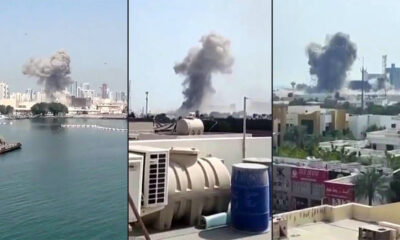
Iran Retaliates: Gulf States Allied With US Hit by Missiles, Drones
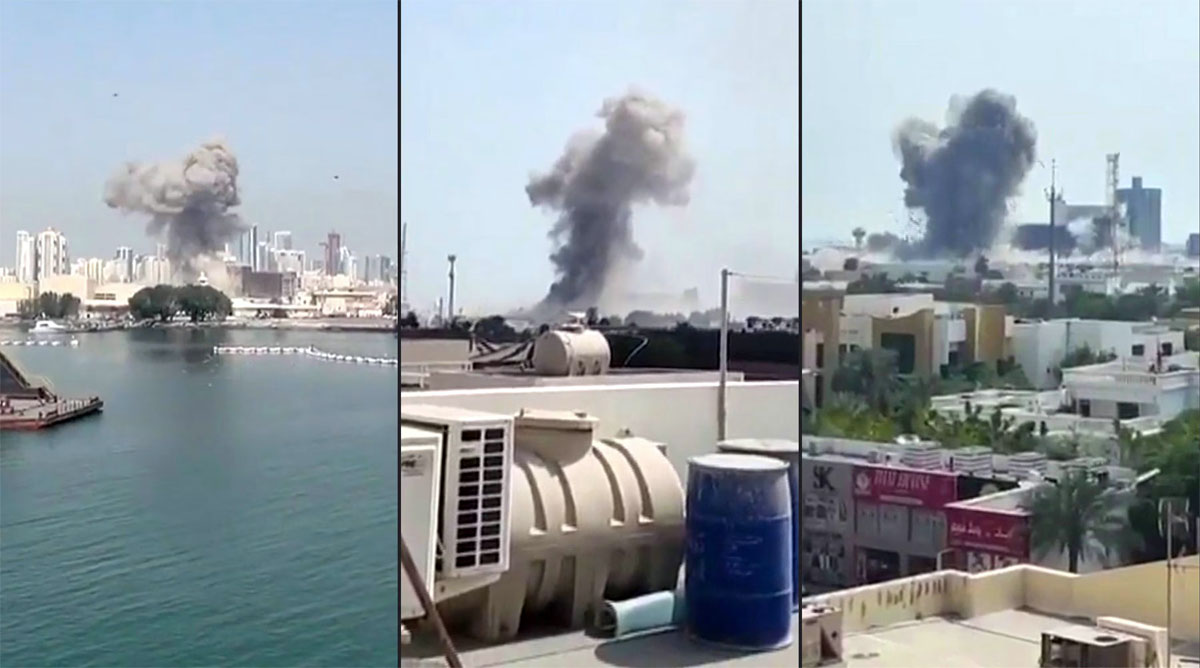
Iran Retaliates: Gulf States Allied With US Hit by Missiles and Drones
Abu Dhabi, Bahrain, Kuwait, Qatar, Saudi Arabia – Gulf nations allied with the United States have borne the brunt of Iranian missile and drone attacks in a dramatic escalation following US‑Israeli strikes on Iranian territory. The offensive, launched by Iran over the weekend, has targeted both military and civilian infrastructure, causing casualties, property damage, and widespread concern across the region.
According to the UAE Ministry of Defence, its air defences intercepted 165 ballistic missiles, two cruise missiles, and 541 drones aimed at the Emirates, preventing larger-scale devastation. However, debris from interceptions has still caused property damage and civilian injuries, with at least three deaths confirmed. Airports and commercial areas in Abu Dhabi and Dubai faced temporary closures as emergency measures were implemented.
Bahrain, Kuwait, Qatar, and Saudi Arabia have also reported missile and drone strikes, with UAE‑style interception efforts mitigating some of the damage. Civilian infrastructure, including residential buildings, airports, and commercial facilities, sustained damage from falling debris. Local authorities confirmed that dozens of people were injured, some critically.
READ ALSO:
- Daddy Freeze Warns Couples Over 40: ‘Avoid Moving Abroad, Especially US, UK’
- Austin Bar Shooting Kills 3, FBI Investigates Possible Terrorism Link
- Presidency Denies Alleged Poison Plot Against President Tinubu, Calls Viral Report Fake
The attacks follow Iran’s warning that it would retaliate against any US and Israeli military action. Iranian officials have denied targeting neighboring states directly, insisting that strikes are aimed at US forces and allies in the region. Nevertheless, the Gulf Cooperation Council (GCC) countries condemned the attacks, describing them as violations of sovereignty and international law. They have coordinated with the United States to bolster defensive measures and prevent further civilian harm.
In Saudi Arabia, missiles were intercepted over Riyadh and the Eastern Province, prompting an official statement condemning the attacks as “blatant and cowardly.” Oman, traditionally neutral and mediating in nuclear talks, also experienced limited drone strikes on its commercial port at Duqm.
Regional and global responses have been swift. The United States and Israel continue their operations to degrade Iran’s missile and drone capabilities, while Gulf states brace for potential further escalation. Experts warn that continued attacks could destabilize energy markets, especially through key corridors like the Strait of Hormuz, and exacerbate political tensions in the region.
The ongoing crisis highlights the risks faced by Gulf allies of the US, who are now directly exposed to Iran’s military retaliation. Observers caution that while air defences have mitigated a large-scale catastrophe, prolonged conflict could have severe humanitarian, economic, and security consequences.
Iran Retaliates: Gulf States Allied With US Hit by Missiles, Drones

-
 International3 days ago
Iran: US, Israel launch another strikes, Commander, Defence leader, five other top officials killed
-

 International3 days ago
Kamala Harris Slams Trump for Dragging U.S. Into ‘Unwanted War’ in Iran Conflict
-

 metro3 days ago
Hajj, Umrah Are for Muslims Only – Scholar Urges NAHCON to Tighten Screening
-
 International2 days ago
Iran Retaliates: Gulf States Allied With US Hit by Missiles, Drones
-
 International2 days ago
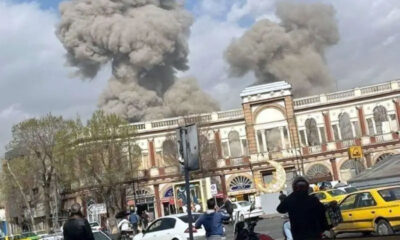
Saudi Arabia Denies Lobbying US to Strike Iran as Gulf States Respond to Escalation
-

 International3 days ago
BREAKING: Iran Forms Three-Member Leadership Council to Steer Country After Khamenei’s Death
-
 International2 days ago
Several U.S. Warplanes Crash in Kuwait Amid Ongoing Iranian Strikes
-

 metro2 days ago
Daddy Freeze Warns Couples Over 40: ‘Avoid Moving Abroad, Especially US, UK’