

Health
Ramadan: Consumption Of ORS, Other Energy Drinks Surge In Kano

-
Indiscriminate consumption dangerous – Experts
-
Nothing wrong with it – Clerics
For many Muslims around the world, Ramadan is a month of reflection, introspection and religious growth. It is also a month of challenging dietary changes as the Muslim faithful are required to eat and drink only twice a day. While many Muslims partake in the fast with healthy foods and drinks, some have decided to supplement with energy drinks and most recently, ORS.
ORS or Oral Rehydration Solutions are used to combat dehydration in people suffering from diarrhea. It contains water, electrolytes and some carbohydrates that replenish the energy in patients with diarrhea. It is usually sold over the counter and often without the requirement of a prescription, hence the easy access to the pill.
Daily Trust gathered that some young Muslims in Kano have now taken to drinking ORS at Sahur, the mealtime for fasting Muslims before the break of dawn, while some even at Iftar when it is time to break their fast.
One of the users, Mariya Sani, told Daily Trust that using ORS during Sahur and Iftar was the only way to get through the fasting.
“I am a tailor, I use energy to work and I easily get tired. This is why I take ORS for Sahur to have the energy I need to work. If I don’t take it, I become weak. I also take it during Iftar to regain my strength”, she said.
Like Mariya, Hadiza Sule also believes that taking ORS was the key to maintaining energy during Ramadan.
She told Daily Trust that she believes taking ORS was the only way to fast till the end and justified her action by saying, “I know doctors prescribe it for sick people who are weak and since fasting naturally makes us weak, I take it to regain strength.
“My 10-year-old son came back from Islamiyya School last week and told me I should buy ORS for him so that he can see through the fasting,” a father, who asked not to be named, said, adding that it is now common knowledge for his son to be demanding for it.
Muhammad Yusuf says he takes the solution because he believes that the drug has no side effects whatsoever even though he takes it without prescription. He said: “I have been taking ORS for a while now, even outside of the fasting period. But during fasting, I take it at Sahur and Iftar to keep my energy up. I have been taking it for a long time now and it doesn’t harm.”
The increase in the consumption of the drugs like other energy drinks has naturally increased its demand at pharmacies and patent medicine stores in the city as admitted by Yahaya Muhammad Sani, a pharmacist.
Sani told one of our reporters that “With the coming of Ramadan, there is a high surge in the demand for ORS/ORT. People come here to purchase at Iftar and keep it to use during Sahur.
“We do sell a carton now in a week because of the demand but before the Ramadan fast, we barely sold 10 out of the 100 sachets in a carton.”
Indiscriminate consumption dangerous – Experts
But as a pharmacist, Sani said the indiscriminate consumption of the solution could have an adverse effect on the person.
“There is a problem taking ORS indiscriminately without a doctor’s prescription. If you are aged or have any underlying health condition, you are more vulnerable to problems. People should avoid taking it and take a lot of water instead.”
He said pharmacists cannot regulate how the people access the drug because “When they come to buy, if you refuse to sell to them, they would still go elsewhere to buy, so I have to reluctantly sell to them.”
READ ALSO:
- Birthday party turns graveyard as policeman kills two + Video
- Bauchi Airport In Complete Darkness When Police Helicopter Crashed – Report
- APC Ticket: 2 Northern Govs Behind Jonathan’s Return Bid
Speaking in a similar vein, Naseeba Babale, a lab scientist said that the indiscriminate consumption of ORS might not end well for its consumers.
“ORS is given to people that have lost something we call electrolytes usually through diarrhea and sometimes vomiting.
“Although people get dehydrated during fasting, it does not lead to electrolyte loss. You see, it contains some salts, which the body of a fasting person doesn’t really need.
“People should be wary about taking it because it could lead to an overload of sodium and then hypertension might set in.”
A medical doctor, Abdullah Shittu also called on people to be wary of indiscriminate consumption of the solution. “This is more, especially with people who are already predisposed to hypertension, they should avoid taking ORS.”
He added that people should avoid using unprescribed drugs.
ORS not haram – Clerics
An Islamic cleric, who preferred not to be named, told Daily Trust that although culturally and even to an extent, morally taking energy supplements like ORS during fasting is frowned upon, spiritually, there is no teaching that prohibits taking them.
He said, “Muslims are told to eat well at Sahur and even to delay eating Sahur so that they eat enough to sustain them through the fast. As long as they don’t take the ORS during the day when the fast is going on, I don’t believe it invalidates the fast. But God knows best.”
In agreement, another cleric, Dr. Shuaibu Doury said that as long as the supplements taken to conserve energy are alcohol-free and consumed within the stipulated time, they do not invalidate the fast.
“I will personally endorse it to people whose nature of work calls for physical and even mental exertion,” he said.
But a former Chairman of Kano State Council of Ulamas, Sheikh Ibrahim Khalil warned that though it is not haram, people should not take it without a prescription by a qualified medical doctor.
“Since doctors prescribe it for patients suffering from diseases such as diarrhea and people do take it to regain their energy because of the fasting, taking ORS doesn’t invalidate fasting. If people take it due to the excessive heat or sun, if it is prescribed or recommended by a doctor to lessen the effect of fasting, then there is no problem.
“Fasting isn’t about hunger. It is about abstinence from eating and drinking. If you take it to regain energy to do your work during the day, it doesn’t affect your fasting. It is not prohibited. It doesn’t invalidate your fasting.”
Sheikh Khalil gave an instance of women being permitted “To take some drugs to pause their menstrual period to be able to fast or to be able to perform Hajj. So, there is no problem if taking ORS will give you strength to fast or to allow you to do your work”
Another cleric and university lecturer, Dr. Ibrahim Siraj said as long as it is not prohibited in Islam, you cannot stop people from using it.
“ORS on its own has no substance in the composition that is forbidden in Islam. So, it can’t be said to be prohibited. If there is something in it that is forbidden, Islamic clerics can give Fatwah against it. It is medical experts that can advise accordingly, if there is anything harmful in taking it, then Islamic clerics too would rely on the expert’s submission to give Fatwah.
“If doctors recommend it to be used, then there is no problem, it can be used since it is acceptable in Islam. But if doctors say there is a problem, then doctors’ professional advice should prevail,” he added.
DAILY TRUST









Health
FG expands emergency healthcare services to 34 states

FG expands emergency healthcare services to 34 states
The Federal Government (FG) has expanded the National Emergency Medical Service and Ambulance System (NEMSAS) to 34 states, in a major push to improve emergency healthcare, strengthen intensive and critical care services, and accelerate progress towards Universal Health Coverage (UHC) across Nigeria.
The expansion was announced by the Minister of State for Health and Social Welfare, Dr. Iziaq Salako, during the opening of the 11th Annual Scientific Conference and Annual General Meeting of the Intensive and Critical Care Society of Nigeria (I-CCSN) in Abuja.
Speaking on the conference theme, “Sustainable Financing for Intensive Care in Public Hospitals in Nigeria,” Salako described emergency and intensive care as essential pillars of a resilient healthcare system, saying timely access to quality treatment saves lives, reduces preventable deaths and protects families from the devastating financial impact of critical illnesses.
According to a statement issued by the ministry’s Assistant Director of Information and Public Relations, Ado Bako, the minister said the expansion of NEMSAS from its pilot phase in the Federal Capital Territory (FCT) to 34 states represents one of the Federal Government’s flagship health sector reforms, with efforts already underway to extend the programme to all 36 states and the FCT.
The National Emergency Medical Service and Ambulance System (NEMSAS) was established to provide a coordinated national emergency response by ensuring the rapid evacuation and transportation of critically ill or injured patients to appropriate healthcare facilities. The initiative supports victims of road traffic crashes, maternal emergencies, medical complications, disasters and other life-threatening situations that require urgent intervention.
READ ALSO:
- Defence minister orders troops to shoot terrorists without waiting for orders
- US prosecutors, FBI investigate Argentine FA over alleged money laundering, fraud
- Properties Razed as Yoruba, Hausa Residents Clash in Ibadan
Salako said the Tinubu administration considers emergency and critical care a strategic investment in Nigeria’s healthcare system, noting that improved emergency response capacity is critical to achieving better health outcomes, strengthening national health security and reducing avoidable deaths.
He observed that delivering quality intensive care requires sustained investments in specialised infrastructure, fully equipped ambulances, intensive care units (ICUs), trauma centres, medical oxygen systems, modern diagnostic equipment, reliable electricity supply and highly trained healthcare professionals.
The minister also expressed concern over Nigeria’s continued dependence on out-of-pocket healthcare spending, warning that many households are forced into financial hardship because of the high cost of emergency treatment and intensive care.
To reduce this burden, he said the Federal Government is expanding health insurance coverage, strengthening sustainable healthcare financing and implementing reforms aimed at making emergency medical services more accessible and affordable.
According to Salako, the government is simultaneously implementing complementary programmes to improve maternal and newborn healthcare, strengthen referral systems and integrate ambulance services with intensive care units, operating theatres, rehabilitation centres and medical oxygen supply networks.
He added that lessons from the COVID-19 pandemic have prompted increased investment in medical oxygen infrastructure, with Pressure Swing Adsorption (PSA) oxygen plants already installed in several federal and state health facilities to improve oxygen availability for critically ill patients.
The minister further disclosed that the government is promoting digital health technologies, telemedicine and tele-critical care services to bridge gaps in access to specialist healthcare, particularly in underserved and rural communities.
Salako emphasised that achieving sustainable emergency healthcare requires stronger collaboration among the Federal Government, state governments, healthcare institutions, professional associations, academic and research institutions, development partners, civil society organisations and the private sector.
He also called for greater investment in healthcare workforce development through the training of more intensive care physicians, emergency medicine specialists, nurses, physiotherapists, pharmacists, anaesthetists, biomedical engineers and other specialised healthcare professionals.
The minister said these reforms align with the Nigeria Health Sector Renewal Investment Initiative and other ongoing efforts to strengthen primary healthcare, emergency medical services and referral systems nationwide.
Earlier, Chairman of the Conference Local Organising Committee, Dr. Harrison Nwogu, said participants would examine the persistent underfunding of intensive care units and explore innovative financing mechanisms, including public-private partnerships (PPPs), expanded health insurance, philanthropic support and diaspora investment.
Chairman of the occasion and Chief Medical Director of Zenith Medical and Kidney Centre, Dr. Olalekan Olutesi, urged wealthy Nigerians and corporate organisations to invest more in the health sector, suggesting tax incentives to encourage greater private-sector participation in healthcare delivery.
Delivering the keynote address, Professor Tamuno-Ojuemi Ogaji advocated a sustainable financing framework that guarantees access to quality intensive care regardless of a patient’s financial status.
He identified inadequate infrastructure, shortages of medical equipment and consumables, unstable electricity supply, limited intensive care beds and insufficient funding as some of the major obstacles affecting critical care delivery in Nigeria.
Also speaking, the Emir of Wase, Dr. Muhammadu Haruna, who represented the Emir of Tula, Dr. Abubakar Buba, described intensive care as a national development issue that affects every Nigerian family.
He said strengthening emergency and critical care services would improve survival rates, reduce preventable deaths and contribute significantly to Nigeria’s economic and social development.
The Federal Government expressed confidence that the continued expansion of NEMSAS, improved healthcare financing, stronger referral systems and sustained investments in emergency medical infrastructure would significantly improve access to life-saving care and strengthen Nigeria’s overall healthcare system.
FG expands emergency healthcare services to 34 states
Health
Tinubu approves new health technology agency to modernise Nigeria’s healthcare system

Tinubu approves new health technology agency to modernise Nigeria’s healthcare system
President Bola Tinubu has approved the establishment of the National Health Technology and Data Analytics Office (NHTDAO), a landmark initiative aimed at accelerating the digital transformation of Nigeria’s healthcare system through innovation, data-driven decision-making and improved coordination across the health sector.
The Presidency also announced the appointment of Dr. Obi Adigwe, a respected pharmaceutical researcher and health innovation expert, as the pioneer National Coordinator of the newly created office.
The development was disclosed in a statement issued by the Special Adviser to the President on Information and Strategy, Bayo Onanuga, who said the new agency would operate under the Office of the Coordinating Minister of Health and Social Welfare.
According to the Presidency, the NHTDAO will serve as a central coordinating platform for health technology, digital health systems and data analytics, helping to unify public and private healthcare institutions without taking over the statutory responsibilities of existing agencies.
Rather than replacing institutions already operating within the health sector, the office will strengthen collaboration among federal and state governments, healthcare providers, development partners and regulatory bodies while promoting the adoption of modern digital healthcare solutions nationwide.
The statement explained that the office would harmonise healthcare institutions, establish national interoperability standards and oversee the implementation of the National Digital Health Architecture, which was approved by the National Council on Health in November 2025.
READ ALSO:
- Borno: Troops Dismantle ISWAP Roadblock, Rescue 53 Hostages
- 44 Violent Incidents, 13 Deaths: Adeleke Demands Osun CP’s Removal Ahead of August Poll
- ‘Disconnected From Reality’ – Nigerians Blast Remi Tinubu Over Akara Business Comments
The initiative is expected to accelerate the deployment of electronic medical records, improve healthcare data management, strengthen disease surveillance systems and support evidence-based policymaking across Nigeria’s health sector.
Government officials believe the new office will also improve emergency response capabilities, facilitate secure information sharing among healthcare institutions and enhance transparency, accountability and efficiency in healthcare delivery.
The Presidency said the creation of the agency aligns with President Tinubu’s commitment to building a secure, technology-driven and data-enabled healthcare system capable of delivering quality medical services to Nigerians under the administration’s Renewed Hope Agenda.
The appointment of Dr. Obi Adigwe is expected to provide strong leadership for the initiative, given his extensive experience in pharmaceutical research, digital health innovation and healthcare policy.
Before his appointment, Adigwe served as Director-General of the National Institute for Pharmaceutical Research and Development (NIPRD), where he led several groundbreaking initiatives to strengthen Nigeria’s pharmaceutical and biomedical research capacity.
His achievements include managing a ¥300 million nanotechnology research grant, overseeing an AFREXIMBank-funded project that established Africa’s first Active Pharmaceutical Ingredients (API) Training Facility and coordinating the roadmap that secured an €18 million European Union grant to support Nigeria’s pharmaceutical industry.
Adigwe also gained international recognition during the COVID-19 pandemic after leading the world’s first scientific evaluation that challenged claims surrounding the effectiveness of Madagascar’s Covid Organics herbal preparation.
To ensure effective implementation and policy coordination, the Federal Government has constituted a high-level steering committee to oversee the activities of the National Health Technology and Data Analytics Office.
The committee will be co-chaired by the Coordinating Minister of Health and Social Welfare, Professor Muhammad Ali Pate, and the Chairman of the Nigerian Economic Summit Group, Olaniyi Yusuf.
Its membership also includes the Minister of State for Health and Social Welfare, the Special Adviser to the President on Technology and Digital Economy, the heads of the National Primary Health Care Development Agency (NPHCDA), the National Health Insurance Authority (NHIA), the National Information Technology Development Agency (NITDA), as well as six representatives of State Commissioners of Health from Nigeria’s six geopolitical zones.
The steering committee is expected to provide strategic guidance, monitor implementation and ensure that digital health reforms are effectively integrated across the country’s healthcare ecosystem.
The establishment of the NHTDAO complements ongoing reforms under the Nigeria Health Sector Renewal Investment Initiative, which seeks to strengthen primary healthcare services, improve access to quality medical care, expand emergency health services and modernise healthcare infrastructure across the country.
Health policy experts say the initiative could significantly transform Nigeria’s healthcare system by improving health data management, promoting innovation, strengthening policy coordination and enabling more efficient healthcare delivery nationwide.
The Presidency expressed confidence that the new office would accelerate Nigeria’s transition to a secure, interoperable and data-driven healthcare ecosystem capable of improving health outcomes for millions of citizens.
Tinubu approves new health technology agency to modernise Nigeria’s healthcare system
Health
AI Smartphone App Detects Eye Cancer with Near-Specialist Accuracy, Study Finds
AI Smartphone App Detects Eye Cancer with Near-Specialist Accuracy, Study Finds
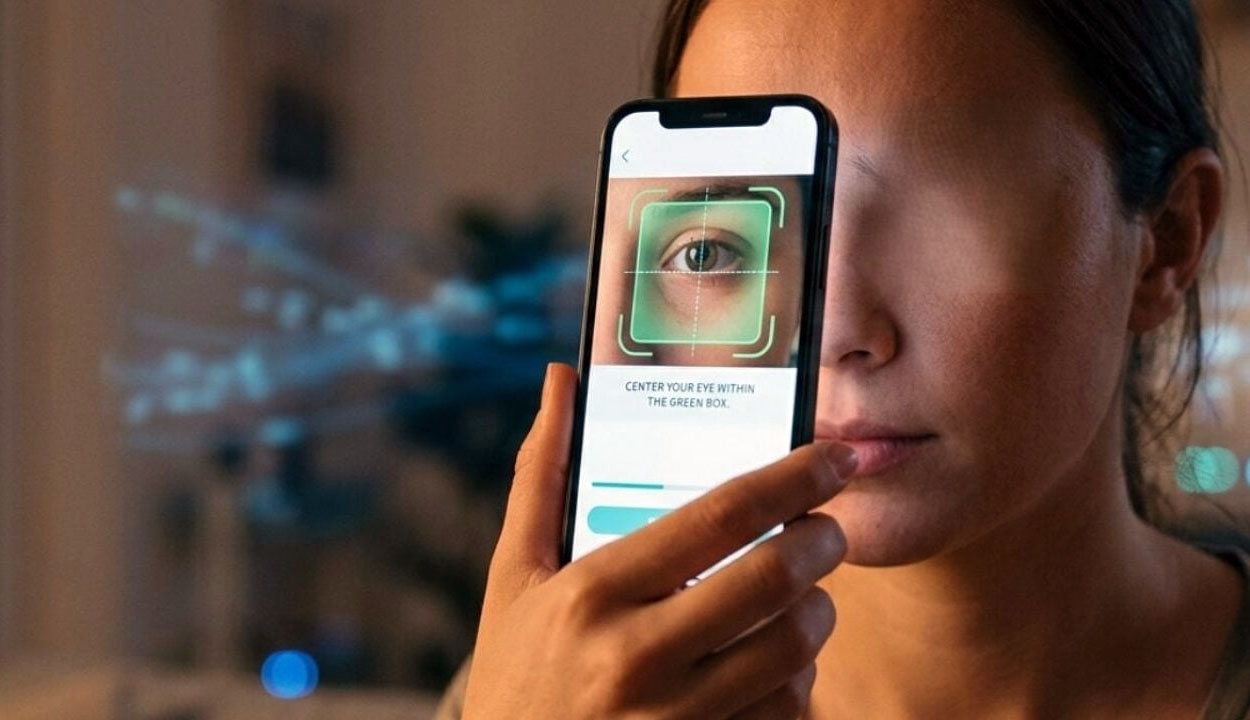
A smartphone-based Artificial Intelligence (AI) application has demonstrated the ability to detect cancers on the surface of the eye with near-specialist accuracy, offering hope for faster diagnosis and improved access to care for patients with potentially sight-threatening and life-threatening conditions.
The application, known as Capture-Tumor, uses advanced deep-learning technology to analyze photographs of the eye taken with a smartphone and identify signs of ocular surface malignancies. Researchers say the innovation could transform early cancer detection by enabling users to perform initial screenings from home before being referred to specialist care.
The findings were published in JAMA Ophthalmology following a non-randomized clinical trial led by researchers at Sun Yat-sen University, China, who evaluated the system’s effectiveness in real-world settings.
According to the researchers, the AI model was trained using more than 12 years of specialist ophthalmic images collected by eye care professionals. The system was initially developed using slit-lamp photographs taken in hospitals before being adapted to work with standard smartphone images captured by patients themselves.
The app includes built-in image-quality assessment tools and provides real-time instructions to help users take suitable photographs. Once captured, images are uploaded to a cloud-based platform where the AI analyzes them and flags suspicious lesions that may require specialist review.
The study involved 614 participants aged between four and 87 years, with a median age of 46. Participants were recruited through television campaigns, social media platforms and online hospital portals. Researchers analyzed 805 eye images from 535 participants included in the final assessment.
READ ALSO:
- NAJA Holds 3rd Auto Industry Summit July 30 on Nigeria’s EV, CNG Future
- EFCC to Arraign US-Blacklisted Lagos BDC Operator Over Alleged ISIS Financing
- US-Iran Ceasefire: Why Petrol Still Costs N1,200/Litre Despite Crude Crash to $70
To ensure diagnostic accuracy, images were matched against histopathological findings where available. In cases where tissue diagnosis was not possible, clinical examinations and telemedicine reviews were used to establish final diagnoses.
The primary objective was to determine how effectively the AI system could distinguish between malignant and benign eye surface lesions.
Results showed impressive performance. During controlled testing using specialist clinical images, the model achieved an Area Under the Curve (AUC) score of 0.945, indicating a high level of diagnostic accuracy. When deployed in real-world conditions using smartphone photographs and in-app guidance, performance improved further, reaching an AUC of 0.977.
The system recorded a sensitivity rate of 89.3 percent, meaning it correctly identified most cancer cases, while its specificity reached 95.9 percent, demonstrating a strong ability to rule out non-cancerous conditions.
One of the study’s most significant findings was the app’s ability to identify previously undiagnosed cancers.
The AI platform generated 58 referrals to specialist centers, resulting in the confirmation of 20 malignant cases through histopathological examination. Remarkably, 19 of those cancers had not been previously diagnosed, highlighting the technology’s potential role in detecting disease earlier than traditional referral pathways.
Researchers noted that none of the newly diagnosed patients required removal of the eye or surrounding orbital tissue, suggesting that earlier intervention may have contributed to more favorable treatment outcomes.
The study also found that the app significantly streamlined access to specialist care. Before using the AI system, patients required an average of 3.69 referrals before reaching definitive treatment. Following implementation of the technology, that figure dropped dramatically to just 1.02 referrals, representing a major improvement in efficiency and patient access.
READ ALSO:
- Police Dismiss Viral Katsina Video, Say Armed Men Are Vigilantes, Hunters
- Jetour Puts Customer Peace of Mind at the Centre of X70 PHEV Rollout
- Mike Ozekhome Barred from Using SAN Title as LPPC Orders Suspension
Experts believe this could reduce delays that often occur when patients move between multiple healthcare providers before receiving an accurate diagnosis.
The researchers further suggested that widespread adoption of smartphone-based screening could substantially increase the number of eye cancer cases detected and treated at specialist centers. However, they cautioned that these projections require additional validation through larger studies.
An accompanying editorial described Capture-Tumor as a pioneering “closed-loop” healthcare model that combines public awareness, AI-assisted screening, specialist triage and targeted referrals within a single platform.
Experts said the study provides an important proof of concept for using AI and mobile technology to decentralize screening for rare diseases, particularly in regions where access to specialist ophthalmologists remains limited.
Eye surface cancers, collectively known as ocular surface squamous neoplasia (OSSN) and related malignancies, can be difficult to diagnose in their early stages because symptoms often resemble less serious eye conditions. Delayed diagnosis can lead to vision impairment, extensive surgery and, in severe cases, cancer spread.
The emergence of smartphone-based AI screening tools could therefore play a critical role in reducing diagnostic delays and improving patient outcomes, especially in low-resource settings where specialist care is scarce.
Despite the promising findings, researchers acknowledged several limitations. Most participants were of Chinese origin, meaning further studies are needed to determine how well the technology performs across diverse ethnic and geographic populations. They also noted that older users may face challenges using smartphone-based screening tools and that the study primarily assessed short-term diagnostic outcomes rather than long-term clinical benefits.
The team emphasized that the application is intended to support—not replace—medical professionals. Any suspicious findings identified by the app would still require confirmation through clinical examination and specialist evaluation.
As healthcare systems increasingly adopt AI-powered diagnostic tools, experts say technologies such as Capture-Tumor could help bridge gaps in access to specialist care, improve early cancer detection and potentially save sight and lives through timely intervention.
AI Smartphone App Detects Eye Cancer with Near-Specialist Accuracy, Study Finds
-

 metro3 days ago
Kano Woman Arrested for Severing Boyfriend’s Manhood Over Plan to Marry Another
-

 metro3 days ago
Gunmen Kill 5 Siblings, 25 Others in Midnight Attack on Kaduna Community
-

 Politics2 days ago
Tinubu tells 2027 rivals: We’ll wrestle ourselves to the finishing line
-

 Education2 days ago
BUK, Northwest University students demand prompt payment of NELFUND upkeep allowances
-

 metro2 days ago
Oyo Receives Two Surveillance Aircraft Worth ₦7.7 Billion to Strengthen Security Operations
-

 metro3 days ago
PFIPC scandal: How Accountant-General exposed Adeniyi Adeyemi’s fake presidential agency
-

 News17 hours ago
Police detain Osun SSG, five others as ₦4.8m, voter cards are recovered
-

 Business2 days ago
Reps move to end dollar charges on locally refined petrol