
Business
Remove petrol subsidy now, presidential economic council advises Buhari
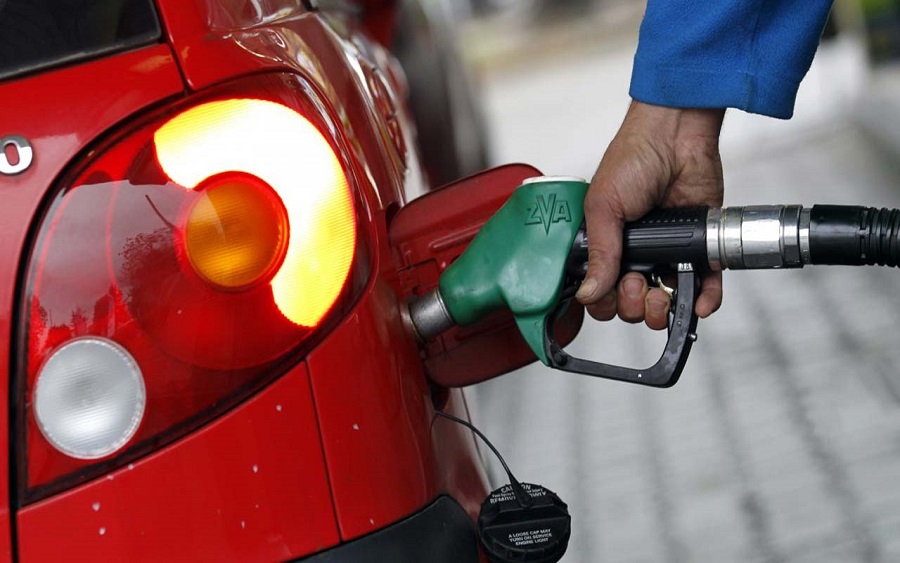
The Federal Government may finally do away with fuel subsidy and allow the market forces to strictly determine the actual pump price of petrol if it bows to pressure within and adopt the recommendation of the Presidential Economic Advisory Council.
Indeed, the council has asked President Muhammadu Buhari to remove subsidy on petrol and adopt a pricing regime that reflects the cost of the commodity.
The council headed by Prof Doyin Salami was set up in 2019 by Buhari to replace the Economic Management Team led by Vice-President Yemi Osinbajo.
The council’s latest advice on petrol subsidy, it was learnt, formed part of its presentation at its sixth regular meeting with the President last Friday, warning that the subsidy regime would worsen solvency of state governments.
According to the document presented at the meeting, the council drew Buhari’s attention to three issues that it said required urgent attention.
They are the need for policy clarity as regards fuel subsidies, which it said would help resolve the dilemma that rising crude oil prices present; the worsening security environment adversely affecting food production leading to higher prices; and the need for the Petroleum Industry Bill to encourage investment in Nigeria’s oil and gas sector.
The council noted that improving crude oil prices had led to what it called the Nigerian ‘dilemma.’
The dilemma, it said, resulted from the conflicting implications of higher crude oil prices on the nation’s economy.
According to the council, rising crude oil prices improve public sector revenue and reserves of foreign currency while higher crude oil prices mean that the cost of imported petrol should be higher than the N167/litre being paid at filling stations.
It noted that the return of fuel subsidy had created a set of enormous problems for the government and indeed the nation.
It added that as there was no provision for subsidy payments in the 2021 budget, such payments would have to be done by the Nigerian National Petroleum Corporation, thereby reducing revenues accruing to the Federation Account.
This situation, it said, was capable of worsening the solvency of many state governments and could take the country back to 2015 when the Federal Government had to provide ‘bailout’ funding to the states.
The council stated, “As there is no provision for subsidy payments in the 2021 budget, such payments will have to be done by the NNPC thereby further reducing revenues accruing to the Federation Account.
“The solvency of many state governments will worsen – this could take us back to 2015 when the Federal Government had to provide ‘bailout’ funding to the states.”
The council added that the subsidy had made investment in Nigeria’s downstream oil sector unattractive.
It stated, “Council advises as follows: there is an urgent need for clarity and consistency in petrol pricing policy.
“Subsidy on petrol be removed and a pricing regime which reflects the cost of petrol adopted.
“It is noteworthy that with the exception of petrol, the prices of all other petroleum products have been deregulated; the cost of retaining the subsidy outweighs the benefits, or that the benefits of removing the subsidy are far greater than the costs.
“Data published by the National Bureau of Statistics also show that petrol prices are not the same across Nigeria.”








Business
Experts Reject World Bank Fuel Import Advice, Warn of Economic Setback for Nigeria
Experts Reject World Bank Fuel Import Advice, Warn of Economic Setback for Nigeria
Energy experts have strongly criticised recent recommendations attributed to the World Bank urging Nigeria to deepen fuel importation and further liberalise its downstream petroleum sector, warning that the proposal is economically risky, poorly timed, and inconsistent with Nigeria’s petroleum law.
The criticism comes amid growing debate over the findings of the World Bank’s latest Nigeria Development Update, which some stakeholders say suggests a return to higher fuel import dependence as part of broader market reforms aimed at stabilising prices and improving efficiency.
However, energy economist Prof. Ken Ife faulted the recommendation, arguing that it contradicts Nigeria’s long-term goal of energy self-sufficiency and undermines ongoing investments in domestic refining capacity.
“You cannot advise a country struggling to achieve economic self-reliance to return to fuel importation,” Ife said, warning that such a policy shift would reverse gains made under the Petroleum Industry framework.
He stressed that the proposal runs counter to the provisions of the Petroleum Industry Act, particularly the Domestic Crude Supply Obligation, which prioritises crude allocation to local refineries to support domestic production.
According to him, abandoning this structure would weaken Nigeria’s refining ambitions, increase exposure to global oil shocks, and worsen pressure on foreign exchange reserves.
“We are building capacity that could exceed domestic demand. Reversing course now would discourage investors and destabilise the downstream sector,” he added.
Ife further questioned the empirical basis of the recommendation, describing it as inconsistent with the broader analytical strength of the World Bank report.
READ ALSO:
- Fake Image of Governor Alia Bowing to Sultan Sparks Controversy, Palace Reacts
- Tinubu Aide Defends Early INEC Statement Release on Amupitan Controversy
- Nigeria-Kenya Comparison Won’t Solve Economic Crisis — Peter Obi Replies Tinubu
Other energy analysts echoed similar concerns, arguing that Nigeria is already at a critical stage of expanding domestic refining, including private-sector-led investments that are expected to reduce dependence on imported petrol in the coming years.
Energy analyst Kelvin Emmanuel also criticised the proposal, insisting that it is disconnected from current global pricing realities and supply chain risks.
He argued that landing imported petrol in Nigeria is already significantly expensive when freight, insurance, and exchange rate factors are considered, making large-scale import reliance economically unsustainable.
Emmanuel further noted that rising crude oil prices—driven partly by geopolitical tensions in the Middle East—have pushed global energy markets into volatility, reinforcing the need for domestic refining resilience rather than import dependence.
He also disputed claims that imported fuel could be cheaper than locally refined products, arguing that such assumptions ignore structural cost realities in the global supply chain.
On inflation and fuel pricing, Emmanuel maintained that Nigeria’s challenges are linked more to policy implementation gaps than production shortages, particularly in crude allocation to local refineries as outlined in the Petroleum Industry Act.
“If domestic supply obligations are properly enforced, price stability will improve and market volatility will reduce,” he said.
He also criticised proposals suggesting that Nigeria should expand social safety nets through borrowing, arguing that such measures could worsen fiscal pressure and contradict responsible debt management principles.
While acknowledging that social protection is important, he insisted that funding should prioritise grants or targeted revenue sources rather than additional debt obligations.
The debate highlights growing tension between international policy advice and Nigeria’s domestic energy strategy at a time when the country is attempting to stabilise fuel supply, reduce import dependence, and strengthen local refining capacity.
Industry observers say the outcome of this policy direction could significantly shape Nigeria’s downstream petroleum sector, foreign exchange stability, and long-term energy security.
Experts Reject World Bank Fuel Import Advice, Warn of Economic Setback for Nigeria
Business
Official, Black Market Rates Diverge as Naira Starts Week on Stable Note
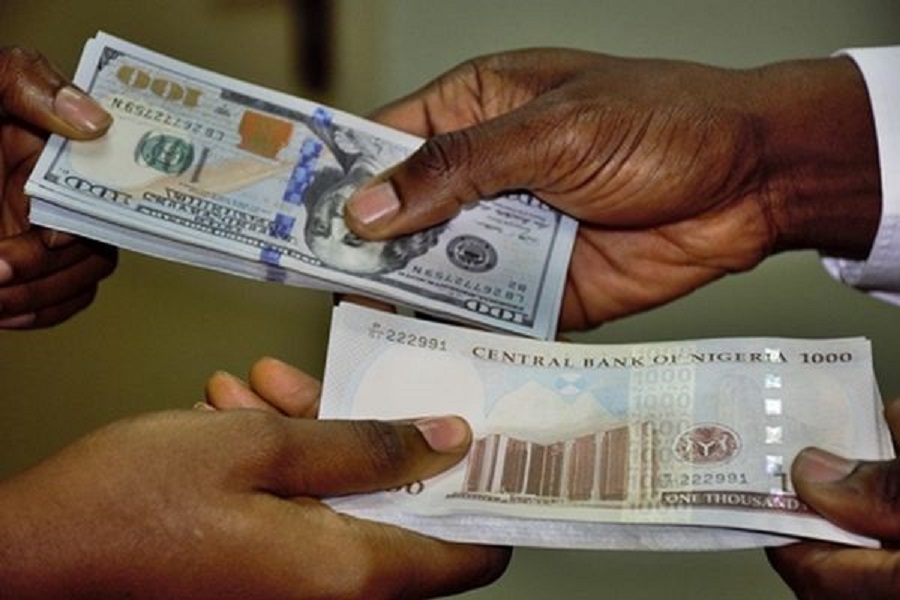
Official, Black Market Rates Diverge as Naira Starts Week on Stable Note
The Nigerian Naira began the new trading week on Monday, April 13, 2026, with slight movements against the United States Dollar across both the official and parallel foreign exchange markets, reflecting continued cautious stability in the currency environment.
In the Nigerian Foreign Exchange Market (NFEM), the official trading window, the Naira opened at about ₦1,358.84 per $1, before recording mild intraday fluctuations that pushed it briefly to around ₦1,362.08, before easing back toward the opening range.
The performance indicates a relatively stable session, supported by ongoing liquidity management efforts and sustained interventions by the Central Bank of Nigeria, which has continued to monitor dollar supply and demand in the banking system.
Analysts say the official market remains largely driven by inflows from oil exports, non-oil earnings, and diaspora remittances, all of which help moderate volatility in the NFEM window.
Parallel Market Remains Higher Amid Strong Demand
In contrast, the parallel market—commonly referred to as the black market—recorded significantly higher exchange rates as demand for dollars persisted among importers, traders, and individuals outside the official FX window.
READ ALSO:
- Kwankwaso Reveals Details of Kwankwasiyya’s ADC Power-Sharing Formula
- ADC Crisis: Supreme Court to Hear David Mark’s Appeal April 14
- FG Boosts Power Generation to 4,300MW in Two Weeks — Adelabu
Reports from currency dealers in commercial hubs such as Lagos, Abuja, and Kano indicate that the Dollar traded between ₦1,460 and ₦1,485 during the morning session.
The wide gap between the official and parallel market rates continues to reflect structural pressures in Nigeria’s foreign exchange system, including limited liquidity access and high demand for foreign currency for imports, travel, and education-related payments.
Market Outlook and Sentiment
Financial analysts note that market sentiment remains cautious, with traders closely watching upcoming macroeconomic indicators, crude oil price movements, and possible policy signals from monetary authorities.
Experts also point out that the stability in the NFEM suggests that recent reforms and tightening measures in the foreign exchange market may be gradually improving transparency and liquidity management, even though pressure persists in the informal market segment.
For many Nigerians, fluctuations in the exchange rate continue to directly impact the cost of imported goods, fuel-related logistics, and overall inflation expectations, making daily FX movements a key economic indicator.
As of early Monday trading, market activity remained steady, with expectations that the Naira will continue to trade within a relatively narrow range unless triggered by major external shocks or policy adjustments.
Official, Black Market Rates Diverge as Naira Starts Week on Stable Note
Railway
FG pushes high-speed train, expands rail links to seaports
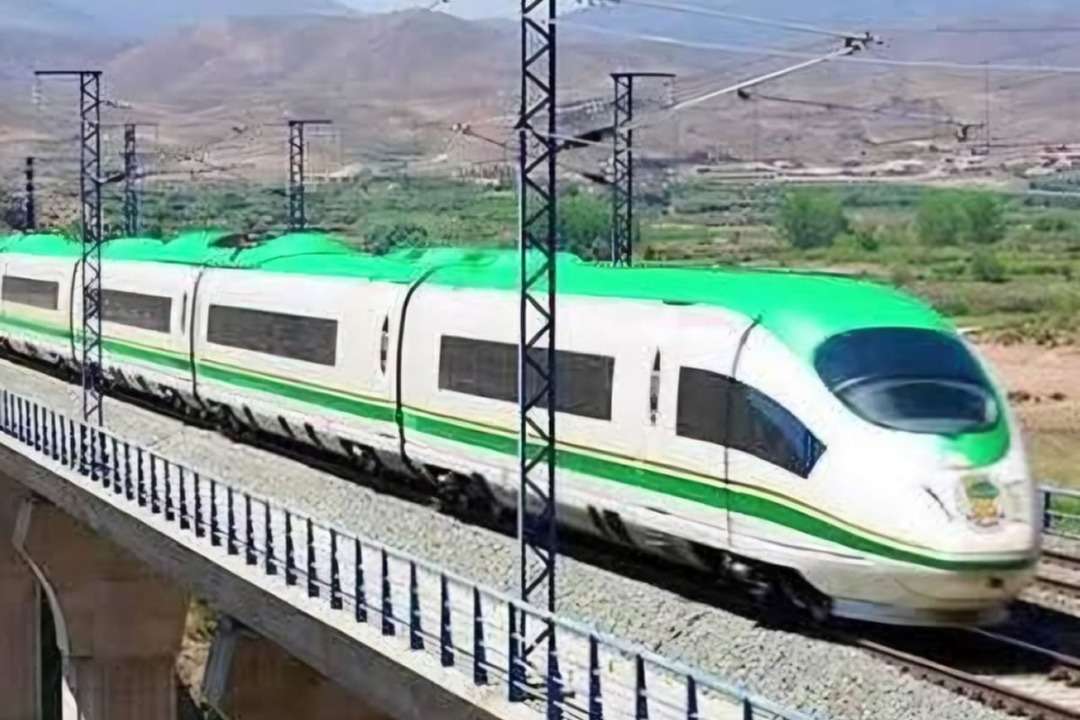
FG pushes high-speed train, expands rail links to seaports
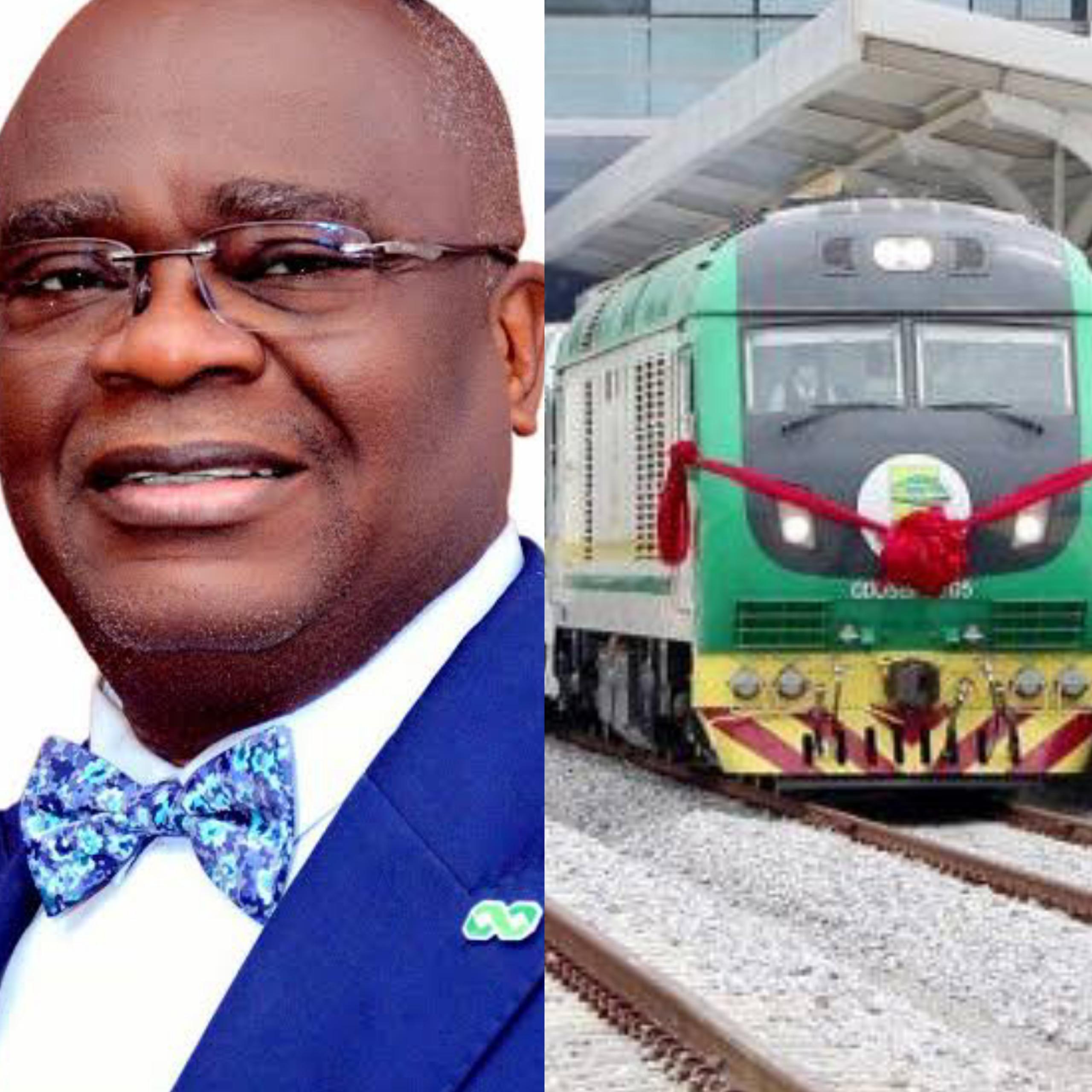
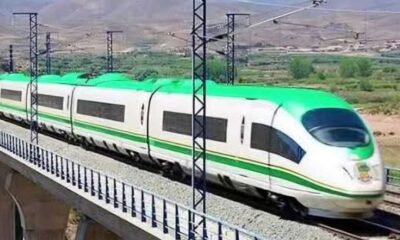
The Federal Government has intensified efforts to modernise Nigeria’s rail system, setting up a high-speed rail committee and approving the expansion of rail connections to key seaports to boost cargo movement and ease logistics bottlenecks.
Managing Director of the Nigerian Railway Corporation (NRC), Kayode Opeifa, disclosed this at the quarterly stakeholders’ engagement of the Nigerian Ports Consultative Council.
In a statement by the NRC’s Chief Public Relations Officer, Callistus Unyimadu, Opeifa said the Office of the Secretary to the Government of the Federation had constituted a committee on high-speed rail development to drive initiative.
He disclosed that the Federal Government was seeking private sector participation in this regard.
The NRC boss also emphasised that seamless rail-port integration remained critical to unlocking the full benefits of ongoing maritime reforms.
Opeifa warned that investments in port infrastructure, including deep seaports, would continue to yield limited returns without efficient rail connectivity to move cargo inland.
He noted that while collaboration between the corporation and port authorities had improved—particularly under the administration of Bola Ahmed Tinubu—significant gaps remain in cargo evacuation from ports, especially in Lagos and along the eastern corridor.
He identified persistent bottlenecks in rail freight operations and called for targeted interventions to improve efficiency, stressing that a shift towards rail-based cargo movement is essential for a more reliable and cost-effective logistics system.
Highlighting ongoing and planned projects, Opeifa said the Federal Government has approved the extension of the Lagos–Ibadan standard gauge rail line to Apapa and Tin Can Island ports. He added that the Warri–Itakpe line would be linked to Warri Port, while the eastern narrow gauge is set to connect the Port Harcourt Port at Onne.
He further disclosed plans to link the Lagos–Kano western line to Baro Port, as part of a broader strategy to integrate all major ports into the national rail network.
On project updates, the NRC boss said the Kaduna–Kano rail corridor is nearing completion, while efforts are underway to connect existing rail lines directly to ports to reduce congestion and improve cargo evacuation.
He also revealed plans for a new rail line to the Lekki Deep Sea Port, expected to pass through Ijebu-Ode and Sagamu to Kajola, where it will link with the Lagos–Ibadan line. The project, he said, is likely to commence this year.
Describing rail connectivity to ports as a key driver of economic growth, Opeifa urged stakeholders, including truck operators, to support the initiative, noting that road transport would continue to play a complementary role in last-mile delivery.
He also called for the expansion of freight yards across both narrow and standard gauge lines to enhance cargo handling capacity and overall efficiency.
The stakeholders’ meeting brought together key players in the maritime and rail sectors to align strategies and strengthen collaboration towards building a more integrated and efficient national transport system.

-
 metro3 days ago
JUST IN: FG Publishes List of 48 Individuals, Groups Linked to Terrorism Financing in Nigeria
-

 metro2 days ago
BREAKING: Troops Arrest 15-Year-Old Linked to Killing of Gen Braimah in Borno
-

 metro2 days ago
Fayose Warns Makinde May Query Olubadan Over Absence at Ibadan Coronation Event
-
 metro2 days ago
Zulum Defends NAF Airstrike, Says Jilli Market Closed Five Years Ago
-

 metro2 days ago
BREAKING: 56 Killed in Accidental Bombing at Borno–Yobe Border Market
-
 Railway2 days ago
FG pushes high-speed train, expands rail links to seaports
-

 Politics2 days ago
Lagos 2027: APC Succession War Intensifies as Tinubu Reportedly Backs Hamzat
-

 metro2 days ago
Police Arrest Suspect Over Fake Job Interview Robbery in Magodo