

Politics
Rivers 2027: Why Fubara Missed APC Screening — Yilwatda
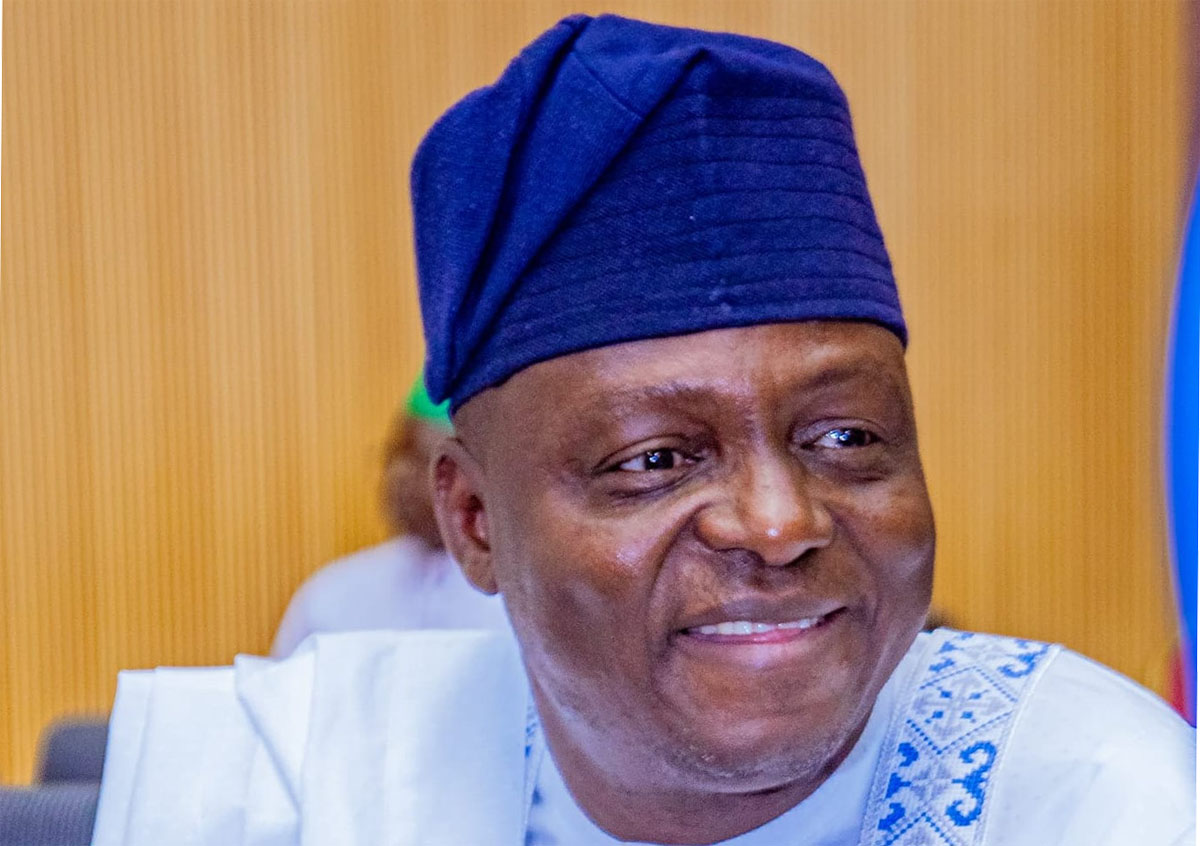
The National Chairman of the All Progressives Congress (APC), Professor Nentawe Yilwatda, has clarified that Governor Siminalayi Fubara’s absence from the party’s recent governorship screening exercise ahead of the 2027 elections should not be misunderstood as political withdrawal or internal disagreement. He explained that Fubara remains a recognised member of the APC following his defection from the Peoples Democratic Party (PDP) in late 2025.
Yilwatda noted that the governor’s position within the party structure in Rivers State is still intact, adding that as a sitting governor, Fubara is naturally regarded as a key leader in the state chapter of the APC. However, he stressed that this recognition does not exempt him from the party’s constitutional requirements, including screening and participation in primaries for the governorship ticket.
The APC chairman further explained that Fubara’s absence from the screening was linked to ongoing consultations and internal party arrangements in Rivers State. According to him, the party allows room for internal processes and coordination among stakeholders, which informed the governor’s decision not to physically appear for the exercise at the time.
READ ALSO:
- China’s Zero-Tariff Policy Will Boost Nigeria’s Non-Oil Exports – ACCI
- Traffic Disruption Looms as Lagos Begins Urgent Repairs on Eko Bridge
- Lagos 2027: Hamzat Gains Massive Backing as APC Battles Over Running Mate
Yilwatda also made it clear that no aspirant, including sitting governors, is guaranteed automatic tickets in the APC. He said the party’s established tradition requires all contenders to go through due process, citing previous primaries in other states as evidence of the APC’s commitment to competitive internal democracy ahead of the 2027 elections.
The political environment in Rivers State remains tense due to the long-standing rivalry between Fubara and his predecessor, Nyesom Wike, who currently serves as Minister of the Federal Capital Territory. Although Wike is still a member of the PDP, both political camps continue to influence grassroots structures and party alignments in the state.
Fubara officially joined the APC in December 2025 at a ceremony held in Port Harcourt, where he received his membership card in the presence of senior party leaders. He said the move was aimed at aligning Rivers State with the federal government to promote stability and development.
Despite efforts to project unity, disagreements within the Rivers APC have persisted, particularly over leadership structure and control of party machinery. Wike has repeatedly dismissed claims that Fubara automatically became the APC leader in Rivers State, insisting that leadership is determined by established party structures and grassroots support.
Meanwhile, APC stakeholders in Rivers State are continuing consultations aimed at stabilising the party ahead of the governorship primary and preventing internal divisions before the 2027 elections. Political observers believe the state’s governorship race is shaping up to be one of the most competitive contests in the next general election due to the ongoing rivalry between opposing political blocs.
Rivers 2027: Why Fubara Missed APC Screening — Yilwatda









Politics
2027: Tompolo-Backed Group Deploys 44 Vehicles for Tinubu-Shettima Campaign in Borno

2027: Tompolo-Backed Group Deploys 44 Vehicles for Tinubu-Shettima Campaign in Borno
The PBAT Door-to-Door Movement, a political support group backed by Niger Delta businessman and Tantita Security Services Nigeria Limited chief executive, Government Ekpemupolo, popularly known as Tompolo, has commenced grassroots mobilisation in Borno State ahead of the 2027 general elections.
The group, which is campaigning for the re-election of President Bola Ahmed Tinubu and Vice President Kashim Shettima, unveiled 44 campaign vehicles and other mobilisation equipment at an event held at Sir Kashim Ibrahim Square, College of Education, Maiduguri.
The equipment presented during the Borno mobilisation included 44 generators, 44 amplifiers, 44 microphones and 88 speakers, according to reports from the event.
The Borno launch represents another stage in the expansion of the Tinubu 2027 campaign structure being developed by the PBAT Door-to-Door Movement, following its northern launch in Katsina earlier in September.
Tompolo, who is the Grand Patron of the movement, was represented at the Maiduguri event by Kestin Pondi, Managing Director of Tantita Limited.
In his message to the gathering, Tompolo called on residents of Borno to support the Tinubu-Shettima ticket, drawing particular attention to Shettima’s connection to the state.
He urged members and supporters of the movement to take the campaign to communities and engage residents at the grassroots ahead of the 2027 election.
Tompolo also commended the Borno State Government for what he described as development achievements and called on residents to support the APC governorship candidate, Mustapha Gubio, as part of efforts to sustain the current administration’s programmes.
The claims about the performance of the Tinubu administration and the Borno State Government were political assessments made by supporters of the administration and were not independent evaluations.
The mobilisation was formally unveiled with the participation of the Borno State Government. Governor Babagana Zulum was represented by his deputy, Umar Usman Kadafur.
Kadafur said the state was prepared for what he described as significant grassroots support for Tinubu and Shettima in the 2027 election.
READ ALSO:
- MTN, Gates Foundation Launch $25m AI Maternal Health Initiative for 500,000 Nigerian Women
- Niger Mosque Attack: Bago Says 63 Abducted, 14 Freed, Three Killed
- UNGA 81: Trump Threatens to ‘Annihilate’ Iran if No Deal Is Reached
Also present was the APC Deputy National Chairman, North, Ali Bukar Dalori, who urged members of the movement to take the campaign beyond political meetings and into communities across the state.
The APC governorship candidate in Borno, Mustapha Gubio, also expressed support for the Tinubu-Shettima ticket and said the administration had delivered what he described as dividends of democracy.
The Borno mobilisation is part of a broader political organisation by the PBAT Door-to-Door Movement, which was founded and sponsored by Tompolo to mobilise grassroots support for Tinubu’s 2027 re-election bid.
The movement inaugurated its national executives in Abuja in July, with its stated objectives including grassroots mobilisation, voter education, community engagement and communicating the Federal Government’s policies and programmes directly to residents.
At the time of its national inauguration, the movement said it intended to take its activities to wards, local government areas, communities, markets and households across Nigeria.
The group subsequently moved its northern mobilisation campaign to Katsina, where it inaugurated coordinators across the state’s 34 local government areas and presented campaign vehicles to them.
The Katsina deployment involved 34 campaign vehicles, with each of the state’s 34 local government areas assigned a coordinator.
The Borno rollout therefore brings the campaign’s reported vehicle deployment in the two northern states to at least 78 vehicles, based on the publicly reported 34 vehicles in Katsina and 44 unveiled in Borno.
The expansion comes as several political groups and support platforms are beginning to organise ahead of the 2027 Nigerian presidential election.
Other pro-Tinubu mobilisation structures have also been announced, including Arewa for Asiwaju (A4A), a group formed by northern political figures, former governors and lawmakers to support Tinubu’s re-election campaign across the 19 northern states and the Federal Capital Territory.
The development indicates that political parties and affiliated support groups are increasingly establishing grassroots structures ahead of the 2027 election.
For the PBAT Door-to-Door Movement, however, the strategy centres on direct engagement with voters. Its organisers have said the objective is to explain government policies and programmes, promote voter education and mobilise supporters at the ward and community levels.
Tompolo has previously said the movement would rely on local volunteers and place emphasis on engaging ordinary Nigerians, including women and young people, as part of its grassroots outreach.
The group has also framed its campaign around the Renewed Hope agenda of the Tinubu administration, arguing that economic reforms and other government programmes should be allowed to continue.
Those positions represent the movement’s stated political case for supporting Tinubu and are separate from independent assessments of the administration’s performance.
With the Borno launch, the Tinubu-Shettima 2027 campaign mobilisation backed by Tompolo has now established a visible operational presence in at least two northern states, with further grassroots activities expected as political parties and support groups prepare for the 2027 elections.
2027: Tompolo-Backed Group Deploys 44 Vehicles for Tinubu-Shettima Campaign in Borno
Politics
Obi vs Soludo: ₦86.67bn Handover Figure Meets ₦127.37bn Debt Claim
Obi vs Soludo: ₦86.67bn Handover Figure Meets ₦127.37bn Debt Claim
The renewed Anambra debt dispute has intensified after former Governor Peter Obi released his 2014 handover document to counter claims by the state government that his administration left behind substantial outstanding loans and other financial liabilities.
The controversy centres on competing accounts of Anambra State’s finances when Obi handed over power to Willie Obiano on March 17, 2014.
Obi’s handover document shows a positive financial position of about ₦86.67 billion after provisions for certain liabilities, while the current Anambra State Government says eight external financing facilities associated with projects undertaken during Obi’s tenure had an outstanding balance of $92.35 million, equivalent to about ₦127.37 billion, as of June 30, 2026.
However, the two figures describe different things and should not be treated as if they were direct measurements of the same debt position.
The ₦86.67 billion figure comes from the financial position presented in the 2014 handover report. The ₦127.37 billion figure is the value the state government assigns in 2026 to the outstanding balance on eight external financing facilities whose original amounts totalled about $123.77 million.
The central unresolved question is therefore how much of those facilities was actually outstanding when Obi left office in March 2014, how much had been disbursed by then, what was subsequently disbursed, how much was repaid by succeeding administrations and what remains outstanding today.
The dispute was reignited after Anambra State officials said the administration of Governor Chukwuma Soludo was still servicing loans and other obligations incurred by previous administrations, including that of Obi.
Obi rejected the claim, insisting that he did not leave Anambra owing salaries, pensions, gratuities or contractors who had completed certified work.
He subsequently challenged the state government to substantiate its claims and released the 2014 Anambra State Handover Report as part of his response.
The document, dated March 17, 2014, was addressed to Obiano and contained a summary of the state’s financial position as of the close of business on March 14, 2014, described as the final working day of Obi’s administration.
According to the document, Anambra had about ₦27 billion committed to local investments.
It also listed approximately $156 million in foreign-currency investments, which was valued at about ₦25.6 billion at the exchange rate used at the time.
The report further listed approximately ₦28.27 billion in balances relating to certified state ministries, departments and agencies, alongside ₦10 billion refunded to the state by the Federal Government.
Those figures produced a combined financial position of about ₦91.67 billion.
The outgoing administration, however, made provision for about ₦5 billion in liabilities, including March 2014 salaries, pensions, gratuities and certified payments relating to projects that had already been executed.
After that provision, the report placed the net financial position at approximately ₦86.67 billion.
Former Secretary to the Anambra State Government Oseloka Obaze, who served under Obi, has defended the document and said he was involved in the handover process.
Obaze has maintained that the financial records were presented to Obiano during the transition and that the incoming governor acknowledged receipt of the documents.
READ ALSO:
- UK Student Visa: 63 Countries Exempt From Proof of Funds, Nigeria Excluded
- Lagos Intensifies Surveillance as Adulterated Palm Oil Raises Food Safety Concerns
- Saudi Arabia Rejects Nigeria’s Request for More 2027 Hajj Slots
However, acknowledgement of a handover document does not necessarily mean that every figure in it was independently audited or certified by the incoming administration.
There is also historical evidence that some elements of Obi’s financial account were subsequently acknowledged by Obiano.
During a television appearance ahead of the 2017 Anambra governorship election, Obiano reportedly confirmed that he inherited about ₦9 billion in cash and approximately ₦25.6 billion in investment-related assets.
That does not, however, resolve the wider question of the state’s liabilities and outstanding borrowing at the time of the transition.
The Anambra State Government has released a separate set of records to support its claim that loans connected with the period of Obi’s administration remain obligations of the state.
According to the government, eight external financing facilities associated with projects approved or implemented between 2007 and 2013 had a combined original value of about $123.77 million.
The state said the outstanding balance on those facilities stood at approximately $92.35 million as of June 30, 2026, which it valued at ₦127.37 billion using the exchange rate applied in its calculation.
The facilities identified by the state government relate to development programmes covering areas such as healthcare, agriculture, education, malaria control and erosion management.
Among the projects listed are the Malaria Control Booster Project, Third FADAMA Development Project, Health System Development Project II, State Education Programme Investment Project and the Nigeria Erosion and Watershed Management Project.
The government has said successive administrations have continued to service the facilities.
It has also maintained that its criticism is not directed at borrowing as a financing tool, arguing that loans can be justified when used for viable development projects and human-capital investment.
Obi, however, has rejected the description of his administration as having left Anambra with the debt burden now being cited.
He has maintained that his administration paid what was due before leaving office and did not owe workers, pensioners or contractors whose claims had been properly processed.
He has also said his administration saved substantial funds for the incoming government.
The most important issue arising from the competing accounts is that a loan contracted during an administration is not necessarily the same as the debt outstanding at the moment that administration leaves office.
A financing agreement can have an approved or contracted value, but the amount actually drawn down at a particular point in time may be lower.
Similarly, repayments may reduce the principal balance, while subsequent disbursements can increase the amount outstanding.
READ ALSO:
- MURIC Warns FG: Any Move Against Atiku Now Lacks Tact
- Jetour T1 Storms Abuja as Automaker Accelerates Nigeria Expansion
- Kidnapped Female Police Officer Found Dead in Ebonyi as Suspect Leads Police to Remains
The timing of those transactions therefore matters in determining what a government actually inherited.
This is particularly significant in the current Anambra controversy because the $123.77 million cited by the state represents the original amounts associated with the eight facilities, while the $92.35 million figure represents the balance the state says remains outstanding in June 2026.
Neither figure, by itself, establishes the exact debt stock on March 17, 2014.
Official debt records have also been cited in the debate, showing Anambra’s external debt stock at about $30.32 million as of December 31, 2013, alongside domestic debt of approximately ₦3.03 billion at the same period.
Those figures are much closer to the date of Obi’s departure, although they do not by themselves establish the precise financial position on March 17, 2014.
They nevertheless add another layer to the debate because they show why the original value of all financing facilities cannot automatically be equated with the state’s debt stock at the time of handover.
The question of how much had actually been disbursed by March 2014 is therefore central.
So is the question of how much remained unpaid at that date.
The subsequent repayment history is equally important.
If part of a facility was repaid after Obi left office, that repayment would reduce the outstanding balance. Conversely, if additional funds under an existing financing agreement were drawn after the change of administration, those later transactions would need to be reflected in any assessment of the debt inherited by the incoming government.
The current state government’s publication gives a picture of the 2026 outstanding balance, but a complete reconstruction of the financial position at the 2014 handover would require the loan-by-loan balances at that date, disbursement records, repayment schedules and subsequent transactions.
This distinction has become central to the public debate.
The Anambra Government argues that loans associated with projects undertaken during Obi’s administration remain outstanding and are still being serviced.
Obi’s position is that the state had substantial funds and investments when he left office and that he did not leave behind the unpaid obligations being alleged.
Both positions can be examined without treating the ₦86.67 billion handover figure and the ₦127.37 billion current outstanding-loan figure as contradictory measurements of the same financial item.
The handover report primarily addresses the assets, balances and estimated liabilities presented by the outgoing administration.
The state’s latest debt statement addresses the current balance of specific external financing facilities.
The broader financial picture therefore requires the two sets of records to be reconciled rather than simply placed against each other.
The dispute also extends beyond external loans.
The Anambra Government has alleged that some salary, pension and gratuity obligations remained outstanding after Obi left office.
The state has cited arrears involving workers and retirees and said the Soludo administration has continued to settle inherited liabilities.
Obi and his supporters have disputed the characterisation of those obligations and maintained that the outgoing administration had settled the liabilities it was responsible for at the time of handover.
Another contested issue is an alleged ₦2.1 billion ecological fund.
The state government has disputed Obi’s account of the fund and said its examination of the relevant bank records did not support the claim that the amount existed in the account in the manner described.
Obi’s camp has maintained its position regarding the funds.
The dispute over the ecological fund is separate from the question of the eight external loans and should not be conflated with the figures contained in the 2014 handover report.
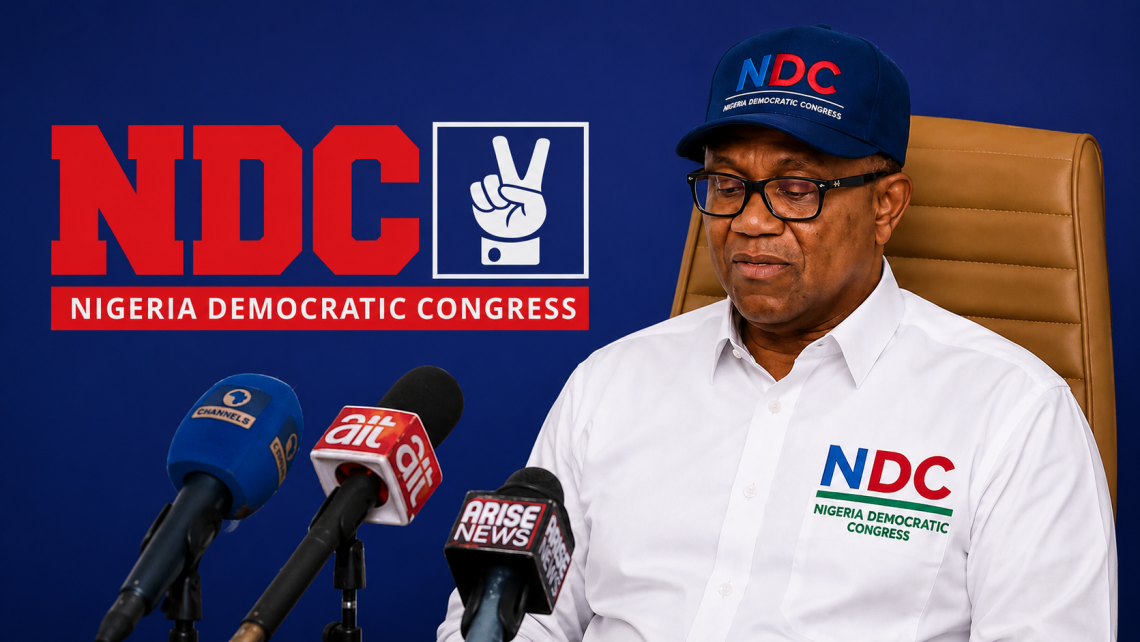
There is also a broader political dimension to the controversy because Obi is now the NDC presidential candidate for the 2027 election, making his record as Anambra governor a subject of renewed public scrutiny.
However, the financial questions themselves concern historical state records and can be examined independently of the political arguments surrounding the former governor.
At the centre of the matter is a relatively straightforward accounting question: what exactly was Anambra State’s financial position when Obi handed over power in March 2014?
Answering that question requires more than the total amount originally attached to loans contracted between 2007 and 2013.
It requires a loan-by-loan reconciliation showing the original facility, the amount disbursed before March 17, 2014, the amount repaid before and after the handover, subsequent drawdowns and the outstanding principal at each stage.
It also requires reconciliation of the cash balances, investments and liabilities listed in the 2014 handover document with the state’s audited accounts and official debt records.
The current controversy has therefore moved beyond a simple argument over whether Obi left money in Anambra’s coffers.
The available records show that the 2014 handover report recorded substantial assets and financial balances, while the current state government has produced records showing that external financing facilities associated with the period of Obi’s administration still have outstanding balances.
What remains contested is the precise amount of debt Anambra inherited on the day Obi left office and how that figure relates to the loans now being serviced.
Until those figures are reconciled, the Anambra debt dispute remains a matter of competing interpretations of financial records spanning more than 12 years.
For taxpayers and residents, the most useful resolution would be a transparent reconciliation of the state’s finances from the March 2014 handover to the present, showing the assets inherited, liabilities outstanding, loans drawn, repayments made and balances remaining.
Such a record would provide a clearer basis for understanding how Anambra’s current debt position developed and which obligations were inherited, serviced or incurred by successive administrations.
Obi vs Soludo: ₦86.67bn Handover Figure Meets ₦127.37bn Debt Claim
Politics
‘Join the Hunt’ — Soludo Urges Igbos to Strategically Align Ahead of 2027

‘Join the Hunt’ — Soludo Urges Igbos to Strategically Align Ahead of 2027
Anambra State Governor Chukwuma Soludo has urged the Igbo people to adopt a more strategic approach to politics, arguing that stronger engagement with the political centre is necessary for the South-East to secure a greater share of national opportunities.
Soludo made the call while speaking to residents of Ekwusigo Local Government Area of Anambra State, where he commissioned the three-kilometre Ozu-Inyaba-Ozubulu-Ihembosi Road and other projects executed in the area.
Speaking largely in Igbo, the governor used a hunting analogy to explain his argument, saying those who want a share of the national “inheritance” must participate in the process through which decisions and resources are determined.
He said the 2027 elections should not be approached solely through emotions or political sentiments, urging voters to consider what their political choices would deliver for the region.
Soludo also questioned the records of politicians who, according to him, return to the South-East during election periods to seek votes but have not adequately addressed longstanding problems affecting the people.
He cited the persistent erosion crisis in Ekwusigo as an example and questioned what politicians who had been involved in public affairs for years had done to resolve it.
Although he did not name anyone in the reported remarks, the comments were seen as a reference to former Anambra State governor Peter Obi, who has remained a prominent figure in the political debate over the South-East’s future.
The governor said the Igbo people should no longer waste their votes without considering the practical benefits that could accrue to the region from their political choices.
He argued that the South-East needed to participate more directly in national political structures rather than remaining isolated and subsequently complaining about marginalisation.
Using his hunting analogy, Soludo said that if others joined a hunt and returned with an elephant, those who stayed away could not reasonably expect to determine how the proceeds were shared.
He linked the argument to the political strategy of the All Progressives Grand Alliance (APGA), saying the party was positioning itself to secure what he described as the rightful inheritance of the Igbo people and Anambra State.
READ ALSO:
- 18 Suspects Transferred to US Over 2021 Killing of Haitian President Moïse
- My Heart Has Always Been Home With You — Tinubu’s Powerful Message to Oluremi at 66
- Tinubu’s UNGA Absence Fuels Questions Over Planned Trump Meeting
“This is where APGA is; Igboland will be better. Anambra will get its right,” he said.
Soludo has consistently promoted closer cooperation between APGA and the Federal Government led by President Bola Ahmed Tinubu.
APGA has declared support for Tinubu’s bid for a second term in the 2027 presidential election, with the party arguing that strategic partnerships could give the South-East greater influence at the national level.
Soludo had earlier said APGA adopted Tinubu as its preferred presidential candidate for 2027, citing what he described as strategic and ideological considerations.
The governor has subsequently presented the relationship between APGA and the Federal Government as a practical political partnership aimed at securing development opportunities for Anambra and greater influence for the South-East.
However, the political alignment has generated disagreement, including within the opposition space and among some APC members in Anambra.
The Anambra APC has previously disputed claims of a broad political partnership between APGA and APC, maintaining that the two parties remain separate political organisations.
Soludo’s latest comments also included a defence of APGA’s relevance in Igbo politics.
He described APGA as a platform through which several Igbo politicians rose to prominence and criticised politicians who benefited from the party before moving to other political organisations.
The governor said APGA intended to retain its political strength in Anambra while supporting Tinubu at the presidential level in 2027.
His position effectively places APGA’s 2027 strategy around retaining political control in Anambra while backing Tinubu’s presidential bid.
Meanwhile, Soludo’s comments about political participation and the region’s development have attracted criticism from some commentators, who have questioned whether the governor’s strategy has produced sufficient benefits for Anambra.
Critics have also raised questions about the state’s continuing erosion crisis, infrastructure and the extent of federal support received by the state under the current political arrangement.
The latest remarks come as political parties and prominent politicians intensify preparations for the 2027 general elections, with the political strategy of the South-East increasingly featuring in debates over regional representation, federal influence and access to national resources.
Soludo’s argument is that the region can improve its bargaining position by engaging strategically with the political centre rather than remaining outside national power structures.
‘Join the Hunt’ — Soludo Urges Igbos to Strategically Align Ahead of 2027
-
 International2 days ago
18 Suspects Transferred to US Over 2021 Killing of Haitian President Moïse
-

 News2 days ago
NiMet Predicts Thunderstorms, Rain Across Nigeria Till Wednesday
-

 Politics2 days ago
‘Join the Hunt’ — Soludo Urges Igbos to Strategically Align Ahead of 2027
-

 Sports2 days ago
Messi Fires Stunning 75th Career Free-Kick to Reach 930 Goals in Inter Miami Draw
-

 metro2 days ago
My Heart Has Always Been Home With You — Tinubu’s Powerful Message to Oluremi at 66
-
 News2 days ago
Working People United Celebrates Oluremi Tinubu at 66, Commends Her Humanitarian Efforts
-
 News1 day ago
NLC Backs ₦500 Petrol Demand, Workers Propose ₦500,000 Salary
-

 Auto2 days ago
Jetour T1 Storms Abuja as Automaker Accelerates Nigeria Expansion