
News
Russia breaks silence on use of its flag by Nigerian protesters
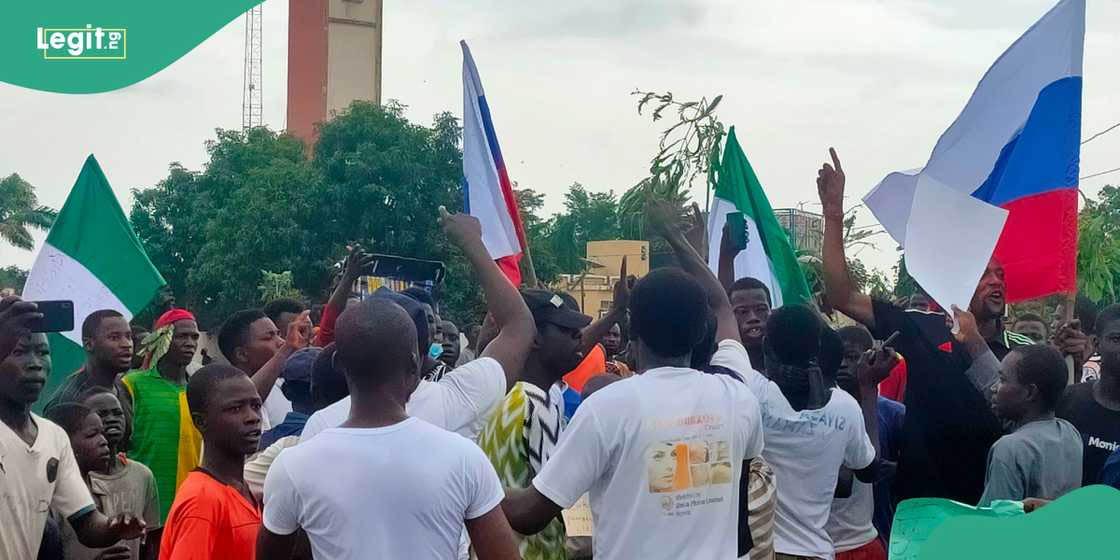
Russia breaks silence on use of its flag by Nigerian protesters
The Russian Embassy in Nigeria has denied any involvement with the use of its flag in Nigeria by some protesters in northern Nigeria.
Some protesters against bad governance and hardship were seen marching on the streets, carrying Russian flag and held placards with various messages.
Russia has been accused of involvement in the political upheavals in several West African countries, including Mali, Burkina Faso and Niger.
But in a statement on Monday, the embassy said Russia does not interfere in the internal affairs of other countries, including Nigeria, and that the protesters’ actions did not reflect any official Russian government policy or position.
READ ALSO:
- IgboMustGo protest: IPOB demands referendum, says Ndigbo ready to exit Nigeria
- MTN Nigeria takes control of MoMo PSB, buys out minority shareholder
- BREAKING: Tailor promoting spread of Russian flag arrested in Kano
The statement said, “The Embassy has noted the reports in Nigerian media and the circulation of videos and images in digital media depicting protesters in northern states of the country carrying Russian flags and chanting slogans to Russian President Vladimir Putin.
“The Government of the Russian Federation as well as any Russian officials are not involved in these activities and do not coordinate them in any way.
“As always, we emphasize that Russia does not interfere in the domestic affairs of foreign states, including Nigeria.
“These intentions of some protesters to wave Russian flags are personal choices of individuals, and they do not reflect any official position or policy of the Russian Government in the issue.
“We respect Nigerian democracy and believe that peaceful demonstrations in conformity with the Nigerian law are a manifestation of democracy.
“However, should these events lead to any disruptions or acts of violence we strictly condemn them.”
General Chris Musa, Nigeria’s Chief of Defence, has labelled the action of such protesters as treasonable, saying the law would catch up with them.
Russia breaks silence on use of its flag by Nigerian protesters







News
ICPC, NRC Forge Anti-Graft Alliance to Safeguard Rail Assets
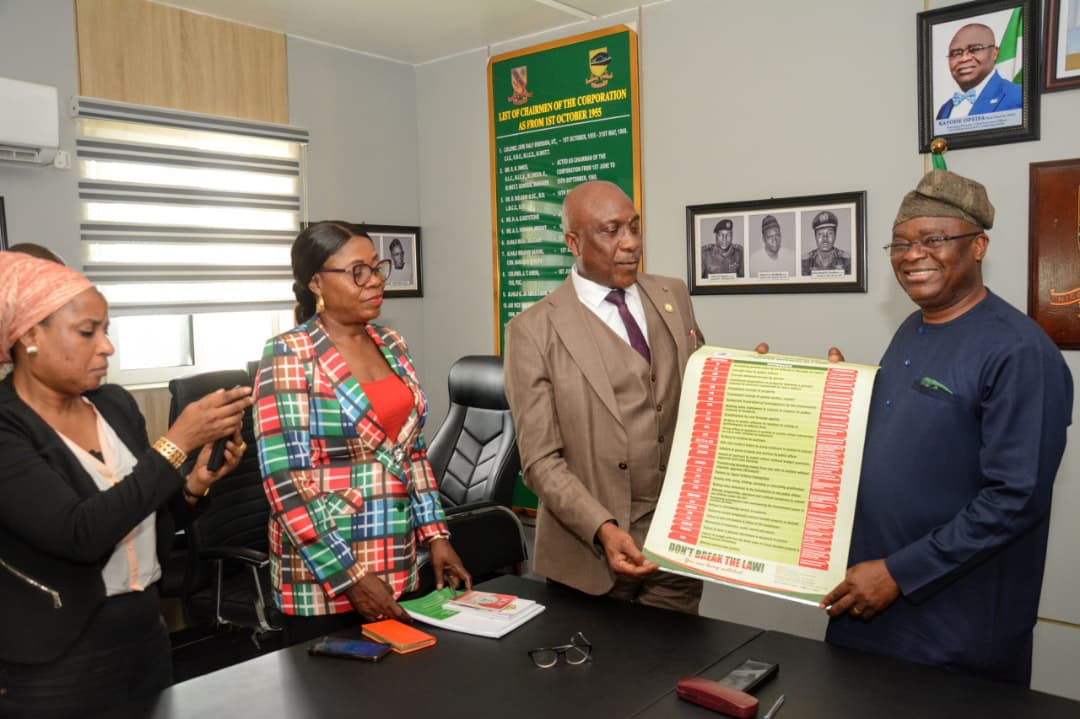
ICPC, NRC Forge Anti-Graft Alliance to Safeguard Rail Assets
The Independent Corrupt Practices and Other Related Offences Commission has pledged closer collaboration with the Nigerian Railway Corporation to strengthen transparency and accountability in the country’s rail sector.
The Resident Anti-Corruption Commissioner (RAAC), Lagos Office, Mr. Alexander Chukwumah, gave the assurance during a courtesy visit to the NRC Managing Director, Dr. Kayode Opeifa, at the corporation’s headquarters.
Chukwumah said the commission was prepared to support the NRC through targeted training programmes aimed at equipping staff with the knowledge to identify and avoid actions that could expose them to corruption-related offences.
He explained that the initiative aligns with the ICPC’s public education mandate to promote integrity across public institutions.
He urged the management of the corporation to work closely with its Anti-Corruption and Transparency Unit, noting that members of the unit had been trained to detect early warning signs and red flags capable of preventing minor lapses from escalating into major institutional crises.
According to him, the visit was also to reinforce the cordial relationship between both agencies and reciprocate the goodwill earlier extended by the railway corporation.
“ICPC is committed to ensuring that NRC workers stay out of trouble. There are ways we can guide you and your team to avoid actions that could expose them to corruption risks,” Chukwumah said.
In his response, Opeifa welcomed the partnership and expressed readiness to deepen collaboration with the anti-graft agency to entrench transparency within the corporation.
The NRC boss observed that the railway system could have achieved greater milestones over the years but for corruption-related setbacks that slowed its growth.
He requested the commission to organise a capacity-building programme for heads of departments and senior management staff to sharpen their understanding of compliance standards and ethical decision-making.
Opeifa identified vandalism of railway infrastructure as a major operational challenge, stressing that the destruction of critical assets continues to strain service delivery.
As part of efforts to curb the menace, he presented anti-vandalism sweatshirts to the ICPC delegation bearing the inscription: “Rails and railway assets are critical national treasures and not scraps.”
He maintained that the corporation operates a strict disciplinary regime, warning that any staff found culpable of collusion or sabotage faces immediate dismissal.
He also commended NRC engineers and other personnel for sustaining operations despite logistical and infrastructural challenges.
On the corporation’s long-term direction, Opeifa reiterated the NRC’s Vision 2-5-10-20 development framework aimed at modernising and expanding the rail network.
He said the first phase prioritises optimising legacy lines and reviving abandoned corridors that once served as economic lifelines, including the Kaduna–Nguru–Kaura Namoda route, with plans to restore services to Zamfara State within the year.
He added that the corporation is advancing a freight-by-rail drive under its “Railing with the States” initiative to enable sub-national governments leverage rail infrastructure for economic growth and enhance connectivity to the nation’s seaports.
Opeifa further disclosed that the NRC plans to gradually transition from diesel-powered locomotives to cleaner energy sources such as gas within the next five years, subject to funding, while working towards doubling Nigeria’s rail assets by 2035.
News
Tinubu swears in Disu as substantive IGP, chief inaugurates up state police committee
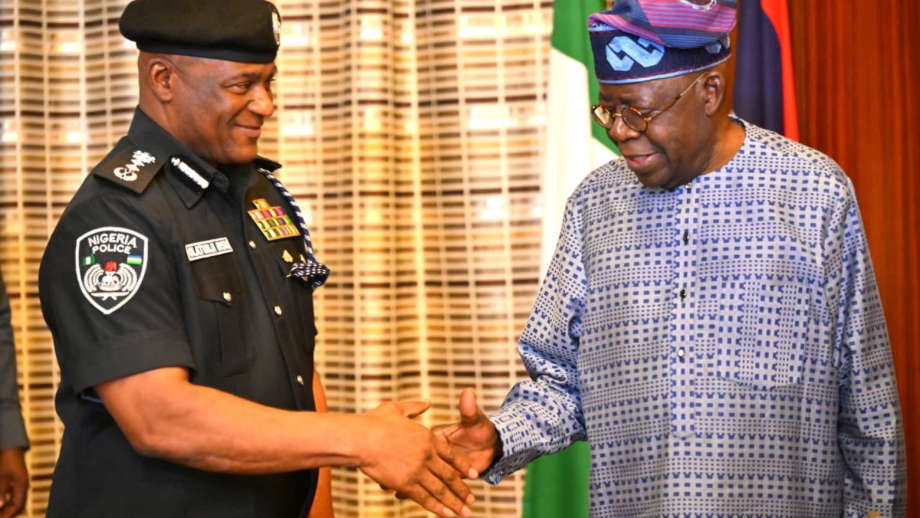
Tinubu swears in Disu as substantive IGP, chief inaugurates up state police committee
President Bola Tinubu on Wednesday swore in Olatunji Disu as the substantive Inspector-General of Police at the Council Chambers of the State House, Abuja, as the new police chief immediately inaugurated a committee to drive the implementation of state policing.
Disu took the oath of office at 2:53pm after his citation was read by the State House Director of Information and Public Relations, Mr Abiodun Oladunjoye.
The brief ceremony, witnessed by Vice President Kashim Shettima, members of the Federal Executive Council and other top government officials, preceded the FEC meeting, which commenced at 3:01pm.
Among dignitaries present were the Secretary to the Government of the Federation, George Akume; National Security Adviser, Nuhu Ribadu; Chief of Staff to the President, Femi Gbajabiamila; Minister of Police Affairs, Ibrahim Gaidam; FCT Minister, Nyesom Wike; and Head of Service, Mrs Esther Walson-Jack.
The President also swore in newly appointed commissioners of the Revenue Mobilisation Allocation and Fiscal Commission and the Federal Civil Service Commission.
Disu’s confirmation followed his unanimous endorsement by the Nigeria Police Council on Monday, barely a week after Tinubu appointed him acting IGP in the wake of the resignation of his predecessor, Kayode Egbetokun, on February 23, 2026.
At Monday’s Police Council meeting, Lagos State Governor, Babajide Sanwo-Olu, reportedly commended Disu’s track record, particularly his tenure as Commander of the Rapid Response Squad in Lagos between 2015 and 2021.
Nasarawa State Governor, Abdullahi Sule, also described the appointment as merit-based, while Enugu State Governor, Peter Mbah, seconded the motion endorsing him.
Disu, 59, joined the Nigeria Police Force as a Cadet Assistant Superintendent of Police on May 18, 1992. Before his elevation, he served as Assistant Inspector-General of Police in charge of the Special Protection Unit and the Force Criminal Investigation Department Annex in Lagos. He previously held key roles in Lagos and Rivers states.
Hours after his inauguration, the new IGP held his first formal engagement with senior officers, during which he announced the constitution of an eight-member committee to oversee the implementation of state policing.
Professor Olu Ogunsakin was named chairman of the committee.
Addressing the force hierarchy, Disu said leadership was “not about position but responsibility,” stressing that professionalism, discipline and accountability must guide policing nationwide.
He underscored the need for restraint in the exercise of authority and respect for human rights, insisting that all Nigerians must be treated with dignity and fairness irrespective of status.
The IGP also pledged to strengthen internal oversight mechanisms, directing that the Public Complaint Unit and the X-Squad be empowered to operate independently.
On decentralisation, Disu said state policing would enable different tiers of government to play more active roles in addressing security challenges across the country.
News
Tinubu names ‘Tax man’ Taiwo Oyedele minister of state for finance
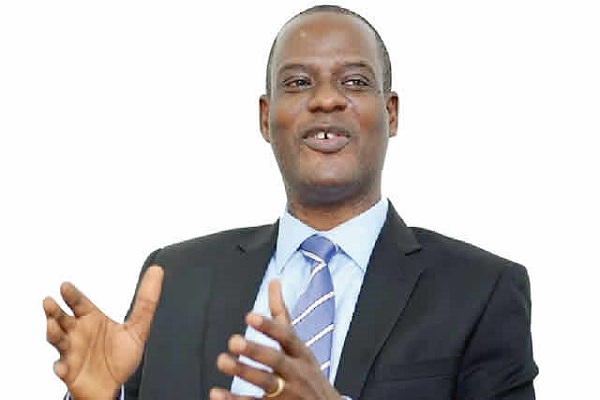
Tinubu names ‘Tax man’ minister of state for finance
President Bola Tinubu has nominated Taiwo Oyedele as the minister of state for finance, replacing Doris Anite-Uzoka.
Mrs Anite-Uzoka will now move to the Ministry of Budget and National Planning, as the Minister of State, her third portfolio in the administration.
President Tinubu today conveyed the nomination of Mr Oyedele to the Senate for confirmation in a letter to the Senate President, Godswill Akpabio.
Until President Tinubu nominated him as a minister, Mr Oyedele from Ikaram, Akoko, Ondo State, was the chairman of the Presidential Committee on Fiscal Policy and Tax Reforms, which overhauled Nigeria’s tax system.
Mr Oyedele, 50, is an economist, accountant and public policy expert.
He attended Yaba College of Technology, where he obtained a Higher National Diploma (HND) in accountancy and finance. He attended Oxford Brookes University and earned a BSc in applied accounting.
He also completed executive education programmes at the London School of Economics, Yale University, the Gordon Institute of Business Science, and the Harvard Kennedy School.
Mr Oyedele spent 22 years of his working career at PwC, joining in 2001 and rising to become the Fiscal Policy Partner and Africa Tax Leader.
Mr Oyedele is also a professor at Babcock University in Ogun State and a visiting scholar at the Lagos Business School.
Bayo Onanuga,
Special Adviser to the President,
(Information and Strategy)
March 3, 2026

-
 International3 days ago
Iran Retaliates: Gulf States Allied With US Hit by Missiles, Drones
-
 International3 days ago
Saudi Arabia Denies Lobbying US to Strike Iran as Gulf States Respond to Escalation
-
 International2 days ago
Several U.S. Warplanes Crash in Kuwait Amid Ongoing Iranian Strikes
-
 metro3 days ago
Daddy Freeze Warns Couples Over 40: ‘Avoid Moving Abroad, Especially US, UK’
-
 Politics2 days ago
Wike Blasts Kingibe Over FCT Council Election Remarks
-
 International2 days ago
Israeli Airstrikes Kill 31 in Lebanon as Hezbollah Loses Senior Figures
-

 Health2 days ago
Nigeria to Receive Breakthrough HIV Prevention Drug This Month – NACA
-

 International3 days ago
Austin Bar Shooting Kills 3, FBI Investigates Possible Terrorism Link