

International
Saudi Arabia worries over US strikes on Iran

Saudi Arabia worries over US strikes on Iran
READ ALSO:
- Two warders suspended for assisting Lagos robbery inmate to process passport
- Traditionalists frustrating police investigation of Ekiti masqueraders attack on Muslim ladies – MURIC
- Netanyahu praises Trump after U.S. strikes Iran’s nuclear sites, calls it ‘pivot of history’
Oman
Oman, which was mediating nuclear talks between Washington and Tehran, on Sunday strongly condemned US strikes on nuclear sites in Iran.
The Gulf sultanate “expresses deep concern, denunciation and condemnation of the escalation resulting from the direct air strikes launched by the United States on sites in the Islamic Republic of Iran”, the official Oman News Agency said.
Lebanon
Lebanese president Joseph Aoun, in statement released by the Lebanese Presidency on X, meanwhile said: “Lebanon, its leadership, parties, and people, are aware today, more than ever before, that it has paid a heavy price for the wars that erupted on its land and in the region. It is unwilling to pay more, and there is no national interest in doing so, especially since the cost of these wars was and will be greater than its ability to bear.”
“The bombing of Iranian nuclear facilities raises fears of an escalation of tensions that could threaten security and stability in more than one region and country.
“The President of the Republic calls for restraint and the launch of constructive and serious negotiations to restore stability to the countries of the region and avoid further killing and destruction,” the statement added.
UK
UK Prime Minister Keir Starmer called on Iran to “return to the negotiating table” over its nuclear ambitions after the US carried out strikes on Iranian nuclear sites.
“Iran can never be allowed to develop a nuclear weapon and the US has taken action to alleviate that threat,” Starmer said on X, adding that “stability in the region is a priority”.
“We call on Iran to return to the negotiating table and reach a diplomatic solution to end this crisis.”
Iraq
Iraq warned on Sunday that the US attacks on its neighbor Iran’s nuclear facilities threaten peace and stability in the Middle East.
Iraq “expresses its deep concern and strong condemnation of the targeting of nuclear facilities” in Iran, government spokesperson Basim Alawadi said. “This military escalation constitutes a grave threat to peace and security in the Middle East and poses serious risks to regional stability,” he added.
European Union
The European Union’s top diplomat said Iran must not be allowed to develop a nuclear weapon but she urged those involved in the conflict to show restraint.
“I urge all sides to step back, return to the negotiating table and prevent further escalation,” EU foreign policy chief Kaja Kallas said in a post on social media.
Kallas will chair a meeting of the 27-nation bloc’s foreign ministers in Brussels on Monday, with the Israel-Iran war high on the agenda.
New Zealand
New Zealand Foreign Minister Winston Peters urged “all parties to return to talks.”
He wouldn’t tell reporters Sunday whether New Zealand supported President Trump’s actions, saying they had only just happened.
The three-time foreign minister said the crisis is “the most serious I’ve ever dealt with” and that “critical further escalation is avoided.”
READ ALSO:
- Iwuanyanwu’s Will bans young widow from remarrying
- Police arrest 22 suspects over killing of 12 travelers in Plateau
- Shettima refuses Ganduje’s handshake amid 2027 VP ticket crisis ( Video)
“Diplomacy will deliver a more enduring resolution than further military action,” he said.
Italy
Italy’s foreign minister Antonio Tajani, on state broadcaster RAI, said: “Now we hope that, after this attack, which caused massive damage to nuclear weapons production and posed a threat to the entire region, a de-escalation can begin and Iran can sit down at the negotiating table.”
China
A flash commentary from China’s government-run media asked whether the US is repeating “its Iraq mistake in Iran.”
The online piece by CGTN, the foreign-language arm of the state broadcaster, said the US strikes mark a dangerous turning point.
“History has repeatedly shown that military interventions in the Middle East often produce unintended consequences, including prolonged conflicts and regional destabilization,” it said, citing the American invasion of Iraq in 2003.
It said a measured, diplomatic approach that prioritizes dialogue over military confrontation offers the best hope for stability in the Middle East.
Japan
Prime Minister Shigeru Ishiba told reporters Sunday it was crucial to calm the situation as soon as possible, adding that the Iranian nuclear weapons development also must be prevented.
Ishiba, asked if he supports the US attacks on Iran, declined to comment. He was speaking to reporters after an emergency meeting with officials from key ministries over the US military action.
Ishiba said officials are still assessing details and doing their utmost to protect the safety of the Japanese nationals in Iran, Israel and elsewhere in the region.
While the US attacks on Iran do not affect Japan’s stable energy supply for the time being, Ishiba said, he has instructed officials to “watch the development with a sense of urgency and take every precaution” to prevent an increase in oil and utility costs ahead of the summer when energy demand rises.
South Korea
South Korea’s presidential office said it would hold an emergency meeting Sunday to discuss the security and economic ramifications of the US strikes and potential South Korean responses.
READ ALSO:
- Trump calls US strikes on Iran’s nuclear facilities ‘spectacular success’
- Police deny fresh herdsmen attack in Benue community
- Keyamo mocks Atiku, El-Rufai, says new ADA party lacks strength to challenge APC
Australia
Australia, which shuttered its embassy in Tehran and evacuated staff Friday, continued to push for a diplomatic end to the conflict.
“We have been clear that Iran’s nuclear and ballistic missile program has been a threat to international peace and security,” a government official said in a written statement. “We note the US President’s statement that now is the time for peace.”
“The security situation in the region is highly volatile. We continue to call for de-escalation, dialogue and diplomacy.”
Israeli Prime Minister Benjamin Netanyahu was predictably all praises for Trump’s decision.
“Your bold decision to target Iran’s nuclear facilities, with the awesome and righteous might of the United States, will change history,” he said in a video message directed at the American president.
Netanyahu said the US “has done what no other country on earth could do.”
Israel’s Ambassador to the UN Danny Danon also thanked Trump for his “historic decision to prevent Iran from obtaining nuclear weapons. Today, President Trump proved that ‘Never Again’ is not just a slogan — it’s a policy.”
In Washington, Congressional Republicans — and at least one Democrat — immediately praised Trump after he announced his fateful attack order.
“Well done, President Trump,” Sen. Lindsey Graham of South Carolina posted on X. Texas Sen. John Cornyn called it a “courageous and correct decision.” Alabama Sen. Katie Britt called the bombings “strong and surgical.”
Oklahoma Sen. Markwayne Mullin posted: “America first, always.”
The Senate Armed Services Committee chairman, Roger Wicker of Mississippi, said Trump “has made a deliberate — and correct — decision to eliminate the existential threat posed by the Iranian regime.”
Wicker posted on X that “we now have very serious choices ahead to provide security for our citizens and our allies.”
The quick endorsements of stepped up US involvement in Iran came after Trump had publicly mulled the strikes for days and many congressional Republicans had cautiously said they thought he would make the right decision. Senate Majority Leader John Thune said Saturday evening that “as we take action tonight to ensure a nuclear weapon remains out of reach for Iran, I stand with President Trump and pray for the American troops and personnel in harm’s way.”
Thune and House Speaker Mike Johnson, R-Louisiana, were briefed ahead of the strikes on Saturday, according to people familiar with the situation and granted anonymity to discuss it.
Johnson said in a statement that the military operations “should serve as a clear reminder to our adversaries and allies that President Trump means what he says.”
House Intelligence Committee Chairman Rick Crawford, R-Arkansas, said he had also been in touch with the White House and “I am grateful to the US servicemembers who carried out these precise and successful strikes.”
Breaking from many of his Democratic colleagues, Sen. John Fetterman of Pennsylvania, an outspoken supporter of Israel, also praised the attacks on Iran. “As I’ve long maintained, this was the correct move by @POTUS,” he posted. “Iran is the world’s leading sponsor of terrorism and cannot have nuclear capabilities.”
Both parties have seen splits in recent days over the prospect of striking Iran. Kentucky Rep. Thomas Massie, a Republican and a longtime opponent of US involvement in foreign wars, posted on X after Trump announced the attacks that “This is not Constitutional.”
Many Democrats have maintained that Congress should have a say. The Senate was scheduled to vote as soon as this week on a resolution by Virginia Sen. Tim Kaine requiring congressional approval before the US declared war on Iran or took specific military action.
Connecticut Rep. Jim Himes, the top Democrat on the House intelligence panel, posted on X after Trump’s announcement: “According to the Constitution we are both sworn to defend, my attention to this matter comes BEFORE bombs fall. Full stop.”
Saudi Arabia worries over US strikes on Iran
ARAB NEWS







International
Nigeria Secures UN Human Rights Council Seat With 172 Votes
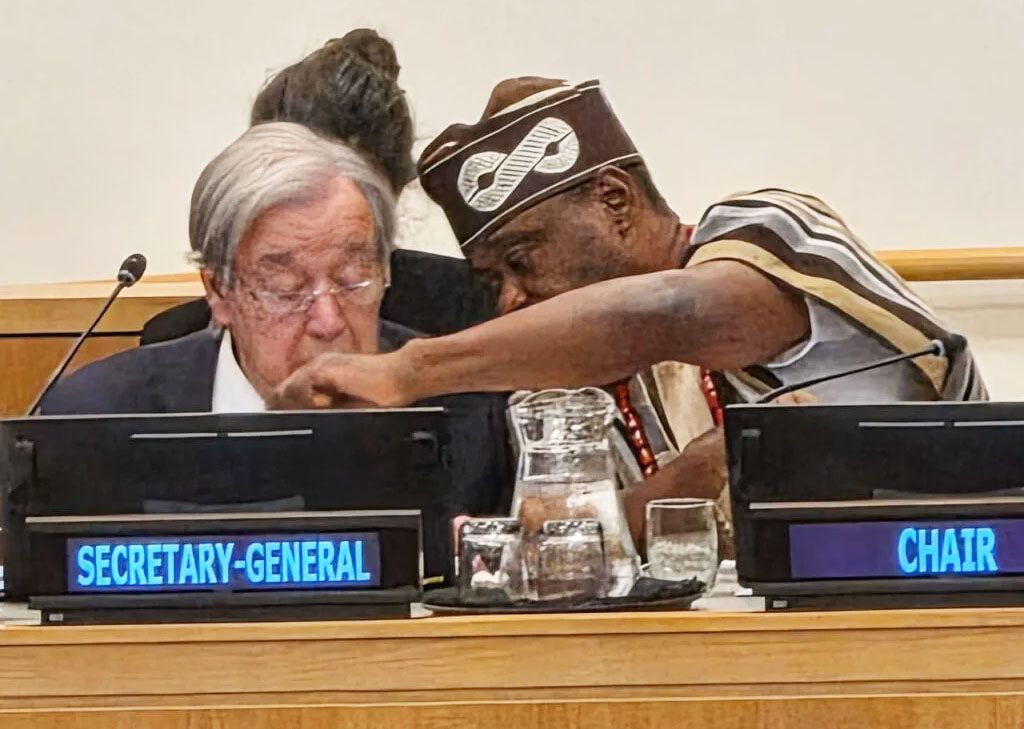
Nigeria has secured a seat on the United Nations Human Rights Council (UNHRC) after receiving 172 votes in an election by the UN General Assembly, earning the country a three-year term on the international body responsible for promoting and protecting human rights worldwide.
The election was held on Tuesday, October 13, 2026, at the United Nations headquarters in New York. Nigeria will serve on the 47-member council from January 1, 2027, to December 31, 2029.
Nigeria was among 15 countries elected to the council for the new term. The other successful candidates included Zambia, Ghana, Burundi, Brazil, the Dominican Republic, Uruguay, Germany, Ireland, Japan, Jordan, Kuwait, Nepal, Moldova and Ukraine.
Among the African candidates, Zambia received 177 votes, Ghana secured 173, Nigeria obtained 172, while Burundi received 160 votes.
The election gives Nigeria an opportunity to participate in international deliberations on human rights standards, alleged violations and measures aimed at improving the protection of fundamental freedoms across the world.
However, the process has attracted criticism from human rights organisations because the election was uncontested. Regional groups nominated exactly as many candidates as there were available seats, meaning there was no competitive ballot among rival candidates within the respective groups.
The UN Human Rights Council is an intergovernmental body based in Geneva, Switzerland. Established in 2006, it is mandated to address human rights violations, promote respect for fundamental freedoms and make recommendations to governments and the international community.
READ ALSO:
- Houthi Missile Targeting Riyadh Shot Down as Debris Injures Four, Damages 15 Homes
- Outrage as Israeli Settlers Torch Mosque, Burn Vehicle in Occupied West Bank
- Attempted Suicide: ‘If You Survive, We’ll Jail You’ – Akpabio
The council comprises 47 member states elected by the UN General Assembly through a secret ballot. Its seats are allocated among five regional groups to ensure geographical representation, and members serve staggered three-year terms.
The body examines human rights situations in individual countries, conducts its Universal Periodic Review of UN member states and considers complaints and reports concerning alleged abuses. It can also appoint independent experts, establish commissions of inquiry and authorise fact-finding missions to investigate serious allegations.
Although the council plays an important role in international human rights oversight, it does not operate as a criminal court and cannot independently impose criminal sentences on individuals accused of abuses.
Nigeria’s election comes amid continuing international scrutiny of human rights conditions in several countries, including concerns about police conduct, accountability, freedom of expression and the treatment of vulnerable groups.
The selection of countries with contested human rights records has been criticised by advocacy organisations, which argue that uncontested elections can weaken accountability and reduce pressure on candidates to demonstrate their commitment to protecting fundamental rights.
The criticism has also raised questions about how elected countries will use their positions on the council to address allegations of abuses and support international human rights standards.
For Nigeria, membership offers a platform to contribute to debates on issues such as unlawful killings, torture, discrimination, the rights of women and children, freedom of expression and the protection of civilians during armed conflicts.
The country will also be expected to participate in council sessions, consider resolutions and engage with other member states on international human rights concerns.
Nigeria’s three-year membership begins in January 2027. Its performance on the council will be watched alongside its domestic human rights record, including how authorities address allegations of misconduct and strengthen accountability and protection for citizens.
The election is therefore both a diplomatic achievement for Nigeria and an opportunity for the country to demonstrate its commitment to the principles the council was established to uphold.
Nigeria Secures UN Human Rights Council Seat With 172 Votes
International
Houthi Missile Targeting Riyadh Shot Down as Debris Injures Four, Damages 15 Homes
Houthi Missile Targeting Riyadh Shot Down as Debris Injures Four, Damages 15 Homes
Saudi Arabia’s air defences have intercepted and destroyed a Houthi ballistic missile targeting Riyadh, as debris from earlier missile interceptions injured four people and damaged about 15 residential homes in the Saudi capital.
The developments were announced on Wednesday, October 14, 2026, amid escalating attacks involving Saudi Arabia and Yemen’s Houthi armed group.
Major General Turki Al-Maliki, spokesman for the Saudi-led coalition supporting Yemen’s internationally recognised government, confirmed that a ballistic missile launched towards Riyadh had been intercepted and destroyed.
Saudi authorities subsequently lifted danger warnings issued for Riyadh and Al-Kharj Governorate through the country’s National Early Warning Platform, indicating that the immediate threat covered by those alerts had passed.
The missile interception came after loud explosions were heard over Riyadh late on Tuesday as Saudi air defences engaged incoming aerial threats.
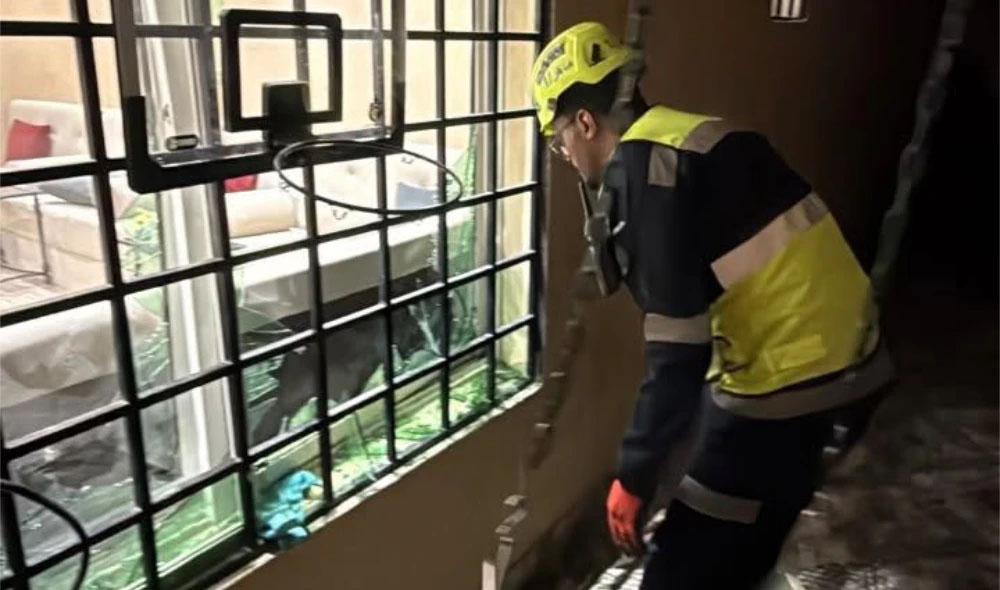
According to the Saudi Civil Defence, debris from two previously intercepted cruise missiles fell on residential areas, injuring four people and causing material damage to approximately 15 homes.
The injured comprised two women, a man and a child. Authorities said the debris caused limited damage to the affected properties, while images released by Saudi officials showed damage inside residential buildings.
READ ALSO:
- Outrage as Israeli Settlers Torch Mosque, Burn Vehicle in Occupied West Bank
- Attempted Suicide: ‘If You Survive, We’ll Jail You’ – Akpabio
- Yamal Inspires Barcelona Comeback to Sink Osimhen’s Galatasaray
Emergency services responded to the incident, and the relevant authorities implemented established safety procedures. The four injuries were attributed to falling missile fragments rather than a direct impact from the intercepted missiles.
The latest interception was part of a broader series of missile and drone attacks targeting Saudi Arabia. The Saudi-led coalition reported intercepting threats over Riyadh and other parts of the kingdom, including Dhahran and Al-Kharj.
Saudi officials also reported that three drones had been destroyed north of Riyadh on Tuesday.
In a separate incident, Saudi Arabia’s Energy Ministry confirmed that an administrative building belonging to state-owned oil giant Saudi Aramco in Dhahran, in the kingdom’s Eastern Province, was struck on Tuesday evening, causing what authorities described as a limited fire.
The ministry said there were no casualties from the fire. Reports indicated that the building was part of the Aramco headquarters complex, which houses offices associated with the company’s extensive oil and energy operations.
The Houthis have claimed attacks against Saudi strategic and energy facilities, including Aramco installations and King Khalid International Airport in Riyadh. The latest developments have raised further concerns about the security of civilian areas and critical infrastructure across the kingdom.
Saudi Arabia has vowed to respond to attacks against its territory. The Saudi Cabinet, chaired by Crown Prince Mohammed bin Salman, condemned the attacks and reaffirmed the kingdom’s commitment to protecting its security and freedom of navigation in the Red Sea and the Bab al-Mandab Strait.
The renewed confrontation has also prompted military action by the Saudi-led coalition in Yemen. On Tuesday, the coalition announced operations targeting facilities it said were being used to support Houthi attacks. It issued warnings urging civilians to stay away from designated locations.
The Houthis, who control Yemen’s capital, Sanaa, have said their attacks are retaliation for Saudi military operations against them. The conflict has intensified after years of intermittent fighting and has increased concerns about the potential impact on regional stability, energy supplies and international shipping.
The latest missile interception in Riyadh underscores the continuing threat posed by missiles and drones in the conflict. Although the ballistic missile targeting the capital was destroyed, falling debris from earlier interceptions demonstrated the risks to residents even when air defences successfully engage incoming weapons.
Saudi authorities have not reported further casualties from the latest ballistic missile interception. The situation remains tense as the kingdom continues to monitor and respond to incoming aerial threats.
Houthi Missile Targeting Riyadh Shot Down as Debris Injures Four, Damages 15 Homes
International
Outrage as Israeli Settlers Torch Mosque, Burn Vehicle in Occupied West Bank
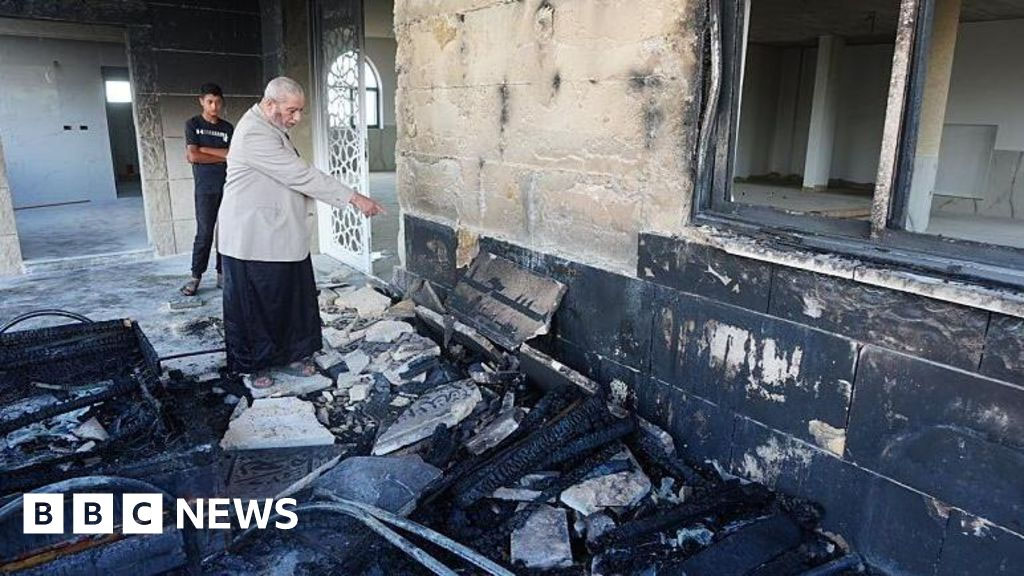
Israeli settlers have reportedly set fire to a mosque, a vehicle and an olive tree in a Palestinian village in the occupied West Bank, in an attack that has renewed concerns about violence against Palestinian communities and religious sites.
The incident occurred in the early hours of Wednesday, October 14, 2026, when a group of settlers raided Mikhmas, also spelt Mukhmas, northeast of occupied Jerusalem.
According to the Palestinian news agency WAFA, the Jerusalem Governorate reported that dozens of settlers entered the village shortly after midnight and set fire to a mosque and a nearby olive tree. A vehicle was also completely burned during the attack.
Reports from the scene showed damage to the mosque’s entrance. No injuries were reported in the initial accounts of the incident.
Mohammed Kanaan, a member of Mikhmas’ municipal council, told Anadolu Agency that the attackers set fire to a prayer room and a vehicle at about 2 a.m. local time. He said residents alerted the relevant authorities and requested the intervention of firefighting crews.
Reports also indicated that nationalist and racist slogans were spray-painted on the mosque and other buildings in the village. The extent of the damage and whether anyone had been arrested in connection with the attack were not immediately clear.
READ ALSO:
- Attempted Suicide: ‘If You Survive, We’ll Jail You’ – Akpabio
- Yamal Inspires Barcelona Comeback to Sink Osimhen’s Galatasaray
- Press Freedom: Judge Blocks Trump’s Ban on Three Major US Media Outlets
The attack adds to continuing concerns over Israeli settler violence in the occupied West Bank, where Palestinian residents have reported assaults, intimidation, property destruction and attacks on farmland.
The incident is particularly sensitive because it involved a Muslim place of worship. Religious sites and civilian property are protected under international humanitarian law, and deliberate attacks against them raise serious legal concerns.
The latest incident also comes amid the annual olive harvest, an important source of income for many Palestinian farming families. The Palestinian Colonization and Wall Resistance Commission said on Monday that it had documented 136 attacks linked to the olive harvest since the beginning of October. The reported incidents included beatings, intimidation, gunfire, theft of olives and farming equipment, and damage to trees.
The burning of the mosque in Mikhmas follows other reported arson attacks on mosques in the West Bank in recent months. In July, two mosques in the Palestinian villages of Qusra and Kour were set on fire following deadly clashes in the territory.
Reuters reported at the time that the Israeli military had confirmed evidence of arson and graffiti at the affected mosque sites and condemned attacks on religious places. The incidents prompted renewed calls for measures to prevent further attacks and hold those responsible accountable.
The wider situation in the Israeli-occupied Palestinian territory remains tense, with attacks by settlers and Israeli military operations contributing to insecurity for residents. Palestinian officials have repeatedly called for stronger protection of communities and accountability for attacks on civilians and their property.
The circumstances surrounding Wednesday’s mosque attack remain under investigation, and it was not immediately clear whether Israeli authorities had announced arrests or opened a formal inquiry.
The incident has once again highlighted concerns over the safety of Palestinian religious sites, homes and agricultural land, as calls grow for effective action against violence in the occupied West Bank.
Outrage as Israeli Settlers Torch Mosque, Burn Vehicle in Occupied West Bank
-
 metro3 days ago
₦8.7bn Erosion-Control Budget Gap Raises Questions as Anambra Gullies Expand
-
 Politics2 days ago
Obi Positioning for SGF Role Under Atiku’s ADC Ticket – Sowore
-
 metro2 days ago
How Bandits Demand ₦300m Ransom for Abducted Kaduna Couple, Baby in Viral Video
-
 metro3 days ago
Child Soldiers, Baby Factories: US Raises Alarm Over Official Complicity in Nigeria
-

 News3 days ago
Fuel Subsidy May Ease Hardship Today, But Could Cripple Nigeria’s Economy Tomorrow — FG
-
 metro3 days ago
2027 Elections: Atiku Demands Names of INEC Ballot Printers, Questions Secret Contracts
-

 Politics2 days ago
Okonkwo Alleges Return of Subsidy, Accuses NNPC of Plotting Trillions in ‘Lost Profit’
-
 metro2 days ago
How Military Air Strike Crushed ISWAP Attack Plot, Killed Over 40 Fighters in Borno