
News
SERAP sues Akpabio, Abbas over each lawmaker’s N21m running cost

SERAP sues Akpabio, Abbas over each lawmaker’s N21m running cost
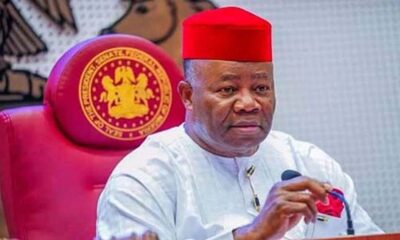
Socio-Economic Rights and Accountability Project (SERAP) has filed a lawsuit against the Senate President, Mr Godswill Akpabio, and Speaker of House of Representatives, Mr Tajudeen Abbas.
They are accused of failing “to end the apparently unlawful practice by the National Assembly of fixing its allowances and running costs, and the failure to account for the monthly running costs paid to members.”
The Senate recently came out to denied approving jumbo pay to the federal lawmakers, explaining that N21m considered as monthly salary a lawmaker was actually for running cost.
Akpabio and Abbas are sued for themselves and on behalf of all members of the National Assembly.
Former President Olusegun Obasanjo had alleged that the lawmakers fix their own salaries and allowances, contrary to the recommendations of the Revenue Mobilisation Fiscal Allocation Commission (RMAFC).
In the suit number FHC/ABJ/CS/1289/2024 filed last Friday at the Federal High Court, Abuja, SERAP is seeking: “an order of mandamus to direct and compel Mr Akpabio and Mr Abbas to end the apparently unlawful practice of the National Assembly fixing its remuneration and allowances termed as ‘running cost’.”
SERAP is seeking: “an order of mandamus to direct and compel Mr Akpabio and Mr Abbas to disclose the exact amount of the monthly running costs being paid to and received by the lawmakers, and the spending details of any such running costs.”
SERAP is also seeking: “an order of mandamus to direct and compel Mr Akpabio and Mr Abbas to end the alleged practice of paying remuneration and allowances termed as ‘running costs’ into the personal accounts of lawmakers.”
In the suit, SERAP is arguing that: “The provisions of paragraph N, section 32(d) of the Third Schedule to the Nigerian Constitution 1999 [as amended] clearly make it unlawful for the National Assembly to fix its salaries, allowances and running costs.”
SERAP is also arguing that, “the alleged practice of paying running costs into the personal accounts of lawmakers is a fundamental breach of Rule 713 of the Federal Government Financial Regulations, which provides that ‘public money shall not be paid into a private bank account.’”
READ ALSO:
- VIDEO: China holds colourful reception for Tinubu
- Russia pushes on key Ukraine city while Kyiv’s Kursk incursion slows
- Reactions as singer Timaya accuses apostle Suleman of lying
According to SERAP, “‘Public function’ means activities in the public interest, not against it. The reports that lawmakers are fixing their own salaries, allowances and running costs amount to private self-interest or self-dealing. It is also detrimental to the public interest.”
SERAP said, “The constitutional oath of office of lawmakers requires them to ensure transparency and accountability in the exact amounts of salaries, allowances and running costs they receive.”
SERAP is also arguing that, “The allegations that lawmakers are fixing their own salaries, allowances and running costs are entirely inconsistent and incompatible with the constitutional oath of office and the object and purpose of the UN Convention against Corruption to which Nigeria is a state party.”
The suit filed on behalf of SERAP by its lawyers, Kolawole Oluwadare, Andrew Nwankwo, and Ms Blessing Ogwuche, read in part: “Directing and compelling the lawmakers to account for and return any misused or mismanaged running costs they collected would build trust in democratic institutions and strengthen the rule of law.”
“SERAP is seeking: an order of mandamus to direct and compel Mr Akpabio and Mr Abbas to refer the allegations on the misuse of the running costs received by members to appropriate anticorruption agencies for investigation and prosecution where there is relevant admissible evidence.”
“The country’s international legal obligations especially under the UN Convention against Corruption impose a legal commitment on public officials including lawmakers to discharge a public duty truthfully and faithfully.”
“The convention specifically in paragraph 1 of article 8 requires members to promote integrity, honesty and responsibility in the management of public resources.”
“Nigerians have a right to scrutinize how their lawmakers spend their tax money and the commonwealth. Nigerians also have a right to honest and faithful performance by their public officials including lawmakers.”
“Ending the reported practice by lawmakers of fixing their salaries, allowances and running costs would improve public confidence in the integrity and honesty of the National Assembly.”
READ ALSO:
- Wike threatens PDP govs backing Fubara, says ‘I’ll put fire in your states’
- Napoli in U-turn withdraw Osimhen number 9 jersey from Lukaku
- Double promotion, cash reward for cleaner who returned $10,000 found in aircraft
“Constitutional oath of office requires public officials including lawmakers to abstain from all improper acts, such as fixing their own salaries, allowances and running costs, that are inconsistent with the public trust.”
“It is a travesty and a fundamental breach of their fiduciary duties for members of the National Assembly to fix their own salaries, allowances and running costs.”
“Rule 713 of the Federal Government Financial Regulations provides: ‘Personal money shall in no circumstances be paid into a government bank account, nor shall any public money be paid into a private bank account.’”
“In the Seventh Schedule to the Nigerian Constitution, lawmakers commit to strive to ‘preserve the Fundamental Objectives and Directive Principles of State Policy contained in the Constitution’, [and to] perform their ‘functions honestly, faithfully’, to act ‘always in the interest of the well-being and prosperity of Nigeria’.”
“Lawmakers also commit to ‘preserve, protect and defend the Constitution of Nigeria; and abide by the Code of Conduct contained in the Fifth Schedule to the Constitution.’”
“SERAP notes that Section 15(5) of the Nigerian Constitution requires public institutions to abolish all corrupt practices and abuse of power. Section 16(2) of the Nigerian Constitution further provides that, ‘the material resources of the nation are harnessed and distributed as best as possible to serve the common good.’”
“According to our information, members of the National Assembly are currently fixing their own salaries, allowances and running costs. The running costs are reportedly paid directly into the personal accounts of members.”
“Senator Kawu Sumaila, representing Kano South Senatorial District, recently disclosed in an interview with BBC Hausa that each Nigerian senator earns at least N21 million monthly in running costs, salaries, and allowances.”
“Mr Sumaila reportedly said, ‘My monthly salary is less than N1 million. After deductions, the figure comes down to a little over N600,000. Given the increase effected in the Senate, each senator gets N21 million every month as running cost.’”
No date has been fixed for the hearing of the suit.
SERAP sues Akpabio, Abbas over each lawmaker’s N21m running cost










News
Tinubu Aide Defends Early INEC Statement Release on Amupitan Controversy
Tinubu Aide Defends Early INEC Statement Release on Amupitan Controversy
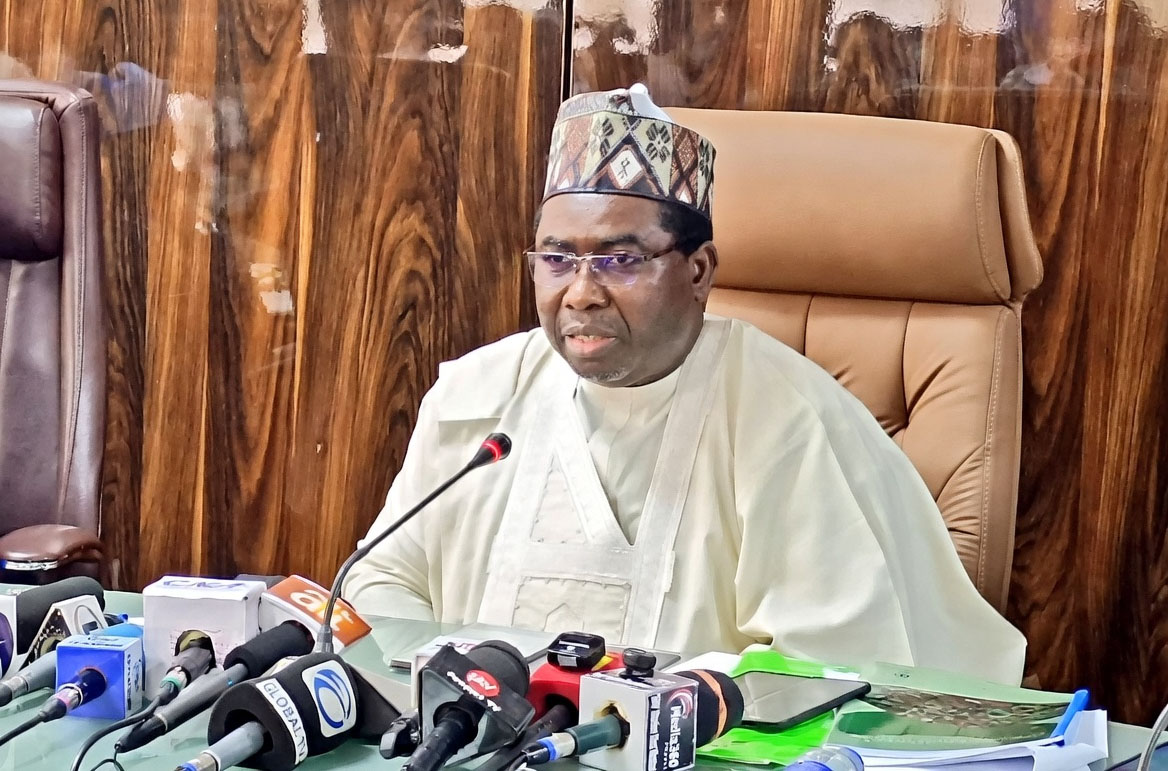
A presidential media aide, Dada Olusegun, has defended his decision to circulate a statement clearing the embattled Chairman of the Independent National Electoral Commission (INEC), Prof. Joash Amupitan, hours before it was officially released by the commission, saying his action falls within his responsibility to communicate government activities.
The controversy began after Olusegun posted on X (formerly Twitter) at about 8:12 pm on April 10, sharing a statement denying allegations that Amupitan had links to pro-government or pro-APC political activity during the 2023 general elections.
However, INEC reportedly published the same statement on its official platform the following day at about 6:16 pm on April 11, a timing gap that triggered public debate and questions about coordination between the presidency and the electoral body.
The development immediately sparked concerns online, with critics questioning why a presidential aide would publish a statement involving an independent institution before the commission itself, raising renewed discussions about the independence of INEC and institutional communication protocols.
Reacting to the backlash, Olusegun dismissed suggestions of wrongdoing, insisting that there was no conspiracy and that the similarity in messaging should not be misinterpreted.
READ ALSO:
- Nigeria-Kenya Comparison Won’t Solve Economic Crisis — Peter Obi Replies Tinubu
- Trump Sparks Global Outrage After Calling Pope Leo XIV “Weak, Terrible”
- INEC Chairman Under Pressure Over Alleged Pro-Tinubu X Account Link
“It is important to separate coincidence in messaging from conspiracy,” he wrote on X, adding that public institutions often respond to issues already in the public domain and that his post did not influence INEC’s official communication.
He further clarified that he did not author the statement and has no authority over INEC’s internal processes, stressing that his role is limited to communicating and defending the policies and image of President Bola Ahmed Tinubu’s administration.
“My role remains what it has always been: to communicate, clarify, and propagate the good works of President Tinubu’s administration responsibly,” he said.
Despite his explanation, the incident triggered widespread reactions on social media, with users questioning the timing of the publications and alleging possible coordination between the presidency and the electoral body.
Some commenters argued that the early release of the statement by a presidential aide could create public perception issues regarding electoral credibility in Nigeria, while others insisted it reflected deeper concerns about institutional independence.
The Independent National Electoral Commission has not issued any further clarification beyond its earlier denial of allegations linking its chairman to partisan political activity during the 2023 elections.
INEC has consistently maintained that its leadership remains neutral and that claims suggesting political bias are false and capable of undermining public trust in the electoral process.
The controversy has further fueled national debate over the boundaries between government communication, political messaging, and the independence of key democratic institutions in Nigeria, particularly ahead of future elections.
Observers say the incident highlights the increasing sensitivity of official communication in the digital era, where timing and perception can significantly shape public trust in institutions.
Tinubu Aide Defends Early INEC Statement Release on Amupitan Controversy
News
Nigeria-Kenya Comparison Won’t Solve Economic Crisis — Peter Obi Replies Tinubu
Nigeria-Kenya Comparison Won’t Solve Economic Crisis — Peter Obi Replies Tinubu
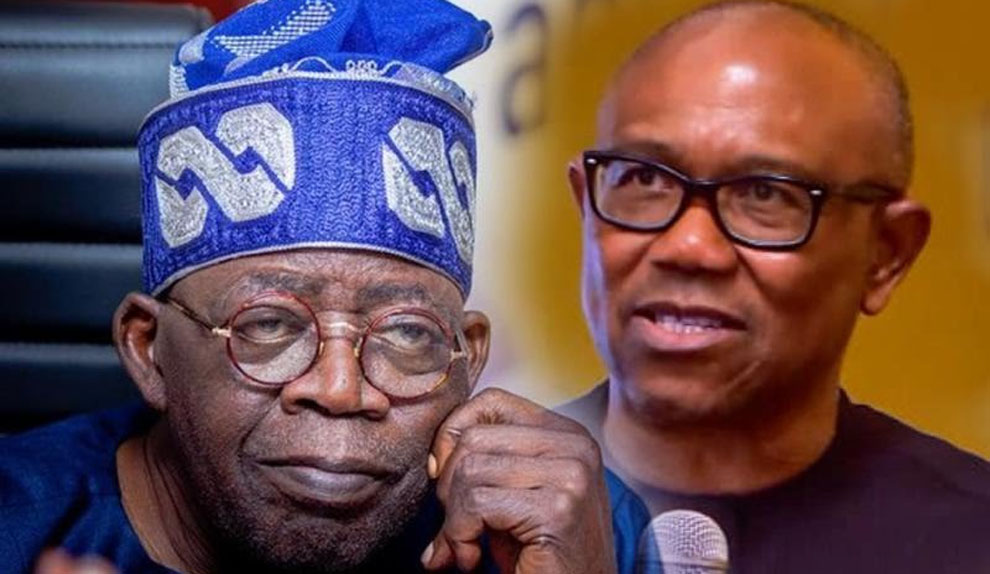
Former presidential candidate of the Labour Party, Peter Obi, has criticised President Bola Tinubu’s comments comparing Nigeria’s economic situation with Kenya and other African countries, insisting that such comparisons do not address Nigeria’s deepening economic challenges.
Obi said the focus should be on solving domestic problems rather than engaging in Nigeria-Kenya economic comparisons, especially at a time when Nigerians are grappling with rising inflation, unemployment, fuel costs, and declining living standards.
He made the remarks while reacting to President Tinubu’s statement in Yenagoa, where the President suggested that Nigeria remains relatively better positioned than some African countries despite its current economic difficulties.
According to Obi, what Nigeria urgently needs is economic reform driven by measurable data, not comparisons that attempt to offer comfort instead of solutions.
“Comparing Nigeria to Kenya or any other country will not fix our problems,” Obi said. “What Nigerians need are concrete solutions driven by measurable data, not statements that attempt to console rather than confront reality.”
Obi Cites Development Indicators to Support Position
Obi backed his argument with development statistics, claiming that Kenya performs better than Nigeria in several key human development indicators, including income levels, education, and healthcare outcomes.
READ ALSO:
- Trump Sparks Global Outrage After Calling Pope Leo XIV “Weak, Terrible”
- INEC Chairman Under Pressure Over Alleged Pro-Tinubu X Account Link
- 2027: Tinubu Knows Opposition Playbook, Always Ahead — Festus Keyamo
He stated that Kenya has a Human Development Index (HDI) score of about 0.630 compared to Nigeria’s 0.530, indicating a wider development gap between both countries.
He also noted that Kenya’s GDP per capita is estimated at about $2,200–$2,300, while Nigeria’s remains below $900, reflecting weaker income distribution and productivity levels.
On poverty levels, Obi said about 43% of Kenyans live below the poverty line, compared to around 63% of Nigerians, translating to a significantly larger number of people affected in Nigeria.
He further highlighted education challenges, stating that Nigeria has about 20 million out-of-school children compared to Kenya’s 3.5 million, alongside weaker infrastructure and electricity access.
In health outcomes, he added that life expectancy in Kenya stands at about 67 years, while Nigeria’s is approximately 54 years, showing significant gaps in healthcare delivery and social welfare systems.
“Statistics Are Not Optional in Governance” — Obi
Obi also criticised earlier remarks attributed to President Tinubu during the campaign trail, including the phrase “Na statistics we go shop?”, insisting that data-driven governance is essential for national development.
“Statistics are not optional; they are the language of development,” he said. “No country can plan effectively or measure progress without credible data and meaningful comparisons.”
He added that while international comparisons can be useful for policy evaluation, they must be applied honestly and not used to downplay domestic economic hardship.
Calls for Focus on Reform, Not Rhetoric
The former Anambra State governor urged the Federal Government to shift focus toward economic restructuring, job creation, productivity growth, and human capital development, rather than political narratives.
Obi said Nigeria must confront its realities with honesty and avoid what he described as “self-consolation politics,” warning that failure to do so would delay meaningful progress.
He maintained that while Kenya also faces its own challenges, Nigeria’s development indicators show deeper structural issues that require urgent policy attention.
“If we are serious about progress, we must face the truth and take responsibility,” he said.
Political analysts say Obi’s comments reflect growing public debate over Nigeria’s economic direction, governance performance, and the use of statistics in national policymaking amid rising cost-of-living pressures.
Nigeria-Kenya Comparison Won’t Solve Economic Crisis — Peter Obi Replies Tinubu
News
INEC Chairman Under Pressure Over Alleged Pro-Tinubu X Account Link
INEC Chairman Under Pressure Over Alleged Pro-Tinubu X Account Link
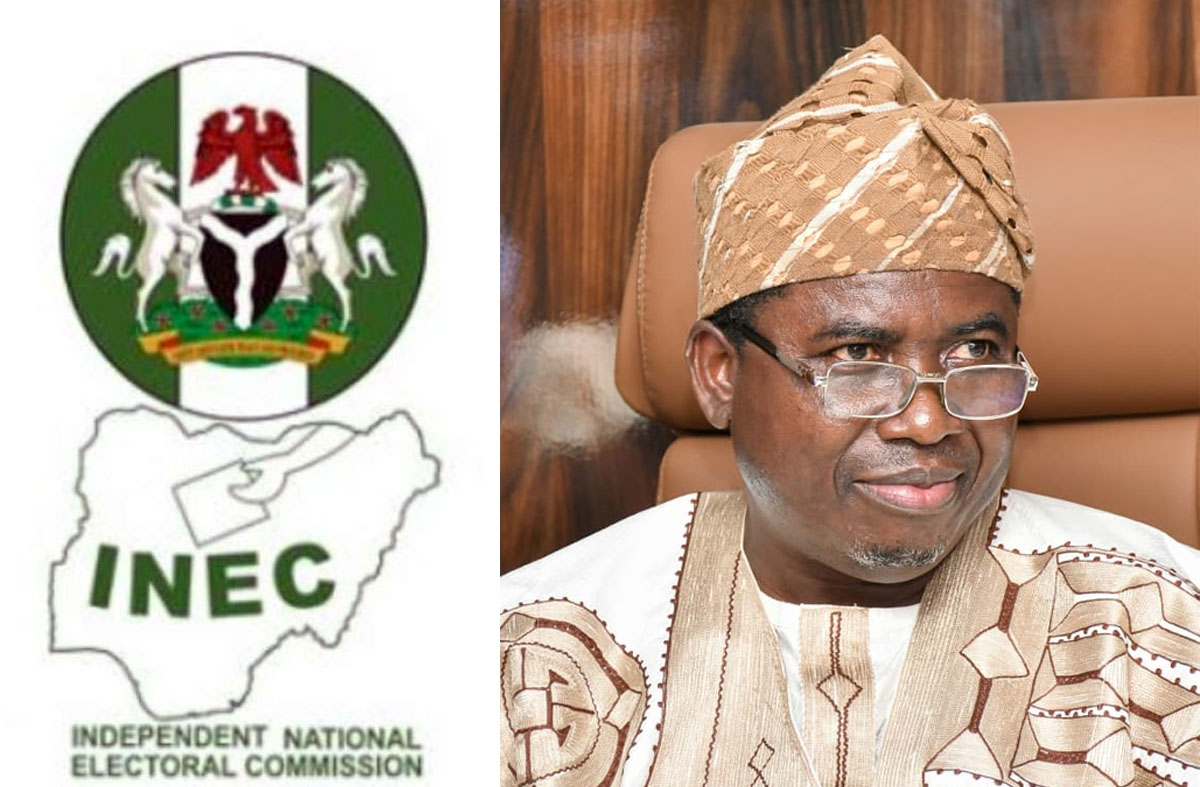
Pressure is mounting on the Chairman of the Independent National Electoral Commission (INEC), Prof. Joash Amupitan, following allegations linking him to a controversial social media account on X (formerly Twitter) accused of posting partisan content during the 2023 general elections.
The development has triggered renewed calls for resignation from opposition figures and civic groups, who argue that the controversy raises concerns about the neutrality of INEC, especially ahead of future elections.
The allegations gained traction following a report by Daily Trust, which examined an X account allegedly connected to the INEC chairman and its online activity during the 2023 electoral cycle.
According to the report, the account reportedly made posts interpreted as sympathetic to the All Progressives Congress (APC) and its presidential candidate, Bola Ahmed Tinubu, raising questions about possible political bias.
Some of the resurfaced posts include a March 17, 2023, comment describing supporters of Labour Party candidate Peter Obi as “evil in the 24th century,” as well as another post responding to APC National Youth Leader Dayo Israel with the phrase “Victory is sure.” A later post on April 25, 2023, reportedly used the word “Asiwaju” in reaction to Tinubu’s airport reception.
READ ALSO:
- 2027: Tinubu Knows Opposition Playbook, Always Ahead — Festus Keyamo
- Official, Black Market Rates Diverge as Naira Starts Week on Stable Note
- Kwankwaso Reveals Details of Kwankwasiyya’s ADC Power-Sharing Formula
The account is said to be linked to user ID 1567086242164101120, which investigators claim was created on September 6, 2022, and initially operated under the handle @joashamupitan before undergoing changes in display name and status in 2026.
Reports further indicate that the account was later renamed @Sundayvibe00, locked, and labeled a “parody account,” while a separate account with a similar handle later emerged—raising concerns about possible impersonation or identity duplication on the platform.
Digital analysts note that while usernames on X can be changed, user IDs remain permanent, allowing historical activity tracking. However, they caution that this does not automatically constitute proof of ownership or direct control.
Investigations also explored claims that the account may have been linked to a phone number allegedly associated with two-factor authentication tied to the INEC chairman. However, no publicly available forensic evidence has confirmed this link.
Reacting to the allegations, Prof. Amupitan, through his media aide, denied any connection to the account, insisting that he does not operate any social media account on X and has never engaged in partisan political commentary.
INEC also dismissed the claims, describing the account as fake and cautioning against misinformation capable of undermining public trust in the electoral process.
Despite these denials, the controversy has continued to generate public debate, with opposition parties—including the African Democratic Congress (ADC)—and civil society organisations calling for a transparent investigation and, in some cases, resignation.
Fact-check findings cited in reports suggest that while there is historical linkage between the account and the handle @joashamupitan, the absence of conclusive forensic proof makes the claims unverified. The report ultimately rated the allegation as “mostly true,” further fueling political tension.
Observers say the controversy highlights growing concerns over electoral integrity in Nigeria, the influence of digital footprints on public office holders, and rising scrutiny of the independence of electoral institutions ahead of future elections.
INEC Chairman Under Pressure Over Alleged Pro-Tinubu X Account Link

-
 metro2 days ago
JUST IN: FG Publishes List of 48 Individuals, Groups Linked to Terrorism Financing in Nigeria
-

 metro17 hours ago
BREAKING: Troops Arrest 15-Year-Old Linked to Killing of Gen Braimah in Borno
-
 metro2 days ago
42-Year-Old Married Woman Declared Missing Found in Hotel with Man
-
 Politics2 days ago
Did Faleke Just Reveal Lagos’ Next Governor? Party Moves Begin
-

 Education3 days ago
Germany Opens Fully Funded Scholarships for Nigerians, Africans
-
 Politics2 days ago
2027: Oyo APC Governorship Aspirant Saheed Oladele Resigns From Party
-
 metro2 days ago
ADC Threatens Civil Disobedience To Force INEC Chairman To Resign
-

 Entertainment2 days ago
EFCC, Police Investigate Blessing CEO Over Alleged ₦300m Cancer Scam