
News
Soyinka worries about festering corruption in Nigeria, offers solution
Soyinka worries about festering corruption in Nigeria, offers solution
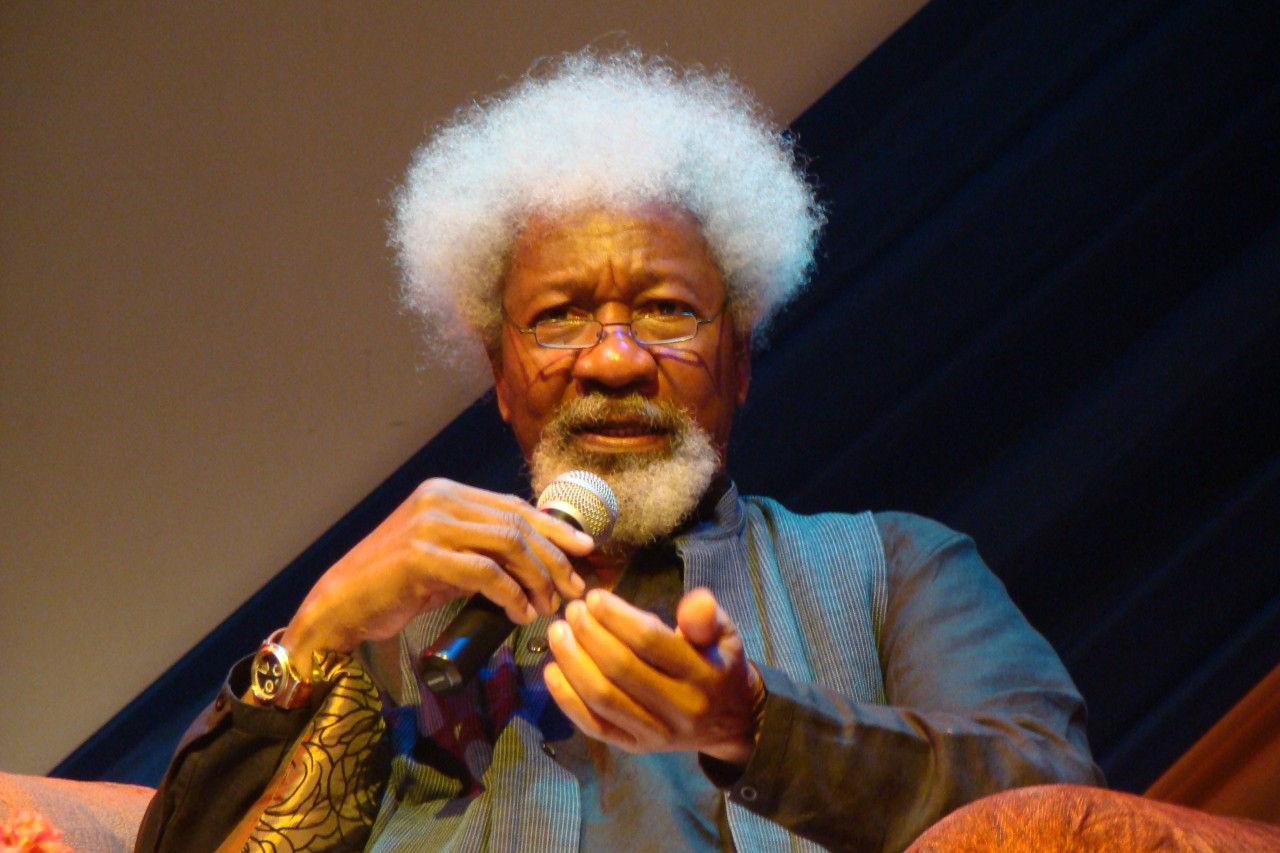
Nobel Laureate Prof Wole Soyinka has expressed concerns over the level of corruption in the society, saying the cankerworm is deeply it from the top to the bottom.
Soyinka said that the drive to fight the deadly malaise formed one of the motives for establishing Pyrates Confraternity 62 years ago.
According to him, without attitudinal change and readiness of Nigerians to begin to do the right thing, winning the war against pervasive corruption will remain an impossible task.
The world renowned scholar spoke at the 26th annual Wole Soyinka Lectures organised by National Association of Seadogs otherwise known as Pyrates Confraternity to mark the 90th birthday of Soyinka.
The lecture at June 12 Cultural Centre, Kuto, Abeokuta had as its theme “The baby or the bathwater: Navigating the dark tunnels of systemic corruption to nationhood” with the former Lagos Governor Babatunde Fashola as guest lecturer.
The Nobel Laurette noted that the challenge of corruption is such that run from the top to the bottom in Nigeria and that only decision of every citizen to change for good that can help halt its deadly march in the country
He said: “The particular aspect of this lecture that struck me is corruption, corruption is not just when you change money, it is a cankerworm that eats deep into the fabric of the society from the top to the bottom and corrupts our very nature, our very existence.
“And one aspect of the lecture emphasised that cure for the corruption begins from the inside. Yes, we can talk about institution, government, we can talk about exercise of power unfairly, inordinately to the disadvantage of the rest of the community and all that as part of corruption but ultimately, the solution, short term, immediate and long term must begin from the inside and this is one of the motives for establishing Pyrates Confraternity 62 years ago.”
READ ALSO:
- Anxiety in Kogi over kidnap of local govt chairman
- UK suspends £38,700 (N80m) family visa threshold
- 150 computers stolen from Kano Digital Park – Communication minister
Soyinka cleared the misconceptions people have about Pyrates Confraternity, saying it is a registered association and not blood-thirsty secret cult.
He explained it is founded to push for justice and advance a better nation..
He lauded the members of the association for organising the event and urged them to continue to push for the ideal of social justice and good governance which is the core mandate of the association.
Soyinka with the former Secretary General of Commonwealth, Chief Emeka Anyawu later unveiled a book “Ship Ahoy” written to document 60 years history of the confraternity.
Fashola described Soyinka as not a only gift to the country, the continent but also the entire civilisation.
Speaking on the theme of the lecture, the former Minister of Works and Housing
said while corruption in terms of pecuniary gains is no doubt reprehensible, the displacement of African highly cherished moral values remains the worst form of corruption.
The former Governor said that for instance, the number of lives lost on roads every month as a result of wrong attitude and values is far more than what is lost to the insecurity which everyone complain about in the country.
He said: “When I was in office as a Minister, the Federal Road Safety Corps usually made copies of the monthly reports on road crashes available to me, the report is actually for the office of the Secretary General of the Federation but I used to get a copy.
“In October 2022, a total of 1111 road crashes was reported across the country out of which 449 died representing 6% of 6458 people involved in the accident with 2780 injured. The analysis showed a 3% decrease when compared with the previous month but 10% increase when compared with the figure for October 2021..
“This goes to show that an average of 400 people is lost monthly to road crashes in the country but I doubt if the insecurity which is always an issue during campaign is responsible for huge loss of lives like this every month in the country”.
He said further analysis showed that speed violation accounted for 51.7% of the accident, fatigue is responsible for 15%, sign rules violation 5.8%, dangerous driving 5.4%, while route violation is responsible 4.5% of the accident.
Fashola said that out of 1613 vehicles involved in the accident, cars constituted 469 representing 29.5% and that 66% of these cars were those being used for commercial purposes.
The former Governor argued that the carnage has remained unabated on our roads not because of bad roads but because out of corruption of values people have neglected adhering to highway codes.
He said: “Many people don’t even know the high way codes, they don’t drive with certificated driver’s licence, many don’t even know that the road is a shared asset, many don’t give regard to the speed limit, these are all corruption that are making the slaughter to continue on our roads”.
Fashola said as way out “people must embrace attitudinal change, the people must embrace recertification of their driver’s licence and training, people must respect the traffic rules to stop this disturbing waste of life and properties”.
Soyinka worries about festering corruption in Nigeria, offers solution













News
Mother, Six Children Kidnapped in Fresh Kaduna Bandit Attack

Mother, Six Children Kidnapped in Fresh Kaduna Bandit Attack
In a fresh wave of banditry in Kaduna State, a mother and six children were abducted from their home in Kurmin‑Uwa near Janjala community in Kagarko Local Government Area on Friday night. The attack comes less than 24 hours after suspected bandits kidnapped ten residents, including seven members of a single family, in Unguwar Sabon‑Titi, Katari.
According to residents, the raid occurred around 10:23 p.m., with the assailants going directly to the targeted house before whisking away the victims, identified as Ladi Malachy, Patience Malachy, Promise Malachy, Inama Malachy, Peter Malachy, and Aboyi Malachy. Witnesses said the attackers fled into surrounding forests, leaving the community in fear.
READ ALSO:
A local resident, Ibrahim Shehu, confirmed the abduction, while a community leader, speaking on condition of anonymity, revealed he alerted security operatives immediately after learning about the raid. However, it remains unclear whether authorities responded promptly. Kurmin‑Uwa is located about two kilometres from Kagarko town, an area that has seen repeated bandit attacks on households.
Security sources indicate that search and rescue operations have been launched, as authorities work to locate the kidnappers and secure the release of the abducted family. Meanwhile, the Kaduna State Police Command has yet to issue an official statement regarding the incident.
The back‑to‑back kidnappings have heightened tension in rural Kaduna communities, with residents calling for intensified patrols, improved security presence, and faster emergency response to prevent further abductions. Analysts warn that without swift action, such violent raids may continue to terrorise villages across the state.
Mother, Six Children Kidnapped in Fresh Kaduna Bandit Attack
News
INEC Warns ADC Against Holding Convention Without Supervision
INEC Warns ADC Against Holding Convention Without Supervision
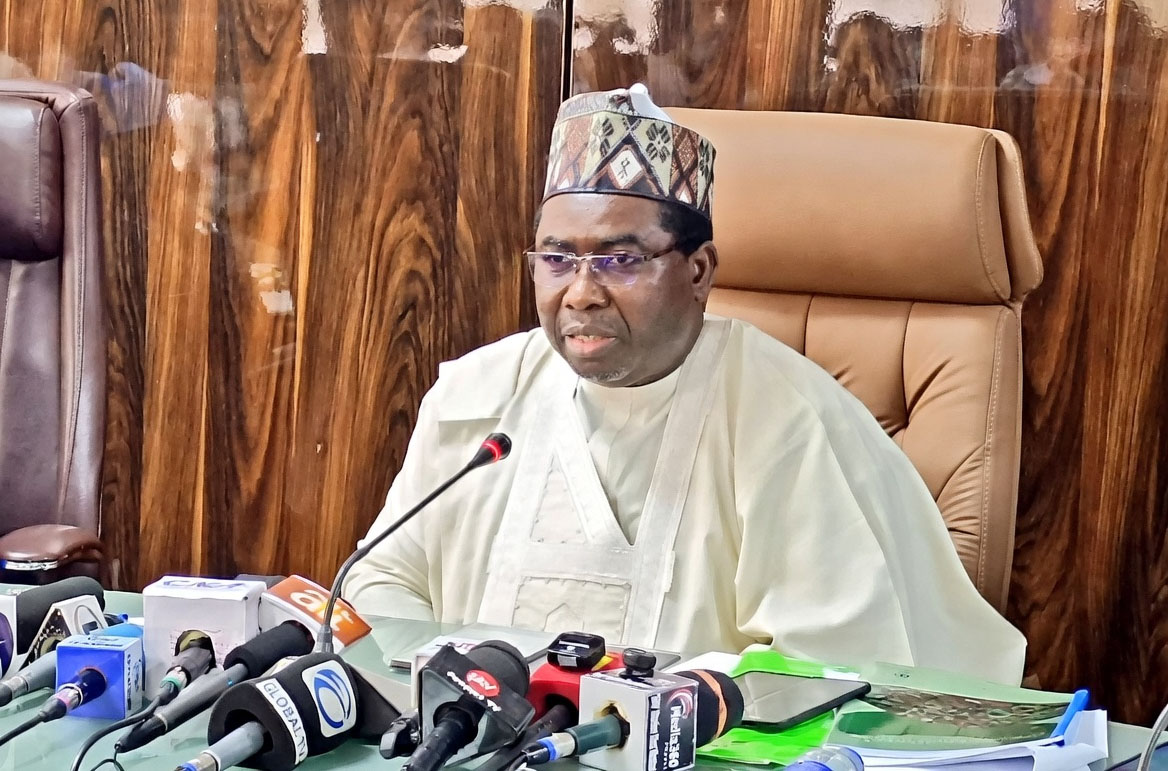
The Independent National Electoral Commission (INEC) has cautioned the African Democratic Congress (ADC) against proceeding with its planned congresses and national convention without proper supervision and in defiance of an existing court order.
Chairman Joash Amupitan issued the warning during an interview on Arise TV on Friday, after the ADC insisted on going ahead with its convention despite INEC’s derecognition of the leadership faction linked to David Mark and Rauf Aregbesola.
Amupitan stressed that INEC’s actions were guided by legal considerations, particularly a subsisting court order restraining the ADC from taking steps that could undermine ongoing legal proceedings. “Don’t do anything. Don’t take any step that will render any proceeding before the court nugatory,” he said.
READ ALSO:
- APC Rejects ADC Claims, Says Tinubu Not Responsible for Party’s Legal Troubles
- Fani‑Kayode Fires Back at Peter Obi, Defends NADECO’s Legacy
- Presidency Clarifies Why Tinubu Met Plateau Victims Only at Airport
He explained that the ADC’s plan to conduct congresses and a national convention is already part of a pending legal process, with motions related to the activities yet to be determined by the court. Ignoring the court’s directive, he warned, could result in invalidated elections or nullified internal party decisions, citing precedents in Zamfara and Plateau states where failure to comply with court orders affected electoral outcomes.
Amupitan highlighted the risks of repeating past mistakes, stressing that while the ADC is free to act as it chooses, INEC would not risk supervising illegal or unauthorized party activities. He reinforced the importance of adhering to the Electoral Act and judicial directives to ensure that party events are legally recognised and free from future challenges.
The INEC Chairman’s warning comes amid heightened tension within the ADC, with the faction led by David Mark facing derecognition and ongoing litigation over the party’s legitimate leadership. Analysts note that the statement underscores INEC’s commitment to rule of law, legal compliance, and internal party democracy, especially as Nigeria approaches the 2027 general elections.
INEC Warns ADC Against Holding Convention Without Supervision
News
Presidency Clarifies Why Tinubu Met Plateau Victims Only at Airport

Presidency Clarifies Why Tinubu Met Plateau Victims Only at Airport
The Presidency has clarified why President Bola Tinubu did not leave the airport during his recent visit to Jos, amid public criticism. Officials said the decision was driven by tight scheduling, logistical constraints, and aviation safety concerns.
President Tinubu visited Jos North Local Government Area, where he met with families of victims killed in the Angwan Rukuba attack. Speaking to the bereaved, he said, “You have no light at the airport, and I have to fly back within the next 10 minutes. To the victims, there’s nothing I can give you, whether it’s money in millions, but console you and promise you that this experience will not repeat itself.”
The visit was attended by political supporters, traditional rulers, security operatives, and other stakeholders. However, Tinubu’s airport-only engagement drew criticism, with some accusing him of insensitivity toward grieving families.
In response, the President’s Special Adviser on Information and Strategy, Bayo Onanuga, explained that Tinubu’s schedule on Thursday included receiving Chadian President Mahamat Idriss Déby Itno at the Presidential Villa before traveling to Iperu in Ogun State. Following a security briefing by Plateau Governor Caleb Mutfwang, the Ogun trip was canceled, and an emergency visit to Jos was arranged overnight.
READ ALSO:
- Iran’s IRGC Threatens Google, Microsoft, Apple as ‘Legitimate Military Targets’
- Nigeria Apologises Over ‘Igbo King’ Controversy in South Africa as Protests Turn Violent
- Plateau Killings: Ezekwesili Blasts Tinubu, APC Over ‘Failure to Act’
Officials said logistical challenges made a town visit impractical. The airport runway does not support night flights, and the road distance from the airport to Jos township is about 40 minutes. These factors made it unfeasible for the President to visit the conflict site, meet victims in town, and return to the airport safely before dusk.
To ensure engagement, representatives of affected communities were brought to a hall adjoining the airport, allowing Tinubu to meet directly with victims, local leaders, and security officials. Among attendees were the Minister of Defence, the Chief of Army Staff, and the Inspector General of Police, who had visited Rukuba to assess security operations.
During the meeting, the President consoled victims, listened to their concerns, and assured justice would be delivered. He also promised the deployment of 5,000 AI-enabled surveillance cameras to monitor the city and enhance the identification and arrest of troublemakers. Furthermore, he invited community leaders to Abuja for additional talks on long-term solutions to recurring violence in Plateau State.
The Presidency described the visit as a strategic, high-level engagement aimed at addressing the root causes of conflict, rather than a symbolic gesture. Officials emphasized that Tinubu’s approach prioritized safety, efficiency, and direct interaction with key stakeholders while adhering to flight and logistical constraints.
Despite the criticisms, the televised meeting was seen as reassuring by residents, signaling the President’s commitment to peace, security, and community-driven solutions in Plateau State.
Presidency Clarifies Why Tinubu Met Plateau Victims Only at Airport

-

 metro2 days ago
VeryDarkMan Dares Sowore Over Blord’s Kuje Prison Remand
-

 metro2 days ago
Nigerians to Enjoy Four-Day Break as FG Declares Easter Holidays
-

 metro2 days ago
Tinubu Approves 1,000 Forest Guards, Orders 5,000 CCTV Cameras to Boost Security in Plateau
-

 Business3 days ago
NNPC Boosts Crude Supply to Dangote Refinery to Address Rising Fuel Prices
-

 metro11 hours ago
Pastor Found Dead in Guest House After Night Out With Married Female Church Member
-

 International1 day ago
Iran Announces ‘Bounty’ on US Pilots After Claiming Downing of Fighter Jet
-
 International3 days ago
Iran Fires Missiles at Israel After Trump Threatens Weeks of ‘Extremely Hard’ Strikes
-

 Politics12 hours ago
Wike: PDP Not Financially Ready for 2027 Presidential Election