

News
Stolen $2bn: Report exposes Abacha looting machinery, strategies

- FG drags UK to court over £150m loot
Fresh facts have emerged on the modus operandi used by a former Head of State, late Gen. Sani Abacha, to steal humongous amount from Nigeria’s treasury and stashed the funds running into two billions of dollars away in secret foreign accounts.
This is coming as the Nigerian government has sued Britain’s National Crime Agency (NCA) over €180 million (£150 million) reportedly stashed abroad by the late dictator, asking that the funds be returned to the country (Nigeria).
In a new report by the Telegraph of the UK, Abachi was said to have executed the looting after seizing power in a 1993 coup, using his position as Nigeria’s head of state to place himself above the law and skim vast sums of money from the oil-rich nation.
For instance, the report stated that he would tell advisers to make spurious requests to him for money to deal with national “emergencies”, according to the US court documents.
Signed letters would then be sent to the CBN, which would provide cash, travellers’ cheques or arrange a wire transfer.
The report added, “Money was stuffed into boxes or bags and transported to Abacha’s house, before associates arranged for it to be sent abroad.
“At least $2 billion is thought to have been stolen this way, using more than 60 letters to the central bank.
“Abacha also arranged for the government to sell bonds to a company controlled by his allies before buying them back at vastly inflated prices, generating an illicit windfall of $282 million.”
Separately, the report stated that Abacha and his associates extorted French engineering firm, Dumez Group, of $97 million and used his spoils to live a luxurious lifestyle.
“Inside his many sprawling homes, he kept piles of glittering jewellery, including gold necklaces and rings, and at one stage as much as $100 million in cash,” the report noted.
However, the money Abacha and his associates plundered became the subject of an international search after the dictator’s sudden death in 1998 at the age of 54.
The report stated that weeks after his death, Abacha’s widow was caught trying to flee the country with 38 suitcases packed with money and his family later forfeited nearly $1 billion.
“Yet the only clues hinting at where other stashes of money could be found were a few details of secret offshore bank accounts discovered by authorities,” it said.
“Since then, the Nigerians have sought foreign help to recover as much as possible, with more than $1 billion eventually returned from Switzerland alone,” it added.
Efforts to recover the stolen funds have reportedly been hampered by the sheer complexity of Abacha’s dealings as well as marathon legal battles that have dragged on for years, some involving former associates.
The latest is that the Nigerian government has sued Britain’s National Crime Agency (NCA) over control of €180 million (£150 million) stashed abroad by former Head of State, late Gen. Sani Abacha.
According to the UK Telegraph, the case is expected to spark fresh questions about dirty money flowing through the City of London.
Nigeria is asking the NCA to release funds (about N84.5 billion) that it froze at the request of the US authorities.
In just one example of the web of transactions crisscrossing the globe, some US prosecutors outlined in court filings how money was laundered by Abacha and his associates through bank accounts in Lagos, London, New York, Paris, Zurich, and Geneva.
The assets were stashed in banks, including Deutsche Bank, HSBC, and Banque SBA, according to the lawsuit, although there was no suggestion that the banks were involved in any wrongdoing.
The Telegraph stated, “This legal action eventually resulted in a 2020 deal to repatriate about $321 million, which had been laundered through the US banking system and then held in accounts in Jersey under the name of Doraville Properties Corporation, a British Virgin Islands company, and Abacha’s son, Mohammed.”
The new development comes as Britain fights claims that it has been very tolerant of dirty money flowing through the City of London.
US officials said last month that they were concerned that deep links between the UK and several Russian oligarchs meant that sanctions issued against Moscow if it invades Ukraine could be rendered ineffective.
Last Sunday, Briish Labour MP David Lammy accused ministers of doing too little to deal with corruption in Britain.
Lammy said, “We have to fix the dirty money problem we have, this huge problem of money laundering in London, of corruption and fraud.
“There’s so much that (ministers) are not doing. Joe Biden knows it and he’s concerned.”
But simultaneously, another court tussle in the UK is happening in parallel. At stake is more than €90 million, some of which came from Abacha’s security votes fraud, according to a High Court judgement issued in 2014.
The money is said to be controlled by a Singapore-based trust set up for the benefit of the family of Abubakar Bagudu, the serving governor of Kebbi State, who is accused of playing an “instrumental role” in many of Abacha’s corrupt schemes by the US prosecutors.
Bagudu has always denied any wrongdoing. His office did not respond to a request for comment, the report said.
His brother, Ibrahim, is a director of two companies known as Blue Holdings owned by the Singapore trust.
According to the Pandora Papers, a leaked cache of documents obtained by the International Consortium of Investigative Journalists last year, the Bagudu brothers enlisted Farrer & Co, an elite London law firm that has advised the Queen, to help them set up these businesses.
They moved €98 million from a British Virgin Islands trust to a new structure spanning Singapore and the Cook Islands.
Farrer & Co said it carried out “extensive due diligence” on Bagudu and that it obtained approval from the Serious Organised Crime Agency (SOCA), the precursor to the NCA, to move the funds.
The amount reportedly controlled by the Singapore trust may now have grown to as much as €180 million and kept in accounts at Waverton Investment Management and James Hambro & Partners, both in London.
The NCA has been working with American authorities in a bid to confiscate the funds and return them to “the people of Nigeria,” the report stated.
However, the Nigerian government wants them to be returned directly to the country and the parties, including lawyers for Bagudu, have been holding negotiations about a possible settlement, court filings in the US show.
Bagudu struck a deal with the Nigerian government in 2003, in which he agreed to return a sum of money but made no admission of wrongdoing, and the agreement was reaffirmed by President Muhammadu Buhari in 2018.
This is interpreted to mean almost 70 per cent of the UK money could be handed to Bagudu if returned.
Court filings showed the Nigerian government subsequently sought to unlock the funds and repatriate them in legal action against the NCA – a move that was opposed by the UK and the US.
The country hired Kingsley Napley, the London law firm famed for representing a host of celebrities, including Rebekah Vardy, to represent it.
The report quoted Spotlight on Corruption, a non-profit campaign group, as saying that the case raises questions about whether, “law enforcement is being paid and resourced enough to get its act together”.








News
Obasanjo Backs Higher Oil Derivation, Says 13% Is Only the Beginning
Obasanjo Backs Higher Oil Derivation, Says 13% Is Only the Beginning
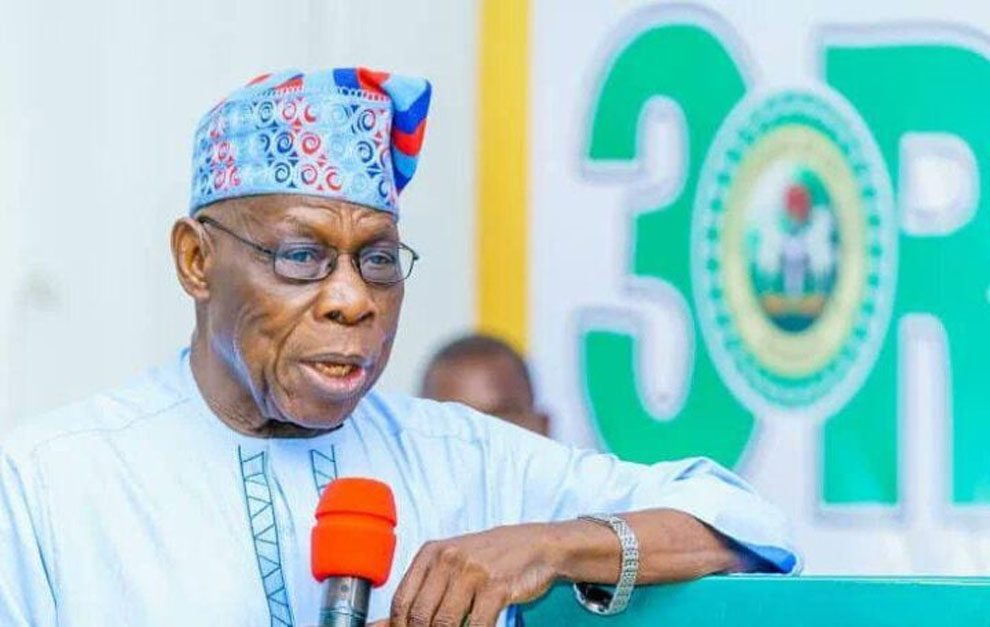
Former President Olusegun Obasanjo has backed calls for an increase in the 13 per cent oil derivation fund allocated to oil-producing states, saying the existing arrangement should be regarded as a starting point rather than a final settlement.
Obasanjo made the position known on Monday during the inauguration of the Crude Distillation Unit (CDU) of the $1 billion Azikel Refinery at Obunagha in Yenagoa Local Government Area of Bayelsa State.
Addressing Bayelsa State Governor Douye Diri, the former president acknowledged that oil-producing states and communities had yet to receive what he considered a fair share of the benefits from the exploitation of their natural resources.
“You are right that the states and oil-producing communities have not got a fair deal so far. Thirteen per cent is the beginning. You can continue to talk,” Obasanjo said.
His remarks reinforced renewed demands for a review of Nigeria’s revenue-sharing arrangement, particularly from the Niger Delta, where crude oil production has remained central to the national economy.
Under the existing constitutional framework, oil-producing states receive at least 13 per cent of revenue accruing to the Federation Account directly from natural resources, in line with the principle of derivation.
However, the allocation has remained a source of debate, with stakeholders in the oil-producing region arguing that the revenue does not adequately address the environmental damage, infrastructure challenges and economic difficulties associated with petroleum exploration.
Diri also criticised the existing arrangement, insisting that communities where crude oil is extracted should have a greater say in how the resources are managed and how the resulting wealth is distributed.
READ ALSO:
- How Bandits Demand ₦300m Ransom for Abducted Kaduna Couple, Baby in Viral Video
- 2027 Elections: Atiku Demands Names of INEC Ballot Printers, Questions Secret Contracts
- ₦8.7bn Erosion-Control Budget Gap Raises Questions as Anambra Gullies Expand
The governor argued that the region had endured years of agitation over what residents perceive as an imbalance between the resources extracted from their communities and the benefits they receive.
He also faulted the Land Use Act, arguing that the distinction between state control of surface resources and Federal Government control of resources beneath the ground places oil-producing communities at a disadvantage.
Diri maintained that the Niger Delta was not demanding exclusive ownership of the proceeds from petroleum production but wanted to become a more active participant in decisions affecting the industry.
“We do not want to take all to ourselves. We just want to be co-players in determining how it is done. Thirteen per cent is not enough for the states,” he said.
The governor urged young people in Bayelsa to acquire relevant technical and professional skills to benefit from industrial investments, including the refinery project.
He warned that the presence of major oil and gas facilities would have limited benefits for local communities if residents lacked the expertise needed to secure employment and participate in their operations.
The refinery project, owned by Azikel Petroleum under the Azikel Group, is expected by its promoters to produce about 2.5 million litres of petrol and two million litres of diesel daily, alongside other petroleum products, when completed.
The installation of the crude distillation unit marks a significant stage in the development of the facility, whose foundation was laid by Obasanjo about eight years ago.
The former president commended Azikel Group President, Azibapu Eruani, for sustaining the project and urged him to complete the refinery within the next 12 months.
Obasanjo also acknowledged the contributions of the African Finance Corporation and the African Export-Import Bank (Afreximbank), calling for continued support to bring the investment to completion.
He praised Diri for supporting the project and commended the Bayelsa government for what he described as the productive use of the state’s available revenue.
Eruani said the refinery was conceived to position Bayelsa and the wider Niger Delta as active participants in the petroleum industry rather than merely suppliers of crude oil.
He expressed confidence that the project would support industrialisation, create economic opportunities and strengthen local participation in the oil and gas value chain.
The refinery initiative comes amid continuing debates over resource control, revenue allocation and development in the Niger Delta, with calls for oil-producing communities to receive greater economic benefits from the natural resources extracted from their territories.
Obasanjo Backs Higher Oil Derivation, Says 13% Is Only the Beginning
News
FG Approves Upward Review of Feeding Allowance for NYSC Members
FG Approves Upward Review of Feeding Allowance for NYSC Members
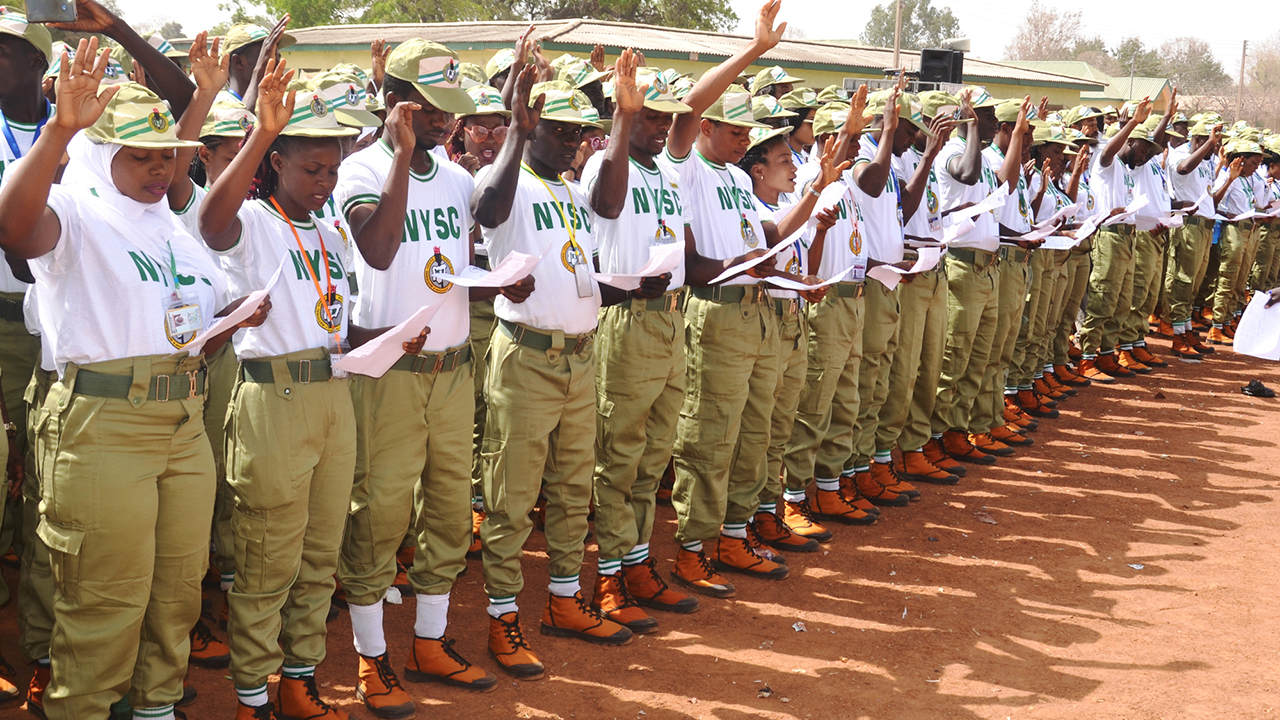
Abuja — The Federal Government has approved an increase in the feeding allowance for members of the National Youth Service Corps (NYSC) during their orientation course, with implementation scheduled to commence in 2027.
The Director-General of the NYSC, Brigadier General Olakunle Nafiu, disclosed this while addressing the 2026 Batch C Stream One corps members at the NYSC Orientation Camp in Obubra, Cross River State.
According to the DG, the Budget Office has already been formally notified of the upward review of the allowance. However, the specific monetary value of the increment was not disclosed during the announcement.
READ ALSO:
- Fuel Subsidy May Ease Hardship Today, But Could Cripple Nigeria’s Economy Tomorrow — FG
- Petrol Price Hike Hits Abuja as MRS, AA Rano, Others Raise Rates Despite FG’s Discount Plan
- Kano Police Explain Blockade of ‘Tinubu Must Go’ Meeting
The approval comes amid persistent calls for improved welfare for corps members, particularly regarding the feeding and general upkeep provided during the mandatory three-week orientation exercise.
Beyond the financial announcement, Brigadier General Nafiu used the platform to counsel the corps members on financial responsibility. He advised them to spend wisely and cultivate a strong savings habit, stressing the importance of prudent resource management during their service year and beyond.
The DG’s visit to the Obubra camp was part of a broader tour to assess the welfare and conditions of corps members currently undergoing orientation across the country.
While the 2027 implementation timeline suggests a waiting period for the current batch, the approval signals the government’s intent to adjust the allowances in line with current economic realities. Further details regarding the exact amount and the modalities for the disbursement are expected to be communicated by the NYSC Directorate in due course.
FG Approves Upward Review of Feeding Allowance for NYSC Members
News
Fuel Subsidy May Ease Hardship Today, But Could Cripple Nigeria’s Economy Tomorrow — FG
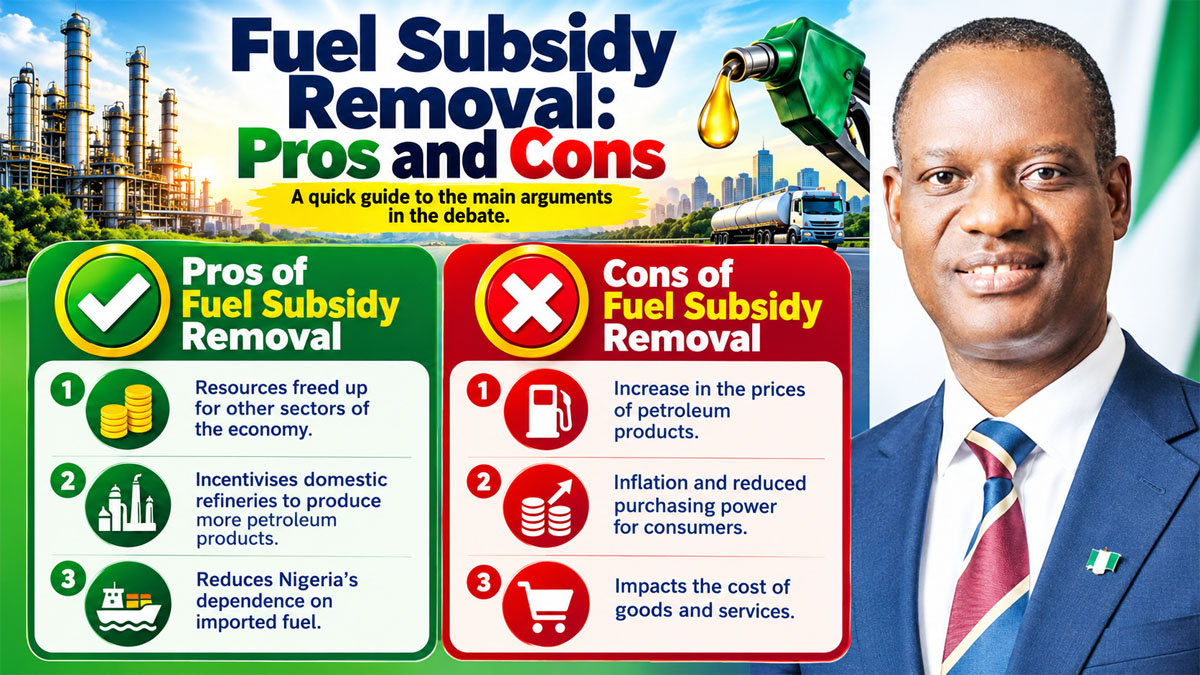
The Federal Government has warned that restoring petrol subsidy could provide temporary relief to Nigerians but expose the country to severe fiscal pressure in the long run, as rising fuel prices continue to deepen the cost-of-living crisis.
Finance Minister Taiwo Oyedele has estimated that a return to petrol subsidy could cost Nigeria more than ₦20 trillion annually, arguing that the financial burden could undermine government spending on infrastructure, healthcare, education and other essential services.
The warning comes amid growing public concern over the impact of rising petrol prices, transportation fares, food costs and business operating expenses on households and enterprises across the country.
For millions of Nigerians, cheaper petrol could offer immediate relief by reducing transportation and distribution costs. However, the government maintains that a blanket subsidy would place enormous pressure on public finances and could weaken the gains expected from the removal of fuel subsidies in 2023.
Oyedele said the scale of Nigeria’s petrol consumption makes a return to the policy particularly expensive. He has argued that subsidising petrol would divert substantial public resources from other priorities and potentially increase borrowing requirements.
READ ALSO:
- Petrol Price Hike Hits Abuja as MRS, AA Rano, Others Raise Rates Despite FG’s Discount Plan
- Kano Police Explain Blockade of ‘Tinubu Must Go’ Meeting
- Xenophobia: Nigeria Evacuates 111 More Citizens From South Africa as Returnees Hit 2,037
The government’s position is that the resources saved through fuel subsidy removal can be redirected towards infrastructure, social services and development programmes. However, the immediate benefits of those savings remain a major concern for citizens facing higher daily expenses.
The debate has intensified as the government explores alternative measures to cushion the effects of rising fuel prices without restoring a nationwide subsidy.
One of the proposed interventions is a temporary petrol discount at NNPC retail outlets, intended to provide short-term relief to motorists and other consumers. The government has maintained that the arrangement is different from a blanket subsidy because it involves a reduction in the company’s retail profit margin rather than direct government payments.
Other measures announced or proposed by the government include support for vulnerable households, wider adoption of compressed natural gas (CNG), and interventions aimed at moderating fuel costs and easing pressure on businesses.
However, the effectiveness of these measures will depend on how widely the benefits reach consumers and whether any reduction in petrol prices translates into lower transport fares and the cost of goods and services.
Critics of the current approach argue that the hardship facing households requires more immediate and measurable relief. They contend that increased government revenue from subsidy removal must translate into visible improvements in living standards, public services and economic opportunities.
The policy debate therefore centres on how to balance immediate relief with long-term economic stability. While subsidised petrol could reduce the price paid at filling stations, the ultimate cost to the country would depend on the subsidy rate, consumption levels, funding arrangements and wider economic effects.
For Nigeria, the challenge is to protect households and businesses from the effects of rising energy costs without placing an unsustainable burden on public finances.
Targeted assistance, better public transportation, investment in domestic energy supply and transparent deployment of public revenue could help cushion the impact of high fuel prices while limiting the risks associated with a universal subsidy.
Ultimately, the question is not simply whether cheaper petrol would ease hardship today, but whether the country can provide meaningful relief without creating financial pressures that could worsen economic conditions tomorrow.
Fuel Subsidy May Ease Hardship Today, But Could Cripple Nigeria’s Economy Tomorrow — FG
-
 metro2 days ago
Tension in Kano as Phone Traders Confront Chinese Sellers Over Cheaper Phones
-

 Entertainment2 days ago
‘My Wife Fed Actresses I Was Dating Despite Knowing About Our Affairs’ – Yinka Quadri
-
 metro1 day ago
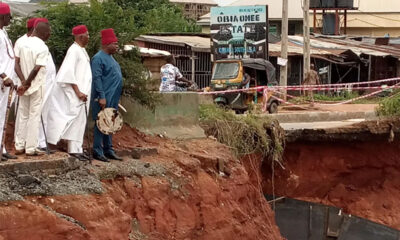
₦8.7bn Erosion-Control Budget Gap Raises Questions as Anambra Gullies Expand
-
 International2 days ago
US Names 24 More Nigerians in Fresh Fraud, Money Laundering Crackdown
-
 Politics1 day ago
Obi Positioning for SGF Role Under Atiku’s ADC Ticket – Sowore
-
 Africa2 days ago
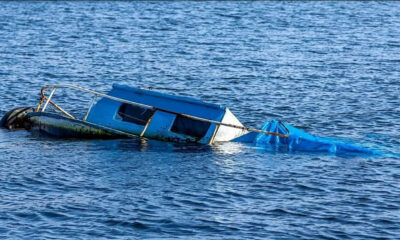
Djibouti Boat Disaster: 139 Migrants Dead, Dozens Missing
-

 Politics1 day ago
Okonkwo Alleges Return of Subsidy, Accuses NNPC of Plotting Trillions in ‘Lost Profit’
-

 News2 days ago
Oshiomhole Accuses Umahi of Bias in Road Projects, Demands Repairs Before New Construction