

News
Stunted growth: Nigerian followers guilty as leaders, says Yusuf Ali SAN
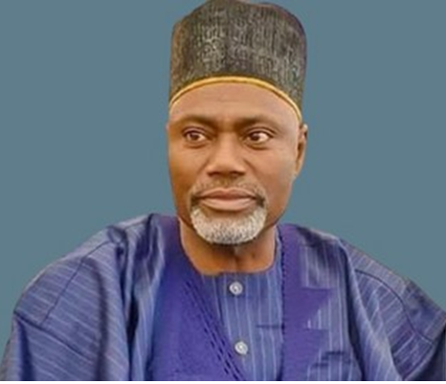
Stunted growth: Nigerian followers guilty as leaders, says Yusuf Ali SAN
Nigeria will continue to have a stunted grown until the people change their character and enthrone impactful leaders, a legal icon, Professor Yusuf Olaolu Ali (SAN), has said.
Ali spoke to newsmen last weekend before the inauguration of the remodelled Ifetedo Central Mosque in the Ife South Local government Area of Osun State.
Some of the personalities that witnessed the inauguration are the Olubosin of Ifetedo Kingdom, Oba Akinola Akinrera, Latiiri 1; Deputy President of the Nigerian Supreme Council for Islamic Affairs (NDCIA) and President of the Muslim Ummah of the South-West Nigeria (MUSWEN), Alhaji Rasaq Oladejo; Registrar, Joint Admission and Matriculation Board (JAMB), Professor Ishaq Oloyede; Aare Musulumi of Yoruba land, Edo and Delta states, Alhaji Dawud Makanjuola Akinola; Asiwaju Musulumi of Yoruba land, Alhaji Khamis Tunde Badmus and the Chief Imam of Ifetedo Central Mosque, Chief Imam AbdulJabar Hussein Akindunmi.
He lamented that Nigeria had failed virtually in all sectors due to lack of impactful leadership and followership.
He said the country ought to be running like the Asian Tigers that broke into the ranks of advanced economies.
Ali said, “Nigeria has a stunted growth in all parameters in the measurement of the growth of a country. We are stunted because by now, we should be running, but we are hardly crawling.
“All the indices of progress, we don’t need to reinvent the wheel. Other countries such as the so-called Asian Tigers and the advanced countries don’t reinvent themselves. You can borrow and buy technologies. And as long as you are able to have it, you’re making progress.
“We need impactful leadership and followers that are honest and patriotic.”
He noted that the followers are as guilty as their leaders for the precarious state of the country and advocated a holistic approach to redeem the situation.
“It’s two sides of the coin. You can’t be blaming the leaders because the followers are as bad, if not worse than the leaders in this country.
“For me, we have to be holistic and must all play our roles, discharge our duties by doing all that are necessary to have the kind of level of development that we need as a nation,” he said.
The legal luminary said the challenges holding down the country 25 years after the restoration of civil rule are due to the incalculable damage done by military interregnum.
He said, “We grope in the dark because it is easier to destroy than to build. We may not appreciate the depth of what the military had done to our psyche as a people: lack of orderliness.”
He also spoke on the controversy around the Tax Reform Bills pending at the National Assembly, stating that Nigerians usually avoid paying taxes on the premise that there is hardly any evidence of the judicious use of the proceeds by the government.
On the proposal for a six-year single term for the president and governors to replace the existing two terms of four years each.
“If Nigerians don’t change their attitude, nothing can take us to an Eldorado. We must first of all agree on that. I have always been an advocate of a six-year single tenure; it is good for our system. It will stop the incessant fight for self succession by the office holder to return to power after four years tenure. You will know that once you spend your six years you’re out of the place and there will be peace.
“However, if the six-year single tenure throws up an inept leadership, there is provision in the Constitution for impeachment.
“Whether you abuse it or use it wisely is a different thing. The system is self-cleaning but unfortunately, we have character issues.
“Most of us don’t have character and you need good character for a system to work well,” he said.

News
Nigeria at 66: Tinubu Unveils Fresh Push for Lower Costs, Jobs, Prosperity (Full Text)
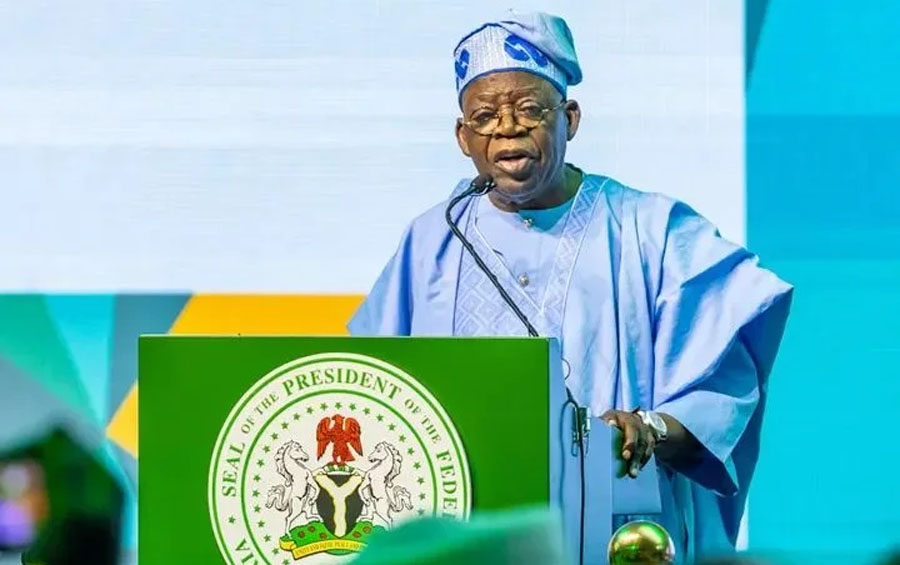
Nigeria at 66: Tinubu Unveils Fresh Push for Lower Costs, Jobs, Prosperity (Full Text)
President Bola Ahmed Tinubu has declared that Nigeria is entering what he described as an “age of prosperity”, saying the focus of his administration will now shift from economic reforms to lower living costs, job creation, industrial growth and improved living standards.
Tinubu made the declaration in his 66th Independence Day address to Nigerians on Thursday, October 1, 2026, saying his administration had spent the past three years addressing what it regarded as longstanding economic distortions and was now moving towards what he called “shared and widespread prosperity.” (State House)
“The emergency treatment is over. The foundation has been repaired,” the President said, arguing that the country had reached a turning point after a difficult period of economic adjustment.
Tinubu said the next phase would concentrate on translating economic improvements into tangible benefits for Nigerians, particularly by reducing the cost of producing and transporting goods, expanding agricultural production and creating millions of productive opportunities.
According to the President, the government will pursue expanded mechanised irrigation and dry-season farming, improved access to seeds and fertiliser, greater agricultural mechanisation, storage facilities and better transportation infrastructure.
He said investments in roads, railways and ports would also help connect farms and factories to markets and reduce the cost of moving goods across the country.
READ ALSO:
- Israeli Actor, Flight Instructor Among Two Killed In California Plane Crash
- Flood Cuts Off Part of Agbarho-Ughelli Road, Strands Commuters in Delta
- Dangote Draws Battle Lines as Fuel Import Fight Heads Back to Court
Tinubu said the administration’s approach was based on lowering production costs so that savings could eventually be reflected in the prices paid by consumers.
He also placed job creation and industrialisation at the centre of the next phase of his economic programme, saying Nigeria’s large youth population could become an engine of production if provided with the right opportunities, skills, infrastructure and access to finance.
The President said government would use the country’s natural gas resources to support new industries and help businesses revive factories, while expanding digital connectivity and skills development.
“I want to see more Nigerians making things,” Tinubu said, outlining a vision in which Nigerian farms supply cities and factories, local businesses expand their exports and young Nigerians build technology companies and other enterprises.
On social protection, Tinubu acknowledged that millions of Nigerians still face difficulties paying for food, education, healthcare and transportation.
He said government would strengthen support for vulnerable households through the National Social Register, while continuing programmes such as the Nigerian Education Loan Fund (NELFUND) and CREDICORP.
The President also said the Federal Government would continue working with state and local governments to strengthen primary healthcare, basic education and other essential public services.
Tinubu said these interventions were intended to support vulnerable Nigerians while the broader economy expands, rather than serve as a permanent substitute for economic opportunity.
He also defended the administration’s economic reforms, arguing that the measures did not create Nigeria’s longstanding economic weaknesses but were intended to address them.
The President said the Nigerian economy had grown by more than four per cent in 2026, while inflation had fallen from its peak, foreign reserves had been rebuilt and the foreign exchange market had stabilised. He also said oil theft had declined and that Nigeria generated more than $6 billion in non-oil export revenue in 2025, which he described as a record. These figures were presented as part of the administration’s assessment of its economic performance. (State House)
Tinubu acknowledged the hardship associated with the reforms but argued that the government could not reverse in four years problems that had accumulated over several decades.
“We cannot erase in four years what accumulated over generations,” he said, while promising to change the country’s economic direction and steadily reduce poverty.
The President said the administration’s ultimate objective was not merely to manage poverty but to create conditions that would allow more Nigerians to move out of poverty through sustained economic growth and productive employment.
“The age of reform has done its work. Now begins the age of prosperity,” Tinubu declared.
He urged Nigerians to look ahead and support efforts to build what he described as a country of greater abundance and opportunity.
Tinubu concluded his Independence Day speech by calling for national unity and renewed confidence in Nigeria’s future, saying the country had corrected its economic direction and should now move forward without looking back. (State House)
Full Tinubu Independence Day speech
The complete 66th Independence Day address by President Bola Ahmed Tinubu, titled “From Reform to Prosperity,” is available in full on the official State House website. (State House)
Read Tinubu’s full 66th Independence Day address
Nigeria at 66: Tinubu Unveils Fresh Push for Lower Costs, Jobs, Prosperity (Full Text)
News
Independence Day: Tinubu Unveils Plan to Cut Living Costs, Expand Jobs
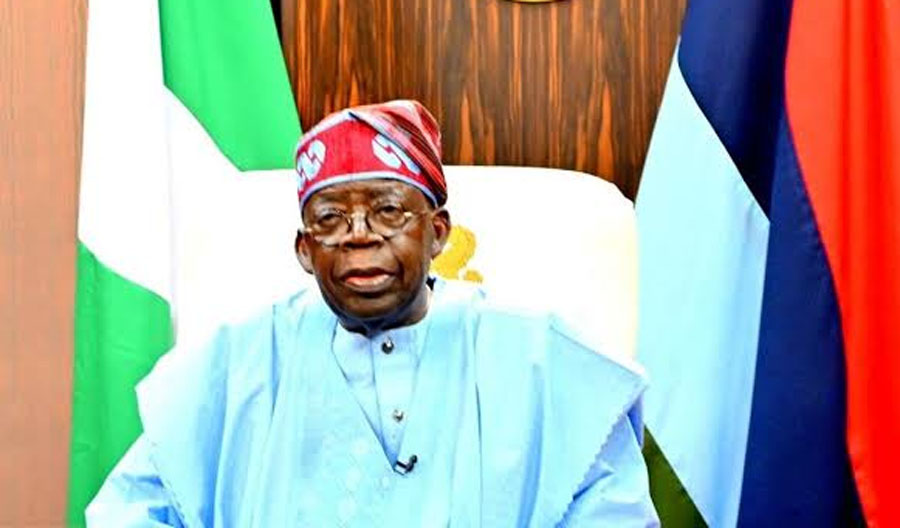
Independence Day: Tinubu Unveils Plan to Cut Living Costs, Expand Jobs
President Bola Ahmed Tinubu has declared that reducing the cost of living, creating productive jobs and expanding industrial growth will be the focus of the next phase of his administration, as Nigeria moves from economic reforms to what he described as an “age of prosperity.”
Tinubu made the declaration in his Independence Day address on Thursday, October 1, 2026, as Nigeria marked its 66th anniversary.
The President said his administration had spent the past three years correcting what he described as deep-rooted economic distortions and was now shifting its attention towards ensuring that the benefits of economic growth reach more Nigerians.
“Our priority is to bring down the cost of living,” Tinubu said, explaining that the government would pursue the goal by reducing the cost of producing and transporting goods consumed by Nigerians.
He said the government would expand mechanised irrigation and dry-season farming, improve access to seeds and fertilisers, increase agricultural mechanisation and invest in storage and transportation.
Tinubu also linked lower consumer prices to improved infrastructure, saying the government was building and completing roads, railways and ports to connect farms and factories with markets.
He said reducing post-harvest losses, lowering manufacturers’ energy costs and improving the movement of goods would help bring down prices.
Tinubu targets millions of productive jobs
The President said job creation, enterprise and industrial development would be at the centre of the next phase of his economic programme.
He noted that millions of young Nigerians enter adulthood every year and said the government must turn the country’s youthful population into an engine of production and opportunity.
Tinubu pledged to use Nigeria’s natural gas resources to power industries, support the revival of factories, expand digital connectivity and provide young Nigerians with skills required by employers.
He also promised greater support for Nigerian businesses through infrastructure and access to finance.
“I want to see more Nigerians making things,” the President said, adding that he wanted Nigerian farms to supply domestic factories and Nigerian businesses to sell more goods internationally.
CNG expansion to reduce transport costs
The President also pointed to the expansion of Compressed Natural Gas (CNG) as part of the government’s strategy to reduce transportation costs following the removal of petrol subsidy.
He said more than 120,000 vehicles had been converted to CNG, with more than 400 certified conversion centres and over 90 CNG refuelling stations now operating across the country.
The government has also targeted lower fares on selected routes through the National Affordable CNG Transit Programme.
The Presidency said CNG and electric public transport services in parts of Borno were already carrying passengers for between N50 and N100, compared with commercial fares of about N300 to N600 on some routes. It also cited cheaper fares on the Suleja-Abuja route and subsidised electric-bus services in Abia.
However, concerns remain about the ability of CNG infrastructure and vehicle deployment to deliver nationwide reductions in transport costs.
Social protection for vulnerable Nigerians
Tinubu acknowledged that many Nigerians still face difficulties meeting basic needs, including food, education, healthcare and transportation costs.
He said the government would strengthen social protection programmes and improve the National Social Register to ensure assistance reaches vulnerable households.
The President also highlighted the Nigerian Education Loan Fund (NELFUND), which provides financing for students, and CREDICORP, which offers consumer credit for eligible Nigerians seeking to acquire assets such as vehicles, solar systems and digital devices.
He said the government would continue working with state and local governments to strengthen primary healthcare, basic education and essential public services.
Tinubu defends economic reforms
The President maintained that the economic reforms introduced since 2023 were necessary to address longstanding weaknesses rather than the cause of Nigeria’s economic difficulties.
He said Nigeria’s economy had grown by more than 4 per cent in 2026, while inflation had fallen from its peak, foreign reserves had been rebuilt and the foreign exchange market had stabilised.
Tinubu also said oil theft had declined and that Nigeria generated more than $6 billion in non-oil export revenue in 2025, which he described as the highest in the country’s history.
The President acknowledged, however, that the reforms had brought significant hardship to many households.
He said the government could not immediately erase problems that had accumulated over decades but could change the country’s economic direction by sustaining growth and creating millions of productive opportunities.
“The age of reform has done its work. Now begins the age of prosperity,” Tinubu declared.
The speech comes amid continuing concerns over food prices, transportation costs, unemployment, insecurity and household purchasing power.
While the government says its reforms have stabilised the economy and created the foundation for growth, concerns remain about poverty, governance and the pace at which economic improvements are reaching ordinary Nigerians.
Tinubu’s new economic agenda therefore places lower living costs, job creation, industrialisation, agricultural productivity and social protection at the centre of the next phase of his administration.
Independence Day: Tinubu Unveils Plan to Cut Living Costs, Expand Jobs
News
Adeyanju Faults Okpebholo’s Governance, Commends Edo Anti-Kidnapping Efforts

Adeyanju Faults Okpebholo’s Governance, Commends Edo Anti-Kidnapping Efforts
Human rights lawyer and public affairs commentator Deji Adeyanju has criticised the governance record of Edo State Governor Monday Okpebholo, while commending his administration’s efforts to tackle kidnapping and violent crime in the state.
Adeyanju made the remarks in a statement on Wednesday, September 30, 2026, in which he acknowledged what he described as the governor’s firm position against insecurity in Edo State.
The lawyer said he had consistently criticised Okpebholo’s administration and remained opposed to what he described as the governor’s “failed governance style”.
However, he said the administration deserved recognition for specific measures taken against kidnapping, particularly the identification and prosecution of suspected kidnappers and the demolition of properties and hideouts allegedly linked to criminal activities.
According to Adeyanju, the measures send a strong message that kidnapping and other violent crimes would not be tolerated in Edo.
He urged Okpebholo to intensify the campaign against criminal groups by combining enforcement with stronger preventive security measures across the state.
READ ALSO:
- Israeli Actor, Flight Instructor Among Two Killed In California Plane Crash
- Flood Cuts Off Part of Agbarho-Ughelli Road, Strands Commuters in Delta
- Dangote Draws Battle Lines as Fuel Import Fight Heads Back to Court
Adeyanju specifically called for greater use of community policing, saying security structures should be strengthened at the ward and local government levels.
He said stronger community-based security networks would enable residents to provide timely intelligence to security agencies and help prevent kidnappings before they occur.
The lawyer also urged the governor to strengthen the state’s wider security architecture and sustain pressure on suspected criminals.
His comments come against the backdrop of continuing kidnapping concerns in Edo State, which has experienced a number of abduction incidents along major roads and in communities.
In June, Okpebholo condemned a kidnapping incident around the Vegetable Market area of Airport Road in Benin City and directed the state Commissioner of Police to commence an investigation aimed at rescuing victims and arresting those responsible.
The governor said at the time that his administration would not tolerate activities that threatened public safety and security and urged residents to remain vigilant and report suspicious movements to security agencies.
Edo has also introduced measures aimed at strengthening local security responses, including support for vigilante operations and other community-level interventions.
Adeyanju’s latest comments present a mixed assessment of the Okpebholo administration: he maintained his criticism of the governor’s broader governance record but acknowledged the steps taken against kidnapping and criminal activities.
He said the security measures should be sustained and expanded through stronger intelligence gathering and community participation to address the threat before attacks occur.
Adeyanju Faults Okpebholo’s Governance, Commends Edo Anti-Kidnapping Efforts
-
 metro2 days ago
Osogbo Food Bonanza Turns Nightmare as Discount Vendor Vanishes With Customers’ Millions
-

 metro3 days ago
24 Hours in Darkness: Iju Ishaga Residents, Businesses Count Losses as Ikeja Electric Fails to Restore Power
-
 Education2 days ago
FG Releases 2026–2028 Approved Textbooks, Introduces QR Codes for Tracking
-
 News2 days ago
Breaking: Tinubu Ends Extended European Vacation, Departs Paris for Nigeria
-

 metro2 days ago
Hamzat Clarifies Lagos Traffic ‘Lifestyle’ Remark After Backlash
-

 Sports2 days ago
Nigeria XI vs Guinea-Bissau: Awoniyi, Lookman, Adams Lead Super Eagles Attack
-
 metro1 day ago
$2.1m Land Suit: Court Orders Wike’s Son to Produce American Passport
-

 Auto3 days ago
Carloha Opens Wider Access to Chery Q as Smart EV Enters Nigeria’s Mainstream