
Education
TETFUND funds 40,000 PhD researches, others, 5,525 infrastructural projects across institutions

TETFUND funds 40,000 PhD researches, others, 5,525 infrastructural projects across institutions
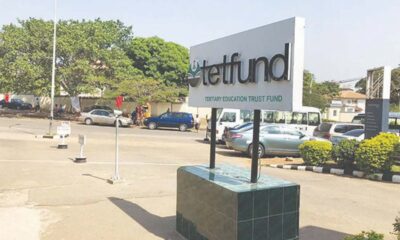
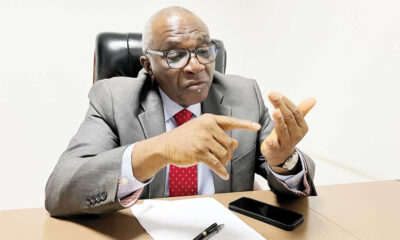
Arch. Sonny Echono, the Executive Secretary of Tertiary Education Trust Fund (TETFund), revealed that the organization has spearheaded the funding of over 5,525 physical infrastructural projects and facilitated the establishment of over 576 faculty and departmental libraries across tertiary institutions nationwide.
Speaking at the 26th seminar of the Nigerian Academy of Education in Abuja, Echono highlighted TETFund’s commitment to advancing tertiary education in Nigeria through strategic investments.
He noted that the Fund has also provided grants for 19,297 Institution-Based Research (IBR) projects and supported 912 research projects under the National Research Fund (NRF). These initiatives aim to foster impactful research that contributes to national development and addresses global challenges.
Echono emphasized TETFund’s significant contributions to enhancing academic resources, including procuring 3,099,871 library books and sponsoring 845 Academic Research Journals projects. Additionally, the Fund has facilitated the development of 2,307 Academic Manuscripts into Books.
READ ALSO:
- My adventure at PSG will end in few weeks – Mbappe
- Bandits attack Zamfara communities, kill Islamic cleric, 29 others
- Fubara gazettes executive order moving assembly sitting to Government House
Regarding capacity building, TETFund has sponsored 23,271 academic staff for PhD programs, with 4,598 attending foreign institutions and 18,673 studying within Nigeria. Similarly, 15,977 academic staff were sponsored for master’s degree programs, with 3,525 pursuing studies abroad and 12,452 within the country. Moreover, 911 scholars were sponsored for Benchwork in foreign institutions, and 872 academic staff for Post-Doctoral programs to strengthen scientific research capacity in Nigeria.
Echono underscored the positive impact of government interventions in tertiary institutions, culminating in Nigeria being recognized as one of the six most improved countries in the Time Higher Education Rankings between 2021 and 2022.
TETFund continues to play a pivotal role in driving infrastructural development, research excellence, and capacity building within Nigerian tertiary institutions, contributing significantly to the advancement of education in the country.
TETFUND funds 40,000 PhD researches, others, 5,525 infrastructural projects across institutions










Education
FG Clarifies WAEC Subject Selection, Says Students Free to Choose Across All Fields

FG Clarifies WAEC Subject Selection, Says Students Free to Choose Across All Fields
The Federal Government has issued a clear explanation on subject selection under the revised Senior Secondary School Curriculum as registration for the West African Examinations Council (WAEC) continues nationwide.
In a joint statement released on Saturday, the Minister of Education, Maruf Tunji Alausa, and the Minister of State for Education, Sa’id Suwaiba Ahmad, clarified that there is no restriction or exclusion attached to the choice of any approved subject.
“All subjects remain fully open for students to choose from, provided such choices are properly guided by the school authority, parents, or a certified school counsellor,” the ministers stated.
They explained that science students are free to pick subjects traditionally grouped under the arts or social sciences, while arts and social science students may also select science-based subjects. According to the ministers, the revised curriculum was designed to be flexible, student-centred, and supportive of diverse academic interests and career pathways.
READ ALSO:
- Court Orders Wike to Respond to Tonye Cole’s ₦40bn Defamation Suit
- CAC to Begin Nationwide Crackdown on Unregistered PoS Operators by January 2026
- Studies show menopause can reduce women’s memory, concentration by 40%
The government also clarified that the subject previously known as Information and Communication Technology (ICT) has now been renamed Digital Technology, stressing that the adjustment is only a change in nomenclature. The curriculum content remains intact, and students who offered ICT are fully qualified to register for Digital Technology in both internal and external examinations.
Addressing concerns over trade subjects, the Ministry noted that six have been officially approved.
“A student may register for any of these subjects if the school offers them and the student has been taught the subject. However, there is no obligation to register for a trade subject where a student has not been exposed to any of the six approved options,” the statement added.
Reaffirming its commitment to smooth and accurate examination processes, the Ministry urged parents, school owners, counsellors and examination bodies to rely on verified information and ensure proper guidance to all candidates.
The Federal Government assured that it will continue to promote seamless, well-coordinated WAEC registration across the country.
FG Clarifies WAEC Subject Selection, Says Students Free to Choose Across All Fields
Education
NECO grants full accreditation to schools in Burkina Faso to conduct SSCE, BECE exams
NECO grants full accreditation to schools in Burkina Faso to conduct SSCE, BECE exams
The National Examinations Council (NECO) has expanded its international operations with the accreditation of schools in Burkina Faso to conduct its flagship examinations, the Senior School Certificate Examination (SSCE) and the Basic Education Certificate Examination (BECE).
In a statement released in Abuja on Sunday, the council’s Acting Director of Information and Public Relations, Mr. Azeez Sani, confirmed that NECO granted full approval after a comprehensive assessment of selected institutions in the West African nation.
According to Sani, a NECO accreditation team evaluated the schools’ infrastructure and readiness by inspecting classrooms, laboratories, libraries, computer labs, workshops, examination halls, sports facilities and overall security architecture. The team also reviewed Continuous Assessment (CA) records, staffing levels, and the general learning environment before issuing approval.
“Following a thorough and detailed evaluation, the schools were granted full accreditation to host the SSCE and BECE,” Sani said.
READ ALSO:
- Four Dead, Ten Injured in Mass Shooting at Child’s Birthday Party in California
- White House Shooting: Suspect Once Worked With CIA as US Opens Full Terrorism Probe
- Nigerian army rescues 12 teenage girls abducted by Boko Haram in Borno state
He added that NECO’s expansion into Burkina Faso reflects its growing commitment to providing quality education assessment services across Africa. With this development, the council strengthens its goal of becoming a leading continental examination body serving both Nigerian and foreign students.
Sani further recalled that NECO recently established an examination centre in London, United Kingdom, adding to existing centres in Togo, Benin Republic, Niger Republic, Equatorial Guinea, Côte d’Ivoire, and Saudi Arabia.
Nigeria’s Ambassador to Burkina Faso, Amb. M.D. Galadima, applauded the development, describing it as a major relief for Nigerian families in the country. He noted that parents previously had to take their children to Saki, Oyo State, to register and sit for NECO exams — a process that posed security risks and imposed heavy financial burdens.
“With this accreditation, those risks are eliminated, and families can now save significant costs,” Galadima said, urging Nigerians in Burkina Faso to seize the opportunity by enrolling their children for NECO examinations.
Leader of the accreditation team, Dr. Uche Ezenwanne, said the approval now allows Nigerian students residing in Burkina Faso to write the SSCE and BECE without travelling back home.
NECO grants full accreditation to schools in Burkina Faso to conduct SSCE, BECE exams
Education
Study Permit Reform: Canada Exempts Postgraduate Students From PAL/TAL in 2026

Study Permit Reform: Canada Exempts Postgraduate Students From PAL/TAL in 2026
The Government of Canada has unveiled major reforms to its study permit system, announcing a more streamlined process for international postgraduate students beginning January 2026. Under the new policy, master’s and doctoral candidates enrolled in public Designated Learning Institutions (DLIs) will no longer be required to submit Provincial or Territorial Attestation Letters (PAL/TAL).
The policy shift forms part of a broader federal plan to simplify pathways for highly skilled students while maintaining firm control over overall international student intake.
The PAL/TAL system, introduced to help provinces regulate student numbers, has improved oversight but also increased processing times and administrative workload. The 2026 exemption is expected to significantly speed up permit approvals for postgraduate applicants and reduce paperwork.
Despite easing requirements for advanced degree programs, Canada will continue enforcing a national cap on international students. Under the 2026–2028 Immigration Levels Plan, Ottawa intends to issue up to 408,000 study permits in 2026—comprising 155,000 new permits and 253,000 extensions. This marks a 7% drop from 2025 and 16% below 2024 levels. However, the government says it remains committed to attracting top-tier researchers and graduate talent.
READ ALSO:
- Kano Insecurity: Barau Challenges Govt to Produce Evidence of Alleged Incitement
- Ganduje fires back as Kano Govt demands his arrest over alleged incitement, militia support
- Troops repel major Boko Haram/ISWAP attack in Chibok, kill scores in NAF airstrikes
Under the revised rules, PAL/TAL exemptions will apply to:
- Master’s and PhD students at public DLIs
- K–12 learners
- Certain federal priority and vulnerable groups
- Current study permit holders applying for extensions at the same level and institution
Of the 309,670 study permit spaces allocated under the 2026 cap, an estimated 180,000 applicants will still require PAL/TALs, allowing provinces to retain oversight on enrolment levels.
Master’s and PhD candidates will also be removed from the national study permit cap, ensuring they are not subject to annual limits. Additionally, PhD applicants will benefit from expedited 14-day processing, part of Canada’s strategy to remain globally competitive in research recruitment.
Federal targets for new international student entries remain:
- 2026: 155,000 (range: 150,000–160,000)
- 2027: 150,000 (range: 145,000–155,000)
- 2028: 150,000 (range: 145,000–155,000)
These targets apply to students entering academic programs longer than six months at approved DLIs.
The reforms highlight Canada’s dual-track approach: maintaining tighter control over total enrolment while incentivising high-level research, innovation, and postgraduate education. By removing administrative barriers and offering faster processing for top applicants, Canada aims to strengthen its position as a leading destination for skilled and ambitious international students.
Study Permit Reform: Canada Exempts Postgraduate Students From PAL/TAL in 2026

-
 metro3 days ago
Senate Launches Emergency Probe into Widespread Lead Poisoning in Ogijo, Lagos/Ogun
-

 News3 days ago
BREAKING: Tinubu Sends Fresh Ambassadorial Nominations to Senate, Names Ibas, Ita Enang, Dambazau
-

 Auto3 days ago
Court of Appeal Affirms Ruling Barring VIO from Seizing Vehicles or Fining Motorists
-

 Sports1 day ago
2026 FIFA World Cup Draw: England Draw Croatia as Brazil Face Morocco in Tournament Opener
-

 News3 days ago
US authorities arrest Nigerian CEO Cashmir Chinedu Luke for alleged $7m VA fraud
-

 metro3 days ago
FG secures release of three Nigerians detained in Saudi Arabia
-

 metro3 days ago
Ned Nwoko vows legal action against rising online harassment, criminal defamation
-

 metro3 days ago
Buratai Defends Nigeria’s Resilience, Says Nation Is “Rising, Not Failing” Despite Insecurity