

Opinion
The exit of Arakunrin Oluwarotimi Odunayo Akeredolu, by Bolanle Bolawole
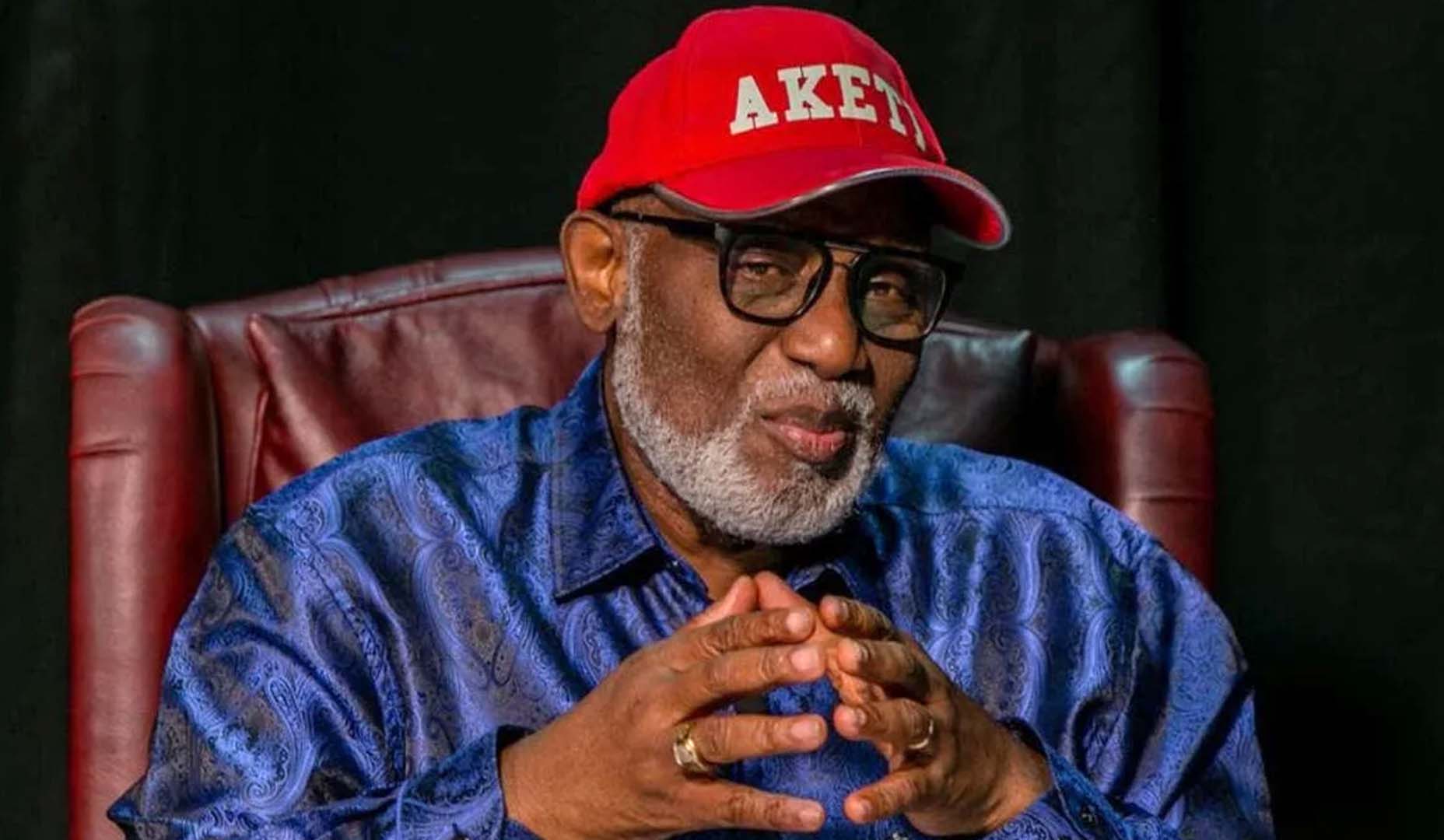
The exit of Arakunrin Oluwarotimi Odunayo Akeredolu
By Bolanle Bolawole
turnpot@gmail.com 0705 263 1058
My phone rang, rousing me up from sleep, and the words rang out: “Bola, has that boy called you?” I hesitated! Who is the person speaking? And who is “that boy”. To ask “who is speaking” will be discourteous. The masculine voice on the line sounded familiar and did not hesitate to call my name – and he did so with confidence and authority. The voice, too, was that of an elderly person. So, I asked: “What boy, Sir?” “Your governor, Arakunrin Akeredolu”
By this time the voice was damn decipherable. I have sat in the same room and around the same conference table too many times with one of the doyens of the journalism profession not to recognize his voice. We had rubbed minds while I was at The Westerner newsmagazine, when it was adding The Nigerian Compass to its stable; we also, together with other patriots, had plotted the way forward for the Yoruba Nation at the Yoruba World Congress before it scattered. Aba Saheed of the Nigerian Tribune fame in those politically turbulent days of the Chief Obafemi Awolowo-led Unity Party of Nigeria versus the National Party of Nigeria needs no introduction – a one-man riot squad that was an unrelenting thorn in the flesh of President Shehu Shagari.
“No sir, he has not called me”. “He will call you. I shared your piece with him and told him to call you” “Yes sir. Thank you, sir” The next day Aba Saheed called me again. “Has he called you?” “No, sir!” “Aaha? What is wrong with this boy? He will call you” “Yes, sir!” After one or two more “Has he called you?”, which received the same “No, sir” response, Aba Saheed muttered some words and gave up. Till date, I wouldn’t know what they discussed and why Arakunrin was meant to have called me.
But Aba Saheed was not the only respected Yoruba leader or doyen of the journalism profession that wanted or felt that Akeredolu should call me. Many who called to ask me for his phone number expressed shock whenever I told them I did not have it. “Are you not from the same town?” Yes, we are from the same Owo!” Many felt I should have been one of his unofficial media aides! I wasn’t – and couldn’t have been. I never met or spoke with Aketi, as he is famously called. The closest I ever got to him was during the 8th Day Fidau for my late friend, Taiye Haruna, as Aketi and his team walked off the field at the end of proceedings.
That is not to say, however, that I did not impact his administration in some ways. While he had newly won his election and was yet to be sworn in, I warned the people of Ondo State to watch it; that the bad side of Akeredolu had to be tamed if Ondo State was to enjoy his good side. I was viciously attacked by the elites of Owo! What kind of an Owo son are you, they asked! One even threatened to report me to Olowo! I was at a media function when one of the reporters, a lady, gave a low down on governor-elect Akeredolu’s lack of human relations.
To be forewarned is to be forearmed; so, I decided to sound a note of warning, not because I had anything against the man but just that his tenure as governor might bode well for the state. Weeks later, and Aketi was yet to be inaugurated, an ardent reader of my column, and an Aketi acquaintance, called to complain about what he suffered trying to access the governor-elect. “Aketi’s human relations are bad, his wife’s are worse” he lamented. Again, I wrote and warned. Again, I was bashed by some Owo elites.
However, many of the people around Aketi – commissioners, special advisers, etc – secretly applauded things that I wrote, which they dared not say themselves. I learnt from them that some of my writeups swayed him. Good! Like the one on the Alabi family house at Igboroko, Owo that he had planned to demolish to make way for his cenotaph of controversy but which he later spared after my advocacy.
Playing God is not peculiar to Aketi or Ondo state. Our big men play God and many of their aides are damn too cowardly to stand up to them. Those who dare are unceremoniously shown the door, like Aketi did to my senior at Owo High School, Kola Olawoye SAN, who was Aketi’s Commissioner for Justice and Attorney-General. Two stubborn men met in Akeredolu and Olawoye. While Aketi advanced his family interests, Olawoye, supported by the then Chief Judge of the state, Hon. Justice (Mrs.) O. O. Akeredolu (nee Fagboyegun), advanced Ondo state’s interests but Aketi eventually had his way.
Remember that “Abe Nazet Olooni” advert of yore? The razor-blade tongue of aketi was double-edged and spared no one, cutting friends and foes alike. He was blunt, up to the point of being called irascible. Yet, some tact and diplomacy were expected of anyone in high office.
Some of Aketi’s family members did not help matters. Aketi also did not – could not? – help himself. Friends who could tell him the bitter truth, he cast away – or he was made to cast away. Those who were the source of his rise to power he discountenanced. It will interest you to know that many of the Owo elites who shouted me down at the beginning virtually all fell out, one after the other, with Aketi. Olawoye was said to have been the man who opened Aketi’s eyes to the Ondo State governorship tussle.
As Aketi’s wife, several years his senior in age, got a foothold in her husband’s government, an Igbo mafia emerged. A cabal of political associates with eyes fixed on the next governorship tussle in 2014 also grouped themselves. Some also talked of the Owo mafia. Akeredolu’s illness helped; just like that of former President Umaru Yar’Adua and Muhammadu Buhari’s helped the formation of cabals that took hold of the reins of power. This should interest political researchers.
One theory says Akeredolu’s family members were aware of his health conditions and prepared themselves for any eventualities. That was why his son, Babajide, was promoted to a position of relevance. During COVID-19, Babajide was in the engine room of the State’s response to the virus. Afterwards, Aketi tested the waters when he boasted that he could make his son his Chief of Staff and nothing would happen. Of course, he has a precedence in former Gov. Segun Agagu who made his younger brother, Femi, his Chief of Staff.
Maybe the uproar that attended his boast made Aketi to change the nomenclature but he still installed his son, Babajide, as the most powerful person in his administration. Conflict of interest is the reason why many, who vouch for Babajide’s competence, disagree with the arrangement. But it would appear that Aketi was a man who, like Nostradamus, saw the future. He needed someone he could trust; and there was no one better than his own blood and flesh.
If, then, Aketi and his family knew of his failing health, and prepared for any eventualities, can we still ascribe his health challenges to “Irunmoles” and Ondo State traditional rulers said to be angry with some of his decisions? Or can we still say that it was the cenotaph erected as a memorial to those slain by terrorists at Owo, right in the precincts of the Owo palace and to the alleged dismay of the traditionalists, that triggered the anger of the “Irunmoles” against Aketi?
Sheer coincidence or what? But many people who are not as privileged as a governor survived cancer, why not Aketi who had the money to spend? Aketi’s wife is a cancer survivor; why not Aketi? Aketi – and God — must have been instrumental to Betty surviving cancer; what role did Betty play in her own husband’s battle with cancer?
Aketi is gone; nothing can bring him back again. As Marc Antony said of Caesar in Shakespeare’s Julius Caesar, “The evil that men do lives after them, the good is oft interred with their bones” But before the good deeds of Aketi are interred with his bones, let us recount a few of them here. As president of the Nigerian Bar Association, he kept alive the radical tradition birthed by Alao Aka-Bashorun. His role in the formation of Amotekun will never be forgotten. But for his courageous stand that led to the formation of Amotekun, the South-west today might have become similar killing fields like the Middle Belt. Aketi doggedly and resolutely fought for the presidency to rotate to the South. He spoke vehemently against back-to-back Fulani/Northern presidency. He trod where even angels feared to – and that was massive; really, really massive. While many others were compromising or eating their words, Aketi stood firm like the rock of Gilbraltar, insisting without mincing words that the presidency must rotate to the South. And it did! Again, that was massive! Aketi’s efforts at developing his Owo hometown has given the ancient town a face-lift that many could never have thought possible. Although there are complaints that the development was not evenly spread within the town and that the suburbs were not factored into it, Owo will not forget Akeredolu in a hurry.
Aketi’s shenanigans were many: His and some of his family’s alleged greed and avarice; his lack of tact, civility and gentility; some of his family members were no less obtuse; and together, they lacked finesse and human relations. Still, Aketi managed to leave indelible imprints on the sands of time. May his soul RIP!
LAST WORD: Lucky Aiyedatiwa is the new governor of Ondo State! Congratulations, Your Excellency! I don’t know if I can extend similar congratulations to the in-coming First Lady but let me warn: No battery, no bashing in Ondo State Government House, please! But how I wish the child had been allowed to die from its mother’s hands! Some will now say that our brand new governor was disloyal to his boss! That he broke Aketi’s heart! That in Aketi’s moment of anguish, Aiyedatiwa’s blow – like Brutus did to Julius Caesar – was the unkindest cut of all! That Aiyedatiwa was one of those who couldn’t exercise some patience but harried Aketi to his untimely grave!
Haba! You conveniently forgot that he was not obliged to make you deputy governor. Wouldn’t your predecessor, Agboola Ajayi, now say it served Aketi right? There were others even more deserving – but he chose you. The other side of the argument, though, is that if Aiyedatiwa hadn’t fought for his political life, he wouldn’t be where he is today! I take no sides! But now that the world or stage, as William Shakespeare called it, has become yours, as Aketi himself inadvertently prophesied, the whole world waits to see to what use you will put it. All eyes are on you. The ball is now in your court. The buck now stops on your table!
You declared a 3-day mourning period for your boss; great! But you couldn’t wait out those days of mourning before making important appointments! Incongruous! Now, some will ask if you were truly mourning! But now that you are shopping for a deputy, the criteria you listed amuse me! Did I hear you say you are searching for a loyal, trusted, and supportive deputy? Karma must not hear that from you! What goes around comes around! Did not the scripture say whatsoever a man soweth…
Oorun ni n gba t’owo omode/Iku ni n bo bata l’ese Rago/Ko sohun t’o ni’bere ti kii l’opin/Bee si ni ko si ohun ti a n je l’enu ti kii tan/Afi ola Olorun Eleduwa/Igba o lo bi orere/Aiye o lo bi opa ibon/Bi oni ti ri, ola o ri be/L’o mu Babalawo d’Ifa ojoojumo/Toto, o se bi owe/O tun se bi ayajo/O si le f’ara jo ogede/Sugbon ase ti Eleduwa fi da ile aiye niyen/ Enikan o si le yii pada/Yala Oba ni, tabi Ijoye/Yala olowo, tabi talaka/Ogbo-oogba ni gbogbo Ise Ojo Kefa/Ni’waju Aseda, Ameda! Oro ree, e gbee yewo!
“When sleep beckons, a child is forced to release what he had staunchly held on to/It takes death to remove the hooves of a horse/There is nothing that has a beginning that will not have an end/So also there is nothing, no matter how sweet, that we can savour forever/Only the grace of God is everlasting/No condition is permanent/What is today, may not be tomorrow/Which is why Babalawos consult their Ifa oracle on a daily basis/ This may sound proverbial/It may even appear like incantation or divination/But it is the way the Creator has arranged the things He created/And no one can change it/Be you king or chief/ Be you rich or poor/ Equal before God are the Man He created on the sixth day/This is food for thought/Consider it!
* Former Editor of PUNCH newspapers, Chairman of its Editorial Board and Deputy Editor-in-Chief, BOLAWOLE was also Managing Director/Editor-in-Chisf of THE WESTERNER newsmagazine. He writes the ON THE LORD’S DAY column in the SUNDAY TRIBUNE and TREASURES column in the NEW TELEGRAPH newspapers on Wednesdays. He is also a public affairs analyst on radio and television.







Opinion
2027: Competence, Not Zoning, Should Decide Nigeria’s Next President — Imasuagbon
Nigerians should look beyond ethnicity, region and the longstanding debate over rotational presidency when choosing the country’s next leader, according to a chieftain of the African Democratic Congress (ADC), Kenneth Imasuagbon.
The former Edo State governorship aspirant said the priority ahead of the 2027 election should be finding a president with the ability to confront Nigeria’s economic, security and infrastructure challenges.
Speaking to journalists in Benin, Imasuagbon argued that presidential rotation is not a requirement of the Nigerian Constitution and should therefore not outweigh the question of competence.
He said voters should be more concerned about replacing poor schools with better ones, improving healthcare and addressing hardship than debating where the next president comes from.
Imasuagbon specifically appealed to voters in the South to support former Vice President Atiku Abubakar, who is contesting the 2027 presidency on the ADC platform.
According to him, Atiku has demonstrated the experience and determination needed to improve the country, describing the former vice president as someone capable of promoting national unity and fairness.
He also accused the Bola Tinubu administration of worsening economic pressure through policies including the removal of fuel subsidy, while expressing concern about the condition of roads, electricity and other infrastructure.
Imasuagbon argued that the next administration must focus on practical improvements in areas such as power, transportation, employment, security and public services.
The ADC chieftain also dismissed the idea that the ruling All Progressives Congress (APC) would automatically benefit from its incumbency advantage in 2027.
He maintained that the electorate ultimately determines the outcome of an election, arguing that voters could change the political direction of the country if they were determined to do so.
Imasuagbon further criticised what he described as regional and ethnic considerations in the distribution of political appointments and opportunities, insisting that the next president should give Nigerians across different parts of the country a sense of belonging.
His comments come as political parties and their candidates intensify preparations for the 2027 presidential election.
Opinion
Lesson from Dotun Oladipo’s Brave Daughters, by Bamidele Johnson
Lesson from Dotun Oladipo’s Brave Daughters, by Bamidele Johnson
I hope to grow old. I want to see my kids become real adults, find their own feet, make mistakes, recover from them, and perhaps one day complain that their own children are giving them grey hairs. I want that plainly stated before anything else, as everything that follows might read as a man agreeing to an early exit rather than a man simply being honest about the odds.
I want the decades. I want to become the grandfather who repeats the same stories until nobody bothers correcting him anymore. But wanting a thing and being granted are different things. The last year has made that difference harder to ignore than I would like. I have lost many friends recently to keep thinking that optimism is my natural resting state. Some of these men had better blood pressure than mine, better habits, better everything that is supposed to count. It did not save them.
There is no formula I know that reliably separates the men who make it to 70 from those who do not. Anyone who says he knows one is selling something. So, I do not assume that old age is an already booked destination. Even if I once did, which I doubt, the last three years have cured me of such an illusion. As such, I treat it as a hope rather than an expectation, and I have found that a more honest way to live.
It is exactly why I want something placed on record now, while I am still able to place things on record, rather than leave it for people to guess what my wishes were in the fog of a funeral week. If I do not make old bones, my children are not to be asked to read tributes at my funeral. Not one line, however short, however lovingly written.
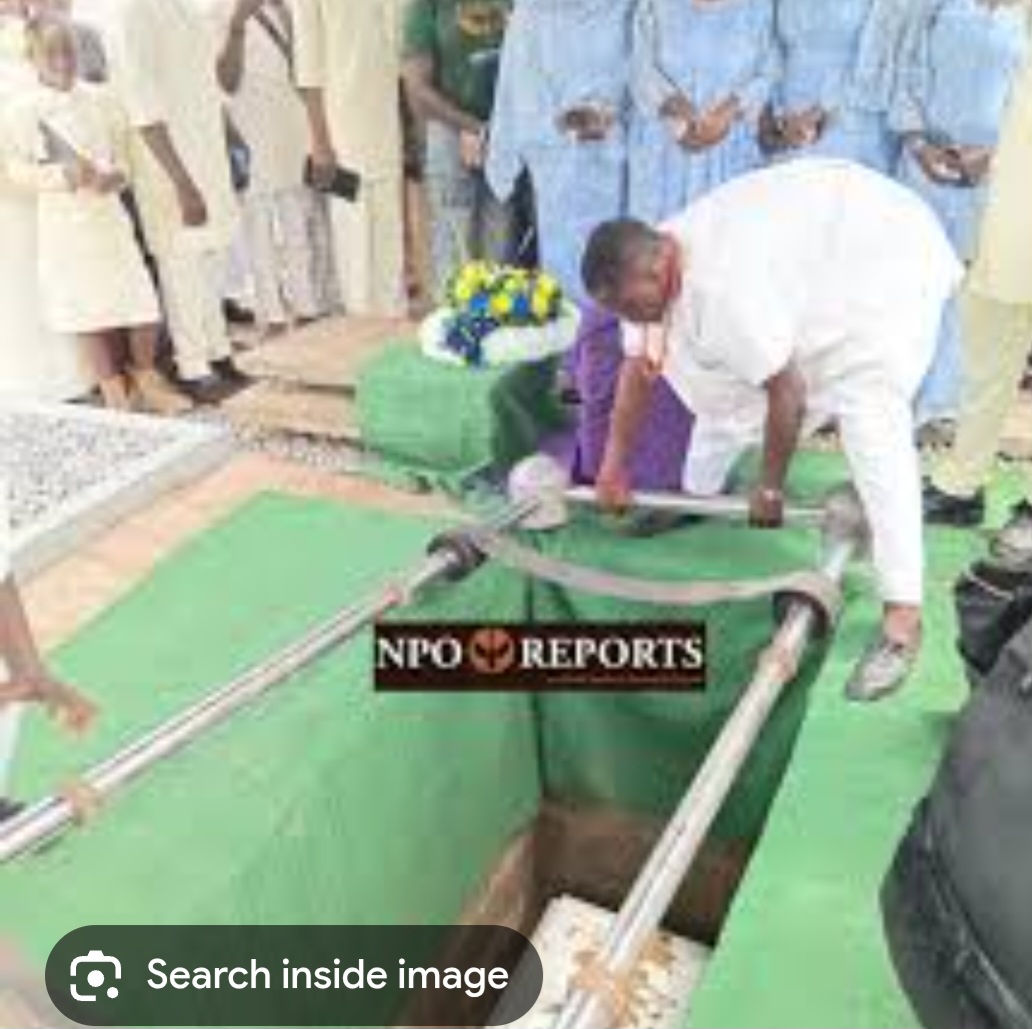
This, for me, was settled today rather than re-opened. At Dotun Oladipo’s funeral service, his three daughters took turns to read their tributes to their dad, and I found myself watching them with awe. There was a kind of strength in them that I do not possess. It is the strength needed to stand in front of a hall brimming with grieving adults and speak about a man they have just lost. Forever. Strength, however, is not the same as ease. I could see plainly what that strength was costing them as they read. Their voices caught. Their composure held and then did not hold and then held again through sheer will.
In front of them, in the pews, men and women considerably older than them came undone in ways the girls themselves were somehow managing to resist. I went mightily close. Some of the sobbing was quiet, the type people try to fold into a handkerchief. Some of it was not quiet at all, the kind that announces itself whether or not you want it.
Those young women honoured their father with a grace that is beyond me. What they did was astonishing. So, what I am attempting is an observation of a custom I have now watched wound people. This was not the first time I had watched this particular ritual extract more than it should from people already running on fumes. I saw an earlier and harder version of it at a friend’s wake back in 2015.
The first son was called forward to read his father’s tribute, and he could not do it. He tried, but the words would not come, and he stood there in front of a crowd of mourners, with his grief simply refusing to organise itself into sentences. The officiating minister, rather than releasing him from the task, urged him to continue. I sat fizzing with sorrow and ire. He could not go on and, eventually, the minister accepted, but not before insisting a while longer than it should have reasonably taken. His younger brother was called up next, presumably on the theory that if one grieving son could not manage it, maybe another one could. He flunked it in the same way. Grief does not distribute itself more conveniently among siblings just because a programme has been printed and needs to be followed.
I have turned that memory over many times since, trying to work out why this part of the rites is treated as mandatory in the first place. I have not found a satisfying answer. Maybe it comes from a belief that a child’s words carry more weight than anyone else’s, which may even be true, but weight is exactly the problem when those carrying it are struggling to hold themselves together with nothing but adrenaline and the fear of dissolving in public.
Maybe it is simply inertia, the reason we still do a hundred things at funerals that nobody can explain the original purpose of. Either way, I have stopped looking for the justification. I no longer think one exists that is good enough to weigh against what I watched happen to that boy in 2015.
So, let this stand as my instruction rather than my preference, the kind of thing I would rather state plainly now than leave for my children to infer later from how uncertain I sound when the subject comes up in passing. If I do not get the old age I am hoping for, my children will not be asked to read a single word over my body. Someone else can speak for me. A friend, a stranger with a steadier voice and a smaller stake in the loss, anyone whose grief will not be quite so total that standing upright becomes almost impossible.
My children, of course, will sit in front and fall apart if that is what the day requires of them, but without the microphone. That, at least, is one small mercy I intend to arrange for them while I am still here to arrange it.
Dotun deserved every bit of the send-off his daughters gave him today, and I suspect he would have been the first to tell them to sit down and let someone else carry the weight for a while. He did not get a say in that, as none of us ever do once we are the ones being spoken of rather than the ones speaking. Rest well, Dotun. You raised three young women whose strength I will not soon forget. That alone says everything worth saying about the man you were.
Opinion
‘Tinubu Will Win Again in 2027’ — Charismatic Bishops’ Secretary
‘Tinubu Will Win Again in 2027’ — Charismatic Bishops’ Secretary
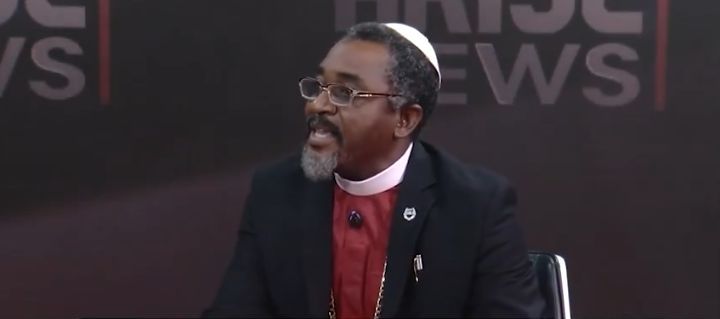
A senior Nigerian cleric, Archbishop Chivir Chianson, has declared that President Bola Tinubu will retain the presidency after the 2027 general election, attributing the prediction to a message he said came from God.
Chianson, who serves as Secretary General of the Charismatic Bishops’ Conference of Nigeria, made the statement while appearing on Arise Television on Saturday.
Rather than basing his prediction on political calculations, the archbishop said his confidence came from what he described as the prophetic role of bishops.
He maintained that the conference had previously spoken about Tinubu’s political future based on what he said was divine revelation and that the President would return for another term.
Chianson also predicted that Tinubu’s performance would improve if he wins the 2027 election.
READ ALSO:
- DSS warns Osun churches, mosques, markets over alleged terrorist attack plot ahead of 2027
- ‘Tinubu Will Win Again in 2027’ — Charismatic Bishops’ Secretary
- Fake miracles, bogus grants: How clerics allegedly fleece Nigerians of millions
Addressing the political opposition, the cleric said the bishops could not be blamed if rival parties failed to unite or organise themselves effectively ahead of the election.
He also sought to clarify the position of the bishops when dealing with government, saying their role in speaking truth to power did not mean they should approach political leaders with hostility or disrespect.
According to him, the Constitution, alongside their religious convictions, should guide how they engage the President and the country.
Chianson said he was sufficiently confident in his prediction to promise that he would return to the Arise TV studio after the 2027 election, when he expects the result to demonstrate that the bishops’ prophecy was correct.
His comments add a religious dimension to the increasingly active political conversation surrounding the 2027 presidential race.
‘Tinubu Will Win Again in 2027’ — Charismatic Bishops’ Secretary
-
 Sports3 days ago
‘I Was Never the Chosen One’ — Dembele Responds to Mbappe
-

 International2 days ago
Islamic Council Condemns Attempted Attack on Holy City of Mecca
-

 metro2 days ago
Lagos Power Outage: Ikeja Electric Blames TCN as Businesses, Homes Groan
-

 Education3 days ago
JAMB Moves 2027 UTME Time — Here’s What Candidates Need To Know
-
 News2 days ago
Keep Politics Out of My Office — Ogbomoso Grand Chief Imam Warns Politicians, Bloggers
-
 Politics2 days ago
2027: APC Governors Reject Wike’s Rainbow Coalition, Insist on Party Loyalty
-

 News3 days ago
I Wanted to Disgrace Tinubu — Omokri Reveals What He Discovered at Chicago Varsity
-

 metro2 days ago
A Son Wouldn’t Have Done Better — Dangote Speaks on Daughters, Succession