
Opinion
The Sunday Igboho I know
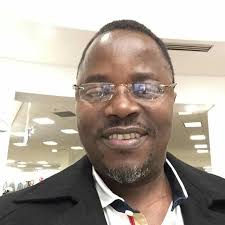
By Tunde Odesola
(Published in The PUNCH on Monday, February 8, 2021)
Gangan is the hourglass-shaped talking drum covered by cowskin that talks in the voice of man. Unique, the gangan talking drum is Yoruba’s invaluable gift to the world.
Quite unlike countless artefacts stolen from Africa, and transported to Europe, America and beyond, I believe that the talking drum was left unstolen because the gangan can’t talk without the dexterity of the fingernails – a fact supported by the Yoruba proverb, ‘ati ranmu gangan, kii sehin ekanna’.
But dexterity, in the case of gangan, belonged to the black man. Probably frustrated by in-dexterity, the white man let the talking goatskin, the wooden hourglass and its strings be.
Two weeks ago, the gangan roared in Igangan town of Ibarapa in Oyo State. Just like in the days of yore when drummers accompanied warriors to the warfront, I heard the gangan clearly, saying, “Sunday Igboho npale ogun mo, orisa ma je o t’enu mi jade!” Meaning: “Sunday Igboho is preparing for war, may the gods forbid me saying so.”
About three weeks ago when I interviewed the Akoni Oodua of Yoruba land, Chief Sunday Adeyemo alias Sunday Igboho, he talked passionately about Yoruba culture and tradition.
Despite the mystique surrounding his persona, Igboho was respectful. Without knowing my age, he accorded me the honour due to an elder brother, using the English noun, ‘sir’, and the Yoruba pronoun, ‘e’, both of which confer seniority – while talking to me.
Our talk centered around whether or not African bulletproof aka ‘ayeta’ or ‘odeshi’ truly exists. Igboho insisted that ‘ayeta’ is real and vowed to stake his life and N10m against anyone who doesn’t believe that African bulletproof exists. He said, “I will stake N10m against the N10m of anyone who doesn’t believe African bulletproof exists. The person should bring his gun and shoot at me. I will win the bet.”
A few days after Igboho spoke to me about ‘ayeta’, he visited Igangan and stood in the gap for his embattled ethnic nationality, which has come under incessant murderous attacks by Fulani herdsmen while the Yoruba political leadership, with the exception of Governor Rotimi Akeredolu of Ondo State, maintained criminal silence.
Shortly after the gangan thundered victoriously in Igangan, echoing the liberation of Oduduwa children from rape, kidnapping and killings by Fulani herdsmen, a dirge was heard at the Tinubu Square in Lagos.
Ogini? Kilode? Wetin happen? Who die? Media attention shifted swiftly to Tinubu Square, where a torn gangan was found in the possession of a footman singing the songs of sorrow and crying more than the bereaved.
What’s the mission of this flunkey? The manservant wanted to outshine his master and reap quick media traction from the emerging Igboho sensation but met his Waterloo in a classic comeuppance.
Blinded by ambition, the opportunistic, imprudent and chauvinistic fellow danced naked to some anti-FEMInist music at the popular OJODU bus stop near Berger, in Lagos, when a rickety okada crushed him for his blasPHEMY.
The Igboho I know is a commoner, who doesn’t have access to questionable public funds like Nigeria’s politicians in the federal executive council, state executive councils, federal and state legislatures, and local government councils.
The Igboho I know is a 48-year-old tribal-marked man who spoke the only language President Muhammadu Buhari understood – force – forcing the northern president to sack his redundant service chiefs after yearly strident calls for the removal of the underwhelming military chiefs by Nigerians fell on deaf ears.
Shamefully, in order for the removal of the service chiefs not to appear as forced by the Igboho enigma, Buhari rewarded the failed military chiefs with ambassadorial posts when they’ve not even turned in their letters of stewardship for assessment.
The cluelessness of the trivial Buhari administration is further highlighted by the three-month tenure extension of the IGP, Mohammed Adamu, on the premise that the President is searching for the right candidate. This is the most stupid excuse for dullness. I don’t know how Buhari would use just three months to search for Adamu’s successor when he couldn’t do so in the last two years Adamau has been in the saddle.
The Igboho I know is a tribal lord, just like Buhari, who told all other Nigerian ethnic nationalities to vacate their lands and water for his Fulani kinsmen to freely use for Ruga.
Sadly, it’s on record that no Fulani herdsman has been prosecuted and brought to justice by the Buhari presidency despite damning evidence of complicity.
In its characteristic knee-jerk approach to issues, security sources said the Presidency’s first reaction was to attempt to arrest Igboho, but was advised against such a move for fears that the tension already generated by Fulani killings nationwide could result in simultaneous protests that would be larger than the #Endsars riots.
The Sunday Igboho I know is far more compassionate and courageous than Vice President Yemi Osinbajo, Asiwaju Bola Tinubu, all Yoruba governors, except Akeredolu, all Yoruba leaders, ministers, senators, and House of Representative members who have kept quiet because they and their children are safe from killer Fulani herdsmen.
The sound emanating from the gangan being beaten by spineless and greedy Yoruba political leaders is clear. It says, “Bamu, bamu layo, awa o mo bi Fulani npa omo enikankan, bamu, bamu la yo.” Meaning, “We’re filled to the throat, we don’t know if Fulani kills anyone, we are filled to the throat.”
The same thing goes for 99.9% of Yoruba obas, whose member, the Olufon of Ifon, Oba Adegoke Adeusi, was killed by suspected Fulani kidnappers, but who didn’t speak against the killing. Well, if a foremost oba was killed and Yoruba obas kept quiet, won’t they go dancing shaku-shaku if sons and daughters of nobodies in their domains are killed or raped? Yet, this set of leaders clamour for constitutional empowerment.
Only the Alaafin of Oyo, Oba Lamidi Adeyemi, wrote an open letter to Buhari, warning of the tragic consequences of the actions of Fulani kidnappers, herdsmen, and the general insecurity in the land. A couple of other Yoruba monarchs may share Alaafin’s views, but they need to speak up against the killing and raping of their subjects.
The Igboho I know understands the language of the fascist Buhari regime. Force is the language. Former US President Donald Trump thought Nigeria was in a democracy when he asked Buhari why were Nigerian Christians being killed over an alleged Islamisation agenda.
Nobel laureate, Professor Wole Soyinka, General Olusegun Obasanjo, General TY Danjuma, Pastor Enoch Adeboye, Bishop David Oyedepo, emirs and numerous leaders of thought have warned Buhari that Nigeria is about to collapse, but the Katsina warlord will never listen because the only language he understands is force.
That Buhari’s next-of-kin presidency granted university licence to the General Sani Abacha family, last week, gives an idea of the depthless corruption subsuming the All Progressives Congress-led government.
If Abacha, Buhari’s benefactor, didn’t steal the country blind, maybe Nigeria would today have the capacity to store millions of COVID-19 vaccines about to be donated by western countries but which are at the risk of getting spoilt as a result of inadequate power supply.
Since I met Igboho at the Osun Peoples Democratic Party secretariat in the Dada Estate area of Osogbo in mid 2000, he has never changed from his down-to-earth nature. With what he did in Igangan, the puppy of Igboho is far better than the toothless and clawless lion of the Aare Ona Kakanfo, Gani Adams. I won’t gloat and beat my chest, saying I predicted the unfitness of Adams for the Kankafo post in 2017. The lesson I took away from Adam’s appointment was that to err is kingly, to forgive is divine.
My advice for the Igboho I know: You’ve blunted the sword of the Fulani with your palm, they’re coming from the highest places to demystify you. Be prepared, talk less, issue press statements. Nigerians are on your side, and they’re watching.
Email: tundeodes2003@yahoo.com
Facebook: @tunde odesola
Twitter: @tunde_odesola







Opinion
How opposition Tinubu would treat President Tinubu, By Farooq Kperogi

How opposition Tinubu would treat President Tinubu, By Farooq Kperogi
How opposition Tinubu would treat President Tinubu, By Farooq Kperogi
Opinion
Adelabu’s Power Lines as Laundry Lines
Adelabu’s Power Lines as Laundry Lines
Azu Ishiekwene
In many parts of the country, the rains poured down earlier in the week, bringing much physical and psychological relief from the searing heat.
The absence of electricity from public supply channels made it worse. Average daytime temperatures throughout March ranged from 33 degrees to 38 degrees centigrade in Lagos and Abuja, respectively.
Nigeria’s public electricity grid must rank among the most intractable problems any developing country could face. There is hardly anything more constant than the announcement of grid collapse, which leaves businesses and homes seeking alternatives and incurring unplanned expenses while paying for electricity not supplied.
What Candidate Tinubu promised
During his 2023 campaign, President Bola Ahmed Tinubu said that if he didn’t fix the problem, he shouldn’t be voted in for a second term. He must be regretting that statement now. Since the beginning of his administration in May 2023, there have been multiple grid collapses, with the highest number recorded in 2024 at 12. Even when incidents were fewer, sporadic outages have continued. The failure, on face value, is attributed to a mix of technical, structural and administrative weaknesses in the system. But there is more to it in the sense in which it is said: “The more you see, the less you understand.”
So unreliable is the public electricity supply that the Presidential villa appropriated N10 billion in 2025, and an additional N7 billion in 2026 for the installation of a solar mini grid that will effectively disconnect Nigeria’s seat of power from the national grid, bedevilled by ageing transmission lines which collapse repeatedly from sabotage, poor maintenance, and frequency imbalances.
The joke is on us
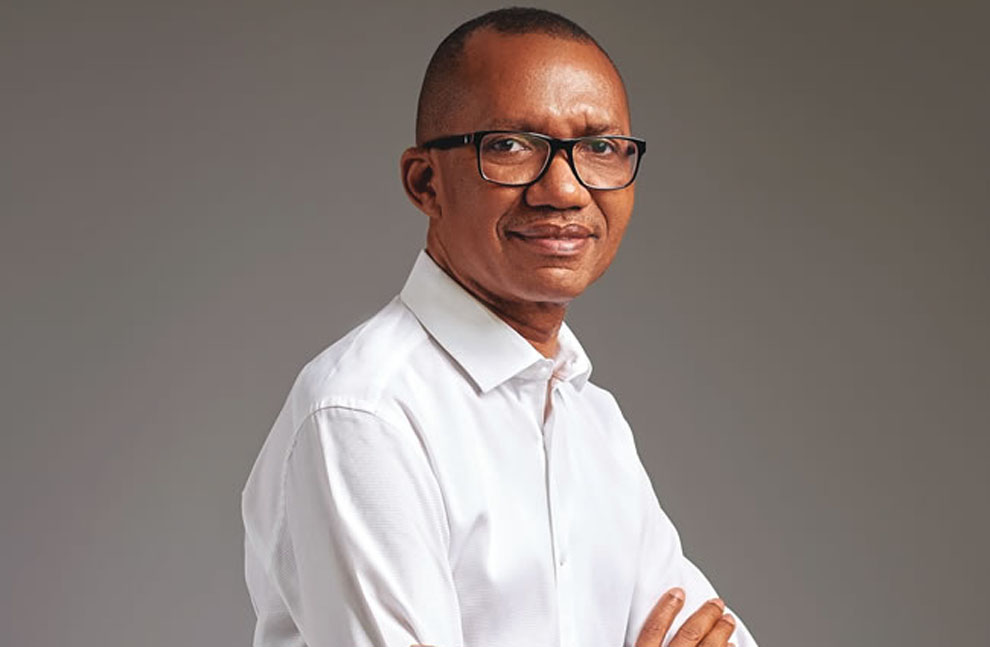
Nigerians, ever ready to make a jest of their tragic maladies and long suffering, are beaten when it comes to power outages. They are shocked beyond humour. If the high-tension cables were not too high overhead, people in communities through which they run would not hesitate to hang their laundry on them – knowing from experience that the lines are just part of the landscape and are very likely to be without electricity.
READ ALSO:
- Ondo PDP Rejects Wike Faction, Affirms Loyalty to Turaki‑Led NWC
- Bandits Abduct Seven Family Members, Three Neighbors in Kaduna
- Festus Keyamo Urges ADC to Thank INEC Over Derecognition of Rival Factions
I have seen a video of a masquerade performing on a streetlight pole. Of course, the crowd applauded its invincibility; yet, both the crowd and the masquerade knew better. The lines had not been electrified for months and were unlikely to be for the spell of the circus.
Hope was rekindled at the beginning of the Tinubu administration when news filtered through that the currently embattled former governor of Kaduna State, Nasir El-Rufai, had not only produced a blueprint, but was going to be given the assignment of sorting out Nigeria’s notorious electricity sector. I learnt reliably that, as part of his plan, El-Rufai was discussing a $10 billion investment agreement with the Saudis before he ran into rough weather.
The coming of Adebayo
That was how Adebayo Adelabu took the job – a job at which he has performed so disastrously, saying he failed would be an honour. But it’s not his fault – it’s the fault of the President who appointed him and the Senate that cleared him for a job that he was clearly incompetent to perform, either based on his record or based on any hope of redemption. He is brilliant, but the power sector is littered with the remains of brilliant people, among whom he is now a fossil.
His better years were when he worked as an auditor at PWC. He was also the Executive Director/CFO at First Bank, and later a deputy governor at the Central Bank. He may not have been directly responsible for the misfortunes of these institutions at the time, but he doesn’t exactly smell of roses.
In the normal course of things, his banking career should have been a yellow flag. Still, Nigeria being Nigeria, the quota system and political connections ensured that he defied gravity.
Then, in 2023, Tinubu offered him the position of Minister of Power, after his failed attempt to become governor of Oyo State on the platform of the Accord Party. That only worsened our misery. Adelabu will be best remembered for splitting electricity consumers into parallel payment bands that do not necessarily reflect improved services.
The thing is not that Adelabu failed at his job. It’s the lack of evidence that he tried. Mr Dan Kunle, an energy expert familiar with the history of that sector, told me that, “No one is saying a power minister should provide the resources to fix the sector from thin air. It’s for him to provide a solid framework that would create the right environment and attract sovereign intervention.”
Adelabu, like many of his predecessors, is running the power ministry in 2026 with the 1950 operational manual of the Electricity Corporation of Nigeria (ECN). Yet, even then, when the country had a population of about 50 million, the British knew that electricity was an economic good. To provide meaningful and sustainable service, they had to prioritise not just the key administrative centres but also areas that could pay. That was why, for example, coal was shipped from Enugu to the Ijora Power Station in Lagos.
No roadmap
Adelabu has no roadmap, or if he has one for a population four times what it was under ECN, it’s a roadmap to nowhere. The same old problems persist: gas shortages, moribund plants, infrastructure deficits, massive debts, and frequent grid collapses, limiting supply to about 4,000 MW despite a capacity of 13,000 MW.
READ ALSO:
- INEC Warns ADC Against Holding Convention Without Supervision
- APC Rejects ADC Claims, Says Tinubu Not Responsible for Party’s Legal Troubles
- Fani‑Kayode Fires Back at Peter Obi, Defends NADECO’s Legacy
While Adelabu may wring his hands alongside Nigerians when the lights trip off, the sector has been drowning under the yoke of N6 trillion in debt as of late 2025, fuelled by non-cost-reflective tariffs and unpaid bills to both generating and distribution companies. Some of the problems predate Adelabu, but his incompetence has worsened them.
Yet, he still has ambition. Not to redeem himself after his disastrous three years as minister, but to become the governor of Oyo State. Obviously, he believes the reward for poor performance is a higher office. He is so shameless, it means nothing to him that he holds the Olympic record for national grid collapse. It means nothing to him that Nigerian businesses are powered by Indian generators and their homes by Chinese solar panels.
Examples from Africa
Egypt, with a population of 110 million, has 100 percent universal electricity access, supported by a heavy reliance on gas (81 percent) and growing low-carbon sources like hydropower. This ensures a stable supply amid population pressures.
South Africa serves 85-90 percent of its 62 million residents but faces severe shortages. Frequent load shedding persists due to Eskom’s debt, ageing infrastructure, and maintenance issues, despite high per-capita generation.
Ghana reaches 88-89 percent coverage for 34 million people, with hydro and thermal power dominating. Urban areas enjoy near-99 percent access, while rural areas still have gaps and occasional outages.
Kenya hits 76 percent for 56 million, excelling in urban (97 percent) and geothermal power. Rural expansion lags, though targets aim for full access by 2030.
Compared to the countries above, only 57 percent of Nigerians are grid-connected, with outages occurring 85 percent of the time, and poor metering and corruption that sustain estimated billing and inefficiencies.
After watching Adelabu perform so poorly over the last two years on the national stage, I was hoping he would go away quietly, under the shadow of the darkness he has fostered. But since he insists that he won’t leave quietly – or appears determined to stay on – I’m considering a self-appointed mission to drag him to Oyo State to see how he will turn their night into day.
Adelabu’s Power Lines as Laundry Lines
Ishiekwene is the Editor-In-Chief of LEADERSHIP and author of the book, Writing for Media and Monetising It.
Opinion
Super Bowl: Can Africa Spring Up anew?
Super Bowl: Can Africa Spring Up anew?
With a landmass of approximately 9.83 million km² and a population of 334–336 million as of 2025—making it the third-largest country in the world—the United States is massive. It is four times the size of Algeria, Africa’s largest country, and dwarfs Nigeria, the continent’s most populous nation.
The United States is a titan among nations. Who knows—perhaps neologists will coin a new term if the U.S. eventually purchases or forcefully takes Greenland from Denmark, further surging its landmass and population. When this massive scale fuses with unparalleled infrastructure, world-class venues, and a vast market, the USA becomes an ideal host for international sporting events with strong returns on investment.
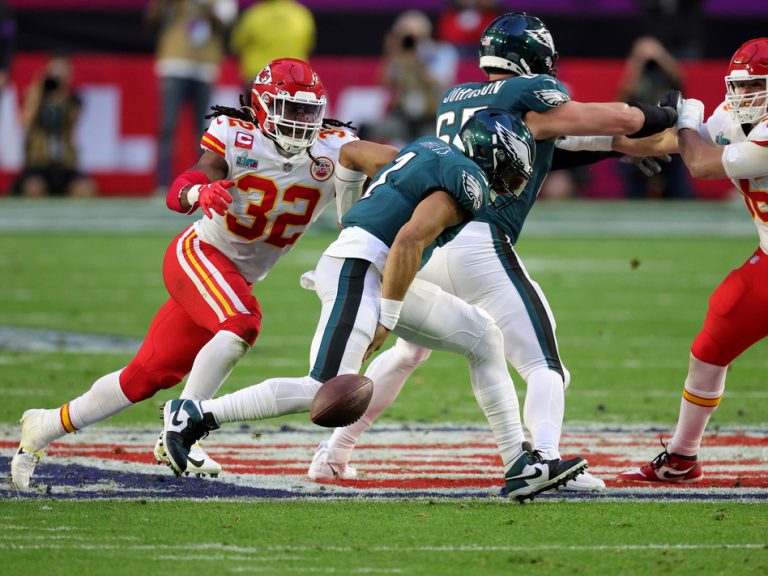
Between 1904 and 2025, the USA hosted one FIFA World Cup (with another to be co-hosted in 2026 with Mexico and Canada), four Summer Olympics, four Winter Olympics, and one FIBA Basketball World Cup. Unlike soccer, which is still finding its footing in the United States—even with Major League Soccer (MLS) having existed for 30 years—American football is the undisputed number-one sport. The Super Bowl—born from Lamar Hunt’s “light-bulb moment”—is the crown jewel. The Super Bowl has become what sociologists call a secular ritual, binding the social fabric of Americans together.
Beyond the Vince Lombardi Trophy, the Super Bowl has evolved into a global marketing masterpiece. From the famous 1984 Apple commercial introducing the Macintosh, which is studied in MBA classes worldwide, to the 1979 Mean Joe Greene Coca-Cola commercial that showed genteel human warmth winning over fearsomeness, the intentionality of brands going head-to-head with rivals has been a recurring feature of every Super Bowl.
While the USA is always attractive for hosting events, the Super Bowl’s success pivots on intellection that results in ingenious marketing. For the recent Super Bowl LX on February 8, 2026, two brands mirrored David Ben-Gurion’s principle of “taking the fight to the enemy.” Pepsi and Anthropic’s Claude entered with an offensive strategy: Claude’s AI ad—“Ads are coming to AI. But not to Claude.”—was a calculated strike in the competitive AI market, while Pepsi’s polar bear blind test revived the sulphurous rivalry with Coca-Cola. Many companies use their ad slots to build brand identity and equity or announce arrival in the business world.
Where does Africa stand in this Super Bowl business and sports calculus? While developed nations are making groundbreaking launches with chutzpah and creativity from creative shops—all resulting in a participatory economy—Africa’s involvement is largely an on-the-field display of Négritude spirit and ravenous passion.
For Africa, the Super Bowl has become a “badge of honor” through representation. Mohammed Elewonibi, a Nigerian raised in Canada, was the first player of African origin to win a Super Bowl (XXVI, 1992, with the Washington Redskins). Since then, nearly 41 players of Nigerian origin or heritage have won—the most of any African country—including six who tasted victory with the recent Seattle Seahawks: Uchenna Nwosu, Nick Emmanwori, Boye Mafe, Jaxon Smith-Njigba (of Nigerian and Sierra Leonean roots), Jalen Milroe, and Olu Oluwatimi.
Yet, as impressive as African athletes are in making the continent proud, we have blatantly failed to translate that audience engagement into commercial windfalls like the Super Bowl on home soil. It is appalling that most of Africa’s sporting events—the Durban July Handicap, Senegalese wrestling (Laamb), or the Safari Rally—have not fully harnessed the intersection of sports and marketing. Even the Africa Cup of Nations (AFCON), despite its 3.45 billion cumulative viewers (far surpassing the Super Bowl’s ~125–127 million), lacks comparable marketing prestige. Why are there no global product launches during our matches? Why aren’t AI giants capitalizing on Africa’s tech startup boom?
Africa is being fed celery when it deserves the whole salad. This asymmetry stems from structural economic factors, but the genie is out of the bottle—we must be forward-looking. To turn African sporting events into “goldmines,” we must reinvent the industry, much as Cirque du Soleil did for the circus. Facing declining audiences, rising costs, and fierce competition, it lost its grip on the circus business. Cirque, however, escaped the dying circus business by reinventing it.
By viewing competition through a new lens, Africa can transform massive viewership into unparalleled economic advantage and value. Just as Cirque du Soleil created uncontested market space, African sports must adopt what W. Chan Kim and Renée Mauborgne called a “Blue Ocean Strategy”—creating uncontested market space and making competition irrelevant. Much as we can not compete toe to toe with advanced economies , we should not follow them like zombies.
In their book Blue Ocean Strategy: How to Create Uncontested Market Space and Make the Competition Irrelevant, the authors highlight how companies in “red oceans” fight for shrinking profits in crowded, defined markets. African sports events currently sit in those crowded red oceans. To elevate them, we need disruptive leaders willing to venture into untapped markets, create new demand, and unlock unlimited growth opportunities.
Joseph Pine and James Gilmore, in their book The Experience Economy, wrote about the need to transform commodities into experiences. As Africans, we have been able to move our sporting events from the commodity stage to the third stage—service delivery—but the experience stage is the North Star we should aspire to reach.
Our cultures, as varied as they are, define us. Despite dilution by Western civilization, our culture stands uneroded, like the mountains that litter our landscape and serve as a canopy to preserve our common heritage. This means our forefathers took culture into the realm of experience—something we are still grappling with in our sporting spectacles today. For us to make headway, our cultures—already bubbling with experience—must mix seamlessly with our sporting spectacles.
Now is the time to merge cultural events like the Eyo Festival, Argungu Festival, Gnaoua World Music Festival, Osun Osogbo Festival, Meskel Festival, and others with our sporting spectacles—that is the Blue Ocean Strategy. This can only be achieved through close collaboration between leaders in sports administration and marketing professionals selling experiences, and the time is now. As this is done, a line from David Diop’s poem Africa—“That is your Africa springing up anew”—would fill our lips.
The experience stage is the nirvana!
Toluwalope Shodunke
Can be reached via tolushodunke@yahoo.com
Super Bowl: Can Africa Spring Up anew?

-
 metro3 days ago
VeryDarkMan Dares Sowore Over Blord’s Kuje Prison Remand
-

 metro3 days ago
Nigerians to Enjoy Four-Day Break as FG Declares Easter Holidays
-
 metro2 days ago
Tinubu Approves 1,000 Forest Guards, Orders 5,000 CCTV Cameras to Boost Security in Plateau
-
 metro21 hours ago
Pastor Found Dead in Guest House After Night Out With Married Female Church Member
-
 Business3 days ago
NNPC Boosts Crude Supply to Dangote Refinery to Address Rising Fuel Prices
-
 International2 days ago
Iran Announces ‘Bounty’ on US Pilots After Claiming Downing of Fighter Jet
-
 International3 days ago
Iran Fires Missiles at Israel After Trump Threatens Weeks of ‘Extremely Hard’ Strikes
-

 Politics22 hours ago
Wike: PDP Not Financially Ready for 2027 Presidential Election
You must be logged in to post a comment Login