
News
Tinubu Approves Salary, Allowance Increase for Nigerian Armed Forces
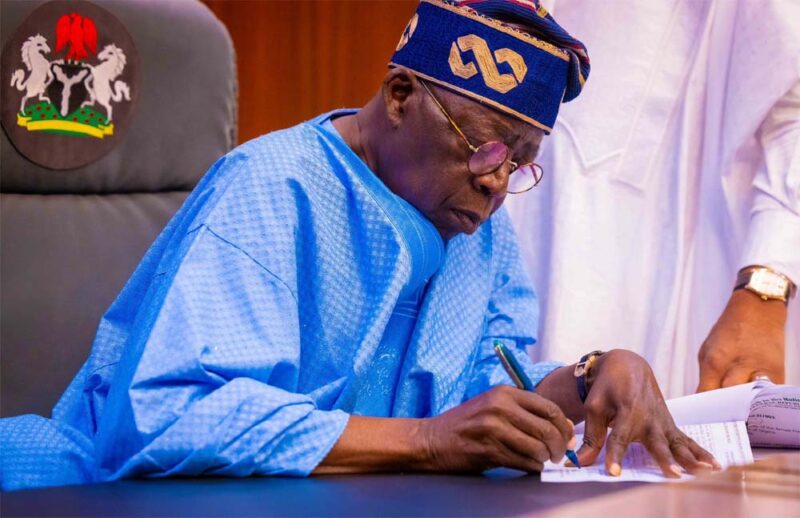
Tinubu Approves Salary, Allowance Increase for Nigerian Armed Forces
President Bola Ahmed Tinubu has approved an upward review of salaries and allowances for personnel of the Nigerian Armed Forces, a move aimed at improving military welfare in Nigeria and strengthening ongoing security operations against terrorism and banditry.
The announcement was made during an interfaith Iftar (breaking of fast) hosted by the president for members of the armed forces at the Presidential Villa, Abuja, where military leaders gathered to mark the Ramadan period and discuss national security matters.
During the event, the Chief of Defence Staff, represented by the Chief of Army Staff, expressed appreciation to the president for approving the salary increase for Nigerian soldiers and an upward review of allowances for the Brigade of Guards.
According to him, the approvals form part of a broader package aimed at improving the welfare of Nigerian military personnel, which also includes the procurement of modern military equipment and provision of improved housing for troops.
“I want to most sincerely thank our indefatigable President for the various approvals for the upward review of salaries of members of the Armed Forces of Nigeria, as well as the upward review of allowances of the Brigade of Guards,” he said.
READ ALSO:
- Igbo Union Rejects State Police, Advocates Return to Pre‑1966 Regional Policing
- Nigeria’s Mall Retail Falters as Shoprite Completes Shutdown After 20 Years
- Iran Launches ‘Massive’ Drone Strikes on Israel, US Bases
The defence chief noted that the new welfare measures would significantly boost the morale of Nigerian troops who are currently engaged in operations across different regions of the country battling terrorism, banditry, kidnapping and other security threats.
He added that the approvals would also enhance the military’s operational capacity through improved logistics, modern weapons systems and better accommodation for service members.
“These laudable approvals will go a long way in enhancing our operational efficiency, and I assure you that they are well received by all members of the armed forces,” he said.
Addressing the soldiers, President Tinubu commended members of the armed forces for their sacrifice, dedication and professionalism in defending Nigeria’s sovereignty.
He acknowledged that many military personnel remain separated from their families for extended periods while confronting armed groups and other threats to national security.
“My duty is to thank all of you on behalf of a grateful nation, knowing fully well that many times you are without your families and that you stay away from them,” the president said.
“Some of you are facing attacks by bandits and terrorists. I commend your courage, sacrifice and professionalism as you put your lives on the line in defence of Nigeria’s sovereignty and the safety of its citizens.”
Tinubu also reaffirmed his administration’s commitment to strengthening Nigeria’s military through sustained investment in intelligence systems, modern equipment and operational logistics.
The president noted that the armed forces have continued to record progress in degrading terrorist groups and bandit networks in several parts of the country through ongoing military operations.
He also thanked Nigerians for their patience amid the government’s economic reforms, noting that the sacrifices made by citizens and security personnel are crucial to the country’s long-term stability and development.
“I am happy to inform you that your sacrifices and that of fellow citizens are not in vain. We are now coming out of the dark tunnel,” Tinubu said.
During the gathering, the president also expressed sympathy to the government and people of Borno State over a recent terrorist attack, assuring them of the federal government’s continued support in the fight against insurgency.
The latest salary increase for Nigerian military personnel is expected to improve the welfare of soldiers and further strengthen the country’s efforts to tackle persistent security challenges.
Tinubu Approves Salary, Allowance Increase for Nigerian Armed Forces









News
Iran Ready to Help Nigeria Combat Boko Haram, ISWAP — Envoy
Iran Ready to Help Nigeria Combat Boko Haram, ISWAP — Envoy
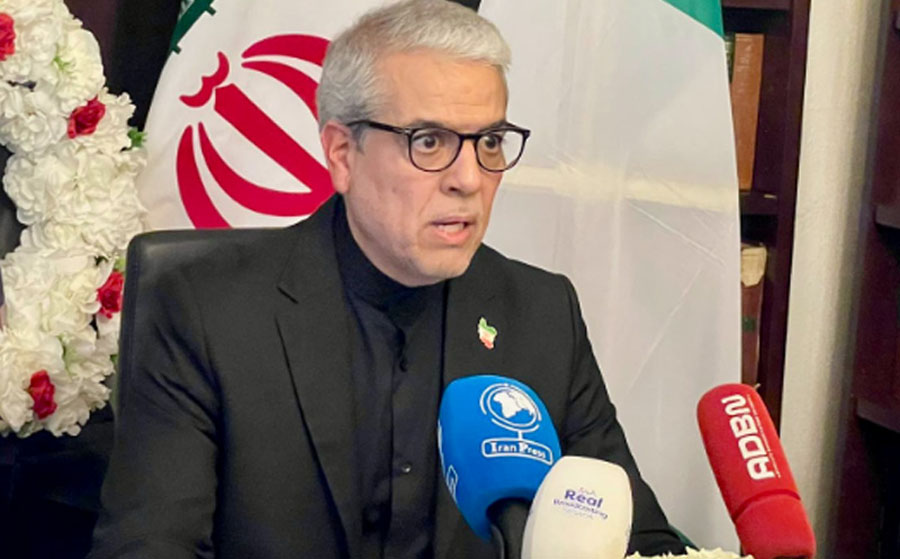
Iran has expressed its readiness to support Nigeria in the fight against terrorism, rejecting recent allegations that Tehran sponsors extremist movements in West Africa. The offer was made by Gholamreza Mahdavi Raja, Iran’s ambassador to Nigeria, during an interview on Arise Television in Abuja.
Raja emphasised that Islamic groups in Nigeria maintain only spiritual and cultural links with Iran and do not have political or operational ties. He highlighted that recent rallies and mourning events organised by Shi’ite groups in Nigeria were expressions of grief following the death of Iran’s former supreme leader, Ali Khamenei, and not evidence of Iranian sponsorship.
The ambassador’s remarks came after Israeli Ambassador Michael Freeman accused Iran of backing Islamic movements in Nigeria and across West Africa to spread terrorism globally. Freeman cited concerns over Iran’s ballistic missile and nuclear programmes, claiming Nigeria has been affected by terrorism allegedly linked to Tehran.
READ ALSO:
- Abduction of Corps Member Sparks Calls to Suspend NYSC
- Police Arrest More Suspects Over Killing of Ajiran of Agungi’s Son in Lagos
- Iran Fires Missiles as Mojtaba Khamenei Succeeds Father as Supreme Leader
Responding to these claims, Raja called the accusations unfounded and politically motivated, stressing that Iran itself has been a victim of terrorism and has consistently condemned attacks worldwide. “We are ready to share our counterterrorism experience and assist countries like Nigeria that face extremist threats,” he said, noting Nigeria’s ongoing challenges with groups such as Boko Haram and the Islamic State West Africa Province (ISWAP).
Raja also underscored the importance of multilateral cooperation in tackling terrorism, adding that Iran is willing to work with Nigerian authorities to enhance security measures, protect citizens, and strengthen responses to insurgent violence.
The Iranian envoy’s statement aligns with the position of the Islamic Movement of Nigeria (IMN), which dismissed claims of Iranian backing as misleading and politically motivated. The controversy follows recent protests by IMN members across several Nigerian states in response to the strikes on Tehran carried out by the United States and Israel.
Iran’s offer of support comes at a time when Nigeria continues to grapple with rising insecurity, including repeated attacks by insurgent groups that have displaced communities and posed significant challenges to national security. Raja stressed that sharing Iran’s experience could help Nigeria address terrorism more effectively while highlighting the importance of moral and spiritual solidarity among Muslim communities.
Iran Ready to Help Nigeria Combat Boko Haram, ISWAP — Envoy
News
FG Resolves OPL 245 Dispute, Says Move Will Boost Nigeria’s Economy
FG Resolves OPL 245 Dispute, Says Move Will Boost Nigeria’s Economy
The Federal Government has announced the resolution of the long-running dispute over Oil Prospecting Licence (OPL) 245, describing the development as a major step toward strengthening Nigeria’s economy and restoring investor confidence in the country’s oil and gas sector.
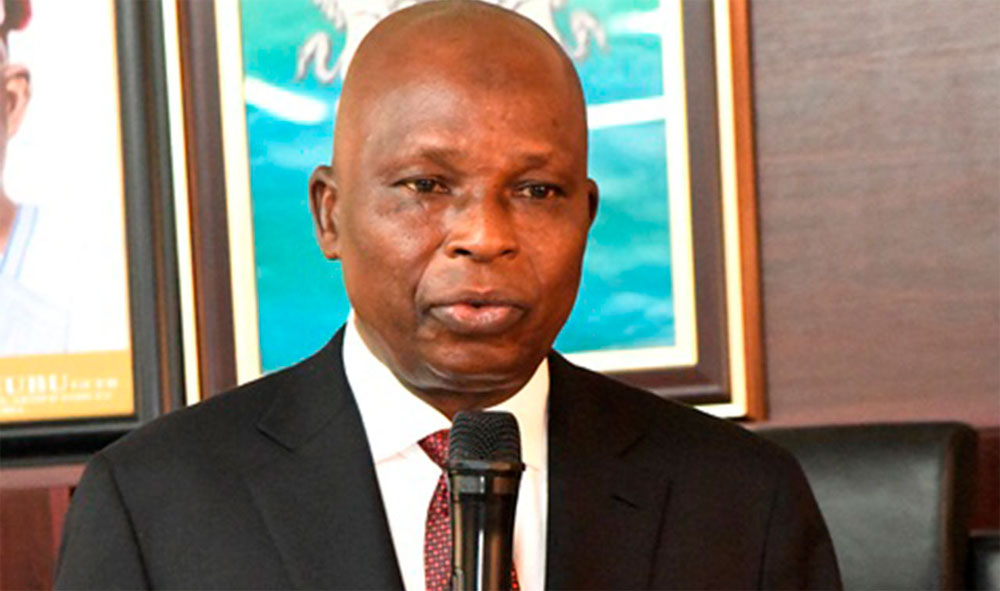
The Attorney-General of the Federation and Minister of Justice, Lateef Fagbemi, disclosed this after the signing of a legal agreement in Abuja that effectively ends more than two decades of litigation and international arbitration over the controversial oil block.
According to him, the settlement was reached between the Federal Government and energy companies Eni and Nigerian Agip Exploration Limited.
Fagbemi said resolving the dispute would reposition the country’s economy and strengthen the Federal Government’s fiscal capacity.
He attributed the breakthrough to the leadership of President Bola Ahmed Tinubu, noting that the president had directed early in his administration that all outstanding disputes over the oil block be resolved amicably in the best interest of Nigerians.
“The agreement marks a turning point for Nigeria’s oil and gas sector after more than two decades of legal battles and international arbitration,” the Attorney-General said.
He explained that the settlement will culminate in a Consent Arbitral Award, bringing final closure to the dispute and helping restore Nigeria’s reputation as a credible partner in global business and investment.
Fagbemi noted that the resolution would remove long-standing legal and fiscal uncertainties that previously hindered the development of the oil block.
According to him, the development is expected to attract large-scale investment into the sector, create employment opportunities, and reinforce Nigeria’s position as one of Africa’s leading energy producers.
He also stated that anticipated revenues from the oil asset can now be incorporated into the country’s medium-term fiscal framework, which would support budget stability, long-term economic planning, and debt sustainability.
The Attorney-General further said resolving the dispute through negotiation rather than prolonged arbitration reflects Nigeria’s commitment to alternative dispute resolution and strengthens the country’s credibility in international commercial and arbitration circles.
“This settlement sends a clear signal to the global community that Nigeria is open for business and committed to fairness and respect for contractual obligations,” he said.
Fagbemi also commended several institutions that played key roles in the resolution process, including the Ministry of Petroleum Resources, the Nigerian Upstream Petroleum Regulatory Commission, the Nigerian National Petroleum Company Limited, and the Economic and Financial Crimes Commission, as well as international partners involved in the agreement.
He described the settlement as a triumph of dialogue over conflict and national interest over narrow considerations.
“With this agreement, Nigeria can now move forward with confidence, ensuring that the development of OPL 245 becomes a source of prosperity for the nation and future generations,” Fagbemi added.
The State House press statement announcing the development was signed by presidential spokesman Bayo Onanuga on Sunday in Abuja.
FG Resolves OPL 245 Dispute, Says Move Will Boost Nigeria’s Economy
News
Strait of Hormuz Crisis Threatens Nigeria’s Food Inflation Progress as Oil Prices Surge
Strait of Hormuz Crisis Threatens Nigeria’s Food Inflation Progress as Oil Prices Surge
Escalating military tensions between the United States, Israel and Iran — particularly around the Strait of Hormuz, one of the world’s most critical energy chokepoints — are threatening to reverse Nigeria’s recent gains in easing food inflation and stabilising the cost of living. (Reuters)
The Strait of Hormuz links the Persian Gulf to the Arabian Sea and normally handles around 20 per cent of global crude oil and natural gas shipments. Recent disruptions — including the effective closure of the waterway and attacks on vessels and nearby oil infrastructure — have disrupted oil flows, sending crude prices sharply higher and amplifying global supply risks. (Reuters)
These disruptions have reached global markets: Brent crude prices have climbed above $90 per barrel and are showing signs of further increases, with some analysts warning they could top $100 or more if the conflict persists. (The Guardian)
Nigeria’s Hard‑Won Inflation Gains Under Pressure
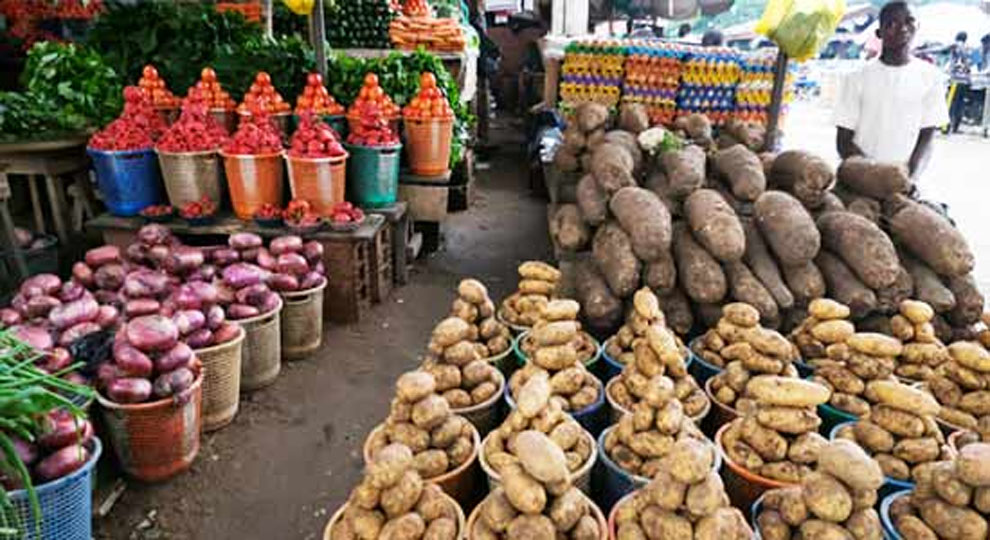
Just weeks earlier, Nigeria was showing signs of relief from price pressures. According to the National Bureau of Statistics (NBS), headline inflation eased slightly to 15.10 per cent year‑on‑year in January 2026, while food inflation slowed sharply to 8.89 per cent, a rare single‑digit reading representing a notable improvement for Nigerian households. (LinkedIn)
READ ALSO:
- APC Condemns Alleged Role of Publicity Secretary in Kidnap, Killing of Ebonyi Monarch
- Osogbo Youth Forum Launches Free JAMB UTME Tutorial for Indigenes, Residents
- Hoodlums Disrupt Wike-Backed PDP Congress in Oyo, Injure Party Members
However, the current tensions in the Middle East threaten to erode these gains quickly by pushing up overall production and distribution costs through higher energy and logistics prices.
Oil Price and Energy Market Shocks
The ongoing conflict has caused significant disruptions in global energy markets, prompting major producers to cut output and halting tanker traffic through the Strait of Hormuz. According to experts, this disruption has already contributed to increased fuel and energy prices worldwide, with downstream effects on inflation and economic costs. (Reuters)
Higher global crude prices — while potentially boosting Nigeria’s oil export earnings and government revenue — have a paradoxical effect on the domestic economy. Because Nigeria still relies heavily on imported refined petroleum products, any surge in international crude prices tends to drive up local fuel costs, which in turn push transportation and food distribution costs upward, adding renewed pressure on inflation. (cedmagazineng.com)
Impact on Transport and Logistics Costs
The disruption of shipping through the Strait has led to rerouting around longer and more expensive routes such as via the Cape of Good Hope, dramatically increasing shipping times and freight costs for global trade. Analysts note that such shifts in transportation patterns can contribute to higher prices for imported goods and agricultural inputs, which feed into the cost of food production and distribution in Nigeria. (Apa.az)
Fertiliser and Agricultural Costs
The conflict has extended beyond energy markets to other global supply chains. For example, reports indicate that Iran has banned food and agricultural exports, which could disrupt supplies of key inputs like fertilisers. Nigeria imports significant volumes of fertiliser, and any spike in fertiliser prices could translate into higher agricultural input costs, potentially reducing crop yields and increasing food prices. (Businessday NG)
Domestic Fuel Prices Set to Rise
In response to higher global crude benchmarks, Nigerian fuel prices have already begun rising. Energy analysts warn that petrol prices could approach ₦1,100 per litre or more if Brent crude remains elevated, adding further cost pressures on households and businesses. (Independent Newspaper Nigeria)
Paradox of Oil Revenues and Consumer Costs
While higher oil prices may bolster government revenue — because Nigeria’s 2026 budget was benchmarked at a much lower crude price — the inflationary impact of rising fuel, transportation and production costs could outweigh revenue gains for ordinary citizens. Analysts stress that unless the government uses any additional revenue to build economic buffers — such as boosting domestic refining capacity and supporting local food production — inflation pressures could resurface strongly. (Independent Newspaper Nigeria)
Economic Risks and Policy Recommendations
Economists are calling on Nigerian policymakers to prepare for wider economic disruptions if the conflict around the Strait of Hormuz persists. Measures proposed include strengthening local agricultural production, reducing dependence on imported fuel, and building strategic food and energy reserves to cushion the domestic economy against global shocks. (Independent Newspaper Nigeria)
Without such interventions, the current geopolitical instability could undo the recent progress Nigeria has made in moderating inflation and improving economic stability.
Strait of Hormuz Crisis Threatens Nigeria’s Food Inflation Progress as Oil Prices Surge

-

 metro2 days ago
Daniel Bwala Faces Backlash After Al Jazeera Interview With Mehdi Hasan
-

 Entertainment3 days ago
Davido Loses Close Friend Denisi Amid ₦1bn Legal Dispute
-

 News3 days ago
BREAKING: Tinubu Posts Yakubu, Omokri, Fani-Kayode, 62 Other Ambassadors (Full List)
-
 Business15 hours ago
NNPCL, Marketers Increase Petrol Price Again Within 24 Hours After Dangote Refinery Hike
-

 News3 days ago
US Releases Additional Epstein Files Containing Allegations Against Donald Trump
-
 International23 hours ago
Top 10 Strongest Militaries in the World in 2026 – Full Ranking
-
 metro18 hours ago
EFCC Intercepts Wife of Federal High Court Chief Judge With $160,000 Cash
-

 metro3 days ago
Deputy Speaker Kalu Faces 72-Hour Ultimatum Over NYSC, Law School Records