
metro
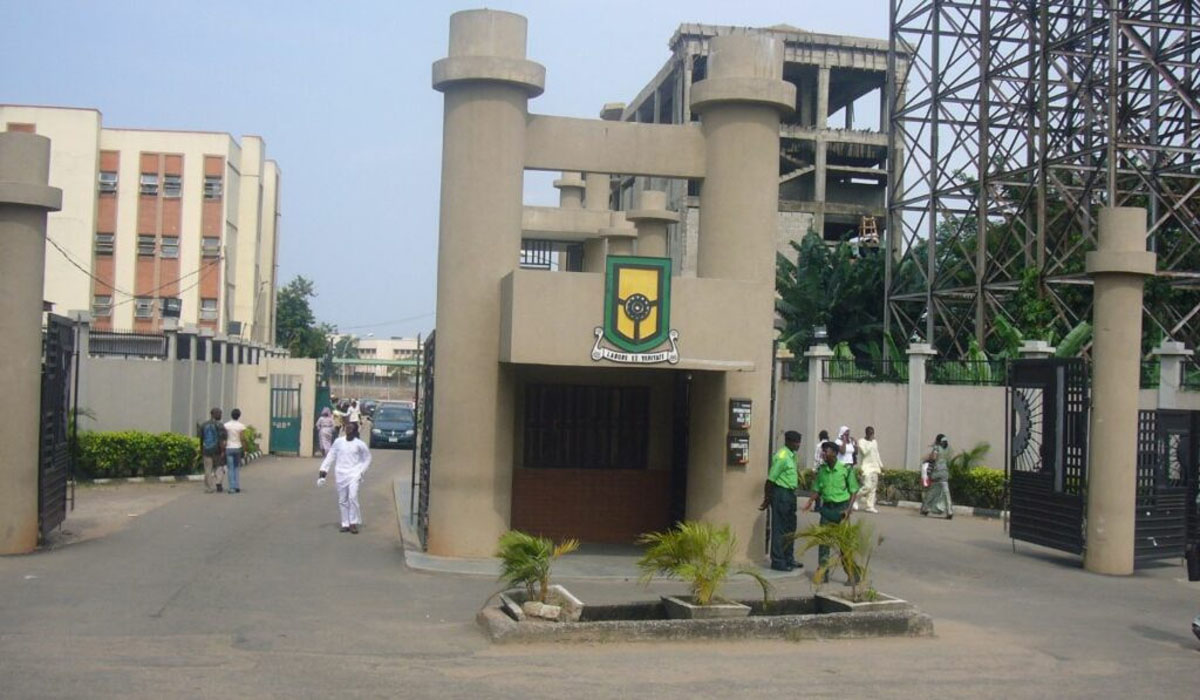
Tinubu approves upgrade of Yabatech to university – Minister
Tinubu approves upgrade of Yabatech to university – Minister
The Minister of Education, Dr Tunji Alausa has revealed that President Bola Tinubu has approved the long-awaited conversion of Yaba College of Technology (Yabatech) into a university.
Alausa confirmed the development on Friday while addressing the institution’s management during a visit.
“I discussed this with President Tinubu, and he approved it without hesitation. I am now awaiting the official memo and necessary protocols,” he stated.
“This institution is a legacy. With over 200 staff members holding doctorate degrees, it is more than ready to attain university status,” he added.
After inspecting and commissioning several projects, he expressed satisfaction with the institution’s maintenance culture, noting that most facilities were still in good condition.
“I commend your pursuit of excellence. Innovation and investment in technology are key to development, and the Federal Government will support you,” he assured.
The minister, however, urged the institution to prioritise innovation and vocational skills in its programmes.
He noted that in Europe, and elsewhere, technical and vocational education is incorporated into their curriculum.
READ ALSO:
- Nigeria will respond strongly to Canada’s visa denied CDS – Defence minister
- Enough of your lies – FG slams Binance executive Gambaryan
- Obasa drags Lagos Assembly, Meranda to court over impeachment
He emphasised the government’s focus on Science, Technology, Engineering, Mathematics (STEM) and Entrepreneurship.
“We need to reshape our country, and Yabatech must key into technology again.
“Over 70 per cent of our population consists of youths, and we must equip them with technical skills. Developing these skills is crucial for national progress,” he added.
He decried the country’s overemphasis on white-collar jobs, which has led to high youth unemployment. “We must change this narrative,” he stressed.
Alausa urged the institution to take Artificial Intelligence, Robotics, and Coding seriously.
“If our youths excel in these fields, they can work remotely and earn foreign exchange.
“There are over 685,000 jobs available in Tech and Software Development. I challenge Yabatech to drive innovation and provide education that supports manufacturing and technology.
“This will strengthen the private sector, which in turn will drive societal growth. We must support President Bola Tinubu in moving the nation forward,” he said.
Alausa commended Yabatech’s Rector, Dr Ibraheem Abdul, for endowment fund projects. He advised the creation of a robust alumni endowment office as a platform for giving back.
He also encouraged the institution to collaborate with industries to commercialise its research products. “Universities abroad thrive on endowment,” he pointed out.
Earlier, Abdul welcomed the development, stating that the institution, with over 200 PhD holders, is committed to raising standards and needs government backing.
“We aim to be a university of technical and vocational education, driving innovation and solving societal challenges for national advancement,” he added.
Meanwhile, the Chairman of the Governing Council, Prof Funso Afolabi, thanked the Minister for his visit and sought his support in meeting the institution’s demands.
The bill outlining the college’s change in status and its new name is expected to be sent to the National Assembly for passage and presidential assent.
Tinubu approves upgrade of Yabatech to university – Minister
(NAN)








metro
US Freezes Assets of Eight Nigerians Over Boko Haram, ISIL, Cybercrime Links
US Freezes Assets of Eight Nigerians Over Boko Haram, ISIL, Cybercrime Links
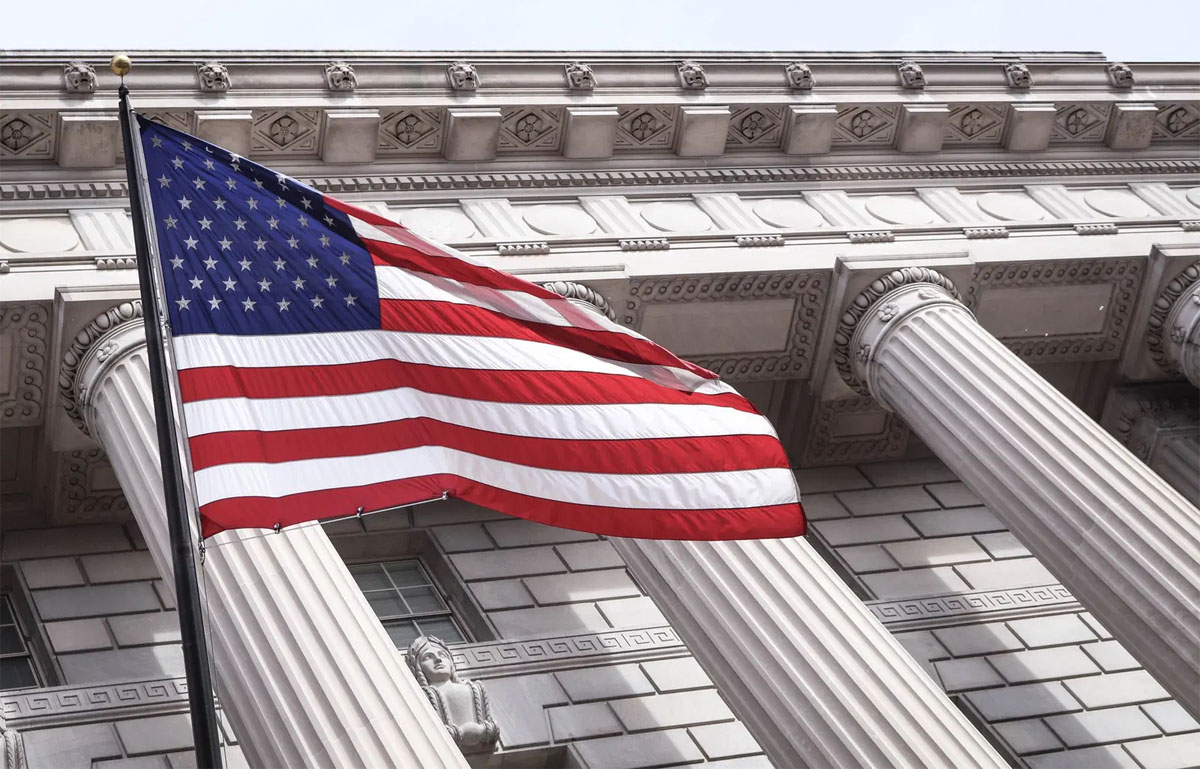
The United States government has imposed sweeping asset freezes and financial sanctions on eight Nigerians accused of having links to Boko Haram, the Islamic State of Iraq and the Levant (ISIL), and international cybercrime networks, as part of its expanded counter-terrorism and security measures.
The sanctions were contained in a 3,000-page document dated February 10, released by the Office of Foreign Assets Control (OFAC) under the United States Treasury Department. The publication, titled “Specially Designated Nationals and Blocked Persons List,” serves as an official notice of individuals and entities whose assets and financial interests have been blocked under US law.
According to the document, the action forms part of Washington’s broader efforts to disrupt terrorism financing, prevent extremist groups from accessing the global financial system, and combat cyber-enabled crime. OFAC stated that the list is designed to assist the public and financial institutions in complying with various US sanctions programmes.
Among those sanctioned is Salih Yusuf Adamu, also known as Salihu Yusuf, born August 23, 1990. He was identified as having ties to Boko Haram and was reported to hold a Nigerian passport. Yusuf was among six Nigerians convicted in 2022 in the United Arab Emirates for establishing a Boko Haram cell and attempting to transfer $782,000 from Dubai to Nigeria to fund insurgent activities.
READ ALSO:
- Terror in Lagos Traffic: Cutlass Gang Unleashes Mayhem on Mile 12–Ketu Road
- FG Drags El-Rufai to Court Over Alleged NSA Phone Interception
- Mystery in Lekki: Police Probe Death of Two Nollywood Crew Found Lifeless in Parked Car
Another individual listed is Babestan Oluwole Ademulero, born March 4, 1953, who was designated under terrorism-related sanctions. He appeared in the OFAC document under several aliases, including Wole A. Babestan and Olatunde Irewole Shofeso, reflecting the use of multiple identities linked to extremist networks.
The sanctions also include Abu Abdullah ibn Umar Al-Barnawi, also known as Ba Idrisa, reportedly born between 1989 and 1994 in Maiduguri, Borno State. He was flagged under terrorism-related provisions due to alleged involvement with extremist operations in Nigeria’s North-East.
Abu Musab Al-Barnawi, also referred to as Habib Yusuf, was listed as a senior Boko Haram figure, with his year of birth recorded between 1990 and 1995. He has long been associated with the group’s leadership and violent campaigns in the Lake Chad Basin.
Another name appearing twice in the publication is Khaled (or Khalid) Al-Barnawi, born in 1976 in Maiduguri. He was listed under multiple aliases, including Abu Hafsat and Mohammed Usman, and was linked to Boko Haram’s international support and logistics networks.
Ibrahim Ali Alhassan, born January 31, 1981, was also designated. He was reported to hold a Nigerian passport and reside in Abu Dhabi, United Arab Emirates, and was accused of providing support to Boko Haram through cross-border financial and operational channels.
Also sanctioned was Abu Bakr ibn Muhammad ibn Ali Al-Mainuki, also known as Abu-Bilal Al-Minuki, born in 1982 in Mainok, Borno State. He was identified as having ties to ISIL, marking the overlap between local insurgent groups and global jihadist movements.
In addition, Nnamdi Orson Benson, born March 21, 1987, was listed under CYBER2 sanctions for alleged involvement in international cybercrime and financial fraud, underscoring the US focus on digital threats alongside terrorism financing.
The sanctions mean that all property and interests belonging to the designated individuals within US jurisdiction are blocked, while US citizens and businesses are prohibited from engaging in any transactions with them. Foreign entities that knowingly assist the sanctioned persons risk facing secondary sanctions.
The latest designations come amid increased pressure from US lawmakers, who recently recommended visa bans and asset freezes against individuals and groups accused of religious freedom violations and the persecution of Christians in Nigeria. Those earlier recommendations included Rabiu Kwankwaso, the Miyetti Allah Cattle Breeders Association of Nigeria, and Miyetti Allah Kautal, although they were not part of the OFAC sanctions list.
The development also follows the decision by Donald Trump in October 2025 to re-designate Nigeria as a Country of Particular Concern over alleged violations of religious freedom. Nigeria was first placed on the list in 2020 but was later removed by Joe Biden after he assumed office.
Boko Haram was officially designated a foreign terrorist organisation by the United States in 2013. The group has been responsible for thousands of deaths and widespread displacement across Nigeria’s North-East and the Lake Chad Basin since 2009.
US authorities say the latest sanctions reaffirm Washington’s commitment to counter-terrorism, global security, and cybercrime prevention, while sending a strong signal to individuals and networks involved in extremist financing and digital fraud.
US Freezes Assets of Eight Nigerians Over Boko Haram, ISIL, Cybercrime Links
Auto
Appeal Court Ruling on VIO Limited to Abuja, Not Lagos — LASG
Appeal Court Ruling on VIO Limited to Abuja, Not Lagos — LASG
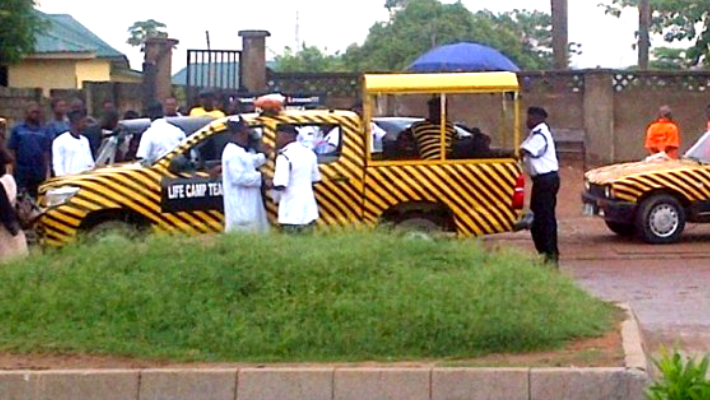
The Lagos State Government has dismissed widespread claims that a recent Court of Appeal judgment has stripped Vehicle Inspection Officers (VIOs) of their powers across Nigeria, insisting that the ruling applies strictly to the Federal Capital Territory (FCT).
The clarification follows public reactions to a decision of the Court of Appeal, Abuja Division, which upheld an earlier ruling of the Federal High Court restraining Vehicle Inspection Officers and the Directorate of Road Traffic Services in the FCT from stopping motorists, impounding vehicles, or imposing fines.
The judgment triggered viral interpretations suggesting that VIO operations had been outlawed nationwide.
However, Lagos State Attorney-General and Commissioner for Justice, Lawal Pedro, SAN, described such interpretations as legally inaccurate and misleading.
Basis of the Court Decision
According to Pedro, both the Federal High Court and the Court of Appeal premised their decisions on the absence of statutory authority empowering VIO officials in the FCT to stop, impound, confiscate vehicles, or impose fines on motorists.
READ ALSO:
- Terror in Lagos Traffic: Cutlass Gang Unleashes Mayhem on Mile 12–Ketu Road
- FG Drags El-Rufai to Court Over Alleged NSA Phone Interception
- Mystery in Lekki: Police Probe Death of Two Nollywood Crew Found Lifeless in Parked Car
“It is important to understand that the Honourable Judge of the Federal High Court and Justices of the Court of Appeal premised their decision on absence of statutory power conferred on the Respondents to stop, impound or confiscate vehicles and/or impose fines on motorists on roads in FCT Abuja,” he stated.
He noted that the courts did not declare vehicle inspection enforcement unconstitutional in Nigeria, but rather ruled specifically on the legal framework governing the FCT authorities involved in the suit.
Why Lagos Is Different
The Lagos government stressed that Nigeria’s federal structure allows states to legislate on residual matters such as road traffic management and vehicle inspection.
Pedro explained that Lagos operates under the Lagos State Transport Sector Reform Law, which expressly establishes and empowers the Vehicle Inspection Service (VIS).
Section 12(1) of the law authorises the VIS to:
Inspect and regulate the roadworthiness of vehicles
Conduct pre-registration inspections
Issue Road Worthiness Certificates
Collaborate with other relevant agencies to enforce traffic laws
In addition, Section 23(1) provides for penalties against offenders, subject to adjudication before mobile or magistrate courts, ensuring judicial oversight.
Not of Nationwide Effect
While acknowledging that the appellate decision is binding within the FCT, the Lagos government emphasised that it does not have automatic nationwide application.
“The judgment, though binding, is not of general application or of nationwide effect in Nigeria,” the ministry stated.
The state government stressed that VIS officers in Lagos remain legally empowered to carry out enforcement duties under extant state laws.
Wider Implications
The controversy underscores ongoing debates over traffic enforcement powers in Nigeria, particularly the constitutional boundaries between federal and state authorities.
Legal analysts note that unless the Supreme Court delivers a broader pronouncement on the issue, enforcement powers will continue to depend largely on the specific statutory framework establishing such agencies in each jurisdiction.
For now, Lagos authorities insist that vehicle inspection and traffic enforcement operations in the state remain valid and legally grounded.
Appeal Court Ruling on VIO Limited to Abuja, Not Lagos — LASG
metro
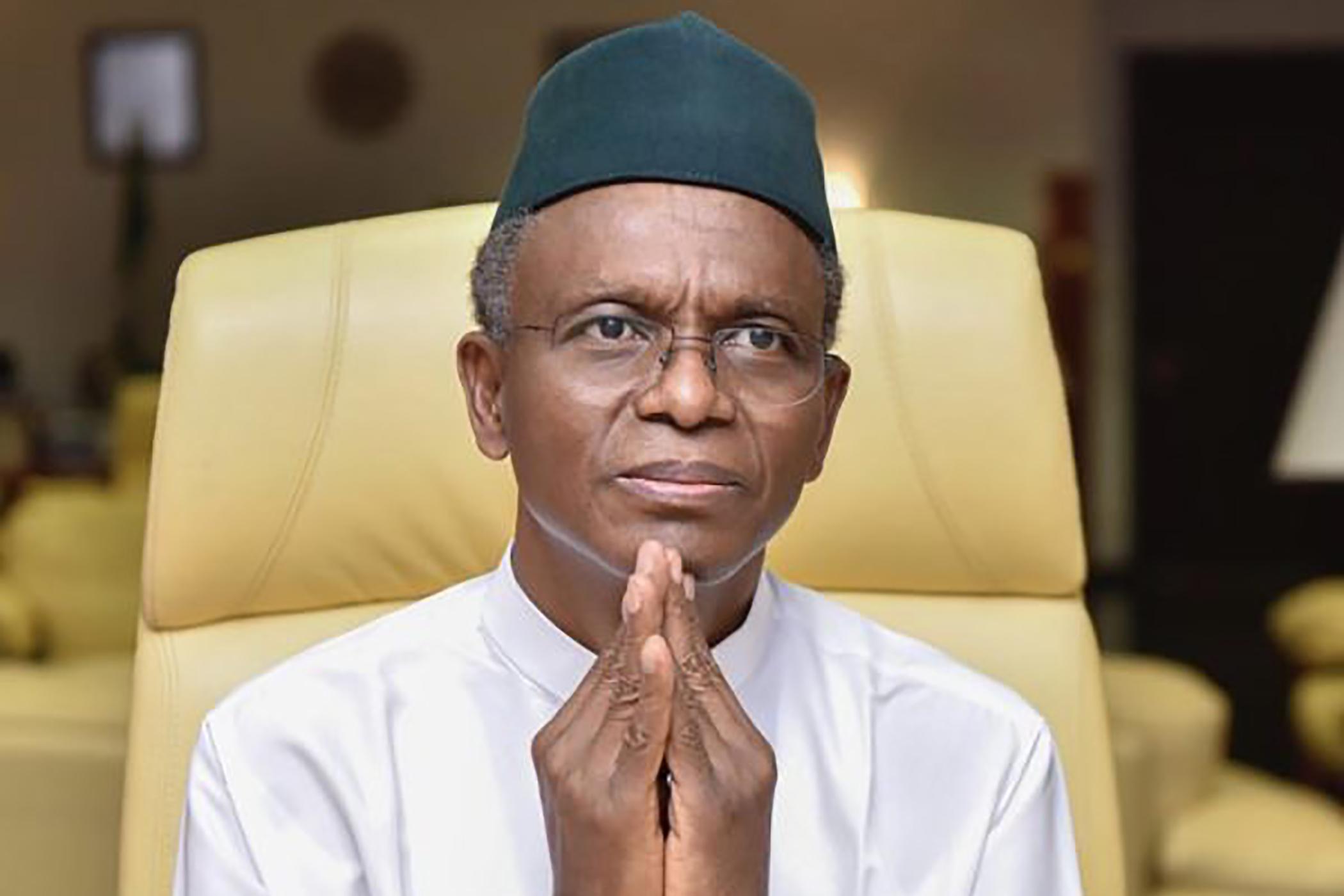
FG Drags El-Rufai to Court Over Alleged NSA Phone Interception
FG Drags El-Rufai to Court Over Alleged NSA Phone Interception
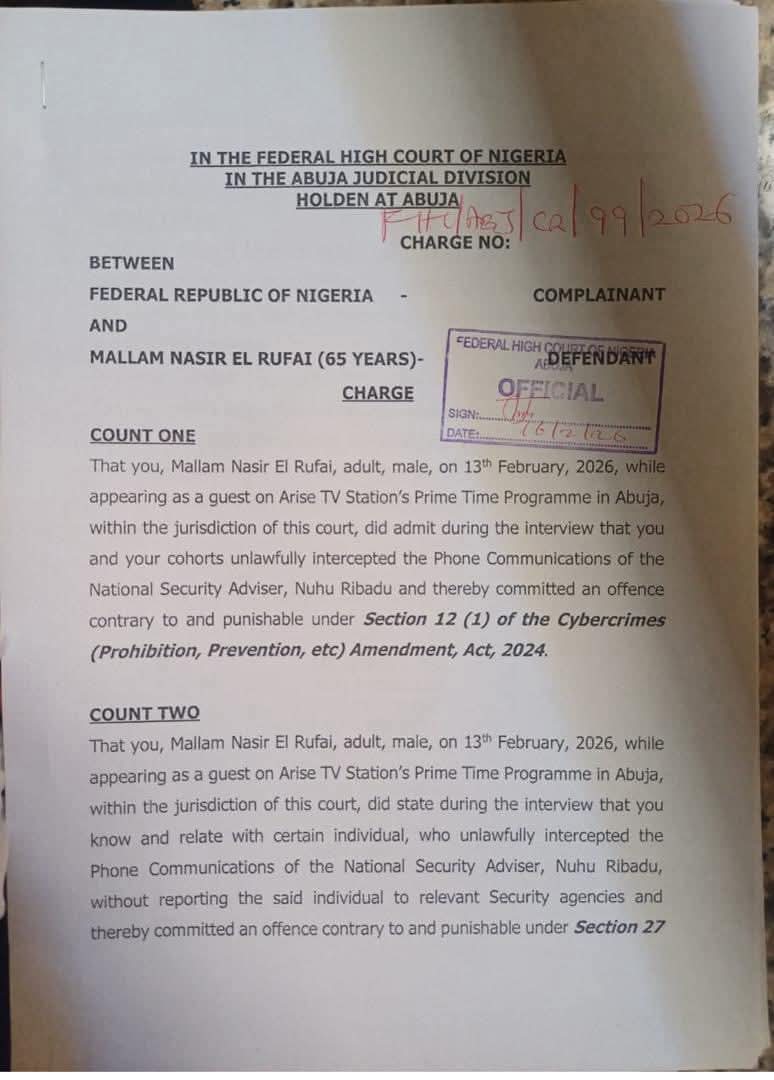
The Federal Government has filed a three-count criminal charge against former Kaduna State Governor, Nasir El-Rufai, accusing him of unlawfully intercepting the phone communications of the National Security Adviser (NSA), Nuhu Ribadu.
The charge, filed at the Federal High Court in Abuja through the Department of State Services (DSS), alleges that El-Rufai conspired with unnamed accomplices—said to be currently at large—to carry out the interception.
According to court documents, the alleged offence contravenes Section 12(1) of the Cybercrimes (Prohibition, Prevention, etc.) (Amendment) Act 2024.
The Federal Government further claimed that El-Rufai admitted involvement in the act during an appearance on Arise Television’s Prime Time programme on February 3.
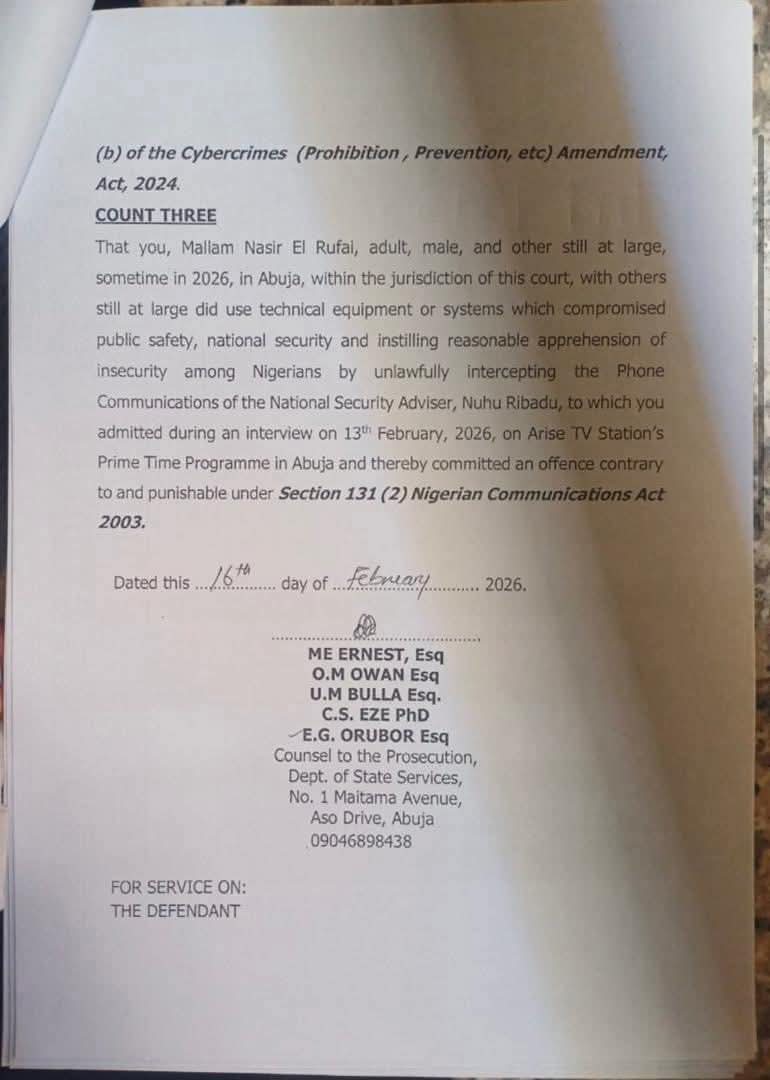
In the second count, prosecutors alleged that the former governor was aware that the NSA’s communications had been unlawfully intercepted but failed to report the breach to appropriate security agencies.
The third count accuses El-Rufai and his alleged collaborators of using technical equipment to intercept Ribadu’s calls in a manner that endangered public safety and national security.
The prosecution argued that the action created “reasonable apprehension” among Nigerians, contrary to Section 131(2) of the Nigerian Communications Act 2003.
El-Rufai, a former Minister of the Federal Capital Territory under President Olusegun Obasanjo and a prominent figure in an emerging opposition coalition critical of President Bola Tinubu’s administration, has yet to publicly respond to the charges.
Further proceedings in the case are expected to commence at the Federal High Court in Abuja.

-
 Education1 day ago
Check Your Name: UNILORIN Releases Updated NELFUND Refund List for 2024/2025 Students
-

 News17 hours ago
Osogbo Sons and Daughters Mark 5th Anniversary with Awards, Political Undertones
-

 metro2 days ago
Woman Arrested Over Murder of Nigerian E-Hailing Driver in South Africa
-

 metro2 days ago
Boko Haram Terrorists Release Video of 176 Abducted Kwara Residents
-

 News1 day ago
Afenifere Calls for Immediate Take-Off of State Police as Terror Threats Rise in Yorubaland
-
 metro3 days ago
Court Orders DIA to Produce Cleric Accused of Coup Plot by February 18
-
 metro1 day ago
US Military Boosts Support for Nigeria’s Fight Against Insurgency With Ammunition, Troop
-

 metro1 day ago
Argungu Festival 2026 Highlights Peace, Stability, Economic Growth — Tinubu