
Opinion
Tinubu, el-Rufai and the cobra
Tinubu, el-Rufai and the cobra
Tunde Odesola
(Published in The PUNCH, on Friday, February 20, 2026)
If they were not venomous, snakes would probably garland the necks of the rich and the influential to delineate social class. With a body handwoven by its Creator, the snake is the most awesome creature, epitomising engineering fluidity among wildlife. Its fleeting mobility, intricate symmetry, stretchy sinews, delicate precision and frightening fatality define a brute created without hurry.
If the Creator, in His infinite creativity, had swapped the rabies of the dog for the venom of the snake, the faintest bark would have sent feet fleeing, sticks wielding, and alarum bells ringing. Armed with just rabies as a weapon, the snake would have been handpickable like snails after rainfall; slithering and spitting alone do not deter like venom strike. Meat and skin, snakes are attractive.
If its venom was exchanged for rabies, the snake would probably have been Man’s best friend, barking through a slit mouth and narrow throat, without a noise. Before closing production on the evening of the Sixth Day, God assessed His production line; behold all things were bright and beautiful. So, he rested on the Seventh Day.
But Man and snake are not friends; one strikes the head, the other strikes the heel. This eternal enmity results in deaths within both camps, with the human casualty dripping with grief, while snakedom is griefless – Ọ̀dájú lọmọ ejò.
On the last day of January 2026, fast-rising soprano singer, Ifunanya Nwangene, curled up in bed, enjoying a sleep in her Abuja apartment. Later, a cobra crawled into bed with her. Ifunanya probably felt the snake crawl over her arm, and she tried to move her arm away from the uninvited visitor. When the cobra sensed that the arm, which was inanimate a while ago, was slowly becoming animate, it panicked and lashed out, sinking its fangs into the songbird’s wrist. With that split-second strike, the cobra blew out Ifunanya’s candles.
In minutes, a numbing pain in the wrist woke the songster up. She saw the bite and the swelling. Frantic, she made a call to her father, uncle and friends. This must be a bad dream, Ifunanya thought. Wake up, wake up, girl! But the Nightingale was slipping away. Death has crept in right in the safety of her room.
Following Ifunanya’s death, the BBC, in a February 7, 2026, story headlined “A singer’s tragic death highlights Nigeria’s snakebite problem,” reveals the controversy that trailed Ifunanya’s death. In the report, Ifunanya’s father, Christopher Nwangene, accused the Federal Medical Centre, Jabi, Abuja, of unprofessional treatment and lacking antivenom when she was rushed to the hospital. But the hospital refuted the allegations in a clap back, insisting that it had enough antivenom in stock and that Ifunanya received good treatment. The Chief Medical Director of the FMC, Saad Ahmed, explained that Ifunanya arrived over two hours after the snakebite. Ahmed’s allegation, however, beggars belief and raises the question: why would Ifunanya’s uncle and friend separately go in search of antivenoms and, indeed, buy some, if the hospital had the antidote?
READ ALSO:
- American Woman, 64, Alleges Embassy Mocked 27-Year-Old Fiancé Before Visa Denial
- Epstein, Ex-Israeli PM Named in Alleged Profiteering From Boko Haram Crisis
- CBN Policies, Foreign Inflows Drive Naira to Two-Year Peak
A nationwide backlash left a populace lamenting the preventable loss of a special talent. Christopher said the hospital’s medical staff should not have removed the tourniquet tied to her wrist to limit the venom from spreading to other parts of her body when the hospital did not have enough antivenom. Though the use of a tourniquet is no longer advisable as treatment for snakebite because it can cause tissue damage and increase the risk of amputation, Ifunanya’s father insisted that it was better for her daughter to be amputated than to die.
In its characteristic fire brigade method, the Nigerian Senate, without setting a timeline, called on the Federal Ministry of Health and the National Agency for Food and Drug Administration and Control to ensure hospitals across the country were stocked with safe, effective and affordable antivenoms. The Senate’s hollow directive typifies the futility of an imam’s rumbling stomach when presented with a dish of pork.
The lack of direction and commitment in the Senate directive on antivenom explains the lackadaisical legislation the nation gets when issues involve the masses, while diligence and speed attend legislation on issues that directly benefit lawmakers like constituency projects, car purchase and accommodation. The energy and time deployed by the Senate leadership under High Chief Godswill Akpabio to fight the Soyoyo from Kogi State, Senator Natasha Akpoti-Uduaghan, encapsulates the NFA metaphor of my youth. In my secondary school days, unserious students were called NFA, an acronym for No Future Ambition. Can the Nigerian masses attest that their National Assembly yesterday, today or tomorrow truly has people-oriented ambition, except talk loudly, cackle heartily, defect, and look towards the Presidency for patronage?
The venom economy, when measured through anti-venom and venom-derived therapeutics, is a multi-billion-dollar, fast-growing global market with respectable profitability driven by healthcare demand, innovation, and rising global incidence of venomous encounters. Nigeria, with its multitude of youth unemployment should tap into the global-venom market, but its clueless political class will not ensure any life-changing policy to push unemployment back.
When he was Health Minister six years ago, a former Speaker of the Lagos House of Assembly, Dr Olorunnimbe Mamora, described as ‘epidemic proportions’, the 20,000 snakebites recorded annually in Nigeria. That was six years ago. Today, the Toxinological Society of Nigeria says snakebite cases in Nigeria annually have climbed up to 43,000, making the need to produce antivenoms locally a matter of national duty. The Association of Community Pharmacists of Nigeria estimates that the country spends about $12million yearly importing antivenoms. A vial of imported antivenom, according to the BBC,costs between N45,000 and N80,000, necessitating the need for local production, export and job creation. But in Mamora’s alarm lay an underlying potential for the country to partake in the multi-billion-dollar global venom market, which included participants like scorpions, spiders, wasps, ants, etc.
The BBC report states that Nigeria’s snakebite “epidemic proportions” is “compounded by a critical shortage of affordable antivenom, which needs to be stored in fridges – often impossible in areas with unreliable electricity”. However, herbal medicine produced locally by traditional medicine practitioners does not need refrigeration. A 2005 study, “Effect of Annona senegalensis rootbark extracts on (cobra) Naja nigricotlis venom in rats,” published in the peer-reviewed Journal of Ethnopharmacology, showed the relative effectiveness of the rootbark of African custard apple in treating cobra venom.
READ ALSO:
- Edo Governor Okpebholo Names Mercy Johnson-Okojie Special Adviser
- Many Feared Dead as Suspected Lakurawa Militants Attack Kebbi Communities
- AMAC Polls Shock: Another PDP Candidate Withdraws from FCT Race, Backs APC
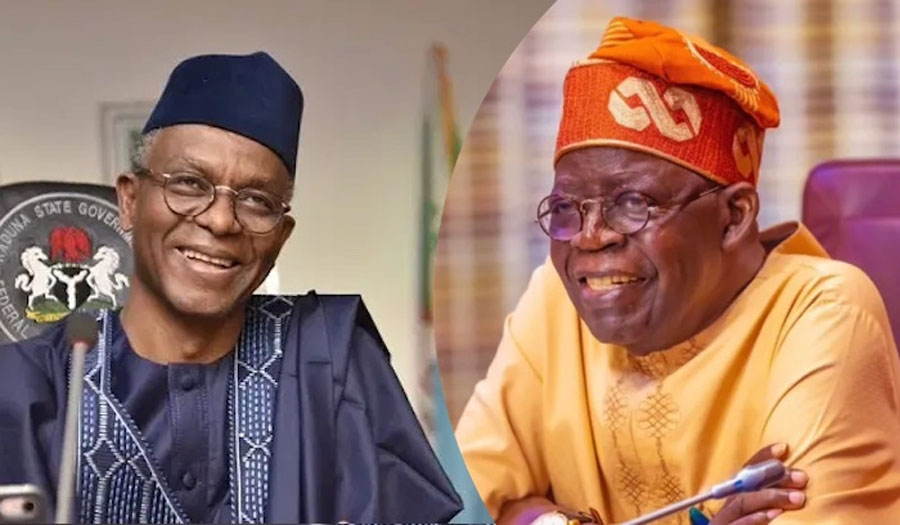
While the nation grappled with insecurity, hunger and poverty, there came a rumble from outside Aso Rock. A little mallam, Nasir el-Rufai, sat on a huge pile of peddles, singing a Fulani song, pelting the roof of the Villa with his pebbles. Aso Rock panicked. The embers of a recent coup are still glowing. When a fly perches on the scrotal sack, caution becomes the first commandment.
I daresay the former Kaduna State governor was the most vocal vendor of the Bola Tinubu electoral commodity to the North when members of the Fulani hegemony were afraid to openly side with the presidential candidacy of Tinubu while President Muhammadu Buhari reigned. Short men and daring deeds.
When everyone was afraid of Buhari, El-Rufai showed dogmatic courage and stood by his belief. And Tinubu won. After Tinubu’s victory, el-Rufai danced to Kizz Daniel’s Buga song with Tinubu over dinner. While Tinubu was bugga-ing in owambe fashion, el-Rufai was waltzing to Buga in the Fulani stick-across-the-neck dance style. I watched the dance again today. Laugh catch me. Between Tinubu and el-Rufai, someone was scratching their nose with the head of a cobra.
Before or after the deceitful dance, Tinubu publicly begged el-Rufai to come and work in his administration, and el-Rufai said he would work on a part-time basis because he had some personal issues to attend to. When Tinubu was compiling his list of ministers, el-Rufai also submitted his cv, but his name was shockingly flagged by security agencies.
I do not know what the mallam did to offend Jagaban, but I guess the President is just uncomfortable with the personality of the former governor. He probably sees Nasir as a stormy petrel who would be uncontrollable if allowed into the cabinet. The moral question that bubbles up from the depth of virtueless politics, therefore, is: “Why enlist el-Rufai to fight your battle when you knew you were going to dump him?”
Well, Nigerian politics lacked virtue before, during, and after the days of el-Rufai as Kaduna governor. In the murky waters of politics, fish eats fish, dog eats dog, snake eats snake. Tinubu is eating today; he might be eaten tomorrow.
So, when you see El-Rufai vehemently criticise Tinubu, e get why. No bi because of God. When Tinubu abuses Abubakar Atiku, na cruise. When Peter Obi knack Tinubu apako, na content. If Atiku tear Tinubu, na paddy-paddy matter. Dem all sabi wetin dem dey do. Dem go fight, dem go settle.
Nigerians love sports, especially football. In Brazil, football employs 3.3 million people, generating about $2bn annually. In the 2023/2024 season, the Premier League generated $6.34billion. Nollywood and the Nigerian music world, without government initiative, have grown to international repute, generating millions of dollars.
So, instead of our elected politicians and public officials snaking from one party to another in almajeri fashion, there should be a concerted national effort geared towards providing the dividends of democracy to the masses. Perhaps they have forgotten what the dividends of democracy are, here they are: security, healthcare, education, employment, welfare, infrastructure, etc.
Email: tundeodes2003@yahoo.com
Facebook: @Tunde Odesola
X: @Tunde_Odesola
Tinubu, el-Rufai and the cobra









Opinion
El Rufai’s Arise News mind game with Ribadu, By Farooq Kperogi

El Rufai’s Arise News mind game with Ribadu, By Farooq Kperogi
El Rufai’s Arise News mind game with Ribadu, By Farooq Kperogi
Opinion
Oshiomhole: Behold the 13th disciple of Christ
Oshiomhole: Behold the 13th disciple of Christ
Opinion
AFCON 2025: Flipping Content Creation From Coverage to Strategy

AFCON 2025: Flipping Content Creation From Coverage to Strategy
By Toluwalope Shodunke
The beautiful and enchanting butterfly called the Africa Cup of Nations (AFCON) emerged from its chrysalis in Khartoum, Sudan, under the presidency of Abdelaziz Abdallah Salem, an Egyptian, with three countries—Egypt, Sudan, and Ethiopia—participating, and Egypt emerging as the eventual winner.
The reason for this limited participation is not far-fetched. At the time, only nine African countries were independent. The remaining 45 countries that now make up CAF’s 54 member nations were either pushing Queen Elizabeth’s dogsled made unique with the Union Jack, making supplications at the Eiffel Tower, or knocking at the doors of the Palácio de Belém, the Quirinal Palace, and the Royal Palace of Brussels—seeking the mercies of their colonial masters who, without regard for cultures, sub-cultures, or primordial affinities, divided Africa among the colonial gods.
From then until now, CAF has had seven presidents, including Patrice Motsepe, who was elected as the seventh president in 2021. With more countries gaining independence and under various CAF leaderships, AFCON has undergone several reforms—transforming from a “backyard event” involving only three nations into competitions featuring 8, 16, and now 24 teams. It has evolved into a global spectacle consumed by millions worldwide.
Looking back, I can trace my personal connection to AFCON to table soccer, which I played alone on concrete in our balcony at Olafimihan Street—between Mushin and Ilasamaja—adjacent to Alafia Oluwa Primary School, close to Alfa Nda and Akanro Street, all in Lagos State.
Zygmunt Bauman, the Polish-British sociologist who developed the concept of “liquid modernity,” argues that the world is in constant flux rather than static, among other themes in his revelatory works.
For the benefit of Millennials (Generation Y) and Generation Z—who are accustomed to high-tech pads, iPhones, AI technologies, and chat boxes—table soccer is a replica of football played with bottle corks (often from carbonated drinks or beer) as players, cassette hubs as the ball, and “Bic” biro covers for engagement. The game can be played by two people, each controlling eleven players.
I, however, enjoyed playing alone in a secluded area, running my own commentary like the great Ernest Okonkwo, Yinka Craig, and Fabio Lanipekun, who are all late. At the time, I knew next to nothing about the Africa Cup of Nations. Yet, I named my cork players after Nigerian legends such as Segun Odegbami, Godwin Odiye, Aloysius Atuegbu, Tunji Banjo, Muda Lawal, Felix Owolabi, and Adokiye Amiesimaka, among others, as I must have taken to heart their names from commentary and utterances of my uncles resulting from sporadic and wild celebrations of Nigeria winning the Cup of Nations on home soil for the first time.
While my connection to AFCON remained somewhat ephemeral until Libya 1982, my AFCON anecdotes became deeply rooted in Abidjan 1984, where Cameroon defeated Nigeria 3–1. The name Théophile Abéga was etched into my youthful memory.
Even as I write this, I remember the silence that enveloped our compound after the final whistle.
It felt similar to how Ukrainians experienced the Battle of Mariupol against Russia—where resolute resistance eventually succumbed to overwhelming force.
The Indomitable Lions were better and superior in every aspect. The lion not only caged the Eagles, they cooked pepper soup with the Green Eagles.
In Maroc ’88, I again tasted defeat with the Green Eagles (now Super Eagles), coached by the German Manfred Höner. Players like Henry Nwosu, Stephen Keshi, Sunday Eboigbe, Bright Omolara, Rashidi Yekini, Austin Eguavoen, Peter Rufai, Folorunsho Okenla, Ademola Adeshina, Yisa Sofoluwe, and others featured prominently. A beautiful goal by Henry Nwosu—then a diminutive ACB Lagos player—was controversially disallowed.
This sparked outrage among Nigerians, many of whom believed the referee acted under the influence of Issa Hayatou, the Cameroonian who served as CAF president from 1988 to 2017.
This stroll down memory lane illustrates that controversy and allegations of biased officiating have long been part of AFCON’s history.
The 2025 Africa Cup of Nations in Morocco, held from December 21, 2025, to January 18, 2026, will be discussed for a long time by football historians, raconteurs, and aficionados—for both positive and negative reasons.
These include Morocco’s world-class facilities, the ravenous hunger of ball boys and players (superstars included) for the towels of opposing goalkeepers—popularly dubbed TowelGate—allegations of biased officiating, strained relations among Arab African nations (Egypt, Algeria, Tunisia, and Morocco), CAF President Patrice Motsepe’s curt “keep quiet” response to veteran journalist Osasu Obayiuwana regarding the proposed four-year AFCON cycle post-2028, and the “Oga Patapata” incident, where Senegalese players walked off the pitch after a legitimate goal was chalked off and a penalty awarded against them by DR Congo referee Jean-Jacques Ndala.
While these narratives dominated global discourse, another critical issue—less prominent but equally important—emerged within Nigeria’s media and content-creation landscape.
Following Nigeria’s qualification from the group stage, the Super Eagles were scheduled to face Mozambique in the Round of 16. Between January 1 and January 3, Coach Eric Chelle instituted closed-door training sessions, denying journalists and content creators access, with media interaction limited to pre-match press conferences.
According to Chelle, the knockout stage demanded “maximum concentration,” and privacy was necessary to protect players from distractions.
This decision sparked mixed reactions on social media.
Twitter user @QualityQuadry wrote:
“What Eric Chelle is doing to journalists is bad.
Journalists were subjected to a media parley under cold weather in an open field for the first time in Super Eagles history.
Journalists were beaten by rain because Chelle doesn’t want journalists around the camp.
Locking down training sessions for three days is unprofessional.
I wish him well against Mozambique.”
Another user, @PoojaMedia, stated:
“Again, Eric Chelle has closed the Super Eagles’ training today.
That means journalists in Morocco won’t have access to the team for three straight days ahead of the Round of 16.
This is serious and sad for journalists who spent millions to get content around the team.
We move.”
Conversely, @sportsdokitor wrote:
“I’m not Eric Chelle’s biggest supporter, but on this issue, I support him 110%.
There’s a time to speak and a time to train.
Let the boys focus on why they’re in Morocco—they’re not here for your content creation.”
From these three tweets, one can see accessibility being clothed in beautiful garments. Two of the tweets suggest that there is only one way to get to the zenith of Mount Kilimanjaro, when indeed there are many routes—if we think within the box, not outside the box as we’ve not exhausted the content inside the box.
In the past, when the economy was buoyant, media organisations sponsored reporters to cover the World Cup, Olympics, Commonwealth Games, and other international competitions.
Today, with financial pressures mounting, many journalists and content creators seek collaborations and sponsorships from corporations and tech startups to cover sporting events, who in turn get awareness, brand visibility, and other intangibles.
As Gary Vaynerchuk famously said, “Every company is a media company.” Yet most creators covering AFCON 2025 followed the same playbook.
At AFCON 2025, most Nigerian journalists and content creators pitched similar offerings: on-the-ground coverage, press conferences, team updates, behind-the-scenes footage, analysis, cuisine, fan interactions, and Moroccan cultural experiences.
If they were not interviewing Victor Osimhen, they were showcasing the stand-up comedy talents of Samuel Chukwueze and other forms of entertainment.
What was missing was differentiation. No clear Unique Selling Proposition (USP). The result was generic, repetitive content with little strategic distinction. Everyone appeared to be deploying the same “Jab, Jab, Jab, Hook” formula—throwing multiple jabs of access-driven content in the hope that one hook would land.
The lesson is simple: when everyone is jabbing the same way, the hook becomes predictable and loses its power.
As J. P. Clark wrote in the poem “The Casualties”, “We are all casualties,” casualties of sameness—content without differentiation. The audience consumes shallow content, sponsors lose return on investment, and creators return home bearing the “weight of paper” from disappointed benefactors.
On November 23, 1963, a shining light was dimmed in America when President John F. Kennedy was assassinated.
As with AFCON today, media organisations sent their best hands to cover the funeral, as the who’s who of the planet—and if possible, the stratosphere—would attend. Unconfirmed reports suggested that over 220 VVIPs were expected.
While every newspaper, radio, and television station covered the spectacle and grandeur of the event, one man, Jimmy Breslin, swam against the tide. He chose instead to interview Clifton Pollard, the foreman of gravediggers at Arlington National Cemetery—the man who dug John F. Kennedy’s grave.
This act of upended thinking differentiated Jimmy Breslin from the odds and sods, and he went on to win the Pulitzer Prize in 1986.
Until journalists and content creators stop following the motley and begin swimming against the tide, access will continue to be treated as king—when in reality, differentiation, aided by strategy, is king.
When every journalist and content creator is using Gary Vaynerchuk’s “Jab, Jab, Jab, Hook” template while covering major sporting events, thinkers among them must learn to replace one jab with a counterpunch—and a bit of head movement—to stay ahead of the herd.
Toluwalope Shodunke can be reached via tolushodunke@yahoo.com

-

 News3 days ago
Saudi Arabia Confirms Sighting of Ramadan Crescent, Fasting Begins Wednesday
-

 metro3 days ago
Lagos Woman Shares Ordeal After Alleged Rape, Sparks Nationwide Outcry
-

 News3 days ago
Ramadan Begins in Nigeria as Sultan Confirms Crescent Sighting
-

 International19 hours ago
Canada Opens New Express Entry Draw for Nigerian Workers, Others
-
 metro2 days ago
Seven Killed in Horrific Crash at Ota Toll Gate
-
 metro3 days ago
Deadlock at National Assembly as House Snubs Electoral Act Bill Meeting on E-Transmission Clause
-
 News2 days ago
Korope Drivers Shut Down Lekki–Epe Expressway Over Lagos Ban (Video)
-

 Health2 days ago
Ramadan Health Tips: Six Ways to Stay Hydrated While Fasting