

metro
Train attack: Terrorists contact hostages’ families

•Sober mood at bank over MD’s abduction •They use buses to take away victims, says survivor •Amaechi: we need N8b to replace four coaches •Two-kilometre rail tracks destroyed •Helicopters, drones to shadow trains •Governors: violent attacks threaten our capacity •Katsina commissioner loses finger •El-Rufai: we are at war
The terrorists who attacked a Kaduna-bound train and abducted unspecified number of passengers on Monday, have contacted their families.
They are yet to demand ransom, the families said yesterday.
No fewer than eight people, including Trade Union Congress (TUC) Secretary-General Musa Ozigi-Lawal, TUC Kwara State chapter Chairman Akin Akinsola, National Board of Technical Education (NBTE) director at Kaduna office, Abdul Isa Kofar-Mata and a dentist Dr Chinelo Nwandowere killed by the gunmen. About 41 others were injured.
A member of one of the families told our correspondent that the abductors informed them that their family members and many other passengers were safe.
The family member, who pleaded not to be named for security reasons, said the bandits made a telephone call on Tuesday night.
”They told us our sister and other missing passengers were with them in their camps and that she was safe. They didn’t say more than that before ending the call.
”We are scared. We are just praying for God’s intervention and her safety. We are pleading with the kidnappers to release her for us,” he said.
A journalist, whose mother and sister were kidnapped, said the bandits also contacted his brother.
He said his mother and sister arrived in Nigeria from Saudi Arabia and boarded the train to Kaduna.
”My mum and sister were on the train and are among those not accounted for.
”The bandits have contacted my brother but didn’t ask for ransom yet. They have told us that my mum and sister are with them in the forest.
READ ALSO:
- NDLEA busts five-member airport drug syndicate, seizes N19.8m cash
- IPOB protests move to name Second Niger Bridge after Buhari
- Drug War: FG approves N1bn for eye lie detector, goggle for NDLEA
”Please, join in prayer for their safe return. We are praying fervently that nothing bad will happen to them and others in their custody,” the journalist said.
Staff members of the Bank of Agriculture (BOA), whose Managing Director Alwan Hassan is still missing, were in a sober mood at the headquarters in Kaduna.
Some of the survivors yesterday accounted their encounter with the terrorists in interview with our correspondent.
The Federal Government said it was working on measures to ensure there are no further attacks on trains, including recruiting villagers to secure the tracks and deploying aircraft and drones.
The police have acquired five additional high-powered unmanned Aerial Vehicles (UAVs), otherwise known as drones.
The Inspector-General of Police (IGP), Usman Baba, in a statement by the Acting Force Public Relations Officer, Olumuyiwa Adejobi, a chief superintendent of police (CSP), said the equipment was part of a policy to integrate the use of innovative technology in law enforcement duties.
”The drones will assist the [olice in monitoring active crime scenes, coordinating response operations, and providing aerial support to responding officers.
”The UAVs include an ALTI Transition, capable of covering up to 150km in a single flight with high endurance of up to 14 hours, and an Elistair Orion fixed-wing aircraft, capable of covering up to 92m altitude with high endurance of up to 50 hours and other sensitive and forensic-based features,” he said.
A police source said most of the drones will be deployed to monitor the Kaduna/Abuja rail track.
Minister of Transportation, Rotimi Amaechi, said there were plans to work with the Department of State Services (DSS) to employ villagers to man the rail tracks.
He thinks Monday’s attack succeeded because the Airforce could not deploy aircraft to accompany the train due to poor weather.
Amaechi said the Airforce had promised to resume escorting the train when operations resume, pending the installation of the integrated security surveillance and monitoring solution.
He spoke in Kaduna during a visit to the victims.
Amaechi said the damage caused by the attack would require significant expenses to repair. He put the cost at N8billion.
He said: “The level of damage supersedes the request we made for the purchase of equipment that will help install security, especially as it pertains to surveillance.
”We are going to repair the track, between one and a half to two kilometres and that is huge. We are going to replace the locomotives. About one or two of the coaches were damaged. We are going to buy some coaches.
THE NATION






metro
Nigeria Wins $3.38bn Mambilla Arbitration Battle As ICC Rejects Sunrise Claims
Nigeria Wins $3.38bn Mambilla Arbitration Battle As ICC Rejects Sunrise Claims
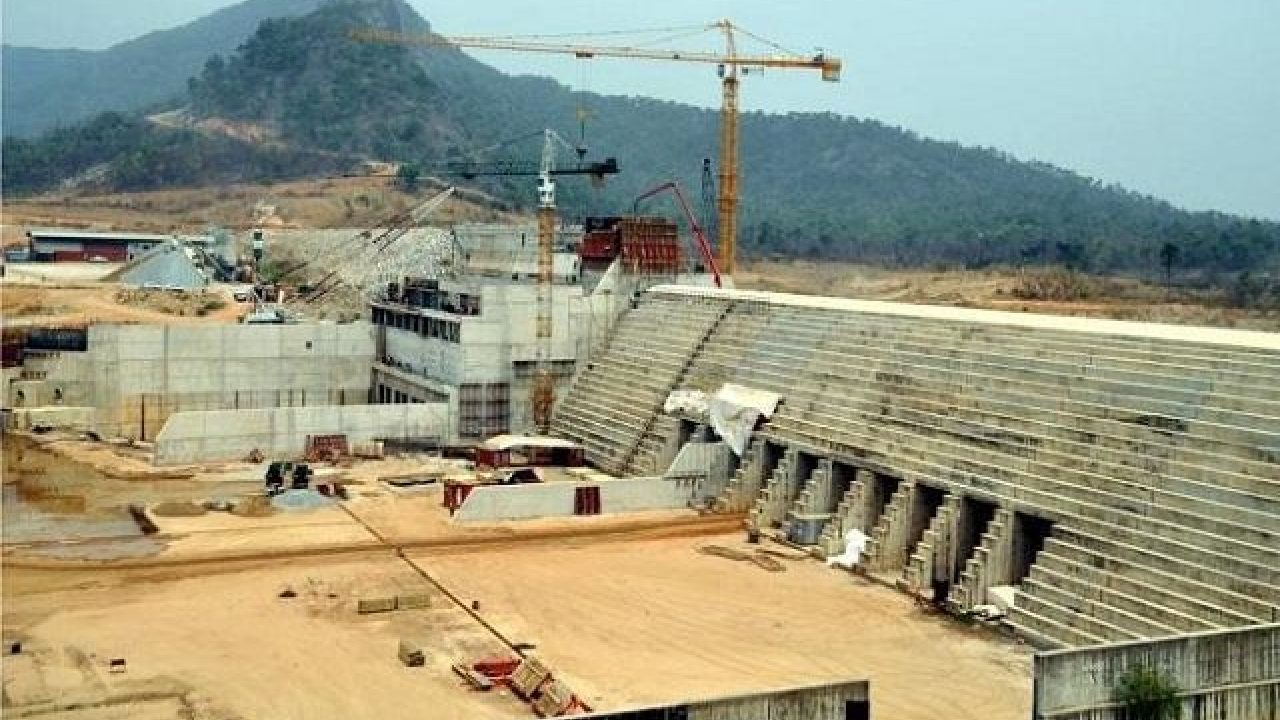
Nigeria has won a major international arbitration battle over the long-delayed Mambilla Hydroelectric Power Project, after an International Chamber of Commerce (ICC) tribunal in Paris rejected claims by Sunrise Power and Transmission Company Limited that had put the country’s potential financial exposure at more than $3.38 billion.
The ruling, issued on September 17, 2026, is a significant development for the proposed 1,500MW Mambilla power project in Taraba State, which has been stalled for years by a combination of legal, contractual, financing and implementation challenges.
President Bola Ahmed Tinubu welcomed the decision, describing it as the removal of what he called the biggest legal obstacle to the project’s progress.
The dispute dates back to a 2003 agreement concerning the development of the Mambilla project. Sunrise Power subsequently commenced arbitration proceedings against Nigeria at the ICC in October 2017, initially seeking about $2.35 billion over an alleged breach of contract.
The parties later entered into a settlement agreement in 2020 under which Nigeria was to pay Sunrise $200 million. A subsequent disagreement over the implementation of that agreement led to another arbitration.
In the latest proceedings, Sunrise sought about $680 million, including the settlement sum and interest. A separate claim connected to disputes over the development of the Mambilla project was valued at more than $2.7 billion in compensation and interest.
Together, the related claims created potential exposure of more than $3.38 billion for Nigeria.
The ICC tribunal rejected Sunrise’s claim that Nigeria had breached its obligations under the settlement agreement and its addendum. It also dismissed the company’s request for Nigeria to pay $400 million, comprising the $200 million settlement sum and an additional $200 million claimed as a default payment.
READ ALSO:
- 2027: Sowore Says He’d Rather Die Than Travel Abroad For Medical Treatment
- Toyin Abraham Rejects Lagos APC Campaign Council Inclusion
- FG Suspends Niger NSCDC Commandant As 37 Suspected Illegal Miners Die In Custody
The tribunal further held that Leno Adesanya, the promoter of Sunrise Power, was bound by the arbitration agreement under the settlement arrangement. It also confirmed its jurisdiction over Nigeria’s counterclaim against Adesanya and his firm.
Rather than ordering Nigeria to pay the amounts sought by Sunrise, the tribunal directed Sunrise and Adesanya to reimburse Nigeria for 75 per cent of its legal fees and expenses incurred in the arbitration.
The legal costs were assessed at approximately $11.82 million. About $2.5 million is expected to be recovered from funds held in escrow by the ICC, while Sunrise and Adesanya are required to pay the remaining $9.32 million, with interest at 10 per cent annually, compounded annually, from notification of the final award until payment.
The tribunal also fixed the arbitration costs at approximately $1.66 million, with Sunrise and Adesanya responsible for 75 per cent and Nigeria responsible for the remaining 25 per cent.
The three-member tribunal was chaired by Melaine van Leeuwen, with Stavros Brekoulakis and Simon Nesbitt serving as co-arbitrators. Nigeria’s external legal team was led by Elizabeth Oger-Gross and Tolu Obamuroh of Paul Hastings LLP.
The outcome ends a major phase of a dispute that has followed the Mambilla power project for nearly a decade in international arbitration and more than two decades from the original project agreement.
The original proposal envisaged a 3,050MW hydroelectric plant in Taraba State under a build-operate-transfer arrangement. The project was subsequently revised as the government sought to reduce its cost and improve its prospects of attracting financing.
In 2021, the Federal Government announced that the planned capacity would be reduced by about half, from 3,050MW to approximately 1,525MW. The scheme was subsequently rescoped to around 1,500MW to make it more financially viable and “bankable” for lenders.
The original project had been associated with an estimated cost of roughly $5 billion to $5.8 billion, while the rescoped project has been put at around $4 billion in previous government discussions.
The prolonged delay has meant that the Mambilla scheme has yet to become an operational source of electricity despite its potential to significantly increase Nigeria’s generation capacity.
President Tinubu, in his reaction to the ICC ruling, commended Attorney-General of the Federation and Minister of Justice, Lateef Fagbemi, officials of the Federal Ministry of Justice and Nigeria’s external legal team for their role in defending the country.
He also acknowledged former President Olusegun Obasanjo and the late former President Muhammadu Buhari, who testified during the arbitration proceedings, as well as former Ministers of Power Babatunde Fashola and Suleiman Adamu and other witnesses and experts.
Tinubu also credited the National Security Adviser and the Economic and Financial Crimes Commission (EFCC) for their roles in the broader matter.
The President said Nigeria remained committed to working with genuine investors and honouring its legal obligations while defending the country against claims it considers detrimental to the national interest.
The original 2003 contract has also been the subject of separate domestic legal proceedings and investigations. Tinubu said the contract was not authorised by the Federal Executive Council (FEC). Those domestic proceedings are distinct from the ICC arbitration, which has now been decided in Nigeria’s favour.
The arbitration victory, however, does not mean that the 1,500MW Mambilla project is immediately ready for construction or electricity generation.
The government still has to address major issues involving project financing, construction, engineering, transmission infrastructure and implementation arrangements. Previous plans have included financing discussions involving the Export-Import Bank of China, while the project’s restructuring was intended to improve its bankability.
With the arbitration dispute now resolved, the focus shifts to securing the funding and completing the arrangements required to move the Mambilla project from a long-delayed proposal to actual construction and, ultimately, electricity generation.
Nigeria Wins $3.38bn Mambilla Arbitration Battle As ICC Rejects Sunrise Claims
metro
FG Suspends Niger NSCDC Commandant As 37 Suspected Illegal Miners Die In Custody
FG Suspends Niger NSCDC Commandant As 37 Suspected Illegal Miners Die In Custody
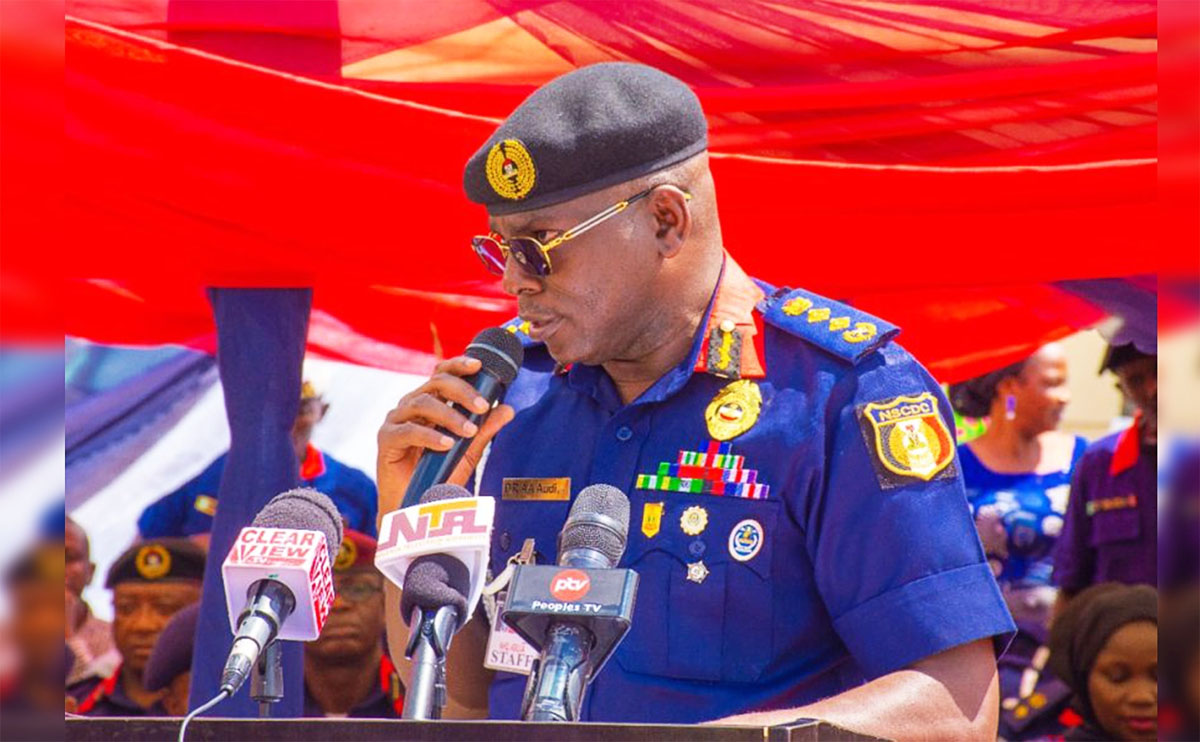
The Federal Government has suspended the Niger State Commandant of the Nigeria Security and Civil Defence Corps (NSCDC), Suberu Siyaka Aniviye, following the deaths of 37 suspected illegal miners in the Corps’ custody in Minna, Niger State.
The suspension was ordered by the Minister of Interior, Olubunmi Tunji-Ojo, on Friday, September 18, 2026, alongside a directive for a full investigation into the circumstances surrounding the deaths.
The incident occurred after the NSCDC carried out enforcement operations against suspected illegal mining activities in parts of Niger State on September 15 and 16. The operation reportedly focused on the M.I. Wushishi and Lukoto areas of Minna, where scores of suspects were arrested and various exhibits recovered.
The deaths were discovered in the early hours of Thursday, September 17, after the suspects had been taken into custody.
The Niger State NSCDC initially attributed the deaths to a suspected disease outbreak, but the Corps’ national headquarters subsequently cautioned against drawing conclusions about the cause of death before medical and laboratory examinations were completed.
The NSCDC said the bodies had been deposited at the General Hospital, Minna, for medical examination to establish the actual cause of death.
Although early reports put the death toll at 33, Niger State Governor Mohammed Umaru Bago confirmed that 37 suspected illegal miners had died in custody.
The differing figures reported in the immediate aftermath underscore the importance of the ongoing investigation and medical examination in establishing the definitive number of victims and the circumstances of each death.
Following the incident, NSCDC Commandant-General Ahmed Abubakar Audi ordered the constitution of a high-powered investigative team headed by the Deputy Commandant-General in charge of Intelligence and Investigation.
READ ALSO:
- 2027: Sanwo-Olu, Fashola, Ambode Join Lagos APC Campaign Council
- Anambra Debt Row: Presidency Challenges Peter Obi as State Releases N127.4bn Loan Records
- South African Woman Jailed 25 Years for Smuggling 5.75kg Heroin into Nigeria
The team is expected to investigate the condition of the suspects when they were arrested, the period they spent in custody, the conditions of their detention, the medical attention provided to them and other circumstances that may have contributed to the deaths.
The NSCDC also directed that the health and welfare of all persons still in its custody be given priority, while appropriate measures are taken to protect personnel who may have had contact with the affected detainees.
The Corps said it would refrain from speculating about the cause of the deaths until the outcome of the medical examination is available. It stressed that reports linking the deaths to a particular disease had not been medically or scientifically established.
Meanwhile, police authorities in Niger State have opened a separate investigation into the deaths.
The development has also raised questions about the conditions in which the suspects were detained.
A survivor, Dauda Shehu, reportedly said about 65 detainees were held in an overcrowded and poorly ventilated cell. He said some detainees struggled to breathe and banged on the cell door in an attempt to attract the attention of security personnel.
A preliminary intelligence account also suggested that overcrowding and poor ventilation may have contributed to the deaths. However, these remain preliminary accounts and have not been established as the official cause of death.
The official explanation that a possible disease outbreak was involved has also come under scrutiny, with authorities stressing that only medical and laboratory examinations can determine whether disease played any role.
Governor Bago has described the incident as tragic and declared three days of mourning in honour of the deceased.
The Niger State Government also postponed an APC campaign rally scheduled for September 19 in Minna following the deaths.
The Federal Government’s decision to suspend the Niger State NSCDC commandant came a day after the Corps announced its internal investigation.
Tunji-Ojo said the commandant would remain suspended while the investigation continued, stressing that the government had a responsibility to protect lives.
The minister also appealed for calm and urged members of the public to remain law-abiding while the investigation is conducted. He expressed condolences to Governor Bago and the families and relatives of the deceased.
The incident has brought renewed attention to the risks associated with illegal mining in Niger State, where artisanal and small-scale mining activities remain widespread.
Niger State is rich in mineral resources and attracts artisanal miners, particularly those involved in gold mining. Authorities have intensified operations against illegal mining because of concerns over environmental damage, unsafe mining practices and links between illicit mining and criminal networks in parts of the country.
However, the immediate focus of the investigations is the deaths in custody and the treatment of the detainees between their arrest and the discovery of their bodies.
The key issues expected to be addressed include the exact number of people who died, their physical condition at the time of arrest, the number of detainees held at the facility, the adequacy of ventilation and other detention conditions, access to medical care, the timeline of events and the precise medical cause of death.
The NSCDC investigation, the police inquiry and the medical examinations are expected to provide a clearer account of what happened and whether any failures occurred in the handling or detention of the suspects.
Until those investigations are concluded, authorities have not established an official cause of death beyond confirming that the detainees died while in NSCDC custody.
FG Suspends Niger NSCDC Commandant As 37 Suspected Illegal Miners Die In Custody
metro
South African Woman Jailed 25 Years for Smuggling 5.75kg Heroin into Nigeria
South African Woman Jailed 25 Years for Smuggling 5.75kg Heroin into Nigeria
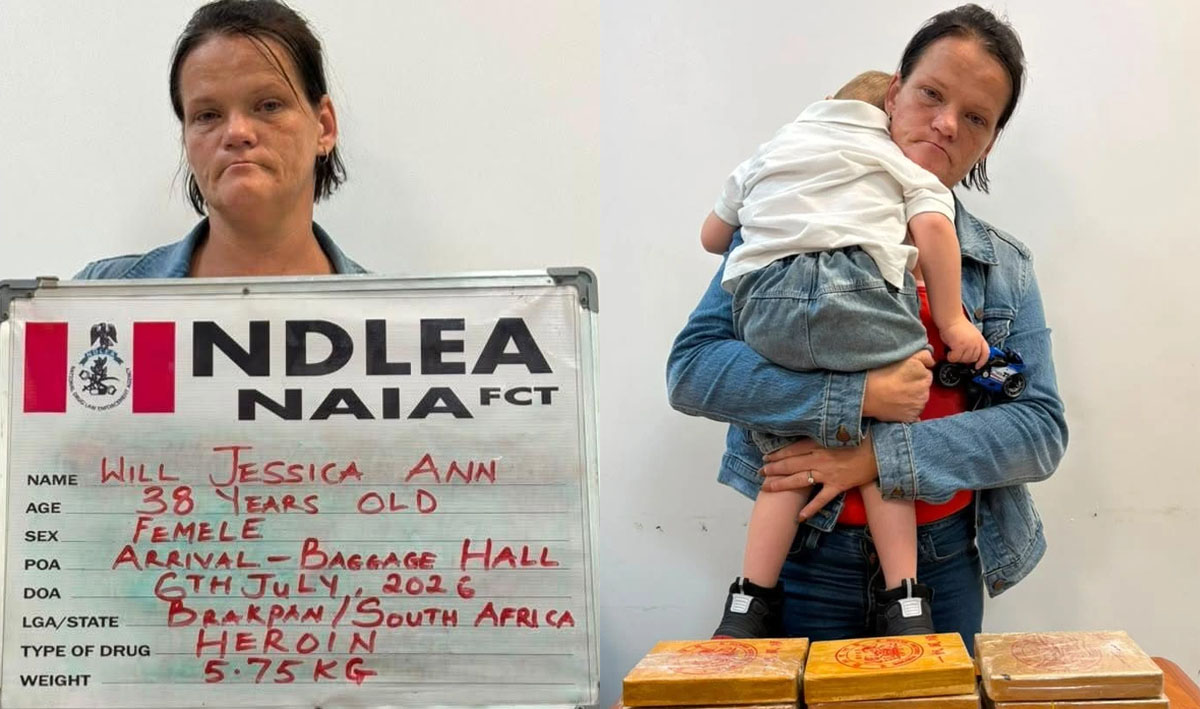
A Federal High Court in Abuja has sentenced a 38-year-old South African woman, Will Jessica Ann, to 25 years in prison for importing 5.75 kilogrammes of heroin into Nigeria through the Nnamdi Azikiwe International Airport, Abuja.
Justice Obiora Egwuatu handed down the sentence after Ann pleaded guilty to charges brought against her by the National Drug Law Enforcement Agency (NDLEA).
The defendant was sentenced to 15 years on the first count and 25 years on the second count, with both terms ordered to run concurrently. This means she will serve a maximum of 25 years, rather than 40 years.
The case dates back to July 6, 2026, when NDLEA operatives intercepted Ann during the inward clearance of passengers arriving on Qatar Airways Flight QR1433 from Doha at the Abuja airport.
Ann was travelling with her three-year-old son when she was stopped by anti-narcotics officers.
READ ALSO:
- Adunni Ade Reveals Christian Fans Unfollowed Her After Publicly Identifying as Muslim
- Jetour Set to Storm Abuja Show with Rugged Luxury T2
- 25 Universities, Teaching Hospitals Get Solar Power Under REA Programme
According to details presented in court, the NDLEA said Ann initially denied having any checked-in luggage. However, operatives reportedly established that two suitcases containing the illicit substance carried baggage tags corresponding with the claim tags attached to her passport.
The agency said the two suitcases contained 14 large blocks of heroin, weighing a total of 5.75kg.
Ann reportedly admitted ownership of the luggage and told investigators that she had travelled from Cambodia through Doha before arriving in Abuja.
During the proceedings, the prosecution also told the court that Ann had admitted to conspiring with Jan Coenraad De Jager, a South African man who remains at large.
She was subsequently arraigned on a two-count charge bordering on conspiracy and unlawful importation of heroin under the relevant provisions of the law.
Ann pleaded guilty to the charges in August, prompting the prosecution to present the facts of the case before the court proceeded to sentencing.
The court was told that the seized heroin had an estimated street value of about ₦103.5 million, based on an estimated value of approximately ₦18 million per kilogramme.
Ann pleaded for leniency, expressed remorse and promised not to engage in drug trafficking again. She also told the court that she did not know there were illicit drugs in the bags.
After considering the facts of the case, Justice Egwuatu sentenced her to 15 years on Count One and 25 years on Count Two, directing that the sentences run concurrently.
The court also ordered that the seized heroin should be destroyed if the convict does not appeal within the period prescribed by law.
The case is part of the NDLEA‘s efforts to intercept illicit drug consignments being brought into Nigeria through international airports and other entry points.
The seizure at Abuja airport, followed by the defendant’s guilty plea and conviction, has resulted in the 25-year custodial sentence imposed by the Federal High Court.
South African Woman Jailed 25 Years for Smuggling 5.75kg Heroin into Nigeria
-

 International2 days ago
Islamic Council Condemns Attempted Attack on Holy City of Mecca
-

 metro3 days ago
Lagos Power Outage: Ikeja Electric Blames TCN as Businesses, Homes Groan
-
 Politics3 days ago
2027: APC Governors Reject Wike’s Rainbow Coalition, Insist on Party Loyalty
-
 News2 days ago
Keep Politics Out of My Office — Ogbomoso Grand Chief Imam Warns Politicians, Bloggers
-

 metro1 day ago
Niger Mosque Abductions: Terrorists Execute 30 of 500 Captive Muslim Worshippers
-

 International3 days ago
US Court Blocks Trump Visa Rule Limiting Stay of Foreign Students, Journalists
-

 metro3 days ago
A Son Wouldn’t Have Done Better — Dangote Speaks on Daughters, Succession
-

 Entertainment2 days ago
BREAKING: Olu Jacobs Dies at 84, Atiku Mourns Cultural Icon