

metro
Two minors arrested for self-kidnapping in Ondo

Two minors arrested for self-kidnapping in Ondo
Two teenagers who allegedly orchestrated their own kidnap and demanded the sum of N100,000 as ransom were among the 18 suspected kidnappers paraded on Monday, by men of the Ondo State Security Network Agency, Amotekun.
The siblings, aged 15 and 13 years, who are in Junior Secondary School 3 and Senior Secondary School 1, told newsmen that the plan was initiated to punish their mother who used to maltreat and make life miserable for them.
One of the girls said “I was the one who initiated the plan because I wanted to punish my mother, who has been behaving as if she is not my mother. I never wanted to use the money for anything but just to punish her.”
Speaking on the arrest of the two young girls, the Amotekun commander, Adetunji Adeleye, said the two minors from Oka-Akoko, Akoko South West Local Government Area of the state, kidnapped themselves and demanded N100,000 ransom from their parents and the traditional ruler of the community.
Adeleye said the two girls were arrested in a hotel after staying in the hotel for four days and said “their parents raised an alarm that their children were kidnapped and reported at Amotekun office, and we swung into action but when they called for ransom we tracked their number and we were able to arrest them, but the young girls attributed their action to the high handedness of their mother.
READ ALSO:
- BREAKING: APC NWC officially confirms resignation of Adamu, Omisore
-
Police nab 6 boys for gang-raping 19-year-old girl in Anambra
-
Nigeria records 170 Lassa fever deaths in 2023 – NCDC
“We appreciate the Department of State Service (DSS) for assisting us in apprehending them. When they were negotiating, they even threatened the traditional ruler that if the ransom was not paid within two hours they are going to kill the victims without knowing that they are the criminals perpetrating the act.”
He also disclosed that a middle-aged woman, identified as Ajara Salamat was apprehended by the security operatives for preparing food for kidnappers and kidnapped victims, providing daily needs for the kidnappers in the forest.
He said “We have Coker Noah who held two ladies hostage and employed two other men to torture and rape them for weeks before one of the victims had access to the phone and called us and we were able to apprehend them.
“Also, we have a family where the mother specializes in buying daily needs including food for kidnap suspects and victims in Owo and Ifon.
“We equally apprehended some kidnappers in the forest with several ATMs found on them, which they could not explain how they came about it but we suspect that the ATMs belong to the victims they held hostage and a lot of other things which they could not justify how it came to them”
Two minors arrested for self-kidnapping in Ondo








metro
Oyoland Grand Chief Imam Celebrates Dr Sharafudeen Raji for Service to Islam
Oyoland Grand Chief Imam Celebrates Dr Sharafudeen Raji for Service to Islam
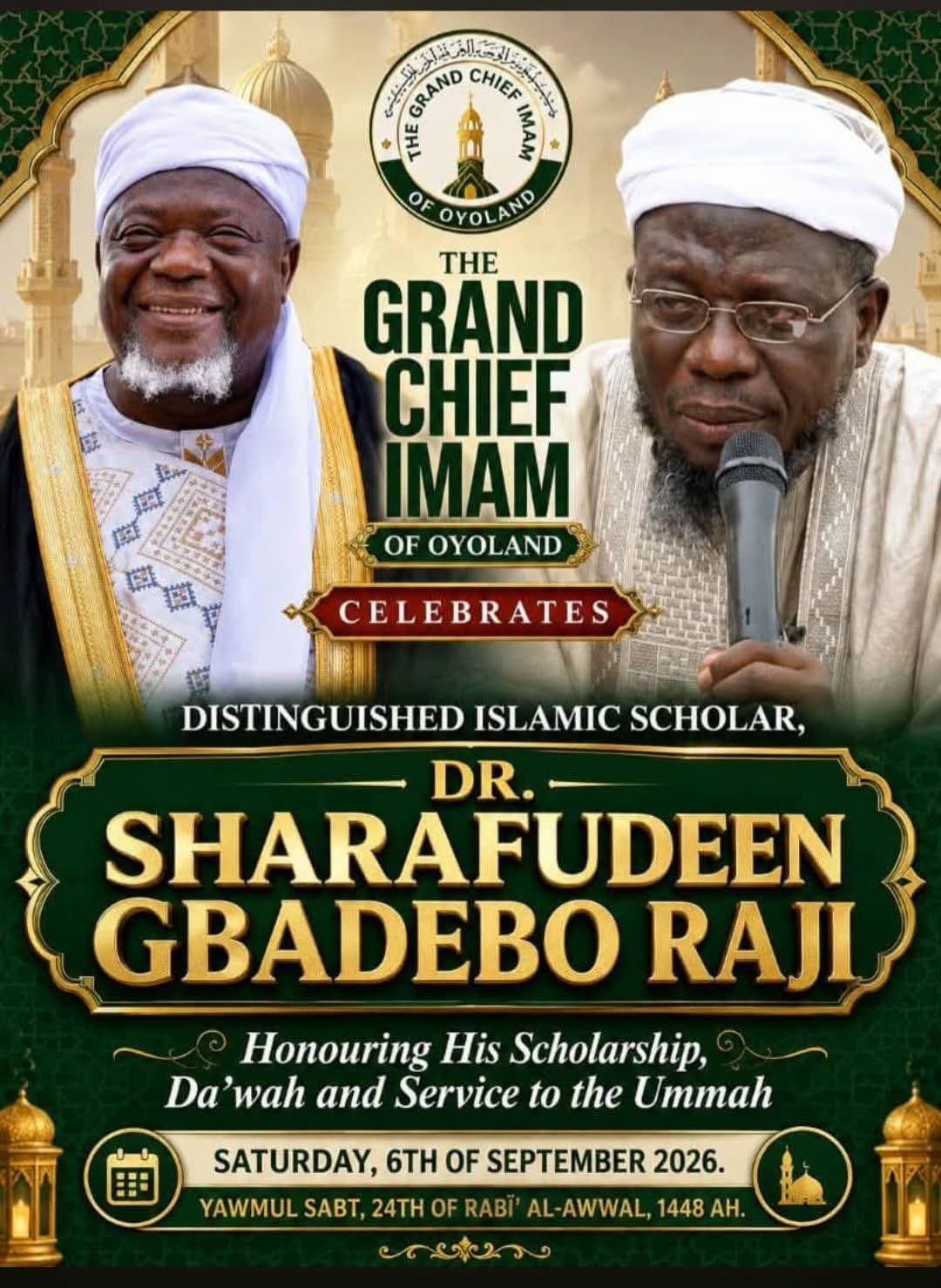
OYO — The Grand Chief Imam of Oyoland, Fodhilatu Shaykh Bilaal Husayn Akinola Akeugberu, has honoured renowned Islamic scholar and educationist, Dr Sharafudeen Gbadebo Raji, for his outstanding contributions to Islamic scholarship, teaching, da’wah and the development of Islamic educational institutions.
The Grand Chief Imam described Dr Raji’s years of commitment to the propagation of Islamic knowledge as worthy of recognition, saying his efforts had continued to impact Muslims within and outside Oyo State.
The recognition was announced by the Office of the Grand Chief Imam of Oyoland on Saturday, September 6, 2026, in Oyo State.
Dr Raji, who is the founder and director of Al-Madeenah Islamic Centre and Al-Madeenah Academy, Ogbomoso, has over the years established himself as a prominent voice in Islamic education and da’wah.
The Grand Chief Imam’s office particularly praised his efforts to make Islamic knowledge accessible to Muslims through lectures and educational materials shared on digital and social media platforms.
The scholar was also commended for his approach to explaining complex Islamic jurisprudence and fiqh issues in a manner that ordinary Muslims can understand, often drawing on practical examples and relatable illustrations.
His teachings, according to the statement, consistently emphasise adherence to the Qur’an and authentic Sunnah in matters of faith, worship and everyday conduct.
Dr Raji’s academic credentials were also highlighted during the celebration. He reportedly obtained a First-Class honours degree from the Islamic University of Madinah, Saudi Arabia, and graduated third in his class globally.
READ ALSO:
- 11 feared killed as terrorists invade Adamawa community
- Omotola: I get Hollywood royalties but nothing from 30 years in Nollywood
- Adeleke’s re-election faces tribunal battle as APC, PDP file petitions
The achievement, the Office of the Grand Chief Imam said, reflected his dedication to academic excellence and Islamic scholarship.
Beyond his academic accomplishments, Dr Raji was recognised for his ability to communicate Islamic teachings across linguistic and cultural boundaries. His proficiency in Yoruba, Hausa, Arabic and English has enabled him to reach diverse audiences in Nigeria and beyond.
In his congratulatory message, Shaykh Akeugberu described the contribution of Islamic scholars and teachers to the preservation and transmission of beneficial knowledge as invaluable to the Muslim Ummah.
He said public recognition of scholars who dedicate their lives to serving Islam and humanity should be encouraged as a means of appreciating their sacrifices and inspiring younger generations.
The Grand Chief Imam noted that the responsibility of scholars goes beyond acquiring knowledge, stressing the importance of transmitting beneficial knowledge to present and future generations.
The celebration of Dr Raji was therefore presented as a recognition not only of his academic achievements but also of his years of teaching, da’wah and institutional development.
The Grand Chief Imam prayed for Allah’s continued protection and preservation of Dr Raji, asking for good health, strength, increased beneficial knowledge and wisdom.
He further prayed that Allah would keep the scholar firm upon the Qur’an and authentic Sunnah, bless his family, students and institutions, and make his scholarship a lasting source of benefit to generations yet unborn.
The Office of the Grand Chief Imam of Oyoland extended its warm congratulations to Dr Raji, wishing him long life, good health and continued strength in his service to Islam and humanity.
The message ended with prayers for the scholar: “Ameen Ya Rabbal-‘Alamin.”
Oyoland Grand Chief Imam Celebrates Dr Sharafudeen Raji for Service to Islam
metro
11 feared killed as terrorists invade Adamawa community
11 feared killed as terrorists invade Adamawa community
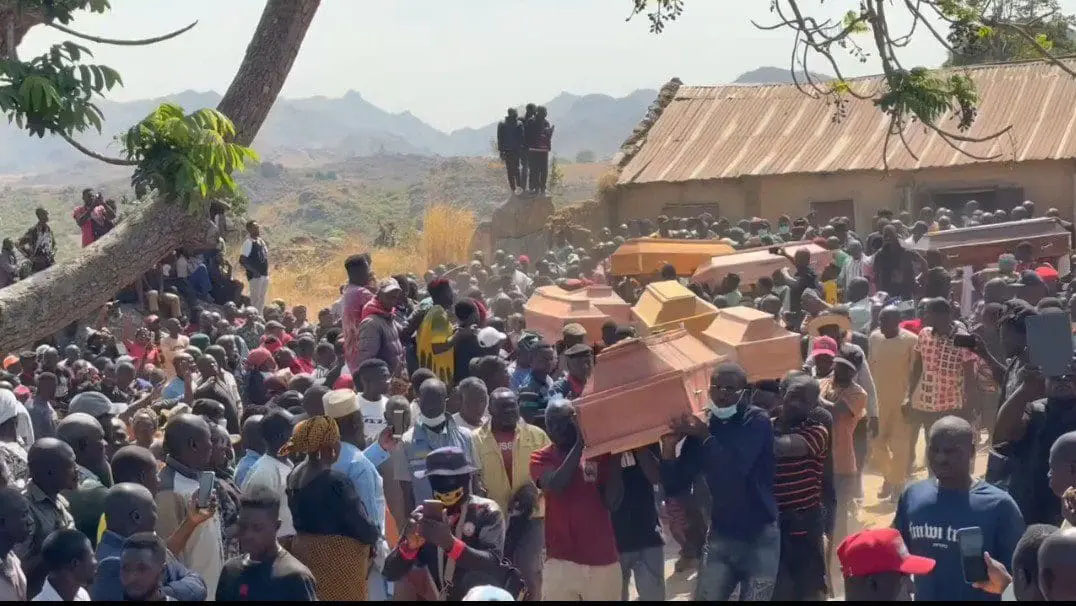
At least 11 people are feared dead after suspected terrorists attacked Zaranga village in Gombi Local Government Area of Adamawa State in the early hours of Monday, leaving residents dead, homes burnt and several people missing.
The attackers reportedly invaded the community while residents were asleep, opening fire on people before setting several houses ablaze.
The assault sent residents fleeing for safety, with some reportedly escaping into nearby bushes and surrounding forests as the attackers moved through the community.
A resident who spoke by telephone on condition of anonymity because he was not authorised to speak to the media said 11 bodies had been recovered following the attack.
“For now, 11 dead bodies have been recovered. Many people are still missing. Search teams and security personnel are in the forest searching for the missing people,” the resident said.
The resident said the search operation was continuing, raising fears that the death toll could increase if more victims are found.
Another resident described the attack as a devastating loss to his family, saying his wife and two other relatives were among those killed.
“My wife and two of my family members were also killed during the early morning invasion of my village,” he said.
The identities of the attackers could not be independently established at the time of reporting, although residents described them as suspected Boko Haram terrorists.
READ ALSO:
- Omotola: I get Hollywood royalties but nothing from 30 years in Nollywood
- Adeleke’s re-election faces tribunal battle as APC, PDP file petitions
- I always think I’m the best – Mbappé speaks on Ballon d’Or chances
The Adamawa State Police Command had yet to officially confirm the reported casualty figure as of the time of filing this report.
Repeated calls to the command’s Public Relations Officer, SP Suleiman Nguroje, seeking confirmation of the attack and details of the security response were reportedly unanswered.
The circumstances surrounding the attack, including the number of attackers involved and whether security personnel engaged them during or after the assault, were also unclear.
The latest incident has renewed concerns about the security of rural communities in Gombi LGA, an area that has suffered deadly attacks and other forms of insecurity in the past.
In April 2026, at least 29 people were killed in attacks on Guyaku and Telabala communities in Gombi Local Government Area, highlighting the persistent security challenges facing communities in the area.
The latest attack underscores the continuing challenges faced by communities in Adamawa State, particularly settlements located in remote areas where security response can be difficult.
Gombi has historically faced threats linked to Boko Haram and other armed groups, with previous attacks forcing residents to flee their homes and disrupting farming and other economic activities.
Security agencies have continued counter-terrorism operations in the North-East, including efforts to identify and disrupt terrorist networks operating across Adamawa, Borno and Yobe states.
However, the reported attack on Zaranga has once again raised questions about the protection of vulnerable rural communities and the need for faster responses to security threats.
For families in Zaranga, the immediate priority remains locating residents who are still missing and establishing the full extent of the casualties and destruction.
The reported figure of 11 deaths remains provisional pending official confirmation by the police or other security authorities. The number could change as search teams continue efforts to locate missing residents and recover possible additional victims.
The incident is expected to further heighten security concerns in Gombi and neighbouring communities, where residents have repeatedly called for stronger protection against attacks by armed groups.
Authorities are yet to issue a comprehensive statement on the Zaranga incident, including whether any suspects have been identified or arrested.
As security personnel and community members continue search operations, residents are hoping for the safe return of those still unaccounted for and stronger measures to prevent another attack.
11 feared killed as terrorists invade Adamawa community
metro
Three Women Killed, 10 Injured in Multiple Crash on Lagos-Ibadan Expressway Bridge
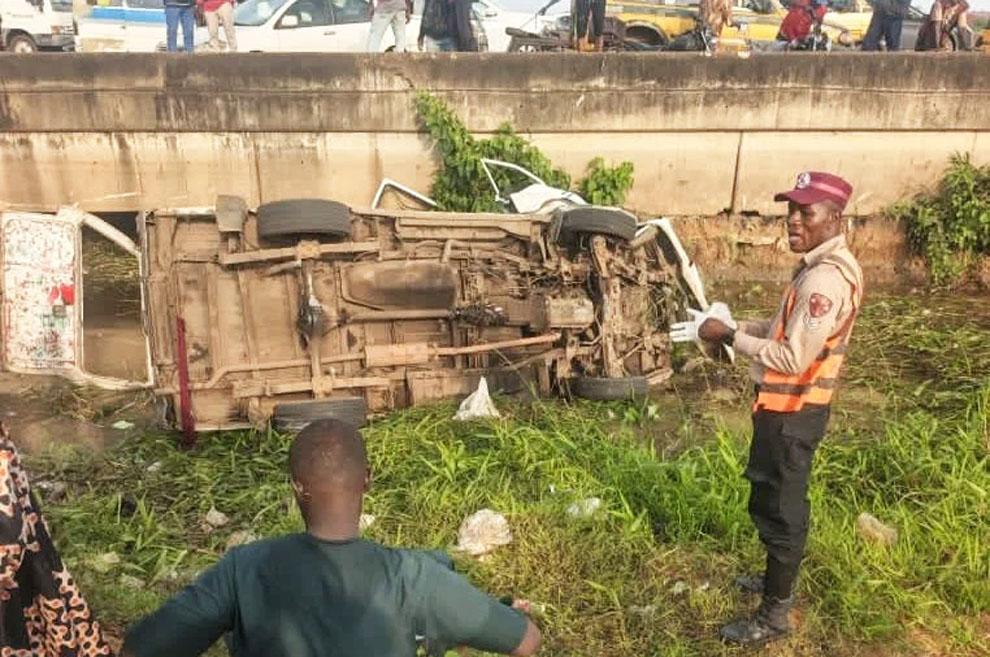
Three Women Killed, 10 Injured in Multiple Crash on Lagos-Ibadan Expressway Bridge
Excessive speeding and loss of control caused one vehicle to plunge off the Long Bridge into a ditch, according to eyewitness accounts and preliminary investigations.
OGUN STATE, Nigeria – Tragedy struck the Lagos-Ibadan Expressway on Friday, September 4, 2026, when a multiple-vehicle crash at the Long Bridge claimed the lives of three women and left 10 others with varying degrees of injuries. The crash occurred around 5:10 p.m. at the Long Bridge, opposite Mikano, inward Lagos, according to the Federal Road Safety Corps (FRSC), Ogun State Sector Command. The spokesperson for the Ogun State Traffic Compliance and Enforcement Agency (TRACE), Babatunde Akinbiyi, confirmed the incident, placing the time at approximately 5:24 p.m. Three vehicles were involved in the crash: a white Mazda bus with registration number AGL 891 XX, a white Toyota bus with registration number KJA 247 YM, and a white Toyota Corolla with registration number BDG 867 HG. According to the FRSC, a total of 16 people—comprising 12 males and four females—were involved in the crash. Ten victims, including nine males and one female, sustained injuries, while three female occupants were confirmed dead.
Preliminary investigations identified speed violation (SPV) and loss of control (LOC) as the probable causes of the crash. Eyewitness accounts indicated that excessive speeding and loss of control caused one of the vehicles to somersault into a ditch. The FRSC stated that further investigation is ongoing to establish the full circumstances surrounding the incident.
READ ALSO:
- Socialite Igho ‘Tiny’ Ubiribo Dies After Penis Enlargement Surgery
- +Senator Shehu Buba Denies Bandit Links, Says Viral Videos Manipulated
- Two Weeks to His Wedding: Groom-to-Be Beaten to Death by Lagos Mob
The crash was reported to the FRSC at 5:34 p.m., and rescue teams arrived at the scene six minutes later, at 5:40 p.m. Emergency responders from TRACE, the FRSC, the Nigeria Police Force, and the Ogun State Ambulance and Emergency Service all responded to the scene. Some of the injured victims were evacuated to the Lagos State Accident and Emergency Centre in Ojota by the Ogun State Ambulance and Emergency Service, while others were transported to AZ Hospital in Magboro by the FRSC. The remains of the deceased were deposited at the General Hospital, Ifo, morgue, and the Idera Hospital morgue in Sagamu. The vehicle that plunged into the ditch was recovered and moved to the Warewa Police Station, alongside the other vehicles involved in the crash, for further investigation.
The crash caused significant traffic disruptions along the expressway during evacuation operations, but normalcy was restored after the vehicles were cleared from the scene. The Ogun State Sector Commander, Corps Commander Oludare Ogunjobi, expressed condolences to the families of the deceased and wished the injured victims a speedy recovery. He urged motorists plying the Lagos-Ibadan Expressway to exercise maximum caution, avoid excessive speed, maintain proper control of their vehicles, and remain alert throughout their journeys. Ogunjobi further advised motorists to “drive within safe speed limits and avoid any behaviour capable of compromising their safety and that of other road users”.
The incident follows a pattern of fatal accidents on the busy expressway. On August 25, 2026, seven people were killed and two others injured in a multiple road crash involving three vehicles around the Kara area of the Lagos-Ibadan Expressway.
Three Women Killed, 10 Injured in Multiple Crash on Lagos-Ibadan Expressway Bridge
-

 Business2 days ago
BREAKING: OPay Warns Customers Against Viral Shutdown Message, Threatens Legal Action
-
 metro2 days ago
NSCDC Rescues 15 Trafficked Minors Sold for ₦2m Each by Fake NGO Official
-

 metro2 days ago
Osinbajo raises alarm over chemicals in fruits, recalls wife’s orange juice experience
-
 metro2 days ago
APC rally: Suspected thugs attack journalists, smash Radio Nigeria vehicle in Kano
-

 Politics2 days ago
15 northern states may collapse if fuel subsidy returns, OAU professor warns Atiku
-

 Education2 days ago
JAMB Releases Underage UTME Results, Sets Strict Conditions for Admission
-
 metro2 days ago
Lagos-Ibadan Expressway: FG begins Kara Bridge repairs Tuesday, deploys traffic agencies
-

 Auto2 days ago
NAJA 19th Auto Awards: Industry’s best to battle for honours December 3