

Education
UNILAG received N8bn research grants in three years – VC

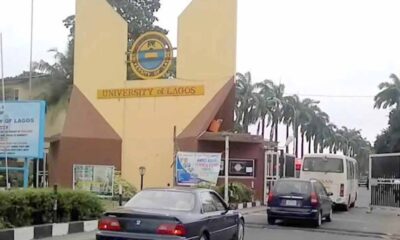
The Vice Chancellor, University of Lagos, Prof. Oluwatoyin Ogundipe, has said the university attracted over N8bn research grants in the past three years.
He stated this in an interview on Wednesday after a ceremony to hand over the vertical extension of the Faculty of Law of the institution in Lagos.
Alhaji Femi Okunnu, a Senior Advocate of Nigeria, and former Federal Commissioner for Works and Housing, donated N100m for the construction of the extension.
Ogundipe said, “In the past three years of this administration, I want to say that we have been able to attract research grants of over N8bn.
“Already, this Faculty of Law has just been awarded an international grant of $45,000 and another one of $20,000.
“That is the direction a university should go. The university is the light. We are supposed to lighten the society and that is the path we are taking in UNILAG, reaching out for grants.”
About 20 of his colleagues from the institution, he added, were currently being interviewed by the TETFund for research grants worth N20 million each.
He said, “I am sure they will all get the N20 million each and if I should put these amount together, it will translate to a total of N400 million other research grants and this is going to go a long way in moving the university to an envious height.
”You must realise that our research now is demand-driven to assist the country achieve its much desired accelerated growth and that is what UNILAG is aiming at, as the university of first choice that it truly is.”
He added that the gesture from Okunnu was a life-changing one, worth emulating, noting that there was the need for more of such, from friends of the institution and other stakeholders.
Ogundipe said there was the need to support scholars who could compete locally and globally, just like the students.




Education
Preparing Students for University, Work in Changing World, By Cambridge
Preparing Students for University, Work in Changing World, By Cambridge
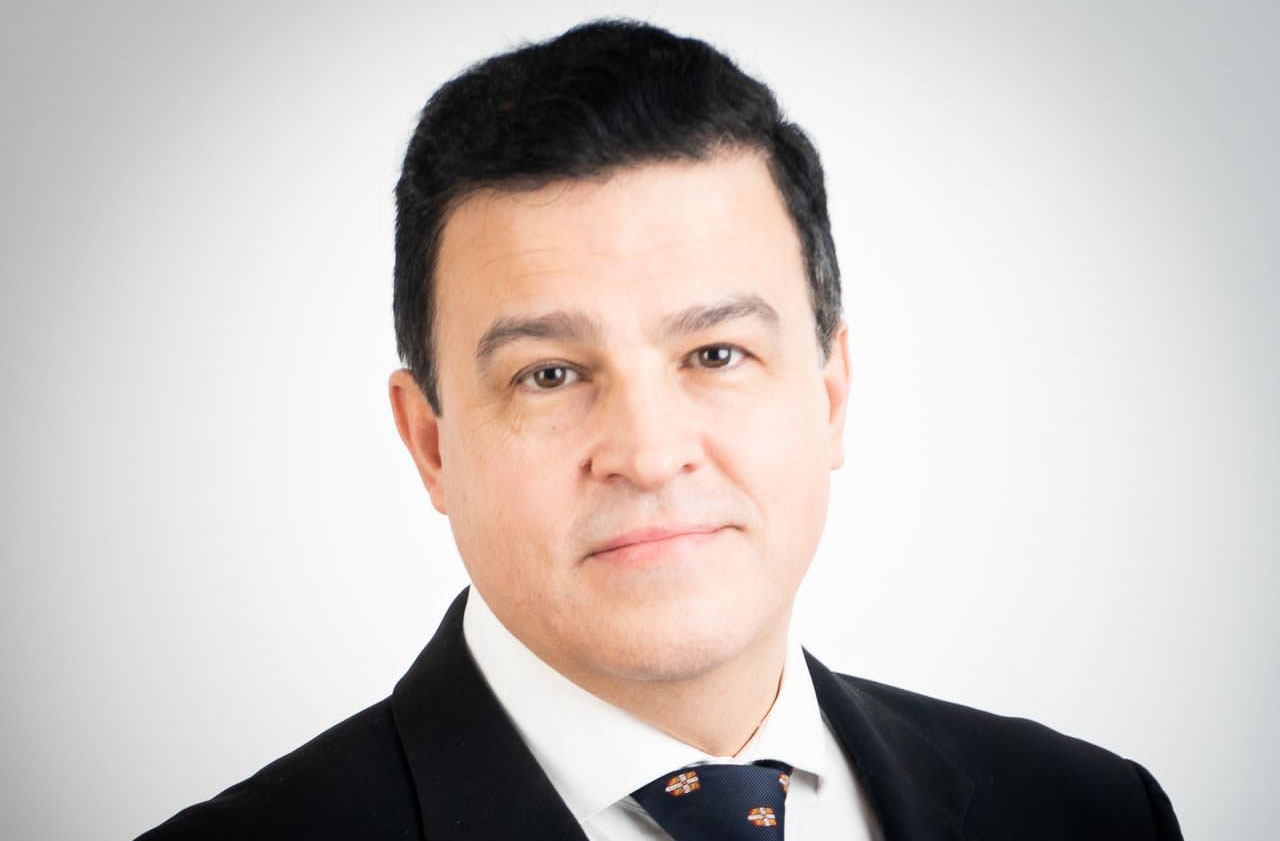
Juan Visser
The transition from secondary school to tertiary education is becoming an increasingly important test of whether education systems are preparing young people not only for university admission but also for independent learning, critical thinking and the changing world of work.
For many students, moving from the structured environment of school into higher education represents a fundamental shift. At university, learners are expected to take greater responsibility for their studies, conduct research, interrogate evidence, manage their time and participate confidently in academic discussions.
This means the challenge for schools extends beyond helping students secure admission. They must also ensure that learners possess the academic habits, intellectual confidence and transferable skills required to succeed after gaining entry.
The demand for tertiary education has grown substantially worldwide. UNESCO data indicates that approximately 264 million students are enrolled in higher education globally, more than twice the number recorded at the beginning of the century.
The expansion reflects the growing recognition of higher education as a pathway to economic mobility, wider opportunity and the development of skills required to support national economies.
However, increasing access has also exposed a significant challenge: the gap between university admission and preparedness for higher-level learning.
Research by the Council for Aid to Education and the Organisation for Economic Co-operation and Development (OECD) found that approximately 57 per cent of students entering tertiary education were not proficient in critical thinking and written communication.
The implication is significant for education policymakers, schools, teachers and parents. Preparation for higher education cannot begin when a student arrives on a university campus. It must start much earlier, particularly during the secondary-school years when academic behaviours and intellectual capabilities are being formed.
According to education experts, traditional approaches that place heavy emphasis on memorisation and examination performance are increasingly insufficient for the demands of universities and modern workplaces.
Students need to learn how to analyse information, challenge assumptions, assess evidence, solve unfamiliar problems and develop independent conclusions.
READ ALSO:
- Federal Workers Urge Finance Ministry to Pay Delayed Allowances, Promotion Arrears
- Nigeria Wins $3.38bn Mambilla Arbitration Battle As ICC Rejects Sunrise Claims
- 2027: Tinubu May Mediate Wike-APC Governors Rift In France
International curricula such as Cambridge IGCSE and Cambridge International AS & A Levels provide one model of how secondary education can develop these capabilities.
The programmes emphasise enquiry-based learning, encouraging students to engage with concepts, test ideas and formulate their own perspectives rather than simply recall information.
At the IGCSE level, students are introduced to structured enquiry through analytical reading, evidence-based argument and problem-solving across a broad range of subjects.
These foundations are subsequently developed at AS and A Level, where students are expected to evaluate competing viewpoints, synthesise information from different sources and communicate their arguments with clarity and precision.
Such competencies closely reflect the demands of tertiary education, where students are increasingly expected to navigate large amounts of information, distinguish credible evidence from weak sources and formulate independent positions.
The emphasis, therefore, is not simply on what students learn but also on how they learn.
Critical thinking and problem-solving are treated as transferable capabilities that can be applied across academic disciplines and real-life situations. Students are encouraged to make reasoned judgements, construct coherent arguments and approach unfamiliar challenges with greater confidence.
Independent learning is equally important.
University students are expected to manage their time, organise academic workloads, locate and evaluate resources and take responsibility for their own progress. Where these habits have already been developed in secondary school, students are better positioned to cope with the autonomy and complexity of tertiary education.
Research by the International Education group at Cambridge University Press & Assessment, titled Preparing Learners to Thrive in a Changing World, reinforces the importance of these capabilities.
The study found that students and teachers regard self-management skills as critical to future success, while also identifying them among the most difficult skills to teach and learn.
From managing time and maintaining focus to adapting to change and working independently, such capabilities are increasingly essential not only for university but also for employment and adult life.
The changing labour market has further increased the importance of transferable skills. The World Economic Forum’s Future of Jobs Report 2025 identified analytical thinking as the leading core skill among employers, while resilience, flexibility and agility were also among the most highly valued core skills. The report also identified creative thinking, technological literacy, curiosity and lifelong learning among skills expected to remain increasingly important.
This suggests that education systems must increasingly focus on producing learners who can adapt, think critically, solve problems and apply knowledge in unfamiliar environments.
The objective, therefore, should be to develop curious and resilient learners capable of continuing to learn long after they have completed formal education.
Evidence of the potential of this approach can also be seen in the Outstanding Cambridge Learner Awards, which recognise exceptional performance in Cambridge assessments across more than 40 countries.
Students in South Africa are among those who receive the awards annually, demonstrating strong examination performance, extensive subject knowledge and the ability to perform under demanding, internationally benchmarked assessment conditions.
Internationally recognised qualifications can also provide students with greater flexibility.
In countries including Nigeria, Ghana and South Africa, Cambridge International AS & A Levels are recognised by local universities through established admission processes. This enables students to pursue higher education within their home countries while benefiting from internationally benchmarked secondary qualifications.
The combination gives learners greater choice, allowing them to balance local educational opportunities with international aspirations.
Ultimately, however, the purpose of secondary education should extend beyond university admission.
Whether students proceed to university, professional qualifications, entrepreneurship or vocational careers, they require confidence, adaptability and the ability to continue learning.
The transition from classroom to campus should therefore be understood as more than a change of location. It is a transition from guided learning to greater intellectual independence.
By cultivating the ability to learn, think critically, manage responsibilities and adapt to change, schools can better prepare young people for the demands of tertiary education and the wider economy.
By the completion of their secondary education, students should possess more than examination certificates and subject knowledge. They should have developed the habits of mind required to navigate uncertainty, assess competing ideas, solve problems and continue acquiring knowledge throughout their lives.
For education systems confronting rapidly changing economic and technological realities, the priority is increasingly clear: prepare learners not merely to pass examinations or enter university, but to succeed wherever their education takes them.
Cambridge University Press & Assessment, part of the University of Cambridge, said its International Education group works with schools globally to build education around knowledge, understanding and skills.
Through the Cambridge Pathway, which provides a framework from ages three to 19, the organisation offers qualifications including Cambridge IGCSE, International AS & A Levels and the AICE Diploma, alongside learning resources, support and research-based insights.
The broader objective, it said, is to equip learners with the confidence and capabilities to meet the opportunities and challenges of a rapidly changing world.
Juan Visser is Regional Director, Sub-Saharan Africa, International Education, Cambridge University Press & Assessment.
Preparing Students for University, Work in Changing World, By Cambridge
Education
25 Universities, Teaching Hospitals Get Solar Power Under REA Programme

25 Universities, Teaching Hospitals Get Solar Power Under REA Programme
Twenty-five federal tertiary institutions have been connected to solar electricity under the Rural Electrification Agency’s (REA) Energizing Education Programme.
The REA Managing Director, Abba Aliyu, disclosed this during the commissioning of a 3MW captive solar hybrid power project at Yakubu Gowon University, Abuja.
According to Aliyu, the programme covers 22 federal universities and three affiliated teaching hospitals and has deployed more than 100MW of clean energy.
He said the initiative now benefits over 300,000 students and 50,000 academic and administrative staff.
READ ALSO:
- Adunni Ade Reveals Christian Fans Unfollowed Her After Publicly Identifying as Muslim
- Jetour Set to Storm Abuja Show with Rugged Luxury T2
- Fiji Declares National HIV Emergency as Diagnoses Surge Sixteenfold
Aliyu added that the new 3MW facility would power key university facilities, including lecture halls, laboratories, ICT systems, administrative buildings and campus lighting.
Meanwhile, Minister of Power Joseph O. Tegbe said reliable electricity was essential to supporting teaching, research, healthcare and digital services in universities.
He stressed that the long-term performance of the solar projects would be more important than their commissioning.
Vice-Chancellor of Yakubu Gowon University, Prof. Hakeem Babatunde Fawehinmi, also said dependable electricity was critical to the institution’s academic and research activities.
25 Universities, Teaching Hospitals Get Solar Power Under REA Programme
Education
Niger State Urges Local Communities to Protect Newly Completed Public Schools
Niger State Urges Local Communities to Protect Newly Completed Public Schools
Basic education officials deliver modern classrooms to help children learn safely, kicking off an ambitious statewide renovation drive.
State education leaders in Niger State are calling on neighborhood residents and parent groups to take good care of newly renovated primary schools.
On Wednesday, the head of the Niger State Universal Basic Education Board, Dr. Ibrahim A. Liman, reminded communities that public classrooms belong to everyone, warning that state funding can only make a lasting difference when local people watch over these shared spaces.
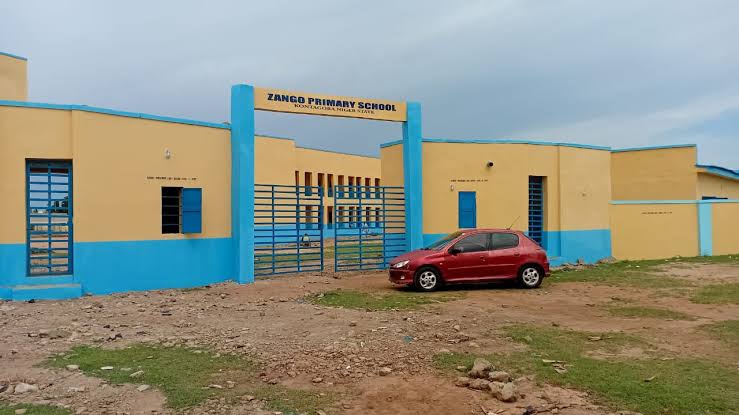
To prepare for handing over the keys, board officials visited Zango Primary School in Kontagora and Richard Lander Primary School in New Bussa. These two locations are the first to finish out of seven model schools currently under construction.
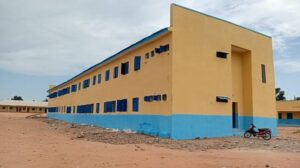
During their visits, team members inspected classrooms to make sure builders followed high safety standards, while encouraging neighbors to keep the grounds secure, tidy, and ready for pupils.
Furthermore, state officials explained that these building projects are part of a larger plan to improve early education across every community. Alongside these new classrooms, the board is starting repair work on about 400 primary schools throughout the state.
In addition to fixing desks and roofs, authorities are upgrading classroom teaching tools and supporting teachers. As a result, children across all backgrounds will have safe, welcoming spaces to learn and grow together.
Niger State Urges Local Communities to Protect Newly Completed Public Schools
-

 International2 days ago
Islamic Council Condemns Attempted Attack on Holy City of Mecca
-

 metro3 days ago
Lagos Power Outage: Ikeja Electric Blames TCN as Businesses, Homes Groan
-
 News2 days ago
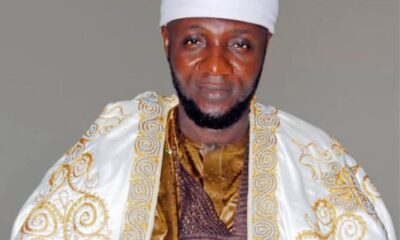
Keep Politics Out of My Office — Ogbomoso Grand Chief Imam Warns Politicians, Bloggers
-

 metro2 days ago
Niger Mosque Abductions: Terrorists Execute 30 of 500 Captive Muslim Worshippers
-

 Entertainment2 days ago
BREAKING: Olu Jacobs Dies at 84, Atiku Mourns Cultural Icon
-
 International3 days ago
US Court Blocks Trump Visa Rule Limiting Stay of Foreign Students, Journalists
-

 metro3 days ago
A Son Wouldn’t Have Done Better — Dangote Speaks on Daughters, Succession
-
 metro3 days ago
Fatal NURTW Leadership Clash in Osun Leaves Two Dead; State Orders Park Shut Down
You must be logged in to post a comment Login