

metro
We have enough external reserves to withstand global recession, shocks – FG
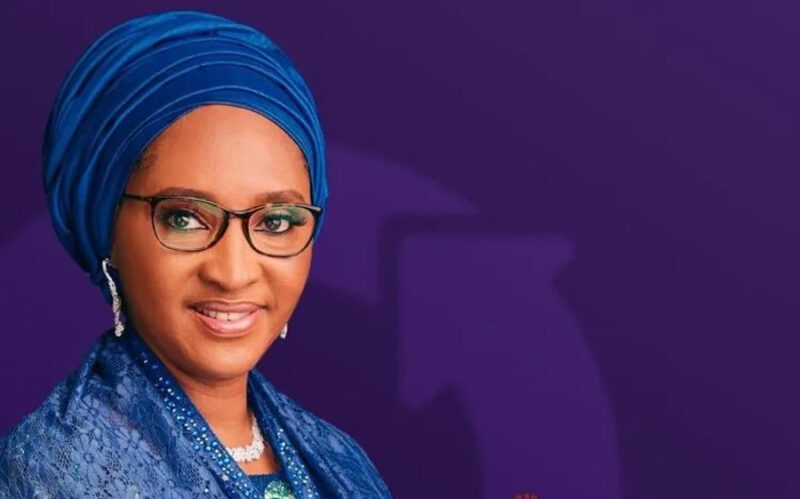
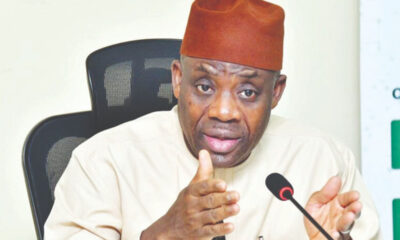
The Minister of Finance, Budget and National Planning, Mrs. Zainab Ahmed, yesterday admitted that although the projected global economic recession for 2023 appeared inevitable, with about $34 billion in the nation’s foreign reserves, the projected headwinds shouldn’t pose much threat to Nigeria.
The comment by the minister came on same day that the Senate directed her to liaise with the Governor of the Central Bank of Nigeria, Mr. Godwin Emefiele, and submit details of President Muhammadu Buhari’s N23. 7 trillion Ways and Means request, within three days, for scrutiny.
Speaking during an interview with Arise News Channel at the ongoing World Economic Forum (WEF) in Davos, Ahmed, also stated that the government was considering a gradual phasing out of petrol subsidy payments from April, instead of removing it in one fell swoop in June.
Ahmed further posited that she wasn’t feeling ‘betrayed’ by the refusal of President Muhammadu Buhari to remove subsidy payments, having stuck out her neck on the issue for years without much success.
“It is quite likely that there will be a global recession. From the reports we’ve seen from the World Bank and the International Monetary Fund (IMF) and other forecasts, there will be a global recession. How it will affect the globe, of course will be different from sub-region to sub-region. But clearly there’s going to be a decline in growth on a general basis,” she projected.
READ ALSO:
- Dirty, old naira notes flood ATMs 2 weeks to deadline
- Atiku’ll sell Nigeria to his shady friends –Tinubu warns Nigerians
- Withdrawal policy: Nigeria Governors’ Forum (NGF) to engage Emefiele on naira redesign
She explained that even China was predicted to see a reduction in growth, partly because of the sustained economic impact of the COVID-19 pandemic.
“We have seen the resurgence of COVID-19 in some developed economies, especially China, but also the effect of the Russia Ukraine war that is having a global impact.
“The quantitative easing that is implemented by central banks across the world also contributes to high cost of interest, resulting in high inflation rate, which means people’s spending power is weakened as a result. So there are all indications that there will be a global recession,” she noted.
On the question of how Nigeria intends to weather the coming headwinds and whether Nigeria has enough foreign reserves like it did around 2008, when it had reserves of over $60 billion, Ahmed noted that at $34 billion, it was enough to sustain imports for six months.
“It is true we had higher reserves during the first global recession. Our reserves are now at $34 billion. So that is still a healthy level. It means we’re able to meet at least six months of imports and other expenses into the country.
“It means we can withstand another global shock if we’re able to carry through a coordinated response between the monetary, fiscal as well as trade authorities. We have learned a lot from the experience that we went through during the COVID. And it showed that when we plan as one, we can actually withstand the shocks,” she explained.
According to her, the last recession in Nigeria was short-lived because of the coordinated response, which had not just government, but also private sector contributing to the efforts, including scaling back on some categories of government spending.
She maintained that Buhari has done well in terms of infrastructural growth even as the non-oil sector outperformed the cash cow, crude oil by a wide margin, a testimony to the efforts of the current administration to diversify the economy.
“Well, I will say that if you look at the numbers, the performance of the 2022 budget, you will see that oil and gas sector contribution was about 35 per cent, while the non oil sector had the largest contribution, but not only that, the non-oil sector contribution outperformed the budget by a very large proportion.
“ For example, company income tax outperformed the budget by 158 per cent. So there’s some foundational measures that have been taken that have enabled non-oil sector revenue to grow on a consistent basis and not just by a little bit but quite significantly.
READ ALSO:
- Fayose, others shun Atiku’s campaign rally in Ekiti
- 12 things to know as applicant for Nigeria Immigration Service and available positions
- Reps step down bill to exempt Nigerians schooling abroad from NYSC, favouring upward review of allowance
“And secondly, the oil sector’s contribution that was minimal in 2022 is looking good to pick up in 2023. The measures that the government has taken, a combined effort of security and intelligence agencies work have resulted in improved production from the oil and gas sector.
“And it looks like it will continue as well. Most of the fields that were previously not producing at the levels that they were supposed to produce can now produce at maximum capacity. And also, the oil price of the international market is still at a very reasonably high level.
“And we’re doing a lot to encourage investments in gas so there’ll be new and additional incremental streams that will come also from the gas sector, so we should be able to meet this.
“Then, also we introduced some new excise duties as some taxes, the full effect of which we will see in in 2023,” she said.
But Ahmed admitted that Nigeria must rev up its revenue collection efforts in relation to debt, saying the government had embarked on borrowing to pay petrol subsidy.
“We have to improve on our revenue so that that revenue-to-debt service ratio improves. Again, we have had to borrow to be able to invest in our infrastructure. When this administration started, we had an infrastructure stock of about 22 per cent. We’ve been able to move that to 35 per cent.
“These are investments that are required to grow the economy on a sustainable basis. Also, we’ve been faced with two recessions. And we took expansionary stand to spend our way out of recession, because you cannot just contemplate what will happen,” she posited.
On fuel subsidy removal, the minister said this year, it would be advisable to remove fuel subsidy, rather than waiting for June to withdraw payments which would hurt Nigerians.
“Where there is not enough revenue for government to buy the refined petroleum products, we have had to borrow to buy the petroleum products. So, if we take that out, that’s about N3.25 trillion. That is a significant relief, that we don’t incur any more than that number that we projected for in 2023.
She also pushed back on the question of whether she felt disappointed by the non-removal of subsidy despite all her efforts, stressing that it was a collective decision to retain the payments.
“Betrayed? No, It was a decision that was taken as a collective, recognising the fact that due to the lingering impact of the COVID-19 pandemic, and also heightened inflation, that removal of the first subsidy at that time will have increased more burden on the citizen.
READ ALSO:
- APC presidential rally grounds Ilorin as huge crowd welcomes Tinubu to Kwara
- Reverend Isaac Archi’s death: Niger boils as angry youths set police station ablaze
- ‘Stop lying’ — Oby Ezekwesili knocks Atiku over claim of leading economic team under Obasanjo
“The president does not want to contemplate a situation where measures are taken that are further going to burden the citizens. So, the decision was to extend the period from June 2022 to 18 months, beginning from January 2022.
“So in June 2023, we should be able to exit. The good thing is, we hear a consistent message that everybody is saying this thing needs to go. It is not serving the majority of Nigeria’s.
“What will be safer is for the current administration to maybe at the beginning of the second quarter to start removing the fuel subsidy, because it’s more expedient if you remove it gradually, than to wait and move it all in one big swoop.
“So the idea for us in the budget, is that the subsidy costs should not exceed that N3.23 trillion. So whether it’s done completely 100 per cent by June or by July, or whatever, it’s a process,” she said.
Senate Gives Finance Minister, Three Days Ultimatum to Submit N23.7trn Ways and Means Details
Meanwhile, the Senate has directed Ahmed to liaise with Emefiele and submit details of Buhari’s N23. 7 trillion Ways and Means request, within three days, for scrutiny.
Buhari had in December last year’s urged the Senate to approve the Ways and Means restructuring.
The red chamber, upon receiving the Presidential request, had set up an adhoc Committee chaired by the Senate Leader, Ibrahim Gobir, to carry out necessary legislative actions on it.
The panel then sent out invitations to the Finance Minister, the CBN Governor and other heads of federal ministries, departments and agencies that had direct connection with the fiscal document.
However, at the resumption of plenary after the New Year recess on Tuesday, Gobir informed his colleagues that the adhoc panel had not been able to sit because details of the Ways and Means Advances had not been provided by the executive arm of government.
The Chamber therefore ordered the Minister of Finance and the CBN Governor, to within three days, supply required information on the request to the ad hoc panel.
The red chamber warned that in view of presidential and National Assembly elections coming up next month, it would adjourn plenary this week or latest by Tuesday next week for practical participation in campaigns.
Senate’s warning followed request made by Gobir for additional three days .
Gobir who rose through Order 40 of the Senate Standing rules under personal explanation, told the Senate that series of attempts made by the Committee from 28th December, 2022 to Tuesday, 17th January, 2023, to meet the Finance Minister and CBN Governor for the required details proved abortive.
He said: “As a special committee for urgent and thorough assignment, we hit the ground running immediately after composition on 28th of December last year.
“For required details on the N22.7trillion Ways and Means Restructuring, six vital questions were raised, five for the CBN governor and one for the Finance Minister, but their trips abroad, prevented us from asking them the questions.
READ ALSO:
- Abia PDP gov candidate sick, can’t campaign, says Ikpeazu now
- Man Utd fans want Osimhen at Old Trafford next summer
- How nollywood actor stabbed neighbour to death over N1,000 electricity bill
- Court sentences six to death by hanging for armed robbery and murder
“Now that they are around, we request the Senate to give us additional three days for thorough work on the assignment and submission of report,” he said.
Obviously angry with Gobir’s submissions, the President of the Senate Ahmad Lawan, in his response said the Ways and Means request from the president, was a very serious issue that must not be taken with levity by all those concerned .
He said the Senate was ready to approve the request after thorough scrutiny which could only be done if required details were provided by relevant officials from the executive arm of government.
Lawan said, “We must have necessary information for passage of the N22.7 trillion request and time is not on our side in the Senate now in view of coming general elections.
“If there is need for the Senate to sit up to Friday this week for thorough consideration and passage of the request, it will be done.
“However, the affected officials from the executive must also expedite action on provision of required information as regards documents authorising approval and disbursement of the monies totalling N22.7trillion,” he said.
Meanwhile, the Senate has said it would adjourn plenary next week to enable lawmakers to embark on rigorous campaigns in their various constituencies in preparation for the forthcoming National Assembly elections.
The Senate President stated this during plenary in Abuja.
He said the break would enable lawmakers contesting for various offices during the 2023 general election to interact with their constituents and canvass for their votes.
He, however, said the Senate may possibly close this week if it was able to deal with urgent issues requiring its attention so that it would not have to sit next week.
thisdaylive







metro
18 Suspected Bandits Killed as Security Forces Foil Mass Kidnap in Katsina
18 Suspected Bandits Killed as Security Forces Foil Mass Kidnap in Katsina
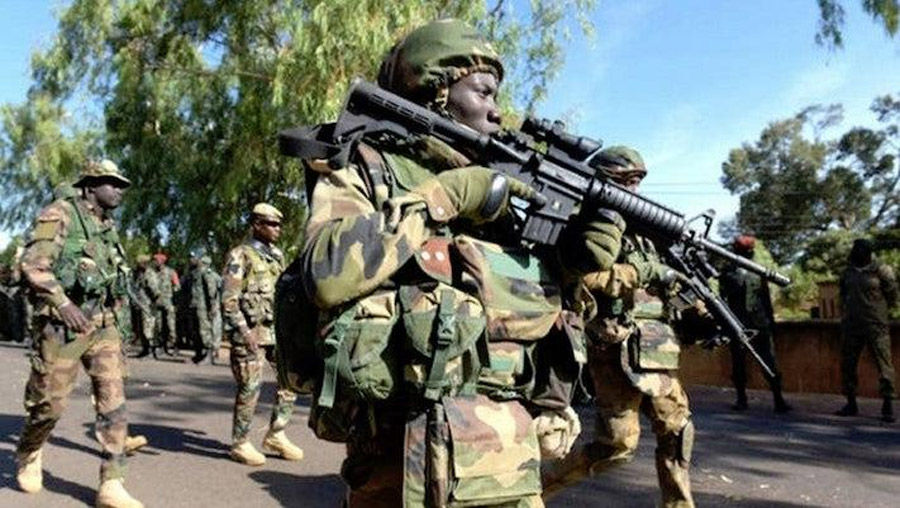
Eighteen suspected bandits have been killed in an intelligence-led ambush that reportedly foiled a planned mass kidnapping in Bakori Local Government Area of Katsina State.
The operation took place at about 1am on Monday, September 21, 2026, at Gidan Iyado, Kakumi Ward, after security personnel received intelligence that an armed group was planning to abduct residents for ransom.
According to the Katsina State Ministry of Internal Security and Home Affairs, the operation involved hunters, members of the Community Watch Corps and local vigilante groups, who laid an ambush and engaged the suspected bandits.
The ministry said 18 members of the group were killed, while no casualty was recorded among the security personnel involved in the operation.
Recovered items included one G3 rifle, two AK-47 rifles, 14 rounds of 7.62mm live ammunition and three motorcycles.
READ ALSO:
- Petrol Depot Prices Fall as Dangote, Marketers Cut Rates, Pump Price Reduction Looms
- 2027: Tompolo-Backed Group Deploys 44 Vehicles for Tinubu-Shettima Campaign in Borno
- MTN, Gates Foundation Launch $25m AI Maternal Health Initiative for 500,000 Nigerian Women
Security personnel also recovered two cows and 94 sheep, which the authorities believe were among livestock allegedly rustled by the group.
The Katsina government identified the alleged leader of the group as Alhaji Musa Duki, whom it described as a former school headmaster who allegedly became a bandit leader operating from Mununu Forest in Faskari Local Government Area.
Authorities said the operation was part of continuing efforts to disrupt bandit networks, kidnapping operations and rural insecurity across Bakori, Faskari and neighbouring communities.
The government said a sustained covert operation was ongoing to locate Duki and other members of the network, identify their hideouts and prevent further attacks.
Katsina State Governor Dikko Umar Radda commended the security personnel and community-based security groups involved in the operation, while urging residents to continue providing timely and credible information to security agencies.
The latest operation comes amid continuing security challenges in parts of Katsina State, where authorities have increasingly relied on intelligence gathering and collaboration between conventional security agencies and community-based security groups to disrupt criminal activity.
The recovered weapons and ammunition have been taken into custody as security agencies continue efforts to dismantle the alleged network and prevent further kidnapping and banditry in the affected areas.
18 Suspected Bandits Killed as Security Forces Foil Mass Kidnap in Katsina
metro
Police Arrest Two Arms Dealers, Recover 300 Rounds of Ammunition in Kaduna
Police Arrest Two Arms Dealers, Recover 300 Rounds of Ammunition in Kaduna
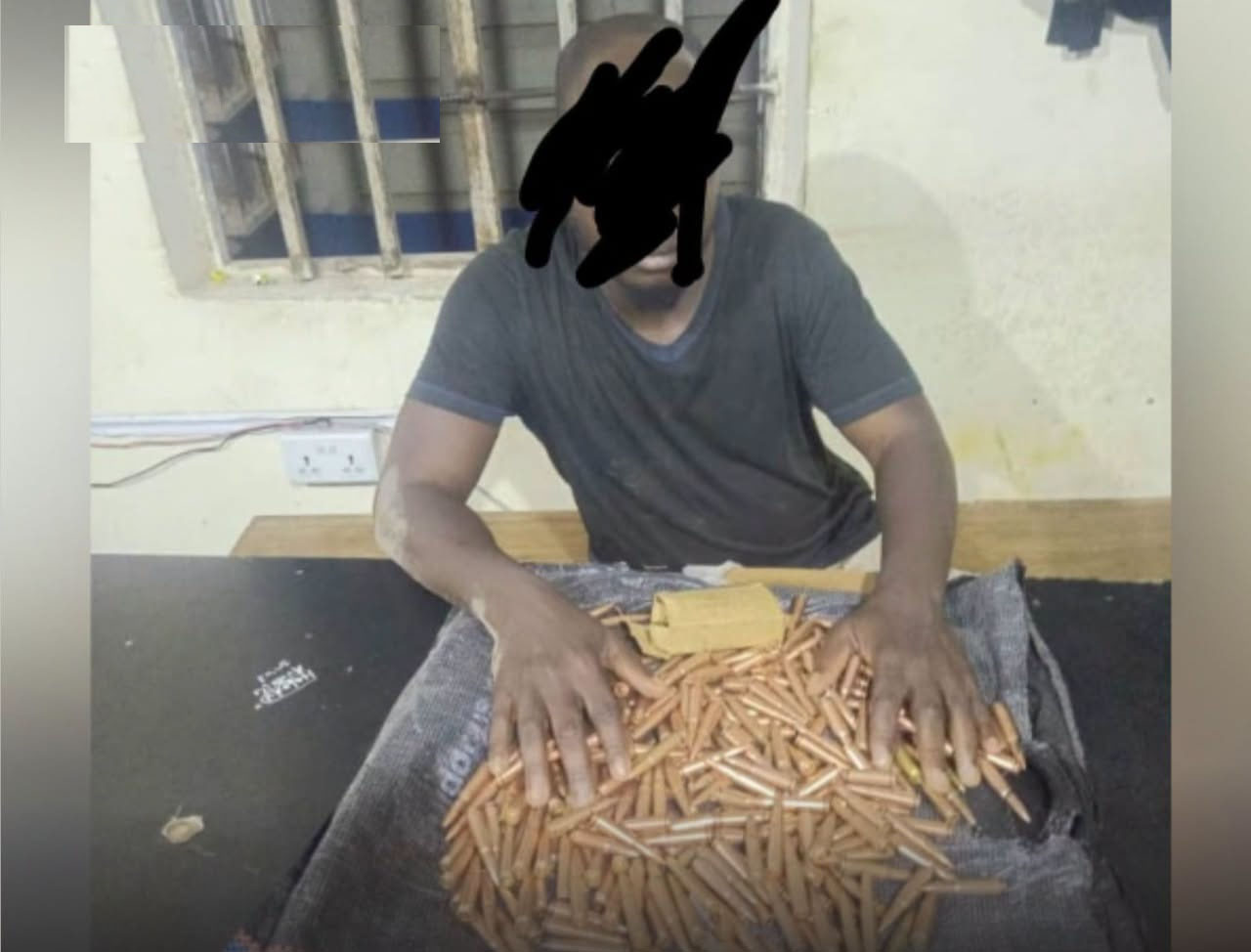
The Kaduna State Police Command has arrested two suspected arms traffickers and recovered 300 rounds of live ammunition in an intelligence-led operation in the state.
The suspects, identified as Rayyanu Adamu and Nasiru Abubakar, were arrested by operatives of the Police Anti-Kidnapping Unit following surveillance around the Giwa and railway station axis.
Police said the operation resulted in the recovery of 270 rounds of AK-47 ammunition and 30 rounds of Type 06 ammunition.
The suspects are being interrogated as investigators work to determine where the ammunition was sourced, its intended destination and whether other people are involved in the alleged trafficking operation.
The arrests come amid increased security operations across Kaduna State against kidnapping, banditry, arms trafficking and terrorist logistics.
READ ALSO:
- Petrol Depot Prices Fall as Dangote, Marketers Cut Rates, Pump Price Reduction Looms
- 2027: Tompolo-Backed Group Deploys 44 Vehicles for Tinubu-Shettima Campaign in Borno
- MTN, Gates Foundation Launch $25m AI Maternal Health Initiative for 500,000 Nigerian Women
In a separate operation, troops of Operation FANSAN YAMMA arrested a suspected terrorist kingpin and two alleged members of his network in Kubau Local Government Area.
Troops also arrested a 50-year-old woman in Igabi Local Government Area who was allegedly transporting 300 rounds of ammunition. The military said preliminary investigations indicated that she had travelled from Zamfara to Lafia before allegedly receiving the ammunition for onward delivery to suspected terrorist elements in Birnin Gwari.
A suspected terrorist logistics supplier was also arrested in Birnin Gwari, with four communication devices recovered during the operation.
The separate operations point to continuing efforts by security agencies to disrupt the movement of arms and ammunition to criminal and terrorist groups operating in Kaduna and neighbouring areas.
The Kaduna Police Command has also recorded other ammunition seizures in recent operations, as security personnel intensify efforts to identify suspected arms suppliers, couriers and their associates.
The two suspects remain in police custody while investigations continue.
Police Arrest Two Arms Dealers, Recover 300 Rounds of Ammunition in Kaduna
metro
Niger Mosque Attack: Bago Says 63 Abducted, 14 Freed, Three Killed
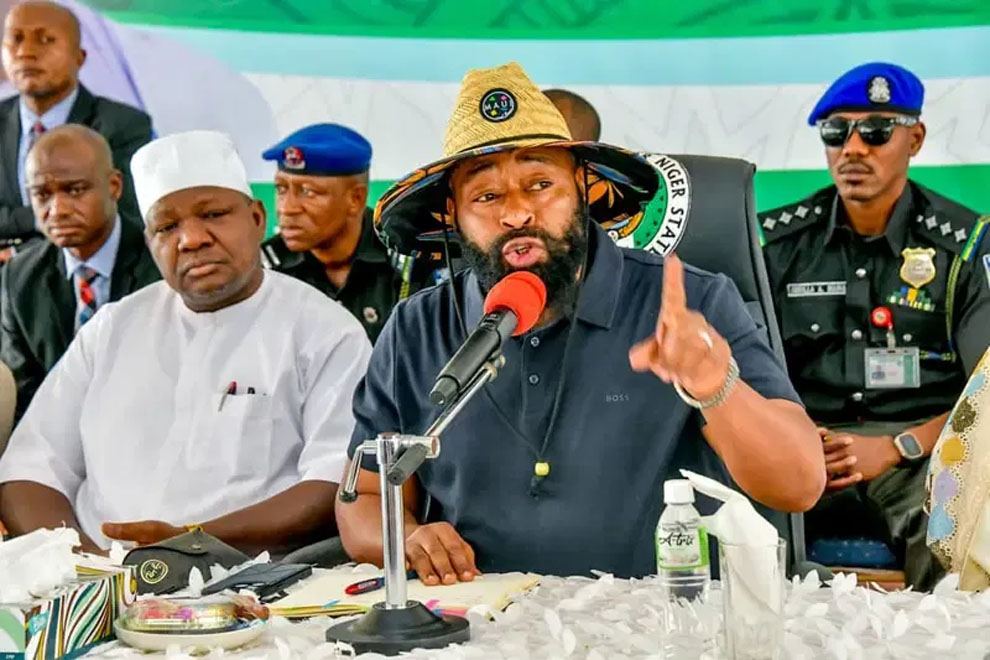
Niger Mosque Attack: Bago Says 63 Abducted, 14 Freed, Three Killed
Niger State Governor, Mohammed Umaru Bago, has said 63 people were abducted during the August 21 attack on worshippers in the Dakera area of Borgu Local Government Area, with three victims killed and 14 others recovered.
Bago’s disclosure provides the first specific official breakdown of the victims following weeks of conflicting reports about the scale of the Niger State abduction.
The governor said 33 worshippers were abducted from a mosque, while the attackers seized another 30 people from a nearby market as they fled, bringing the total number to 63.
He made the disclosure when former Niger State governor and Senator representing Niger North, Abubakar Sani Bello, visited the Government House in Minna to sympathise with the state over recent deaths and security incidents.
Bago also rejected reports circulating on social media that about 500 people had been abducted, describing the figure as exaggerated.
“It was a social media hype. Thirty-three were kidnapped at the mosque, and on their way, they kidnapped an additional 30 in a market, making a total of 63,” the governor said.
He added that three of those abducted had been killed, while 14 had been recovered.
The governor’s account means that, of the 63 people he said were abducted, 17 have been accounted for through deaths or recovery, leaving 46 whose current status was not specified in his latest disclosure.
However, the official figure has not ended concerns over the scale of the wider Borgu mass abduction.
Residents of Dekara and neighbouring communities staged a protest in New Bussa on Monday, September 21, demanding the release of hundreds of people they said remained in captivity more than a month after the attacks.
According to Reuters, residents initially estimated that about 600 people had been abducted during coordinated attacks on several communities. The president of the Borgu Youths Development Association, Abdullahi Yahaya Sadauki, subsequently said community estimates had risen to nearly 700 people allegedly still in captivity.
Reuters said it could not independently verify the higher figure.
READ ALSO:
- UNGA 81: Trump Threatens to ‘Annihilate’ Iran if No Deal Is Reached
- Mambilla: Malami Defends $200m Settlement, Rejects ICC Corruption Findings
- Obasanjo Family, Orji Kalu Among Nigerians Linked to $271m US Property Investigation
The residents are calling for a formal headcount across the affected villages to establish the actual number of people missing, those who escaped and those who were taken into captivity.
The protest also reflected the wider impact of the security crisis in Borgu, with residents saying insecurity has restricted access to markets and healthcare. Shops were reportedly closed in the area as residents observed a shutdown to draw attention to the continued captivity of the victims.
The attack occurred on August 21 when armed men invaded communities in the Dekara district of Borgu, including Gidan-Zana and Kpenya.
Police had initially said armed men stormed Kpenya Mosque during Friday prayers after attacking Gidan-Zana and Kpenya communities. Police spokesperson Wasiu Abiodun said at the time that authorities could not confirm the number of people abducted.
The initial police assessment indicated that no death had been confirmed at that stage, while a joint security team was deployed to the area for assessment and rescue operations.
Residents subsequently told Reuters that more than 60 worshippers had been abducted during what appeared to be coordinated attacks on several communities in Borgu. Reuters noted at the time that it could not independently verify the residents’ account.
The latest developments therefore present two different sets of figures that should not be treated as interchangeable.
Governor Bago’s official account puts the number abducted from the mosque and a nearby market at 63, comprising 33 worshippers and 30 other people. He says three were killed and 14 recovered.
The much higher figure of about 600, later described by community representatives as close to 700 people still in captivity, relates to the broader series of attacks across Dekara and neighbouring communities, rather than necessarily the specific mosque-and-market incident identified by Bago. The higher community estimate remains unverified.
The discrepancy has increased pressure on authorities to establish a comprehensive record of those affected by the attacks.
President Bola Ahmed Tinubu had previously ordered an immediate rescue operation following the August 21 attacks. More than a month later, however, residents say they are still waiting for the safe return of their relatives.
Niger State Commissioner for Information, Obed Nuhu Nana, told Reuters that security agencies had been mobilised and that the government was making efforts to rescue the victims.
Borgu’s location along Nigeria’s western border with the Republic of Benin has also heightened security concerns, particularly because the area covers remote communities where armed groups can operate across difficult terrain.
The continuing uncertainty over the number of victims has left families seeking answers about relatives who have not returned home. Community leaders say a physical headcount remains necessary to determine the true scale of the Borgu kidnapping.
For now, the latest official position is that 63 people were abducted in the mosque and market incidents, three were killed and 14 were recovered. The separate community claim that hundreds more remain in captivity has not been independently verified and requires further official investigation.
The conflicting figures underscore the need for authorities to reconcile community records with security agencies’ information and provide a verified account of the people abducted during the August attacks.
Niger Mosque Attack: Bago Says 63 Abducted, 14 Freed, Three Killed
-
 International2 days ago
18 Suspects Transferred to US Over 2021 Killing of Haitian President Moïse
-

 News2 days ago
NiMet Predicts Thunderstorms, Rain Across Nigeria Till Wednesday
-

 Politics2 days ago
‘Join the Hunt’ — Soludo Urges Igbos to Strategically Align Ahead of 2027
-

 Sports2 days ago
Messi Fires Stunning 75th Career Free-Kick to Reach 930 Goals in Inter Miami Draw
-
 metro2 days ago
My Heart Has Always Been Home With You — Tinubu’s Powerful Message to Oluremi at 66
-
 News2 days ago
Working People United Celebrates Oluremi Tinubu at 66, Commends Her Humanitarian Efforts
-
 News1 day ago
NLC Backs ₦500 Petrol Demand, Workers Propose ₦500,000 Salary
-

 Auto2 days ago
Jetour T1 Storms Abuja as Automaker Accelerates Nigeria Expansion