
News
What you need to know about Prince Bola Ajibola
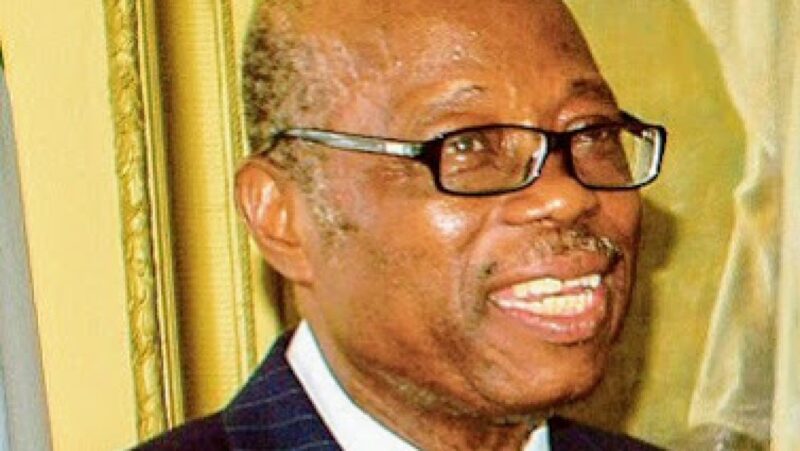
WHO IS JUDGE BOLA AJIBOLA?
A BRIEF PROFILE
His Excellency Judge Bola Abdul Jabbar Ajibola,
(SAN, KBE, D.Sc,D.Litt,FNIALS,FCIArb,CFR)
Born on 22nd March, 1934 to the Owu Royal Family, His Excellency Judge Bola Abdul Jabbar Ajibola attended Owu Baptist Day School, Ago Owu and Baptist Boys High School, Abeokuta, Ogun State for his primary and secondary school education between 1942 and 1955. In 1958, he was enrolled at Holborn College of Law, University of London from where he graduated in 1962 with a degree in law before he was called to the Bar at Lincoln’s Inn on 27 November 1962.
He was President of the Nigerian Bar Association (NBA), 1984-1985 and Attorney-General/Minister of Justice (1985-1991). From there, he moved to the International Court of Justice, Den Hague, Netherlands. After a three-year stint at the World Court in 1994, he further served as Judge Ad Hoc of the World Court from 1994 to 2002. He was appointed Judge of the Constitutional Court of the Federation of Bosnia and Herzegovina. He also served as the Nigeria High Commissioner to the United Kingdom between 1999 and 2002.
He was Chairman of Nigerian delegation to the Nigerian-Cameroon Mixed Commission on the Bakassi Peninsula. Prince Ajibola served as Vice President and later President of the World Bank Administrative Tribunal from 1994 to 2005; President, World Association of the World Jurists and Arbitrator, Ethiopia-Eritrea Boundary Dispute Commission.
READ ALSO:
- JAMB reschedules mock exam, fixes new dates for UTME
- Police arrest man, sons for attacking FRSC officials, burn patrol van
- FRSC hands over N27m found on accident spot to police
A voracious reader, prolific writer, renowned administrator, jurist and arbitrator of global acclaim, Prince Ajibola has attended numerous international conferences and has held international positions and arbitration assignments too numerous to mention here. In his professional career, he has provided outstanding legal consultancy services to several companies including Avon Cosmetics Limited; Masms Solicitors and Co. of London; Exxon, Houston, Texas, USA and Arthur Anderson and Co., London and Lagos.
In recognition of his outstanding imprints on the sands of time, Usmanu Dan Fodiyo University, Sokoto, awarded him Doctor of Literature (D. Litt) in 2003 while the Federal University of Agriculture conferred on him an Honorary Doctor of Agriculture (D. Agric) in 2004. As the Attorney-General and Minister of Justice between 1985 and 1991, he never took home a salary, asking that same should be distributed to the coffers of Federal Government (35%), Nigerian Bar Association (25%) and Charitable/humanitarian organisations (40%). The first Nigerian to be so selfless.
He also founded African Concern, a non-governmental organisation in Lusaka, Zambia in May, 1995 to promote peace, justice and harmony among peoples of Africa in order to eradicate the problems of refugees arising from political conflicts and natural disasters. This, he accomplished in association with the United Nations High Commissioner for Refugees to give succour to refugees in Nigeria, Liberia, Sierra Leone and Rwanda.
Prince Ajibola, an altruist, founded Islamic Mission for Africa in 1996, which gave birth to Crescent University, Abeokuta, a visionary initiative capable of building a new generation of graduates imbued with industry, moral uprightness and diligence as well as the inculcation of spiritual redevelopment in young men and women.
READ ALSO:
- MURIC to JAMB: We accept your apology, act on petitions written against Covenant, Canaanland Universities
- Labour party call for truce as state chairmen insist Abure is National Chairman
- Sad Easter as scores die in boat mishap in Bayelsa
Furthermore, the reputed legal icon and Islam’s ambassador has to his credit other awards and honours among which are: Knight of the Order of British Empire (KBE), 1989; Fellow, Chartered Institute of Arbitration (FCIArb); World Jurist Award 1987; Senior advocate of Nigeria (SAN), 1986; Fellow, Nigerian Institute of Advanced Legal Studies and Commander of the Federal Republic of Nigeria (CFR) among others.
Judge Bola Ajibola is the Founder/Proprietor, Crescent University, Abeokuta. Built on the pedestal of knowledge and faith, the university was established as a private academic institution under the banner of Islamic Mission for Africa(IMA).
It was established in consonance with her doctrine and vision: learning and character. The operating licence from the Federal Government of Nigeria was obtained from National Universities Commission(NUC) on June 9, 2005 by the then Minister of Education, Mrs Chinwe Nora Obaji.
Judge Bola Ajibola founded the university after selling his assets both in Nigeria and abroad to achieve the noble cause of assisting the Nigerian populace in closing the widening gap between attainable potential students’ population and limited space in public universities.Of his vision,accomplishment of Crescent University is the ultimate.
The university which prides itself as Citadel of Academic and Moral Excellence has graduated 12 sets at undergraduate level and 5 sets at Master’s level.Today,many of these products are performing excellently well both in further studies and employment.Some of them who made First Class in their first degree have also clinched Distinction/PhD grades in their MSc programmes abroad and government-owned universities in Nigeria.Only recently,Adedeji Ajayi,who bagged his BSc and MSc degrees from Crescent University got a keenly contested appointment as a senior journalist (Planning) with the British Broadcasting Corporation(BBC) while employers of labour have consistently lauded Crescent University products for good conduct.
This is, in fact, in concord with Judge Ajibola’s mission that “we are not out to produce brilliant beasts but global citizens” who will bring about peaceful coexistence among nations of the world.
WHO IS JUDGE BOLA AJIBOLA







News
Tinubu Rejects Calls to Suspend New Tax Laws, Insists Reforms Will Proceed
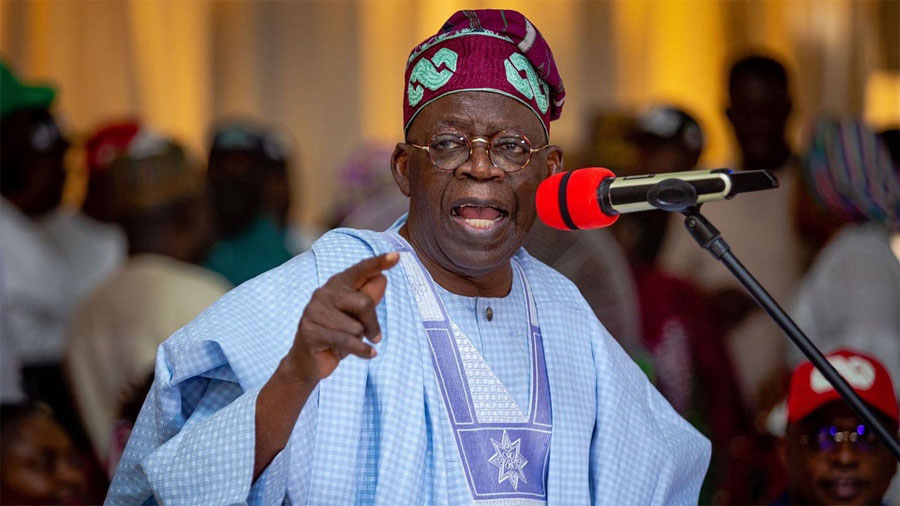
Tinubu Rejects Calls to Suspend New Tax Laws, Insists Reforms Will Proceed
President Bola Tinubu has rejected calls to suspend the implementation of Nigeria’s new tax laws, insisting that no substantial issue has been established to justify halting the reform process.
In a statement personally signed on Tuesday, Tinubu affirmed that the tax reform laws, including those that took effect on June 26, 2025, and others scheduled to commence on January 1, 2026, will be implemented as planned.
“No substantial issue has been established that warrants a disruption of the reform process,” Tinubu said. “Absolute trust is built over time through making the right decisions, not through premature, reactive measures.”
The president’s position comes amid growing public debate over alleged discrepancies between the tax acts passed by the National Assembly and versions published in the Official Gazette.
On December 26, the National Assembly ordered a re-gazetting of the tax laws after acknowledging differences between the legislative versions and the published documents. In separate statements, the House of Representatives spokesman, Akin Rotimi, and the Clerk to the National Assembly, Kamoru Ogunlana, assured Nigerians that the matter was being addressed within constitutional and statutory limits.
READ ALSO:
- Two Close Aides of Anthony Joshua Identified as Victims of Fatal Crash
- Court Orders Accelerated Hearing of Suit Challenging 2025 Tax Acts, Declines Injunction
- Sophia Momodu Asks Fans to Stop Calling Her Davido’s Wife
They explained that the review was being conducted in line with the 1999 Constitution, the Acts Authentication Act, and established parliamentary practice, stressing that the exercise was purely administrative and did not suggest any defect in legislative authority.
“This administrative action is intended solely to authenticate and formally reflect legislative decisions,” the statements said, adding that certified true copies would be made available to stakeholders and the public.
However, former Vice President Atiku Abubakar described the situation as “a grave constitutional issue,” arguing that any law published in a form not passed by the National Assembly amounts to a nullity.
“A law that was never passed in the form in which it was published is not law,” Atiku said, warning that any post-passage alteration without legislative approval would constitute a constitutional breach.
Despite the controversy, President Tinubu, who is currently on vacation in Europe, reiterated his administration’s commitment to due process and pledged continued collaboration with the National Assembly to resolve any outstanding issues.
“These reforms are a once-in-a-generation opportunity to build a fair, competitive, and robust fiscal foundation for our country,” Tinubu stated, adding that the new laws are aimed at harmonisation, structural reset, and strengthening the social contract, not increasing tax burdens.
The affected legislations include the Nigeria Tax Act 2025, Nigeria Tax Administration Act 2025, Joint Revenue Board of Nigeria (Establishment) Act 2025, and the Nigeria Revenue Service (Establishment) Act 2025.
Tinubu urged stakeholders to support the implementation phase, which he described as firmly in the delivery stage, assuring Nigerians that the reforms are designed to promote prosperity and shared responsibility.
Tinubu Rejects Calls to Suspend New Tax Laws, Insists Reforms Will Proceed
News
NAF Bombards Lakurawa, Bandit Camps in Zamfara after US airstrike

NAF Bombards Lakurawa, Bandit Camps in Zamfara after US airstrike
In a major escalation of counterterrorism operations across the North-West, the Nigerian Air Force (NAF) has carried out devastating precision airstrikes on notorious bandit enclaves in Zamfara State, coming on the heels of United States missile strikes that crippled Lakurawa terrorist camps in Sokoto.
The Air Component of Operation Fansan Yamma, Sector 2, executed two high-impact air interdiction missions at Turba Hill and the camp of feared bandit leader, Kachalla Dogo Sule, both located in Tsafe Local Government Area of Zamfara State. Several bandits were neutralised, while key operational facilities were destroyed.
Director of Public Relations and Information of the NAF, Air Commodore Ehimen Ejodame, described the strikes as a significant breakthrough in the sustained offensive against armed banditry.
He said the operations were intelligence-driven, relying on credible, multi-source intelligence and persistent surveillance. The first strike targeted Turba Hill, identified as a major bandit hideout. According to Ejodame, aerial reconnaissance revealed intense human activity and a zinc-roofed structure serving as the nerve centre of the enclave.
“Following positive identification, the target was engaged with precision. Post-strike assessments confirmed the complete destruction of the structure and the neutralisation of several bandits,” he said.
The second mission struck Kachalla Dogo Sule’s Camp, a notorious stronghold linked to the manufacture and deployment of improvised explosive devices (IEDs). Intelligence reports had connected the camp to recent deadly IED attacks along the Dan Sadau–Magami axis.
“The precision strike triggered intense fires that destroyed multiple active structures, effectively crippling the group’s IED production and operational capacity,” Ejodame added.
He noted that the airstrikes had significantly degraded bandit networks in Zamfara and reaffirmed the NAF’s commitment, in collaboration with other components of Operation Fansan Yamma, to denying criminal elements safe havens and restoring lasting peace across the North-West.
Army Confirms US Missile Strikes on Sokoto Terror Camps
Meanwhile, the Nigerian Army has confirmed that recent United States airstrikes targeted Lakurawa terrorist camps in Tangaza Local Government Area of Sokoto State, delivering a heavy blow to the group’s operational capability.
A senior Army Headquarters source disclosed that the strikes were conducted in coordination with US Africa Command (AFRICOM) following actionable intelligence on terrorist movements along the Kaurau axis. The missile strikes hit camps in the Bauni Forest near Waria and Alkassim villages on December 25.
Follow-up patrols carried out the next day confirmed extensive destruction of terrorist infrastructure. Troops later recovered missile debris in Kajiji town, Tambuwal LGA, Kebbi State, believed to be components of Tomahawk missiles.
Army engineers identified some of the debris as fuel boosters weighing about 300 kilograms, capable of penetrating soft ground up to two metres. The Army assured residents that investigations and recovery operations were ongoing and urged the public to report any suspicious objects.
Eight Killed as Terrorists Attack Kebbi Communities
Despite the military gains, terror struck Kebbi State as gunmen launched coordinated attacks on Kaiwa, Gelawu and Gebbe villages in Shanga Local Government Area, killing at least eight people and injuring several others.
The Kebbi State Police Command confirmed that seven victims died during the attacks, while another later succumbed to injuries in hospital. One injured person is currently receiving treatment.
Police spokesperson, CSP Bashir Usman, said security forces had intensified patrols and surveillance across the affected areas to prevent further attacks, though details of ongoing operations could not be disclosed.
Residents described the assaults as unprecedented and devastating, forcing many villagers to flee their homes in fear.
Troops Kill 80 Terrorists, Rescue 34 Victims Nationwide
In a broader update, the Nigerian Army announced that troops killed over 80 terrorists, rescued 34 kidnapped civilians and arrested several criminal suspects in coordinated operations across multiple states between December 25 and 29.
The operations spanned Borno, Adamawa, Sokoto, Katsina, Niger, Zamfara, Plateau, Delta, Cross River and the Federal Capital Territory.
In Borno State, air and ground offensives neutralised 57 terrorists and disrupted ISWAP/JAS networks, while operations in Niger and Katsina repelled coordinated attacks and recovered stolen livestock.
Troops also rescued kidnapped civilians in Kebbi and Plateau states, arrested illegal miners in the FCT, apprehended armed robbery suspects, and dismantled oil bunkering and piracy syndicates in Delta and Cross River states.
The Army said the successes underscore its resolve to sustain intelligence-driven operations, protect lives and property, and dismantle terrorist and criminal networks across the country.
News
Sokoto Operation: FG Reassures Investors, Says Nigeria’s Economy Remain Stable
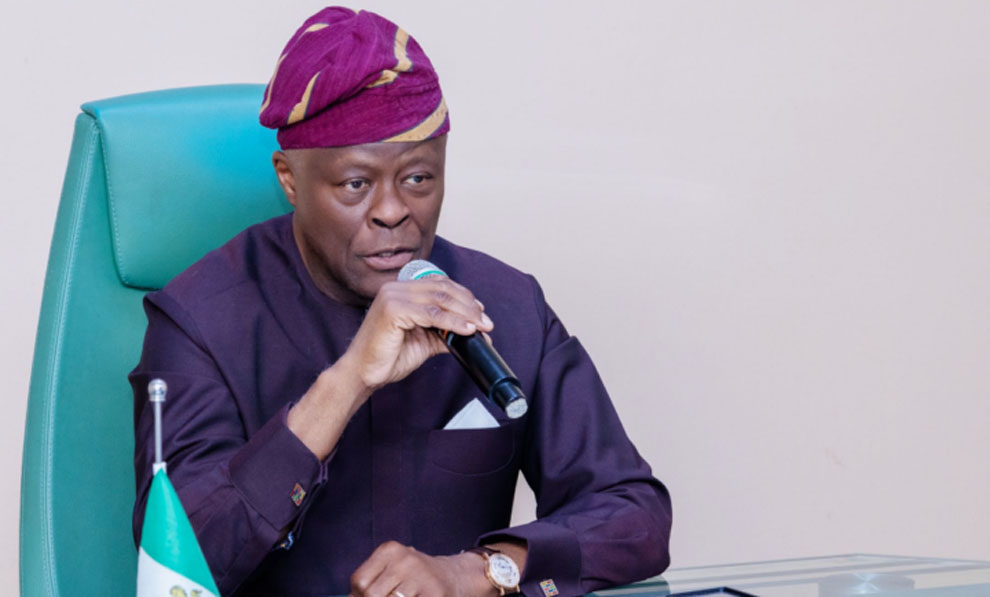
Sokoto Operation: FG Reassures Investors, Says Nigeria’s Economy Remain Stable
The Federal Government has reassured investors, financial analysts, and international development partners that Nigeria remains peaceful, stable, and economically resilient despite concerns following a joint security operation in Sokoto carried out on Christmas Day.
The Minister of Finance and Coordinating Minister of the Economy, Wale Edun, gave the assurance in a statement issued on Sunday in Abuja, explaining that the operation—conducted in collaboration with the United States—was a targeted, intelligence-led action aimed solely at terrorist elements threatening national security and economic activities.
“What Nigeria is decisively confronting—alongside trusted international partners—is terrorism,” Edun said, stressing that the context of the operation was essential to understanding its broader economic implications.
He described the Sokoto operation as “precise, intelligence-led, and focused exclusively on terrorist elements that threaten innocent lives, national stability, and economic activity,” adding that the action was designed to strengthen security rather than unsettle financial markets or undermine investor confidence.
“Far from destabilising markets or weakening confidence, such actions strengthen the foundations of peace, protect productive communities, and reinforce the conditions required for sustainable economic growth. Security and economic stability are inseparable; every effort to safeguard Nigerians is, by definition, pro-growth and pro-investment,” the minister said.
READ ALSO:
- Ibadan Explosion: Fayose Releases Documents, Claims Makinde Got ₦50bn from FG
- Italy Arrests Nine Over €7M Hamas Funding Network, Seizes €8M in Assets
- Kennedy Center Sues Musician for $1M Over Trump Name Cancellation
Edun noted that under the leadership of President Bola Ahmed Tinubu, Nigeria has recorded measurable progress in security improvements and economic reforms, reflected in key macroeconomic indicators.
According to him, Nigeria’s GDP grew by 3.98 per cent in Q3 2025, following a strong 4.23 per cent growth in Q2, with expectations of an even stronger performance in Q4 2025. He added that inflation has slowed for the seventh consecutive period and now stands below 15 per cent, attributing the improvement to coordinated fiscal and monetary policies.
The minister said Nigeria’s financial markets remain stable, with both domestic and international debt markets functioning efficiently under prudent fiscal management. He recalled that the country recently secured credit rating upgrades from Moody’s, Fitch, and Standard & Poor’s, describing them as independent validation of the government’s reform agenda.
“We have maintained fiscal discipline, prioritised efficiency, and protected macroeconomic stability, demonstrating resilience in the face of external shocks,” Edun said.
Referring to President Tinubu’s recent national address, Edun stated that the administration’s focus for 2026 is to consolidate gains made in 2025, strengthen economic resilience, and sustain momentum toward inclusive and durable growth.
Assuring local and foreign investors ahead of market reopening on Monday, December 29, 2025, Edun said confidence in Nigeria’s economic direction remains justified.
“As markets reopen, investors can be confident that Nigeria remains reform-driven, stable, and focused on growth. The fundamentals are strengthening, the policy direction is clear, and this administration’s resolve to protect lives and secure prosperity is unwavering,” he said.
He concluded by reaffirming the country’s investment outlook: “Nigeria remains open for business, anchored in peace, and firmly focused on the future.”
Sokoto Operation: FG Reassures Investors, Says Nigeria’s Economy Remain Stable

-
 metro3 days ago
Ibadan Explosion: Fayose Releases Documents, Claims Makinde Got ₦50bn from FG
-

 metro2 days ago
Niger Delta Crackdown: Army Seizes ₦150m Stolen Oil, Arrests 19 Suspects
-

 metro3 days ago
Plateau Kidnappers Demand ₦1.5m Each as 28 Muslim Travellers Remain in Captivity
-

 Sports2 days ago
Anthony Joshua injured as two die in fatal Lagos-Ibadan Expressway crash (plus photos)
-

 Sports2 days ago
Cristiano Ronaldo Wins Best Middle East Player at 2025 Globe Soccer Awards in Dubai
-

 metro23 hours ago
Ogun Man Arrested After ₦4,000 Debt Dispute Claims Stepbrother’s Life
-
 metro19 hours ago
Mrs. Regina Akume Urges SGF George Akume to Return to Christianity Amid New Marriage
-

 metro3 days ago
Bello Turji Not Killed in US Airstrikes, Security Expert Debunks Reports