

International
Zelensky calls for ‘firm global response’ to train station bombing

Ukrainian President Volodymyr Zelensky called for a “firm global response” Friday after a missile strike killed 52 people at a train station in eastern Ukraine where civilians had gathered to flee a feared Russian offensive.
“This is another Russian war crime for which everyone involved will be held accountable,” Zelensky said in a video message, referring to Friday’s missile strike, whose victims included five children.
“World powers have already condemned Russia’s attack on Kramatorsk. We expect a firm global response to this war crime,” he continued.
World leaders condemned the attack in the Donetsk capital, with US President Joe Biden accusing Russia of being behind a “horrific atrocity” that the French condemned as a “crime against humanity.”
At least 52 people including five children were killed, the regional government said, while Zelensky reported 300 wounded, saying the strike showed “evil with no limits”.
Zelensky said the bombing had been reported in Russia before the missiles had even landed and called for more weaponry to counter Moscow’s aggression.
“I am sure that the victory of Ukraine is just a matter of time, and I will do everything to reduce this time,” he added.
AFP journalists saw the bodies of at least 30 people under plastic sheets next to the station.
Body parts, packed bags and stuffed animals were flung across the floor.
On the station forecourt, the remains of a missile were still visible.
It was tagged with white paint with the words “for our children” in Russian, an expression frequently used by pro-Russian separatists in reference to their losses since the start of the first Donbas war in 2014.
READ ALSO:
- Buhari Running Nigeria As If No One Is In Charge – Tambuwal
- FG to complete 2,754 low-cost houses in April 2023
- Nationwide blackout as electricity grid collapses again
“I was in the station. I heard, like, a double explosion. I rushed to the wall for protection,” said Natalia, searching for her passport among the abandoned belongings.

The remains of one rocket in the aftermath of the attack on the railway station
Another woman in a state of shock told AFP: “I saw people covered in blood entering the station and bodies everywhere on the ground.”
Russia denied being behind the missile strike, which came with European Commission President Ursula von der Leyen and EU foreign policy chief Josep Borrell in Kyiv for talks with Zelensky and to visit the scene of civilian killings in the town of Bucha.
Russia faces “decay” because of ever tougher sanctions and Ukraine had a “European future”, Von der Leyen said at a news conference with Zelensky.
Six weeks into President Vladimir Putin’s invasion, Moscow has shifted its focus to eastern and southern Ukraine after stiff resistance ended plans to swiftly capture the capital Kyiv.
– ‘All this horror’ –
Russian troops appear set on creating a long-sought land link between occupied Crimea and the Moscow-backed separatist statelets of Donetsk and Lugansk in the Donbas region, where civilians have been urged to flee heavy shelling that has laid waste to towns and complicated evacuation efforts.
“There is no secret — the battle for Donbas will be decisive. What we have already experienced — all this horror — it can multiply,” warned Lugansk regional governor Sergiy Gaiday.
In the city of Lozova west of Kramatorsk, more than 15,000 people have fled, Oleg Sinegubov, head of the Kharkiv regional military administration, said on Telegram.
“There are still about 50 thousand [people]. A large number of people will leave. Departures are organized both by rail and own vehicles,” he said, adding that fighting was taking place nearby.
In the south, the Black Sea port city of Odessa girded for rocket attacks, imposing a weekend curfew.
Residents and Ukrainian officials returning after a Russian withdrawal from an area near Kyiv, meanwhile, were taking stock of the scale of the devastation.
Bucha, where authorities say hundreds were killed — some with their hands bound — has become a byword for the brutality allegedly inflicted under Russian occupation.
But Zelensky warned worse was being uncovered.
“They have started sorting through the ruins in Borodianka,” northwest of Kyiv, he said in his nightly address. “It is much more horrific there. There are even more victims of Russian occupiers.”
Conflict in the area has wrought massive destruction and bodies are only now being retrieved, with 27 recovered from two destroyed buildings, according to Prosecutor General Iryna Venediktova.
Fresh allegations also emerged from Obukhovychi, northwest of Kyiv, where villagers told AFP they were used as human shields.
– ‘Help us now’ –
Moscow has denied targeting civilians, but growing evidence of atrocities has galvanised Ukraine’s allies in the EU, which has approved an embargo on Russian coal and the closure of its ports to Russian vessels.
The bloc has frozen 30 billion euros ($32.6 billion) in assets from blacklisted Russian and Belarusian individuals and companies, it said Friday.
It also blacklisted Putin’s two adult daughters and more than 200 others as part of its latest sanctions package, according to an official list published late Friday.
The United States and Britain had already sanctioned the Russian leader’s daughters.
En route to Kyiv, Borrell told journalists the EU would supply 7.5 million euros to train Ukrainian prosecutors to investigate war crimes, which Russia is accused of committing.
At the United Nations General Assembly, 93 nations voted Thursday to suspend Russia from the body’s human rights council, prompting accusations from Moscow that the move was “illegal and politically motivated.”
“Russia’s lies are no match for the undeniable evidence of what is happening in Ukraine,” Biden said, calling the invasion “an outrage to our common humanity”.
Ukraine has welcomed new pressure on Moscow, but it continues to push for harsher sanctions and more heavy weaponry.
“Either you help us now — and I’m speaking about days, not weeks — or your help will come too late and many people will die, many civilians will lose their homes, many villages will be destroyed,” foreign minister Dmytro Kuleba said after meeting NATO foreign ministers in Brussels.
Britain said Friday it was sending Ukraine more “high-grade military equipment” including Starstreak anti-aircraft missiles and 800 anti-tank missiles, while Slovakia said it had given Ukraine an S-300 air defence system.
AFP







International
US Court Blocks Trump Visa Rule Limiting Stay of Foreign Students, Journalists

US Court Blocks Trump Visa Rule Limiting Stay of Foreign Students, Journalists
A federal court in the United States has temporarily blocked the Donald Trump administration from implementing a new immigration rule that would have imposed fixed time limits on how long foreign students, exchange visitors and journalists could remain in the country without applying for extensions.
The ruling, delivered by U.S. District Judge F. Dennis Saylor IV in Boston on Monday, September 14, came just one day before the controversial rule was scheduled to take effect.
The decision provides immediate relief for thousands of Nigerians in the United States, particularly international students, researchers, exchange visitors and journalists whose immigration status could have been affected by the new restrictions.
However, the ruling does not specifically exempt Nigerians. The rule applies broadly to foreign nationals covered by the affected visa categories, meaning Nigerians are among the people who would have been subject to the proposed restrictions.
The Trump administration’s rule, published by the U.S. Department of Homeland Security (DHS) in July, sought to replace the long-standing “duration of status” (D/S) system with fixed admission periods for holders of F, J and I visas.
Under the proposed system, F-1 international students would generally have been admitted for a maximum of four years, while J-1 exchange visitors would also have faced a four-year limit.
Foreign journalists holding I visas would have been permitted to remain for up to 240 days before being required to seek an extension. The Federal Register rule also contained a separate 90-day limit for certain Chinese journalists.
The changes would have represented a major departure from the system that has governed foreign students and researchers in the U.S. for decades.
Under the existing duration-of-status arrangement, eligible students can generally remain in the country for the period necessary to complete their approved programme, provided they maintain their immigration status and comply with the relevant requirements.
The proposed fixed-term system would instead have required many students whose programmes extend beyond four years to seek an extension from U.S. immigration authorities.
Judge Saylor ruled that the Department of Homeland Security had failed to provide an adequate justification for such a significant change.
The judge described the agency’s reasoning as “exceptionally weak”, finding that DHS had not sufficiently addressed the consequences of abandoning the existing system or considered less restrictive alternatives.
READ ALSO:
- Sokoto Shuts Mosque After Cleric Stabbing, Names Ulamas Probe Panel
- Iran Rejects US Talks as Trump’s Mixed Signals Deepen Hormuz Standoff
- Saudi Arabia Vows ‘Firm’ Response as Houthi Attacks Wound 13
The court’s decision also highlighted the potential impact on American universities, research institutions and the wider U.S. economy.
According to the ruling, approximately 1.6 million people hold F visas, while another 500,000 hold J visas. Major American research universities have significant numbers of international students, particularly at postgraduate level.
Saylor warned that implementing the rule could result in substantial financial and educational disruption, including declining international enrolment and increased administrative costs for universities.
He noted that the existing system had facilitated the arrival of millions of foreign students and researchers whose contributions had supported advances in science, medicine and technology as well as economic growth in the United States.
The legal challenge was brought by a coalition representing higher education, immigration and journalistic interests, which argued that the new restrictions would create uncertainty for international students, universities, researchers and journalists.
The groups maintained that forcing students and exchange visitors to repeatedly apply for extensions could disrupt academic programmes, research projects and professional activities.
They also argued that the rule could make American universities less attractive to international students at a time when institutions depend heavily on global talent.
The Trump administration, however, defended the policy as necessary to strengthen immigration enforcement and prevent abuse of the student and exchange-visitor visa system.
DHS General Counsel James Percival criticised the court’s decision, arguing that the existing system could allow people to remain in the United States for excessively long periods while technically maintaining student status.
The administration has particularly raised concerns about individuals who enrol in minimal academic programmes and remain in the country for years.
The court’s decision therefore represents a temporary legal setback for the administration’s effort to impose tighter controls on foreign student visas and other temporary immigration categories.
For Nigerian students in the U.S., the immediate consequence is that the proposed four-year F-1 limit does not take effect while the preliminary injunction remains in force.
Students who need more than four years to complete their programmes are therefore not currently required to leave the United States or obtain an extension solely because of the blocked rule.
READ ALSO:
- Peter Obi Rejects Anambra Debt Claims, Challenges Soludo Govt to Produce Evidence
- Peter Obi: Release My UNN Academic Records, I Have Nothing to Hide
- A Son Wouldn’t Have Done Better — Dangote Speaks on Daughters, Succession
The same applies to eligible exchange visitors and foreign journalists who would have been affected by the proposed fixed admission periods.
The ruling also means that the existing immigration framework remains in place while the legal battle continues.
However, Judge Saylor’s decision is a preliminary injunction, not a final judgment on whether the Trump administration has the legal authority to change the visa system.
The administration can continue defending the rule in court, and the final outcome could still change depending on subsequent proceedings or appeals.
A further hearing in the case is expected on October 2, 2026, as the parties continue their legal arguments over the new immigration policy.
The dispute comes amid a broader tightening of U.S. immigration policies under Trump, with the administration seeking greater scrutiny of foreign nationals entering or remaining in the country.
The blocked rule was formally published in the Federal Register on July 17 and was scheduled to become effective on September 15, 2026.
For now, however, foreign students, exchange visitors and journalists covered by the affected visa categories can continue operating under the existing rules while the court proceedings continue.
The ruling could therefore provide temporary certainty for Nigerian students in America, Nigerian researchers, exchange visitors and journalists who had faced the prospect of additional immigration applications and tighter deadlines under the now-blocked policy.
It also leaves open a wider debate over how the United States should balance immigration enforcement and national security with the interests of universities, international education, scientific research, cultural exchange and journalism.
The Federal Register had said the new system was intended to establish fixed periods of admission and clearer procedures for extensions. The court’s intervention means those provisions cannot currently be implemented as scheduled.
The case is consequently being closely watched by American universities and international students, including Nigerians, because any eventual decision could determine whether the U.S. returns permanently to fixed periods of admission or retains the long-standing duration-of-status framework.
For the moment, the key development is that Trump’s proposed visa time limits have been blocked, and the existing rules remain in effect pending further litigation.
US Court Blocks Trump Visa Rule Limiting Stay of Foreign Students, Journalists
International
Iran Rejects US Talks as Trump’s Mixed Signals Deepen Hormuz Standoff
Iran Rejects US Talks as Trump’s Mixed Signals Deepen Hormuz Standoff
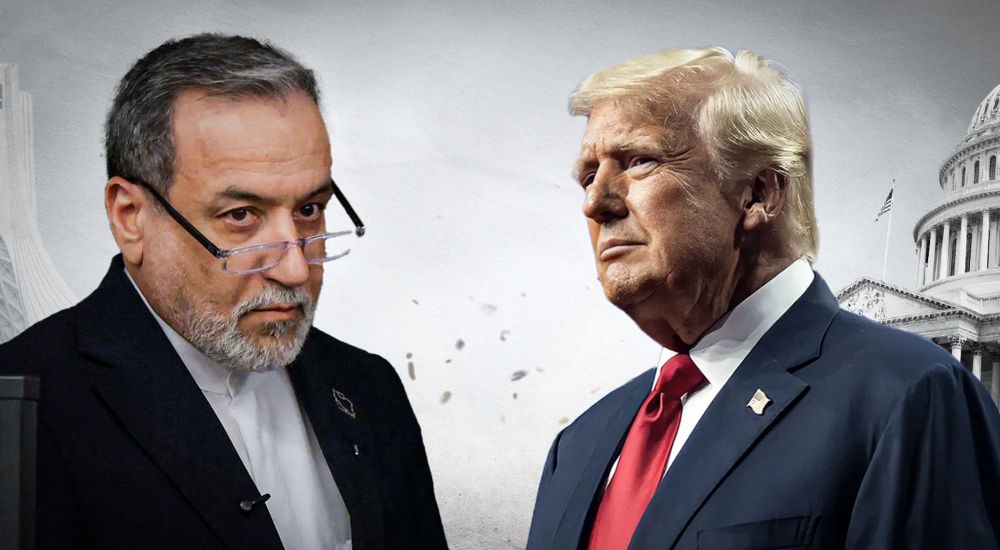
Iran’s top security official on Tuesday ruled out any negotiations with the United States, dismissing President Donald Trump’s suggestion that he was open to talks as “mixed signals” and insisting that Tehran’s conditions must be met before any dialogue can begin.
“Don’t get distracted by the U.S. president’s mixed signals — from ‘no negotiations’ to ‘we’re ready to talk’,” Mohsen Rezaei, secretary of Iran’s Supreme National Security Council, posted on X. “The stakes around oil and the straits have changed. Damage control won’t stop what’s coming. No talks until Iran’s conditions are met. Period!”
Trump said on Monday that he was open to holding talks with Iran, after weeks of saying it was too early to make a deal to end the Middle East war. “The failing Nation of Iran wants to make a deal, quickly and badly. I will determine whether or not the U.S.A. will choose to engage — The concept of which we are open to,” Trump wrote on his Truth Social network. The statement marked a sharp reversal from Trump’s remarks just days earlier. On September 9, he told reporters at Andrews Air Force Base that the US was “not looking for” negotiations with Iran. “Originally, I wanted to make a deal. We’re so far down the line; they have very little country left right now. So we’re not looking for it,” he said at the time.
Tehran has repeatedly listed demands as preconditions for ending the war and its blockade on the Strait of Hormuz. According to Iranian officials, these include a definitive end to the war and all aggression against Iran and its regional allies, lifting the naval blockade imposed on Iranian ports, full compensation for war damages, removal of sanctions against Iran’s economy, and the unconditional release of frozen Iranian assets abroad. Rezaei’s rejection came as Tehran and Muscat postponed talks between Iran and Gulf Arab states that had been scheduled for Monday. Iran’s Fars news agency reported that the postponement was made “at the request of some countries in the region and was a joint decision by Tehran and Muscat”.
READ ALSO:
- Saudi Arabia Vows ‘Firm’ Response as Houthi Attacks Wound 13
- Peter Obi Rejects Anambra Debt Claims, Challenges Soludo Govt to Produce Evidence
- Peter Obi: Release My UNN Academic Records, I Have Nothing to Hide
The diplomatic standoff unfolds against a backdrop of continuing violence in the Strait of Hormuz. On Sunday, an attack on an Iranian commercial cargo vessel killed one person and wounded four others, according to Iranian state media. The same weekend, an attack on the commercial vessel MT El Gaia left one Indian crew member missing and 13 rescued. The United Kingdom Maritime Trade Operations (UKMTO) has reported multiple incidents involving merchant vessels in the strategic waterway, advising mariners to “consider the latest maritime security information and maintain awareness of the evolving operational environment”. Oman, which has emerged as a key mediator in the conflict, saw its Foreign Minister Badr Albusaidi announce the postponement of the Gulf talks “in the interests of consensus.” “We remain committed to fostering dialogue that supports stability and lasting cooperation in our region,” he said on X.
The Strait of Hormuz remains a central point of contention. Before the war began in late February, about one-fifth of the world’s oil and liquefied natural gas supplies were shipped through the waterway. Traffic has since plummeted amid continued security risks. Brent crude futures jumped more than 2 per cent on Tuesday, trading above $107 per barrel as the diplomatic impasse deepened. Trump has pushed to restore shipping through the strait to pre-war levels to bring down energy prices ahead of November’s midterm elections. But Tehran has shown no sign of relinquishing what it regards as a key source of strategic leverage.
The latest exchange fits a broader pattern of conflicting signals from Washington. In June, the United States and Iran signed a framework agreement that included provisions for a $300 billion private investment fund to rebuild Iran’s economy. Negotiations were scheduled to conclude within 60 days, but the process stalled amid renewed hostilities. Iranian officials have repeatedly dismissed contradictory statements from Washington as political messaging rather than evidence of a genuine diplomatic opening. Tehran has stressed that any future diplomatic process would require concrete guarantees rather than verbal commitments, arguing that previous US reversals have undermined trust.
Iran Rejects US Talks as Trump’s Mixed Signals Deepen Hormuz Standoff
International
Saudi Arabia Vows ‘Firm’ Response as Houthi Attacks Wound 13
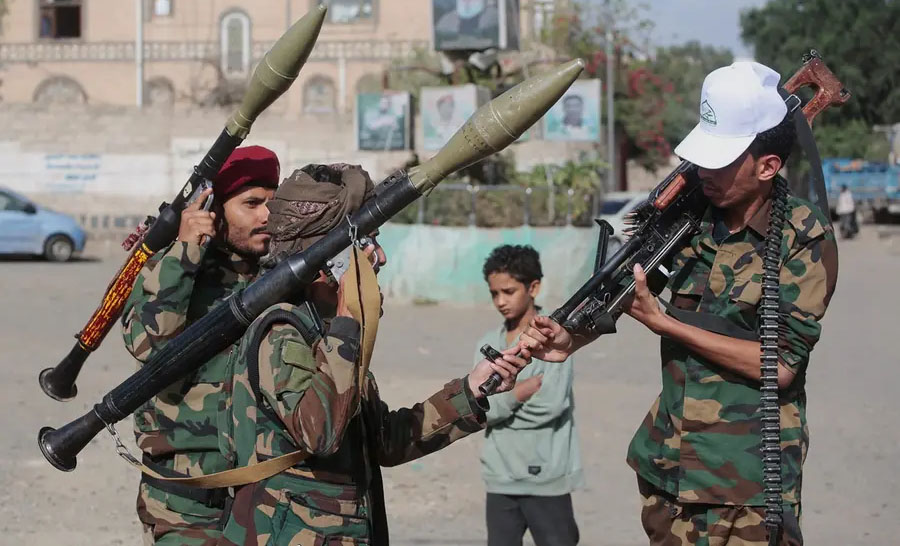
Saudi Arabia Vows ‘Firm’ Response as Houthi Attacks Wound 13
Saudi Arabia has pledged to respond “firmly” to a wave of Houthi missile and drone attacks that wounded 13 civilians in the kingdom’s south, as the Iran-backed group tightens its grip on the Bab al-Mandab Strait and pushes oil prices above $100 a barrel.
The Saudi-led coalition said it would take “all necessary operational measures” to protect the kingdom’s sovereignty after Monday’s strikes on Khamis Mushait, Abha and Taif — three southern cities far from the Yemeni border. The attacks injured 13 civilians, damaged seven homes and two vehicles, and triggered air-raid alerts across six Saudi regions, including Jeddah, Yanbu, Jizan and AlUla.
According to coalition spokesman Brigadier General Turki al-Maliki, Houthi forces launched “dozens of ballistic missiles and drones” at civilian and military targets in southern Saudi Arabia. A resident of Khamis Mushait told Agence France-Presse he heard “intense blasts” that left fires burning for a “long time”. “Honestly, we couldn’t sleep at all,” he said. Saudi air defences intercepted multiple projectiles, but falling debris caused civilian injuries. Civil Defence lifted the alerts by Tuesday morning, saying the danger had “passed”. The coalition retaliated with more than 50 airstrikes on Houthi-held areas, according to Houthi sources — matching the scale of the previous day’s bombardment.
READ ALSO:
- Peter Obi Rejects Anambra Debt Claims, Challenges Soludo Govt to Produce Evidence
- Peter Obi: Release My UNN Academic Records, I Have Nothing to Hide
- A Son Wouldn’t Have Done Better — Dangote Speaks on Daughters, Succession
The renewed fighting has far-reaching consequences beyond Yemen’s borders. Houthi forces have seized Mayyun Island, along with Greater and Lesser Hanish and Zugar Island, giving them control of all three key islands at the southern entrance to the Bab al-Mandab Strait. They have also captured the port city of Mokha and the coastal town of al-Khawkhah, completing their takeover of Yemen’s entire Red Sea coast. The timing is critical. With the wider US-Iran war choking the Strait of Hormuz, the Bab al-Mandab has become a vital artery for Saudi oil exports. Houthi attacks on Saudi oil infrastructure have already pushed oil prices above $100 per barrel**, while average US diesel prices topped **$6 for the first time. Saudi Arabia has shut down its East-West pipeline as a precaution following attacks in the Riyadh and Medina regions — a move that further constrains the kingdom’s ability to export crude.
The human cost of the renewed conflict continues to mount. The UN’s International Organization for Migration (IOM) reports that 93,864 people have been displaced since fighting reignited in July, with the heaviest impact in Ta’iz and Lahj governorates. UN monitors verified 40 civilian casualties — 8 deaths and 32 injuries — between 1 and 14 September. Women and children accounted for half of those killed and more than half of the wounded.
A member of the Houthi Political Bureau declared that “Yemen’s response will continue and escalate” until Saudi Arabia stops its “aggression” against the Yemeni people. Houthi military spokesman Yahya Saree claimed the attacks were retaliation for more than 300 Saudi airstrikes in Yemen over the past five days. The Houthis, who seized Yemen’s capital Sanaa in 2014 and sparked a civil war that has become one of the world’s worst humanitarian disasters, remain undeterred by Saudi air power.
Saudi Crown Prince Mohammed bin Salman met Egyptian President Abdel Fattah al-Sisi on Tuesday to discuss regional developments. But hopes of a broader de-escalation remain slim. US media reported last week that President Donald Trump had rejected a personal request from the Saudi crown prince to intervene in the war. Trump said on Monday he was open to talks with Iran, but Tehran’s top security chief Mohsen Rezaei responded that “there will be no negotiations until Iran’s conditions are met”. A proposed meeting between Gulf states and Iran over the future of Hormuz was postponed on Monday, with Tehran accusing Riyadh of using Yemen as a pretext to delay the talks.
Saudi Arabia faces a difficult path. Its airstrikes have so far failed to deter the Houthis’ advance, and the kingdom’s oil-dependent economy is increasingly vulnerable to disruption. With the Strait of Hormuz closed and the Bab al-Mandab now under Houthi control, the world’s leading crude exporter is navigating its most dangerous security environment in years. For ordinary Yemenis and Saudis alike, the cost is measured not only in oil prices but in lives, homes and displaced families.
Saudi Arabia Vows ‘Firm’ Response as Houthi Attacks Wound 13
-

 News2 days ago
SERAP Threatens Legal Action Over ₦126bn INEC Electoral Funds
-
 Politics2 days ago
Five Islamic Clerics Abducted After Tinubu Re-Election Prayer At Yari’s Zamfara Residence
-

 Opinion2 days ago
‘Tinubu Will Win Again in 2027’ — Charismatic Bishops’ Secretary
-

 Politics21 hours ago
2027: Northern Lecturers Back Tinubu, ASUU Disowns Endorsement
-

 metro2 days ago
Mother ‘sold daughter’s abuse videos for $300’: Nigeria child pornography case shocks nation
-

 Sports2 days ago
‘Unacceptable’ — Arteta Furious Over Sunderland Penalty in Arsenal Win
-

 News1 day ago
Nwifuru Dismisses Cubana Chief Priest as ‘Attention-Seeker’
-

 News2 days ago
Petrol Subsidy: Presidency Rejects Atiku’s Plan, Says No Going Back