Group tackles Natasha over call for drug test on senators
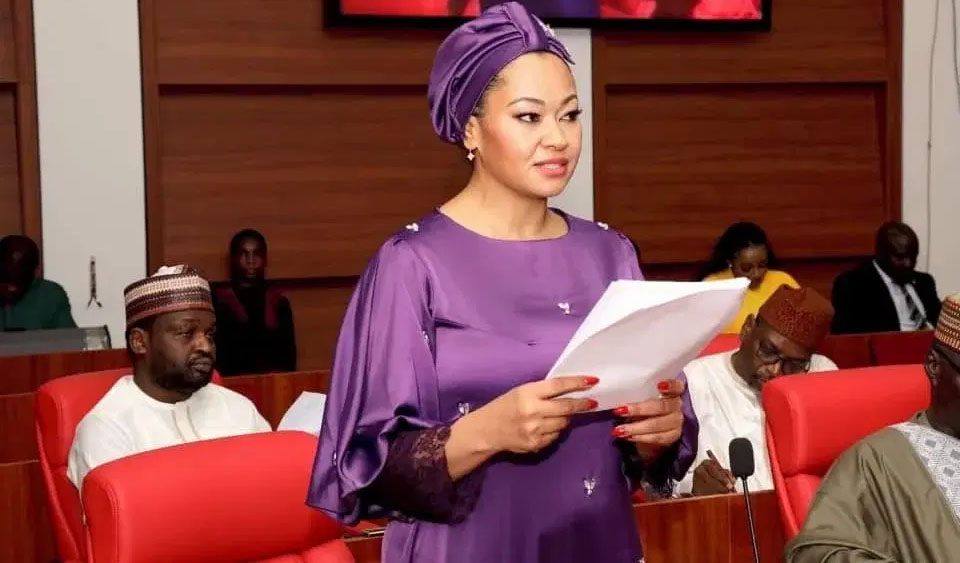
Some indigenes of Kogi West Senatorial District on Sunday, rose in defence of their senator, Sunday Karimi over the verbal tirade between him and Mrs Natasha Akpoti-Uduaghan, the embattled Senator of Kogi Central who is currently on suspension from the national assembly, noting that her call for periodic drug tests was apt and self-indicting.
The indigenes said the embattled senator’s advice was in order, considering the fact that her conduct since she refused to obey a simple sitting arrangement rule at the Senate, had truly called for a drug test to ascertain if she was free from the influence of substance.
The constituents were responding to a statement by the embattled Senator, where she called for periodic drug tests for senators, in response to a statement by Karimi.
Their reaction came through a statement signed by the Chairman, Kogi West Patriotic Assembly, Ayodele Joshua, PhD; and Secretary, Kareem Adigun.
Senator Karimi had said former Governor Yahaya Bello had been vindicated by the embarassment Akpoti-Uduaghan had brought on the Senate and Nigeria as a whole.
The Kogi West Indigenes, who swiftly rose in his defence after Akpoti-Uduaghan’s response, told him not to engage in a war of words with her, stating that they were well positioned to give the embattled Senator the right response.
“Our attention has been drawn to a rejoinder by the suspended Senator representing Kogi Central in the National Assembly, Mrs. Natasha Akpoti-Uduaghan, to Senator Sunday Karimi’s comments on her conduct at the National Assembly, which recommended drug tests for serving senators.
“The embattled senator’s advice is in order, considering the fact that her conduct since she refused to obey a simple sitting arrangement rule at the Senate, has truly called for a drug test to ascertain if she is free from the influence of substance.
“Or how else can one explain the ridiculous things she has been saying from one media house to the other, both in Nigeria and abroad, to authenticate her spurious allegations against the Senate President? We need to be sure that she is the one saying those things and not someone under the influence of some substance.
“We identify with our brothers and sisters, fathers, and mothers from Kogi Central at this trying period. The disgrace a so-called daughter of the land has brought is not to them alone but to the entire state.
“If a woman of her age can be going from one international platform to the other, shouting sexual harassment against the Number 3 citizen of a country as populous and influential as Nigeria, with no iota of proof, then Nigerians need to really accept the fact that drug tests must be carried out on every aspiring Senator so that we would always avoid swearing in the wrong characters.
“Even Nigerian women are unanimous in their position that they must be wary of those they elect into sensitive positions and by virtue of this, become role models for their children. Forget about those who would never see anything good in their country.
“Previous actions and false accusations by this same suspended Senator against other personalities have shown that she is not fit to hold such position. The recall process should be followed through so she can at least learn and also represent her people better next time.”
“Senator Karimi should not join words with the suspended Senator. We will respond appropriately on his behalf. With her unfounded allegations, resort to cheap propaganda in the media against dissenting voices, and ridiculous kindergaten statements that shouldn’t even be uttered by people in their right frame of mind, it is clear that she should be the first person to take her proposed drug test,” the Kogi West indigenes declared.
Group tackles Natasha over call for drug test on senators
Delta Police Intercept Sienna With Military Uniforms, Suspected Drugs
The Delta State Police Command has intercepted a Toyota Sienna allegedly conveying military camouflage uniforms, boots, hats and cartons of suspected illicit drugs, arresting the driver in the process.
The interception was carried out on Friday, September 18, 2026, by operatives of the command’s Anti-Cult Unit (CACU), Asaba, following intelligence about the movement of the vehicle from Onitsha in Anambra State towards Ondo State.
The police said operatives mounted surveillance along the anticipated route and intercepted a green Toyota Sienna with registration number KP 527 AAA at about 4:50am.
The vehicle was allegedly driven by Isaac Urji, 45, from Abia State, who was arrested after the search.
According to the police, officers recovered cartons of substances suspected to be Tramadol and other illicit drugs, alongside military camouflage uniforms, boots and hats.
The Delta State Police Public Relations Officer, SP Bright Edafe, disclosed the development in a statement made available to journalists in Warri on Saturday.
Edafe said investigation had commenced to determine the source and intended destination of the recovered items and identify other people who may have been connected with the consignment.
The interception comes amid a wider crackdown by the command on kidnapping, cultism, illicit drugs and illegal firearms across Delta State.
In a separate operation on September 18, operatives of the Special Anti-Kidnapping Unit (SAKU), Sector III, Ubulu-Uku, arrested two suspected cultists at Alisheme Community in Ika South Local Government Area.
The suspects, identified as Destiny Okafor, 18, and Sunday Bryan, 22, were allegedly linked to cultism and kidnapping-related activities.
Police said preliminary investigations indicated that the two suspects identified themselves as members of the NBM Confraternity. Officers reportedly recovered a locally fabricated single-barrel gun, a battle axe, two cutlasses, mobile phones and a laptop.
In another operation on September 15, police and other security personnel conducted a cordon-and-search operation around Ogboli Quarter and other areas of Issele-Uku in Aniocha North Local Government Area following intelligence about suspected cult activities.
Four suspected cultists were arrested during the operation, while police said they recovered two locally made pistols, one pump-action gun and six live cartridges.
The arrests and recoveries are part of the Delta Police Command’s intelligence-led operations targeting criminal activities across the state.
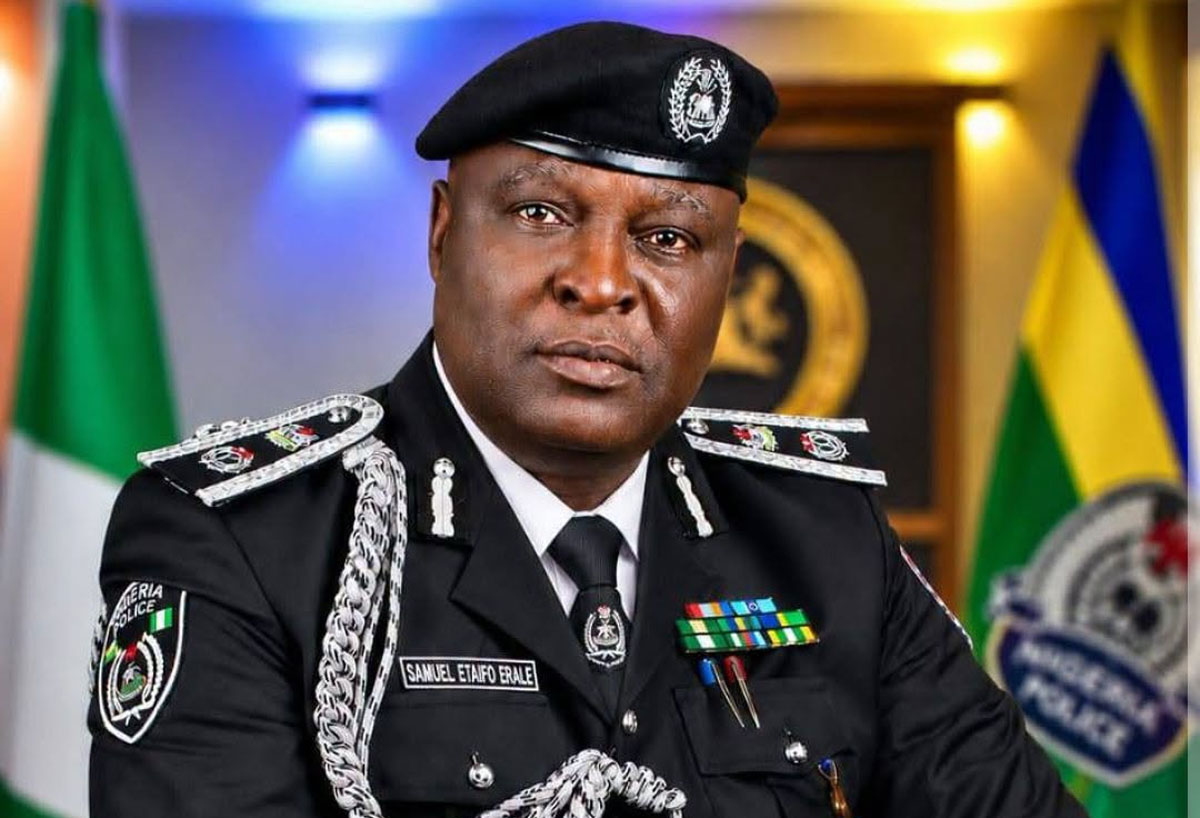
The Commissioner of Police, CP Samuel Erale, said the command would sustain operations against kidnapping, cultism and the proliferation of illegal firearms.
He also urged residents to continue providing credible information to security agencies, assuring the public that information supplied to the police would be treated confidentially.
Meanwhile, the driver arrested in connection with the intercepted Sienna remains in police custody as investigators work to establish the circumstances surrounding the movement of the military uniforms and suspected illicit drugs.
The police have not announced any charges against the suspect, and the investigation is expected to determine whether other individuals were involved in the consignment.
Delta Police Intercept Sienna With Military Uniforms, Suspected Drugs
Jehovah’s Witnesses Adjust Blood Transfusion Rules, Allow Personal Choice
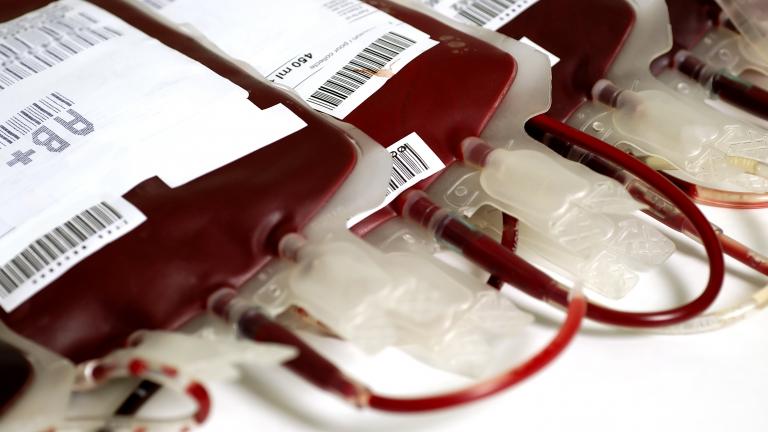
The Jehovah’s Witnesses have announced a major adjustment to their longstanding blood transfusion policy, allowing individual members to decide according to personal conscience whether to accept or donate four major blood components.
The new position covers red blood cells, white blood cells, plasma and platelets derived from another person’s blood. The decision was announced by the organisation’s Governing Body on Friday, September 18, 2026, from its World Headquarters in Warwick, New York.
Under the revised policy, members can personally decide whether to accept medical treatment involving any of the four components. They can also decide whether to donate blood for the production of components or fractions intended for another person’s treatment.
The organisation stressed that its prohibition on whole-blood transfusions remains unchanged. The position is based on its interpretation of the biblical instruction to “abstain from blood.”
Jehovah’s Witnesses said decisions involving the four components are now matters of individual conscience, meaning local congregations are not to interfere with or judge members over such choices.
International spokesman Paul Gillies said the organisation continued to regard blood and life as sacred while recognising that decisions concerning the four components should be made personally by individual Witnesses.
The adjustment follows a policy clarification announced in March 2026 concerning the use of a member’s own blood during medical procedures. That position also left the decision to individual conscience where blood is removed, stored and subsequently returned during treatment.
According to the organisation, the latest decision reflects its interpretation that the Bible does not specifically address whether members should accept the four primary blood components in medical treatment.
The organisation said its members seek professional medical care and do not practise faith healing. It also said healthcare professionals should discuss individual decisions concerning blood components directly with patients and respect those choices.
The medical uses of the components vary. Red blood cells can be used to replace blood lost through surgery or serious injury, while platelets help manage certain bleeding conditions. Plasma is used in several treatments involving bleeding and clotting disorders, while white blood cells have more specialised clinical applications.
The Associated Press reported that the revised policy permits members to receive products derived from donated blood while retaining the prohibition on whole-blood transfusions.
Jehovah’s Witnesses said the organisation has more than nine million members worldwide, with congregations in more than 200 countries and territories.
The September decision represents a significant change in the organisation’s approach to the four major blood components, with responsibility for accepting or donating them now placed on individual members.
The ban on whole-blood transfusions, however, remains in place.
Jehovah’s Witnesses Adjust Blood Transfusion Rules, Allow Personal Choice
Akpabio Links Okowa’s APC Defection to EFCC Investigation
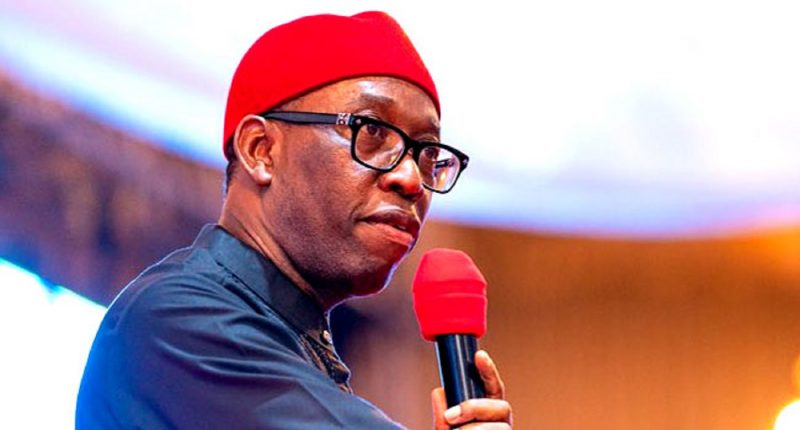
Senate President Godswill Akpabio has alleged that former Delta State Governor Ifeanyi Okowa joined the All Progressives Congress (APC) partly because of concerns over an ongoing investigation by the Economic and Financial Crimes Commission (EFCC).
Akpabio made the allegation while discussing political developments in Delta State in an audio recording involving Sandra Duru, which was circulated publicly and reported by Nigerian media organisations.
According to reports quoting the recording, Akpabio said Okowa’s defection to the APC was influenced by fears surrounding the corruption allegations against him, rather than solely by political considerations.
The Senate President was also quoted as saying that Okowa was not involved in discussions surrounding the emergence of the current APC leadership, claiming that key decisions had already been taken before the former governor joined the party.
Akpabio further claimed that he played a role in helping Okowa secure the APC senatorial ticket for Delta North ahead of the 2027 general elections.
The allegation has emerged against the backdrop of the EFCC investigation into Okowa, which dates back to his tenure as Delta governor between 2015 and 2023.
Okowa was arrested and questioned by the EFCC in November 2024 over allegations involving the management of funds accruing to Delta State through the 13 per cent derivation allocation from the Federation Account.
The investigation has also focused on alleged investments and assets associated with the former governor, including interests linked to the UTM Floating Liquefied Natural Gas (FLNG) project and properties in Asaba and Abuja.
Okowa has denied wrongdoing and previously said he was not afraid of being investigated, maintaining that funds belonging to Delta State were used appropriately during his administration.
The former governor’s political move to the APC did not bring the EFCC investigation to an end.
The anti-graft agency has previously stated that Okowa’s defection to the APC would not stop its investigation. In a more recent development, Okowa visited the EFCC’s Lagos office in June 2026 amid the continuing investigation.
Reports at the time said the visit was connected with efforts to secure the release of his international passport to enable him to travel abroad for medical treatment. There was no indication that the visit amounted to a fresh arrest.
The EFCC has maintained that the investigation remains active. Its Director of Legal and Prosecution, Sylvanus Tahir, SAN, was quoted as saying that the case was still undergoing investigation and that the commission would act based on its findings.
The continuing investigation is significant in assessing the context of Akpabio’s latest allegation, but the EFCC’s position does not establish that the investigation was the reason for Okowa’s defection.
Okowa joined the APC in April 2025, alongside his successor, Delta State Governor Sheriff Oborevwori, several commissioners, local government chairpersons and other political leaders who previously belonged to the Peoples Democratic Party (PDP).
At the time, Okowa explained the decision in terms of Delta State’s relationship with the Federal Government.
He said the state needed to establish stronger links with the Federal Government in Abuja because of its contribution to the national economy and the resources available at the federal level.
The former governor had previously served as the PDP’s vice-presidential candidate alongside Atiku Abubakar in the 2023 presidential election.
His subsequent move to the APC represented a significant political realignment in Delta State and brought him into the same party as Governor Oborevwori and other former PDP leaders in the state.
Okowa has since secured the APC ticket for the Delta North senatorial contest scheduled for the 2027 elections.
Akpabio, who represents Akwa Ibom North-West Senatorial District, has also become involved in the political arrangements surrounding Okowa’s new role within the APC.
The Senate President’s latest comments have nevertheless raised questions about the circumstances surrounding the former governor’s defection, particularly because the EFCC investigation remains unresolved.
However, no public evidence has established that Okowa joined the APC in order to stop or avoid prosecution by the EFCC. Akpabio’s statement is an allegation about the former governor’s motivation, while Okowa’s publicly stated reason for joining the APC centred on the political and developmental interests of Delta State.
The allegations also come as political parties and their leading figures intensify preparations for the 2027 general elections, with defections and alliances continuing to reshape party structures across the country.
For now, the established position is that the EFCC investigation involving Okowa remains ongoing, while the reason Akpabio has attributed to the former governor’s APC defection remains his own claim.
The outcome of the EFCC investigation and any future response from Okowa could provide further clarity on the issues surrounding the allegations.
Akpabio Links Okowa’s APC Defection to EFCC Investigation