

Education
JAMB to investigate mass low UTME scores, technical issues

JAMB to investigate mass low UTME scores, technical issues
The Joint Admissions and Matriculation Board (JAMB) has ordered an immediate review of the 2025 Unified Tertiary Matriculation Examination (UTME) amid mounting complaints from candidates across Nigeria about alleged technical glitches, incomplete questions, and unusually low scores.
This was disclosed in a statement signed by JAMB’s Public Communication Advisor, Fabian Benjamin,
The Board acknowledged an “unusual volume of complaints” following the release of this year’s UTME results last Friday. The board noted that its post-examination review process has now been fast-tracked due to the widespread dissatisfaction
The Board is fast forwarding its annual system review—a comprehensive post-mortem of the examination process that is conducted each year, months after the exercise.
“We are particularly concerned about the unusual complaints originating from a few states within the federation. We are currently scrutinising these complaints in detail to identify and rectify any potential technical issues,” the Board stated.
Three-stage review underway
Benjamin noted that the review would cut across all stages of the UTME process, which are registration, examination, and result release.
He added that JAMB had brought in independent professionals to assist with the investigation.
READ ALSO:
- NDLEA breaks 25-year jinx, inaugurates forensic labs in Abuja, Enugu
- UK cuts graduate visa from two years to 18 months
- Barcelona edge closer to title after 4-3 win over Madrid
“To assist in this process, we have engaged a number of experts, including members from the Computer Professionals Association of Nigeria, Chief External Examiners, who are heads of tertiary institutions, the Educational Assessment and Research Network in Africa, measurement experts, and Vice Chancellors from various institutions.”
The board stressed its commitment to transparency and accountability, assuring that it would “implement appropriate remedial measures promptly” if technical faults were identified.
Candidates to take legal action
Amid growing concerns over the integrity of the 2025 Unified Tertiary Matriculation Examination (UTME), thousands of candidates are reportedly preparing to take legal action against the Joint Admissions and Matriculation Board (JAMB).
The candidates are alleging significant technical issues during the exam, including malfunctioning systems that caused questions to disappear or fail to load properly.
The situation has ignited widespread outrage on social media, with many students and parents questioning the fairness of the results. Some have demanded that JAMB allow for result verification or re-marking to address potential discrepancies.
This growing discontent has been further amplified by claims from individuals who say their results do not reflect their actual performance.
READ ALSO:
- PDP is already dead, we‘ll receive you soon – Ganduje replies Lamido
- Army arrests 12 terror suspects in Kwara
- Kidnapped Katsina businessman dies in bandits’ custody
As public outcry continues, the hashtag #ThisIsNotMyResult has been trending, reflecting the mounting pressure on JAMB to respond to the allegations and restore confidence in the examination process.
The Minister of Education, Dr. Tunji Alausa, has described the high failure rate in the 2025 Unified Tertiary Matriculation Examination (UTME) as clear evidence that the government’s anti-malpractice measures are working, particularly within the Joint Admissions and Matriculation Board (JAMB) system.
Alausa said the significant drop in scores is a direct result of tightened security and anti-cheating protocols introduced by the Board. “That’s a big concern, and it’s a reflection of exams being done the proper way.
“JAMB conducts its exam using a computer-based testing system. They’ve implemented strong security measures, and as a result, fraud or cheating has been completely eliminated,” he said
Reinforcing the Board’s position, JAMB Registrar, Prof. Is-haq Oloyede, said the 2025 UTME incorporated a range of deliberate innovations aimed at safeguarding the integrity of the examination process.
Addressing journalists at a press briefing in Abuja on Friday, May 9, 2025, he explained that the new measures were part of efforts to align the UTME with global standards.
“Anyone conversant with contemporary methods of trial-testing of test items would not be part of those who consider as error some deliberate actions towards item standardisation,” he said.
Oloyede emphasized that the Board has made consistent improvements to sustain excellence in the conduct of the exam.
He noted that the 2025 UTME featured an internally developed software, JAMB TEST, which replaced the previous Autobot and Autotest systems used for centre accreditation. According to him, this yielded “results beyond our expectations” and contributed significantly to the success of this year’s exam.
JAMB to investigate mass low UTME scores, technical issues







Education
NEMA Awards Three Essay Winners ₦500,000 Each

NEMA Awards Three Essay Winners ₦500,000 Each
Three participants have emerged as the overall winners of the 2026 National Essay Competition organised by the National Emergency Management Agency (NEMA), taking home ₦500,000 each.
The winners were drawn from three categories covering secondary school students, tertiary institution students and members of the NYSC Emergency Management Vanguards.
At the award ceremony held at NEMA’s headquarters in Abuja on September 10, the agency also rewarded contestants who finished second and third with ₦300,000 and ₦200,000 respectively. Those who made the top 10 in each category received certificates of recognition.
In the senior secondary school category, Orire Fareedah Omolola of Murphy-Tonia Schools, Lagos, emerged victorious with her essay, “My Role in Disaster Risk Reduction.” Onminyi Olive of Faith Academy, Goshen, Abuja, came second, while Isah Zainab Ize of Government Secondary School, Gwarinpa, Abuja, placed third.

Secondary School Winners of the NEMA Essay Competition
Adelanwa Emmanuel Oluwatosin of the University of Ibadan won the tertiary category with an essay examining “Climate Change and Disaster Management in Nigeria.” Memunat Olawore Omobolanle of the Nigerian Law School, Lagos Campus, was runner-up, while Aminu Ibrahim Bello of Umaru Musa Yar’adua University, Katsina, took third place.
READ ALSO:
- Yari: God Chose Me to Lead Tinubu’s 2027 Campaign
- Iran’s President Seeks End to War as US Tightens Economic Pressure
- Woman disguises as Muslim woman in Niqab to steal in Ado-Ekiti market, video sparks outrage
The NYSC category was won by Dabagal Marylyn Mialmoen, whose entry explored the opportunities and challenges of technology in disaster response. Abiola Olamide Zion, serving in Adamawa State, finished second, while Stanley Sunday Iserhienrhien came third.
NEMA Director-General Zubaida Umar said the competition was created to get young Nigerians thinking more deeply about disaster prevention, preparedness and community resilience.
Umar, who was represented at the event by the agency’s Director of Internal Audit, Aliyu Waziri, said the number of entries received meant that the judging process had to be extended to ensure the final results met the required standards of fairness and transparency.
She said disaster management should become part of everyday life instead of being treated as something to consider only after an emergency has occurred.
Umar also praised the quality of the submissions, saying they demonstrated growing awareness among young Nigerians about disaster risks and ways of responding to them.
A media consultant to NEMA on the competition, Hakeem Bello, encouraged the participants to take the lessons from the contest back to their schools, institutions and communities.
He said the initiative was not simply about giving prizes to the best writers but about developing young people who understand that preventing disasters and preparing for them can save lives.
NEMA said finalists living outside Abuja would receive their prizes and certificates through the agency’s zonal directorates closest to them.
The competition is part of NEMA’s broader public awareness programme aimed at building a stronger culture of disaster prevention, preparedness and resilience across Nigeria.
NEMA Awards Three Essay Winners ₦500,000 Each
Education
ASUU Threatens Nationwide Strike Over Unpaid Salaries, Unimplemented Agreement

ASUU Threatens Nationwide Strike Over Unpaid Salaries, Unimplemented Agreement
The Academic Staff Union of Universities (ASUU) has threatened to reactivate its suspended nationwide strike if the Federal Government and state governments fail to urgently resolve outstanding issues affecting university lecturers.
The union warned that it could withdraw its members’ services “without any further notice”, citing the incomplete implementation of the December 2025 ASUU-Federal Government agreement, payment of the remaining 3.5 months of withheld salaries and the non-remittance of billions of naira deducted from lecturers’ salaries.
The warning followed an emergency meeting of ASUU’s National Executive Council (NEC) held at the University of Abuja.
In a statement issued in the early hours of Friday, ASUU President, Professor Christopher Piwuna, said the union could no longer guarantee industrial peace in the nation’s public universities unless urgent steps were taken to address the outstanding issues.
ASUU said the December 2025 agreement was reached after more than eight years of negotiations and struggles over the welfare of university lecturers and the broader condition of Nigeria’s public university system.
According to the union, however, the agreement has not been fully implemented by the Federal Government and several state governments.
“Unless immediate and concrete steps are taken to FULLY and COMPREHENSIVELY address issues bordering the welfare and well-being of Nigerian academics, ASUU-NEC will not accept any blame for calling out its members on a nationwide strike action within the shortest time possible,” the union warned.
The latest development raises the possibility of another disruption to academic activities in Nigeria’s public universities if the Federal Government and affected state governments fail to reach an understanding with the union.
ASUU has been pushing for full implementation of the agreement across federal and state-owned universities, arguing that inconsistent implementation has created disparities in the treatment of lecturers.
READ ALSO:
- FG to Give Students 100MB Free Data Daily From October 1
- Two Arrested in London Over Suspected Links to Iran Intelligence
- Lagos Woman Jailed for Dumping Refuse in Drain During Rainfall
The union commended Abia State Governor Alex Otti and the governments of Bauchi, Ekiti, Ogun, Benue, Yobe, Adamawa, Kebbi, Katsina and Borno for beginning implementation of the agreement.
It also disclosed that Kano, Edo, Plateau, Taraba, Gombe and Bayelsa states had pledged to commence implementation in September or October.
ASUU, however, warned other state governments to take action before their universities were plunged into what it described as an “industrial crisis of monumental proportions.”
The latest position follows earlier warnings by ASUU branches in several universities over the slow or incomplete implementation of the agreement and the payment of outstanding entitlements.
The union had previously directed branches in a number of universities to begin processes that could lead to industrial action, with some branches issuing ultimatums to their respective university authorities and state governments.
One of the major issues in the latest ASUU warning is the payment of withheld salaries arising from the union’s prolonged strike under the previous administration.
ASUU said the Tinubu administration had paid four of the 7.5 months of salaries withheld from its members during the dispute but insisted that the remaining 3.5 months must be released.
The union acknowledged President Bola Ahmed Tinubu for paying part of the withheld salaries but said withholding the balance meant the matter remained unresolved.
“We have consistently acknowledged President Bola Ahmed Tinubu for paying four (4) out of the withheld salaries. However, leaving out the unpaid balance does not give his government the full credit of a labour-friendly administration,” ASUU said.
The issue of withheld salaries has remained a major source of disagreement between the government and university lecturers since the prolonged 2022 ASUU strike.
The union has maintained that its members should not be left to bear the financial consequences of the dispute after returning to work.
READ ALSO:
- Peter Obi’s Benue Convoy Blockade Raises Questions Ahead of 2027
- Honda shakes up Nigeria operations, dissolves HAWA, retains HMN
- Fire Scare at Abuja Train Station as Electrical Fault Sparks Blaze, NRC Assures Passengers
ASUU also raised concerns over the alleged non-remittance of several deductions made from lecturers’ salaries.
The union said pension contributions, cooperative deductions and union check-off dues running into billions of naira had remained unremitted for several months.
It warned that failure to remit the deductions was placing additional financial pressure on university employees and undermining confidence in the existing industrial relations framework.
According to ASUU, the combination of unpaid salaries, unremitted deductions and incomplete implementation of the 2025 agreement could worsen tensions across the university system.
“In no mistaken terms, ASUU posits that the non- or haphazard implementation of the 2025 FGN-ASUU Agreement by federal and state governments is a recipe for industrial crisis in Nigeria’s public universities,” the union stated.
The latest nationwide warning is coming against the backdrop of separate disputes between ASUU branches and university authorities over salaries and other entitlements.
At Nnamdi Azikiwe University, Awka, the university’s ASUU branch recently commenced an indefinite strike over the non-payment of the full August 2026 salary to its members.
The branch said the action was based on ASUU-NEC’s standing position that branches could withdraw their services when salaries were not paid within the required period.
At Sule Lamido University, Kafin Hausa, the ASUU branch also threatened industrial action over outstanding salary-related demands and issues connected with the implementation of the agreement.
The developments have heightened concerns among students, parents and university authorities over the possibility of disruptions to lectures, examinations and other academic activities.
ASUU has, however, continued to indicate that it prefers dialogue and negotiation to industrial action, provided governments demonstrate a willingness to resolve the outstanding matters.
The union said it had given the Federal Government and state governments sufficient opportunities to address the outstanding issues but warned that continued delays could force it to take further action.
ASUU said its decision to suspend its previous nationwide strike was based on commitments made by the government and the expectation that the outstanding issues would be resolved.
It now wants the government to demonstrate concrete progress on the 2025 agreement, the payment of the remaining 3.5 months of withheld salaries and the remittance of deductions from lecturers’ salaries.
“ASUU-NEC resolved to notify all concerned that the Union may activate its suspended strike action without any further notice if the critical issues raised in this release are not speedily addressed,” the union said.
The warning means the Federal Government and state governments now face renewed pressure to resolve the dispute before it escalates into another nationwide university strike.
For students and other stakeholders in the education sector, the outcome of the ongoing engagement between ASUU and the government could determine whether Nigeria’s public universities maintain uninterrupted academic activities or face another round of industrial action.
The union has therefore urged the authorities to act quickly, stressing that it would not accept responsibility for the consequences if unresolved salary, welfare and agreement-implementation issues eventually lead to the reactivation of its suspended strike.
ASUU Threatens Nationwide Strike Over Unpaid Salaries, Unimplemented Agreement
Education
FG Releases Eight-Month CATA Allowance to Lecturers Across Federal Tertiary Institutions
FG Releases Eight-Month CATA Allowance to Lecturers Across Federal Tertiary Institutions
Minister announces full payment covering January to August 2026 for universities, polytechnics and colleges of education
The Federal Government has announced the full payment of the Consolidated Academic Tools Allowance (CATA) to academic staff in federal universities, polytechnics and colleges of education for the period of January to August 2026. The Minister of Education, Dr. Maruf Tunji Alausa, disclosed this on Wednesday shortly after inaugurating the Ministerial Committee on Accreditation in Abuja. The announcement brings relief to thousands of lecturers who have been awaiting the release of the eight-month allowance under the 2025 Federal Government–Academic Staff Union of Universities (FGN/ASUU) agreement.
CATA is a financial allowance provided to academic staff to support the purchase of essential tools and materials required for teaching, research and other academic activities. The allowance covers expenses such as journal publications, conference participation, internet services, membership of professional and learned societies, as well as the purchase of academic books. It forms a major component of the revised remuneration package for university lecturers under the 2025 FGN-ASUU agreement, signed on January 14, 2026, and constitutes part of the 40 per cent increase in their overall emoluments.
Speaking on the development, Alausa said the payment was made in accordance with the provisions of the 2025 FGN-ASUU agreement, reaffirming the government’s commitment to its implementation. “The Office of the Minister of Education is happy to announce that the full CATA payment has now been released by the Federal Government from January to August 2026 to all universities, all polytechnics and colleges of education,” Alausa said. “All these institutions should have received notification to start paying CATA to all academic staff.” The minister added that payment to non-academic staff was also being processed and expressed optimism that the funds would be made available in the coming weeks. “And also, the payment to non-academic staff, we’re hoping that these funds will be made available, hopefully, in the next few weeks,” he said.
READ ALSO:
- Police Arrest Woman Over Fake OPay Shutdown Notice
- Amaechi will be caged politically, Wike shouldn’t bother about Ikwerre votes — Wihioka
- Residents Cry Out Over Poorly Constructed Entrance of Ademola Abiola Street, Demand Urgent Intervention
According to Alausa, the release of the allowance was another indication of President Bola Tinubu’s commitment to improving the welfare of both academic and non-academic staff in the nation’s tertiary institutions. “This is another indication of President Bola Tinubu’s commitment to our academic and non-academic staff. President Bola Tinubu made a commitment to ensuring that the quality and welfare of our staff are prioritised. He has prioritised the welfare of our staff,” he said. The minister said the administration’s education reforms extended beyond staff welfare, noting that significant investments were also being made in infrastructure across tertiary institutions, as well as in basic and postgraduate education. “Beyond prioritising the welfare of our staff, he has also significantly invested in infrastructure at all our tertiary institutions and also basic and postgraduate education,” Alausa said. He added that the administration was committed to ensuring that Nigerian children receive quality education that can compete with standards anywhere in the world.
The latest announcement follows an earlier release covering five months of accumulated CATA payments announced by the government in June. In a June 4 circular addressed to vice-chancellors of federal universities, Alausa said the payment was part of efforts to implement the renegotiated agreements reached with ASUU. The CATA payment is separate from other components of lecturers’ remuneration, such as the Earned Academic Allowance (EAA) and Professorial Allowance.
The development comes against the backdrop of concerns recently raised by ASUU over the implementation of the allowance. At its recent National Executive Council (NEC) meeting in June, the union reviewed the implementation of the FGN-ASUU agreement and raised concerns over outstanding aspects of the new remuneration package, including CATA. ASUU President, Prof. Christopher Piwuna, also called for clarity on the eligibility criteria for the payment of the allowance, particularly the phrase “eligible academic staff,” warning that ambiguity could lead to different interpretations by university authorities. The union stressed that CATA should be implemented in accordance with the agreement reached with the Nigerian Government and should not be confused with other components of lecturers’ remuneration.
Meanwhile, the announcement of the CATA payment has coincided with a dispute at the University of Benin (UNIBEN), where the institution’s chapter of ASUU declared an indefinite strike over alleged underpayment of August salaries. The union, in a communiqué signed by its Chairman, Professor Enaruna Edosa, and Secretary, Dr. Lucky Aimiyekagbon, directed its members to withdraw their services over what it described as the payment of half salaries to academic staff. However, the University Management denied claims that academic staff received half salaries in August 2026, explaining that the issue stemmed from a misunderstanding involving a particular allowance. In a statement signed by the University’s Public Relations Officer, Dr. Benedicta Ehanire, the Management said the confusion had been resolved. “The Management declared that the Federal Government has paid the salaries of all categories of staff up to August, 2026,” the statement said. “The Consolidated Academic Tools Allowance (CATA), which was confused for salary, has now been released by the federal government and promptly disbursed to staff who are entitled to the allowance.” The Management assured staff that all legitimate entitlements would be paid without hindrance and urged stakeholders to avoid undue sensationalisation of issues to sustain the prevailing industrial harmony in the University.
Despite the latest payment, unresolved financial disputes continue to strain relations between academic unions and the government. ASUU and the Congress of University Academics (CONUA) have insisted on the payment of withheld salaries. Outstanding issues listed by the unions include the 25 and 35 per cent wage award arrears, promotion allowance arrears, and three and a half months’ salaries withheld during the 2022 strike by ASUU.
FG Releases Eight-Month CATA Allowance to Lecturers Across Federal Tertiary Institutions
-

 metro2 days ago
Police Arrest Woman Over Fake OPay Shutdown Notice
-

 Politics2 days ago
Amaechi will be caged politically, Wike shouldn’t bother about Ikwerre votes — Wihioka
-
 Politics2 days ago
Remi Tinubu Appeals To South-East Voters, Says She Wants To ‘Enjoy Nigeria’ In Old Age
-

 metro18 hours ago
Woman disguises as Muslim woman in Niqab to steal in Ado-Ekiti market, video sparks outrage
-
 metro2 days ago
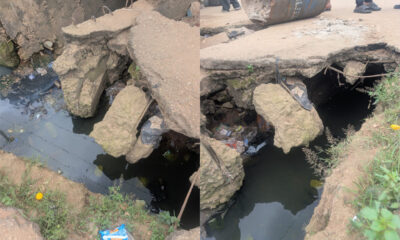
Residents Cry Out Over Poorly Constructed Entrance of Ademola Abiola Street, Demand Urgent Intervention
-

 Politics2 days ago
Breaking the Cycle of Collective Guilt: When a Ruling Party Voice Backs Peter Obi
-
 Health2 days ago
Ahead of Dry Season Surge, NCDC Urges Proactive Measures Against Lassa Fever
-

 News21 hours ago
AI on the Roads: LASTMA Turns to China to Fix Lagos Traffic