

metro
FG records milestone with first-ever common entrance into TVET Class 1

FG records milestone with first-ever common entrance into TVET Class 1
The successful conduct of the maiden National Common Entrance Examination into TVET Class 1 has been lauded by the Federal Ministry of Education, describing it as an historic step toward revitalizing technical education in Nigeria.
This was made known by the ministry’s director of Technology and Science Education, Dr Muibat Adenike Olodo, who was represented by deputy director of Vocational, Mr Kehide Osinake, during the monitoring exercise of common entrance examination into the federal and 32 states Technical Colleges in the country, held on last Saturday.
The examination recorded a total of 29,256 candidates across federal and state Technical Colleges nationwide, with 22,995 applying specifically to Federal Colleges.
While monitoring the exercise at the Federal Science and Technical College, Orozo, Dr Olodo commended the smooth coordination and impressive turnout.
She emphasised that the initiative is designed to equip Nigerian youth with practical, industry-relevant skills to address unemployment and shift the country’s economic focus from consumption to productivity.
READ ALSO:
- $456.95m unremitted funds: Reps committee threatens to sanction 13 oil firms
- Benue killings: Tinubu orders arrest of killer herders
- Sokoto govt says its open to dialogue with bandits
Also present during the monitoring exercise was the registrar and chief executive officer of NABTEB, Dr Aminu Mohammed, who described the initiative as a strategic move to reposition technical education.
He confirmed that approximately 30,000 JSS3 students participated nationwide.
Dr Mohammed further explained that successful candidates will be placed into trades such as electrical installation, tailoring, and solar maintenance based on their exam scores and aptitude data.
He stressed that skills acquisition, are not mere paper qualifications but hold the key to national economic growth.
He added that successful students will be provided with starter packs and have access to Bank of Industry loans to establish small businesses or gain employment as the results of the examination will be out within three weeks.
He also disclosed that plans are underway, under the leadership of the Minister of Education, Dr. Maruf Olatunji Alausa, to transition future entrance examinations into a Computer-Based Testing (CBT) format.
According to the ministry, this landmark achievement signals a bold new chapter for Nigeria’s education sector.
It called on parents, educators, industries, and development partners to support the collective effort of building a skilled and self-reliant generation.
FG records milestone with first-ever common entrance into TVET Class 1



metro
No US Case Against Tinubu, Family Enjoy Unimpeded Transit for UNGA — Ambassador Ibrahim

No US Case Against Tinubu, Family Enjoy Unimpeded Transit for UNGA — Ambassador Ibrahim
Nigeria’s Permanent Representative to the United Nations, Ambassador Jimoh Ibrahim, has declared that President Bola Tinubu and members of his family enjoy unimpeded transit in the United States and cannot be arrested while attending the United Nations General Assembly (UNGA) in New York.
Ibrahim, who also chairs the United Nations Committee on Budget and Administration, made the clarification in a statement issued on Sunday by the Office of Nigeria’s Permanent Representative to the UN in New York, amid renewed online campaigns speculating about possible legal action against the Nigerian leader during his planned participation in the 81st session of the UNGA. The envoy said the Nigerian Mission in New York had received no notification from the United States government indicating that Tinubu would face any restriction on his movement during the General Assembly.
Citing Section 11 of the 1947 United Nations–United States Headquarters Agreement, Ibrahim explained that representatives of UN member states and members of their families are protected from impediments to transit to and from the UN headquarters district. He said the provision requires US federal, state and local authorities to refrain from imposing restrictions on the movement of representatives of member states, their families, UN officials, specialised agencies and persons invited to the headquarters district on official business. According to the envoy, the protection under the agreement covers representatives irrespective of the relations existing between their governments and the United States government.
READ ALSO:
- Buhari’s Govt Was Weakened by Sycophants Who Betrayed His Trust, Says Ex-DSS Boss
- EFCC arraigns man over alleged N700m fraud, Ravenpay 2FA breach
- Catholic priest leaves priesthood, weds Kenyan woman after 12 years in Kenya
Ibrahim stressed that an allegation does not constitute a crime, insisting that criminal accusations must be established through due process and proved beyond reasonable doubt before conviction. He added that where a conviction cannot be secured in a sensitive criminal matter, the consequences could include substantial compensation. The envoy also dismissed social media efforts to criminalise Tinubu or secure his arrest, saying such efforts would ultimately prove futile. “Social media cannot criminalise or arrest President Bola Tinubu, no matter how much the opposition invested in it; those efforts will only end as an exercise in futility. He has immunity from arrest in the US during UNGA,” Ibrahim said.
Ibrahim noted that attendance at the UNGA is ultimately a matter of national priority, but said countries could delegate representation when necessary. According to him, more than 60 per cent of the current speaking list comprises vice presidents and foreign ministers representing their respective countries, demonstrating that heads of government were not required to personally attend every UNGA engagement. The ambassador explained that member states of the United Nations are invited to participate in the high-level event, rather than individual leaders being invited in their personal capacities.
Ibrahim recalled that a former Nigerian president—whom he stressed was not Tinubu—was once restricted to a 10-kilometre radius from the UN headquarters in connection with a drug-related allegation. He said the allegation was never proved, adding that while US law-enforcement authorities may invite individuals to provide information during investigations and collect identifying details—including personal and family history, educational records and fingerprints—such procedures do not amount to arrest or conviction. The envoy explained that information gathered in such investigations may be used to establish links between individuals, groups and networks, particularly in cases involving alleged financial and other criminal offences. He noted that such personal information is protected and is not necessarily made public by investigating agencies.
Ibrahim’s intervention comes amid renewed public debate and online campaigns over President Tinubu’s planned participation at the 2026 UN General Assembly in New York, with discussions centred on claims that the Nigerian president could face arrest in the United States over historical allegations. Nigerian officials have repeatedly maintained that no U.S. court has convicted President Tinubu of any criminal offence. The envoy urged Nigerians to continue to hold the national flag in high esteem and support what he described as the economic transformation being pursued under the Tinubu administration.
No US Case Against Tinubu, Family Enjoy Unimpeded Transit for UNGA — Ambassador Ibrahim
metro
EFCC arraigns man over alleged N700m fraud, Ravenpay 2FA breach
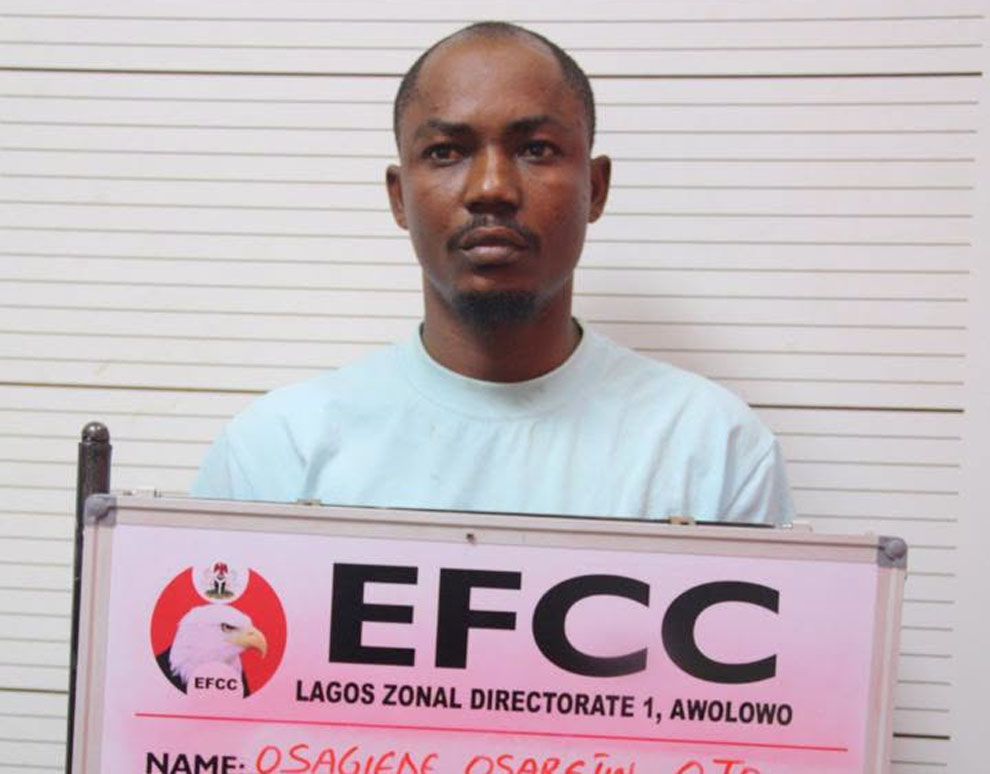
EFCC arraigns man over alleged N700m fraud, Ravenpay 2FA breach
The Economic and Financial Crimes Commission (EFCC) has arraigned Osaretin Osagiede before the Lagos State High Court sitting in Ikeja over an alleged N700 million fraud involving Best Start Micro Finance Bank.
Osagiede was arraigned on Friday, September 4, 2026, by the EFCC’s Lagos Zonal Directorate 1 before Justice Olukayode Ogunjobi on a three-count charge bordering on unauthorised access to computer material and receiving stolen property.
The EFCC alleged that Osagiede committed the offences alongside Zacharia Lorshe, who is currently at large.
According to the anti-graft agency, the alleged offences occurred in Lagos between March 2025 and January 2026, when Osagiede and Lorshe allegedly bypassed the two-factor authentication (2FA) system on Ravenpay user accounts to gain unauthorised access to banking data.
The commission alleged that the security measure was deliberately bypassed with the intention of obtaining unauthorised access to the bank’s data.
One of the charges stated that Osagiede and Lorshe allegedly caused the Ravenpay accounts’ 2FA authentication method to be bypassed to secure unauthorised access to the bank’s data.
READ ALSO:
- 11 feared killed as terrorists invade Adamawa community
- Omotola: I get Hollywood royalties but nothing from 30 years in Nollywood
- Adeleke’s re-election faces tribunal battle as APC, PDP file petitions
The alleged offence was said to contravene Section 387 of the Criminal Law of Lagos State 2011.
Another count alleged that Osagiede and Lorshe dishonestly received N700 million belonging to Best Start Micro Finance Bank, despite allegedly having reason to believe that the money was stolen.
The alleged offence was said to contravene Sections 411 and 328(1) of the Criminal Law of Lagos State 2011.
When the charges were read to him, Osagiede pleaded not guilty.
Following his plea, prosecution counsel, H.U. Kofarnaisa, urged the court to fix a date for trial and remand the defendant in a correctional facility pending the hearing of his bail application.
Justice Ogunjobi subsequently ordered that Osagiede be remanded in a correctional facility and adjourned the case until September 16, 2026, for hearing of his bail application.
The latest case centres on allegations of unauthorised access to computer material, the alleged bypassing of Ravenpay’s two-factor authentication system, and the alleged receipt of N700 million belonging to Best Start Micro Finance Bank.
The allegations against Osagiede have not been proven in court. He remains presumed innocent until proven guilty.
EFCC arraigns man over alleged N700m fraud, Ravenpay 2FA breach
metro
Catholic priest leaves priesthood, weds Kenyan woman after 12 years in Kenya
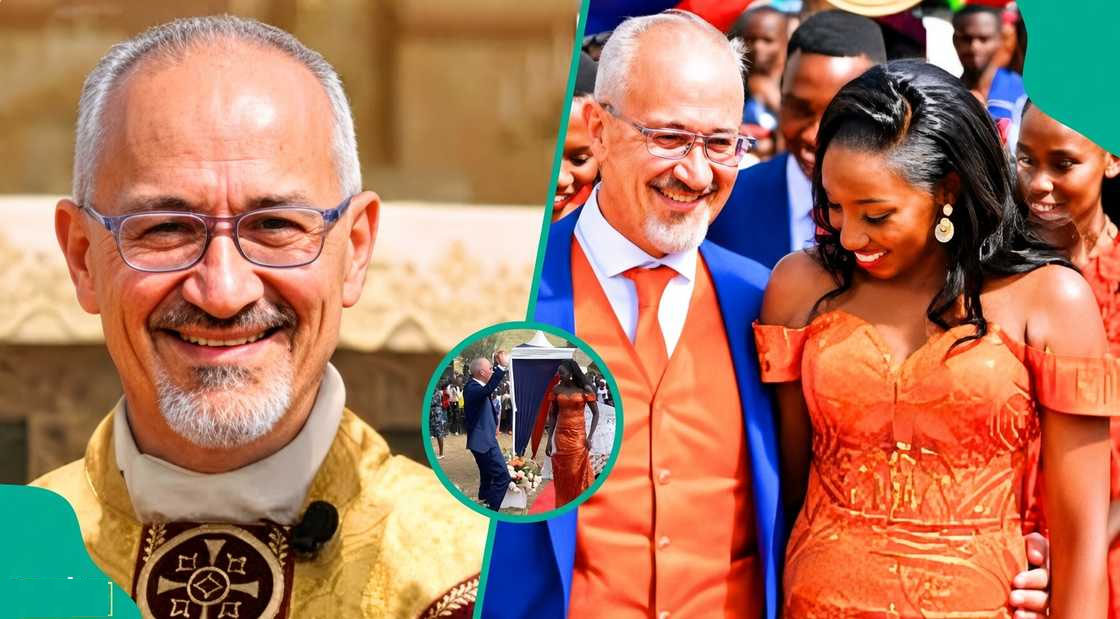
Catholic priest leaves priesthood, weds Kenyan woman after 12 years in Kenya
Italian-born former Catholic priest Sandro Ferretto has left the Catholic priesthood and married his Kenyan partner, Sharon Jepng’ok, after spending about 12 years serving as a missionary in Baringo County, Kenya.
Ferretto, 55, married Jepng’ok on September 6, 2026, at Seretion Village in Kasiela, Baringo South, in a traditional Koito wedding ceremony conducted in accordance with Kalenjin customs.
The marriage has attracted significant attention after videos and photographs from the ceremony, including footage of Ferretto dancing with his bride, circulated widely on social media.
Ferretto previously served as a Catholic parish priest in Kasiela and Mochongoi, where he reportedly became closely connected with residents during his years of pastoral and missionary work.
According to reports, the Italian-born cleric arrived in Kenya in 2008 after being ordained for the Diocese of Padua in Italy. He subsequently served under the Diocese of Nyahururu, working in communities across Baringo County.
During his years in Kenya, Ferretto was involved in pastoral activities and community programmes and became a familiar figure among residents, many of whom knew him as Father Sandro.
READ ALSO:
- 11 feared killed as terrorists invade Adamawa community
- Omotola: I get Hollywood royalties but nothing from 30 years in Nollywood
- Adeleke’s re-election faces tribunal battle as APC, PDP file petitions
It was during his missionary service in Baringo that Ferretto reportedly met Sharon Jepng’ok, a Kenyan woman from the area. Their relationship later developed, eventually leading to his decision to leave active priestly ministry and pursue a different path in his personal life.
Ferretto returned to Italy in December 2020, where he later took up a pastoral assignment in Saletto, Borgo Veneto. By 2023, reports indicated that he had stepped away from his pastoral responsibilities and taken time for personal reflection.
He subsequently returned to Kenya, where he reunited with Jepng’ok and eventually formalised their relationship through marriage.
The couple’s wedding was marked by a Koito ceremony, an important traditional rite among the Kalenjin people that involves family participation, customary negotiations and blessings for the couple.
The ceremony at Seretion Village brought together relatives, friends and members of the local community. Ferretto also participated in the traditional celebrations, with videos from the event showing him dancing alongside his bride.
The wedding has generated discussion because of Ferretto’s previous position as a Catholic priest and the Church’s longstanding discipline regarding priestly celibacy.
In the Latin Catholic tradition, priests are ordinarily required to observe celibacy and are not permitted to marry while remaining in the clerical state. A priest who seeks to leave the clerical state and marry must go through the appropriate Church process.
However, publicly available reports have not provided sufficient details to establish the exact canonical status of Ferretto’s departure from the priesthood or whether the Catholic Church has issued a formal statement regarding his marriage.
Ferretto’s story has nevertheless drawn considerable attention because of his long association with Kenya. After spending more than a decade working as a missionary and parish priest in Baringo, he has now begun a new chapter of his life with Jepng’ok.
The former priest’s transition from missionary service to marriage has sparked widespread interest online, particularly among people familiar with his years of service in the Baringo community.
His wedding also highlights the personal connections that can develop between missionaries and the communities where they spend many years serving, with Ferretto ultimately choosing to celebrate his marriage according to the traditions of the Kenyan community where he had spent a significant part of his life.
Catholic priest leaves priesthood, weds Kenyan woman after 12 years in Kenya
-

 Business3 days ago
BREAKING: OPay Warns Customers Against Viral Shutdown Message, Threatens Legal Action
-

 metro3 days ago
Osinbajo raises alarm over chemicals in fruits, recalls wife’s orange juice experience
-

 metro3 days ago
NSCDC Rescues 15 Trafficked Minors Sold for ₦2m Each by Fake NGO Official
-

 Auto3 days ago
NAJA 19th Auto Awards: Industry’s best to battle for honours December 3
-

 metro2 days ago
APC rally: Suspected thugs attack journalists, smash Radio Nigeria vehicle in Kano
-

 Politics3 days ago
15 northern states may collapse if fuel subsidy returns, OAU professor warns Atiku
-
 metro2 days ago
Lagos-Ibadan Expressway: FG begins Kara Bridge repairs Tuesday, deploys traffic agencies
-

 Education3 days ago
JAMB Releases Underage UTME Results, Sets Strict Conditions for Admission