
International
Bowen: UK move to recognise Palestinian state is a diplomatic crowbar to revive peace process
Bowen: UK move to recognise Palestinian state is a diplomatic crowbar to revive peace process
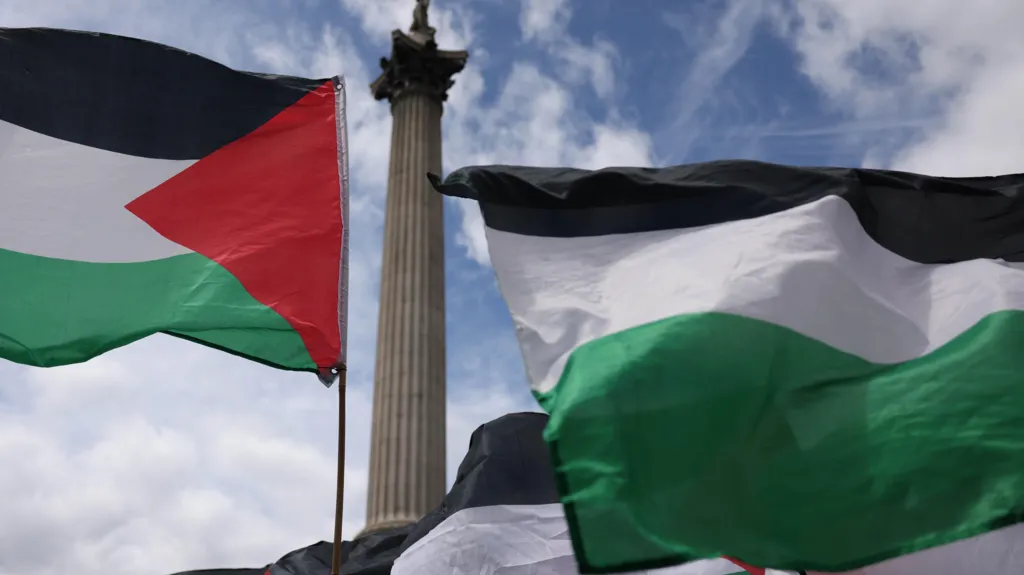
Prime Minister Sir Keir Starmer’s announcement that Britain will recognise Palestinian statehood is a major change in UK foreign policy.
He offered to postpone recognition if Israel took “substantive steps to end the appalling situation in Gaza, agree to a ceasefire and commit to a long-term, sustainable peace, reviving the prospect of a two-state solution.”
Israel’s immediate rejection of his statement meant that Starmer’s speech writers can start work now on what he will say at the UN General Assembly in September. UK recognition of Palestine looks “irreversible,” according to a senior British official.
Starmer won’t be expecting Britain’s change of policy to produce an independent Palestinian state any time soon – from the perspective of many Israelis, the best time for it would be never – but the intention, diplomatic sources say, is to empower moderates on both sides, Israelis and Palestinians. The British hope they can jolt them into believing that peace might be possible.
It won’t be easy, not just because of the way Hamas killed around 1,200 people, including hundreds of Israeli civilians, and took hostages on 7 October 2023, followed by Israel’s vengeful response that has killed tens of thousands civilians and left Gaza in ruins.
It is also because every attempt to make peace has failed. Years of peace talks in the 1990s ended in bloodshed. Every attempt to revive them since then has collapsed.
Israel’s rejection came minutes after Keir Starmer finished speaking in Downing Street. Later in the evening, Israel’s prime minister Benjamin Netanyahu posted a fiercely worded denunciation on social media.
“Starmer rewards Hamas’s monstrous terrorism and punishes its victims. A jihadist state on Israel’s border TODAY will threaten Britain TOMORROW.”
“Appeasement towards jihadist terrorists always fails. It will fail you too. It will not happen.”
READ ALSO:
- Senate issues three-week ultimatum to NNPCL over N210tn audit queries
- Nigeria auto industry stakeholders hold crucial summit in Lagos Thursday
- Modu Sheriff: Peter Obi will run for president under PDP in 2027
Netanyahu denies Israel has caused starvation and catastrophe in Gaza. Had he accepted Britain’s conditions for a postponement, his government would have disintegrated. He depends on the support of ultra nationalist extremists who want to annex the occupied territories and force Palestinians out, not grant them independence.
But Netanyahu is not their prisoner. He built a career opposing the two-state solution, the idea that peace can be built by creating an independent Palestinian state alongside Israel. Earlier this month he said a Palestinian state would be a ‘launchpad’ for more 7 October style attempts to destroy Israel.
Netanyahu will be hoping for the strong backing of the US government. Its position is that recognising a Palestinian state now rewards Hamas terrorism.
Donald Trump told reporters as he flew back to the US after his golfing interlude in Scotland that he didn’t support Britain’s move.
The issue of Palestinian sovereignty could become another factor cracking apart transatlantic relations.
Until the last few weeks Keir Starmer was not convinced the time was right to recognise Palestine. But pictures of Palestinian children in Gaza starving to death were the last straw after so much killing and devastation.
Attitudes hardened in Downing Street and the Foreign Office, as well as in the Labour party and more widely in the UK.
Britain’s decision to join France in recognising Palestine is another sign of Israel’s increasing diplomatic isolation. Two of its major western allies, the UK and France, both permanent members of the UN Security Council, have dismissed Israel’s attempt to block their recognition of Palestine when the General Assembly meets in New York in September.
In New York just after Starmer’s statement, David Lammy, the UK foreign secretary, was given a big round of applause when he announced Britain’s decision at the UN’s conference on a two-state solution and recognition of a Palestinian state.
READ ALSO:
- Ebonyi gov suspends 25 commissioners, 62 others for absence from state function
- We won’t give visa to Nigerians travelling for birth purpose — US
- Industry minister, AfDB president to visit SAGLEV electric vehicle assembly plant in Lagos
His dismissed the accusation that Palestinian independence could be lethal for Israel.
“There is no contradiction between support for Israel’s security and support for Palestinian statehood. Indeed, the opposite is true.”
“Let me be clear: the Netanyahu government’s rejection of a two-state solution is wrong – it’s wrong morally and it’s wrong strategically.”
A British official said the atmosphere was electric as Lammy told the delegates that the UK’s announcement was being made “with the hand of history on our shoulders.” Lammy went on to delve into Britain’s imperial past in Palestine which is deeply intertwined with the roots of the conflict between Jews and Arabs for control of the land Britain once ruled.
Britain captured Jerusalem from the Ottoman Empire in 1917 and controlled Palestine until in 1948, exhausted and out of ideas to deal with what was then a full-scale war between Arabs and Jews, it handed over responsibility to the UN and left Palestine. Immediately, Israel’s first prime minister David Ben Gurion declared independence, and Israel defeated an invasion by Arab armies.
At the UN David Lammy recalled how Arthur Balfour, his predecessor as foreign secretary had in 1917 signed a typewritten letter promising to ‘view with favour the establishment in Palestine of a national home for the Jewish people.’
But the document, known as the Balfour Declaration, also stated “that nothing shall be done which may prejudice the civil and religious rights of non-Jewish communities in Palestine.” It did not use the word Arab, but that is what was meant.
Lammy said Britain can be proud of the way it helped lay Israel’s foundations, But the promise to Palestinians, Lammy said, was not kept, and that “is a historical injustice which continues to unfold.”
Britain’s conflicting promises fuelled and shaped the conflict. A time traveller going back a century to Palestine in the 1920s would find the tension and violence depressingly familiar.
The way the UK hopes to end the misery in Gaza, create peace in the Middle East and remedy the historical injustice Lammy described is to revive the two-state solution.
The conference in New York at which he was speaking was chaired by France and Saudi Arabia. It has produced a seven-page document aimed at creating a way ahead to revive the two-state solution, which includes condemnation by Arab states of Hamas and its 7 October attacks on Israel.
The window for peace through the two-state solution appeared to be locked shut after the collapse of the peace process that started with real hope in the 1990s.
Britain’s decision to recognise Palestine is a diplomatic crowbar to try to reopen it.
Bowen: UK move to recognise Palestinian state is a diplomatic crowbar to revive peace process







International
US Singer D4vd Faces Murder Charges Over Teen’s Death in Los Angeles
US Singer D4vd Faces Murder Charges Over Teen’s Death in Los Angeles
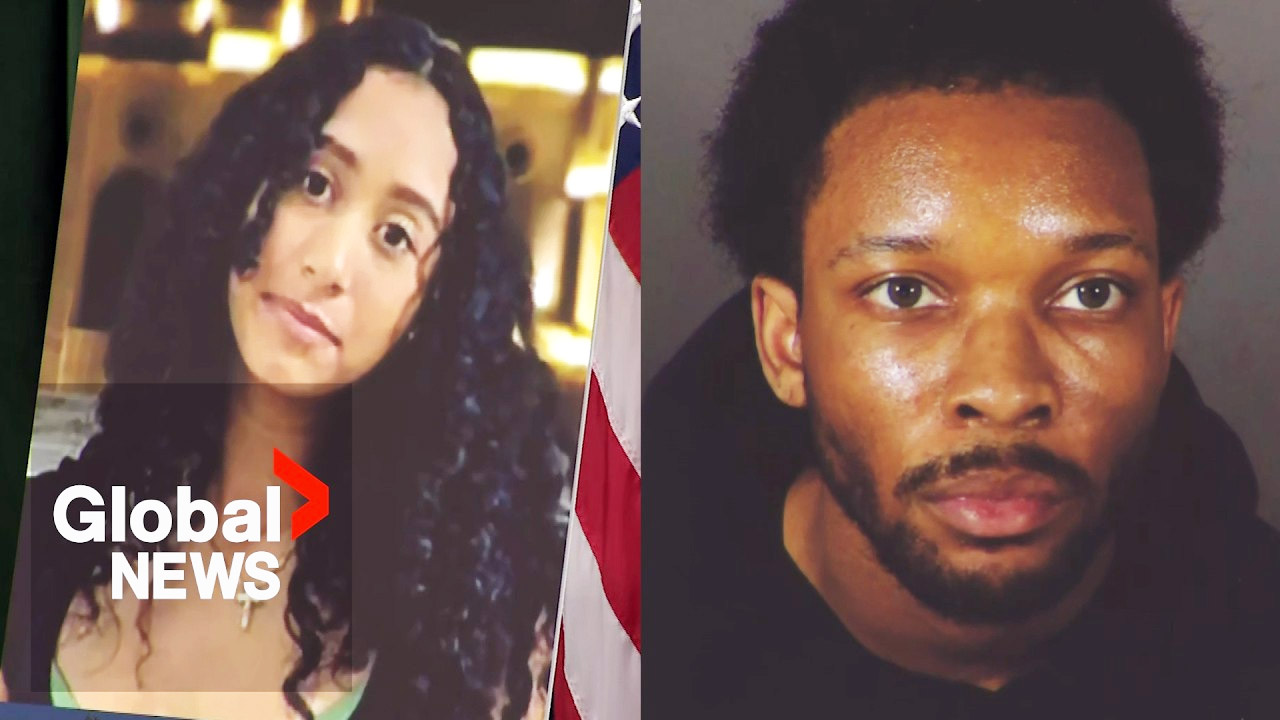
American singer D4vd, born David Anthony Burke, has been charged in connection with the killing of 14-year-old Celeste Rivas Hernandez, in a case that prosecutors have described as one of the most serious and disturbing in recent years.
The Los Angeles County District Attorney’s Office, led by District Attorney Nathan J. Hochman, confirmed that the 21-year-old faces multiple felony charges, including first-degree murder, continuous sexual abuse of a minor, and mutilation of human remains.
According to investigators, the teenager was last seen on April 23, 2025, after visiting Burke at his residence in the Hollywood Hills area of Los Angeles. She was reported missing shortly after she failed to return home.
Months later, on September 8, 2025, authorities made a gruesome discovery when her decomposed and dismembered remains were found inside the front trunk of a Tesla vehicle linked to the singer. Police reportedly traced the vehicle after receiving complaints about a strong odour, leading to the recovery of body parts stored in a cadaver bag.
Prosecutors say the case includes several special circumstance allegations, such as murder of a witness, murder for financial gain, and lying in wait. They also allege that Burke used a sharp instrument to carry out the killing.
READ ALSO:
- Peter Okoye Officially Changes Birthday Date Amid Renewed Tension in P-Square Family Rift
- ADC Crisis Deepens as Court Orders Detention of Factional Chairman in Kebbi
- LASTMA Intervenes as Tanker Kills Dispatch Rider in Lagos
“This is a parent’s nightmare,” Hochman said during a press briefing, describing the case as “brutal and horrific.” He added that the charges represent the most severe offences his office can prosecute.
Jim McDonnell, chief of the Los Angeles Police Department, stated that authorities remain committed to ensuring justice for the victim and her family.
Burke was arrested on April 16, 2026, and is currently being held without bail. He is expected to be arraigned at the Foltz Criminal Justice Center.
If convicted, he faces either the death penalty or life imprisonment without parole, although prosecutors have yet to decide whether capital punishment will be pursued.
The singer’s legal team, led by Blair Berk, alongside Marilyn Bednarski and Regina Peter, has denied all allegations. In a statement, they said evidence will show that Burke “did not murder Celeste Rivas Hernandez and was not the cause of her death.”
The case has already had major consequences for Burke’s career. He cancelled his planned “D4VD Withered” world tour and was dropped from brand partnerships with Hollister Co. and Crocs.
D4vd rose to prominence in 2022 with his hit Here With Me and later released Romantic Homicide, a track whose title he previously described as metaphorical rather than literal.
The case remains ongoing, and the defendant is presumed innocent unless proven guilty in court.
US Singer D4vd Faces Murder Charges Over Teen’s Death in Los Angeles
International
Iran Keeps Strait of Hormuz Closed, Says Final Deal With US Still Distant
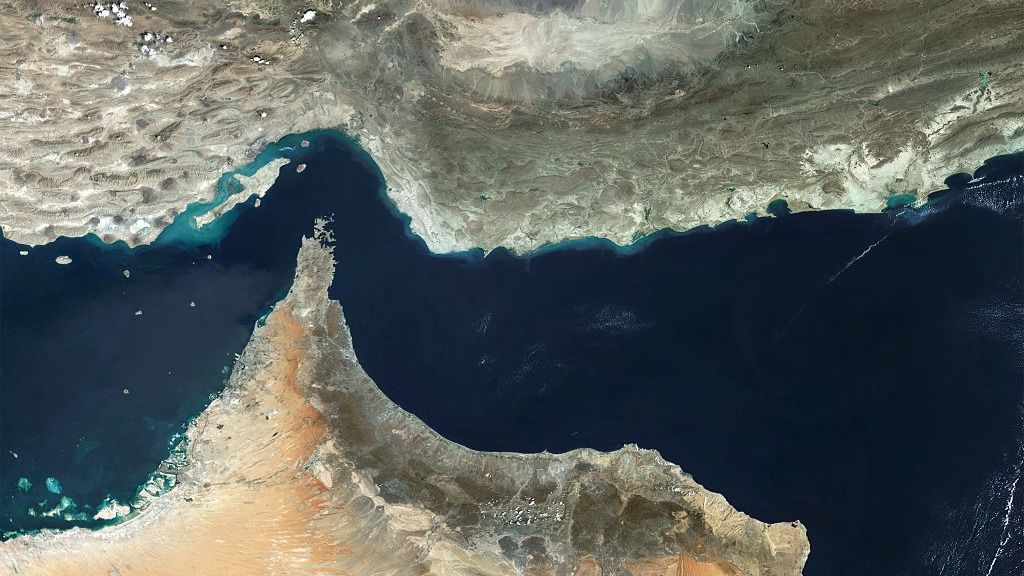
Iran Keeps Strait of Hormuz Closed, Says Final Deal With US Still Distant
The strategic Strait of Hormuz remained effectively closed on Sunday as the standoff between Iran and the United States deepened, with Tehran insisting that a final peace agreement is still “far off” despite ongoing negotiations.
Iran’s parliament speaker, Mohammad Bagher Ghalibaf, signalled cautious progress in talks but stressed that key disagreements remain unresolved.
“There has been progress… but there are many gaps and some fundamental points remain. We are still far from the final discussion,” Ghalibaf said in a televised address, underscoring the fragile state of diplomacy.
The latest developments come as mediation efforts involving regional players, including Pakistan and Egypt, continue following high-level talks that ended without a breakthrough.
Iran has maintained that it will not reopen the vital maritime route—through which roughly one-fifth of global oil and liquefied natural gas supplies pass—until Washington lifts its blockade on Iranian ports.
Meanwhile, Donald Trump said “very good conversations” were ongoing but warned Tehran against attempting to “blackmail” the United States, adding that Washington would continue to take a firm stance.
READ ALSO:
- Eight Kidnapped UTME Candidates Freed in Benue After Three Days
- Yayi’s emergence, defining moment for unity, equity, progress — Ogun West Professionals
- 2027 Elections: APC Insists No Anointed Candidates in Lagos
The situation has been further complicated by shifting signals from Tehran. On Friday, Iran briefly declared the strait open following a temporary ceasefire tied to efforts to halt hostilities involving Israel and Iran-backed forces in Lebanon. The announcement initially calmed global markets and drove oil prices down.
However, Iran quickly reversed course after the U.S. reiterated that sanctions and maritime restrictions would remain until a comprehensive agreement is reached.
“If America does not lift the blockade, traffic in the Strait of Hormuz will definitely be limited,” Ghalibaf warned.
Tensions escalated further after Iran’s elite Islamic Revolutionary Guard Corps (IRGC) issued a stern warning that any vessel attempting to pass through the strait without authorisation would be considered as cooperating with hostile forces and could be targeted.
Shipping activity in the area has since dropped sharply. While a few oil and gas tankers briefly crossed during the short-lived reopening, most vessels have retreated, leaving the critical waterway largely empty.
Security incidents have heightened fears of escalation. A UK maritime security agency reported that Iranian forces fired at a tanker, while another vessel was struck by an unidentified projectile, causing damage but no casualties. Separately, a commercial vessel was reportedly threatened while attempting to exit the Gulf.
India also lodged a diplomatic protest after two of its flagged vessels were involved in a reported shooting incident in the strait, reflecting growing international concern over the safety of global shipping routes.
On the diplomatic front, negotiations remain deadlocked over Iran’s nuclear programme—particularly its stockpile of near-weapons-grade enriched uranium. While Washington has indicated that Iran may be willing to relinquish the material, Tehran has firmly rejected the claim.
Iran’s leadership, including President Masoud Pezeshkian, has insisted that the country will not surrender what it describes as its “legal right” to a peaceful nuclear programme.
“How come the U.S. president declares that Iran should not use its nuclear rights but does not say why?” Pezeshkian said, questioning Washington’s position.
The current crisis traces back to a broader regional conflict that escalated after coordinated military actions involving the United States and Israel earlier this year, which triggered retaliatory strikes and drew in Iran-backed groups across the Middle East.
With a fragile two-week ceasefire set to expire midweek, uncertainty remains high. Analysts warn that failure to reach a deal could lead to renewed hostilities and further disruption to global energy markets.
For now, Iran’s position remains unchanged: no reopening of the Strait of Hormuz without concessions from the United States, and no final agreement until core disputes are resolved.
Iran Keeps Strait of Hormuz Closed, Says Final Deal With US Still Distant
International
Brazilian President Lula Calls UN Security Council ‘Lords of War’, Slams Trump Over Global Conflicts
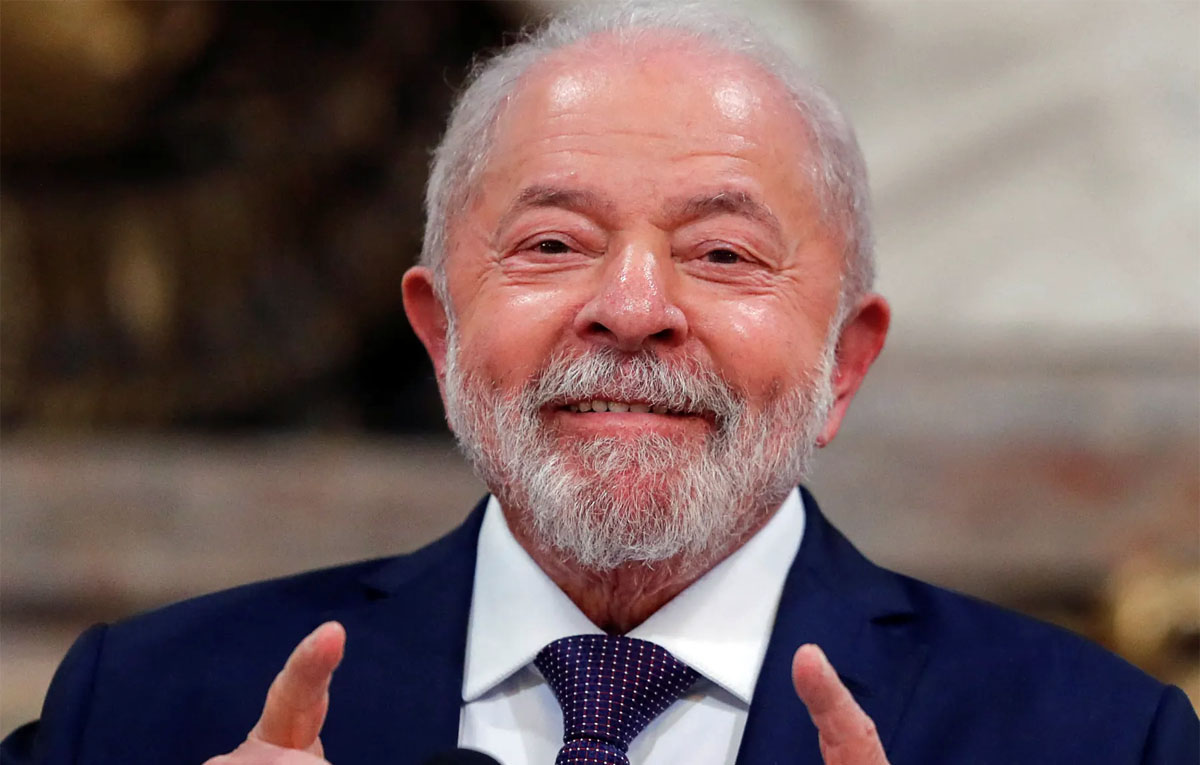
Brazilian President Lula Calls UN Security Council ‘Lords of War’, Slams Trump Over Global Conflicts
Brazilian President Luiz Inácio Lula da Silva has sharply criticised the United Nations Security Council and major world powers, accusing them of fuelling global instability instead of promoting peace.
Speaking on Saturday at an international summit of progressive leaders in Barcelona, Lula called on the five permanent members of the United Nations Security Council—China, France, Russia, the United Kingdom, and the United States—to “change their behaviour” amid rising global tensions.
He described the permanent members as having shifted from their post-World War II mandate of maintaining peace to becoming what he termed “lords of war.”
“The five members of the Security Council… were supposed to ensure world peace after the Second World War, but have become the lords of war,” Lula said.
The Brazilian leader accused these countries of taking major global decisions without adequate consultation with the United Nations system, saying smaller and poorer nations often bear the consequences of such actions.
Although he did not directly name any leader, Lula appeared to criticise former U.S. President Donald Trump over social media posts and statements he said contributed to escalating tensions, particularly regarding Iran.
READ ALSO:
- Bandits Kidnap Kwara Monarch, Wife, Aide in Overnight Palace Attack
- Former NFF President Ibrahim Galadima Dies at 74
- Police Nab Inspector Over Robbery, Killing of Fuel Attendant
He referenced Trump’s past comments on his Truth Social platform, including warnings tied to the Strait of Hormuz, which he described as inflammatory and dangerous to global peace.
“We cannot wake up every morning and go to bed every night with the president of a republic tweeting, threatening the world and declaring wars,” Lula said.
He stressed that no single world leader, regardless of power, should impose unilateral rules on other nations, adding that global governance must be based on cooperation and respect.
Lula also accused the United Nations of remaining passive in the face of escalating conflicts, saying the institution is failing to fulfil the purpose for which it was created after World War II.
“Today, the United Nations no longer represents the purpose for which it was created,” he said.
The remarks come amid continued global tensions involving Iran, the United States, and Israel, with ongoing diplomatic disputes over nuclear development and regional security.
However, some of the conflict details cited in circulating reports remain disputed by official international records and are not independently verified by major global institutions.
Lula used the platform to call for urgent reform of global institutions, insisting that the UN Security Council must be restructured to ensure fairness, transparency, and collective decision-making.
The comments have added to growing international debate over the effectiveness of the UN Security Council, particularly its veto system and its role in resolving modern geopolitical conflicts.
Brazilian President Lula Calls UN Security Council ‘Lords of War’, Slams Trump Over Global Conflicts

-

 Education19 hours ago
FG Opens PTDF Scholarship 2026: Requirements, Deadline, and Application Steps
-

 Education2 days ago
VIDEO: JAMB Registrar Meets CBT Owner Over Hijab Removal Allegation
-

 Education3 days ago
Muslim Girls in Hijab Allegedly Harassed at JAMB Centres Amid UTME 2026 Exams
-
 Education2 days ago
Why UTME Results Were Delayed — JAMB Gives Official Explanation
-
 News2 days ago
Yayi’s emergence, defining moment for unity, equity, progress — Ogun West Professionals
-
 Politics2 days ago
Shekarau, Gwarzo Dump PDP for APC in Kano Political Shake-Up
-

 Entertainment21 hours ago
Peller Faces Backlash Over Claim His ₦100m Savings Are Off-Limits
-
 News2 days ago
NYSC Expands SAED Programme, Moves to Establish Trust Fund for Corps Members