

News
FG considers privatisation of Ajaokuta Steel, TBS, refineries, airports, other enterprises
FG considers privatisation of Ajaokuta Steel, TBS, refineries, airports, other enterprises
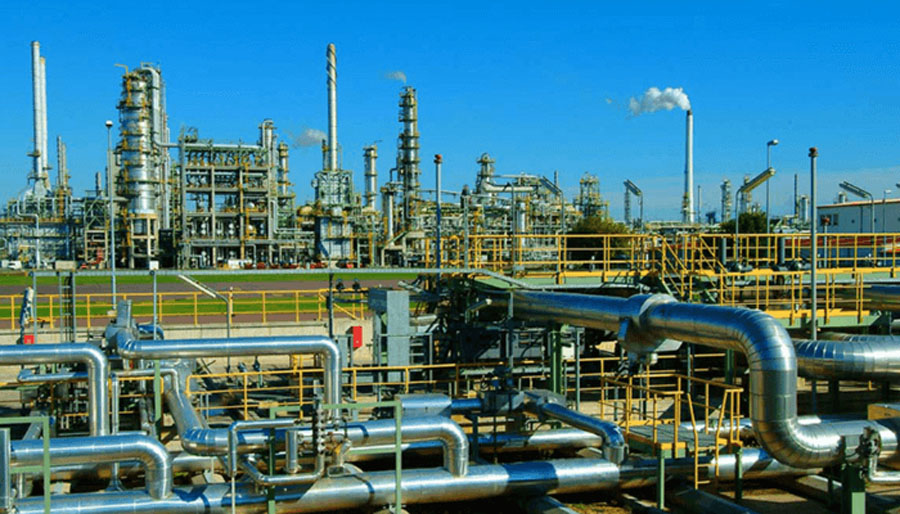
The Federal Government has announced plans to privatise or concession at least 91 state-owned enterprises, including the Ajaokuta Steel Company, Tafawa Balewa Square (TBS), Lagos Trade Fair Complex (TFC), the country’s four refineries, and five international airport terminals.
Director-General of the Bureau of Public Enterprises (BPE), Mr. Ayodeji Ariyo Gbeleyi, disclosed this yesterday in Abuja, noting that each transaction would undergo a rigorous and transparent process, with input from technical, financial, and legal experts.
“We expect, from the 91 enterprises, it will be subject to a very rigorous exercise. One transaction at a time. You take them sectorally,” Gbeleyi explained.
“For example, if we are talking about the five international airport terminals, of course, we will engage the Ministry of Aviation and Aerospace Development. It is the business case or the pre-feasibility study that will say to you what you can expect in terms of concession fee from terminal operators.”
The BPE boss stressed that the bureau cannot arbitrarily fix values or terms for the enterprises until expert advisers have completed feasibility studies.
“We can’t sit here and determine that. That is why we bring in advisers to assist us—whether as a financial adviser, whether as a legal adviser to review the legal regulatory framework, or as technical consultants to review the operational realities of the infrastructure and the business case.
READ ALSO:
- Benue govt bans graduation parties in basic schools
- Stop giving money to miscreants, Lagos warns celebrities, influencers
- Court remands 18-year-old man for allegedly raping two-year-old in Ekiti
It is that business case that will determine the structure and the nature of the transaction. Some transactions may lend themselves to a different structure, while another one will lend itself to another structure. And until you start, you cannot get to the nitty-gritty of what value and what to expect,” he said.
Using the stock exchange as an example, Gbeleyi explained the process further:
“If you want to enlist your entity on the stock exchange, you will engage investment bankers, you will engage lawyers, you will engage technical advisers. And based on their work, they will come up with a financial range and say to you that based on our analysis, this is the range of price you want to achieve. So, until we get to that phase for each of the transactions, we’ll now be able to tell you what to expect.”
Gbeleyi highlighted the impact of past reforms in key sectors, noting the transformation in telecommunications, pensions, ports, and aviation.
According to him, the telecom sector now boasts 169.3 million subscribers with a teledensity of 78.11 percent, contributing 14.4 percent to Nigeria’s GDP. Broadband subscriptions have reached 104.1 million, while internet users stand at 138.7 million. The e-commerce market, he added, was valued at $15 billion in 2023 and is projected to hit $33 billion by 2026.
On pension reforms, Gbeleyi revealed that the sector has amassed 10.79 million contributors and assets worth N24.63 trillion.
He also pointed to successes in port reforms, which led to the leasing of 26 terminals and attracted over $2.5 billion in investments, reducing cargo dwelling time to between four and seven days.
READ ALSO:
- WAEC set to fully adopt computer-based WASSCE by 2026
- It’s illegal to block roads to collect revenue – Kogi boss
- Fire breaks out at Oyo varsity, radio equipment destroyed
“Of course, the Nigerian Ports Authority (NPA) revenue profile is also growing as a result of this exercise—taxes, duties, and associated revenues are also increasing, with throughput improving and also improving contribution to the treasury,” he added.
In aviation, Gbeleyi cited remarkable growth in ground handling companies. NAHCO’s turnover, he said, rose from N3.25 billion in 2006 to N53.5 billion in 2024, while SAHCO’s turnover jumped from N2.31 billion in 2009 to N28.9 billion in 2024.
“These reforms and data points underscore the BPE’s strategic initiatives to enhance Nigeria’s economic landscape, addressing challenges and setting a trajectory for future growth. The discussions highlighted the importance of maintaining momentum in these sectors to ensure continued progress and economic stability,” Gbeleyi said.
With the planned privatisation and concessioning, the government aims to unlock value from state-owned enterprises, attract fresh investments, and boost efficiency across critical sectors of the economy.
FG considers privatisation of Ajaokuta Steel, TBS, refineries, airports, other enterprises








News
Delta Governor Reveals ₦503,000 Monthly Salary, Says Permanent Secretaries Earn ₦900,000

Delta Governor Reveals ₦503,000 Monthly Salary, Says Permanent Secretaries Earn ₦900,000
Asaba, Delta State – Delta State Governor, Sheriff Oborevwori, has made a surprising disclosure about the state’s salary structure, revealing that his monthly salary of ₦503,000 is significantly lower than the ₦900,000 earned by Permanent Secretaries in the state. He also disclosed that the Head of Service earns ₦1 million monthly, making it the highest-paid civil service position in Delta State. The governor made the revelation on Thursday during the inauguration of 12 four-bedroom terraced duplexes for Permanent Secretaries and the presentation of 12 official vehicles to newly appointed Permanent Secretaries in Asaba, the state capital. His remarks, captured in a video posted by ARISE TV on YouTube, have sparked widespread discussions about salary structures in the public service.
According to Oborevwori, the state government increased the salaries of Permanent Secretaries in response to their complaints that some Directors were earning almost the same amount as them. “When the Permanent Secretaries said most of the Directors are receiving almost the same thing with them, we increased their money. Today, Permanent Secretaries… Your salary is 900, my salary is 503,000, Governor’s salary. Head of Service is one million. It’s clear,” he said. The governor added with a touch of humour, “So, you know some of them don’t want their husbands to know how much they are receiving.”
The salary increase for top civil servants was part of a broader welfare package approved by the governor. In June 2026, Oborevwori approved over 50 per cent increment in the salaries of the Head of Service and Permanent Secretaries, alongside a threefold increase in cash prizes for outstanding public servants. This adjustment came after concerns were raised about salary compression, where Directors in the civil service were earning almost the same as their supervising Permanent Secretaries.
READ ALSO:
- Okocha Ignites Fresh GOAT Debate: Nigerian Legend Says Messi Is ‘Art,’ Ronaldo Is ‘Goalscorer Like Haaland’
- Just When You Thought Fuel Prices Were Falling – Dangote Refinery Pulls the Trigger Again
- History in Makkah: Nigerian Teen Wins Prestigious Qur’anic Contest, Breaks 46-Year Gender Barrier
Oborevwori also announced that his administration had prioritised the welfare of civil servants, noting that 302 public officers had benefited from the Public Officers’ Vehicle Loan Scheme, while 119 others had accessed the Public Officers’ Housing Loan Scheme. Additionally, civil servants interested in agriculture have been provided with farm inputs to enable them to generate extra income while contributing to food production in the state. The governor stated that 450 senior management officers had been sponsored to participate in a seven-weekend training programme organised in partnership with the Administrative Staff College of Nigeria.
The governor further disclosed that Delta State was among the first states to implement the new national minimum wage after consultations with relevant stakeholders, including the Head of Service, the Commissioner for Information, and the Nigeria Labour Congress. He also announced the approval of a 13th-month salary for civil servants in the state, scheduled to commence from December 2026. The governor disclosed that the state government is in the process of sending an executive bill to the Delta State House of Assembly to give this gesture legal backing. “So, it is something that is compulsory. By the time it has legal backing, even when I leave office in 2031, they will still be paying you your 13th month salary,” he said.
The governor noted that the appointment of the 12 Permanent Secretaries in May ensured that all 25 local government areas in Delta State are now represented at the Permanent Secretary level in the state civil service. He emphasised that the appointments were based strictly on merit and were not influenced by political recommendations. “The process was properly done. Not by saying, even the one that was appointed in my place, I don’t even know the person. All the Permanent Secretaries appointed, no one was recommended by anybody, but by merit,” he said.
The governor’s salary disclosure has generated mixed reactions. While some commend his transparency, others have questioned the salary structure that allows top civil servants to earn more than the state’s chief executive. Critics argue that the revelation highlights a disconnect between government officials and ordinary citizens struggling with the cost of living crisis, noting that millions of Deltans can barely afford a single meal a day amid skyrocketing food and fuel prices. Supporters, however, view the disclosure as a demonstration of the governor’s commitment to transparency and the welfare of civil servants, noting the various initiatives his administration has introduced to improve the lot of state workers.
Oborevwori urged civil servants and political appointees to shun absenteeism, nepotism, waste, inefficiency, bribery and corruption, while promising continued investment in infrastructure and measures to improve service delivery.
Delta Governor Reveals ₦503,000 Monthly Salary, Says Permanent Secretaries Earn ₦900,000
News
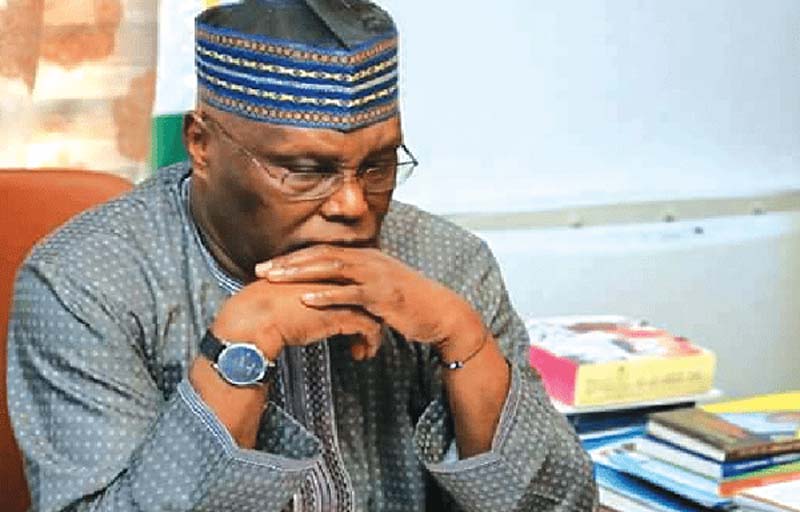
Atiku’s Fuel Subsidy Plan Unrealistic, Destructive, Says Presidency
Atiku’s Fuel Subsidy Plan Unrealistic, Destructive, Says Presidency
The Presidency has criticised former Vice-President Atiku Abubakar’s proposal to restore petrol subsidy if elected president, describing the policy as fiscally unsustainable, retrogressive and incompatible with the changes that have taken place in Nigeria’s petroleum sector.
The Special Adviser to President Bola Tinubu on Information and Strategy, Bayo Onanuga, made the position known in a statement on Thursday titled, “Restoring Petrol Subsidies: Atiku’s Volte-Face and Desperation for Power.”
Onanuga said Atiku’s position represented a departure from his previous stance against petrol subsidy, arguing that the former vice-president had now embraced the policy for political reasons ahead of the 2027 presidential election.
According to him, Atiku had previously advocated the removal of fuel subsidy but had now “opportunistically recanted” the position in an attempt to appeal to Nigerians facing economic hardship.
The presidential aide, however, said Atiku had the constitutional right to propose alternative policies, but insisted that Nigerians were entitled to know how a renewed subsidy regime would be funded and implemented.
He explained that petrol subsidy was not money sitting in government coffers for distribution to motorists, but rather the difference between the regulated pump price and the actual cost of supplying the product.
Onanuga said restoring the old system would require a new legal, fiscal and administrative framework, particularly because the Petroleum Industry Act had provided for the removal of petrol subsidy by the end of June 2023.
READ ALSO:
- Former MFM Pastor Femi Jimoh Dies After Years of Detention, Legal Dispute
- North Korea Fires 10+ Missiles Hours After Trump Signals Fresh Kim Summit
- 40 Feared Dead as Overloaded Boat Carrying Farmers and Children Capsizes in Sokoto
He argued that President Tinubu merely accelerated the implementation of a reform already contemplated under the PIA by announcing the subsidy removal in May 2023.
The presidential aide also said Nigeria’s petroleum industry had changed significantly since the removal of subsidy, particularly with the emergence of large-scale domestic refining capacity.
He cited the Dangote Refinery as a major development that had altered the dynamics of the downstream petroleum sector, arguing that the country was gradually moving away from dependence on imported refined products.
Onanuga warned that returning to a subsidised petrol regime could undermine investments in local refining and reverse the gains recorded in domestic production.
He further argued that subsidy restoration would raise questions about who would bear the financial burden of selling petrol below its economic cost.
“If petrol is sold below its economic cost, someone must absorb the difference,” he said, noting that the burden would ultimately fall on public finances through reduced allocations, increased borrowing, higher public debt or reduced spending on infrastructure and social services.
The Presidency also rejected claims that the removal of subsidy had created a N30tn windfall for the Federal Government, describing such a figure as inaccurate.
Onanuga said the government had instead benefited from reduced fiscal pressure following the discontinuation of petrol price discounts and reforms in the foreign exchange market.
He added that the three tiers of government shared about N3tn from the Federation Account in July, describing the development as evidence of improved government revenues.
According to him, the country’s transition towards domestic refining and locally processed petroleum products could conserve foreign exchange, strengthen energy security, create jobs and support industrial development.
The presidential aide acknowledged that the removal of subsidy had increased the cost of living and placed considerable pressure on households and businesses.
He said the Tinubu administration was pursuing alternative measures to reduce the impact of high energy costs, including the promotion of Compressed Natural Gas, which he described as significantly cheaper than petrol for transportation.
Onanuga urged political actors to provide Nigerians with detailed fiscal calculations whenever they proposed policies such as subsidy restoration.
He asked Atiku to explain the annual cost of the proposed subsidy, the revenue source that would finance it, whether the government would borrow to fund it and whether amendments to existing petroleum-sector laws would be required.
He also questioned how any new subsidy regime would be monitored to prevent the abuses and corruption associated with the previous system.
The Presidency maintained that Nigeria needed sustainable solutions to the rising cost of living rather than a return to what it described as an opaque and financially burdensome petroleum pricing system.
It called for a broader debate on economic policy, but insisted that such discussions must take into account the realities of Nigeria’s current petroleum market and the country’s growing domestic refining capacity.
“Political promises must be backed by fiscal arithmetic,” Onanuga said, urging all political actors, including Atiku, to present Nigerians with the full fiscal and legal implications of any proposal to restore petrol subsidy.
Atiku’s Fuel Subsidy Plan Unrealistic, Destructive, Says Presidency
News
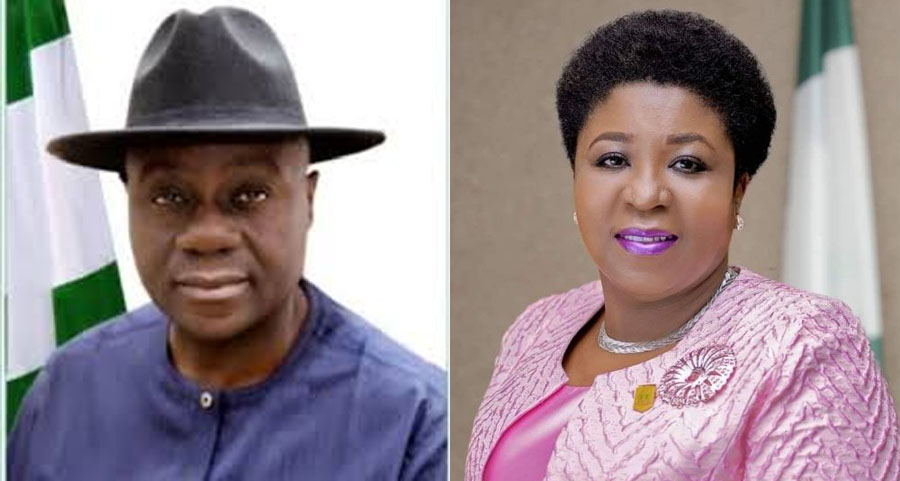
Abel Enitan Replaces Walson-Jack as Head of Civil Service as Tinubu Lauds Outgoing HOS
Abel Enitan Replaces Walson-Jack as Head of Civil Service as Tinubu Lauds Outgoing HOS
-

 metro3 days ago
Palliative Care, Not Abandonment: Doctor Clears the Air on Ogogo’s Stage-Four Cancer Treatment
-

 Insurance2 days ago
NAICOM revokes Universal Insurance licence over ₦15bn capital shortfall
-
 Education3 days ago
WAEC 2026 results: Schools raise alarm over alleged grading anomalies
-
 Entertainment3 days ago
Veteran Nollywood Actor Ogogo Battles Stage-4 Cancer as Daughters Beg for Treatment
-
 metro3 days ago
Lagos Pensioners Give Sanwo-Olu 19-Day Ultimatum: Implement Wage Award or Face ‘Mother of All Protests’
-
 Politics3 days ago
‘No Electoral Agreement with ADC’ – Adeleke Rejects Collaboration Claims, Credits God
-
 metro3 days ago
Over 50 Killed, Scores Injured as Gunmen Attack Mangu Communities in Plateau
-

 metro1 day ago
Palace Chaos: Police Say Cultists Targeted Davido, Not Gov Adeleke, in Deadly Osogbo Shooting