

Opinion
What will they eat when they finish the money? By Azu Ishiekwene
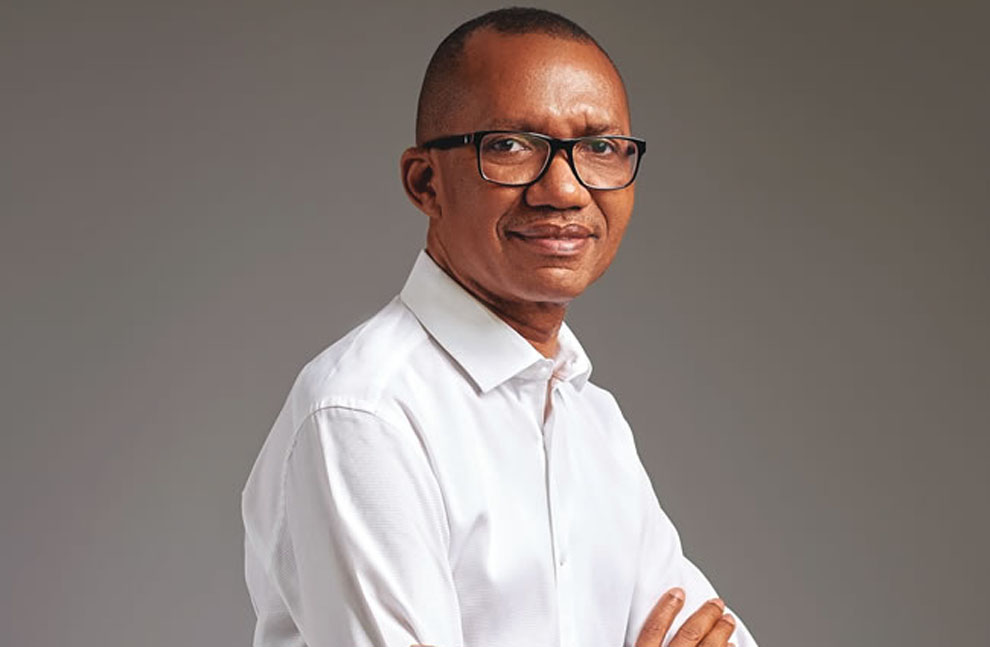
What will they eat when they finish the money? By Azu Ishiekwene
The grave is never satisfied, but other things compete with it for insatiability. I can’t help feeling that some members of Nigeria’s National Assembly will vie for the top place of never enough with the grave, water and fire. Enough is a stranger to them. What happens in these chambers in Abuja, in the name of the people, only God knows.
That’s not to suggest that other arms of government are significantly better. But when we reach the point where we have to decide whose greed is eating us more, then we’re in trouble.
Last week, the Senate Committee on the North-Central Development Commission, NCDC, said it had approved N140 billion for the commission in the 2025 fiscal year, which has three months remaining.
Yielding to overcome
The commission, which couldn’t wait to be born in February, obviously cannot also wait to get its own share of the national cake. Coming after the establishment of development commissions in the North-East and North-West, and well ahead of the promise of similar commissions in three other regions, the NCDC is enjoying the benefit of copying all the bad habits of the existing ones and setting a higher standard of crookedness for others to follow.
And in the “rub-my-back-I-rub-yours” politics of the National Assembly, the management of the NCDC can count on Abuja politicians for help. That explains why the Senate Committee approved N140 billion with the charm of a smitten lover.
“After a careful look at the issues contained in the budget,” the committee chairman, Titus Zam (from Benue State) said, “and the eloquent presentation by the MD and his team, the committee has approved the budget of N140 billion as presented by the commission.”
Devil in the detail
According to the press reports, the budget has now been forwarded to the House committee. Still, we do not have the details of the MD’s “eloquent presentation.” We are also not told of the extent of scrutiny by the Senate committee – only that the committee was so impressed it may well have approved the N140 billion for three months blindfolded.
READ ALSO:
- Emefiele: Court admits WhatsApp conversation as evidence
- Presidency opposes Sowore’s Free Nnamdi Kanu protest
- Ex-FCTA director sentenced to 24 years imprisonment for N318m fraud
But the details provided in the LEADERSHIP report of Friday, October 3, capture the elephant in the room. It gives details of the three-month budget, with an imprint all over of the type of concession typically made when parties are in an overwhelmingly delicate position behind closed doors.
According to LEADERSHIP’s report, the commission will receive N10 billion for cars, N9 billion for travels, and N1.2 billion for telephone calls, apart from its claim to spend N6 billion on unnamed “humanitarian projects.”
What will they eat when they finish the money? By Azu Ishiekwene





Opinion
Five days in Salvador, Brazil’s Yoruba city, By Farooq Kperogi
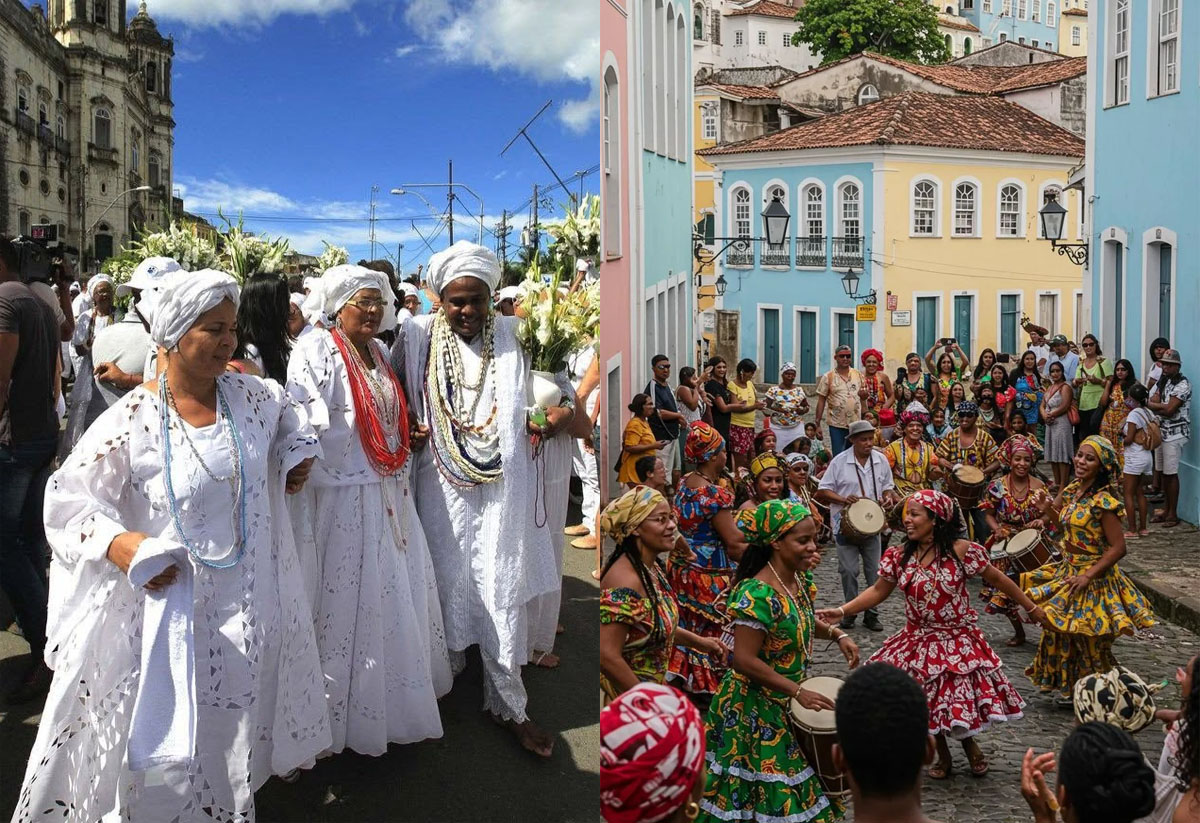
Five days in Salvador, Brazil’s Yoruba city, By Farooq Kperogi
Opinion
Stop, CBN! The baby is in the bathwater
Stop, CBN! The baby is in the bathwater
Tunde Odesola
(Published in The PUNCH, on Friday, July 31, 2026)
I invite you to join me on this journey to the Central Bank of Nigeria headquarters in Abuja, where I shall be meeting with the CBN Governor, Mr Olayemi Michael Cardoso. The meeting is neither official nor scheduled, but its importance highlights the potential harm a recent CBN directive portends for the nation’s banking sector.
The trip will be long and windy; I will be driving in my rugged BMW, which can only take a few passengers. So, the privilege to be on the trip will be on a ‘first come, first served’ basis. The journey is a rescue mission! The CBN is about to disrupt the equilibrium in the banking sector over advertisement fines, giving no room for feedback or consultation with stakeholders. Even the itinerant thrift collector, Bàbá AlájọṢómólú, talks with stakeholders.
Having traversed the nation’s banking corridors for forty-four years, with nearly three of those years as the helmsman at CBN, it is not too much to expect Cardoso, at 69, to possess the wisdom of an elephant.
I looked up Cardoso’s name half‑expecting to find “Solomon” tucked in the middle; instead, I found “Michael.” And the more I weighed both names, the clearer it became that Michael suits him better. Archangel Michael stands for protection and justice, flaming sword in hand, while Solomon’s famed judgment has long been questioned by ethicists who argue that no ruler should threaten or appear willing to endanger an innocent child, insisting that the outcome of Solomon’s judgment depended on emotional reaction, which could have been mistaken.
Instructively, the case I’m discussing with Cardoso rests more on protection and justice than wisdom, though justice rarely walks without wisdom in its shadow.
It was in the groundbreaking book, “Frames of Mind: The Theory of Multiple Intelligences,” written by Harvard professor Howard Gardner and published in 1983, that I discovered why I always muddle up music notes whenever I sing. It was Gardner’s book that told me music intelligence was among the eight types of intelligences there are. Gardner’s work opened my eyes to a moment of epiphany when I realised that no matter what I do, I can never sing according to notes because I do not possess music intelligence. Just look in my direction if you’re looking for the king of ‘off-beat’ singing. You won’t have to mock me for too long though, as I shall enrol in a music school soon.
But Bob Marley wasn’t beset with my “off-key” fate. Still the greatest reggae music band after 45 years of dissolution, Bob Marley and the Wailers bequeathed to humanity timeless songs such as ‘One Love’, ‘No Woman, No Cry’, ‘War’, ‘Buffalo Soldier’, ‘Exodus’, ‘Could You Be Loved’, ‘Three Little Birds’, and many more. The acronym of Marley’s evergreen band is BMW.
READ ALSO:
- Osun Speaker: CP Gotan Arrested SSG Igbalaye for Laughing When Police Boss Was Booed
- Police Release Osun SSG After Controversial Arrest Over Alleged Electoral Offences
- ‘We’ll Marry Beautiful Ones, Kill the Rest’ – Terrorists Reject N155m Ransom for 176 Kwara Captives
If you ask me which I prefer between going down on bended knees before a cheering crowd in the street, engagement ring in hand, asking my beloved, “Will you marry me?” and holding my partner in high esteem at all times? I would choose the latter. What is the essence of public display of affection when the man is a King Kong at home?
Anyway, the whole essence of dating and courting becomes promising when the man proposes and tells the lady to “Be My Wife”: BMW.
Germany produced Adolf Hitler, the mass murderer. It also gave the world great men like Karl Marx, Beethoven, Goethe, Kant, Nietzsche, Engels, and Bismarck, even as the auto world owes gratitude to Germany’s genius, which produced Mercedes-Benz, Porsche, Maybach, Volkswagen, Audi, Opel, etc.
Germany is also the home of Bayerische Motoren Werke, the makers of my very first car, a three-series BMW. Is there someone who didn’t like their first car? I was besotted by my darling BMW. Young and dashing, with a dream job in hand, my silver BMW represented the five stars on the epaulette of a bachelor ready to explore possibilities, promise and passion.
One day, I took my BMW to my panel beater, whose shack flanked the Central Bank of Nigeria, Akure branch. I had just bought a stereo and the gadget wasn’t sitting properly in the radio cavity. The stereo jutted out a jot from the cavity, and I felt the panel beater would have a device to slightly expand the cavity for the radio to sit smugly.
“I’ll be back soon,” I told the guy as I trekked to my bank across the road. When I got back from the bank, the panel beater sprouted from under a car; a big smile spread on his face. “I have finished your work,” he beamed. I joked with him as I paid him his charge, and we both walked to my BMW. I got into my car and froze as I looked at the radio.
The stereo was right there sitting in the cavity. But the panel beater had gouged a big hollow under the cavity to allow the stereo to fit in, leaving an unsightly gash, like missing incisors. I looked at him for an explanation. Heartily, he sprinted from my side to the passenger’s side, got into the car and regaled me about the genius he employed to perform the magic.
I felt like punching him right in the face. But the close range he was to me in the car wouldn’t allow me to deliver the type of punches I wanted. I was too angry to talk as I watched him fiddling with the stereo and telling me the wisdom that produced his act of vandalism. So, I got out of the car, paced about as I wrestled with the thoughts of how best to avenge the wanton destruction.
When other craftsmen saw my state, they abandoned what they were doing and came over to me, asking, “Ọ̀gá, kíló ṣẹlẹ̀. Wetin happen?” It was the panel beater who answered the questions. “Ọ̀gá ń bínú nítorí iṣẹ́kékeré tí mo ṣe ni,” he announced, smiling, “Ọ̀gá is angry because of the little job I did.” So, his colleagues went to the car to see the little job he did. Everyone was aghast, vehemently condemning his stupidity and calling him names.
I got into my car and drove off with my stereo. I didn’t even remember to collect the money I paid him. That was about 30 years ago.
The panel beater’s reckless solution – a crude fix that destroys what it intends to improve – is exactly what the CBN is about to inflict on Nigeria’s banking sector. A badly worded directive that threatens to deduct from the Cash Reserve Ratio kept with the CBN, following a five-day ultimatum, is not regulation. It is panel beaters at work at the CBN
READ ALSO:
- 42 Cows Die Mysteriously in FCT Community, Herder Collapses in Shock
- No Ransom, No Negotiation: President Reveals Intelligence Behind Oriire School Rescue
- Unpaid arrears: Resident doctors threaten total nationwide strike
Now, let’s unbare the issues. In a July 24, 2026, circular to all commercial banks aka Deposit Money Banks (DMBs), the CBN recalled a November 27, 2025, circular, alleging that many banks had failed to comply “with regulatory provisions on advertisement,” thereby ordering “immediate withdrawal of non-compliant advertisements”.
The latest circular entitled “Imposition of Regulatory Sanctions For Breaches of Advertising Requirement,” goes on to say that the CBN had conducted a review of non-compliant advertisements, promotions and related communications by affected commercial banks, adding that “continued circulation of non-compliant advertisements and promotional materials after the November 27, 2025, circular” has attracted fines that run into billions of naira across the banks. My investigation revealed that over 95% of commercial banks are affected in a wave of fines that range between N250m and N500m.
Accusing the affected commercial banks of unprofessionalism in their advertisements, the CBN alleged that, “Misleading claims, omitted conditions and prohibited inducements distort consumer decisions, cause avoidable harm and give non-compliant institutions an unfair advantage over those that observe the rules.” The apex bank added that “penalties are imposed pursuant to Section 95(f) and (g) of BOFIA 2020,” stressing that “the sanctions reflect the nature, severity and persistence of the breach, as well as the consumer protection risks arising therefrom”. BOFIA is the Banks and Other Financial Institutions Act. It encourages sound banking practices and the prevention of misleading representations in promotions and gambling-like advertisements.
To put the scenario in perspective, a layman’s explanation would suffice. The CBN is frowning on advertisements and promotional materials that say bank customers can win a certain amount of money if they participate in a promotion. In the wisdom of the CBN, such a promotion is unethical because not all bank customers can win the promised package.
As good as CBN’s oversight appears in this context, it will amount to cutting off the nose to spite the face if Cardoso does not take a critical look at the whole process holistically. For example, the banks coming under the hammer of the CBN obtained approvals from relevant statutory regulators such as the Advertising Regulatory Council of Nigeria (ARCON) and the Federal Competition and Consumer Protection Commission (FCCPC). Does this mean that the alleged breaches the CBN is complaining about are different from the laws of the nation’s apex regulatory bodies for advertising and consumer protection? Are there two sets of advertising and consumer protection laws in the country? Should there not be a consultative meeting among the CBN, the affected banks and the nation’s advertising and consumer protection bodies so that a proper perspective of all the issues could be unfurled before commercial banks’ balances with the CBN are deducted?
READ ALSO:
- IGP Redeploys Osun CP to Force Headquarters Ahead of August 15 Governorship Election
- Where Will Peter Obi’s Votes Come From? I Can’t See It – Keyamo Predicts Tinubu’s Landslide Victory
- Obi Must Apologise, Pay ₦25,000 or Face FAAN Action — Keyamo Issues Ultimatum
Given the interconnected nature of the banking system in Nigeria, as is the case in most jurisdictions around the world, the practice of deducting regulatory penalties directly from commercial banks’ accounts maintained with the Central Bank of Nigeria (CBN) carries the risk of creating unintended disruptions. Such deductions can adversely affect the liquidity reserves of Deposit Money Banks (DMBs), funds that ultimately underpin customer deposits and financial obligations. Consequently, while regulatory sanctions are an important tool for enforcing compliance, care must be taken to ensure that their implementation does not inadvertently undermine the very financial stability and depositor interests that the CBN is mandated to protect. This concern becomes particularly relevant for several reasons.
Except the CBN takes the role of another panel beater, it should be crystal clear that if substantial penalties are debited directly from a bank’s balances maintained with it, the following industry implications may arise:
Firstly, deductions may temporarily reduce the affected bank’s liquidity position, particularly where the sanction is significant and applied without prior provisioning.
Also, the penalties may negatively impact profitability by reducing earnings available to shareholders and limiting resources that could otherwise be deployed for lending, technology investments, branch expansion or customer service improvements.
It should be noted that widespread industry sanctions can create operational pressure on banks, prompting emergency compliance reviews, forensic audits and the diversion of management attention from business growth initiatives to regulatory remediation efforts.
If the sanctions are imposed simultaneously on a large number of banks, the cumulative effect could tighten liquidity within the banking sector, albeit temporarily, depending on the magnitude of the deductions and prevailing market conditions.
Such actions may increase regulatory risk perceptions among investors, potentially affecting market sentiment, valuation metrics and confidence in the stability of the operating environment.
And there may be reputational consequences for affected institutions, particularly where sanctions receive extensive media coverage. Customers and counterparties may seek explanations regarding the nature of the breaches, even where the infractions relate to historical marketing materials rather than prudential or solvency concerns.
However, arguing from a regulatory perspective, the CBN may contend that enforcement actions are necessary to preserve market discipline, promote consumer protection, ensure compliance with BOFIA, and maintain confidence in the banking system. Sound argument!
But what is the motive behind a punitive circular that does not state the particular infractions committed by respective banks – in the face of the fact that most of the alleged infractions had been corrected by some of the banks? Why issue sanctions without allowing affected banks to respond and present their cases? By holding affected commercial banks by the jugular, without giving room for fair hearing, the CBN has chosen to be draconian. This is a disturbing trend.
I strongly think that the CBN should look inwards and evolve an organic solution to the sectoral challenge because where the alleged infractions relate to historical advertisements already withdrawn by banks, and where there is no evidence of customer loss, financial instability, fraud or prudential misconduct, a collaborative remediation framework may achieve regulatory objectives more effectively than punitive sanctions of a magnitude capable of affecting industry liquidity and operational efficiency
Cardoso, I have laid out the cards. Please, deal wisely. Use your flaming sword of protection and justice fairly.
Email: tundeodes2003@yahoo.com
Facebook: @Tunde Odesola
X: @Tunde_Odesola
Stop, CBN! The baby is in the bathwater
Opinion
Osun election: Àtàọ́ja should stop running joro-jara-joro
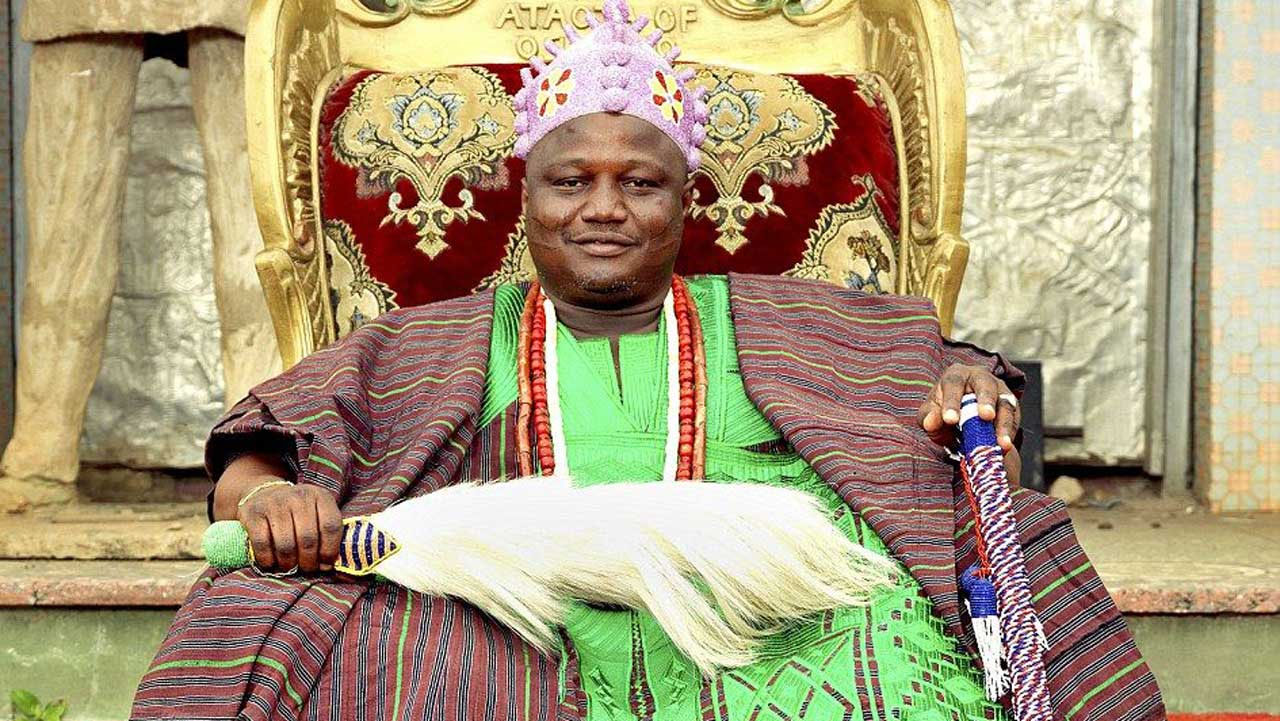
Osun election: Àtàọ́ja should stop running joro-jara-joro
Tunde Odesola
(Published in the PUNCH, on Friday, July 24, 2026)
It’s midmorning in Àtàọ́ja’s palace. The sun beamed a friendly smile, quite different from the furious furnace it was preparing for the afternoon. As gently as the breeze caressed the trees in the palace, two pigeons landed on silent feet in the courtyard. They were on a joint mission. To scavenge. Looking right and left, up and down, beaks at work, wings at the ready, the bouncy birds pecked food in the palace soil. For the male and female pigeons, danger lies not in flying; it lies in walking. Sycophancy walks naked on the palace grounds.
Even the king’s kààakí was caught unawares. It couldn’t herald what was about to happen because everything occurred at a dizzying speed. The Àtàọ́ja, Oba Jimoh Olanipekun, ran out from the inner recess of the palace, his agbada òfì billowing in the Osogbo wind; kira-kita, kira-kita, the king bolted like Usain Bolt. Where is the king running to?
In his breakneck flight, Àtàọ́ja Osogbo forgot to wear his neck beads! I-m-a-g-i-n-e! But he luckily remembered to wear his cap. I suspect it was ancestral forefathers known as ‘àwọn alálẹ̀’ who reminded him to wear his shoes. Otherwise, the king might have appeared out of sorts at the state government event he was fleeing to.
Thankfully, when Àtàọ́ja Olanipekun reached his destination, he still had some breath in his lungs. He sat down, resplendent in white and blue agbada, clenched the microphone and confessed in Yoruba, “Ẹ̀ ri pé ń ò kólẹ̀kẹ̀ ọ́rùn? Mo sáré dé hin ni. Tí a bà á wá, wọ́n á ní, ‘Háà, kò mọ̀ le bọ́ta mọ́!’ Gbogbo ohun tí wọ́n ń sọ là ń gbọ́.”
I’ll translate the king’s speech in English: “Can’t you see that I am not wearing my royal beads? (It is because) I ran to this event. Because if I did not come, they would say, ‘Ha! He cannot come out again!’ We hear everything that they (opposition) are saying. I will not stop eulogising Adeleke Jackson Nurudeen for his excellent performance in Osun State.”
Unfortunately, Olanipekun thinks that by singing himself hoarse on the praise of ebullient Governor Ademola Adeleke, he is giving the re-election bid of the Asiwaju of Ede a boost. No, he is not. If he was, the apex socio-cultural association of Osogbo sons and daughters, the Osogbo Progressive Union, would not openly criticise him for publicly canvassing support for Adeleke and attacking the opposition on many occasions.
The penis of the bird does not dangle outside; it is tucked inside the bird, says a Yoruba proverb. This proverb preaches decorum. If the king had been decorous like other Osun kings, who, though, have their favourites among the governorship candidates, but who have kept their support within the ambit of decency, the OPU wouldn’t have embarrassed him with a public disclaimer.
The Timi of Ede, Oba Muniru Adesola Lawal, had been an exemplar in his support for Adeleke, who hails from his domain. The Timi had been regal: zero aggression, zero hate words, zero campaign against other parties. Oba Timi has shown emotional intelligence while fully supporting Adeleke, his son. That is how to be a father to all subjects. Of course, if Timi was blindfolded at the polling booth on election day, his royal thumb would still locate Accord Party on the ballot, whereas some carricachop from another land is claiming to know Ọ̀ṣọ́ more than Ọ̀ṣọ́’s mother.
READ ALSO:
- Dollar to Naira Exchange Rate Today: Naira Holds Steady as Fuel Importer Demand Mounts
- Senate Bill Requiring Social Media Offices in Nigeria Gains Stakeholder Support at Public Hearing
- Army Declares Soldier Wanted Over Alleged Sale of Military Uniforms to Terrorists
It’s undignifying for the elderly to run helter-skelter, says a Yoruba proverb distilled in these words, “Gbàmí, gbàmí ò ye àgbà.” Another proverb that cautions against kùrùkẹrẹ movement says, “Ẹní wọ bàtà ẹsẹ̀ òsì méjì, ó níbití ó ń lọ.”
The importance of royal objects such as crown, beads and staff is interrogated in the seminal work, “Yoruba: Nine Centuries of African Art and Thought,” written by Henry J. Drewal et al, and published by The Centre for African Art, New York, in 1989. Similarly, the royal totems – crown, beads and staff – are also a subject of scholarship in Rowland Abiodun’s “Yoruba Art and Language: Seeking the African in African Art,” published by Cambridge University Press in 2014.
Drewal and Abiodun aver that in Yoruba thought, the crown, beads and staff are sacred totems that signify divine authority, spiritual protection, leadership, ancestral continuity, and the king’s covenant with the people and the gods.
In both books, the crown is regarded as a sacred emblem containing the spiritual essence that connects the present with the past. Royal beads signify dignity and prestige, abundance and prosperity, and spiritual energy. The staff is an instrument of authority, justice, fairness, and protection.
Joro-jara-joro is an onomatopoeic word that means helter-skelter. Onomatopoeic words are words that sound like their meanings. Examples: buzz, hiss, slap, sleep, twinkle, jab, splash, tear, bang, etc. Joro-jara-joro was amplified by Afrobeat creator Fela Anikulapo-Kuti in his 1976 song, “Zombie”, which mocks Nigerian soldiers’ blind allegiance to dictatorship.
In “Zombie”, Fela caricatures Nigerian soldiers as unthinking brutes whose sole skill is to chaotically rove joro-jara-joro against the masses, like zombies on the mission to “go and kill, go and quench, go and die”. Fela sings, “Zombie way na one way; joro-jara-joro/No break no jam, no sense; Na joro-jara-joro….”
There would have been no reason to write this article because I had made my intention clear enough in an earlier article entitled, “Governor Adeleke and a tale of three Àtàọ́jas,” published in The PUNCH on Friday, July 17, 2026. My preoccupation in the article was to call the attention of the monarch to some of his unkingly utterances. My intention wasn’t political. But an insinuation, especially from some irritating ‘e-rats’ and ‘data boys’, who attempted to paint my intervention in political colours, made this sequel inevitable.
In line with their zombie mentality, a particular ‘e-rat’ along with his fellow ‘data boys’ accused me of meddlesomeness and maintained that it lies within the rights of the Àtàọ́ja to express support for any candidate of his choice.
Clearly, the accusation of meddlesomeness was borne out of dripping ignorance. If not, an enlightened mind would see that the actions of the Àtàọ́ja diminish his traditional stool that represents the Yoruba worldview of unity, morality, justice, fairness and equity. The allegation that the Àtàọ́ja had the right to support any candidate of his choice is valid to the extent that such a right must not violate the principles of fair play, rule of law and decency.
By openly calling the opposition names in a viral video, did the Àtàọ́ja adhere to the principles of fairness and tolerance? By his vitriolic speeches, was he not stoking the embers of strife? If I could be provided with the evidence of one Osun traditional ruler who had been as politically intolerant as the Àtàọ́ja, against the ruling party, I shall tender an apology in my next article.
In one of the bad-taste videos, the Àtàọ́ja arrogantly disclosed how he rejected wise counsel by a concerned citizen, who told him the danger in his public support for Adeleke over other candidates. His words, “One of my people asked me why I am so audacious to the extent of overly supporting one candidate (Adeleke) over others; what if he doesn’t win?”
The king answered the worried citizen. Àtàọ́ja opened his mouth and played god, declaring with finality: “He will win.” Olanipekun’s divisive posture is most unbecoming of an ọba, whose palace should be an abode to seek conflict resolution by his subjects, including politicians. Àtàọ́ja should not be the epicentre of conflict.
In the recent past, I have ventilated my views on the actions of the Ooni of Ife, Oba of Lagos, Apetu of Ipetumodu, Alapomu of Apomu, Oluwo of Iwo, and Emir of Ilorin, among other traditional rulers. I strongly believe that it behoves the citizen to hold traditional rulers to the highest standards because the traditional institution embodies the ethos and pathos of a race.
For ‘e-rats’ and ‘data boys’, whose stock-in-trade is abuse, there is a lesson in the conduct of a member of the House of Representatives, Bamidele Salam. Salam is my friend of over 20 years. Though we have had moments of sharp disagreement, emotions never boiled over to name-calling.
One day, BS, that’s Salam’s nickname, saw my Facebook post on Governor Adeleke. In the post, I advised the governor against excessive dancing and to shear off some personalities who were following him about like houseflies following the wound on a dog’s ears. In the Facebook post about three years ago, I cautioned that the image of the governor dancing to the faintest of drumbeats amid a retinue of hangers-on was not good.
As soon as BS saw the post, he reached out to me on the phone and said, “Ọ̀rẹ́, ọ̀rọ̀ ò rí bẹ́yẹn o. Your post does not reflect the great work Adeleke is doing in Osun…” I smiled from the other end of the phone because Bamidele was pushing Adeleke’s narrative while ignoring the kernel of my Facebook post. When I insisted on the need for the governor to do better in regard to dancing, Bamidele said every man was a work in progress, including me. Bamidele’s example is how to engage intelligently; a lesson government and opposition ‘e-rats’ and ‘data boys’ should learn.
The demarcation between a ruling party and an opposition party is nebulous. Practically speaking, ideological philosophies among Nigeria’s political parties are nonexistent. This is why Àtàọ́ja should be careful in his untraditional support for Adeleke. The Adeleke he sees in the Accord Party today could be in the All Progressives Congress tomorrow. Olanipekun should not burn the bridge of friendship today because he might need to use the bridge tomorrow.
This is the lesson Àtàọ́ja Olanipekun should see in his recent visit to President Bola Tinubu in Abuja. When politicians do their thing, a respectable ọba should maintain a dignified distance. He should not be in the fray.
Are you shocked that Kabiyesi Olanipekun was in Aso Rock a few days ago? Yes, he was. As a guest of President Bola Tinubu. This is the story of how the monarch used one stone to kill two birds. Àtàọ́ja’s daughter was graduating from the Law School in Abuja. An influential Osun State indigene, worried by the king’s intolerant posture against the Osun All Progressives Congress, had arranged for the king to meet with the President. It took some time for the king to meet the President.
During their meeting, the President expressed worry over Àtàọ́ja’s political remarks against the APC in Osun, urging him to allow for a level playing field. I gathered that Àtàọ́ja told the President that he was sold on the Adeleke ticket. Personally, I do not fault Àtàọ́ja’s position – supporting a candidate of his choice; it’s his brickbat approach that is reproachable.
If Tinubu could open his doors to Olanipekun and sit down to dialogue with him, who says there cannot be a dialogue between Tinubu and Adeleke? And if a dialogue occurs between the two and an agreement is struck, would the king not feel uneasy relating with his ‘enemies’ in the APC? The king should always spare a thought for the flip side of things. That is what the wise do.
“Àgbàlagbà kìí ṣe lángbá, lángbá,” is a cautionary proverb for reckless elders. The pit of animosity must not be dug too deep because the digger might fall into it. A word is enough for the wise.
Kabiyesi Àtàọ́ja, kara o le o.
///
Email: tundeodes2003@yahoo.com
Facebook: @Tunde Odesola
X: @Tunde_Odesola
Osun election: Àtàọ́ja should stop running joro-jara-joro
-
 Aviation3 days ago
Obi Must Apologise, Pay ₦25,000 or Face FAAN Action — Keyamo Issues Ultimatum
-
 Politics3 days ago
Where Will Peter Obi’s Votes Come From? I Can’t See It – Keyamo Predicts Tinubu’s Landslide Victory
-
 metro3 days ago
‘We’ll Marry Beautiful Ones, Kill the Rest’ – Terrorists Reject N155m Ransom for 176 Kwara Captives
-

 metro3 days ago
IGP Redeploys Osun CP to Force Headquarters Ahead of August 15 Governorship Election
-
 metro3 days ago
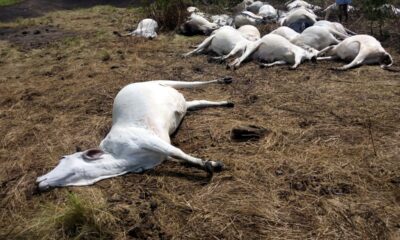
42 Cows Die Mysteriously in FCT Community, Herder Collapses in Shock
-

 Auto3 days ago
Côte d’Ivoire woos Nigerian auto investors to regional mobility expo
-

 Education2 days ago
ICYMI: Court orders JAMB, CBT centre to pay ₦10m over forced removal of candidate’s hijab during UTME
-

 metro3 days ago
Ansar-Ud-Deen Society to Commission New National Headquarters Saturday, Tinubu Expected as Special Guest