
Education
NELFUND Refutes UniAbuja Loan Diversion Claims

NELFUND Refutes UniAbuja Loan Diversion Claims
The Nigerian Education Loan Fund (NELFUND) has strongly refuted recent claims that officials of the University of Abuja (UniAbuja), including the vice‑chancellor and senior administrators, diverted or misappropriated student loan funds intended for indigent students.
In a detailed statement, NELFUND clarified that no verified evidence exists to support allegations that UniAbuja unlawfully withheld or diverted loan disbursements. The Fund said the speculation circulating in some media reports — which implicated the university’s vice‑chancellor, the Dean of Students’ Affairs, and other officials in the alleged diversion of multibillion‑naira funds — is unfounded and misleading.
The reports also suggested that UniAbuja failed to reimburse residual balances to students whose actual tuition fees were lower than the amounts disbursed by NELFUND on their behalf. In response, NELFUND maintained that its structured disbursement and reconciliation framework ensures that funds released for student loans are properly applied in line with its statutory mandate.
READ ALSO:
- NRC, Entertainers Finalise Plans for 2026 Valentine Train Ride
- 2027 General Elections: INEC Announces February 20 for Presidential Poll
- EFCC Nabs Three in Borno Over Viral ₦500 Naira Mutilation Video
Mrs. Oseyemi Oluwatuyi, NELFUND’s Director of Strategic Communications, emphasised that the Fund’s operations are governed by formal verification, compliance, and reconciliation protocols. According to her, loan funds are released through established institutional channels, and strict accountability mechanisms are in place to safeguard both student and institutional interests.
The Fund acknowledged that discrepancies or timing issues sometimes arise in the process of crediting student or institutional accounts, but said these are typically resolved through direct engagement with the relevant institutions, in accordance with due administrative processes.
“Where concerns arise regarding timelines of crediting student accounts or institutional reconciliation processes, NELFUND engages directly with the relevant institution to clarify and resolve such matters administratively and in accordance with due process,” the statement read.
NELFUND reiterated its commitment to transparency, accountability, and rigorous audit procedures, which include reliance on verified documentation and formal reconciliation mechanisms when addressing any issue related to its student loan disbursements.
The Fund also reaffirmed its dedication to protecting the interests of eligible Nigerian students and ensuring that all disbursements are applied lawfully and effectively to support access to tertiary education.
NELFUND Refutes UniAbuja Loan Diversion Claims






Education
JAMB Opens Change of Institution Process, Announces Result Slip Printing Date
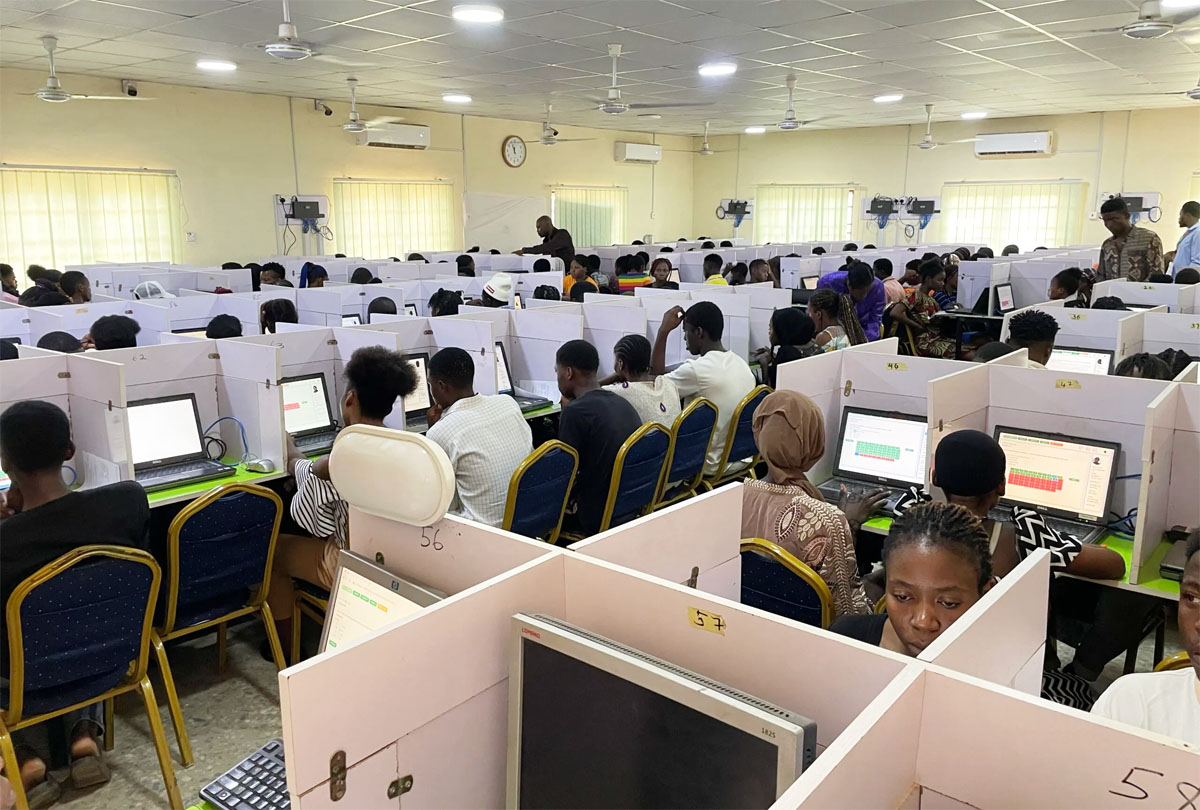
JAMB Opens Change of Institution Process, Announces Result Slip Printing Date
The Joint Admissions and Matriculation Board (JAMB) has officially announced the commencement of the 2026 UTME change of institution and course process for candidates seeking to modify their admission choices.
The announcement was made on Friday in a statement issued by JAMB’s spokesperson, Dr. Fabian Benjamin, via the board’s official communication channels.
According to the statement, candidates who wish to switch their preferred institutions or programmes can now begin the process by visiting any accredited Computer-Based Test (CBT) centre nationwide.
“Candidates wishing to change their institution or programme of choice may now proceed to do so by visiting any of the Board’s approved CBT centres,” the statement read.
JAMB also disclosed that the printing of the original 2026 UTME result slips will officially commence on Monday, May 18, 2026.
The board advised candidates to visit accredited CBT centres to print their result slips and access other official services linked to the admission process.
READ ALSO:
- Woman Gets 20-Year Jail Term For Supporting Terrorism Activities
- Police Dismiss Five Inspectors, Prosecute Three Over Robbery, Kidnapping in Rivers
- ‘I’m Sorry My Daddy’ — Desmond Elliot Tenders Public Apology to Gbajabiamila
The development comes weeks after JAMB released the 2026 Unified Tertiary Matriculation Examination (UTME) results for candidates across the country.
At the initial stage of the result release, candidates were only able to check their scores through SMS using the board’s designated shortcodes, while printing of the official result slips was temporarily unavailable.
JAMB had earlier explained that candidates could check their results by sending “UTMERESULT” to 55019 or 66019 using the same phone number used during registration.
The examination body also warned candidates against manipulating or falsifying their scores, stressing that result forgery constitutes a criminal offence.
According to the board, two candidates and one parent were earlier arrested over alleged result falsification using artificial intelligence and other electronic means.
JAMB further stated that candidates seeking admission into tertiary institutions are expected to print their original result slips ahead of post-UTME screenings, admission verification, and other admission-related exercises.
Education stakeholders believe the opening of the change of institution portal will give candidates the opportunity to reassess their admission chances based on their UTME scores and the cut-off marks of their preferred institutions.
The 2026 admission process is expected to gather momentum in the coming weeks as universities, polytechnics, and colleges of education prepare to release admission guidelines and screening schedules.
JAMB Opens Change of Institution Process, Announces Result Slip Printing Date
Education
Lagos Rejects JAMB’s 150 Cut-Off Mark, Sets 185 for State Universities
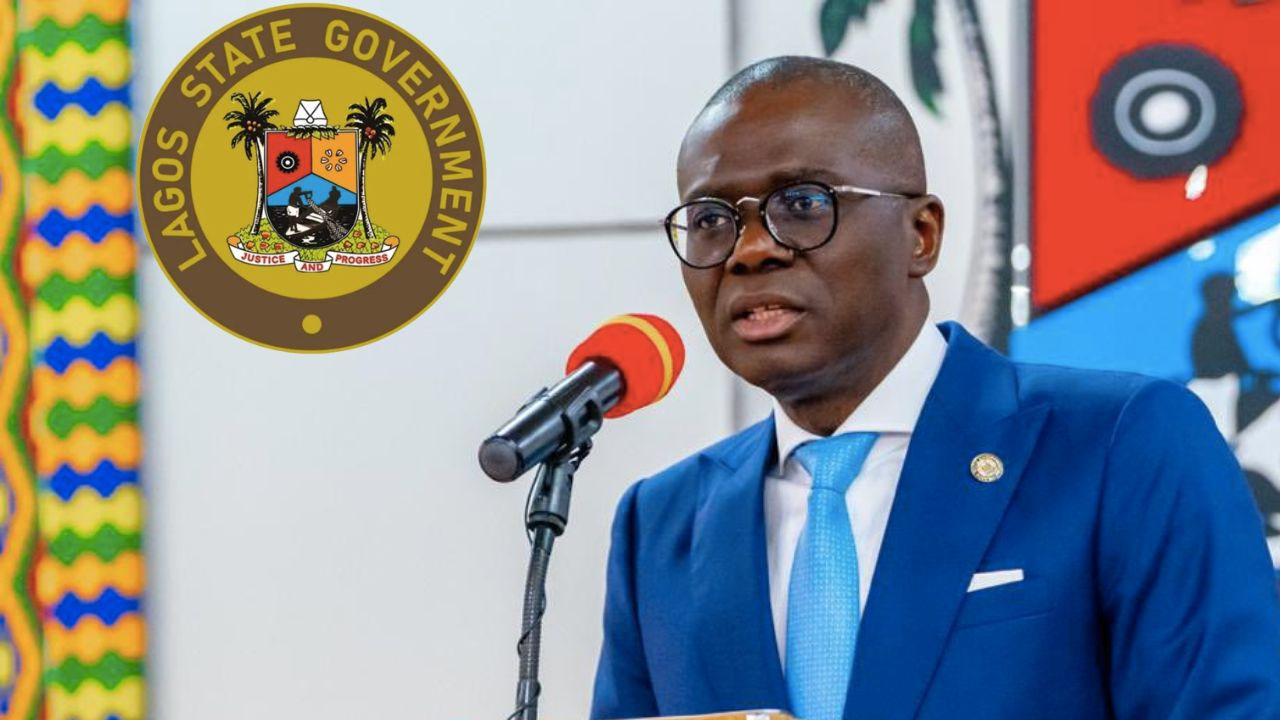
Lagos Rejects JAMB’s 150 Cut-Off Mark, Sets 185 for State Universities
The Lagos State Government has announced that candidates who score below 185 in the Unified Tertiary Matriculation Examination (UTME) will not be admitted into any of the state-owned universities, despite the lower benchmark approved by the Joint Admissions and Matriculation Board (JAMB).
The Commissioner for Tertiary Education, Tolani Sule, disclosed this on Wednesday during a ministerial press briefing held at the Bagauda Kaltho Press Centre in Alausa to mark the third anniversary of Governor Babajide Sanwo-Olu’s second term in office.
Sule rejected JAMB’s approved minimum cut-off mark of 150 for university admissions, describing it as too low for institutions owned by Lagos State.
“To us in Lagos State, the cut-off marks approved by JAMB look too low for our universities. None of our three universities is admitting any student who scored below 185 in the UTME,” the commissioner stated.
He argued that Lagos State could not afford to lower its educational standards to align with states classified as educationally disadvantaged.
“For JAMB to announce 150 as the cut-off mark out of the 400 obtainable marks in the UTME for this year’s admission seekers is very low. Lagos cannot be considered educationally disadvantaged to the extent of bringing its cut-off mark down to meet what Sokoto or Zamfara states require,” Sule added.
READ ALSO:
- Nigerian Professor Jailed 70 Months in US Over $1.4m Fraud
- Why South-East Won’t Support Peter Obi’s One-Term Presidency Proposal — Ikonne
- Presidency Attacks Peter Obi Over ‘One-Term’ Promise, Questions His Political Loyalty
The development comes after JAMB and heads of tertiary institutions approved 150 as the minimum benchmark for university admissions during the 2026 policy meeting on admissions into tertiary institutions across Nigeria.
However, under Nigeria’s admission system, universities retain the right to set higher cut-off marks depending on competitiveness, available spaces and institutional standards.
Lagos State currently operates three major universities: Lagos State University (LASU), Lagos State University of Education (LASUED), and Lagos State University of Science and Technology (LASUSTECH).
According to Sule, the expansion from one state university to three was part of Governor Sanwo-Olu’s broader strategy to improve access to higher education while maintaining quality.
“Increasing our universities from one to three is still part of what the governor is doing to provide more educational platforms and opportunities for Lagos residents,” he said.
“And increasing the number to four is still part of this effort by the state government to give all admission seekers the opportunity to get tertiary education in Lagos.”
The commissioner also revealed that the Lagos State Government was already working with the Ministry of Health on legislation to establish a University of Medicine and Health Sciences in the state.
If established, the proposed institution would become the fourth state-owned university in Lagos and is expected to strengthen medical education, healthcare research and manpower development in Nigeria’s commercial capital.
Sule stressed that the state government would continue investing heavily in education infrastructure, academic staffing and improved access to tertiary education without compromising standards.
Education stakeholders say Lagos State’s decision may increase competition among candidates seeking admission into its institutions, particularly LASU, which remains one of Nigeria’s most sought-after public universities.
The announcement also comes amid concerns over the performance of candidates in recent UTME examinations.
Recent statistics released by JAMB showed that a significant percentage of candidates scored below 200 in the last UTME exercise, sparking nationwide debate over declining academic performance and admission standards.
Despite criticism from some stakeholders, JAMB has maintained that the 150 benchmark merely represents the minimum national requirement and does not prevent universities from adopting higher standards.
Lagos Rejects JAMB’s 150 Cut-Off Mark, Sets 185 for State Universities
Education
WAEC Assures Hitch-Free 2026 WASSCE as NASU Protest Enters Day Two
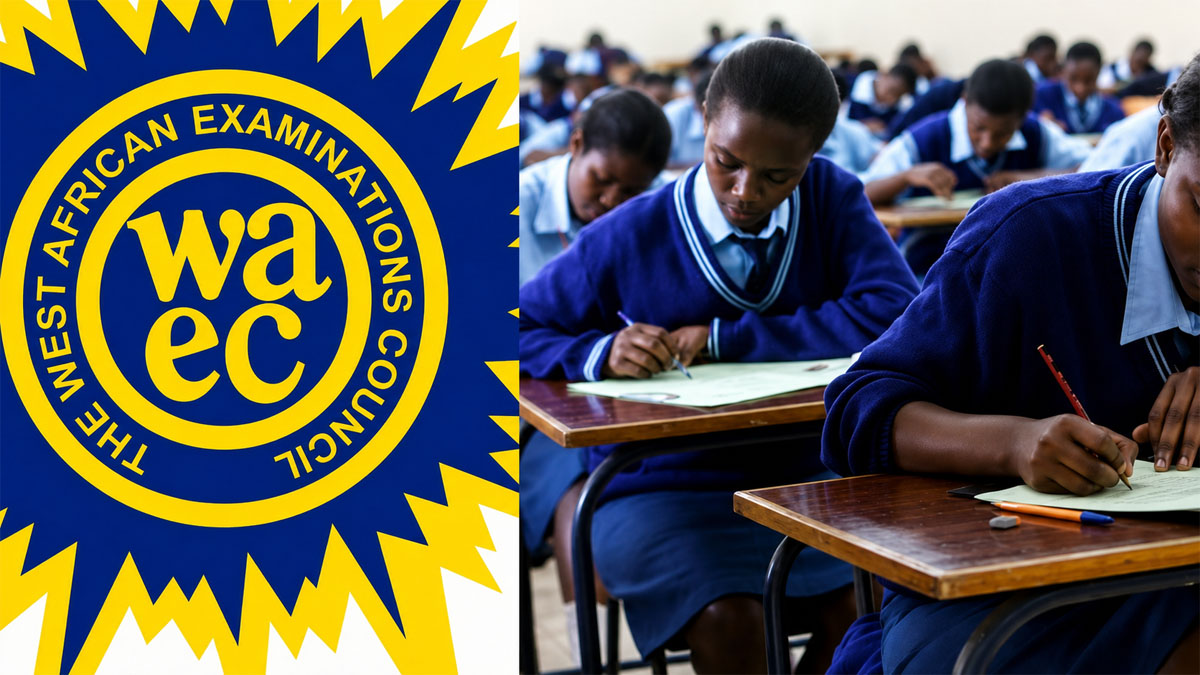
WAEC Assures Hitch-Free 2026 WASSCE as NASU Protest Enters Day Two
The West African Examinations Council (WAEC) has reassured candidates, parents, school owners, and other stakeholders that the ongoing 2026 West African Senior School Certificate Examination (WASSCE) will continue smoothly despite the ongoing nationwide protest by members of the Non-Academic Staff Union of Educational and Associated Institutions (NASU).
The assurance came amid growing concerns over a three-day industrial action embarked upon by NASU members across WAEC offices nationwide over allegations of management high-handedness, illegal recruitment practices, welfare concerns, and controversial pay policies.
The protest, which began on Wednesday at WAEC’s national headquarters in Yaba, Lagos, reportedly spread to several regional and state offices across the country, raising fears about possible disruptions to the ongoing examinations.
However, WAEC, in a statement signed by the Acting Head of Public Affairs for the Head of National Office, Moyosola F. Adesina, said the Council had already activated contingency plans to ensure that the 2026 WASSCE proceeds without interruption.
According to the examination body, discussions are currently ongoing with the aggrieved workers to address the issues raised by the union.
“While we are concerned about the rights of unions and staff to express their grievances, we are also committed to ensuring seamless and smooth conduct of the ongoing examination,” the statement read.
WAEC explained that some of the issues raised by NASU had either been misunderstood or misrepresented.
READ ALSO:
- Edo Varsity Suspends 27 Medical Students Over Exam Fraud
- Police Fire Tear Gas as Osun Students Protest Colleague’s Death
- CBN Data Shows Naira Strengthening Across Forex Markets
The Council clarified that the recent adjustment in examination days was a direct consequence of the streamlining of WAEC subjects from 76 to 38, as well as the adoption of a hybrid mode of examination conduct.
It also dismissed allegations of arbitrary dismissals and punitive sanctions against workers, insisting that all disciplinary and career progression matters are handled strictly in line with the provisions of the WAEC Staff Handbook and relevant statutory regulations.
On the controversial recruitment of contract staff, WAEC said the engagement of contract Examination Officers and Assistant Examination Officers was introduced to help manage increasing workloads and improve operational efficiency across the sub-region.
“The engagement of contract staff is a strategic operational measure aimed at enhancing efficiency and ensuring the seamless conduct of the Council’s processes,” WAEC stated.
The Council further urged members of the public to disregard rumours and misinformation capable of creating panic among candidates and parents.
WAEC assured Nigerians that the integrity, credibility, and smooth conduct of the examination remain its top priority.
The Council also reaffirmed its long-standing commitment to delivering reliable educational assessments to students across Nigeria and other member countries, noting that it has sustained that mandate for over 74 years.
Meanwhile, NASU insisted that the protest would continue following the expiration of a seven-day ultimatum issued to WAEC management.
In a letter signed by NASU General Secretary, Peters Adeyemi, the union accused the management of unilateral decision-making, breach of seniority principles, suspension of staff upgrade programmes, and imposition of a minimum net pay policy without proper consultation.
The union also faulted the constitution of investigative panels without union involvement and expressed concerns over recent changes to the structure of the WASSCE examination.
NASU disclosed that its branches nationwide unanimously agreed during an online meeting to proceed with the industrial action after negotiations with management allegedly failed to produce satisfactory outcomes.
The union warned that the protest could be escalated if the management fails to address its demands.
Despite the labour dispute, WAEC maintained that the ongoing 2026 WASSCE remains stable and uninterrupted nationwide.
The Council disclosed that nearly two million candidates from more than 24,000 secondary schools are currently participating in the examination across Nigeria.
WAEC Assures Hitch-Free 2026 WASSCE as NASU Protest Enters Day Two
-

 metro1 day ago
Chike’s Old Interview on Dating Older Women Trends Amid Alleged Link to Frank Edoho’s Ex-Wife
-
 News2 days ago
UPDATED: Ex-Power Minister Saleh Mamman jailed 75 Years for N33.8bn Fraud
-

 metro1 day ago
Nigerian Professor Jailed 70 Months in US Over $1.4m Fraud
-

 metro1 day ago
Police Fire Tear Gas as Osun Students Protest Colleague’s Death
-
 Education1 day ago
Lagos Rejects JAMB’s 150 Cut-Off Mark, Sets 185 for State Universities
-

 Sports2 days ago
Mourinho Wants Osimhen to Lead Real Madrid Attack in Major Rebuild
-

 Politics1 day ago
Makinde Joins 2027 Race, Announces Presidential Ambition in Ibadan
-

 Politics2 days ago
Makinde to Officially Declare 2027 Presidential Bid at Ibadan Mega Rally