

metro
Cleric Says ₦10m Was for Prayers, Not Coup Plot Against Tinubu

Cleric Says ₦10m Was for Prayers, Not Coup Plot Against Tinubu
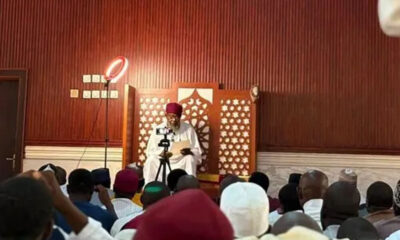
An Islamic cleric, Sheikh Bukar Kashim Goni, has told a Federal High Court in Abuja that the ₦10 million traced to his account was payment for spiritual services and prayers, not funding for an alleged coup plot against the government of Bola Ahmed Tinubu.
Sheikh Goni is currently standing trial alongside several co-defendants over allegations of involvement in a failed plan to overthrow the federal government. The charges were filed by the Office of the Attorney-General of the Federation.
The cleric firmly denied any participation in a coup plot in Nigeria, insisting that his role was strictly religious and focused on prayers, spiritual counselling, and charitable assistance. He maintained that the ₦10 million transaction credited to him was part of payments for religious consultations and had no political or security implications.
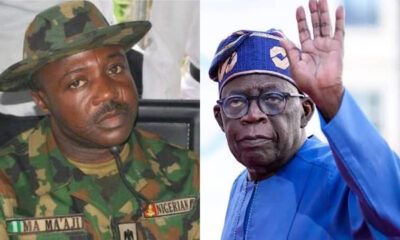
During Tuesday’s proceedings, Justice Joyce Abdulmalik presided over the presentation of video evidence showing Sheikh Goni’s interrogation by security operatives. In the recordings, investigators confronted him with financial documents allegedly linking him to multiple transfers from a military officer identified as Colonel Mohammed Ma’aji. One highlighted transaction was a ₦10 million payment made in October 2024.
READ ALSO:
- US Navy Operation in Hormuz Aims to Protect Commercial Ships, Says Hegseth
- Boko Haram Attack in Lake Chad Kills 23 Chadian Soldiers
- North May Not Back Obi–Kwankwaso Ticket, Says Datti Baba-Ahmed
Security officials argued that the financial pattern suggested sustained contact between the cleric and the officer, with payments reportedly beginning as early as March 2023. Investigators also referenced coded phrases such as “access” and “work tools” found in recorded conversations, which they claim may indicate coordination of illicit activities. However, Sheikh Goni rejected the interpretation, insisting the discussions were spiritual in nature and related only to prayers and personal guidance.
The case also involves other high-profile defendants, including retired Major General Mohammed Ibrahim Gana and retired Naval Captain Erasmus Ochegobia Victor, among others accused of participating in the alleged conspiracy to destabilise the government. All defendants have denied the allegations.
Sheikh Goni told the court he previously fled insurgency-related violence in Maiduguri before relocating to the Karu area of Abuja. He insisted he has never engaged in political or military activities and has no involvement in any unlawful operations. He reaffirmed that his interactions with the military officer were strictly limited to Islamic prayers and spiritual support services.
The Federal High Court continues to examine financial records, digital communications, and witness testimonies as prosecutors attempt to establish links between the defendants and the alleged coup attempt. The defendants, however, maintain their innocence, arguing that the evidence being presented is being misinterpreted.
Cleric Says ₦10m Was for Prayers, Not Coup Plot Against Tinubu









metro
NMDPRA Moves Against Fuel Pump Fraud, Threatens Licence Revocation

NMDPRA Moves Against Fuel Pump Fraud, Threatens Licence Revocation
The Nigerian Midstream and Downstream Petroleum Regulatory Authority (NMDPRA) has intensified its crackdown on fuel pump fraud, directing filling stations nationwide to immediately inspect, calibrate and verify their dispensing equipment following the discovery of cases of under-dispensing.
The regulator said it had identified incidents in which motorists and other consumers received less petrol than the quantity displayed on the pump, describing the practice as a serious breach of consumer trust.
Under its latest directive, operators of retail outlets must check and calibrate their fuel dispensers and totalisers to ensure that the equipment accurately measures the quantity of petroleum products sold.
The NMDPRA warned that stations found to be under-dispensing, operating with improperly calibrated equipment or otherwise compromising dispensing accuracy would be required to take corrective action.
It also warned that persistent or serious violations could lead to the revocation of operating licences.
The crackdown comes as motorists contend with elevated petrol prices across Nigeria. Recent reports put pump prices at around ₦1,350 to ₦1,400 per litre in Lagos, with prices reaching about ₦1,450 in Abuja and higher levels in some other locations.
The combination of higher pump prices and inaccurate dispensing has heightened concerns about the amount of fuel consumers actually receive for their money.
READ ALSO:
- $2.1m Land Suit: Court Orders Wike’s Son to Produce American Passport
- Two Nigerians Jailed 15 Years Over $2.4m US Cyber Fraud
- Osogbo Food Bonanza: Angry Customers Loot Warehouse After Operators Vanish
The problem, however, is not necessarily limited to deliberate manipulation. Faulty or poorly calibrated dispensing equipment can also cause inaccurate measurements, making regular inspection and verification important for both consumers and station operators.
The Petroleum Products Retail Outlets Association of Nigeria (PETROAN) has directed its members to inspect their dispensing meters following the NMDPRA warning.
PETROAN National President Billy Gillis-Harry said the association held an emergency meeting after the regulator raised the issue and subsequently instructed its members to check their equipment nationwide.
He also urged motorists to pay attention to the quantity displayed on the pump while buying fuel and to request receipts for their purchases.
The NMDPRA has also called on major industry associations, including the Major Energy Marketers Association of Nigeria (MEMAN), Depot and Petroleum Products Marketers Association of Nigeria (DAPPMAN), Independent Petroleum Marketers Association of Nigeria (IPMAN) and PETROAN, to ensure that their members comply with the directive.
The latest enforcement drive forms part of the regulator’s wider responsibility to protect consumers and ensure transparency in petroleum product transactions.
The NMDPRA has separately said that petrol pump prices are determined by market forces under the Petroleum Industry Act 2021 and are not fixed by the regulator. It has also said it is working with the Federal Competition and Consumer Protection Commission (FCCPC) to monitor practices including price-gouging, collusion, under-dispensing and compromised product quality.
The regulator has urged consumers and industry stakeholders to report suspected irregularities through its feedback and reporting channels for investigation and possible enforcement.
For motorists, the latest directive means greater attention should be paid to the quantity shown on fuel dispensers, receipts and any noticeable discrepancy between the amount paid and the fuel delivered.
The NMDPRA’s warning also puts filling station operators under increased pressure to ensure that their equipment remains properly calibrated and that consumers receive the full quantity of petrol or other petroleum products for which they have paid.
NMDPRA Moves Against Fuel Pump Fraud, Threatens Licence Revocation
metro
$2.1m Land Suit: Court Orders Wike’s Son to Produce American Passport
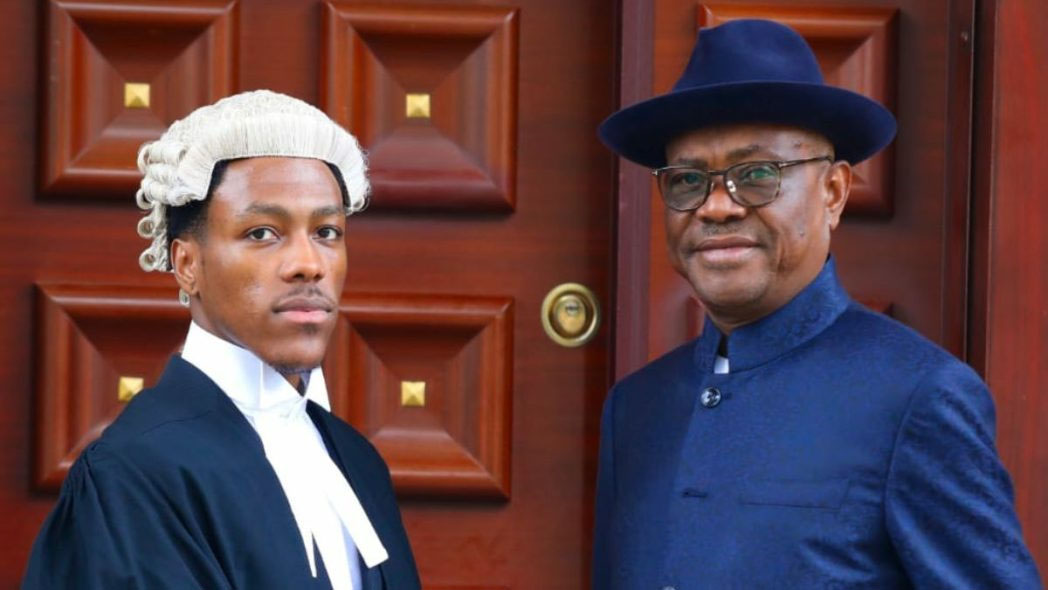
Wike’s Son Jordan Faces Fresh Court Twist as Judge Orders American Passport Produced
A Federal Capital Territory High Court sitting in Maitama has ordered Jordan Ezenwo Nyesom-Wike, son of FCT Minister Nyesom Wike, to produce his American passport in court as hearing continued in a $2.1 million Abuja land dispute.
Justice Sylvanus Oriji issued the order on Tuesday following an application by counsel to the claimants, Hamza Dantani, during cross-examination of Jordan in the suit marked CV/008/2026.
The case was filed by Safwan Garba GY and GY Global Oil and Gas Nigeria Limited, who allege that Jordan agreed to facilitate the acquisition of 60 hectares of land in Abuja—30 hectares each in Katampe and Guzape.
According to the claimants, they first met Jordan in London and later met him in Abuja, where they allegedly sought his assistance in securing the properties.
They allege that Jordan demanded $2.1 million as a facilitation fee, with $2 million allegedly intended for his father and $100,000 for himself.
The claimants further allege that the money was handed over on September 26, 2025, in the presence of Adamu Sani, Aliyu Sarki and Sai Wani, while Jordan was accompanied by Onor Sandy.
READ ALSO:
- Trump Denies Offering Iran Sanctions Relief, Release of Frozen Funds
- Nigeria XI vs Guinea-Bissau: Awoniyi, Lookman, Adams Lead Super Eagles Attack
- Federal Workers Back N500 Petrol Demand, Threaten Three-Day Warning Strike
They claim that after receiving the money, Jordan failed to facilitate the land acquisition or refund the funds and subsequently became unreachable.
Jordan has denied the allegations.
During cross-examination, Dantani questioned Jordan about his whereabouts on September 26, 2025. Jordan told the court that he was outside Nigeria on that date and had travelled using his American passport.
Dantani then asked the court to compel him to produce the document. Justice Oriji granted the application and ordered Jordan to bring the passport before the court.
The passport is expected to be relevant to the parties’ competing accounts of Jordan’s whereabouts on the date the claimants allege the $2.1 million was paid.
Earlier in the proceedings, the claimants’ counsel also asked Jordan to write his full name and signature five times each on a plain sheet of paper. The application was granted without objection from the defence.
The wider dispute is linked to a joint venture agreement dated October 17, 2025, involving Jordan and two companies, Apostle Associate Limited and Creekstone General Contractor Ltd.
According to the claimants’ statement of claim, the proposed project involved the construction of 24 units of six-bedroom fully detached duplexes on 1.7 hectares of land at Guzape New Extension and 1.5 hectares at Katampe New Extension.
The claimants were allegedly expected to contribute $4.2 million, valued at about ₦6.3 billion, while Jordan was to provide the land.
The defence has disputed the claimants’ account of their dealings with Jordan, including the allegation that he received the $2.1 million.
The court has not determined the merits of the competing allegations, and the proceedings remain ongoing.
Justice Oriji adjourned the case until Wednesday for continuation of the hearing.
Wike’s Son Jordan Faces Fresh Court Twist as Judge Orders American Passport Produced
metro
Two Nigerians Jailed 15 Years Over $2.4m US Cyber Fraud
Two Nigerians Jailed 15 Years Over $2.4m US Cyber Fraud
Two Nigerians living in the United States, Chijioke Timothy Odimegwu and Harafat Mogaji, have been sentenced to a combined 189 months in federal prison for their roles in a $2.4 million cyber fraud scheme that targeted businesses and diverted legitimate payments.
Odimegwu, 25, was sentenced to 111 months, or nine years and three months, while Mogaji, 26, received 78 months, equivalent to six years and six months.
Both men were United States Air Force members stationed at Dover Air Force Base in Delaware when they participated in the fraud scheme with other conspirators.
The scheme involved phishing, email spamming and the theft of employees’ usernames and passwords. Prosecutors said the stolen credentials were then used to access victims’ email accounts and monitor legitimate business communications.
The conspirators allegedly used spoofed email addresses designed to resemble those of businesses or their legitimate partners to convince victims to redirect payments into bank accounts controlled by the group.
One of the largest incidents involved more than $1.68 million belonging to a victim in Iowa City. The money was diverted to a bank account in Chicago controlled by members of the conspiracy.
READ ALSO:
- Osogbo Food Bonanza: Angry Customers Loot Warehouse After Operators Vanish
- Super Eagles Suffer Bissau Nightmare as Guinea-Bissau Smash Nigeria 3-0
- Trump Denies Offering Iran Sanctions Relief, Release of Frozen Funds
Another major transaction involved $721,976 paid by the city of Athens, Ohio, in November 2024 for construction of a new fire station. The city believed the payment was being made to its contractor, Pepper Construction, but the fraudsters allegedly intercepted communications and used a fake email address resembling the contractor’s legitimate address to redirect the money.
Authorities were able to freeze part of the Athens payment after the fraud was discovered. The city subsequently recovered $205,000 through mediation and received another $200,000 through an insurance claim, recovering a total of $405,000.
The investigation also uncovered stolen financial information, including bank account details, personal identification numbers and credit and debit card information.
A non-profit organisation in Pella, Iowa, was among the victims whose financial information was compromised. Investigators said the stolen information was used in attempts to carry out unauthorised transactions and purchases.
Authorities said the wider conspiracy involved other participants in the United States and abroad and included several attempts to divert business payments.
Odimegwu was ordered to pay $366,617.59 in restitution, while Mogaji was ordered to pay $995,680.45.
Both defendants were taken into custody after sentencing and will each serve three years of supervised release after completing their prison terms.
The case was investigated by the FBI and the Air Force Office of Special Investigations and prosecuted by the U.S. Attorney’s Office for the Southern District of Iowa.
The case demonstrates how business email compromise and phishing attacks can be used to manipulate legitimate financial transactions by exploiting trusted digital communications.
The combined sentences amount to more than 15 years in federal prison, while the restitution orders require the two men to repay more than $1.36 million.
Two Nigerians Jailed 15 Years Over $2.4m US Cyber Fraud
-
 International3 days ago
Iran Claims Capture of Second US Underwater Drone in Strait of Hormuz
-

 News3 days ago
Anambra Govt Demands Unreserved Apology From Peter Obi Over Debt Claims
-
 News3 days ago
Fake Agency Scandal: Gbajabiamila Says He Never Betrayed Tinubu’s Trust
-

 metro1 day ago
Osogbo Food Bonanza Turns Nightmare as Discount Vendor Vanishes With Customers’ Millions
-

 metro3 days ago
Woman Busted With Alleged Alcohol Hidden in Water Pack at Ogun Prison
-

 metro2 days ago
24 Hours in Darkness: Iju Ishaga Residents, Businesses Count Losses as Ikeja Electric Fails to Restore Power
-

 metro2 days ago
Passenger Dies After Jumping From Moving Bus In Lagos
-
 Politics3 days ago
2027: NDC State Chairmen Reject Obi-Kwankwaso Movement’s Parallel Structures