
Education
UTME 2026: JAMB Gives Fresh Update on Original Result Slip Delay
UTME 2026: JAMB Gives Fresh Update on Original Result Slip Delay
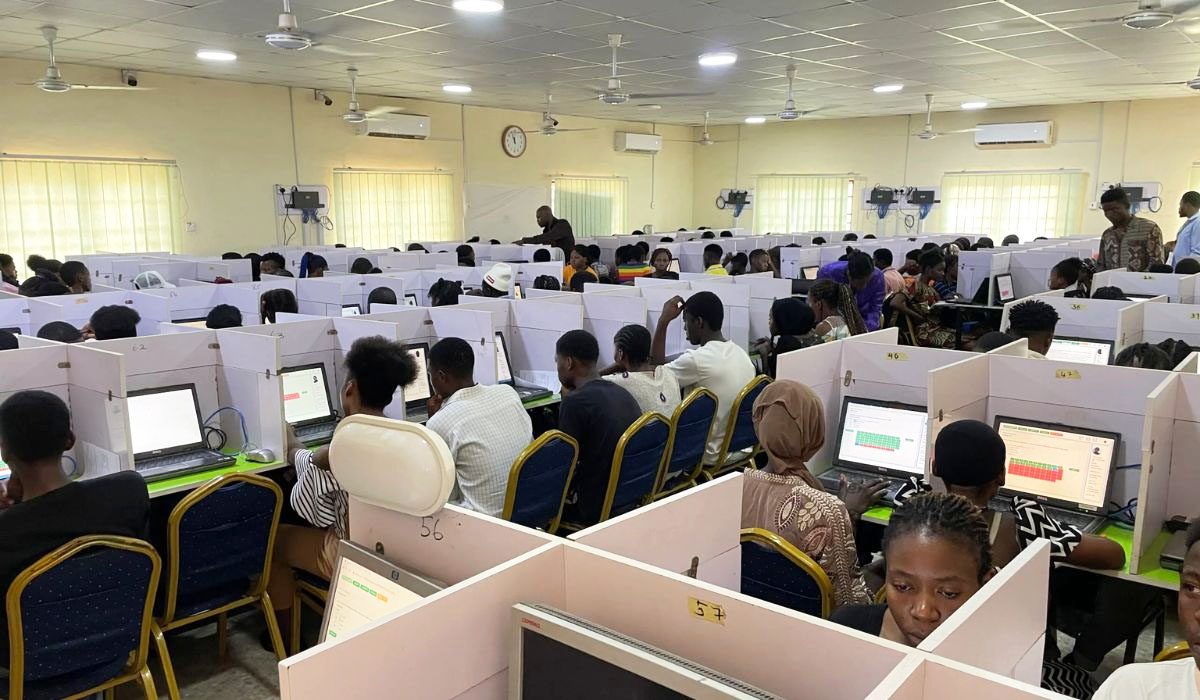
The Joint Admissions and Matriculation Board (JAMB) has clarified why the printing of the 2026 Unified Tertiary Matriculation Examination (UTME) original result slips has not yet begun, urging candidates to remain patient as key administrative processes are still ongoing.
Speaking through its spokesperson, Fabian Benjamin, JAMB explained that the delay is mainly due to the conclusion of UTME sittings for foreign examination centres and ongoing preparations for the mop-up examination for candidates who were unable to sit for the main exercise through no fault of theirs. The board said these processes must be fully completed before the result slip printing portal can be activated.
The board further emphasized that the UTME is a ranking examination, meaning candidates are not only scored but also positioned based on performance relative to others. It noted that the original result slip contains these ranking details, which makes it necessary to finalize all verification and processing steps before releasing the slips to ensure accuracy and fairness.
READ ALSO:
- NYSC Charges Corps Members on Election Duties as Camp Closes in Osun
- Frank Edoho Faces Fresh Allegations as Estranged Wife Breaks Silence
- Yahaya Bello Sweeps Kogi Central APC Primary As Oshiomhole Wins Edo North
JAMB assured candidates that the printing portal will be activated as soon as all necessary adjustments are concluded. It added that official communication will be made available to inform candidates when they can proceed with printing their result slips, advising them to disregard speculation and wait for formal announcements.
The board also reminded candidates that the UTME result slip is an important document required for post-UTME screening, admission clearance into tertiary institutions, and changes of course or institution. While the original slip is not yet available, candidates can still check their results through SMS and other official result-checking channels provided by the board.
The delay has, however, generated reactions from candidates on social media, with many expressing concern over admission timelines and post-UTME deadlines. Despite the frustration, JAMB maintained that the delay is temporary and necessary to ensure a smooth and credible admission process.
Overall, the board stressed that there is no issue with candidates’ results and that the delay is purely administrative. It reassured the public that the printing process will commence shortly once all outstanding examinations and verifications are completed.
UTME 2026: JAMB Gives Fresh Update on Original Result Slip Delay






Education
Alausa: FG Adopts Triennial Learning Assessment to Tackle Learning Poverty

Alausa: FG Adopts Triennial Learning Assessment to Tackle Learning Poverty
The Federal Government has announced that Nigeria will institutionalise the National Learning Assessment (NLA) every three years as part of a broader strategy to combat learning poverty, improve the quality of education, and strengthen evidence-based policymaking across the country.
Minister of Education, Dr. Tunji Alausa, disclosed the development on Friday while monitoring the ongoing 2026 National Learning Assessment in selected public and private schools in the Federal Capital Territory (FCT).
The minister visited Government Secondary School (GSS), Kuje; Junior Secondary School (JSS), Kuje Central; and Topaz Model School, Kuje, to assess the nationwide exercise, which is being conducted simultaneously across the 36 states and the FCT.
According to Alausa, the assessment covers pupils in Primary Three and Primary Five, as well as students in Junior Secondary School (JSS) Two and Senior Secondary School (SSS) Two. The exercise evaluates learners’ proficiency in literacy, numeracy, cognitive development, and other foundational competencies needed for academic success.
He said the Federal Government has resolved to make the National Learning Assessment a regular exercise every three years, noting that the Universal Basic Education Commission (UBEC) has been directed to begin making budgetary provisions for the programme from 2029.
According to the minister, the assessment will provide reliable national data to measure learning outcomes, identify gaps in teaching and learning, and guide policy reforms aimed at improving Nigeria’s education sector.
“The importance of learning assessment is that we need to know the quality of education we are providing to pupils and students at the primary, junior secondary and senior secondary levels and determine whether they are actually learning.
“It is a standard instrument that enables us to evaluate education outcomes across different school levels. The last assessment was conducted by UBEC in 2023, while the previous one was carried out by the Federal Ministry of Education in 2019. Going forward, it will be conducted every three years,” the minister said.
READ ALSO:
- Winpart by CFAO, Energy Switch seal partnership to expand premium Motul lubricant network
- Inside the Fake Agency Scandal: Staff Detail How Adeyemi’s ‘Presidential Council’ Operated Without Work or Direction
- NANS to Tinubu: Don’t Sack Gbajabiamila Over Unproven PFIPC Allegations
Alausa noted that the initiative is a direct response to Nigeria’s persistent learning poverty, where many children struggle to read and understand age-appropriate texts by the age of 10.
He recalled that previous estimates indicated more than 42 million Nigerian children were affected by learning poverty, although the figures were based on earlier data. He expressed confidence that ongoing education reforms under the current administration would significantly improve learning outcomes nationwide.
“We need accurate data to benchmark literacy and numeracy levels and design targeted interventions that will improve learning outcomes across the country,” he added.
The minister also announced that the Federal Government has harmonised the different learning assessment models previously used by education agencies into a single National Learning Assessment framework.
According to him, the unified system will ensure consistency in data collection, enable meaningful comparison of learning outcomes over time, and support more effective planning, curriculum reforms, teacher development, and resource allocation. He explained that the initiative forms part of the Nigeria Education Sector Renewal Initiative (NESRI) and aligns with President Bola Tinubu’s agenda on human capital development and education reform.
The ongoing 2026 exercise is Nigeria’s first nationwide National Learning Assessment conducted simultaneously across all states and the FCT after months of preparation involving the Federal Ministry of Education, UBEC, development partners, and education stakeholders.
The assessment is strictly diagnostic and is not an examination for promotion or certification. Instead, it is designed to generate credible national data on students’ learning achievements and help policymakers develop targeted interventions to improve educational outcomes. Learners are being assessed in English Language, Mathematics, Basic Science and Technology, Citizenship and Heritage Studies, alongside selected non-cognitive skills.
While commending private schools for expanding access to education and helping reduce the number of out-of-school children, Alausa stressed that stronger regulation remains necessary.
According to him, private schools must continue to meet minimum educational standards to ensure that quality learning is not compromised.
“Private schools have helped us keep many children in school. We need to encourage them, but we must also regulate them effectively and ensure they maintain the required standards,” he said.
The minister also praised the learning environment in both public and private schools visited during the inspection, describing the facilities as clean, conducive, and supportive of effective teaching and learning.
Education experts say institutionalising the National Learning Assessment is expected to provide government with consistent and credible data needed to measure progress, address learning gaps, and improve the overall quality of education in Nigeria.
Alausa: FG Adopts Triennial Learning Assessment to Tackle Learning Poverty
Education
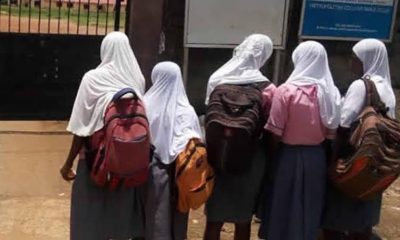
Appeal Court Overturns Hijab Verdict, Declares UI International School Can Enforce Dress Code
Appeal Court Overturns Hijab Verdict, Declares UI International School Can Enforce Dress Code
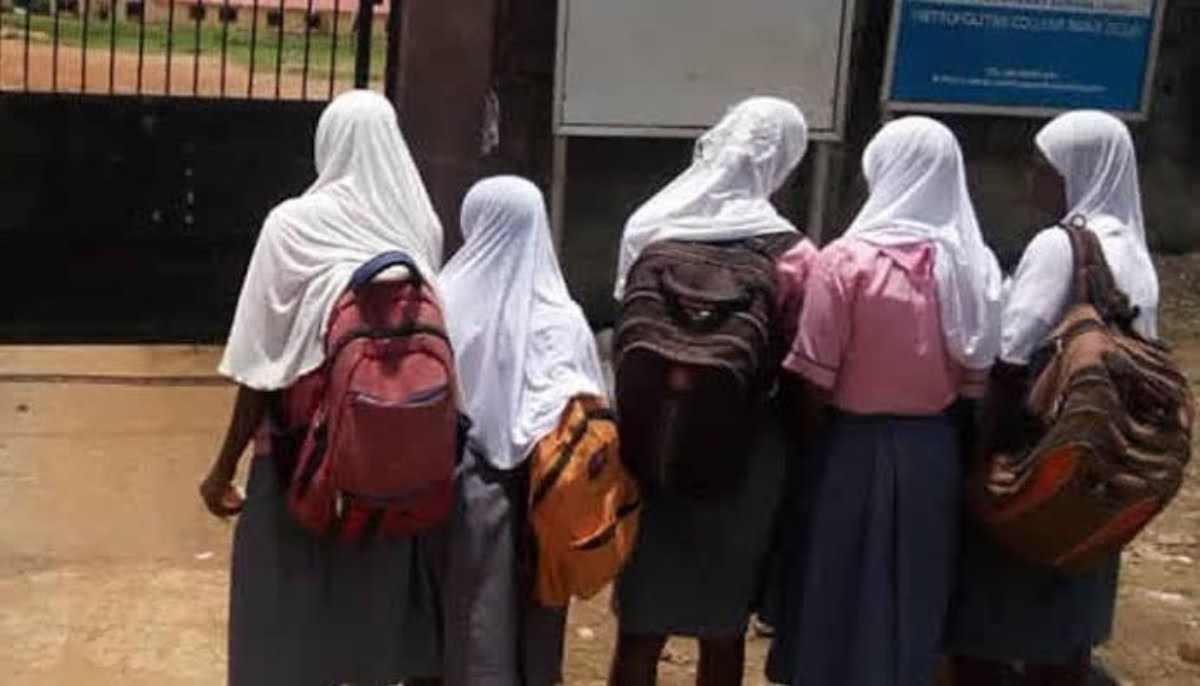
The Court of Appeal, Ibadan Division, has set aside the judgment of the Oyo State High Court that allowed Muslim female students to wear hijab as part of the official uniform at the International School, University of Ibadan (ISI), ruling that the institution is a private school with the legal authority to enforce its dress code.
The appellate court delivered the judgment on Friday in a split 2-1 decision, allowing the appeal filed by the management of ISI against the earlier High Court ruling that recognised the students’ right to wear hijab while in school.
The legal dispute dates back to 2018, when 11 Muslim female students, supported by the Muslim Rights Concern (MURIC), instituted a suit challenging the school’s prohibition of hijab, arguing that the policy violated their constitutional rights to freedom of religion and freedom from discrimination.
In May 2024, Justice Moshood Ishola of the Oyo State High Court ruled in favour of the students, describing the school’s policy as an infringement on their fundamental rights guaranteed under the 1999 Constitution of the Federal Republic of Nigeria.
The court declared that the students were entitled to wear hijab with their school uniforms and restrained the school authorities from enforcing the restriction.
Dissatisfied with the decision, the management of the International School, University of Ibadan approached the Court of Appeal, arguing that the institution is privately managed and possesses the legal authority to determine and enforce its internal regulations, including its dress code.
READ ALSO:
- Appeal Court Verdict: UI International School to Enforce Hijab Ban from Monday
- Baba Ijesha Receives Chieftaincy Title, Brand-New Car from Ooni of Ife
- Dangote Announces Fresh N50 Petrol Price Reduction, Opens Supply to All Marketers
Delivering the lead judgment, Justice Biobele Abraham Georgewill, with Justice K.I. Amadi concurring, held that previous Supreme Court decisions permitting the use of hijab apply only to public schools and not to private educational institutions.
According to the appellate court, although the school is affiliated with the University of Ibadan, it remains a private educational institution and is therefore entitled to establish and enforce its own rules governing students’ appearance and conduct.
Justice Georgewill ruled that the constitutional right to freedom of religion is a personal right that may be voluntarily waived.
He held that by seeking admission into ISI and signing undertakings to obey the school’s rules and regulations, students and their parents accepted the institution’s dress code and other conditions governing admission.
“In public schools, you can wear hijab on school uniforms based on the judgment of the Supreme Court. But the Supreme Court is yet to make any decision on the use of hijab in private schools,” Justice Georgewill stated.
The appellate court concluded that the contractual relationship between the school and its students gives the institution the authority to insist on compliance with its established policies.
However, Justice Fadawu Umar, in his dissenting judgment, held that the appeal lacked merit and should have been dismissed, effectively affirming the earlier High Court decision that upheld the students’ constitutional rights.
Following the judgment, the management of the International School, University of Ibadan notified parents and guardians that it would immediately implement the appellate court’s ruling.
In a notice circulated to parents, the school announced that from Monday, July 6, 2026, no student would be permitted to wear hijab or any headscarf with the official school uniform.
The management said all students are expected to comply fully with the school’s rules and regulations in line with the Court of Appeal’s decision.
The judgment has sparked fresh debate among legal practitioners, education stakeholders, religious organisations and civil society groups over the balance between religious freedom and the autonomy of private schools to regulate student conduct.
Supporters of the ruling argue that private educational institutions should retain the right to establish policies that preserve their identity and operational standards.
Others, however, contend that constitutional rights should remain protected irrespective of whether an institution is publicly or privately managed, describing the judgment as one that raises significant constitutional questions.
The Muslim Rights Concern (MURIC) has expressed disappointment over the verdict and indicated that it would study the Certified True Copy of the judgment before deciding on its next legal steps.
Legal analysts note that the case could still proceed to the Supreme Court, which would have the final authority to determine whether private educational institutions can lawfully restrict the wearing of religious attire as part of their uniform policies.
Until any further judicial pronouncement, the Court of Appeal’s decision remains binding, paving the way for the International School, University of Ibadan to enforce its existing dress code.
Appeal Court Overturns Hijab Verdict, Declares UI International School Can Enforce Dress Code
Education
Appeal Court Verdict: UI International School to Enforce Hijab Ban from Monday

Appeal Court Verdict: UI International School to Enforce Hijab Ban from Monday
The International School, University of Ibadan (ISI) has announced that it will begin enforcing its dress code by prohibiting the use of hijab and headscarves with the school uniform from Monday, July 6, 2026, following a landmark judgment by the Court of Appeal declaring the institution a private school.
The school communicated the decision to parents and guardians through an official notice shared on its WhatsApp platform shortly after the appellate court delivered its judgment on Friday.
According to the notice, all students are expected to comply with the school’s regulations in line with the Court of Appeal’s ruling.
“Following the judgment of the Court of Appeal delivered on Friday, 3 July 2026, declaring The International School, University of Ibadan, a private school, all students are required to comply with the rules and regulations of the school.
“Accordingly, with effect from Monday, 6 July 2026, no student will be allowed to wear a hijab with the school uniform.
“Parents and guardians are kindly requested to ensure that their children comply with this directive. Thank you for your understanding and cooperation.”
The directive follows a split 2-1 judgment of the Court of Appeal, Ibadan Division, which overturned an earlier judgment of the Oyo State High Court that had permitted Muslim female students to wear hijab as part of the school’s uniform.
READ ALSO:
- Baba Ijesha Receives Chieftaincy Title, Brand-New Car from Ooni of Ife
- Dangote Announces Fresh N50 Petrol Price Reduction, Opens Supply to All Marketers
- Emefiele Trial: Witness Tells Court $6.23m CBN Election Observer Fund Was ‘Pure Theft’
In the lead judgment, Justice Biobele Abraham Georgewill, supported by Justice K.I. Amadi, held that the International School, University of Ibadan operates as a private educational institution and is therefore entitled to enforce its internal rules, including its uniform policy.
The appellate court distinguished the case from previous Supreme Court decisions that allowed the use of hijab in public schools, ruling that those decisions do not automatically apply to privately run institutions.
According to the court, while the 1999 Constitution guarantees the right to freedom of religion, students and parents who voluntarily enrol in a private school are deemed to have accepted the institution’s regulations, including its dress code.
The court further held that students admitted into ISI had signed undertakings agreeing to comply with the school’s rules and could not selectively disregard those conditions after admission.
Justice Georgewill noted that although religious freedom is constitutionally protected, it is not absolute in the context of contractual relationships voluntarily entered into with private institutions.
However, Justice Fadawu Umar, who dissented from the majority judgment, maintained that the appeal lacked merit and should have been dismissed, effectively supporting the earlier High Court ruling that recognised the Muslim students’ right to wear hijab.
The legal battle dates back to 2018, when 11 Muslim female students, supported by the Muslim Rights Concern (MURIC) and other stakeholders, challenged the school’s prohibition of hijab, arguing that the policy violated their constitutional rights to freedom of religion and protection from discrimination.
In May 2024, the Oyo State High Court ruled in favour of the students and declared that they could wear hijab with their school uniforms.
Dissatisfied with the judgment, the International School, University of Ibadan appealed the decision, arguing that the institution is privately managed and possesses the legal authority to establish and enforce its own rules regarding student appearance and conduct.
The Court of Appeal has now set aside that earlier judgment, effectively restoring the school’s authority to implement its uniform policy.
The ruling has generated widespread reactions among religious organisations, legal practitioners, education stakeholders and civil society groups, with many describing it as a significant decision on the relationship between religious freedom and the autonomy of private schools in Nigeria.
While supporters of the judgment argue that private institutions should retain the right to regulate their operations without external interference, others contend that constitutional rights should not be limited by school policies.
The decision is not necessarily the final chapter in the dispute, as parties dissatisfied with the appellate court’s verdict retain the constitutional right to approach the Supreme Court for a final determination on the issues raised in the case.
For now, however, the management of the International School, University of Ibadan says all students must comply with the school’s dress code beginning on Monday, in accordance with the appellate court’s ruling.
Appeal Court Verdict: UI International School to Enforce Hijab Ban from Monday
-

 News2 days ago
FG Explains Why NYSC Khaki Will Be Replaced With Adire Fabric
-

 metro13 hours ago
Inside the Fake Agency Scandal: Staff Detail How Adeyemi’s ‘Presidential Council’ Operated Without Work or Direction
-

 Entertainment1 day ago
Baba Ijesha Receives Chieftaincy Title, Brand-New Car from Ooni of Ife
-

 Education1 day ago
Appeal Court Verdict: UI International School to Enforce Hijab Ban from Monday
-
 Education1 day ago
Appeal Court Overturns Hijab Verdict, Declares UI International School Can Enforce Dress Code
-

 metro1 day ago
ISI Muslim Parents Reject Appeal Court Verdict, Head to Supreme Court Over Hijab Ban
-
metro1 day ago
Documents Expose How Disputed Presidential Council Secured Approval to Recruit 300 Staff
-
metro2 days ago
Court of Appeal to Deliver Judgment Friday in UI-ISI Hijab Case