Mass Defection Hits Bauchi APC as Senators, Reps, Aspirants Dump Ruling Party - Newstrends
Connect with us

Politics

Mass Defection Hits Bauchi APC as Senators, Reps, Aspirants Dump Ruling Party
Published

on

Appeal Court Sacks Pro-Wike's Rivers APC Exco, Upholds Nullification of Congresses

Mass Defection Hits Bauchi APC as Senators, Reps, Aspirants Dump Ruling Party

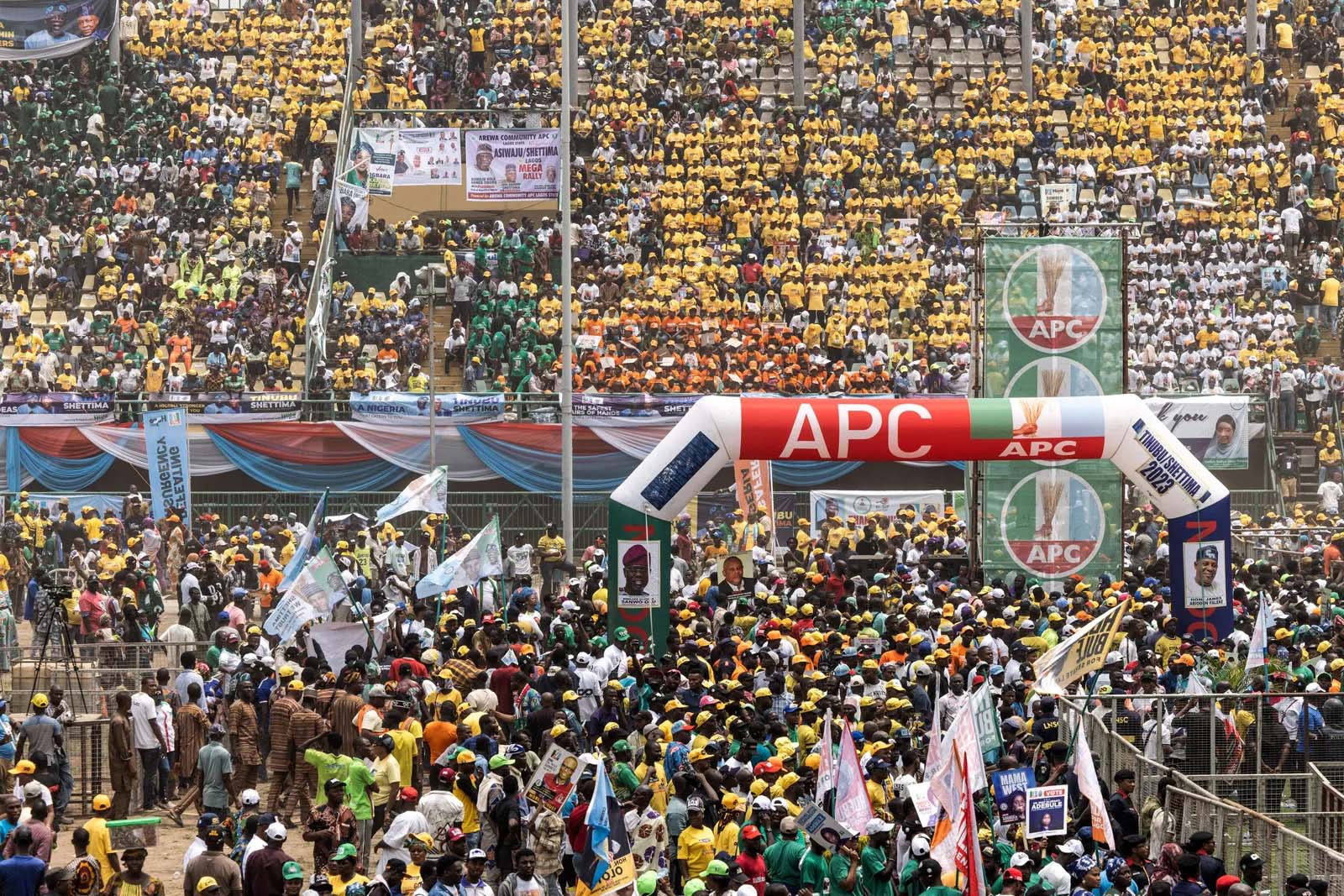
The aftermath of the All Progressives Congress (APC) primaries in Bauchi State has sparked growing discontent, leading to the mass defection of both prominent chieftains and their supporters across the state, with two serving senators, a House of Representatives member, former Inspector General of Police, and scores of aspirants resigning from the ruling party. Lawmaker representing Bauchi South Senatorial District, Senator Shehu Buba Umar, has resigned from the APC and declared his membership of the Peoples Redemption Party (PRP). This comes days after his withdrawal from the APC governorship primary election, citing irregularities and violations of electoral guidelines. Also, the Senator representing Bauchi North, Samaila Kaila Dahuwa, has resigned from the APC after losing his return ticket, joining the PRP.

Buba cited the “absence of internal democracy, lack of fairness, marginalisation of genuine party members, and increasing disregard for the opinions and aspirations of grassroots supporters within the APC.” He said his decision to join the PRP came after extensive consultations with political associates, youths, women groups, party stakeholders, and supporters across Bauchi South Senatorial District and Bauchi State at large. Buba said the PRP remains a political platform built on the principles of justice, transparency, accountability, inclusiveness, and people-oriented leadership, with strong commitment to the democratic values enshrined in the 1999 Constitution of the Federal Republic of Nigeria. Buba explained that his movement to the PRP is aimed at strengthening democratic governance, protecting the interests of the common people, and providing effective and responsive representation for the citizens.

“Our people deserve better governance, better opportunities, and leadership that truly listens to their concerns. Politics should be about service to humanity, justice, development, and improving the living conditions of the masses,” Buba said. The Senator urged his supporters and political allies to join him in the PRP to continue the “collective struggle” for good governance, social justice, accountability, and sustainable development across Bauchi State. Barely 24 hours after parting ways with the APC, Buba clinched the PRP governorship ticket, with the PRP Deputy National Vice Chairman (North), Haruna Buhari, announcing him as the party’s sole cleared aspirant for the ticket.

READ ALSO:

However, Buba’s defection and swift emergence as the PRP governorship candidate have not gone unchallenged. A Bauchi governorship aspirant on the PRP platform, Barrister Safiyanu Garba Idris, has questioned the eligibility and political status of Senator Shehu Buba following his recent defection from the APC. Addressing newsmen on Monday in Bauchi, Idris alleged that Buba remained actively involved in APC activities even after publicly announcing his resignation from the ruling party. According to him, the senator attended meetings of the APC after the date he reportedly claimed to have defected to the PRP. “Somebody who said he left the APC was still participating in APC meetings and activities,” he alleged. The aspirant further questioned how Buba emerged as the sole governorship candidate of the PRP shortly after withdrawing from the APC governorship contest, arguing that the development raised constitutional and procedural concerns regarding party membership and eligibility. Idris also accused some officials within the PRP of manipulating internal processes to favour selected individuals ahead of the 2027 governorship election. According to him, the situation could deepen internal divisions within the party if not properly addressed.

Among those who departed is the incumbent member representing the Jama’are/Itas-Gadau federal constituency in the House of Representatives, Hon. Rabilu Bala Kashuri, who announced his resignation with immediate effect. Kashuri, who sought reelection ticket but was unsuccessful, tendered his resignation from the ruling party in a letter addressed to the APC Chairman of Kashuri Ward in the Itas/Gadau Local Government Area. Similarly, the 2023 deputy governorship candidate and former member of the House of Representatives, Hon. Shehu Aliyu Musa, also resigned from the APC. Musa, who contested the APC ticket for the Bauchi South Senatorial District, cited “lack of purposeful leadership, unfair treatment of party members and lack of cohesion among leaders of the party.” Since the announcement of the results of the APC gubernatorial primaries, several aspirants and stakeholders have resigned from the APC, citing a lack of transparency and violations of internal democracy.

In a related development, former majority leader of Bauchi House of Assembly and aspirant for the Katagum Federal Constituency, Hon. Tijjani Mohammed Aliyu, resigned from the party, alleging that the primaries were marred by predetermined results, vote allocation, and gross violations of party guidelines. According to him, the exercise undermined the principles of internal democracy upon which the APC was founded. In a letter addressed to the Ward Chairman of the APC in Madangala Ward, Katagum Local Government Area, he wrote: “I write to formally notify you of my intention to resign my membership of the party (Membership No. APC 051203000049) in your ward, with immediate effect. This decision follows recent developments regarding party activities, particularly the conduct of the 2026 primaries for various elective positions. After careful observation and review, I am convinced that the process was marred by predetermined results, the outright allocation of votes, and non-compliance with the guidelines for the conduct of said primaries.”

READ ALSO:

Another chieftain, Hon. Abubakar Dahuwa Abdulkadir, who holds the traditional title of Sarkin Yamman Katagum, also withdrew his membership from the party. He described the primaries as unfair, discriminatory, and contrary to democratic ethics. He alleged that the APC failed to conduct the planned direct primary election for the Azare/Madangala State Assembly constituency. Hon. Sulaiman Sunusi Lalaye, an aspirant who sought to represent the Bauchi Constituency in the State House of Assembly, announced his resignation from the APC. In a letter addressed to the Chairman of the APC in Makama/Sarkin Baki Ward, Bauchi Local Government Area, dated May 22, 2026, Lalaye stated that although he had been a member of the party since its formation, he decided to leave due to persistent irregularities and injustice within the organization. He formally notified the party of his decision to withdraw his candidacy for the State House of Assembly on the APC platform. Hon. Rabi’u Abubakar Bishi announced his resignation in a letter addressed to the APC Chairman of the Kangere/Turum Ward. “I am writing to inform you of my decision to resign from the All Progressives Congress. I have taken this step due to internal crises and injustice, among other issues, which I can no longer bear. This resignation will enable me to remain committed to my principles of fighting for good governance in our state,” Bishi said. Many aggrieved members alleged that no direct primaries were conducted in the state, insisting that candidates were merely handpicked through what they described as “selection and imposition.”

The crisis has been further inflamed by the outright rejection of the APC governorship primary results by the Bauchi Progressives Forum. The group has rejected the results announced by the Chairman of the Committee for the APC Governorship Primaries in Bauchi State, insisting that no election was conducted and that aspirants were instead pressured to step down. In a statement signed by its Chairman, Mallam Ibrahim Abdullahi, the group described the figures announced by the Primaries Committee as fictitious and an insult to the people of Bauchi State.

“There was no governorship primary election in Bauchi State. Let us not attempt to deceive Nigerians. The aspirants were invited by certain individuals and asked to step down for former Governor Muhammad Abubakar. They reluctantly agreed because they were not given the opportunity of a credible direct primary,” the statement said. “It is distasteful for the Chairman of the Primaries Committee to announce figures of votes that were neither cast nor counted.” The group further challenged the Committee to produce evidence that voting took place in any ward or local government area across the state. “We had agents across the state, and there was not a single vote cast or counted anywhere. There were no queues and no accreditation of voters. So where did these figures come from? We challenge the Committee to produce a single photograph showing party members queueing to vote anywhere in Bauchi State. Such evidence does not exist,” the group queried.

READ ALSO:

Speaking further, Mallam Abdullahi said the development raised serious questions about the democratic credentials of the APC. “No APC member in Bauchi State who watched the video of those figures being announced would believe that the party truly represents democracy or progressive ideals. This is far removed from the principles upon which the party was founded, and it is deeply insulting to the people of Bauchi State,” he said. The Forum clarified that it was not disputing the emergence of Muhammad Abubakar as the APC governorship candidate, but rather the claim that he emerged through an election. “Muhammad Abubakar emerged as the ‘consensus’ candidate. Some aspirants initially opposed the arrangement and preferred a direct primary, but two eventually agreed, albeit reluctantly, to his emergence. What we expected was for the party to openly state that he emerged through ‘a forced consensus’, not to falsely claim that an election was conducted. That narrative is simply untrue,” the statement added.

The fallout from the APC primaries has extended beyond Bauchi State. A former Inspector General of Police, Abubakar Adamu, resigned his membership of the APC over his loss during the APC governorship primaries in Nasarawa State. Adamu formally submitted his letter of resignation on Monday to the executives of the Makama ward in Lafia, the state capital. He said, “Today I address my letter to you, the ward executives, especially the ward chairman, of my decision to resign from the All Progressives Congress with immediate effect. This decision was not taken lightly. However, recent developments within the party, especially the conduct of the governorship primary election processes in Nasarawa State, have made it difficult for me to continue with my political activities under the platform of the party.”

Adamu explained that internal democracy, fairness, transparency and equal opportunity for aspirants and members, which guided the affairs of any democratic political party, did not reflect the party’s principles. “I strongly believe that internal democracy, fairness, transparency and equal opportunity for aspirants and members guide the affairs of any democratic political party. Unfortunately, the events surrounding the primary election did not reflect this principle and have led to a loss of confidence in the party’s leadership and the processes in the state. After wide consultations with supporters, political associates and family members, I have decided to withdraw my membership to pursue my political aspirations through another platform,” he noted. His resignation sparked protests among his supporters, with many seen in viral videos online burning the broom, the symbol of the APC.

In Kano State, a similar defection from the ruling APC was witnessed as Mustapha Dawaki, a former member of the House of Representatives and erstwhile Chief of Staff to the APC National Chairman, Prof Nentawe Yilwatda, moved to the National Democratic Congress (NDC). Dawaki was officially received on Monday by a leader of the NDC and founder of the Kwankwasiyya movement, Rabiu Kwankwaso, during a meeting held at Kwankwaso’s Miller Road residence in Kano. The development comes barely one week after Dawaki reportedly lost his bid to secure the APC consensus ticket for the Dawakin Kudu/Warawa Federal Constituency seat. Confirming the defection in a statement on Monday, Kwankwaso’s media aide, Saifullahi Hassan, said the former APC stalwart had formally joined the NDC alongside his supporters. “Leader has today accepted the former Chief of Staff to the APC National Chairman, Mustapha Bala Dawaki, popularly known as Mai Gidan Ruwa, into the NDC Kwankwasiyya movement,” Hassan wrote in a Facebook post. Political observers described the defection as another major shake-up within Kano politics, especially as opposition parties and ruling party blocs intensify consultations and consensus arrangements ahead of the 2027 elections.

In Zamfara State, protests have continued to trail the outcome of the APC primaries. A Zamfara State senatorial aspirant for Zamfara North District, Aliyu Shinkafi, has petitioned the National Chairman of the party, Professor Nentawe Yilwatda, over what he termed as “imposition of Sahabi Alhaji Yau, as the sole candidate for the district.” Shinkafi described the exercise as an injustice and a flagrant disregard for the Constitution of the Federal Republic of Nigeria 1999 as Amended, Electoral Act 2026 and the constitution of the APC. He warned that Governor Dauda Lawal will be the major loser in what he called “conspiracy to exclude already cleared Senatorial aspirants from participating in the senate primaries in Zamfara State as the chances of APC winning the elections in the state is minimal.”

The mass defections sweeping through the APC in Bauchi, Nasarawa, Kano, and Zamfara States signal a significant political crisis for the ruling party ahead of the 2027 general elections. The loss of two serving senators, a former Inspector General of Police, a former House of Representatives member turned Chief of Staff to the APC National Chairman, and scores of aspirants across various levels represents a substantial erosion of the party’s grassroots political structures. The defectors’ allegations of “no direct primaries,” “selection and imposition,” “predetermined results,” and “outright allocation of votes” strike at the heart of the APC’s claim to internal democracy. The Bauchi Progressives Forum’s assertion that no election was conducted and that figures announced were “fictitious” is particularly damaging to the party’s democratic credentials. The fact that many defectors have found a ready home in the PRP and NDC suggests that opposition parties are capitalising on the APC’s internal crisis to strengthen their own structures ahead of 2027. For the APC leadership, the challenge now is whether it can contain the fallout, address the grievances of aggrieved members, or risk further defections that could weaken the party’s electoral prospects in key states.

Mass Defection Hits Bauchi APC as Senators, Reps, Aspirants Dump Ruling Party

Loading

Politics

2027: Sanwo-Olu’s Aide Accuses Atiku of Using Subsidy to Turn Nigerians Against Tinubu

Published

on

2027: Sanwo-Olu's Aide Accuses Atiku of Using Subsidy to Turn Nigerians Against Tinubu
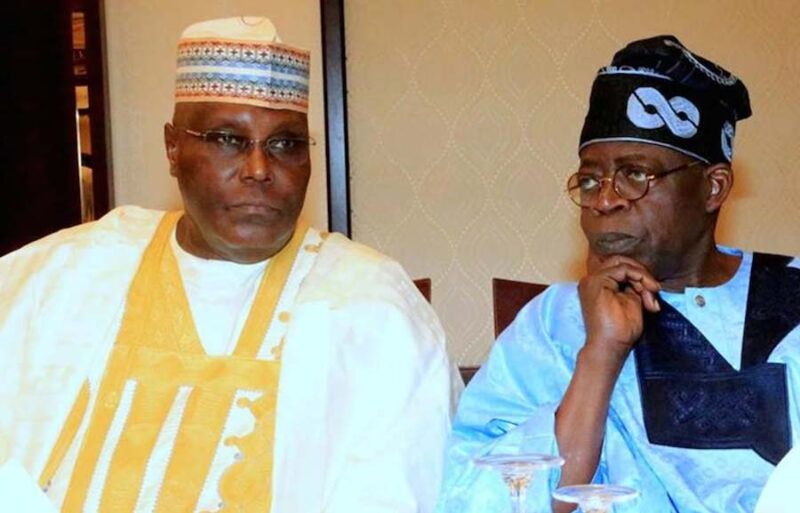
President Bola Ahmed Tinubu and Alhaji Atiku Abubakar

2027: Sanwo-Olu’s Aide Accuses Atiku of Using Subsidy to Turn Nigerians Against Tinubu

Jubril Gawat, Senior Special Assistant on New Media to Lagos State Governor Babajide Sanwo-Olu, has accused former Vice-President Atiku Abubakar of attempting to weaponise the fuel subsidy debate to turn Nigerians against President Bola Tinubu, as the political war of words over the controversial policy intensifies ahead of the 2027 elections. Gawat said this while reacting to Atiku’s promise to restore petrol subsidy if elected president in the 2027 general election. The presidential candidate of the African Democratic Congress (ADC) had last week pledged to restore the subsidy, arguing that its removal had not translated into improved living conditions for Nigerians. Atiku said although he initially did not oppose the decision to remove the subsidy, developments since its removal had changed his position.

“I initially did not oppose the removal of the fuel subsidy. But now that it has been removed, where is the money?” Atiku asked. He also promised to recover funds allegedly stolen from the subsidy scheme, saying his administration would prosecute those responsible for the diversion of public funds. “If I win the presidential election, I will restore the subsidy. And anyone who stole Nigeria’s subsidy funds must return the money,” he said.

Reacting to the pledge, Gawat described the return of subsidy as a major setback to initiatives established following its removal, including the Nigerian Education Loan Fund (NELFUND). “For me, away from other very important issues, bringing back subsidy to knock off a solid initiative like NELFUND is already a big negative to any right thinking person,” Gawat said on X on Tuesday. He argued that the subsidy debate should no longer be part of the country’s policy discussions, suggesting that Atiku’s position was politically motivated. “I also believe the issue of subsidy should not even be on any form of discussion table anymore, the person that brought it believes he can use it to rile up the people against Mr President, same person shockingly commended Mr President in a series of tweets when subsidy was removed,” he said. Atiku had also argued that funds previously spent on subsidising petrol could have been channelled into critical sectors including healthcare, education, security and youth empowerment. “Now it has been removed. Where is the money? If the funds were used to improve healthcare, education, insecurity, security and youth empowerment, things would have been better,” he said.

READ ALSO:

The Tinubu administration has maintained that the subsidy removal was a “difficult but necessary decision” that has created fiscal space for the three tiers of government. According to the Federal Ministry of Finance, the subsidy savings have mobilised N15.827 trillion for the Federation between June 2023 and December 2025. Of this amount, states received approximately N9.17 trillion in additional allocations and local governments received about N6.66 trillion. Net FAAC distribution rose from N10.846 trillion in 2023 to N21.897 trillion in 2025, representing a 102% increase. The government has also pointed to the NELFUND initiative as one of the tangible benefits of the subsidy removal. According to the Minister of Information and National Orientation, Mohammed Idris, the reform scorecard showed that about N6.47 trillion had been spent additionally on strategic infrastructure, while more than N400 billion had been committed to social investment programmes, including NELFUND and CREDICORP. Idris warned against calls to restore petrol subsidy, asking whether the country could afford to choose petrol subsidy over programmes such as student loans and consumer credit for young people. He noted that Nigeria spent about $10 billion on petrol subsidies in 2022, at a time when oil production and government revenues were declining. “A reinstatement of the subsidy could also reduce funding available for roads, railways, electricity and security, while limiting government’s ability to invest in healthcare, education and social protection,” Idris said.

Atiku has intensified his criticism of the Tinubu administration’s handling of the subsidy removal, describing it as “one of the biggest economic frauds sold to Nigerians.” In a statement issued by his Senior Special Assistant on Public Communication, Phrank Shaibu, the former vice-president made several key arguments against the current policy. Atiku argued that while the Tinubu administration claims to have abolished subsidy, the Nigerian National Petroleum Company Limited’s (NNPCL) audited accounts tell a different story. He cited that NNPCL recorded approximately N4.84 trillion as “energy-security expenses” in 2023 and about N7.13 trillion in 2024. Atiku contended that these figures represent a continued government intervention in petrol pricing, merely renamed to avoid political backlash. “Nigerians do not eat semantics. Whether government calls it subsidy, under-recovery, shortfall or energy security, public resources were being used to bridge a gap between economic cost and the price at which petrol was sold. You cannot abolish subsidy at the podium and resurrect it in the accounts under an alias,” he said.

READ ALSO:

Atiku has also accused the administration of applying a double standard, granting fiscal incentives to petroleum investors while denying relief to struggling households. He cited the Deep Offshore Oil and Gas Projects Incentives framework, under which qualifying petroleum developments can receive production tax credits beginning at $3 and $4.50 per barrel. “Tinubu stood at Eagle Square and declared that subsidy was gone. This is the fraud at the heart of Tinubunomics. That is not reform; it is an upside-down economy. You cannot subsidise capital and criminalise relief for citizens. That is not economic reform. It is classic economic apartheid,” he said.

Paul Ibe, an aide to Atiku, has said the former vice-president would restore petrol subsidy if elected president in 2027, but phase out the intervention after the economy improves. Ibe said the proposed measure would be temporary and designed to give Nigerians and businesses room to recover, stimulate economic activity and improve productivity. “We are not returning to Egypt. We are not going back to the old regime that was opaque,” Ibe said. He explained that crude oil would be supplied to local refiners at a discounted price, enabling them to produce petrol and diesel at lower costs, which would eventually translate into lower pump prices for consumers. He criticised the Tinubu administration for removing petrol subsidy alongside other major economic reforms without, in his view, allowing the economy sufficient time to adjust. “No surgeon, no doctor would carry out two or more serious major surgeries, one after the other. They would do one, allow the patient to recuperate, and then undertake the second, or the third,” Ibe said.

The Presidency has also responded to Atiku’s criticisms, with Special Adviser on Media and Public Communications Sunday Dare describing Atiku’s stance as an act of “political apostasy.” Dare accused the former vice-president of flip-flopping on the issue, pointing out that Atiku had advocated for subsidy removal during the 2023 presidential campaign. “To watch a self-styled statesman, who less than four years ago cast himself as an uncompromising apostle of market-driven reform, scramble to promise the reintroduction of petrol subsidies is nothing short of political apostasy,” Dare said.

Dr. Gbenga Olawepo-Hashim, Accord Party presidential candidate, also directed his criticism at Atiku, challenging the ADC candidate over his new position on subsidy removal. Hashim described Atiku as one of the earliest major political advocates of subsidy removal during the Fourth Republic, arguing that his current position required an explanation. “Atiku’s recant on subsidy removal without an apology is dishonesty. If you change your position because circumstances or evidence have changed, tell Nigerians why you changed,” Hashim said. However, Hashim, who has consistently opposed subsidy removal, argued that a targeted and transparent subsidy should be restored to protect citizens and productive sectors from severe economic shocks.

With the 2027 general election approximately five months away, the subsidy debate has become a defining issue. Atiku’s camp has framed his proposal as a central plank of the Atiku Economic Recovery Plan, positioning him as a champion of the poor against what they describe as Tinubu’s “brutally savage capitalism.” Meanwhile, the Tinubu administration and the APC have warned that reversing the reforms without a credible alternative could undermine investor confidence, worsen fiscal pressures, and jeopardise the economic gains being pursued by the administration.

2027: Sanwo-Olu’s Aide Accuses Atiku of Using Subsidy to Turn Nigerians Against Tinubu

Loading

Continue Reading

Politics

2027: APC Denies Withdrawing Tinubu Campaign Council List Amid Controversy

Published

on

2027: APC Denies Withdrawing Tinubu Campaign Council List Amid Controversy
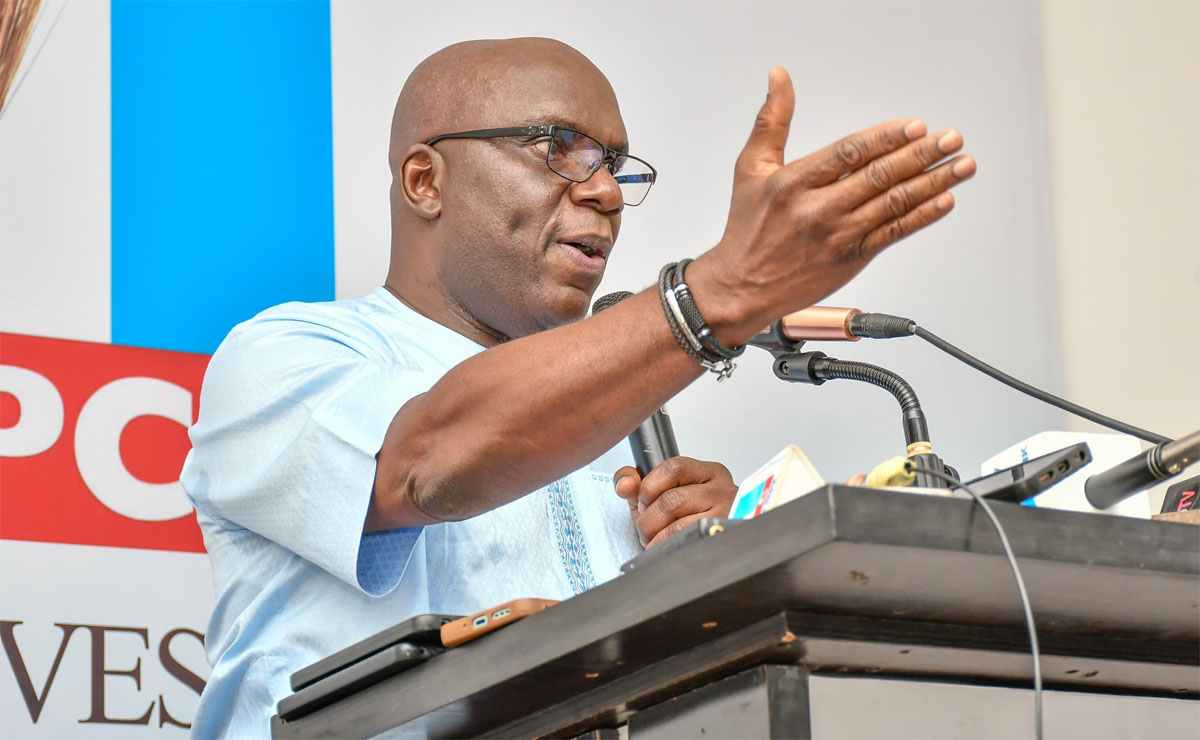
Felix Morka, APC National Publicity Secretary

2027: APC Denies Withdrawing Tinubu Campaign Council List Amid Controversy

The All Progressives Congress has rejected reports that it withdrew the list of members of its 2027 Presidential Campaign Council, describing the claims as unfounded rumours. Felix Morka, the party’s National Publicity Secretary, made the clarification on Tuesday morning in an interview with TheCable, dismissing speculation that President Bola Tinubu had ordered a review of the 223-member list. Morka stated that rumours are not news and that if there is any reason to update the list, it would be announced properly. His comments came amid reports that the presidency had been compelled to review the composition of the campaign council due to what sources described as “anomalies capable of embarrassing the campaign.”

The APC unveiled its 2027 Presidential Campaign Council on Saturday, August 22, 2026, with President Bola Tinubu named as chairman and Vice-President Kashim Shettima as vice-chairman. Other key appointments included Senator Abdulaziz Yari, former Zamfara Governor, as Director-General and Governor Hope Uzodimma, Imo State Governor and Progressive Governors Forum Chairman, as Secretary. The full list comprises 223 members spread across various directorates. However, the composition has generated significant controversy, particularly over the inclusion of serving public officials and individuals facing corruption allegations. Betta Edu, the former Minister of Humanitarian Affairs and Poverty Alleviation who was suspended by Tinubu in January 2024 over allegations of financial malfeasance, was named Director of Women Mobilisation. She was subsequently investigated by the Economic and Financial Crimes Commission (EFCC), though the outcome of the probe has not been made public.

READ ALSO:

Similarly, Ngozi Olejeme, former Chairperson of the Nigeria Social Insurance Trust Fund (NSITF) board, was appointed Zonal Director for Election Planning, Coordination and Mobilisation for the South-South. She is facing an ongoing EFCC probe over an alleged N1 billion money-laundering offence. Zacch Adedeji, Executive Chairman of the Nigeria Revenue Service (NRS), was named Deputy Director of Fundraising, with sources questioning the appropriateness of including a serving head of a revenue agency in a partisan campaign structure.

Several prominent APC figures were notably absent from the list, raising concerns among party stakeholders. Festus Keyamo (SAN), Minister of Aviation and Aerospace Development, who served as spokesman and Director of Public Affairs for the 2023 campaign council, was omitted, as was Simon Lalong, former Plateau State Governor and Director-General of the 2023 APC Presidential Campaign Council. Other notable omissions include Benjamin Kalu (Deputy Speaker of the House of Representatives), Nuhu Ribadu (National Security Adviser), and former Governors Yahaya Bello, Gbenga Daniel, and Ibikunle Amosun. Some sources described these omissions as “sheer errors,” while others attributed them to oversight or political calculations.

Party sources have revealed that the list suffers from three major defects that prompted calls for review: inclusion of individuals with alleged corruption cases, exclusion of experienced party figures who could add value to the campaign, and omissions through mere oversight in the compilation process. A source in the presidency confirmed to Daily Trust that the list was being reviewed due to concerns about the inclusion of “people who are supposed not to be there” and the exclusion of those “that would add value to the campaign.” However, sources indicated that the leadership positions – including the Director-General and Secretary – would remain intact, with adjustments likely limited to the membership composition.

Babafemi Ojudu, a chieftain of the APC, also criticised the composition of the campaign council, pointing out the presence of what he described as “former sinners” on the list. In a statement posted on his official Facebook page, Ojudu observed that the list contained “saints and former sinners, the tried and the tired, reformers and those still awaiting reform.” He said that there are people whose names inspire confidence and others whose names inspire a quick check on one’s wallet, adding that a campaign seeking the confidence of Nigerians should not appear to be offering political sanctuary to every controversial figure who can command a convoy, finance a rally or mobilise a forest.

Reports indicate that the inauguration date for the campaign council has not been announced because there is a need to fine-tune the list of members. A source told Daily Trust that everything is being done in the Villa regarding the review, but noted that such adjustments are not unprecedented. For the 2023 elections, the first list of campaign council members was also recalled and fine-tuned before inauguration. Despite reports of a review, Morka has maintained that the party has not officially withdrawn the list. His clarification leaves the recently announced composition as the latest officially documented structure of the APC‘s 2027 presidential campaign, pending any formal amendment by the party.

2027: APC Denies Withdrawing Tinubu Campaign Council List Amid Controversy

Loading

Continue Reading

Politics

“Close Your Mouth”: Amaechi, Sowore, Obi Clash Over Fuel Subsidy in Heated NBA Debate

Published

on

"Close Your Mouth": Amaechi, Sowore, Obi Clash Over Fuel Subsidy in Heated NBA Debate
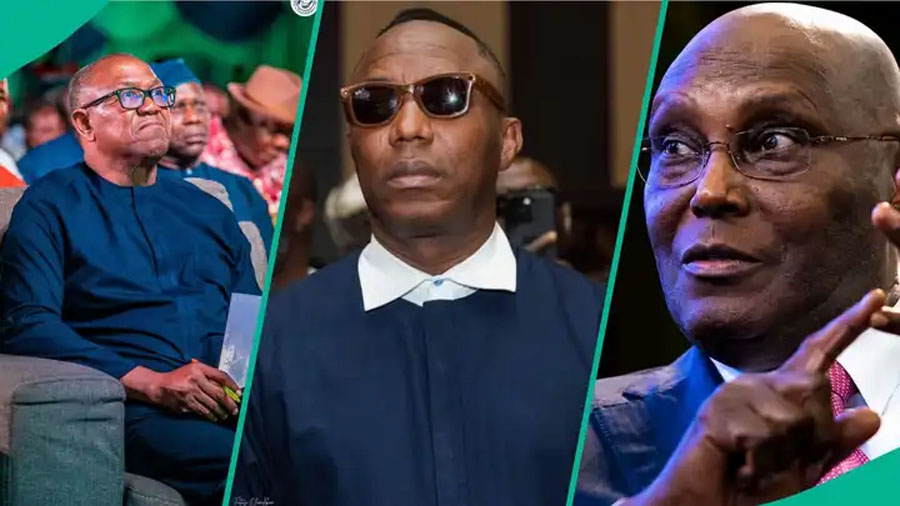
Peter Obi, Omoyele Sowore and Rorimi Amaechi

“Close Your Mouth”: Amaechi, Sowore, Obi Clash Over Fuel Subsidy in Heated NBA Debate

The 66th Annual General Conference of the Nigerian Bar Association (NBA) in Port Harcourt, Rivers State, turned into a fiery political battleground on Monday as three prominent political figures engaged in a heated exchange over fuel subsidy removal, governance records, and Nigeria’s political future ahead of the 2027 elections. The panel session, which was one of the major highlights of the conference themed “Beyond Limits,” brought together presidential hopefuls including Omoyele Sowore of the African Action Congress (AAC), Rotimi Amaechi, Vice Presidential candidate of the African Democratic Congress (ADC), and Peter Obi of the Nigeria Democratic Congress (NDC), who offered competing solutions to Nigeria’s worsening economic and governance challenges. What began as a policy debate quickly escalated into shouting matches, personal attacks, and sharp exchanges as the politicians traded barbs over their records in public office.

Omoyele Sowore, the AAC presidential candidate, opened the debate by asserting his long-standing opposition to fuel subsidy removal, accusing past and present leaders of shifting positions at the expense of ordinary Nigerians. “If there’s anyone who has been consistent about non-removal of fuel subsidy, it has been me. And it took Amaechi and his principal almost 10 years to catch up with me. They have now reversed their position on fuel subsidy,” Sowore declared. Sowore challenged the economic justification for the policy, arguing that the real beneficiaries of subsidy removal were political elites and state governors rather than the masses. “The question about subsidy is, who are you subsidising? You are subsidising the elite. You are subsidising the governors. The only people who are doing well since they removed subsidy are the governors of states,” he said. He also rejected the impression that subsidy removal was a new policy, recalling that previous administrations had removed or attempted to remove subsidies while promising Nigerians better economic conditions. “I was a student in 1989, they removed subsidy. In 1990, they removed subsidy. They said Nigeria will be better. We are in 2026, they are still removing subsidy,” Sowore said. Referencing an earlier comment by Amaechi, Sowore noted: “I love one thing that Amaechi said. He said, apart from Sowore and Adebayo, the rest of us have been in government and we have failed. They have no business coming back. You guys should be apologising to the Nigerian people.”

READ ALSO:

A visibly frustrated Amaechi quickly interjected, cutting Sowore off mid-sentence to refute the characterization of his remarks. “Stop lying. Stop lying, Sowore. I said, judge us by our achievements,” Amaechi fired back. Unfazed by the interruption, Sowore turned his sights directly to Amaechi’s record as a former governor of Rivers State and former Minister of Transportation. “When it comes to subsidy, right? Transportation policy is important. We have a former governor of Rivers State here, Amaechi, who built a rail line that went nowhere. If that rail line was working, subsidy would have been working for the people of Rivers State,” Sowore argued. Responding, Amaechi defended his record as governor and as former Minister, highlighting his administration’s construction of roads, primary schools, and major rail projects like the Lagos-Ibadan and Abuja-Kaduna railways. The ADC vice-presidential candidate quipped: “Where are Rivers lawyers? Let them take Sowore around and show him what I did as a former Governor.” Amaechi asked lawyers from Lagos, Ogun, and Kaduna states to confirm if the railway systems were still working in their states, noting that the Lagos-Ibadan railway was operational during his tenure and questioning why it was not working under President Bola Tinubu. When Sowore interjected again, Amaechi lost his cool and declared: “Moreover, Sowore, when politicians are talking, close your mouth.”

Turning his criticism to Peter Obi, Sowore alleged that Obi had failed to subsidise education during his tenure as Anambra State governor. “Peter Obi did not subsidise education in his state. Lecturers and doctors went on strike for 13 months. You may like him as a person, but he did not perform as a governor. That is the truth,” Amaechi said. Amaechi also argued that transportation policy should form part of the conversation around fuel subsidy, and he defended his own record as Minister of Transportation, saying the Lagos-Ajaokuta railway was operational during his tenure. He also used the opportunity to issue a broader challenge to Nigerians, urging voters to judge politicians by competence rather than ethnic or sectional loyalties. “A coalition should be based on performance. And I speak to you, you should do a referendum. We have all served in government. Atiku has served in government, Peter Obi has served in government, I have served in government and others. Assess us by our last performance and choose,” he said. He warned that Nigeria would continue to struggle with underdevelopment if Nigerians continued to vote along ethnic lines without considering the past performance of candidates. “Don’t just go because you are from Ikwerre or you are from Omoku and choose your own. No! That’s why we are running down,” Amaechi said.

READ ALSO:

Peter Obi, presidential candidate of the Nigeria Democratic Congress (NDC), defended the necessity of removing fuel subsidy, maintaining that while he supports the policy, his administration would have executed it differently to directly benefit citizens. “I subscribe and I maintain that you need to remove subsidy. Mismanagement of the proceeds should not be the reason for not removing it,” Obi said. Obi argued that the problem was not the policy itself but the failure of government to properly utilise the resources saved from it. “What we should have done is that when we remove subsidy, we would have given the people alternative usage for the subsidy. What we have today is that that removal and the attendant resources being recovered are also being mismanaged and stolen,” he said. Citing reported savings of approximately N16 trillion from the subsidy removal, Obi noted that just five per cent of that amount—about N800 billion—could be used to build primary healthcare centres across all 8,809 wards in Nigeria. He also suggested that the savings could have been added to Nigeria’s sovereign wealth fund to generate long-term returns. “If they had saved the money and decided to do like any other country, we would have had $10 billion added to the sovereign wealth fund, which, if you add it today, we will be getting about $10 billion every month, which we can use for a purpose,” Obi said. Obi also emphasised that a Nigerian economy driven by production rather than consumption would work wonders for the country. “Nigeria is poor today because it is not a productive country. Some of us might not be aware that two years ago, Ukraine, which is at war, gave us grain. We are hungry today because Nigeria is not a productive country,” he said.

The drama took an interesting turn when a young lawyer at the conference challenged Amaechi’s reported claim that Sowore could not win a presidential election, arguing that opposition politicians should unite and suggesting that Peter Obi remains the most popular among the contenders. The intervention highlighted the growing appetite among Nigerians for a coalition of opposition forces ahead of the 2027 elections. The NBA conference thus provided one of the earliest major platforms for 2027 presidential hopefuls to publicly test their competing positions on governance, economic management, and accountability, setting the stage for a potentially intense political contest ahead of the general elections. The clash over fuel subsidy—a policy that has significantly impacted the cost of living for millions of Nigerians—remains a central dividing line among the candidates, with Sowore opposing it outright, Obi supporting it but criticising its implementation, and Amaechi arguing for accountability and performance-based governance.

“Close Your Mouth”: Amaechi, Sowore, Obi Clash Over Fuel Subsidy in Heated NBA Debate

Loading

Continue Reading

Trending