

Politics
Okonkwo Releases Evidence Against Peter Obi as ₦5bn Defamation Battle Looms

Okonkwo Releases Evidence Against Peter Obi as ₦5bn Defamation Battle Looms
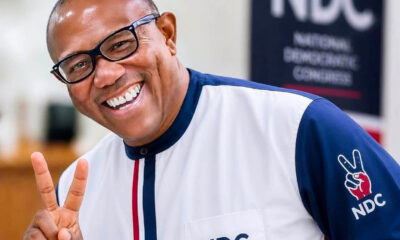
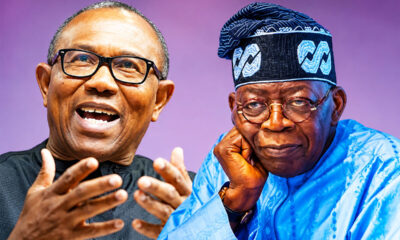
Renowned Nollywood actor and politician Kenneth Okonkwo has escalated his public dispute with Peter Obi, the presidential candidate of the Nigeria Democratic Congress (NDC), by releasing what he describes as documentary evidence to support allegations of financial extortion during the party’s primary elections.

Bank Alert Evidence
Okonkwo insists that aspirants seeking elective positions under the NDC were compelled to make unauthorized payments to secure party tickets and has directly accused Obi of playing a central role in the alleged scheme. The allegations have triggered a fierce response from Obi’s legal team, which has issued a pre-litigation notice demanding ₦5 billion in damages and a public apology within seven days.
The controversy first erupted after Okonkwo appeared on Channels Television’s Sunrise Daily programme, where he alleged that House of Representatives aspirants were required to pay ₦10 million while Senate aspirants were asked to pay ₦20 million. He further claimed that Obi personally supervised the preparation of a list of candidates at the Johnwood Hotel in Abuja and that some of the names included on the list belonged to individuals who either lost their primary elections or did not participate in the process.
According to Okonkwo, aspirants who challenged the legitimacy of the payments were allegedly informed by party officials that the directives originated from Obi and leaders of the party’s caucus structure.
Seeking to reinforce his claims, Okonkwo released screenshots of WhatsApp conversations he allegedly had with Obunike Ohaegbu, an NDC House of Representatives aspirant for the Nnewi North/South/Ekwusigo Federal Constituency. The messages, shared on his X account, purportedly show Ohaegbu expressing dissatisfaction with the conduct of the party’s primary elections and the candidate selection process.

WhatsApp Evidence 1
In one of the conversations released by Okonkwo, Ohaegbu was allegedly quoted as making highly critical remarks about Obi’s role in the process. Other excerpts purportedly referenced allegations that candidate lists were prepared outside the formal primary election structure and included names of individuals who did not emerge victorious during the exercise.
READ ALSO:
- 2027: Babachir Lawal Reveals Why He Prefers Tinubu’s ‘Devil’ to Atiku’s Presidency
- Power-Sharing Showdown: NDC Replaces Kwankwasiyya-Nominated Candidates in Kano
- Nigerian Labour Leader Dies in Geneva During International Labour Conference
Okonkwo also cited a statement from the NDC national secretariat, signed by National Secretary Ikenna Morgan Enekweizu, which acknowledged that the party relied on a leadership structure associated with Peter Obi and that the primary election process in Anambra State was coordinated by Obi’s political team. Okonkwo argues that the statement supports his claims regarding Obi’s influence over the selection process.
Expanding on the alleged financial demands, Okonkwo referred to comments previously made by Senator Seriake Dickson, who noted that political aspirants are generally expected to pay only for Expression of Interest forms before primary elections. According to Okonkwo, any additional financial demands before the conclusion of the primaries would be contrary to established procedures.
He maintained that House of Representatives aspirants were allegedly asked to pay ₦10 million while Senate aspirants were required to pay ₦20 million. He further claimed that Ohaegbu informed him that when concerns were raised with party officials regarding the payments, Obi and members of his caucus were identified as those responsible for authorising the collections.
However, the allegations have been strongly disputed by Ohaegbu himself. During an appearance on Channels Television, the aspirant publicly denied ever telling Okonkwo that Peter Obi directed him to pay ₦10 million. Ohaegbu stated that while he had heard allegations about a candidate list being prepared in a hotel, he never specifically accused Obi of personally demanding money from him.
His denial has raised fresh questions about the credibility of the WhatsApp screenshots released by Okonkwo and whether the messages accurately reflect the context of their conversations.
READ ALSO:
- NRC Confirms Warri–Itakpe Train Accident, Three Passengers Dead
- Galatasaray Ask Osimhen to Help Secure Ademola Lookman Transfer
- Xenophobic: Nigeria Considers Retaliatory Action Against South Africa
Peter Obi’s legal team, led by Chief Alex Ejesieme (SAN) of Madiba Chambers, has since responded aggressively to the allegations. In a formal pre-litigation notice, the lawyers demanded an immediate retraction of all allegedly defamatory statements, a public apology across all platforms where the claims were published, a written undertaking to refrain from making similar allegations in the future, and ₦5 billion in damages.

WhatsApp Evidence2
The legal team identified several statements they consider defamatory, including allegations that Obi wrote candidate lists at the Johnwood Hotel, organised and collected bribes from aspirants, engaged in extortion and fraud, and received funds from undisclosed sources abroad. According to the lawyers, the allegations have caused serious damage to Obi’s reputation.
Despite the legal threat, Okonkwo has remained defiant. He has publicly called on anti-corruption agencies, including the Economic and Financial Crimes Commission (EFCC) and the Independent Corrupt Practices and Other Related Offences Commission (ICPC), to investigate the allegations.
The former Labour Party spokesman argued that as a lawyer and citizen, he has a responsibility to report any information suggesting criminal conduct. He insisted that anti-graft agencies should investigate the alleged transactions and determine whether aspirants were unlawfully compelled to part with money.
Legal observers say the dispute could evolve into a major courtroom battle. While Obi would need to prove that the allegations were false and damaging, Okonkwo could seek to rely on a defence of justification if he can demonstrate that his claims are substantially true.
At the same time, legal experts note that the publication of private WhatsApp conversations could raise separate privacy and evidentiary issues. Ohaegbu’s public denial of key allegations may also complicate Okonkwo’s defence if litigation proceeds.
With the seven-day deadline ticking, attention is now focused on whether Okonkwo will retract his statements or whether Peter Obi will proceed with legal action. As of the time of filing this report, neither side has shown any sign of backing down, setting the stage for what could become one of the most closely watched political and legal battles in Nigeria.
Okonkwo Releases Evidence Against Peter Obi as ₦5bn Defamation Battle Looms






Politics
2027: Sowore Rejects Utomi’s Coalition Talks, Says AAC Won’t Join Opposition Alliance
2027: Sowore Rejects Utomi’s Coalition Talks, Says AAC Won’t Join Opposition Alliance
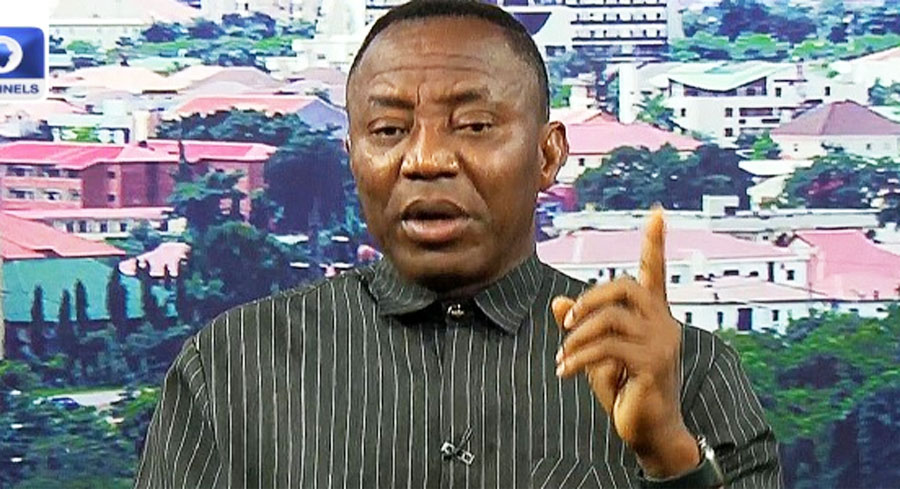
Omoyele Sowore, the presidential candidate of the African Action Congress (AAC) , has rejected fresh moves by the Movement for Credible Elections (MCE) to unite opposition presidential candidates behind a single candidate for the 2027 election.
In a statement on Thursday morning, Sowore said neither he nor the AAC was participating in the coalition discussions being coordinated by a political commission led by Professor Pat Utomi. He declared that the party would not join the proposed negotiations, insisting that the AAC’s political programme was fundamentally different from that of the established political parties.
“I have read a report … stating that a Political Commission led by Prof. Pat Utomi intends to hold talks with several presidential candidates, including myself, with the objective of producing a single opposition presidential candidate for the 2027 election,” Sowore said. “For the avoidance of doubt, neither I nor the African Action Congress (AAC) is part of these talks, and we will not be joining any such coalition.”
The AAC candidate said the party’s position was based on its ideological orientation, rather than political convenience or negotiations aimed at securing access to power. He argued that the party could not form an alliance with what he described as the political establishment it had consistently opposed.
“Many of the politicians now presenting themselves as an ‘alternative’ have, at different times, operated within the same political order, across the APC, PDP, Labour Party and other formations, that we know has failed Nigerians,” he said.
Sowore further said the AAC’s opposition extended beyond President Bola Tinubu and the All Progressives Congress (APC) to what he described as the wider political system and governance practices that had contributed to Nigeria’s socio-economic challenges.
“Our opposition is not merely to Asiwaju Bola Ahmed Tinubu or the evil All Progressives Congress party. It is to the political system and governing practices that have produced decades of poverty, corruption, inequality, insecurity and underdevelopment,” he stated.
He said the AAC would instead pursue what he described as a revolutionary break from the existing political order, anchored on social and economic justice, equal rights, accountable government and the redistribution of political and economic power. “We will not abandon that program for an arrangement whose principal objective is simply to replace one set of establishment politicians with another,” Sowore added.
READ ALSO:
- Sani Abacha’s Son Emerges Kano PDP Governorship Candidate for 2027
- He Does Not Lose Elections”: Abdulmumin Jibrin Predicts 65% Landslide for Tinubu in 2027
- Gaza Building Collapse Kills 21, Including Eight Children
His rejection comes as the MCE Political Commission, chaired by Utomi, begins consultations with opposition presidential candidates and party leaders ahead of its planned tactical session in Ibadan in a fortnight. The commission is seeking to facilitate an agreement among opposition forces on a single presidential candidate for the 2027 election.
According to MCE Media Coordinator, James Ezema, the commission is expected to hold closed-door meetings with shortlisted candidates and their party leaders before the tactical session. The rationale for the closed-door engagements, the commission said, is to prevent what it described as “sabotage from political mercenaries and jobbers” opposed to the initiative and determined to frustrate the negotiations and horse-trading among the shortlisted presidential candidates. The movement stated that Nigeria cannot afford another opposition arrangement in which political actors agree on the need for a united front but disagree when it becomes necessary to determine the arrowhead and rallying point of that electoral alliance.
Those listed for consultation include former Vice President Atiku Abubakar of the African Democratic Congress; Peter Obi of the Nigeria Democratic Congress; Adewole Adebayo of the Social Democratic Party; Seyi Makinde of the Allied Peoples Movement; Donald Duke of the Peoples Redemption Party; Sandy Onor of the Peoples Democratic Party; Peter Agada of the Young Progressive Party; and Sowore of the AAC. The shortlisted parties include the Social Democratic Party (SDP) , African Democratic Congress (ADC) , Allied Peoples Movement (APM) , National Democratic Congress (NDC) , Peoples Democratic Party (PDP) , Accord Party, Peoples Redemption Party (PRP) , African Action Congress (AAC) and Young Progressive Party (YPP) .
Apart from Professor Utomi, other members of the Political Commission expected to drive the tactical engagements include Hajia Maryam Inna Ciroma, Mrs Modupe Adelaja, Comrade Solomon Dalung, Hon. Uche Onyeagocha, Dr Olusegun Mayegun, Dr Sam Amadi, Mr Mike Igini, Obongawan Barbara Etim James, Veteran Olawale Okunniyi and Dr Adum Ter Alex, among others currently being enlisted for co-option.
MCE said the process would not merely require candidates to withdraw from the race, but would involve the development of agreed rules for selecting and endorsing an eventual candidate. It listed credibility, transparency, fairness, due process and a level playing field among the principles expected to guide the process. The commission emphasised that modalities and terms of endorsement will be agreed by all and not imposed, stating that all shortlisted parties must agree to clear, transparent terms and rules of engagement before the endorsement of the most acceptable presidential candidate.
MCE also said it would consider factors including national acceptability, competence, integrity, leadership profile, policy orientation, commitment to democratic institutions and capacity to unite diverse interests in assessing prospective candidates. The proposed coalition, according to the movement, would also be expected to produce a common governance programme addressing insecurity, unemployment, poverty, economic hardship, electoral reforms, constitutional reform, education, healthcare, energy and the cost of governance.
“The Nigerian people deserve more than a coalition of political personalities. They deserve a coalition of ideas, competence, values and a coherent ideological programme for national salvation,” the MCE said. The movement said its role was not to impose a presidential candidate on any party or aspirant but to facilitate a credible process through which the opposition could arrive at a broadly acceptable political arrangement. It urged all stakeholders to approach the engagement with an open mind and a willingness to place Nigeria’s democratic future above personal desires.
The MCE, however, concluded that every participating presidential candidate and their parties would have to make a prior commitment to respect the outcome of the process and support the adopted presidential candidate of the opposition coalition without equivocation in the 2027 elections.
However, the AAC candidate maintained that his party was pursuing a distinct political path. “The AAC is different. We know what we stand for, and we know the Nigeria we are fighting to build. We are not part of these coalition talks, and we will not be joining them,” he declared.
Sowore’s rejection is consistent with his long-standing position on opposition coalitions. In May 2026, he dismissed coalition talks as gatherings of “interest groups and persons who are interested in power,” arguing that the politicians involved were the same people who brought Nigeria to its current state. In August 2026, at the Nigerian Bar Association Annual General Conference in Port Harcourt, Sowore publicly disagreed with Atiku Abubakar and Peter Obi on the need for an opposition coalition, stating: “I disagree with you that we need an opposition to defeat the incumbent. It is the people, the Nigerian people, that will defeat the incumbent, not their friends who do not want to change the old order.” He also said he would only work with politicians genuinely committed to changing the country, adding: “I will not work with anybody who simply wants to replace the old order with an older, even ricketier order.”
The AAC had previously adopted Sowore as its consensus presidential candidate for the 2027 elections in May 2026, with the party’s Presidential Primary Election Chairman, Kayode Babayemi, stating that the decision showed the party’s trust in Sowore’s “steady leadership and his long-term dedication to fighting for a fair and truly democratic Nigeria.” Upon accepting the nomination, Sowore said the AAC was the “only opposition party” that offers a real choice for Nigerians, emphasising that the party does not have connections to powerful figures or corrupt politicians.
2027: Sowore Rejects Utomi’s Coalition Talks, Says AAC Won’t Join Opposition Alliance
Politics
Sani Abacha’s Son Emerges Kano PDP Governorship Candidate for 2027

Sani Abacha’s Son Emerges Kano PDP Governorship Candidate for 2027
The Peoples Democratic Party (PDP) in Kano State has affirmed Muhammad Sani Abacha, son of former military Head of State General Sani Abacha, as its candidate for the 2027 Kano State governorship election following the withdrawal of the party’s earlier flag bearer, Muhammad Bello Dalha.
Abacha emerged on Wednesday, September 16, during an expanded meeting of the Kano PDP State Executive Committee, where the party conducted an affirmation and replacement primary to fill the vacancy created by Dalha’s withdrawal.
The development was announced by the Kano PDP Chairman, Bello Gambo Bichi, who said Dalha had voluntarily stepped down after consultations with party stakeholders in Kano and at the party’s national headquarters in Abuja.
Bichi explained that Dalha had earlier won the party’s governorship primary but subsequently withdrew, making a replacement process necessary under the applicable electoral and party rules.
The replacement exercise was witnessed by representatives of the Independent National Electoral Commission (INEC).
The chairman of the replacement primary election panel, Dr Abba Abdullahi, formally declared Abacha the PDP’s governorship candidate after the exercise. He said the process was conducted in accordance with the PDP constitution, party guidelines, relevant regulations and applicable electoral laws.
Abdullahi also said Abacha had satisfied the requirements for nomination, while noting that his candidacy remained subject to the applicable statutory processes and scrutiny by the relevant electoral authorities.
The latest development marks a return for Abacha to the Kano governorship race. He contested the 2023 governorship election on the PDP platform and finished third in that election.
His return follows an earlier PDP primary in which Dalha emerged as the party’s candidate. Dalha’s subsequent withdrawal has now paved the way for Abacha to return to the contest through the replacement process.
READ ALSO:
- He Does Not Lose Elections”: Abdulmumin Jibrin Predicts 65% Landslide for Tinubu in 2027
- Gaza Building Collapse Kills 21, Including Eight Children
- Niger Mosque Abductions: Terrorists Execute 30 of 500 Captive Muslim Worshippers
The PDP has also named Yusuf Ado Kibiya, a former Kano PDP chairman and former commissioner, as Abacha’s running mate.
According to the party leadership, Kibiya’s selection formed part of a reconciliation arrangement aimed at resolving divisions between rival factions within the Kano PDP.
Bichi said the deputy governorship slot was allocated to the faction associated with former Minister of Special Duties Kabiru Tanimu Turaki as part of the reconciliation process.
The party chairman said the agreement was reached after consultations and that the arrangement had resolved the factional dispute within the Kano PDP.
The reconciliation has also affected other positions on the party’s ticket, with Bichi disclosing that some candidates for the National Assembly and Kano State House of Assembly were replaced as part of the agreement to accommodate members of the different factions.
The PDP leadership has urged its members, leaders and supporters to unite behind the new governorship ticket as the party prepares for the 2027 general elections.
Bichi described the development as a new phase for the Kano PDP and said the party was strengthening its internal structure ahead of the election.
The emergence of Abacha gives the PDP a candidate with previous experience of contesting the Kano governorship. His 2023 campaign was conducted under the PDP, although he did not win the election.
The political landscape in Kano has since changed, with parties preparing new structures and candidates for the 2027 contest.
The PDP’s latest decision also illustrates the role of candidate replacement and internal reconciliation in the preparations for the next election. Rather than overturning the earlier primary result, the party’s process followed the withdrawal of the candidate who had initially secured its ticket.
The party has maintained that the replacement exercise complied with the Electoral Act, its constitution and relevant electoral guidelines. INEC representatives were present during the process, according to the PDP leadership and reports of the exercise. (Vanguard News)
For now, Abacha becomes the PDP’s candidate for the Kano governorship election, with Kibiya as his running mate, while the party moves to consolidate its structure and prepare for the wider electoral contest.
The nomination remains subject to the statutory electoral processes that apply before the 2027 election.
With the replacement of Dalha and the accompanying reconciliation between the rival factions, the Kano PDP will now focus on campaigning, mobilisation and presenting its new ticket to voters as preparations for the 2027 election intensify.
Sani Abacha’s Son Emerges Kano PDP Governorship Candidate for 2027
Politics
Aisha Buhari Visits Atiku Amid Opposition Coalition Activities
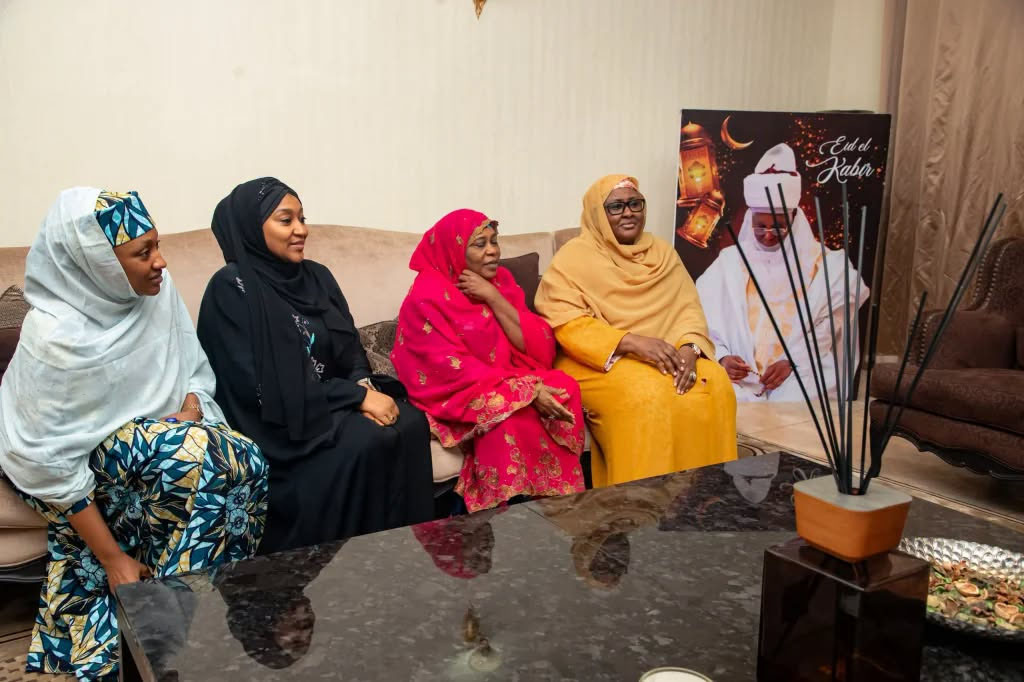
Aisha Buhari Visits Atiku Amid Opposition Coalition Activities
Former First Lady Aisha Buhari has visited former Vice-President and African Democratic Congress (ADC) presidential candidate Atiku Abubakar in Abuja amid increasing political activities and opposition realignment ahead of Nigeria’s 2027 general elections.
Atiku disclosed the visit in a post on his official social media account, describing the meeting with Aisha Buhari as warm and appreciated.
The former Vice-President did not disclose the specific purpose of the visit or the details of the discussions between them.
However, Atiku said the meeting provided an opportunity to reflect on the economic challenges confronting Nigerian families, including the rising cost of food, transportation, education, healthcare and other basic necessities.
He said the situation had placed a significant burden on households and stressed the need for political leaders to prioritise the welfare, dignity and future of Nigerians.
Atiku said Nigerians deserved an economy that rewards hard work, creates opportunities and enables families to live with dignity and hope. He ended his message with the phrase, “Make Nigeria Affordable Again.”
Aisha Buhari’s visit comes as political parties and opposition groups intensify consultations ahead of the 2027 presidential election.
The former Vice-President is seeking the presidency on the platform of the ADC, which has become the political platform associated with an opposition coalition involving several political figures and groups.
The coalition has been holding discussions on how opposition parties could work together ahead of the election, including the possibility of presenting a common candidate.
The issue has remained subject to negotiations among the parties and political actors involved, with different opposition figures publicly expressing views on the structure and leadership of any eventual arrangement.
At an opposition summit held in Abuja earlier this month, representatives of several opposition parties discussed cooperation and preparations for the 2027 elections.
READ ALSO:
- Gaza Building Collapse Kills 21, Including Eight Children
- Niger Mosque Abductions: Terrorists Execute 30 of 500 Captive Muslim Worshippers
- OAU Investigates Death of Final-Year Student as Police Begin Probe
Atiku and Peter Obi, who is associated with the Nigeria Democratic Congress (NDC), were not present at the meeting. Their absence generated public discussion, although representatives of the parties involved subsequently said the coalition process was broader than the attendance of individual presidential aspirants.
The question of a single opposition candidate has remained particularly prominent in the discussions.
Recent public statements have reflected differing positions among opposition figures. While some have called for candidates to make way for a common candidate, Obi has maintained that any decision on stepping down or supporting another candidate would have to be determined through the relevant political parties and coalition arrangements.
Atiku has continued his political mobilisation as the ADC presidential candidate, while the coalition continues to address questions surrounding its structure, leadership and electoral strategy.
The latest meeting between Atiku and Aisha Buhari has therefore attracted attention because of its timing and the wider political realignment taking place ahead of 2027. However, neither Atiku nor Aisha Buhari has publicly stated that the Abuja meeting was related to an electoral alliance, endorsement or coalition negotiation.
The encounter also follows an earlier meeting between the two in Saudi Arabia.
In February 2026, Atiku hosted Aisha Buhari, her daughter Hanan and other members of the Buhari family while they were in Saudi Arabia for Umrah.
Atiku described that meeting as a family and religious gathering, saying the Buhari family was in the Kingdom to perform the lesser Hajj.
Aisha Buhari has continued to maintain a public presence since the death of her husband, former President Muhammadu Buhari, in July 2025.
She has participated in engagements involving education, social development and initiatives associated with the late president’s legacy.
Atiku, meanwhile, has remained active in opposition politics and has continued consultations and mobilisation ahead of the 2027 election.
The ADC adopted Atiku as its presidential candidate after the opposition coalition settled on the party as its platform for the 2027 contest.
The party’s interim leadership has included former Senate President David Mark and former Osun State Governor Rauf Aregbesola, who have been involved in the coalition’s organisational activities.
As political activities intensify, meetings between prominent political figures are increasingly attracting public attention, particularly where they involve personalities linked to different political groups.
For the moment, however, the publicly confirmed details of the Aisha Buhari-Atiku meeting remain limited to Atiku’s acknowledgment of the visit and his comments on Nigeria’s economic challenges.
There is no publicly confirmed statement from either party establishing that the meeting resulted in an agreement on the 2027 election, an endorsement or any specific political arrangement.
Further developments in the opposition coalition and the activities of the various presidential contenders are expected as political parties continue preparations for the 2027 general elections.
Aisha Buhari Visits Atiku Amid Opposition Coalition Activities
-
 Politics3 days ago
2027: Northern Lecturers Back Tinubu, ASUU Disowns Endorsement
-

 metro3 days ago
Police Arrest Mother Over Alleged Brutal Abuse of 7-Year-Old Girl in Anambra
-
 Sports2 days ago
‘I Was Never the Chosen One’ — Dembele Responds to Mbappe
-

 International1 day ago
Islamic Council Condemns Attempted Attack on Holy City of Mecca
-

 metro2 days ago
Lagos Power Outage: Ikeja Electric Blames TCN as Businesses, Homes Groan
-
 News1 day ago
Keep Politics Out of My Office — Ogbomoso Grand Chief Imam Warns Politicians, Bloggers
-

 Education2 days ago
JAMB Moves 2027 UTME Time — Here’s What Candidates Need To Know
-
 Politics2 days ago
2027: APC Governors Reject Wike’s Rainbow Coalition, Insist on Party Loyalty