

Aviation
Witness Reveals How Sirika Approved Nigeria Air Consultancy Deal for Associate
Witness Reveals How Sirika Approved Nigeria Air Consultancy Deal for Associate
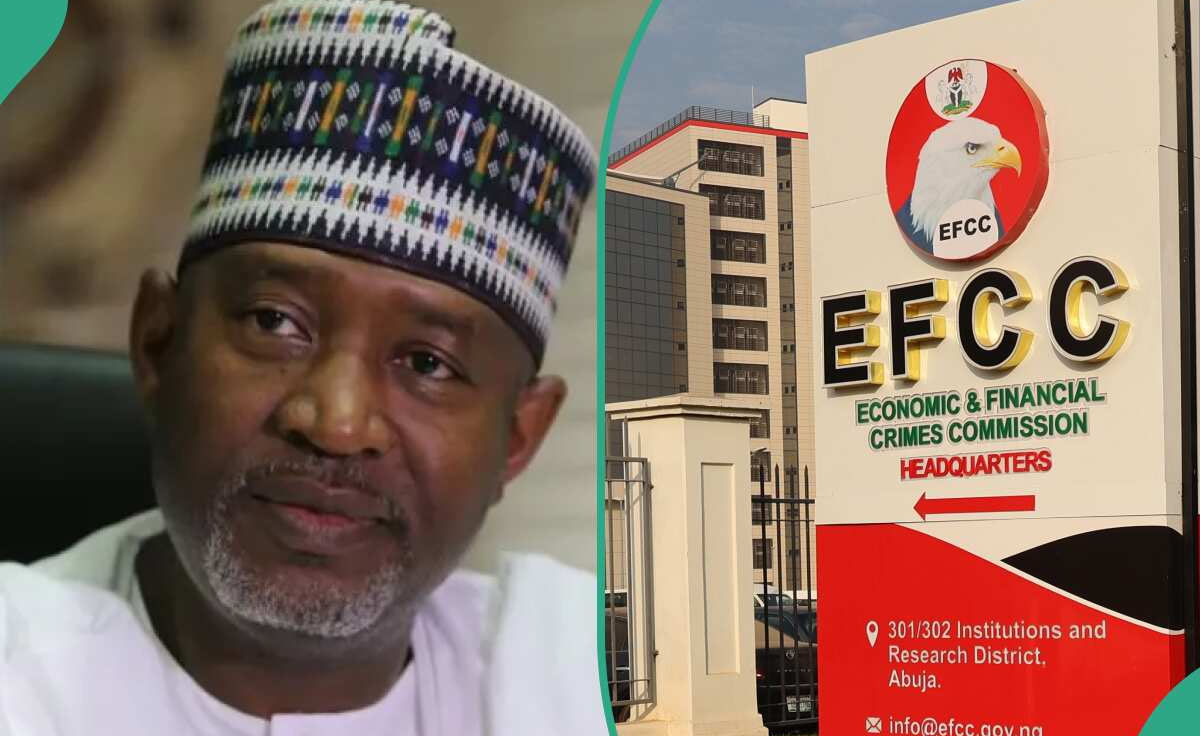
The trial of former Minister of Aviation, Hadi Sirika, took a fresh turn on Wednesday as an investigator with the Economic and Financial Crimes Commission (EFCC) detailed before a Federal Capital Territory High Court in Abuja how the former minister allegedly influenced the award and extension of consultancy contracts linked to the controversial Nigeria Air project.
The EFCC witness, Christopher Odofin, testified before Justice Sylvanus Oriji that Sirika allegedly directed the award of a consultancy contract for the establishment of Nigeria Air to Tianaero Nigeria Limited, a company reportedly linked to Gabriel Tilmann, whom investigators described as a close associate of the former minister.
Sirika is facing trial alongside his daughter, Fatima Sirika; his son-in-law, Hamma Jalal Sule; and Al Buraq Global Investment Limited over an amended six-count charge bordering on abuse of office, contract fraud, and the alleged diversion of public funds. All the defendants have pleaded not guilty to the charges.
According to the witness, Tianaero Nigeria Limited was awarded an initial consultancy contract worth over N299 million on April 4, 2022, for services related to the establishment of Nigeria Air. Odofin told the court that the contract was subsequently extended on October 17, 2022, increasing its value to more than N599 million. The EFCC investigator alleged that findings from the commission’s investigation indicated that the extension was granted on Sirika’s instruction due to his relationship with Tilmann.
READ ALSO:
- Police Arrest Boko Haram, Lakurawa Terror Suspects, Rescue Kidnap Victim
- US-Iran MoU Details Emerge: $300bn Reconstruction Aid, Sanctions Relief in 14-Point Deal
- Grand Chief Imam Denies Involvement in Prayer Event for Oyo APC Governorship Candidate
Odofin further informed the court that investigators examined the mobile phone of former Permanent Secretary in the Ministry of Aviation, Enitan Muyiwa Abel, and allegedly discovered a voice note sent by Sirika while he was in Spain. According to the witness, the former minister instructed the permanent secretary to ensure that the consultancy contract was awarded to Tianaero Nigeria Limited. He also alleged that the contract did not pass through the Bureau of Public Procurement (BPP) before approval but was instead processed based on Sirika’s directive.
The witness told the court that payments relating to the consultancy contract were traced through the company’s accounts with Access Bank and Guaranty Trust Bank. He added that records obtained from the Corporate Affairs Commission (CAC) showed that Tianaero Nigeria Limited was incorporated on March 29, 2021, less than two years before it secured the consultancy contract.
Odofin said investigators tendered bank statements, CAC documents, and a compact disc containing the alleged voice note as exhibits before the court. The exhibits were subsequently admitted into evidence.
The testimony also revived concerns surrounding the controversial launch of Nigeria Air in 2023. In an earlier court appearance, the same witness alleged that the aircraft unveiled as Nigeria Air shortly before the end of former President Muhammadu Buhari’s administration was actually an Ethiopian Airlines aircraft temporarily brought into Nigeria for branding and display purposes. According to the witness, the aircraft remained in Nigeria for only a few days before returning to Ethiopia after the unveiling ceremony.
The claim forms part of the broader allegations being investigated by the EFCC regarding the implementation of the national carrier project during Sirika’s tenure as aviation minister.
Following Wednesday’s proceedings, Justice Oriji adjourned the matter until July 8 for the prosecution to play the audio recording allegedly sent by Sirika and for the continuation of hearing.
The case remains one of the most closely watched corruption trials involving a former cabinet member, given its connection to the controversial Nigeria Air project and the allegations of abuse of office and contract irregularities.
Witness Reveals How Sirika Approved Nigeria Air Consultancy Deal for Associate






Aviation
FAAN reinstates Bolt at airports, denies fixing taxi fares

FAAN reinstates Bolt at airports, denies fixing taxi fares
The Federal Airports Authority of Nigeria (FAAN) has cleared Bolt to resume operations at all airports under its management after reaching an operational agreement with the ride-hailing company.
The development follows growing complaints from travellers over the temporary disruption of e-hailing services at Nigerian airports, with passengers raising concerns about higher transportation costs and reduced options for getting to and from airports.
FAAN also apologised to passengers affected by the disruption, acknowledging that the temporary interruption caused inconvenience and increased transportation difficulties for some travellers.
In a statement by its Director of Public Affairs and Consumer Protection, Henry Agbebire, FAAN said it had listened to the concerns raised by passengers and made the necessary adjustments following constructive engagements with Bolt.
The authority said the agreement with Bolt provides an operational framework that allows the company to resume services while complying with requirements relating to airport security, passenger safety, accountability and orderly transportation.
FAAN’s latest announcement marks a significant development after the authority had faced mounting public criticism over restrictions affecting e-hailing operations at some of the country’s airports. FAAN had earlier maintained that it had not imposed a blanket ban on Bolt, Uber or other e-hailing platforms, but said operators needed to work within an appropriate framework for airport operations. (FAAN)
According to FAAN, airports are highly regulated environments, making it necessary for commercial transportation providers to operate under arrangements that give the authority adequate visibility over vehicles, drivers and passenger pick-ups.
READ ALSO:
- Probe Me Over $16bn Power Spending If You Have Evidence – Atiku Dares FG
- 20-Year-Old Arrested for Allegedly Macheting Father to Death in Anambra
- How Filling Station Sold Me Water Instead Of Petrol – Lagos Resident Recounts Ordeal
The authority said it had been dealing with challenges including passenger solicitation, touting, random pick-ups, unregulated commercial transportation and concerns about safety, security and accountability.
FAAN said these challenges had become more complicated in situations where drivers operate across multiple ride-hailing platforms, prompting the authority to strengthen its oversight of commercial transportation within airport premises.
At the centre of the controversy is the Airport Car Hire Rank Management System (ACHRAMS), which FAAN introduced to bring greater structure and visibility to airport car-hire operations.
FAAN stressed that ACHRAMS is not an e-hailing application and was not created to compete with Bolt, Uber or any other mobility platform. Rather, the authority describes it as an airport-specific system for managing car-hire ranks, dispatch, identification and operational oversight within FAAN-managed airports. (FAAN)
The authority has also rejected suggestions that ACHRAMS was introduced to create a monopoly in airport transportation.
FAAN said it supports competition and does not intend to prevent passengers from choosing between different transportation providers.
The controversy intensified after passengers began complaining about the cost of airport taxi fares, particularly during the period when access to conventional e-hailing services was disrupted.
Reports from Lagos indicated that some passengers were being quoted fares as high as N30,000 for trips from Murtala Muhammed International Airport to parts of Ikeja, while travellers reported substantially lower prices through alternative ride-hailing services. (Aboki Forex)
FAAN, however, has denied claims that it fixed or introduced the airport taxi fares being discussed.
The authority said the fares existed independently of ACHRAMS and were not newly created by the system. According to FAAN, ACHRAMS merely brought greater visibility and transparency to existing airport taxi rates, making the applicable charges more apparent to passengers.
FAAN acknowledged that the comparison with the lower prices many travellers had become accustomed to through e-hailing platforms understandably fuelled public concern over the cost of airport transportation.
The authority said its actions were motivated by regulatory, safety and security considerations, rather than economic interests.
It nevertheless acknowledged that the immediate effect of the temporary disruption was significant for passengers.
FAAN therefore apologised to travellers and said it appreciated their patience and understanding while discussions with e-hailing operators continued.
The authority said the resolution with Bolt demonstrates that it is possible to maintain the integrity and security of the airport environment while preserving the convenience and freedom of choice associated with e-hailing services.
The latest development is also consistent with FAAN’s earlier position that it wanted to establish a workable framework rather than permanently exclude e-hailing companies from airports. On August 20, the authority said discussions with operators were aimed at resolving issues involving passenger safety, security, operational visibility, accountability and the management of pick-up activities. (FAAN)
Bolt’s own airport guidance already requires its drivers operating at Murtala Muhammed International Airport to comply with FAAN rules, including using designated parking areas for pick-ups and drop-offs. Bolt also warns drivers that violations of airport rules can result in penalties or vehicle impoundment. (Bolt)
Bolt’s official Nigeria platform also lists several Nigerian airports where airport transfers are available, including Murtala Muhammed International Airport, Nnamdi Azikiwe International Airport, Mallam Aminu Kano International Airport, Port Harcourt International Airport and Sam Mbakwe International Airport. (Bolt)
FAAN said it remains in discussions with other e-hailing operators and expects outstanding engagements to be concluded in the coming days.
The authority reiterated that passengers remain free to choose from available authorised transportation options that best meet their needs.
FAAN said its responsibility is to ensure that whichever authorised service passengers choose operates within a safe, secure, orderly and accountable airport environment.
The reinstatement of Bolt is expected to give air travellers greater choice and restore access to app-based transportation at FAAN-managed airports, while the authority continues efforts to regulate commercial transportation without compromising passenger safety and convenience.
FAAN assured travellers that their safety, security, convenience and overall airport experience would remain at the centre of its decisions.
FAAN reinstates Bolt at airports, denies fixing taxi fares
Aviation
Keyamo Issues One-Week Ultimatum to Airlines Over Debt Repayment Plans

Keyamo Issues One-Week Ultimatum to Airlines Over Debt Repayment Plans
The Minister of Aviation and Aerospace Development, Festus Keyamo, has given airlines operating in Nigeria one week to agree on realistic repayment plans with aviation agencies over their outstanding financial obligations. This directive was part of resolutions reached at an emergency stakeholders’ meeting convened by Keyamo on Thursday, August 13, 2026, to address the recent industrial dispute between aviation sector unions and some airlines. The meeting followed the temporary suspension of industrial action by aviation unions on Tuesday, August 11, 2026, which disrupted operations at some airports across the country, causing widespread concern among passengers and stakeholders. The emergency meeting was attended by representatives of airlines, aviation sector unions, and heads of aviation agencies, including the Nigeria Civil Aviation Authority (NCAA), the Federal Airports Authority of Nigeria (FAAN), and the Nigerian Airspace Management Agency (NAMA). The Minister emphasized that the era of impunity in the aviation sector is over and that airlines must take responsibility for their financial obligations while working with the government to resolve outstanding debts amicably.
According to a statement signed by the Permanent Secretary, Ministry of Aviation and Aerospace Development, Mahmud Adam Kambari, the NCAA and other aviation agencies were directed to obtain payment schedules from airlines, taking into consideration their operating costs and prevailing economic realities. The statement emphasized that the Directors of Finance and Accounts of all aviation agencies were to meet individually with the affected airlines and agree on realistic repayment plans within one week. The resolution is aimed at addressing financial obligations owed by airlines to aviation agencies while preventing the disputes from escalating into further industrial action and disruption of air travel. The Minister stressed that the repayment plans must be realistic and achievable, as the government is not interested in empty promises but in concrete actions that will restore financial sanity to the sector. Airlines that fail to comply within the stipulated timeframe would face drastic actions, including the possible grounding of aircraft and suspension of operating licenses.
READ ALSO:
- [ICYMI] How Nigerian Medical Doctor Was Promoted to Captain in US Army
- JAMB Aggregate Score 2026/2027: How Nigerian Universities Calculate Your Admission Chances
- Davido Halts London Concert, Threatens to Walk Off Stage Over Fan’s Disrespect to Staff
The emergency meeting was convened in response to a growing industrial dispute between aviation sector unions and some airlines. The unions had threatened industrial action over issues including the unionisation of airline workers and the alleged refusal of some airlines to allow their employees to join trade unions. The dispute escalated to the point where aviation unions temporarily suspended industrial action on Tuesday, August 11, 2026, which had disrupted flight operations at some Nigerian airports, causing significant inconvenience to passengers and raising concerns about the stability of the aviation sector. The disruption had heightened fears over possible widespread cancellations and delays, prompting the Minister to intervene swiftly to prevent a full-blown crisis that could have paralyzed air travel across the country.
The stakeholders also reached an agreement on the contentious issue of unionisation among airline workers. The Minister affirmed the right of workers to decide whether or not to belong to trade unions, stressing that such decisions should be made directly by the workers rather than through airline management. Consequently, the NCAA was directed to ensure that aviation unions have direct access to workers of all airlines solely for the purpose of distributing union forms to enable employees to indicate whether they wish to unionise. The ministry warned that any airline that prevents the unions from having such direct access would face sanctions from the NCAA, including possible fines or suspension of operating licenses. This resolution represents a significant victory for workers’ rights in the aviation sector and ensures that employees can exercise their freedom of association without interference from employers.
The stakeholders further resolved that another meeting would be convened in one month to review progress made in implementing the resolutions and assess the state of the aviation sector. The statement described the resolutions as collective decisions of all parties at the meeting, emphasizing the collaborative approach taken to resolve the disputes. The Minister, while assuring stakeholders of the Federal Government’s commitment to a safe and viable aviation sector, reiterated President Bola Tinubu’s commitment to maintaining a safe, efficient, peaceful, and sustainable aviation industry. This commitment aligns with the broader agenda of the current administration to reform critical sectors of the economy and ensure the welfare of workers and the public. The Minister also noted that the government would continue to engage with stakeholders to address other challenges facing the industry, including infrastructure decay, multiple taxation, and the high cost of aviation fuel.
The latest intervention comes after the aviation unions temporarily suspended their industrial action following the disruption of flight operations at some airports on Tuesday. The dispute had heightened concerns over possible disruptions to air travel and the financial pressures facing airlines operating in the country. Airlines now have until August 20, 2026, to agree on repayment plans with aviation agencies. The Ministry has set up a task force to review the submissions and ensure compliance. Airlines that fail to meet the deadline or fail to reach acceptable repayment agreements will face sanctions, which could include suspension of operating licenses, grounding of aircraft, prohibition from accessing government facilities, and legal action to recover outstanding debts. The Ministry has also directed the NCAA to ensure that aviation unions have direct access to airline workers to distribute unionisation forms, and any airline found obstructing this process will face sanctions. This development marks a significant step in the Minister’s broader efforts to reform the aviation sector, improve financial accountability, and ensure that airlines operate within the framework of the law.
Keyamo Issues One-Week Ultimatum to Airlines Over Debt Repayment Plans
Aviation
Obi Must Apologise, Pay ₦25,000 or Face FAAN Action — Keyamo Issues Ultimatum
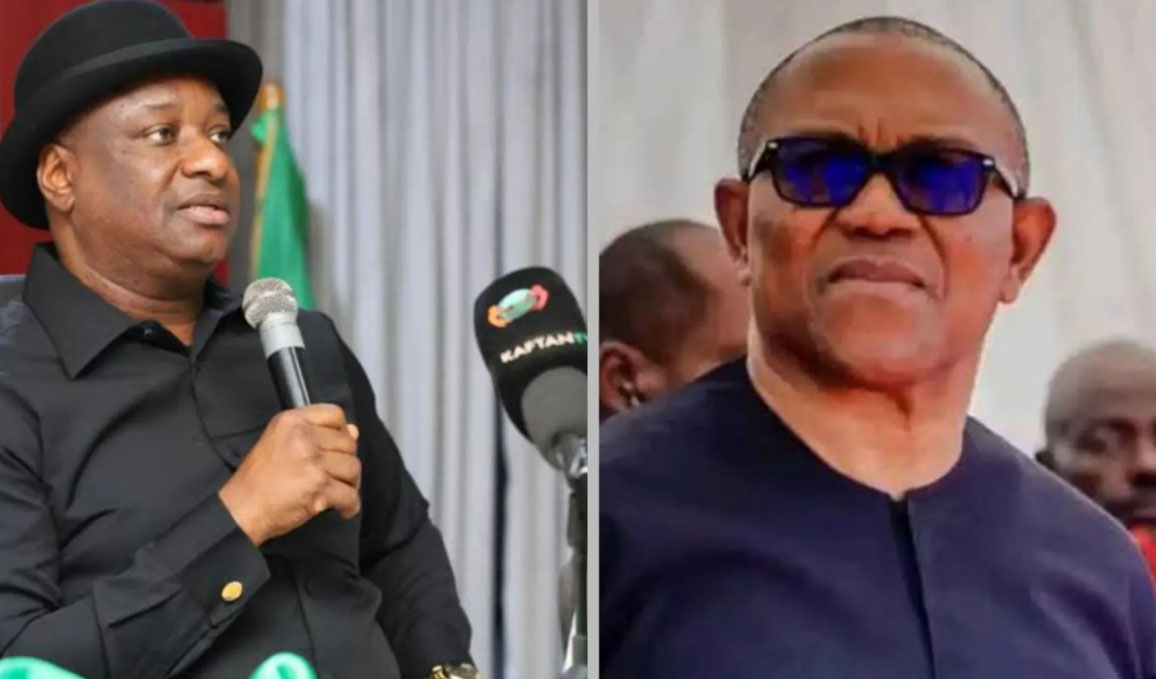
Obi Must Apologise, Pay ₦25,000 or Face FAAN Action — Keyamo Issues Ultimatum
The Minister of Aviation and Aerospace Development, Festus Keyamo, has issued a seven-day ultimatum to Nigeria Democratic Congress (NDC) presidential candidate Peter Obi, demanding a public apology and payment of a ₦25,000 fine over a parking violation at Abuja’s Nnamdi Azikiwe International Airport. Keyamo’s demand follows an internal investigation he ordered after Obi publicly claimed his vehicle was unjustly clamped as part of a political persecution campaign by the Federal Government. The minister released CCTV footage which he says contradicts Obi’s account, insisting the former Anambra governor violated airport regulations and then used his influence to evade the prescribed fine. In a statement posted on his X page, Keyamo declared that what had emerged was a clear case of an opposition candidate trying to whip up unnecessary sentiments for a wrong he and his driver committed.
According to the minister’s detailed narrative, the incident occurred on July 4, 2026, and the CCTV footage tells a very specific story. Obi arrived at the domestic terminal at approximately 8:28 p.m., driven by a police officer, and entered the building with two other occupants. The police driver then parked the vehicle in a designated drop-off zone—almost blocking the entrance—and also left the vehicle unattended. The driver briefly returned at about 8:32 p.m. to retrieve an item but abandoned the vehicle again. Airport security personnel then clamped the tyres, with Keyamo insisting nobody knew the vehicle belonged to Obi at the time. When the driver discovered the clamp, he contacted Obi, who spoke with an airport manager and requested the vehicle’s release—which was granted without payment of the ₦25,000 fine. Keyamo emphasised that the vehicle remained unattended for about 30 minutes in a restricted zone, describing this as a security risk under global airport standards.
READ ALSO:
- Grand Chief Imam warns Bennylee against religious provocation, urges respect for judicial process
- DSS arraigns five suspected Ansaru members over Oyo school abduction, alleged killings
- PFIPC probe: HoS admits failure to verify recruitment documents
However, the Peter Obi Media Office and the Obidient Movement have strongly rejected Keyamo’s narrative, accusing the minister of releasing poorly edited propaganda and manipulating CCTV footage to criminalise the opposition leader. They have raised several counter-claims that directly challenge the minister’s version of events. On the timing dispute, the Obidient Movement argues that timestamps on Keyamo’s own footage show Obi’s vehicle arriving at 20:28 and being clamped at approximately 20:34—six minutes, not thirty. The group accused Keyamo of zooming into the seconds display to confuse viewers into believing they were looking at the minute counter. On the identity of the driver, Obi’s spokesman, Idris Zekeri Jnr, stated that Peter Obi does not have any police or civil defence personnel attached to him in Abuja, challenging Keyamo’s reference to a “police driver”. Obi’s camp also claims the incident Keyamo publicised is entirely different from the one Obi narrated during his interview, suggesting a pattern of targeting the opposition figure. Furthermore, both the Obidient Movement and Obi’s media office insist other vehicles were parked in the same area without being clamped, pointing to selective enforcement targeting Obi. They also questioned why Keyamo showed no similar enthusiasm in investigating high-profile incidents involving Adams Oshiomhole and KWAM 1—known associates of the President.
The Presidency has weighed in on the matter, with presidential spokesman Bayo Onanuga backing Keyamo’s position. Onanuga stated that the evidence completely debunked Obi’s falsehood that he was unduly targeted and persecuted, insisting that he and his police driver broke a simple parking rule at the Airport.
Keyamo has made two formal demands, warning that failure to comply within seven days would prompt him to direct the Federal Airports Authority of Nigeria (FAAN) to take further action. First, Obi must tender an unreserved, public apology to the airport workers he accused of persecution. Second, Obi must voluntarily return to the airport and pay the ₦25,000 fine for wrongful parking, which he allegedly evaded through influence peddling. The minister declared that Obi cannot be bigger than the law.
Meanwhile, legal analyst Ekemini Udim, a Senior Partner at Justice Chambers, has questioned the minister’s authority to impose a fine, arguing that Keyamo is not a court of law. Udim cited a Court of Appeal decision which held that the Federal Road Safety Commission cannot impose fines without taking offenders before a magistrate’s court, arguing the same principle should apply to FAAN. Furthermore, he noted that under the principle of criminal liability, it is the person who commits the offence that should be made to pay for the offence—suggesting that if Obi was not the driver, he cannot be held personally liable.
Obi Must Apologise, Pay ₦25,000 or Face FAAN Action — Keyamo Issues Ultimatum
-
 metro3 days ago
FG Suspends Niger NSCDC Commandant As 37 Suspected Illegal Miners Die In Custody
-

 Politics3 days ago
Toyin Abraham Rejects Lagos APC Campaign Council Inclusion
-

 Politics3 days ago
2027: Sowore Says He’d Rather Die Than Travel Abroad For Medical Treatment
-

 Politics2 days ago
Yayi Ancestry Row: Stepmother Sets Record Straight as Legal Battle Looms
-
 Politics3 days ago
2027: Tinubu May Mediate Wike-APC Governors Rift In France
-

 metro2 days ago
Niger Miners’ Deaths: Families Demand Compensation, Justice for Victims
-

 Sports3 days ago
Falconets Thrash England 3-0, Face Colombia in U-20 World Cup Quarter-Finals
-

 International2 days ago
BREAKING: Bloodbath at Pakistan Mosque as Suicide Blast Kills 21, Injures 103