

International
Trump Weighs Entry Restrictions for Pregnant Foreign Visitors After Supreme Court Ruling
Trump Weighs Entry Restrictions for Pregnant Foreign Visitors After Supreme Court Ruling
The Trump administration is considering tighter restrictions on pregnant foreign women seeking to enter the United States, following a landmark US Supreme Court ruling that blocked President Donald Trump’s executive order aimed at ending birthright citizenship for children born on American soil.
Although no formal policy has been announced, senior White House officials say the administration is exploring measures to curb birth tourism—the practice of travelling to the United States primarily to give birth so that a child automatically acquires US citizenship.
The renewed push comes after the Supreme Court, in a 6-3 ruling, declared unconstitutional President Trump’s executive order that sought to deny automatic citizenship to children born in the United States to parents who are either in the country illegally or on temporary visas. The court held that the order violated the Citizenship Clause of the 14th Amendment, which has guaranteed birthright citizenship for more than 150 years.
The ruling represents a significant legal setback for one of the Trump administration’s most ambitious immigration initiatives, reinforcing long-standing constitutional protections for nearly everyone born on US soil.
Despite the decision, White House officials have signalled that the administration is not backing away from efforts to tighten immigration policies surrounding birthright citizenship.
Speaking after the judgment, Stephen Miller, White House Deputy Chief of Staff for Policy and Homeland Security, said the administration would take “a hard look” at restricting entry for pregnant foreign nationals if officials believe their primary reason for travelling is to give birth in the United States.
According to Miller, immigration authorities must carefully assess temporary visitors because of concerns surrounding birth tourism.
READ ALSO:
- Ogun 2027: Group Rejects Yayi’s Governorship Bid, Endorses Adebutu
- Adeyemi Insists Gbajabiamila Approved His Appointment as Court Case Begins
- UK Plans £10,000 Repayment Rule for Asylum Seekers Before Permanent Settlement
“You have to now think very carefully about who you let into your country, even on a temporary basis because of the possibility for birth tourism.”
He argued that some foreign nationals deliberately travel to the United States in the final weeks of pregnancy so their children can obtain American citizenship, which he claimed could provide long-term access to government benefits and immigration opportunities.
The administration has consistently argued that birthright citizenship creates incentives for illegal immigration and rewards individuals who violate US immigration laws while disadvantaging those who follow legal immigration procedures.
Following the Supreme Court ruling, White House spokesperson Abigail Jackson said President Trump remains committed to protecting what she described as the value of natural-born American citizenship.
She disclosed that the President has directed Congress to consider legislative measures addressing birthright citizenship while instructing the Department of Justice (DOJ) to prioritise investigations into alleged birth tourism operations.
“The Department of Justice will also prioritise investigations of birth tourism schemes. The Trump administration has many tools to safeguard American citizenship,” Jackson said.
Meanwhile, Senator Markwayne Mullin, a key Trump ally, also suggested that tougher restrictions on pregnant visitors are being considered.
Speaking on Fox News, Mullin alleged that some women enter the United States on tourist visas during the final weeks of pregnancy specifically to give birth before returning to their home countries.
He argued that some children born through birth tourism later return to the United States after being raised abroad, raising concerns he linked to national security and intellectual property protection.
While the administration portrays birth tourism as a growing concern, immigration experts say it represents only a small fraction of births in the United States.
The US government does not maintain official statistics on births involving temporary foreign visitors. However, independent estimates suggest that between 20,000 and 26,000 babies are born each year to mothers who entered the country on temporary visas.
Current US immigration regulations already allow consular officers to refuse tourist visa applications if they determine that an applicant’s primary purpose is to obtain US citizenship for a child through childbirth. However, pregnancy itself is not grounds for visa denial. Applicants may still qualify if they demonstrate a legitimate reason for travel and the financial means to cover medical expenses without relying on public assistance.
Legal experts note that any new policy targeting pregnant travellers would likely face significant judicial scrutiny. Immigration authorities would have to ensure that any restrictions comply with constitutional protections, anti-discrimination laws and existing immigration statutes.
The Supreme Court’s ruling reaffirmed decades of constitutional precedent, holding that the 14th Amendment guarantees citizenship to almost everyone born within the United States, regardless of their parents’ immigration status, except in limited circumstances such as children born to accredited foreign diplomats.
Although the administration cannot overturn that constitutional interpretation through executive action, officials have indicated they will continue pursuing alternative measures through legislation, stricter visa screening and criminal investigations into organised birth tourism networks.
Immigration analysts say the debate over birthright citizenship is likely to remain one of the most contentious issues in US immigration policy, with further legal and political battles expected in Congress and the courts.
Trump Weighs Entry Restrictions for Pregnant Foreign Visitors After Supreme Court Ruling







International
Trump Threatens Iran With ‘Very Hard’ Response Over Flydubai Attack

Trump Threatens Iran With ‘Very Hard’ Response Over Flydubai Attack
US President Donald Trump has warned that Iran would face a “very hard” response if investigators establish that Tehran was connected to the attempted attack on a Flydubai passenger aircraft bound for Israel.
Trump made the statement on Thursday as authorities continued investigating the motive behind the Flydubai cockpit attack, in which the co-pilot allegedly stabbed the captain and caused the aircraft to plunge thousands of feet before passengers and other crew members intervened.
Asked at the White House whether the co-pilot had links to Iran, Trump indicated that investigators were examining the possibility.
“Based on what I’m hearing, yes,” Trump said, while stressing that the matter was still being investigated. He later warned that Iran would be hit “very hard” if Tehran was found to have been involved.
The incident occurred on Flydubai flight FZ1073, which was travelling from Dubai in the United Arab Emirates to Tel Aviv, Israel, on September 30.
READ ALSO:
- Phyna Knocks Out Nkechi Blessing in Fourth Round, Wins ₦50m, New Car
- NDC Protests Police Cancellation of Obi-Kwankwaso March in Akwa Ibom
- 2027 Hajj: Nigeria Secures 10,000 Extra Slots, Allocation Hits 60,000
The aircraft was carrying more than 170 passengers when the co-pilot, identified by Israeli authorities as an Omani national, allegedly attacked the captain in the cockpit. The aircraft then entered a steep descent, dropping more than 14,000 feet in about 30 seconds, according to reports.
The injured captain managed to open the cockpit door, allowing passengers to enter and overpower the co-pilot. Passengers and crew then helped stabilise the aircraft, while reserve pilots aboard the flight took control.
The aircraft eventually made an emergency landing in Tabuk, Saudi Arabia, where the injured captain received medical attention and the suspect was taken into custody.
The incident has generated competing assessments over the possible motive. Israeli Prime Minister Benjamin Netanyahu has said the co-pilot appeared to have been radicalised, but he also indicated that it was too early to determine whether Iran was involved.
The United Arab Emirates has launched an investigation into the circumstances of the incident, including whether it involved terrorism, prior planning or direction from an outside actor. Authorities have yet to publicly establish an Iranian role.
Reuters reported that the motive remained unclear, while investigators from several countries were examining the incident. Flydubai has also suspended its flights between Dubai and Israel as investigations continue. (Reuters)
The incident comes amid heightened US-Iran tensions, with Washington already increasing its military presence in the Middle East. Trump’s warning has therefore added to concerns that confirmation of an Iranian connection could trigger further escalation.
For now, however, the alleged Iran-Flydubai link remains under investigation, and no publicly released evidence has established that Tehran directed or supported the cockpit attack. (AP News)
Trump Threatens Iran With ‘Very Hard’ Response Over Flydubai Attack
International
Israeli Actor, Flight Instructor Among Two Killed In California Plane Crash
Israeli Actor, Flight Instructor Among Two Killed In California Plane Crash
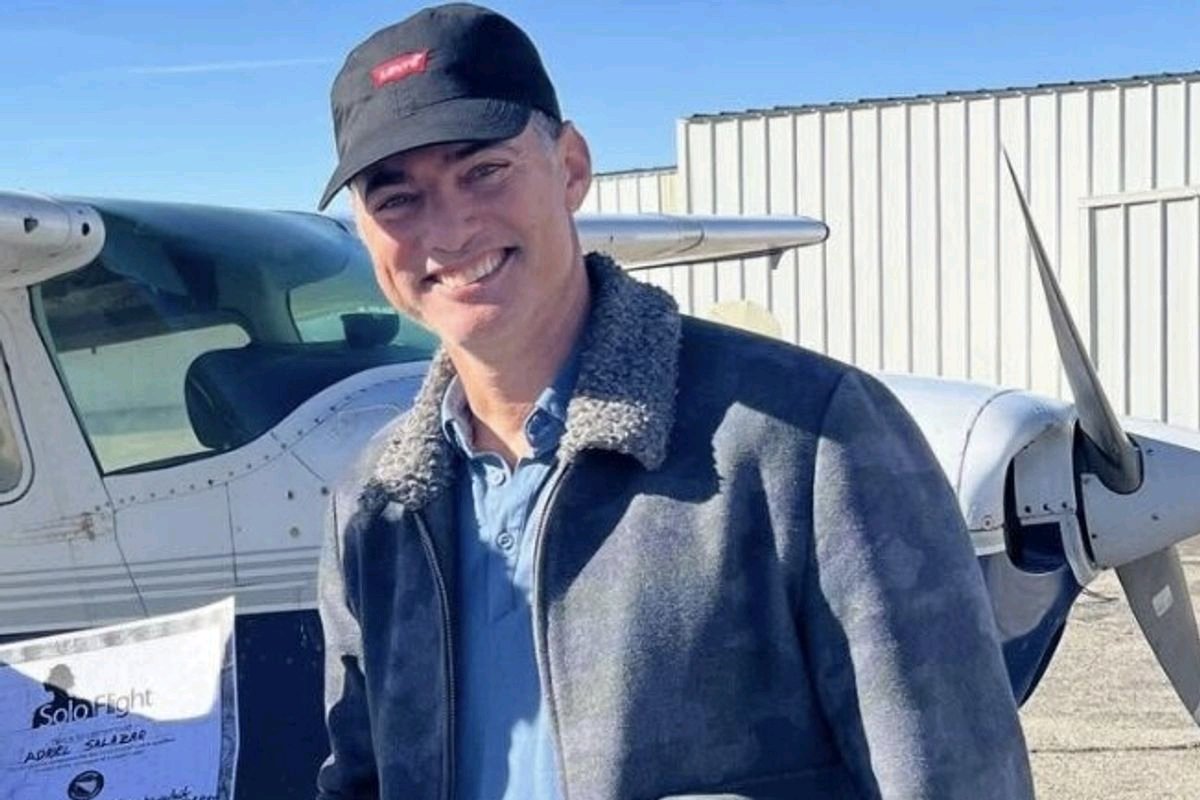
Israeli actor and flight instructor Guy Kapulnik, 46, and his passenger, Taylor Laska, 33, have died after a light aircraft crashed into a field in California, United States.
The fatal crash occurred on Thursday, September 24, 2026, near Hesperia in San Bernardino County.

Emergency responders were alerted to the crash shortly before 10am after the small aircraft went down in an open field.
Both occupants were pronounced dead at the scene.
READ ALSO:
- Flood Cuts Off Part of Agbarho-Ughelli Road, Strands Commuters in Delta
- Dangote Draws Battle Lines as Fuel Import Fight Heads Back to Court
- Tinubu Returns After 30 Days in Europe, Says ‘I’m Healthy and Ready to Work’
The aircraft, identified as a single-engine Aeronca 7AC Champion, crashed near Summit Valley Road and Telephone Canyon Road, about three miles from Hesperia Airport.
Authorities have launched an investigation into the incident, but the cause of the crash had not been established as of Wednesday.
Kapulnik was not only a pilot and flight instructor but also an actor who appeared in several Israeli and international film productions.
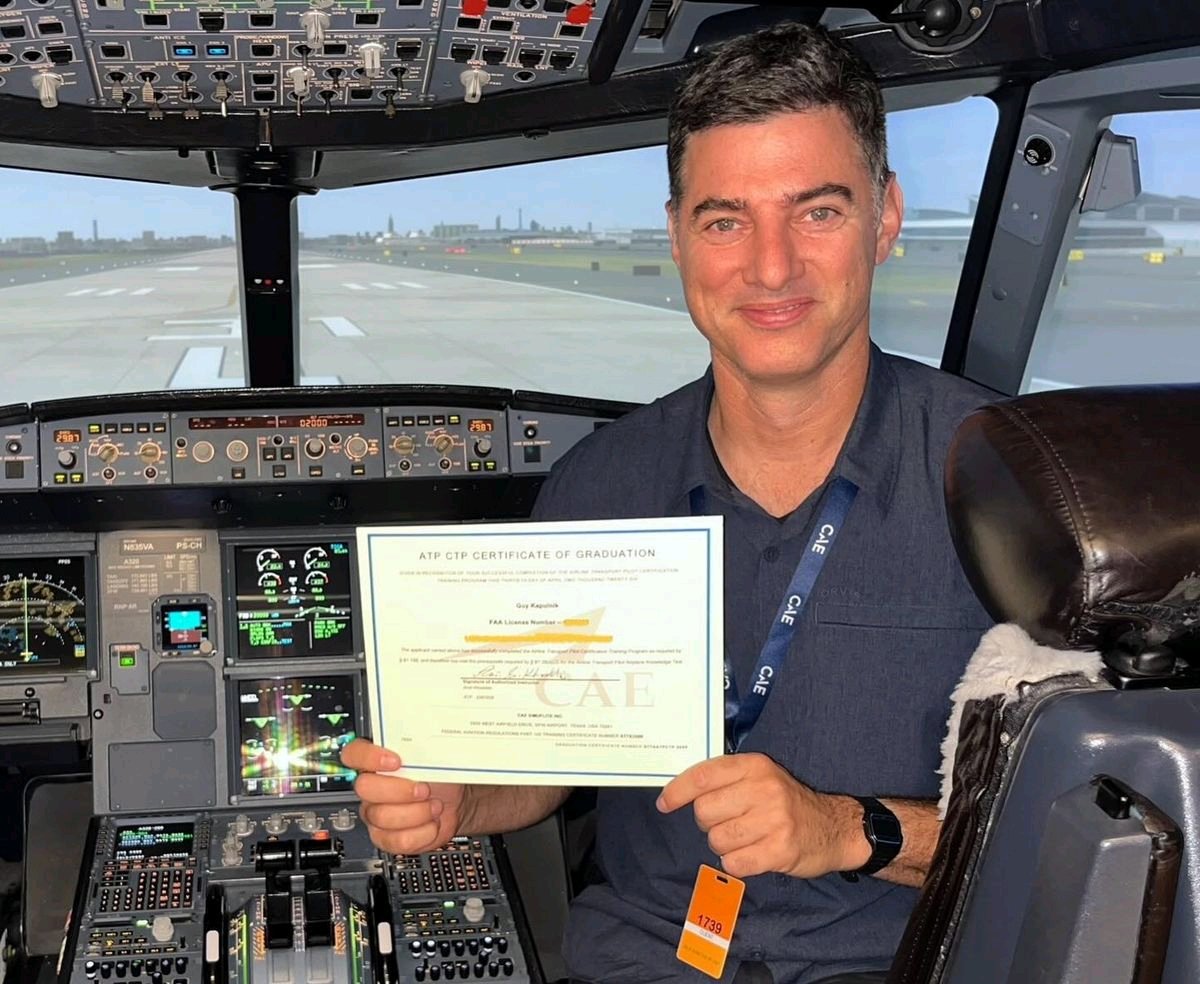
He trained at the Nissan Nativ Acting Studio in Jerusalem before building a career in the entertainment industry. His acting credits included Room 514, Salsa Tel Aviv, Watch Over Me and Lebanon.
After moving to Los Angeles, Kapulnik continued acting while pursuing his passion for aviation. He obtained his pilot’s licence and later became a certified flight instructor.
His aviation career saw him teach aspiring pilots, with friends and former students describing him as passionate about flying and committed to helping others learn.
Kapulnik had also previously served as an officer in Israel’s elite Unit 669, a specialised search-and-rescue unit.
His death has triggered an outpouring of tributes from friends, colleagues and people who knew him through aviation and acting.
Those who knew him remembered him as an adventurous and energetic man who pursued several passions throughout his life, including acting, flying and life at sea.
The passenger, Laska, was also killed in the crash.
Investigators from the relevant aviation authorities are continuing to examine the wreckage and circumstances surrounding the incident to determine what caused the aircraft to crash.
Kapulnik’s funeral is expected to take place in Israel.
Israeli Actor, Flight Instructor Among Two Killed In California Plane Crash
International
Trump Can Resume Third-Country Deportations Temporarily, US Supreme Court Rules
Trump Can Resume Third-Country Deportations Temporarily, US Supreme Court Rules
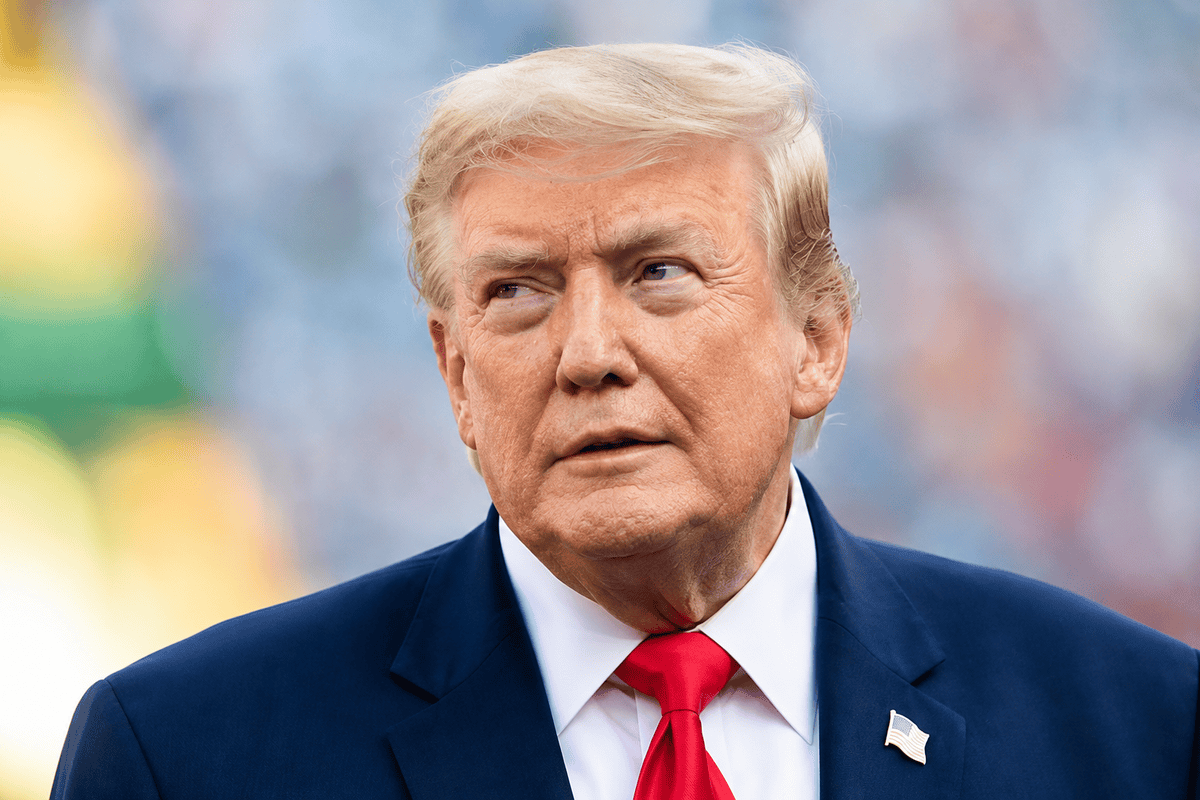
The US Supreme Court has temporarily cleared the way for President Donald Trump’s administration to resume deporting migrants to countries other than their own while the justices consider the legality of the policy.
The emergency order issued Tuesday temporarily suspends a lower-court restriction that required migrants facing third-country deportation to receive adequate notice and an opportunity to raise concerns about possible persecution or torture in the country to which they were being sent.
The Supreme Court’s action is not a final ruling on the legality of the deportation policy. Instead, it allows the Trump administration to proceed with the removals for now while the broader legal challenge moves forward.
The justices have agreed to hear arguments on the case in December, when they are expected to consider whether the policy violates migrants’ due-process rights and whether lower courts had the authority to impose restrictions on the deportations.
The dispute centres on the administration’s policy of sending migrants to third countries rather than returning them directly to their countries of citizenship. Such removals have been used where migrants cannot be returned to their home countries or where those countries refuse to accept them.
READ ALSO:
- Flood Cuts Off Part of Agbarho-Ughelli Road, Strands Commuters in Delta
- Dangote Draws Battle Lines as Fuel Import Fight Heads Back to Court
- Tinubu Returns After 30 Days in Europe, Says ‘I’m Healthy and Ready to Work’
The Trump administration has defended the policy as an important immigration enforcement tool, saying receiving countries provide assurances that deported migrants will not be persecuted or tortured.
The legal challenge intensified after a federal judge in Boston ruled that migrants should have a meaningful opportunity to raise safety concerns before being removed to a third country. A federal appeals court subsequently upheld the requirement, prompting the administration to seek emergency intervention from the Supreme Court.
Tuesday’s order temporarily puts that lower-court restriction on hold. This means third-country deportations can continue for now, but the Supreme Court has not yet determined whether the administration’s policy complies with US law.
The Supreme Court’s unsigned emergency order did not provide an explanation for the decision. Justices Sonia Sotomayor, Elena Kagan and Ketanji Brown Jackson indicated that they would have left the lower-court restriction in place.
The administration has already deported more than 25,000 migrants to third countries, according to figures presented in the legal proceedings. The destinations have included countries in Latin America and Africa.
Government lawyers have argued that lower-court restrictions have created logistical difficulties for immigration authorities, including cancelled deportation flights and delays in carrying out removal orders.
Lawyers representing migrants, however, have challenged the policy on due-process and safety grounds, arguing that people facing removal should have an opportunity to explain why they fear persecution, torture or other serious harm in the countries where they are being sent.
The case therefore remains unresolved. The Supreme Court’s latest order merely allows the deportations to proceed temporarily while the court reviews the underlying legal questions.
The December hearing will give the justices an opportunity to consider the broader dispute and determine whether the administration can continue the policy under the legal framework being challenged.
Until that review is completed and a final ruling is issued, Tuesday’s action should be understood as a temporary suspension of the lower-court restrictions, rather than a final Supreme Court approval of Trump’s third-country deportation policy.
Trump Can Resume Third-Country Deportations Temporarily, US Supreme Court Rules
-

 News3 days ago
Breaking: Tinubu Ends Extended European Vacation, Departs Paris for Nigeria
-

 metro2 days ago
$2.1m Land Suit: Court Orders Wike’s Son to Produce American Passport
-

 metro3 days ago
Hamzat Clarifies Lagos Traffic ‘Lifestyle’ Remark After Backlash
-

 metro2 days ago
Osogbo Food Bonanza: Angry Customers Loot Warehouse After Operators Vanish
-

 Sports3 days ago
Nigeria XI vs Guinea-Bissau: Awoniyi, Lookman, Adams Lead Super Eagles Attack
-

 metro3 days ago
Chimamanda Adichie: Hospital Seeks to Stop Inquest Into Son’s Death
-

 News2 days ago
Tinubu Returns After 30 Days in Europe, Says ‘I’m Healthy and Ready to Work’
-

 metro20 hours ago
Workers to Begin Nationwide Warning Strike Over Petrol Price, Wage Award