23.6% Negative: New DNA Data Shows Paternity Doubts Remain High Among Nigerian Men - Newstrends
Connect with us

metro

23.6% Negative: New DNA Data Shows Paternity Doubts Remain High Among Nigerian Men
Published

on

23.6% Negative: New DNA Data Shows Paternity Doubts Remain High Among Nigerian Men

23.6% Negative: New DNA Data Shows Paternity Doubts Remain High Among Nigerian Men

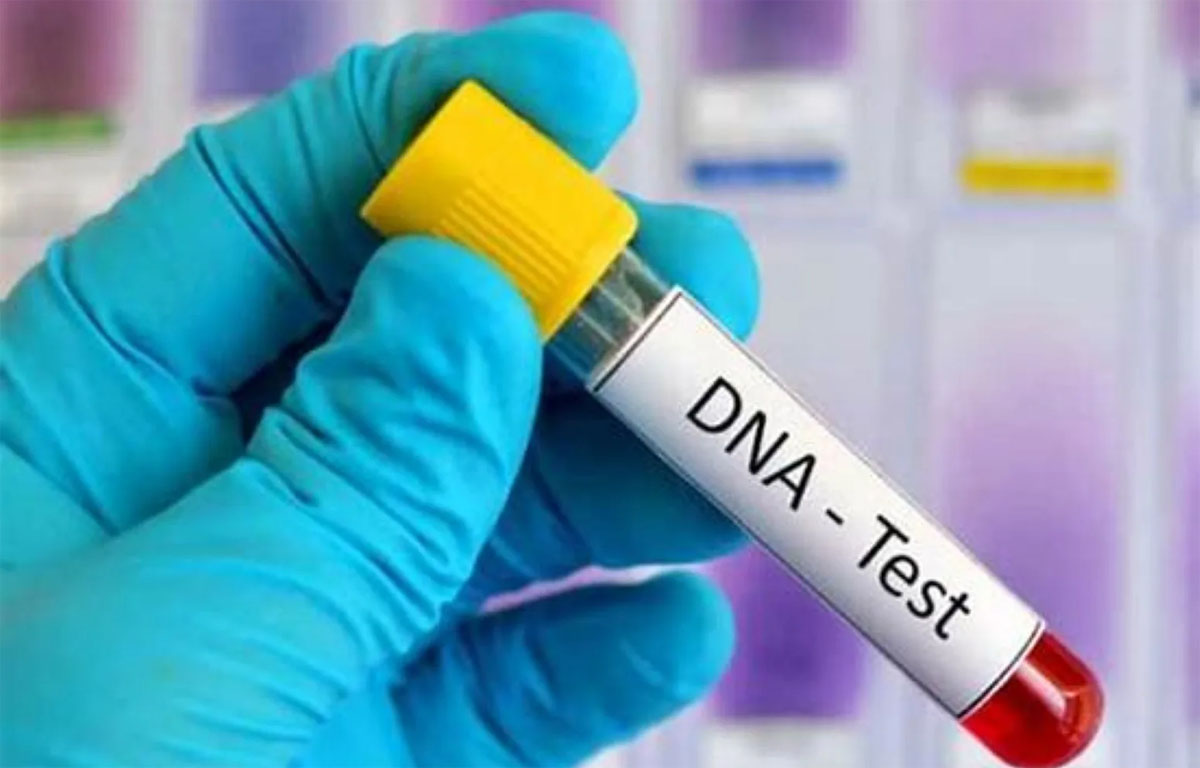
New laboratory data reveals 23.6% negative paternity results, with firstborn sons most affected—but experts warn against misinterpreting the figures as a national prevalence rate.

A new DNA testing report has revealed that nearly one in four paternity tests conducted in Nigeria returned negative results during the 2025/2026 reporting period, meaning the tested man was not the biological father. The data, released by Smart DNA Nigeria, shows that 23.6 per cent of recorded paternity test outcomes were negative, marking a gradual decline from 24 per cent in the preceding period and 26.1 per cent in 2023. The report has sparked widespread discussion about family dynamics, trust, and the growing role of scientific evidence in resolving questions of biological parentage across Nigeria. However, Smart DNA has cautioned strongly against interpreting the figures as evidence that nearly one in four Nigerian fathers are unknowingly raising children who are not biologically theirs. The company stressed that its clients are people who had already developed sufficient doubts or reasons to seek DNA testing, meaning the laboratory’s client population cannot be assumed to represent Nigerian families generally.

Smart DNA’s Operations Manager, Elizabeth Digia, said many clients sought testing because they were struggling with uncertainty over biological parentage rather than responding to external pressure. “Most of the men and women who come to us are not coming because anyone told them to. They are coming because they cannot live with the question,” Digia said, stressing that paternity cases should be handled with dignity rather than sensationalism. The data shows that men are overwhelmingly driving the demand for paternity testing. Male clients accounted for 78.6 per cent of first contacts, compared with just 15.2 per cent for women. Men aged 41 and above represented the largest age group among classified male records, accounting for 48 per cent, while those aged 31 to 40 accounted for another 35.8 per cent—meaning men above 30 years constituted 83.8 per cent of the male testing population. Experts suggest this pattern may reflect both financial stability and accumulated doubts over time. Children aged five or younger represented 59.5 per cent of tested individuals, indicating that many families prefer to resolve questions surrounding biological relationships early. However, the report noted that the data could not establish exactly when doubts about parentage first arose.

READ ALSO:

One of the report’s most striking findings involves the pattern among firstborn children. Boys accounted for 56.1 per cent of negative firstborn outcomes in the latest reporting period, down from approximately 64.4 per cent in the previous period. This finding carries particular weight in a society where firstborn sons occupy an important position in family lineage, inheritance, and succession. A negative paternity result involving a first son can have implications far beyond the relationship between a couple, potentially affecting family identity, inheritance claims, and disputes over belonging. The report noted that cultural pressures around lineage and inheritance may explain why firstborn sons are twice as likely to be tested as firstborn daughters.

Lagos State continues to dominate Nigeria’s DNA testing landscape, accounting for an overwhelming 75.1 per cent of all classified cases, rising from 69 per cent in the preceding period. Within Lagos, the Mainland accounted for 61.6 per cent of cases with specific location classifications, with Lekki recording the highest number of named locations, followed by Ajah, Ikorodu, Yaba, and Ikeja. Outside Lagos, Ogun recorded the highest testing activity, followed by Delta, Oyo, Rivers, Enugu, Edo, Abuja, Imo, and Kwara. The report noted that testing activity outside Lagos increased during the period, suggesting that awareness and demand for DNA testing are gradually spreading across other parts of the country. The ethnic distribution of clients was led by Yoruba at 52.6 per cent, followed by Igbo at 29.1 per cent, Edo at 5.8 per cent, and a combined 5.4 per cent for Delta, Ijaw, Isoko, Urhobo, and Itsekiri groups. The Hausa accounted for just 1 per cent. Smart DNA said the figures reflected its geographical and client base rather than differences in paternity behaviour among ethnic groups.

The report revealed a notable shift in the reasons Nigerians sought DNA testing. Peace of Mind tests—private, self-initiated tests undertaken outside legal, immigration, or court proceedings—increased from 83.7 per cent to 87 per cent of recorded cases. This suggests that private investigations into biological parentage now account for most of the laboratory’s recorded cases, driven primarily by personal uncertainty rather than legal or immigration requirements. Immigration-related DNA testing fell from 13.1 per cent to 9.7 per cent, while legal tests accounted for only 1.9 per cent of cases. A year earlier, the report had highlighted a surge in immigration-related DNA testing to 13.1 per cent, reflecting Nigeria’s emigration trend popularly dubbed the “Japa” phenomenon, where families sought DNA documentation for children’s foreign relocation. The current decline suggests that broader awareness and access may now be driving demand. Smart DNA’s Marketing Manager, Chukwudi Eze, offered a perspective that invites a more balanced reading of the numbers. He noted that the focus should not only be on the “one in four” negative results but also on the fact that three out of every four men tested were confirmed as the biological fathers. “The number people talk about is one in four. But the number they should be talking about is three in four,” Eze said.

The Smart DNA report has also reignited calls for legal reform. Digia lamented the absence of specific laws in Nigeria addressing paternity fraud, a legal gap that leaves many men without recourse after discovering they are not the biological fathers of children they may have raised for years. “Nigeria lacks specific paternity fraud laws, unlike South Africa, leaving men with little legal recourse after years of financial responsibility for children proven not to be theirs,” she said. Legal scholars have similarly pointed to the fragmented and outdated nature of Nigeria’s parentage framework. The Evidence Act provides a presumption of legitimacy—a child born during a valid marriage is presumed to be the husband’s child—but this presumption can be rebutted through DNA testing. However, section 37 of Nigeria’s 1999 Constitution protects citizens’ right to privacy, creating a barrier to compulsory DNA testing. The absence of a comprehensive Parentage and Paternity Act, the lack of civil remedies or criminal sanctions for fraudulent mothers, weak birth registration systems, and insufficient protection of a child’s right to identity remain major challenges. Some legal scholars have called for constitutional amendment to permit court-ordered DNA testing, criminalisation of deliberate misattribution, and robust civil remedies for victims. Digia has also advocated for reforms that include integrating DNA testing into family health and premarital counselling programmes, as well as nationwide public awareness campaigns aimed at correcting misconceptions around DNA testing.

Experts have urged men who receive negative results to avoid directing anger or blame at children, who have no control over the circumstances surrounding their birth or the decision to conduct a test. A child who suddenly becomes the focus of a dispute over biological parentage may experience rejection, confusion, and emotional distress, particularly if the result contributes to the breakdown of the parents’ relationship. The report maintained that while DNA testing could provide highly accurate answers to biological questions, it could not independently explain the social, cultural, economic, or relationship circumstances that led families to seek such tests. It urged the public to rely on evidence rather than rumours or sensational claims when discussing paternity testing and family relationships in Nigeria.

Despite the decline from 26.1 per cent in 2023 to 24 per cent in 2024/2025 and 23.6 per cent in 2025/2026, the figures show that questions surrounding paternity remain a significant reason Nigerians turn to DNA technology. The data also point to a broader change in how Nigerians resolve questions of biological identity. As testing becomes more accessible and awareness grows, the trend could become more pronounced. For Smart DNA, the latest figures represent more than laboratory statistics. They reflect an increasing number of Nigerians turning to scientific evidence when uncertainty about biological fatherhood becomes difficult to live with. And while the negative-result rate has declined for three consecutive reporting periods, its persistence above 20 per cent ensures that paternity testing will remain an emotionally charged issue for Nigerian families.

23.6% Negative: New DNA Data Shows Paternity Doubts Remain High Among Nigerian Men

Loading

metro

US Intensifies Military Training for Nigerian Troops in Bauchi
Published

on

US Intensifies Military Training for Nigerian Troops in Bauchi

US Intensifies Military Training for Nigerian Troops in Bauchi

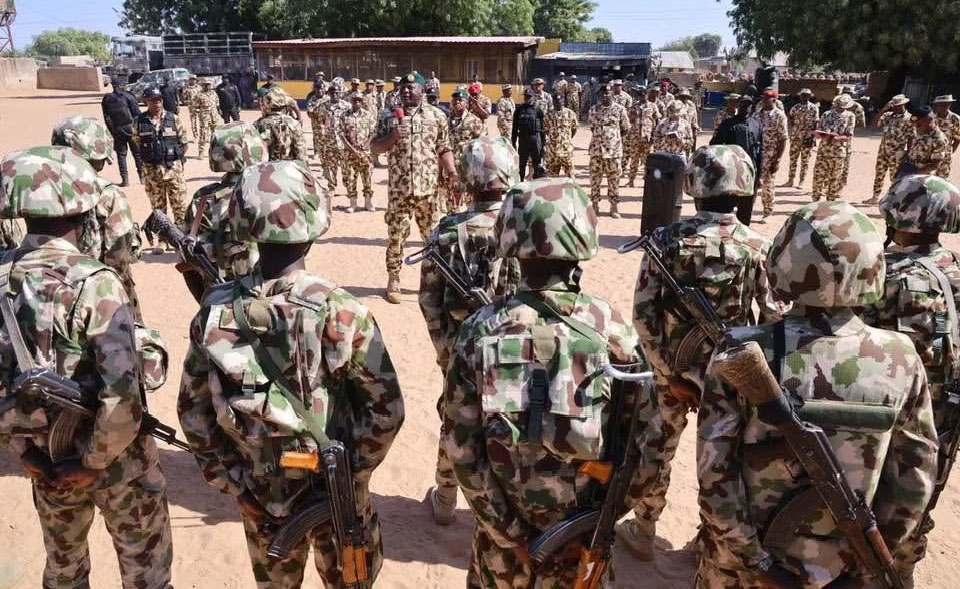
American forces have intensified military training for Nigerian troops in unmanned aircraft systems, combat casualty care, and other critical battlefield skills as part of a broader security cooperation mission aimed at strengthening Nigeria’s operational capacity against terrorism and other security threats.

The training is being conducted at Operating Location Bauchi in Bauchi State, with the United States Africa Command (AFRICOM) confirming that the exercises are designed to share military expertise, strengthen partner capacity, and build relationships between service members from both nations. According to AFRICOM, the programme covers Combat Lifesaver and Tactical Combat Casualty Care instruction, weapons familiarisation, camouflage, water treatment and testing, explosive ordnance disposal, small-unit tactics, and unmanned aircraft systems training. Captain Gabriel Feingold, a logistics officer assigned to the US Army Southern European Task Force, Africa, and operations officer at Operating Location Bauchi, explained that the training programme was developed based on areas Nigerian commanders identified as beneficial. “We bring them a list of several different training topics, and they select what they think would be most beneficial for them,” Feingold said.

READ ALSO:

Unmanned aircraft systems generated particular interest among Nigerian forces, with Sergeant Mark Murphy, an intelligence analyst assigned to the 13th Combat Sustainment Support Battalion, leading approximately 10 members of the Nigerian Air Force Special Forces Regiment through the training. The session began with about 45 minutes of classroom instruction before the Nigerian personnel received hands-on training on operating the aircraft. Murphy also taught the participants techniques for employing unmanned aircraft systems and incorporating intelligence gathered through the platforms into military operations. “They were really excited with being able to get hands-on time with it,” Murphy said, adding that the Nigerian personnel expressed interest in receiving further training on the system.

Beyond technical and operational skills, the joint exercises have created opportunities for American and Nigerian service members to build relationships and improve interoperability. Feingold noted that the interactions were particularly valuable at the lower levels of both forces. “It helps build relationships between Soldiers and the partner force, especially at the lower levels,” he said. According to AFRICOM, US and Nigerian personnel also participate in basketball and volleyball when operational commitments and weather permit, providing additional opportunities to strengthen their relationship. Sergeant Murphy observed that the training made interaction easier, saying, “Now it’s a lot easier to interact with them. They come up, they say hi to me, they talk about the training that we did.”

The Bauchi training represents a continuation of the broader US-Nigeria security partnership. In July 2026, AFRICOM disclosed that the US had withdrawn most troops deployed to Nigeria for a specific counterterrorism operation, while retaining an intelligence-sharing and security cooperation arrangement with the Nigerian military. The US has approximately 200 military personnel and several MQ-9 Reaper drones at the Bauchi airbase for training, intelligence, and support functions in the fight against jihadist militants in northern Nigeria. Additional training opportunities are being developed at Operating Location Bauchi as both sides continue identifying areas where their personnel can share expertise and train together.

US Intensifies Military Training for Nigerian Troops in Bauchi

Loading

Continue Reading

metro

Awujale: Fusengbuwa Ruling House sues Abiodun, kingmakers over stalled selection
Published

on

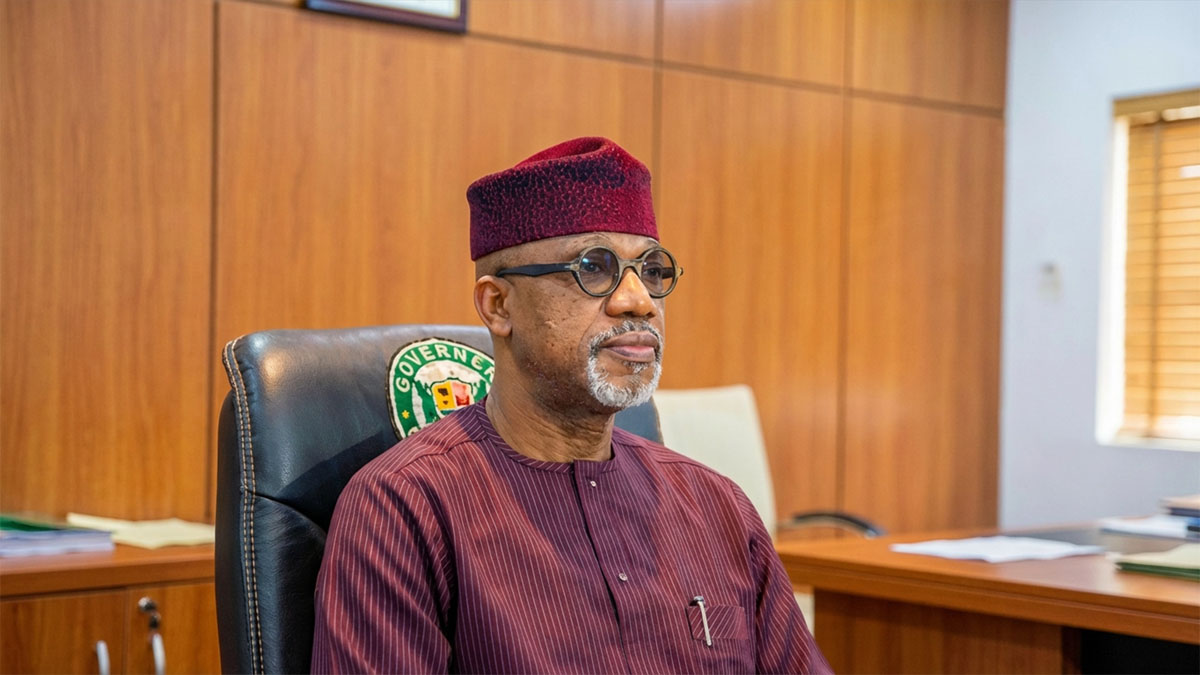
Ogun State Governor Dapo Abiodun

Awujale: Fusengbuwa Ruling House sues Abiodun, kingmakers over stalled selection

The Fusengbuwa Ruling House of Ijebu-Ode has taken Ogun State Governor Dapo Abiodun, the state government and members of the Awujale Afobaje/Kingmakers Council to court over the stalled process of selecting the next Awujale and Paramount Ruler of Ijebuland.

The suit, filed at the Ogun State High Court sitting in Ijebu-Ode, is seeking judicial orders compelling the relevant authorities to allow the succession process to resume and be completed in accordance with the Obas and Chiefs Law of Ogun State 2021.

The case, dated August 21, 2026, was filed by the Chairman of the Fusengbuwa Ruling House, Abdulateef Owoyemi; Deputy Chairman, Adedokun Ajidagba; and Vice Chairman, Prof Fassy Yusuf.

The defendants include Governor Abiodun; the Attorney-General and Commissioner for Justice, Oluwasina Ogungbade (SAN); the Ogun State Executive Council; Commissioner for Local Government and Chieftaincy Affairs, Ganiyu Hamzat; the Secretary of Ijebu-Ode Local Government; and its chairman, Dare Alebiosu.

Nine members of the Awujale Afobaje/Kingmakers Council are also named as defendants. They are Sonny Kuku, Rasheed Adesanya, Oluwaranti Osifeso, Jimi Lawal, Abimbola Okenla, Kunle Ogunade, Agboola Alausa, Adebisi Adaran and Ayotunde Odulaja.

The legal dispute stems from the prolonged process of finding a successor to the late Awujale of Ijebuland, Oba Sikiru Kayode Adetona, who died on July 13, 2025, at the age of 91 after a 65-year reign.

The Fusengbuwa Ruling House maintains that the succession process was properly initiated after Ijebu-Ode Local Government notified it on December 2, 2025, that it was its turn to produce a candidate under the rotational arrangement governing the Awujale stool.

READ ALSO:

The family subsequently held its nomination meeting on January 12, 2026, which it said was within the 14-day period prescribed by Section 16 of the Obas and Chiefs Law of Ogun State 2021.

According to the claimants, 95 princes and princesses were nominated during the exercise, with the completed list forwarded to the nine-member kingmakers’ council on January 19, 2026.

The ruling house contends that the submission of the list marked the completion of its statutory responsibility and paved the way for the kingmakers to commence the next stage of the process — selecting a preferred candidate from the nominees.

However, the claimants allege that the kingmakers were prevented from meeting less than 24 hours after receiving the nomination list.

They alleged that police officers entered the Awujale Palace after midnight on January 20, 2026, and locked the premises, thereby preventing the kingmakers from convening to continue the selection process.

The ruling house is now asking the High Court to determine whether the Ogun State Government had the legal authority to order or facilitate the alleged closure of the palace and prevent the kingmakers from carrying out their statutory responsibilities.

It also wants the court to determine whether the state government had the power under the Ogun State chieftaincy law to suspend the nomination or selection process for the Awujale stool.

The claimants further argue that the ruling house had fully complied with its legal obligation after completing its nomination exercise within the prescribed period.

They are asking the court to determine whether the kingmakers, after receiving the 95-name nomination list, became legally obligated under Sections 16(1)(e) and (f) of the law to select a candidate and forward the name to the Ogun State Executive Council.

The ruling house is also relying on Section 22 of the law in asking the court to determine whether the Executive Council is required to act on a candidate selected and presented by the kingmakers.

The claimants are seeking a declaration that they should not be compelled to reopen, repeat or recommence the nomination exercise after completing it in accordance with the prescribed procedure.

They are also asking the court to declare that the Awujale kingmakers must proceed with the selection of a candidate from the submitted list and forward the name to the appropriate government authority.

Among the reliefs sought is an order directing the kingmakers to reconvene within seven days of judgment and complete the selection process.

The ruling house is further seeking an injunction restraining the Ogun State Government and security agencies from interfering with the succession process.

It wants the court to declare the alleged locking of the Awujale Palace unlawful, ultra vires the Obas and Chiefs Law of Ogun State 2021, and contrary to the claimants’ right to fair hearing.

The legal action follows an earlier decision by the state government to suspend the succession exercise amid concerns over security, alleged bribery and financial inducement.

The Fusengbuwa Ruling House, however, disputes the basis for those concerns and says no evidence or formal petition substantiating the allegations was presented to it.

The claimants further contend that investigations by the police and the Department of State Services (DSS) did not establish wrongdoing by the ruling house.

The dispute has already affected planned engagements between the kingmakers and prospective candidates. The selection process was halted after security authorities became involved, while aspirants were subsequently directed to appear before the DSS for screening.

The case now places the respective powers and responsibilities of the ruling house, Awujale kingmakers and Ogun State Government before the court.

Counsel for the claimants, led by Olusegun Otayemi, argued in the originating summons that the state’s chieftaincy law establishes a sequential process involving nomination, selection and approval, which should be followed once the process has been validly commenced.

The ruling house is therefore asking the court to clarify whether any government authority has the power to interrupt the statutory process after the relevant stages have been completed.

The outcome of the case could determine the future of the current Awujale succession process, including whether the 95-name nomination list remains valid and whether the kingmakers can proceed with the selection of a successor to Oba Adetona.

It could also provide judicial clarification on how the provisions of the Ogun State Obas and Chiefs Law 2021 should be applied in the appointment of the next Awujale.

The case adds a significant legal dimension to the prolonged search for a successor to one of Nigeria’s most prominent traditional rulers, as stakeholders in Ijebuland await further developments from the court.

Awujale: Fusengbuwa Ruling House sues Abiodun, kingmakers over stalled selection

Loading

Continue Reading

metro

“He Must Be Mad” — Oyedepo Slams Sheikh Jingir Over Claim Nigeria Is an Islamic Nation
Published

on

"He Must Be Mad" — Oyedepo Slams Sheikh Jingir Over Claim Nigeria Is an Islamic Nation
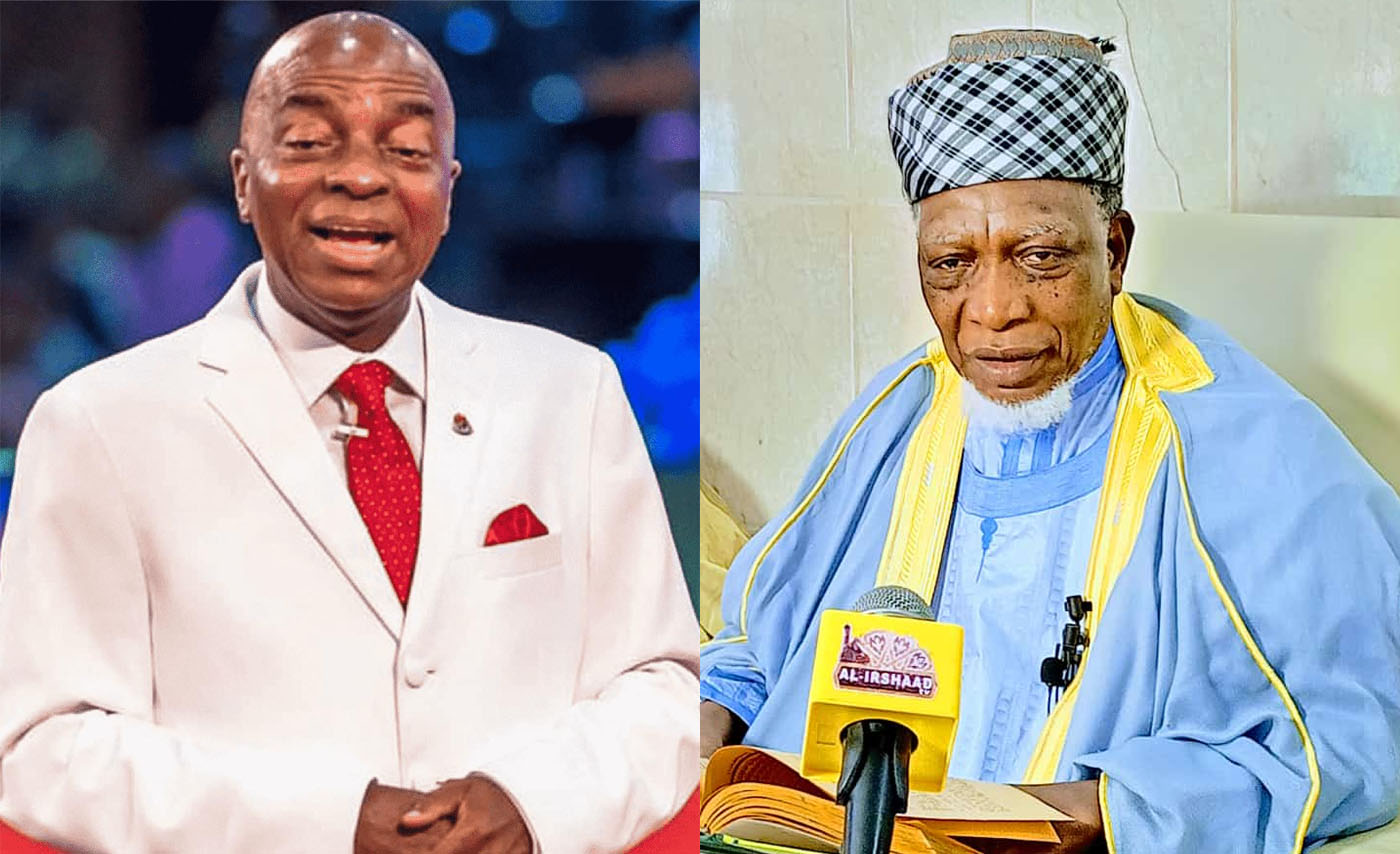
Bishop David Oyedepo and Sheikh Sani Yahaya Jingir

“He Must Be Mad” — Oyedepo Slams Sheikh Jingir Over Claim Nigeria Is an Islamic Nation

Living Faith Church founder rejects Islamic nation assertion as Islamic cleric denies hate speech allegations and maintains support for Muslim-Muslim ticket

Bishop David Oyedepo, founder of Living Faith Church Worldwide, has strongly rejected suggestions that Nigeria is an Islamic nation, describing anyone who holds such a view as “mad.” The cleric made the comment during his Sunday service, weighing in on the ongoing debate over Nigeria’s religious identity that has intensified ahead of the 2027 general election. “Watch Redemption Camp, watch Salvation Ministries, watch Dunamis watch various churches in Nigeria and somebody will stand and say Nigeria is an Islamic nation. Is he mad? Yes, he must be mad,” Oyedepo said. To back his position, the bishop cited the scale and visibility of major Christian churches across the country, arguing that their large congregations and nationwide activities undercut any claim that Nigeria is an Islamic state. Oyedepo further stirred attention with a cryptic prediction, declaring that “there shall be strange happenings between now and the next 12 months in Nigeria,” without elaborating on what this would entail.

Oyedepo’s comments came in response to remarks attributed to Sheikh Sani Yahaya Jingir, Chairman of Jama’atu Izalatil Bid’a Wa’ikamatis Sunnah (JIBWIS). Jingir had spoken at a mass wedding organised by the Kano State Government for 1,500 couples, where he publicly declared his support for President Bola Tinubu’s Muslim-Muslim presidential ticket ahead of the 2027 presidential race. At the event, Jingir reportedly argued that Muslims constitute the majority in Nigeria and maintained that the country belongs to Muslims. “My candidate is Bola Ahmad Bola Tinubu. The President selected a Muslim as his vice. I am one of those who called people to support the Muslim-Muslim ticket,” Jingir was quoted as saying. He further stated: “I know some non-Muslims don’t like the word Muslim-Muslim. As a Muslim who preaches Islam, if I support Muslim-Muslim, what is my offence? What have I done wrong? I don’t stop anyone who believes or supports another candidate from doing the same.”

READ ALSO:

Amid the growing backlash, Jingir has denied claims that he harbours hatred towards Christians, describing such allegations as “mere lies” and insisting that his recent comments were misunderstood. The Islamic cleric made the clarification while speaking at a one-day national symposium in Jos themed “Enhanced Political Participation and Social Justice as a Panacea for Unity and Development in Nigeria.” “A lot of people are saying I dislike Christians. I didn’t say I dislike Christians. It is a lie. My remarks were misinterpreted. Leadership in Islam is not about cheating people of different faiths. Islam teaches us to share love with people of different faiths or sects,” Jingir said. He explained that Islam promotes love, fairness and justice, regardless of religious affiliation, adding that Muslims would be held accountable for mistreating non-Muslims. The cleric further called on President Bola Ahmed Tinubu, state governors and other political leaders to govern with fairness and justice, regardless of religious or political differences. “I call on President Bola Ahmed Tinubu not to cheat non-Muslims and Muslims alike. I also call on you not to cheat those who are not in the same political party with you. You should lead with justice and fairness to all Nigerians,” he said.

Jingir also defended Nigerians’ right to support candidates of their choice during elections, saying, “Everyone has the right to vote for whoever he feels is okay with him to vote for during an election.” He cited his support for a Christian governorship candidate in Plateau State as evidence that his political choices were not motivated by religious hatred. “Everyone has the right to vote for whoever he feels is okay with him to vote for during an election. I have once voted for a non-Muslim as governor in Plateau State, and I voted for him against another Christian contestant, whom I felt would not do justice to all manner of people, including Muslims,” he said.

Oyedepo’s public rebuke adds another prominent religious voice to an increasingly sensitive debate over religion, political representation and national identity as political activities ahead of the 2027 elections intensify. Critics have accused Jingir of using his religious position to influence political choices and deepen religious divisions ahead of the 2027 elections. The timing of the remarks makes them particularly sensitive as Nigeria approaches the 2027 general election, with political actors already positioning themselves for what is expected to be a highly competitive electoral contest.

“He Must Be Mad” — Oyedepo Slams Sheikh Jingir Over Claim Nigeria Is an Islamic Nation

Loading

Continue Reading

Trending