

Auto
Nigeria on the path to zero-emission road transport system
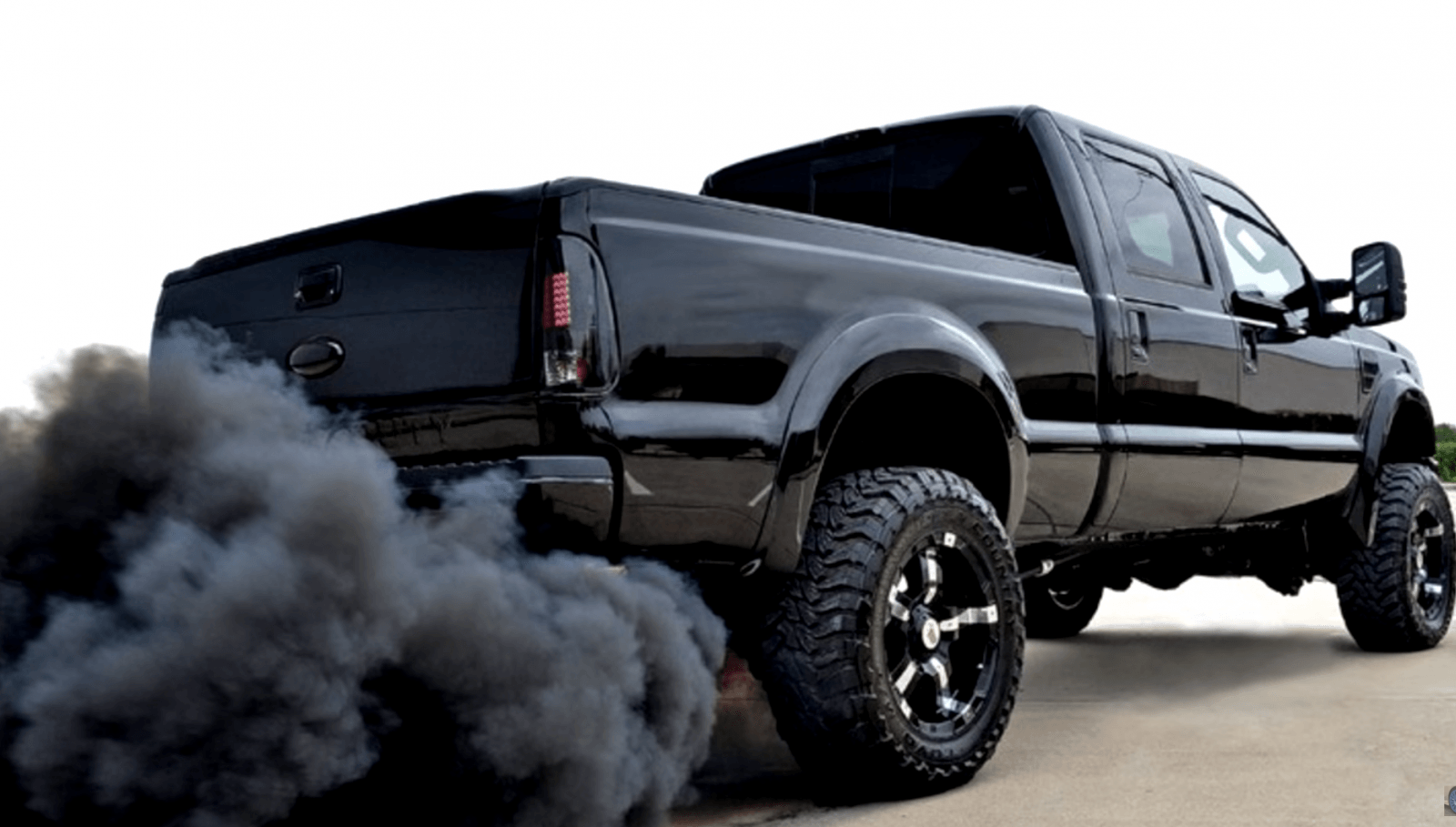
Nigeria must have been sitting on a keg of gun powder with its rising air pollution emanating from gas flaring and vehicle emissions.
A new survey by some university researchers has established a link between poor academics in childhood and air pollution exposure.
Indeed, the Columbia Center for Children’s Environmental Health research result published in the journal of Science Daily says children exposed to elevated levels of air pollution are more likely to have poor inhibitory control during late childhood and poor academic skills in early adolescence, including spelling, reading comprehension and math skills.
The World Health Organisation has also released a report indicating that air pollution is responsible for about seven million annual deaths globally.
Nine out of 10 persons are said to currently breathe air exceeding the WHO guideline limit for pollutants.
Road transport is also said to be a major contributor to greenhouse gases and air pollution, just as flaring of gas, emanating from oil production, is rife with its huge economic losses and incalculable health hazards to Nigerians.
The carbon dioxide, methane and soot released as a result of gas flaring are said to cause health issues such as cancer and lung damage, deformities in children, asthma, bronchitis, pneumonia, neurological and reproductive problems as well as environmental challenges which stall agricultural productivity and aquatic and wildlife lives.
And this has led to social unrest in the Niger Delta oil producing area, escalating to other places as agitators have engaged in violent protests including bombing of oil facilities, kidnapping of oil workers and killings. They complain that their natural environment, farmlands, fishing ponds and other forms of life have been damaged or distorted.
The Nigerian National Petroleum Corporation recently confirmed the huge loss resulting from gas flaring, saying the country lost an about N53.26bn in the first two months of this year as a total of 33.04 billion standard cubic feet of natural gas was flared by international oil companies and local players.
The World Bank reports through the Global Gas Flaring Tracker that Nigeria and six other nations (Russia, Iraq, Iran, the United States, Algeria and Venezuela) have been top gas-flarers of the world for nine years.
Even as they produce 40 per cent of the world’s oil each year, it says these countries account for about two-thirds (65 per cent) of global gas flaring.
Although the Federal Government has imposed a fine on oil companies involved in gas flaring and fixed 2025 as the date to end the flaring practice after several changes of past deadlines, experts are of the view the gas flares could be a huge revenue worth billions of dollars if well harnessed.
Experts including John Walke, director of the Clean Air Project, say air pollution not only contributes to climate change but is also exacerbated by it.
“Most air pollution comes from energy use and production…Burning fossil fuels releases gases and chemicals into the air,” says Walke.

Nigeria is said to have some of the worst air pollution in the world, with clouds of choking soot hanging over gridlocked cities, leading to a rise in serious health conditions and damaged vehicles.
Global Alliance on Heath and Pollution in a report ranks Nigeria third in the world for pollution-related deaths and sixth in premature deaths caused by air pollution.
An international resource watchdog group, Stakeholder Democracy Network, in a report, estimates that 114,000 people die prematurely from air pollution each year in Nigeria.
Many people in Lagos, Nigeria’s commercial capital, are said to be breathing polluted air leading to avoidable deaths. Indeed, a recent World Bank report estimated that air pollution caused over 11,200 premature deaths in Lagos, with children accounting for about 60 per cent.
The health cost of air pollution was put at $2.1 billion, which was about 1.3 per cent of Lagos State’s gross domestic product GDP.
This is not surprising considering about 13 million of mostly old cars imported from Europe and Japan on the nation’s roads, and hundreds of thousands of inefficient generators used by households and businesses for electricity emitting thick smokes.
Researchers have found fuel imported from Europe and pumped into filling stations in Nigeria as extremely toxic. They found that such fuel extremely exceeded the EU pollution limits.
“Our research suggests that Nigeria is having dirty fuel dumped on it that cannot be sold to other countries with higher and better implemented standards. The situation is so bad that the average diesels sampled are of even lower quality that that produced by artisanal refining camps in the creeks of the Niger delta,” said Florence Kayemba, SDN programme manager.
The SDN report reinforces allegations made in a 2016 Public Eye investigation and a Dutch government report in 2018, that European refineries and commodity brokers were blending crude oil with benzene and other carcinogenic chemicals to create fuels hundreds of times over European pollution limits for the weakly-regulated African market.
This was said to be causing significant particulate pollution, damage to vehicles, and adverse health effect s for the residents.
The WHO in 2016 adjudged Onitsha as the world’s most polluted city, recording a concentration of PM10s – soot particles – at 594 micrograms per cubic metre; compared with the WHO safe limit of 66.
For instance, the air quality in Port Harcourt, Aba, Onitsha and Kaduna has reached crisis levels of pollution in recent years, with rising cases of asthma, lung, heart and respiratory diseases.
The SDN report says the levels of particulate matter in Port Harcourt and Lagos are 20 per cent worse than Delhi in India, the most polluted capital city in the world, where emergency levels of photochemical smogs are common.
“High levels of pollution and pre-existing respiratory and other health conditions may increase the risk that COVID-19 poses to the health of the population,” said Matthew Halstead of Noctis, which conducted the laboratory research.
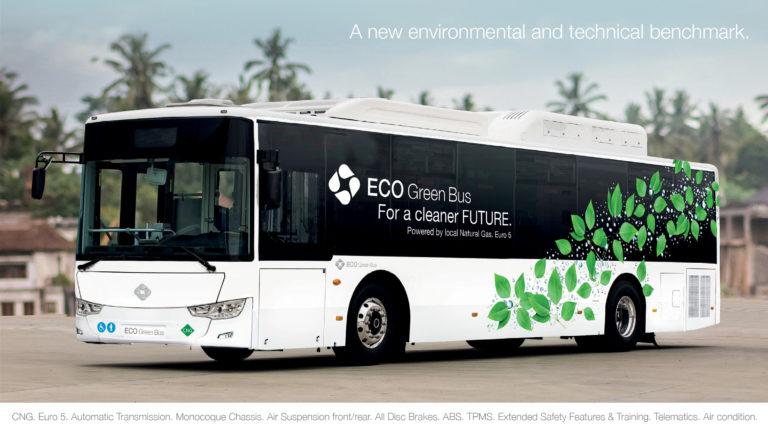
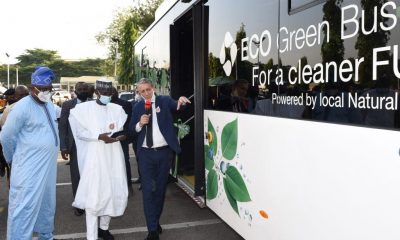
The introduction of ECO Bus transport system, powered by flare gas recovered compressed natural gas (CNG), to Nigeria is therefore considered a big relief and blessing as it will not only solve the problem of gas flaring and but provide a better economic alternative to the meagre flaring fines as well as address the air pollution headache.
This must have also informed the decision of the FG to encourage the conversion of petrol engine vehicles to gas engine automobiles.
It recently unveiled plans to deliver one million vehicles converted from petrol to gas-powered by the end of the year.
The Director-General, National Automotive Design and Development Council, Jelani Aliyu, says the Federal Government is excited about the gas-powered vehicles and will do everything possible to ensure the success of the project.
Aliyu, who spoke at the recent opening ceremony of the 15th edition of the annual Lagos Motor Fair organised by the BKG Exhibitions, also said the NADDC was working with major players in the auto industry in Nigeria to fast-track the transition.
He said, “We are excited about the gas-powered vehicles and I’m particularly delighted to see some of them on display at this auto fair.
“We encourage other players to look at the auto gas project as the government is determined to make it work with plan to deliver one million vehicles converted from petrol to gas-powered by the end of the year.”
The ECO Bus project is said to aim at developing world’s cleanest mass transportation systems, tailored towards the respective environment of each city with a focus on flare gas based CNG operation.
It plans to reduce carbon footprints and other GHG per passenger by 80 per cent, overall costs of public transport per passenger by 30 per cent, and accident rate by 80 per cent.
It is considered to have high operational excellence, safety and comfort as well as transparency, creating a reliable business model.






Auto
FRSC hands over Safeline Bank to ROBOPAY, targets digital financial transformation
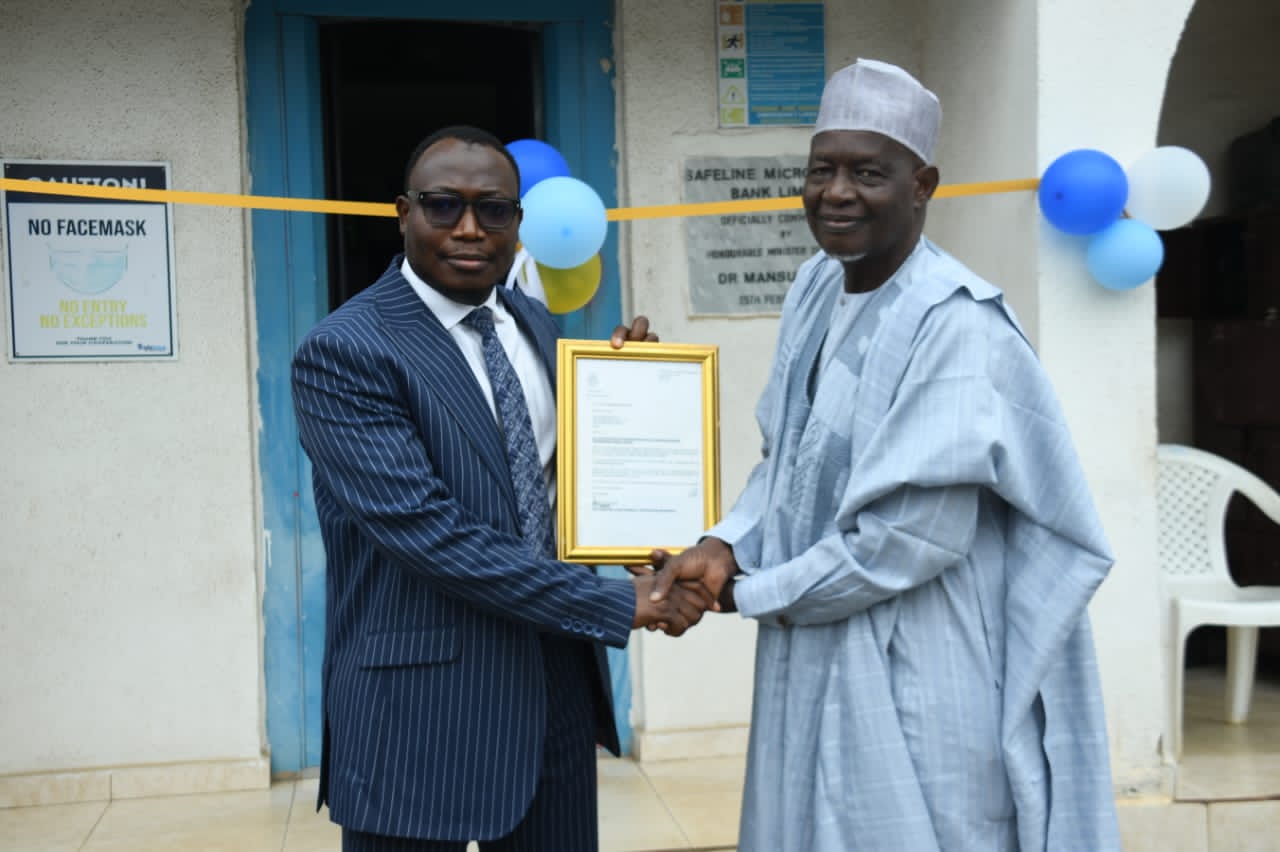
FRSC hands over Safeline Bank to ROBOPAY, targets digital financial transformation
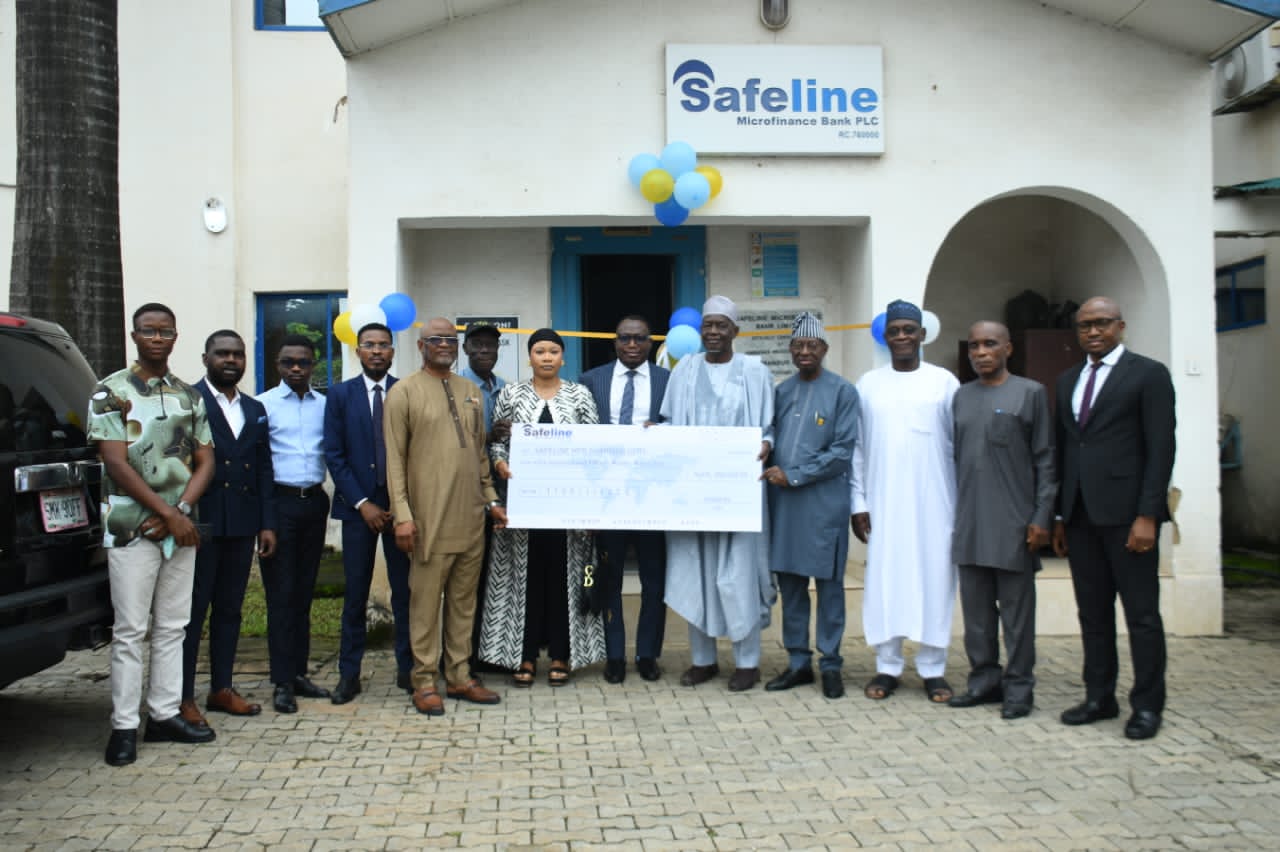
The Federal Road Safety Corps (FRSC) has handed over ownership of Safeline Microfinance Bank to ROBOPAY NIG. LTD., paving the way for a major recapitalisation and technology-driven transformation of the financial institution.
The divestment, which took place on Monday, October 5, 2026, at the bank’s premises in Abuja, is expected to reposition Safeline Microfinance Bank for stronger competitiveness, improved service delivery and sustainable growth in Nigeria’s rapidly evolving financial services sector.
The development, according to a statement by the Corps Public Education Officer, Osondu Ohaeri, is part of the strategic efforts under the leadership of the Corps Marshal, Shehu Mohammed, to reposition the institution for greater efficiency and competitiveness.
Safeline Microfinance Bank was established by the FRSC to provide financial services and opportunities to members of the Corps and other stakeholders.
Speaking at the handover ceremony, Chairman of the Board of Safeline Microfinance Bank, Ibrahim Babagana, a Deputy Corps Marshal (Rtd.), said the decision to divest the bank followed a careful assessment of the prevailing regulatory environment and emerging government policies affecting the microfinance banking industry.
Babagana said sustaining the bank under the changing financial landscape would require substantial additional capital, greater investment in technology and enhanced human capital.
He explained that the Board therefore resolved to transfer ownership to an investor with the capacity, resources and commitment to make the required investments and place the bank on a sustainable growth trajectory.
The former FRSC chief expressed confidence in ROBOPAY, saying the company had demonstrated the competence, commitment and vision required to build on the foundation established by the Corps and take Safeline Microfinance Bank to a new level.
He identified strengthening the bank’s capital base, deploying modern technology and investing in human resources as critical priorities for its survival and competitiveness in the increasingly digital financial services market.
Responding on behalf of ROBOPAY NIG. LTD, Malam Aliyu Abiodun thanked the Board and management of Safeline Microfinance Bank for the confidence reposed in the company, describing the acquisition as a significant milestone and an opportunity to unlock the institution’s considerable potential.
Abiodun said the bank already had valuable assets, structures and an institutional foundation which the new owners would build upon through strategic investments in financial technology, capital and human resources.
He said ROBOPAY would deploy FinTech solutions to modernise the bank’s operations, improve customer experience, expand its service offerings and strengthen its competitive position within Nigeria’s financial services industry.
According to him, the new ownership would retain and leverage the institutional foundation created by the FRSC while introducing innovative technology-driven solutions capable of opening new growth opportunities for the bank.
The transaction thus signals more than a change in ownership, as it ushers Safeline Microfinance Bank into a new phase anchored on recapitalisation, digital innovation and professionalised financial services.
Both parties expressed commitment to ensuring a seamless transition, with the ultimate objective of building a stronger, more competitive and sustainable institution capable of delivering greater value to its customers and stakeholders.
Auto
TCAN Honours Dangote Cement Transport for Safety, Logistics Excellence
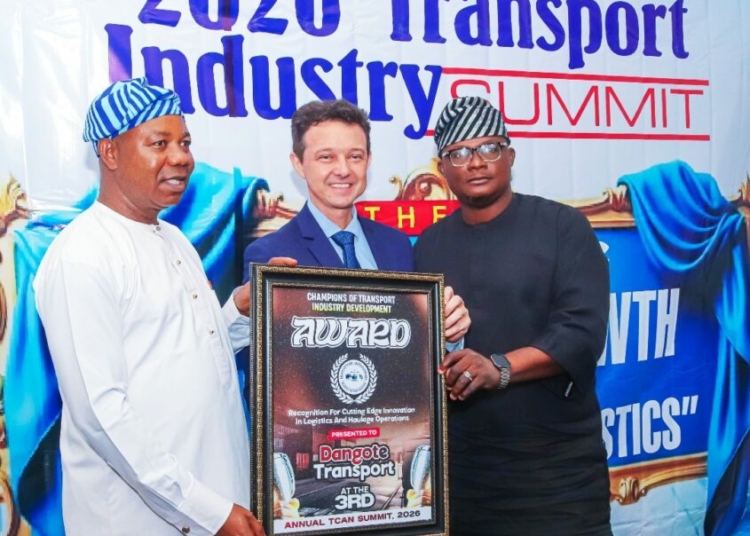
TCAN Honours Dangote Cement Transport for Safety, Logistics Excellence
Dangote Cement Transport has been recognised for its contributions to the development of Nigeria’s transport industry, winning the “Champion of Transport Industry Development Award” presented by the Transport Correspondents Association of Nigeria (TCAN).
The award, presented at the third Transport Summit organised by TCAN in Lagos, recognised the company’s efforts in improving road transport operations, strengthening safety standards and deploying more efficient logistics solutions to support industrial activities across the country.
Receiving the award on behalf of the company’s management, the Head of Dangote Cement Transport, Mr Murilo Silva, said the recognition was a reflection of the commitment of the company’s transport workforce, drivers, safety professionals, engineers and operational partners.
Silva said Dangote Cement viewed transportation as a critical component of industrialisation and economic development, stressing that the efficient movement of goods was essential to sustaining production, trade and national economic activities.
“We are deeply honoured to receive this award from the Transport Correspondents Association of Nigeria. This recognition reflects Dangote Cement Transport’s unwavering commitment to developing a safe, efficient and sustainable transport system that supports economic growth and national development,” he said.
READ ALSO:
- Osogbo Food Bonanza Turns Nightmare as Discount Vendor Vanishes With Customers’ Millions
- Obi’s Debt Storm Deepens as Okonkwo Says: ‘I Was Misled’
- Lagos Club Robbery: Police Arrest Suspect After N5m Bounty
According to him, the company would continue to invest in technology, safety initiatives and operational improvements as part of efforts to raise standards across its transport operations.
“At Dangote Cement, we recognise that transportation is much more than moving goods from one point to another. It is a vital link in the nation’s economic ecosystem,” Silva said.
He added that the company would continue to deploy innovative solutions, strengthen its safety culture and collaborate with relevant stakeholders to improve road transport operations.
Silva dedicated the award to the thousands of drivers, transport professionals, engineers, safety personnel and logistics workers whose daily efforts support the movement of Dangote Cement products across its extensive distribution network.
“This award belongs to our drivers, our safety professionals and every member of our transport team who work tirelessly every day to ensure that our operations are safe, reliable and efficient,” he said.
The recognition underscores Dangote Cement Transport’s investments in fleet management, driver training, road safety programmes and technology-driven logistics solutions aimed at improving operational efficiency and reducing risks associated with road transportation.
The award was presented against the backdrop of growing calls for stronger collaboration between government and private-sector operators to tackle infrastructure and logistics challenges confronting the country’s transport industry.
The TCAN summit also featured discussions on port modernisation, rail integration and technology deployment, with stakeholders emphasising the need for coordinated action to improve freight movement, reduce logistics costs and accelerate innovation across Nigeria’s transport sector.
TCAN Honours Dangote Cement Transport for Safety, Logistics Excellence
Auto
Carloha Opens Wider Access to Chery Q as Smart EV Enters Nigeria’s Mainstream

Carloha Opens Wider Access to Chery Q as Smart EV Enters Nigeria’s Mainstream
Carloha Nigeria is taking the Chery Q to motorists across the country, widening access to an electric vehicle designed to combine affordability, practicality, intelligent technology and zero-emission motoring.
The move by the official franchise holder, assembler and authorised distributor of Chery vehicles in Nigeria is expected to give more Nigerian motorists an opportunity to experience the Chinese automaker’s latest generation of smart electric mobility.
Built around Chery’s global “Quest for Joy” philosophy, the Chery Q blends distinctive styling with intelligent technology, advanced safety features and efficient electric performance, while drawing inspiration from the heritage of the iconic Chery QQ family.
Carloha said the model is targeted at a broad spectrum of motorists, including young professionals, growing families, first-time electric vehicle buyers and urban commuters looking for a cleaner, smarter and more connected driving experience.
The Chery Q also brings a strong design proposition to the compact EV segment. Its award-winning exterior, recognised with both the Red Dot Design Award and iF Design Award, features expressive geometric styling, rounded LED lighting and a contemporary two-tone interior.
Despite its compact dimensions, the vehicle has been engineered to maximise interior space, achieving an 85 per cent space-efficiency ratio.
Measuring 4,195mm in length with a 2,700mm wheelbase, the Chery Q offers substantial passenger room while retaining the manoeuvrability expected of an urban vehicle.
Its practicality is further enhanced by luggage capacity that expands from 375 litres to 1,450 litres, alongside a 70-litre front trunk and 38 smart storage compartments.
According to the company, the combination makes the Chery Q suitable for a wide range of everyday applications, from city commuting and shopping to family outings and weekend journeys.
Beyond its styling and practicality, the electric vehicle has been developed around a rear-engine, rear-wheel-drive architecture, supported by independent suspension and balanced weight distribution to enhance handling and stability.
The model also features Electric Power Steering and a One-Box Brake-by-Wire system designed to provide smoother braking response, improved driving precision and greater control, while supporting regenerative energy recovery.
A key attraction for potential EV buyers is the Chery Q’s claimed driving range. The vehicle offers an estimated 420-kilometre NEDC range, giving users greater flexibility for daily commuting and longer journeys between charging sessions.
Charging downtime is also reduced through its fast-charging capability, with the battery able to move from 30 per cent to 80 per cent in about 16.5 minutes, according to the manufacturer.
With the nationwide rollout, Carloha is positioning the Chery Q as part of the growing transition towards cleaner and smarter mobility in Nigeria, as interest in electric vehicles continues to expand.
The company’s wider strategy of assembling and distributing Chery vehicles locally also places the Q within its broader effort to make the brand’s technology and vehicle range more accessible to Nigerian motorists.
-

 metro2 days ago
Tragedy Strikes FMC: Medical Director Loses Two Daughters—A Doctor and a Pharmacist—Within 48 Hours
-
 metro2 days ago
Transporters Urge IGP Disu to Arrest Illegal Highway Tax Collectors
-

 Politics2 days ago
2027: Soludo Govt Accuses Peter Obi Of Plot To Destroy APGA
-

 metro2 days ago
Army, DSS, Amotekun Kill ISWAP Commander Planning Attacks in Southern Nigeria
-
 metro2 days ago
Kidnappers torture abducted corps members, slash ransom to N100m
-

 News2 days ago
BREAKING: Many Feared Dead as Helicopter Crashes in Ondo Community
-
 metro1 day ago
Ondo Air Tragedy: Soldiers, Families Among 32 Killed In NAF Crash
-

 metro2 days ago
Grand Chief Imam of Oyoland Urges Rabitah 1964 to Regulate ‘Yorubaland’ Islamic Titles