

metro
DRAMA: Couple who snatched mad woman’s baby meet waterloo -Suspects admit guilt, trade blame

Wife: My husband didn’t tell me he was impotent, he starved me of sex for 16 years
Husband: My wife didn’t tell me she has damaged womb, can’t bear children
It was a dramatic moment at Agwa Tashi community, Obi Local Government Area, Nasarawa State on Monday as a couple, Mr Thomas Agba and his wife Mary, were arrested by a combination of some vigilante group members and a few elders of the community for stealing a new born baby belonging to a mad woman.
The couple, who before now were resident in Akwanga Local Government Area of Nasarawa State, had been married for 16 years without an issue. Their relationship had begun when Thomas, an indigene of Kokona LGA, met Mary, who hails from Wamba Local Government Area, and proposed marriage to her. They agreed to get married after a courtship that lasted about six months.
It was gathered that the couple agreed not to have sex before they would get married. Mary, however kept secret the fact that she had lost her womb during an abortion she had as a spinster while Thomas also kept secret the fact that he had been impotent from birth.
Speaking in an exclusive interview with our correspondent, Mary said: “Before I got married 16 years ago, my husband and I never made love.
“He was the first to suggest that we should not have sex until he paid my dowry. He always told me that we should wait until we got married. Unfortunately, I never knew that he was avoiding sex because he was impotent.
“Since we got married, he has not been doing his job as a husband and that always made me sad.
“Each time I confronted him with sex issues, he would either say he was not in the mood or ask that we should adjourn the matter till the next day.
“For 16 years, he kept giving me one excuse or the other, so we never had sex.
“Barely a year after our marriage, I discovered that he was an impotent man. There is no complete man on earth who will spend one year with a woman on the same bed without sex, more so your own wife.
“Many times I tried to seduce him by giving him the best of romantic kisses and wearing sexy clothes at night just to entice him, but his manhood would not stand at all.
“To make matters worse, he has never asked me for sex since we got married.
“I was depressed by the situation, so almost every night, I cried and cried because I didn’t know what to do.
“Right inside me, I also know that I don’t have a womb to conceive a baby even if my husband was a man. But the truth is that I love him so much and I did not want to commit adultery or cheat on him.”
Mary added that since her womb got damaged, it was clear to her that she would have a problem with child bearing when she got married.
She said: “Whenever a new couple gets married and later gives birth, I feel happy for them. But when I realise that I will never have the same experience, tears roll down my cheeks. The joy of every family is to bear children.
“Sometime late last year, I woke up early in the morning and summoned courage to tell my husband the truth. I told him to his face that he is an impotent man and there is no way he can impregnate me for us to bear children.
“He admitted it, telling me that he grew up to discover that he was impotent. I also seized the chance to tell him that I also cannot bear a child because my womb is damaged.
“I told him that even if he was man enough, it would be impossible for me to take in. I them suggested that there were two options open to us since we were both tired of people asking why pregnancy had not come.
“I suggested that we should adopt a baby and move to another location to give the impression that it is our biological baby.
“On a second thought, I remembered that there was a mad pregnant woman around our area, so I decided that we should monitor her, draw her close to us and take her baby as soon as she was delivered of it instead of going through the long process of adopting a child in Abuja.
“We both agreed to the idea and I started drawing the mad woman close to me by providing for her needs and somehow she became used to me.
“She hardly spoke, but due to my closeness to her because of the food I was giving her, she managed to tell me how she was impregnated by a man whose location she could not really say.
“She also said that she was expected to give birth in July, although she ended up delivering in September.
“She went into labour in the night on September 7. Around that time, she was always in our compound, because I was providing for her necessities and our house was not far from the main road.
“We immediately rushed her to the hospital and after about five hours of labour, she was delivered of a baby boy. We spent two days in the hospital to normalise her.
“While we were in the hospital, I sold the idea of snatching the baby from the mad woman to my husband and change our base from Akwanga to Lafia.
“When she was discharged from the hospital, with my husband’s car, we left the hospital in Akwanga, drove straight to Lafia and headed straight to Awe LGA where we arranged for a friend who is a medical personel to give her some injection to calm down her breast milk.
“We dumped her somewhere in Awe LG and returned to Agwa Tashi in Obi LG with the baby.
“The mad woman’s deficiency, which we took advantage of, is that she hardly talks. She prefers to talk alone than to talk to people.
“I had already bought baby food and feeding bottle and prepared hot water in case he would start crying on the road.
“So we abandoned the mad woman in Awe and relocated to Obi to settle there temporarily. Our intention was to move back to Lafia after one year and settle there permanently.
“My husband is a businessman.”
Our correspondent gathered that while many people around Akwanga had noticed the sudden disappearance of the mad woman, none felt any need to probe into her case.
Mary said: “One week after, the new born baby was not feeling so strong, so we took him to Dalhatu Araf Specialist Hospital for treatment.
“As we were trying to locate the children ward, we did not know that a former neighbour of ours in Akwanga was involved in an accident and was admitted at the hospital.
“His wife saw us with a baby and was visibly shocked. From that moment, she knew that we must have snatched the mad woman’s baby, more so because she knew that the mad woman was close to us and her whereabouts had become a source of concern.
“She quickly returned home and informed a few other people who later told some members of the vigilante group about our new location.”
Mary, who pleaded with the team not to thank her over to law enforcement agents, said she could not bear any child because her womb was damaged by a quack doctor during an abortion she had as secondary school pupil, adding that she did what she did out of frustration.
She said: “When I met Thomas about16 years ago, he loved me so much and I equally loved him. So, when he proposed marriage to me, I quickly obliged and could not tell the truth because I didn’t want to lose him.”
Also speaking, Thomas, who also pleaded that security agents should not be involved in the matter, admitted that he was impotent, adding that desperation to have a child led him to accept his wife’s proposal.
He said that they both have themselves to blame for not being sincere about their conditions from the outset.
He said: “We both lied to each other and it landed us in this mess. Please and please, you people should have mercy, pity our condition and look at our case. It was desperation to have a child that led us into this evil plan.”
The couple has since led some members of the vigilante group to Awe in search of the mad woman.
The matter was yet to be reported to the police at press time as the vigilante men insist on finding the mad woman before involving the police in it.
Linus OOTA, The Nation











metro
Petrol Price Hits N1,450/Litre as Middle East Crisis Pushes Oil Above $108

Petrol Price Hits N1,450/Litre as Middle East Crisis Pushes Oil Above $108
The petrol price in Nigeria has climbed to as high as ₦1,450 per litre in Abuja and about ₦1,400 in parts of Lagos, following a fresh increase in the price of refined petroleum products amid a sharp rise in international crude oil prices.
The latest increase comes after the Dangote Petroleum Refinery raised its petrol gantry price by ₦85, from ₦1,265 to ₦1,350 per litre, effective September 12, 2026.
The adjustment, representing a 6.7 per cent increase, has added fresh pressure to the downstream petroleum market as international crude prices surge amid escalating Middle East tensions and concerns over disruptions to global oil supplies.
The latest Dangote adjustment is the refinery’s fourth increase in about three weeks. Its petrol gantry price has risen by roughly 15.9 per cent since August 21, when the price stood at ₦1,165 per litre.
The impact has already become visible at filling stations, although pump prices vary from one location and marketer to another depending on supply costs, transportation expenses, existing stock and pricing decisions.
In Abuja, some filling stations have raised their prices to ₦1,450 per litre, while others are selling between ₦1,395 and ₦1,400. The increases have also been recorded in Lagos and Ibadan, with several outlets reviewing their prices upwards.
The latest retail movements are coming against a dramatic surge in the international oil market. Brent crude, the global benchmark, has risen above $107 per barrel, with prices reaching about $108.33 amid renewed concerns over global supply.
The oil price rally has been driven by escalating military tensions in the Middle East, attacks on energy infrastructure and growing concerns over the movement of crude through major international shipping routes.
READ ALSO:
- Police Arrest Herbal Drink Producer as Ondo Death Toll Hits 29
- Troops Arrest Six Kidnap Suspects in Adamawa as Boko Haram, ISWAP Fighter Surrenders in Borno
- Labour Party Disowns Arabambi Over Peter Obi Records Lawsuits
A drone attack also forced Saudi Arabia to temporarily shut its East-West Pipeline, a key route that allows the country to transport crude to the Red Sea without passing through the Strait of Hormuz. The disruption has heightened concerns about the availability of global oil supplies.
The Strait of Hormuz remains another major source of concern for the global energy market because of its importance to international crude and petroleum-product shipments. Any prolonged disruption to the waterway could further tighten supplies and push oil prices higher.
The current oil shock is already having consequences beyond crude prices. Refiners and fuel suppliers around the world are facing higher replacement costs, while disruptions to shipping and refining infrastructure are increasing the cost of moving petroleum products.
That situation has direct implications for Nigeria despite the country’s growing domestic refining capacity.
The Dangote Refinery, which has become a major supplier of refined petroleum products in Nigeria, has itself adjusted its prices in response to changing international market conditions.
The refinery also increased its coastal price from ₦1,669,543 to ₦1,783,530 per metric tonne, an increase of ₦113,987 or 6.8 per cent.
The latest increase highlights the extent to which global crude prices continue to influence Nigeria’s domestic petroleum market even as local refining expands.
The refinery has also been increasing its crude purchases from Nigeria. It has secured at least 16 million barrels of Nigerian crude for October, equivalent to about 520,000 barrels per day, representing a substantial share of its roughly 700,000-barrel-per-day operating capacity.
The growing availability of locally refined petrol has reduced Nigeria’s dependence on imported finished products, but it does not completely insulate consumers from international oil-price movements. Crude is traded in a global market, while refinery economics, product replacement costs, shipping and other downstream expenses remain sensitive to international conditions.
The latest development is particularly significant because Nigeria’s petrol market is deregulated, meaning retail prices can respond to changes in crude prices, exchange rates, supply costs and competition among marketers.
The current increase could therefore put additional pressure on transport operators, logistics companies, manufacturers and households that depend heavily on petrol.
For consumers, higher pump prices can translate into increased transportation and distribution costs, while businesses that use petrol-powered generators and vehicles may also face higher operating expenses.
The effect could extend to food and other consumer goods if higher fuel and logistics costs are passed through the supply chain.
The renewed pressure comes at a time when the global refining industry is also facing significant disruptions.
David Bird, chief executive of the Dangote Refinery, recently warned that global fuel shortages could continue beyond the current Iran-related conflict because of damage to Middle Eastern refining infrastructure, high refinery utilisation rates and efforts by countries to rebuild depleted fuel inventories.
According to the refinery, the combination of the Middle East conflict and the Russia-Ukraine war has placed additional pressure on global refining capacity and fuel supplies.
Dangote has said it expects to expand its Nigerian refinery capacity further, with plans aimed at increasing its ability to supply refined products to Nigeria and international markets.
For Nigeria, greater domestic refining capacity could strengthen supply security over the long term, but the immediate impact of higher global crude prices is being felt through the cost of petroleum products.
The latest ₦1,450 per litre petrol price in parts of Abuja therefore reflects a combination of domestic pricing adjustments and a rapidly changing international oil market.
There is no uniform national pump price, and motorists in different states and even within the same city may continue to encounter different prices.
However, the movement of petrol towards ₦1,400–₦1,450 per litre at several filling stations signals renewed pressure on Nigerian consumers.
With Brent crude above $108 per barrel, continuing uncertainty around the Strait of Hormuz and other major oil routes, and concerns about global refining capacity, further volatility in petrol prices remains possible.
Unless international oil prices retreat significantly or supply disruptions ease, Nigerian motorists and businesses may continue to face pressure from elevated fuel prices in the coming days.
Petrol Price Hits N1,450/Litre as Middle East Crisis Pushes Oil Above $108
metro
Police Arrest Herbal Drink Producer as Ondo Death Toll Hits 29

Police Arrest Herbal Drink Producer as Ondo Death Toll Hits 29
The Ondo State Police Command has arrested Oloruntoba Babatunde, popularly known as “Meko”, over the alleged production of herbal drinks suspected to be linked to the deaths of 29 people in Odigbo Local Government Area of Ondo State.
The arrest followed reports of sudden and unexplained deaths among residents, particularly young people, in several communities after the consumption of suspected contaminated alcoholic drinks and herbal concoctions.
The Ondo State Government has confirmed 29 deaths and 60 suspected cases connected with the incident, prompting authorities to intensify measures against the production, sale and distribution of unverified alcoholic drinks and potentially dangerous herbal mixtures.
Police spokesman, DSP Abayomi Jimoh, said Babatunde was arrested after investigators traced suspected harmful substances to him. He is currently assisting the police as investigations continue into the source, production and distribution of the drinks.
The police said substances suspected to contain methanol were recovered and submitted for forensic examination. The laboratory analysis is expected to establish the exact composition of the substances and determine whether there is a direct link between them and the reported deaths.
The command stressed that the suspected presence of methanol has not yet been established as the definitive cause of all the deaths, as forensic examinations and post-mortem procedures are still ongoing.
The bodies of the deceased are undergoing medical and forensic procedures, with the police saying the outcome of the post-mortem examinations should provide additional evidence concerning the actual causes of death.
READ ALSO:
- Troops Arrest Six Kidnap Suspects in Adamawa as Boko Haram, ISWAP Fighter Surrenders in Borno
- Labour Party Disowns Arabambi Over Peter Obi Records Lawsuits
- ‘Completely False’ — Moreno Denies Using AI to Prepare Games
In a related enforcement operation, the police arrested 14 other suspects over alleged violations of the ban on the sale and consumption of dangerous alcoholic drinks and concoctions in the affected communities.
The suspects comprise people allegedly involved in selling or consuming the prohibited products. They have been transferred to the State Criminal Investigation Department (SCID) in Akure for further investigation.
The enforcement operation followed directives from the Commissioner of Police, CP Felix Ohagwu, targeting alcoholic drinks and concoctions considered dangerous or potentially life-threatening.
According to the police, investigators are examining every relevant lead, including the source, production, composition, distribution and consumption of the suspected drinks.
The development has also triggered intensified medical intervention in the affected communities. Health officials have been attending to people who consumed the suspected drinks, with affected residents taken to health facilities for assessment, testing and treatment.
The state government earlier moved to halt the production and distribution of unverified alcoholic beverages following the rapid increase in deaths.
The state Health Commissioner, Banji Awolowo-Ajaka, confirmed the 29 deaths and 60 suspected cases, with the affected communities spread across the Odigbo area. Earlier reports had put the death toll at 24 and later 27 before the government confirmed the figure of 29.
The police said the immediate situation had been brought under control following coordinated security, medical and investigative measures, but the investigation into the deaths remains active.
The authorities are expected to rely on laboratory results, post-mortem findings, recovered substances, statements from survivors and other evidence to establish exactly what caused the deaths and whether any individuals should face criminal charges.
The incident has renewed concerns over the dangers associated with unregulated alcoholic drinks and herbal concoctions, especially products whose ingredients and production processes are unknown or have not been subjected to safety checks.
Residents in the affected communities have been urged to avoid consuming unverified alcoholic or herbal products and to promptly seek medical attention if they develop symptoms after consuming suspicious substances.
The arrest of Babatunde and the 14 other suspects does not amount to a finding of guilt. They remain suspects while the police investigation and forensic examinations continue.
The authorities are yet to make a final determination on the precise cause of the deaths or establish through forensic evidence whether methanol contamination was responsible for the entire outbreak.
The outcome of the ongoing investigation is expected to determine whether the suspected producer and other persons arrested will face prosecution and what additional action may be taken against those involved in the manufacture, distribution or sale of potentially harmful drinks.
Police Arrest Herbal Drink Producer as Ondo Death Toll Hits 29
metro
Troops Arrest Six Kidnap Suspects in Adamawa as Boko Haram, ISWAP Fighter Surrenders in Borno
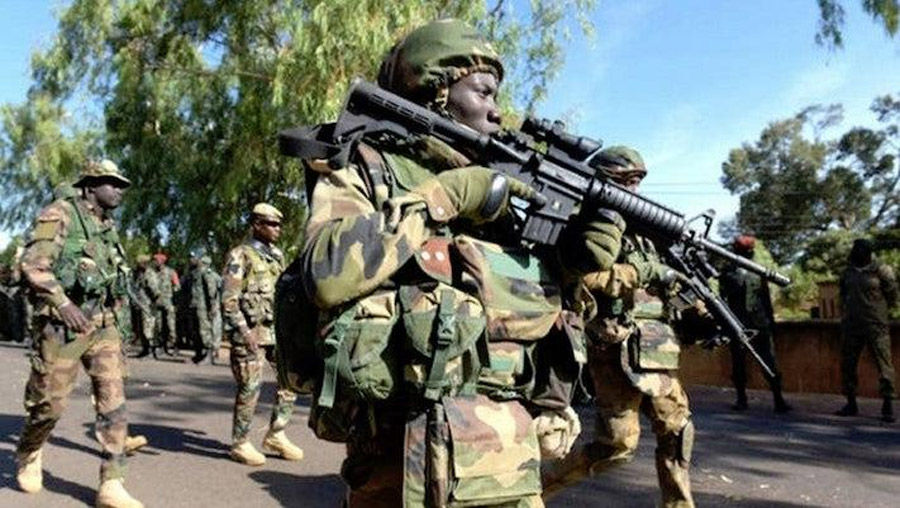
Troops Arrest Six Kidnap Suspects in Adamawa as Boko Haram, ISWAP Fighter Surrenders in Borno
Troops of Operation Hadin Kai have arrested six suspected members of a kidnapping syndicate in Adamawa State, while a suspected Boko Haram/ISWAP fighter surrendered to the military in Borno State with an AK-47 rifle, ammunition and an improvised explosive device.
The latest operations were carried out in Song Local Government Area of Adamawa and Kaga Local Government Area of Borno, as troops continued operations against terrorism, kidnapping and other criminal activities across the North-East.
The Acting Military Information Officer of the North-East Joint Task Force, Operation Hadin Kai, Captain Mohammed Goni, disclosed the developments in a statement issued on Monday.
In Adamawa, troops of Sector 4, Operation Hadin Kai, working alongside local hunters, acted on credible intelligence concerning the activities of a suspected kidnapping syndicate operating around Soktu Hill in Song Local Government Area.
The troops raided the suspected hideout, arresting three suspects and recovering a Dane gun.
The military said further investigation and subsequent covert operations resulted in the arrest of three additional suspects, bringing the total number of suspected kidnappers arrested to six.
Preliminary investigations indicated that the syndicate had been operating across the Soktu, Dumne and Maigero areas of Song LGA.
The suspects reportedly admitted involvement in the abduction of several victims for ransom, as well as other violent crimes in the area.
READ ALSO:
- Labour Party Disowns Arabambi Over Peter Obi Records Lawsuits
- ‘Completely False’ — Moreno Denies Using AI to Prepare Games
- “Not as Corrupt as the World Thinks”: Reno Omokri Defends Nigeria’s Image and Safety
The six suspects remain in military custody for further investigation and appropriate legal action, according to the military.
In a separate development in Borno, troops of the 29 Task Force Brigade, operating under Sector 2 of Operation Hadin Kai and working with Forest Guards, received a surrendered Boko Haram/ISWAP terrorist at Borgozo in Benisheikh, Kaga Local Government Area.
The surrender took place on September 13, with preliminary investigations indicating that the fighter had escaped from a terrorist enclave and decided to abandon the insurgency.
The military said the surrendered fighter was found in possession of one AK-47 rifle, 14 rounds of 7.62mm Special ammunition, four magazines, one improvised explosive device (IED), one magazine pouch and a bicycle.
The suspect has been taken into military custody and is undergoing further investigation and profiling in line with established procedures.
The military described the latest developments as part of its sustained pressure on terrorists, kidnappers and other criminal elements operating across the North-East.
Operation Hadin Kai has continued to combine intelligence-led operations, raids and collaboration with local security networks in efforts to disrupt terrorist and criminal activities and restrict the movement of armed groups.
The Theatre Command said it remained committed to sustaining offensive operations, denying terrorists and other criminal groups freedom of action, improving security for law-abiding residents and creating conditions for economic and social activities to thrive.
The latest arrests and surrender come amid continued military operations against Boko Haram and ISWAP in Borno and surrounding areas, where security forces have intensified efforts to weaken terrorist networks and encourage fighters willing to abandon the insurgency to surrender.
The military has continued to subject surrendered fighters to investigation and profiling to establish their identities, activities and possible links to terrorist networks before determining the appropriate next steps.
The authorities also continue to urge residents to provide credible information on the activities and movements of suspected terrorists, kidnappers and other criminal groups to security agencies.
Troops Arrest Six Kidnap Suspects in Adamawa as Boko Haram, ISWAP Fighter Surrenders in Borno
-

 metro3 days ago
Woman disguises as Muslim woman in Niqab to steal in Ado-Ekiti market, video sparks outrage
-

 metro2 days ago
Ondo Herbal Drink Tragedy: Survivor Vows Never to Drink Again as Death Toll Tops 30
-

 metro2 days ago
Sokoto Cleric Stabbed Twice in Neck After Juma’at Prayer, Attacker Killed
-

 Africa3 days ago
Murder of Nigerian Bishop in South Africa Sparks Outcry Over Unsolved Killings
-

 Business2 days ago
Dangote: ₦525 Refinery Shares Could Rise to ₦10,000
-

 metro2 days ago
MURIC fires back at Peter Obi: Forget Sallah ceremony, free Nigerian Muslims
-

 Community3 days ago
Kaduna Traditional Rulers Set for 100% Pay Rise as Zazzau Emir Backs Proposal
-

 News3 days ago
AI on the Roads: LASTMA Turns to China to Fix Lagos Traffic