

Business
CBN links #EndSARS campaigners to terrorism
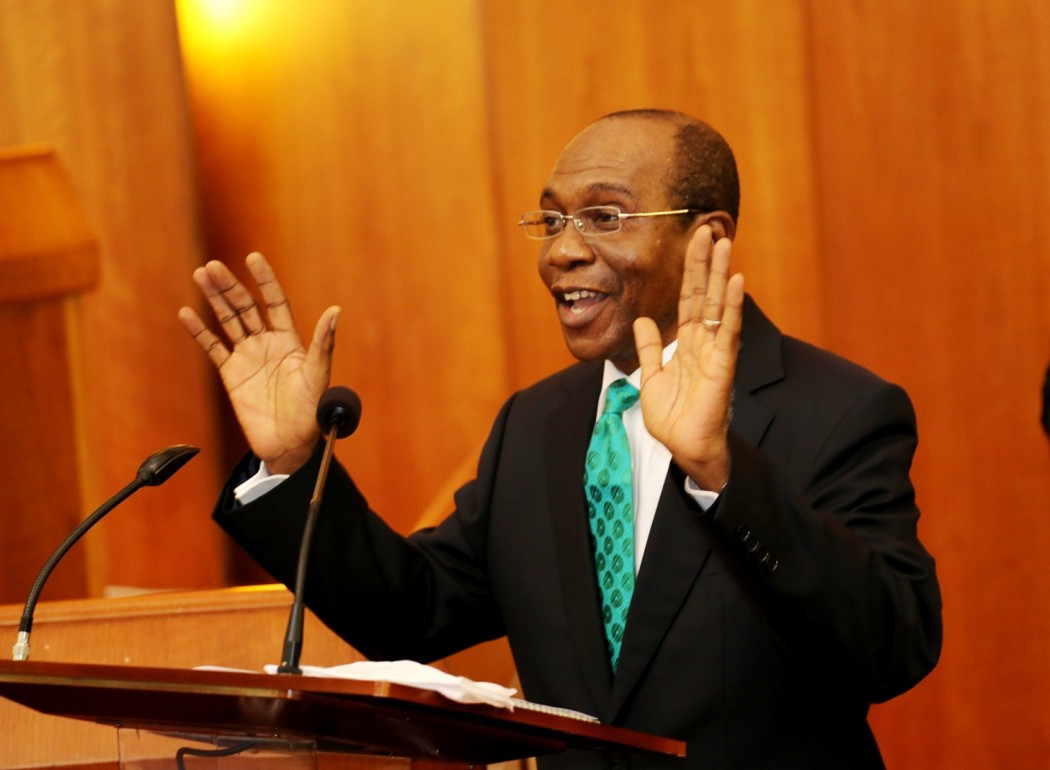
The Central Bank of Nigeria got a Federal High Court in Abuja to freeze the accounts of 20 #EndSARS campaigners after saying money in their accounts could be linked to terrorist activities.
This is contained in a written address in support of a motion ex parte filed by the CBN.
The CBN last month secured an ex parte order to freeze the accounts.
In the case with suit number FHC/ABJ/CS/1384/2020, filed before Justice A. R. Mohammed, the CBN, however, made no mention of the fact that the 20 accounts were owned by persons involved in the #EndSARS protests, but told the court that the funds might have emanated from terrorist activities.
The written address read in part, “My lord, the nature of the transactions undertaken through the defendants’ accounts are of suspected terrorism financing in contravention of Section 13(1)(a)and(b) of the Terrorism (Prevention)(Amendment) Act, 2013 and Regulation 31(2)(a)and (3)(b) of the Central Bank of Nigeria Anti-Money Laundering/Combating the Financing of Terrorism Regulations, 2013.”
In a supporting affidavit deposed to by one Aondowase Jacob on behalf of the CBN, it was stated that the Head of the Economic Intelligence Unit of the Governor’s Department, CBN, Joseph Omayuku, had conducted an investigation on the accounts of the defendants and other individuals and entities held with certain banks in Nigeria.
According to the affidavit, the investigation showed that the owners of the accounts may have been involved in terrorist activities.
It added, “There is a grave allegation that the defendants are involved in suspected terrorism financing via their bank accounts in contravention of the provisions of extant laws and regulations. The aforesaid transactions undertaken by the defendants, using their bank accounts, can cause significant economic and security harm to the public and the Federal Republic of Nigeria if left unchecked.
“The applicant (CBN governor) is thus desirous to have the court empower him to direct the freezing of the 20 accounts listed on the annexure to this application and all other bank accounts held by the defendants.
“A freezing order of this honourable court in respect of the defendants’ accounts would also enable the investigation of the activities of the defendants to a logical conclusion with a view to reporting same to the Nigerian Financial Intelligence Unit.”
The apex bank said unless the order was granted, it would not be able to ensure that the money remained intact, while investigations were ongoing.
The 20 accounts frozen by the CBN are domiciled in Access Bank, Guaranty Trust Bank, Fidelity Bank, United Bank for Africa and Zenith Bank.
The accounts were said to have been flagged after they received money with the narration #EndSARS.
One of the frozen accounts, marked 0056412470 and domiciled in Access Bank, belongs to Bolatito Olorunrinu Oduala, an #EndSARS campaigner, who was appointed into the Lagos State judicial panel set up by Governor Babajide Sanwo-Olu.
Another frozen account marked 0033974485 and domiciled in Access Bank belongs to Bassey Israel, the medical team coordinator for the #EndSARS protests in Port Harcourt.
Similarly, an account marked 0054676984 domiciled in Access Bank belongs to Gatefield Nigeria Limited, which paid freelance journalists to cover the protests.
Justice Mohammed froze the accounts for 180 days subject to renewal, but said anyone who was not satisfied with the ruling was free to challenge it.
Freezing protesters’ accounts illegal – Yesufu
A leading member of the #EndSARS protesters, Aisha Yesufu, described the freezing of the #EndSARS protesters’ accounts as illegal, noting that the government “is behaving like a terrorist.”
She questioned the freezing of the accounts ahead of the court injunction ordering the banks to block the accounts.
Yesufu stated, “The question is, why did they freeze the accounts before obtaining a court injunction? Why the illegality? Our judiciary should know that it is an independent arm of government and there is separation of power.
“The government should be ashamed of itself. The United Arab Emirates just convicted some Nigerians, who were accused of terrorism, and we are hearing that the government would appeal on their behalf. That is where the problem is.”
The activist accused the Federal Government of pampering insurgents, while bearing down on peaceful and harmless protesters.
She added, “#EndSARS campaigners are protesters and they protested the way the Constitution allows, so all these are shenanigans. They had better focus on the terrorists.
“Bandits are laying down their arms and they are taking them to Government Houses, while Boko Haram members are being given preferential treatment, but Nigerians, who were protesting, were being killed by the government. The government is the one behaving like a terrorist right now.”
-The Punch




Business
Nigerians Pay N44 Extra Per Litre as Retailers Defy Falling Depot Prices – Full Report

Auto
Abuja Roars to Life as Jetour X50 Headlines Three-Day Motoring Experience
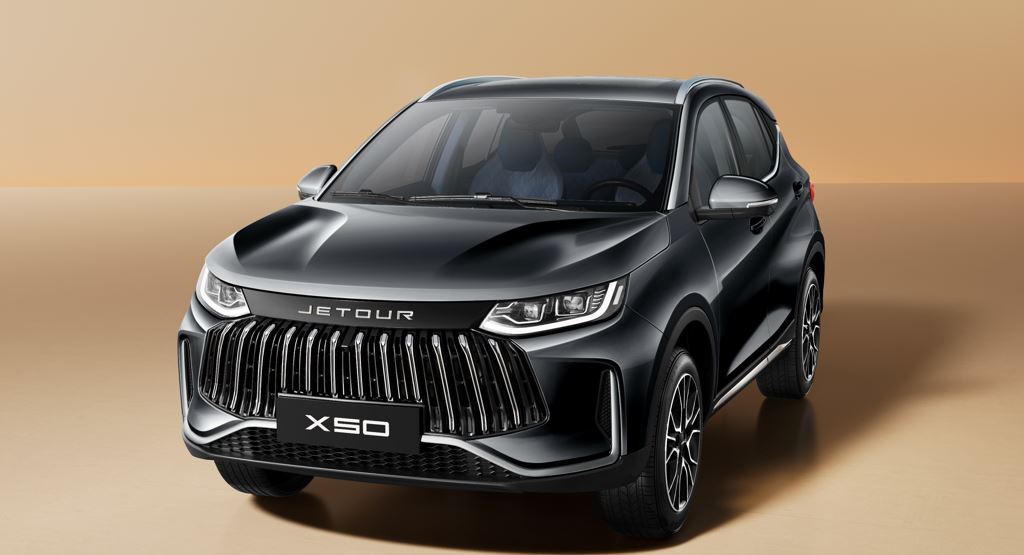
Abuja Roars to Life as Jetour X50 Headlines Three-Day Motoring Experience
Abuja is gearing up for a major motoring spectacle as Jetour Nigeria brings its fast-growing brand experience to the Federal Capital Territory, with the stylish Jetour X50 set to take centre stage in a three-day showcase of performance, technology and automotive innovation.
Scheduled for September 22 to 24, 2026, the Jetour Experience Abuja will move beyond the conventional vehicle exhibition, giving motorists and prospective buyers the opportunity to test-drive the X50, interact with automotive specialists and experience a range of entertainment and interactive activities.
The Abuja activation follows the strong reception recorded during Jetour Nigeria’s recent Lagos experience and forms part of the automaker’s strategy to deepen customer engagement while expanding its footprint across Nigeria.
Backed by an expanding authorised dealer network comprising Elizade Nigeria Limited, Mandilas Autos, Germaine Auto Centre, Kojo Motors, R.T. Briscoe, Tab Autos and New Era AutoVehicle Services, Jetour is also strengthening access to vehicle sales, after-sales support, genuine spare parts and certified technical services nationwide.
At the heart of the Abuja experience will be the Jetour X50, a compact SUV designed to combine contemporary styling, performance and a technology-rich driving environment.
Powered by a 1.5-litre turbocharged engine paired with a dual-clutch transmission, the X50 has positioned itself as a strong contender in Nigeria’s competitive compact SUV segment.
Jetour has equipped the model with a range of premium features, including a 360-degree camera, Blind Spot Detection, 10.5-inch infotainment system with Apple CarPlay and Android Auto, wireless charging and leather upholstery.
The combination of technology, comfort and performance is part of Jetour’s strategy of offering premium motoring features at competitive price points.
The Abuja event also highlights Jetour’s aggressive expansion strategy in Nigeria, following the brand’s recognition with industry accolades including Fastest Growing Auto Brand and Auto Brand of the Year.
With its expanding dealer network providing nationwide sales and after-sales support, Jetour is seeking to deepen customer engagement while making its vehicles and ownership services more accessible to motorists across the country.
As Abuja prepares to welcome the Jetour Experience, the three-day activation is expected to provide motorists with an opportunity to see, feel and drive the X50 while experiencing first-hand what is driving the brand’s growing appeal in Nigeria.
Business
Dangote Refinery Sets ₦525 Per Share for Landmark IPO
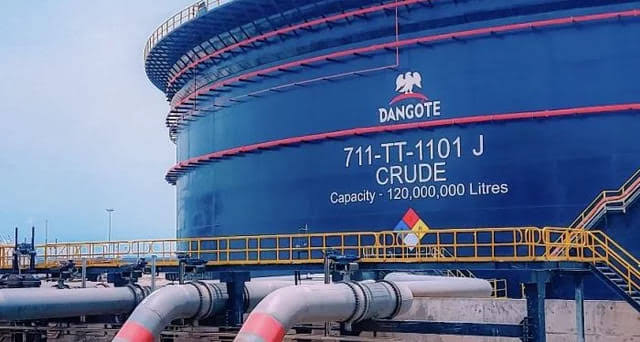
For ₦5,250, Nigerians could soon own a piece of the refinery that has reshaped the country’s fuel market.
-
 Education3 days ago
FG Opens N2.5bn Grant Window For 50 Student Innovators Under “Next Moonshot Initiative”
-
 Politics3 days ago
Peter Obi, Others Challenging Tinubu Cannot Transform Nigeria — Datti Baba-Ahmed
-
 Auto2 days ago
Kaduna to Lead Govt Patronage of Local Vehicles as Sani Unveils Peugeot 5008
-
 metro1 day ago
El-Rufai Demands ₦10bn from Defence Minister Over Southern Kaduna Killings Allegation
-
 metro2 days ago
Socialite Igho ‘Tiny’ Ubiribo Dies After Penis Enlargement Surgery
-
 metro1 day ago
No US Case Against Tinubu, Family Enjoy Unimpeded Transit for UNGA — Ambassador Ibrahim
-
 Entertainment3 days ago
Kneeling to Propose Is Why Western Marriages Fail — Pete Edochie Sparks Fresh Debate
-
 International3 days ago
US Strikes Three Iranian Oil Tankers in Retaliation for Missile Attack on Navy Ships
You must be logged in to post a comment Login