

News
Deleting section 84(12) of electoral act still in progress, says Malami

Abubakar Malami, attorney-general of the federation, says the federal government is taking the necessary steps towards deleting section 84 (12) of the Electoral Act, 2022.
The section reads: “No political appointee at any level shall be a voting delegate or be voted for at the convention or congress of any political party for the purpose of the nomination of candidates for any election.”
Last Friday, a federal high court in Umuahia, Abia state, ordered the attorney-general of the federation to delete the section from the amended electoral act.
Evelyn Anyadike, the judge, held that the section was unconstitutional, invalid, illegal, null, void and cannot stand.
Anyadike ruled that sections 66(1)(f), 107(1)(f), 137(1)(f) and 182(1)(f) of the 1999 constitution already stipulated that appointees of government seeking to contest elections were to resign at least 30 days to the date of the election.
Addressing journalists in Abuja on Wednesday, Malami said the process of implementing the judgment is still ongoing.
“By the judgment, the court directed the office of the attorney-general to take the necessary steps to delete the provision, which in essence implies that the provision should not form part of our laws,” he said.
READ ALSO:
- Obaseki sacks 513 workers, paralympics of Edo sports council
- EFCC frees Obiano after six days in detention, seizes passport
- Convention: Buhari orders APC to refund monies to candidates who step down
“Whether it has been deleted or has not been deleted, is indeed a function of agencies of government and associated, relevant parastatals.
“But the true position of it in that respect is the fact that government printers, and indeed Law Reform Commission, among others, that are responsible for the codification and gazetting of our laws, are working naturally, hand in hand with the office of the attorney general for the purpose of ensuring that what goes into our laws are indeed in line with the provision of the law.
“So what I am saying in essence, it is indeed a work in progress against the background of the fact that the Law Reform Commission is involved statutorily, which is a parastatal under the office of the attorney general, is a party to the process of codification.
“The government printers, which is saddled with the responsibility of gazetting our laws on the request of the office of the attorney general, is equally involved.
“And above all, as you rightly stated, the possibility of an appeal is equally there. So, what I am saying in effect is the deletion of section 84 Subsection 12 is a work in progress and is being considered as such.”
Meanwhile, the house of representatives has described the judgment as an aberration and vowed to appeal against the verdict.
The green chamber is contending that the court has no right to interfere with the powers of the national assembly to make laws.
THE CABLE







News
NLC, Falana Mobilise Nigerians Against Petrol Price Hike, Mount Pressure on Tinubu Govt

NLC, Falana Mobilise Nigerians Against Petrol Price Hike, Mount Pressure on Tinubu Govt
The Nigeria Labour Congress (NLC), human rights lawyer Femi Falana, and pro-democracy activists have called on Nigerians to unite against rising petrol prices and worsening economic hardship, accusing the Federal Government of pursuing policies that have placed an unbearable burden on workers and low-income households.
The labour leaders and activists made the call at a symposium in Lagos held as part of the first memorial activities in honour of late labour activist Abiodun Aremu. They demanded an immediate reduction in petrol prices, improved wages and a review of economic policies they said had eroded the purchasing power of millions of Nigerians.
NLC President, Joe Ajaero, represented by the union’s Acting General Secretary, Benson Upah, said the removal of the petrol subsidy had significantly increased the cost of living, citing rising transport fares, food prices, electricity tariffs and the depreciation of the naira.
Ajaero said workers were struggling to meet basic needs as the cost of essential goods and services continued to rise faster than their earnings.
He argued that many workers had been forced to make difficult choices between paying high transportation costs and walking long distances to their workplaces, while small businesses were also struggling with increasing operating expenses.
The labour leader further criticised the government for failing to provide sufficient relief to cushion the effects of its economic reforms, arguing that the burden of adjustment had fallen disproportionately on ordinary Nigerians.
According to him, the ₦70,000 national minimum wage has lost much of its purchasing power amid rising inflation and the soaring cost of petrol.
“When the minimum wage was set at ₦70,000 in July 2024, petrol sold for approximately ₦668.30 per litre. Today, prices in many parts of the country have exceeded ₦1,400 per litre,” the NLC said in its address.
READ ALSO:
- Buhari Feared Tinubu Presidency, Resisted Pressure to Back Him – Baba-Ahmed Claims
- NAFDAC Probes Corps Member’s Death at Enugu Camp as Fake Drug Claims Emerge
- Nigerian Universities Have Not Expired, Only Teaching Methods, Professor Tells Ojuolape
Ajaero described the situation as unacceptable, insisting that a worker earning ₦70,000 monthly could no longer cope with the rising cost of transportation, food, rent, education and healthcare.
He warned that organised labour would intensify pressure on the government if urgent measures were not taken to address the situation.
The NLC president also disclosed that the union had issued a two-week ultimatum to the Federal Government on October 9, demanding an immediate reduction in petrol prices.
He said the ultimatum was intended to compel the government to respond to workers’ concerns and address the widening gap between wages and the cost of living.
According to the union, failure to meet its demands could force organised labour to consider further action.
Beyond petrol prices, the NLC called for measures to stabilise the naira, reduce inflation, strengthen domestic refining capacity and improve workers’ earnings.
Falana, who chaired the symposium, also challenged the Federal Government’s position on petrol subsidy removal, arguing that governments in other countries continued to subsidise essential goods and services to protect citizens from economic shocks.
The Senior Advocate of Nigeria questioned why Nigeria should treat the withdrawal of petrol subsidies as the only available policy option when other countries provide support for fuel, education, healthcare and other essential services.
He argued that the government should consider alternatives capable of reducing the burden on households rather than allowing rising energy costs to deepen poverty.
Falana also criticised the government’s discussion of a possible petrol landing cost of ₦1,350 per litre, noting that transportation and distribution expenses could push the final pump price higher in different parts of the country.
He said Nigerians needed concrete measures that would make petrol more affordable and ease the pressure on households and businesses.
The lawyer also referred to political figures, including Omoyele Sowore and Donald Duke, who he said had advocated petrol prices below ₦500 per litre if given the opportunity to govern.
Meanwhile, Rashidat Adesina, representing the Joint Action Front (JAF), said the increase in petrol prices since the removal of the subsidy in 2023 had placed a disproportionate burden on workers and poor Nigerians.
Adesina recalled that petrol sold for approximately ₦165 per litre before the subsidy was removed, before rising to around ₦500 and subsequently ₦600 per litre.
She said prices had since climbed to between ₦1,350 and ₦1,400 per litre in some locations, depending on the filling station.
Using ₦1,400 per litre as an example, Adesina noted that a worker earning the national minimum wage of ₦70,000 could purchase only 50 litres of petrol with an entire month’s salary.
She argued that the calculation illustrated the pressure on workers, who must also pay for food, rent, school fees, transportation and other household necessities.
Adesina further accused the government of failing to adequately protect low-income earners from the consequences of its economic policies, calling for a change in the country’s economic priorities.
The speakers collectively demanded lower petrol prices, better wages, measures to stabilise the naira and increased investment in domestic refining as part of efforts to address the cost-of-living crisis.
The renewed calls come amid mounting pressure on the Tinubu administration over the impact of petrol subsidy removal and other economic reforms introduced since 2023.
The NLC’s ultimatum has also raised the prospect of further confrontation between organised labour and the Federal Government if an agreement is not reached within the stipulated period.
The labour movement maintains that urgent intervention is necessary to prevent further deterioration in workers’ living standards, while the activists have urged Nigerians to unite in demanding policies that prioritise economic relief and social welfare.
NLC, Falana Mobilise Nigerians Against Petrol Price Hike, Mount Pressure on Tinubu Govt
News
Nigerian Universities Have Not Expired, Only Teaching Methods, Professor Tells Ojuolape
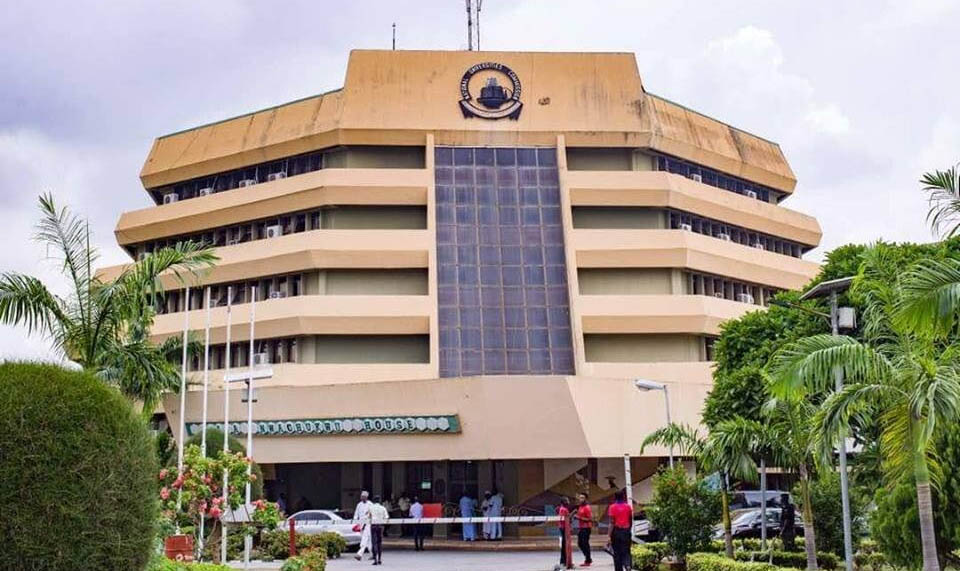
Nigerian Universities Have Not Expired, Only Teaching Methods, Professor Tells Ojuolape
Emeritus professor argues that outdated curriculum delivery, not university courses, is responsible for graduates’ skills gaps
A Professor Emeritus of Human Capital and Comparative Education, Olawale Adetokunbo Ajayi, has faulted the claim that most courses offered by Nigerian universities have become obsolete, arguing that the major problem lies in outdated teaching methods, inadequate practical training and poor implementation of education reforms.
Ajayi, a former Dean of the Faculty of Education, made the submission in a rejoinder to an article by Adesola Adefemi Ojuolape titled “Most Courses in Nigeria’s Universities Have Expired,” in which the writer criticised the relevance of university programmes to contemporary economic realities and employment opportunities.
While acknowledging the concerns raised by Ojuolape, the professor maintained that declaring university courses obsolete could mislead students and parents into abandoning valuable academic disciplines instead of demanding reforms that would make them more relevant to the modern economy.
He described Ojuolape’s argument as 70 per cent correct but incomplete, insisting that the distinction between an outdated course and an outdated method of teaching it was critical to the future of Nigerian higher education.
According to him, disciplines such as Philosophy, History, Sociology, Religious Studies and Literature remain relevant globally, with graduates of these programmes finding opportunities in technology, consulting, international development, research and other sectors.
“My dear Adesola, no course is inherently expired. It is the delivery that has expired,” Ajayi argued.
He cited universities such as Harvard University, the University of Oxford and the National University of Singapore as examples of institutions that continue to teach traditional academic disciplines while integrating modern analytical tools, practical applications and industry-relevant competencies into their programmes.
READ ALSO:
- Kano: Soldiers Kill Two Kidnappers, Rescue Victim, Recover ₦10m
- Oyo Baby Trafficking Scandal: Mother, Doctor Arrested Over Alleged ₦2m Sale of Infant
- Nairobi Mother Says Husband Abandoned Her During Childbirth, Paid Dowry for Another Woman
The professor argued that the same discipline could produce vastly different outcomes depending on how it was taught, the resources available to students and the opportunities provided for practical experience.
Using History as an example, he contrasted an approach centred on memorising historical dates with one that incorporates geographical information systems, digital archiving, oral history and documentary filmmaking.
He said the latter approach could equip graduates with skills applicable to cultural preservation, digital media, research and documentary production.
Ajayi also referred to Germany’s dual vocational education model, which combines classroom instruction with workplace experience, to demonstrate the importance of connecting academic learning with the demands of industry.
He maintained that Nigeria’s challenge was not necessarily a shortage of relevant courses but a failure to implement reforms designed to bridge the gap between theoretical knowledge and practical competence.
Professor acknowledges shortcomings in Nigerian universities
Despite challenging Ojuolape’s central argument, Ajayi agreed that Nigerian universities face serious problems in curriculum delivery, employability and the commercial sustainability of some academic programmes.
He criticised what he described as the continued dominance of theoretical instruction over practical learning, arguing that graduates needed more opportunities to apply classroom knowledge to real-world problems.
The professor also expressed concern about the failure of some lecturers to update their teaching materials and methods in response to technological and economic changes.
Reflecting on his years in academia, Ajayi admitted that some lecturers had continued to rely on teaching notes that were developed decades earlier.
He described such practices as a failure of the education system to prepare successive generations of students adequately for contemporary challenges.
The academic further questioned the cost structure of some university programmes, particularly where institutions charged substantial fees without providing adequate practical facilities, industry exposure or specialised learning resources.
He argued that universities must demonstrate the value they offer students rather than relying solely on the prestige of academic qualifications.
However, he cautioned against treating every humanities or social science programme as economically useless simply because it did not require expensive laboratories or specialised equipment.
Calls for universities to embrace practical training
As part of his recommendations, Ajayi urged Nigerian universities to adopt what he described as a triple-helix model that would connect classroom learning, industry and community problem-solving.
Under the proposed approach, departments would be expected to develop practical projects that allow students to apply their knowledge while addressing real-world needs.
READ ALSO:
- Akpabio Under Fire as Senators Move to Secure His Return as Senate President in 2027
- Lamine Yamal Shines as Barcelona Thrash Real Betis 5-2
- Tinubu Scraps Recruitment Waiver Requirement for Federal Universities
For instance, he suggested that Mass Communication departments could operate campus radio stations, Sociology departments could establish data centres serving local governments, while Theatre Arts departments could develop digital production studios.
He argued that such initiatives would help students acquire practical experience before graduation while creating opportunities for departments to generate revenue and serve their communities.
Ajayi maintained that universities should move beyond producing graduates who possess theoretical knowledge but struggle to demonstrate their competence in professional environments.
He also called for stronger implementation of the National Universities Commission’s Core Curriculum and Minimum Academic Standards, known as CCMAS, which provides a framework for undergraduate curriculum development.
According to him, the effectiveness of such reforms depends on how consistently universities translate policy provisions into actual teaching, learning and assessment practices.
Lecturers urged to update their skills
The professor also called for mandatory professional development for university lecturers, arguing that academic staff must continually update their knowledge and acquire skills relevant to changing professional environments.
He proposed that lecturers should undertake industry placements and demonstrate new competencies as part of their career development.
Ajayi argued that academic promotion should not depend exclusively on journal publications but should also recognise practical projects, professional certifications and evidence of engagement with industry.
He cited digital tools such as Turnitin, SPSS, Canva and learning management systems as examples of technologies that could support modern teaching, research and assessment.
The professor maintained that lecturers who fail to adapt risk leaving students poorly equipped for workplaces increasingly shaped by digital technology and artificial intelligence.
Students advised to combine degrees with practical skills
Ajayi advised university students against viewing academic qualifications and practical skills as competing alternatives.
Instead, he encouraged them to combine specialist knowledge in their chosen disciplines with complementary competencies that could improve their employability.
He suggested that Sociology students could pursue data analytics, History students could learn documentary filmmaking, while English graduates could develop copywriting and digital communication skills.
According to him, the approach would produce graduates with deep knowledge in one discipline and broader capabilities across other areas.
He argued that a university degree could remain valuable if students used their years of study to build both academic knowledge and demonstrable practical competence.
The professor also urged parents to look beyond course titles when selecting institutions for their children, advising them to investigate the quality of teaching, available facilities, industry partnerships and practical opportunities offered by individual universities.
He maintained that the same academic programme could produce different career outcomes depending on the quality of the institution delivering it.
Government urged to fund measurable outcomes
On government policy, Ajayi called for a funding approach that rewards universities for demonstrable results rather than relying predominantly on student enrolment figures.
He proposed that institutions and departments should be assessed on their contributions to innovation, entrepreneurship and the resolution of community problems.
He argued that higher education funding should support practical learning facilities, research infrastructure and programmes that connect universities with industry.
The professor also identified an opportunity for Ojuolape’s intervention to stimulate a broader national debate on graduate employability and curriculum reform.
He suggested that universities should publish employment outcomes for their graduates and that relevant agencies should strengthen monitoring of academic standards and practical training.
Such measures, he argued, would help parents, prospective students and policymakers make better-informed decisions about university education.
Warns against abandoning humanities
Ajayi cautioned that interpreting Ojuolape’s article as a call to abandon traditional academic disciplines could have unintended consequences.
He argued that technical competence without critical thinking, historical awareness, ethical judgement and communication skills could leave graduates ill-equipped to contribute responsibly to society.
He warned against creating an education system in which students from less privileged backgrounds were channelled towards basic vocational occupations while children from wealthier families retained access to advanced academic and technological opportunities.
According to him, vocational and technical education deserve respect, but they should complement rather than replace a broad and balanced education system.
“Skills without citizenship breeds skilled criminals,” he argued, stressing the importance of combining professional competence with ethical and civic responsibility.
He urged policymakers to pursue reforms that give students access to both academic knowledge and practical skills, irrespective of their social or economic backgrounds.
Concluding his rejoinder, Ajayi commended Ojuolape for drawing attention to the problems facing Nigerian universities but urged him to distinguish between the failure of an education system and the value of education itself.
“We built this system. We must reform it, not burn it,” he said.
He added that the goal should be to produce graduates who can combine education with practical competence to lead, innovate and contribute to national development.
The rejoinder therefore shifts the debate from whether university courses should be scrapped to how Nigerian institutions can improve teaching quality, strengthen practical training and ensure that graduates possess skills relevant to the changing economy.
Editorial note: The statistics and international comparisons cited in the original rejoinder have been attributed to its author and have not been independently verified for this report.
Nigerian Universities Have Not Expired, Only Teaching Methods, Professor Tells Ojuolape
News
Akpabio Under Fire as Senators Move to Secure His Return as Senate President in 2027
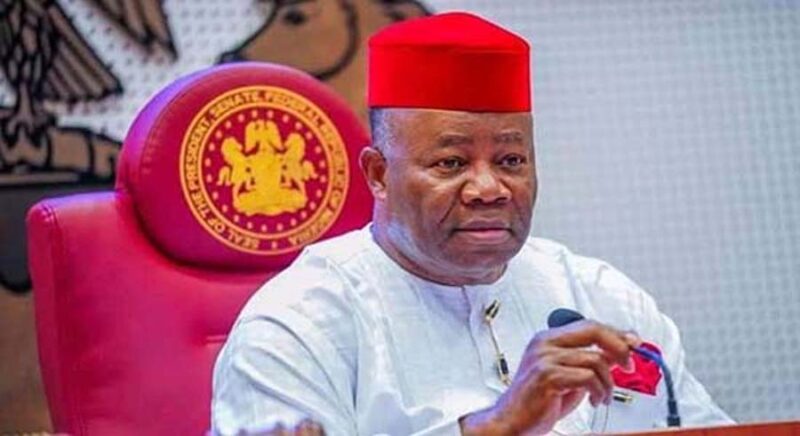
Senate President Godswill Akpabio is facing growing criticism over efforts to secure another term in office, following a controversial move by the current Senate to endorse the return of its leadership in the 11th National Assembly.
The controversy erupted after senators declared that there was “no vacancy” in the Senate presidency, a position critics have described as undemocratic and an attempt to influence the leadership of a future legislature before Nigerians elect a new National Assembly.
The development has intensified political discussions ahead of the 2027 general elections, with questions being raised about the independence of the legislature, the authority of incoming senators and the growing contest for control of the Senate.
At its sitting on Thursday, October 15, 2026, the Senate backed Akpabio’s return as Senate President in the next National Assembly, which is expected to be inaugurated in June 2027.
The motion was moved by Senate Chief Whip Tahir Monguno and seconded by Senator Cyril Fasuyi. It received majority support through a voice vote.
The resolution also endorsed Deputy Senate President Barau Jibrin and other principal officers for another term, subject to their re-election into the Senate.
However, the move has drawn objections from critics who argue that the leadership of the 11th Senate should be determined by the lawmakers elected into the chamber, rather than through a resolution adopted by the outgoing Senate.
READ ALSO:
- Lamine Yamal Shines as Barcelona Thrash Real Betis 5-2
- Tinubu Scraps Recruitment Waiver Requirement for Federal Universities
- FG Begins Rollout of 3,700 Telecom Towers to Connect 20m Nigerians
One of the critics, identified as Epelle in reports, described the move as an affront to democratic principles, arguing that the Senate presidency was not a hereditary position that could be reserved for an incumbent.
Epelle maintained that the office must be contested and decided by senators in accordance with the rules and democratic procedures governing the National Assembly.
The Legislative Advocacy Network (LAN) has also opposed the move. Its coordinator, Benjamin Joseph, argued that the leadership of the next National Assembly should emerge from considerations such as legislative performance, institutional independence and public confidence, rather than political loyalty or the desire to retain existing officeholders.
The criticism centres on whether the current Senate can legitimately declare its leadership positions effectively reserved before the next general election and the inauguration of a new legislature.
Although the resolution signals support for Akpabio within the current Senate, it does not automatically guarantee his return. The next Senate will have its own membership, and its elected members will determine who occupies the offices of Senate President and Deputy Senate President.
Akpabio has meanwhile stepped up efforts to secure political backing for his second-term ambition. At the inauguration of the APC Presidential Campaign Council, he appealed to President Bola Ahmed Tinubu to support his bid to return as Senate President in 2027.
His appeal has added another dimension to the debate over the influence of the Presidency and the ruling All Progressives Congress (APC) in determining the leadership of the National Assembly.
Akpabio has also warned governors against seeking other political offices while still occupying their current positions. The remarks were widely interpreted as a warning directed at Imo State Governor Hope Uzodimma, who is seeking election to represent Imo West Senatorial District in 2027.
Uzodimma’s senatorial ambition has fuelled speculation about a possible contest for the Senate presidency if he wins a seat in the next National Assembly. Reports have also highlighted opposition from Federal Capital Territory Minister Nyesom Wike, who has said he would not support Uzodimma’s reported ambition to lead the Senate.
The emerging rivalry underscores the political calculations surrounding the next Senate leadership, particularly within the APC, where support from party leaders and influential political figures could shape negotiations but cannot replace the formal choice of senators.
For Akpabio, securing another term will depend not only on his political alliances but also on winning re-election to the Senate and obtaining the support of enough senators-elect when the 11th National Assembly convenes.
The backlash over the “no vacancy” resolution has therefore placed the question of Senate leadership in 2027 at the centre of a wider debate about legislative independence, internal democracy and the right of a new parliament to choose its own presiding officers.
As the election approaches, the contest is likely to intensify, with Akpabio’s supporters seeking to consolidate their position and critics insisting that the next Senate presidency must be decided by the lawmakers elected to serve in the 11th National Assembly.
Akpabio Under Fire as Senators Move to Secure His Return as Senate President in 2027
-

 metro2 days ago
Suspended Archbishop Ibezim Drags Anglican Primate to Court, Challenges Six-Month Leave
-
 Education3 days ago
Nigerian Universities Producing Certificate Holders, Not Problem-Solvers, Says Ojuolape
-

 Sports3 days ago
Real Madrid Demand Tebas’ Exit After Explosive Nazi Propaganda Row
-
 Politics3 days ago
2027: Kwankwaso Signals Fuel Subsidy Comeback as NDC Vows to Crash Petrol Prices
-

 Entertainment3 days ago
ToluwaniSings’ Final Hours: Aide Reveals Desperate Search Across 8 Hospitals
-

 metro2 days ago
Imodi-Ijebu Muslim Community Bets on 20 Chiefs to Drive Education, Economic Growth
-

 metro3 days ago
NAF Deploys Pumps in Desperate Push to Recover Submerged Aircraft After Crash Killed 25
-

 metro2 days ago
NAPTIP Raises Alarm as Parents Allegedly Trade Children for Sex, Arrests Woman in Abuja